

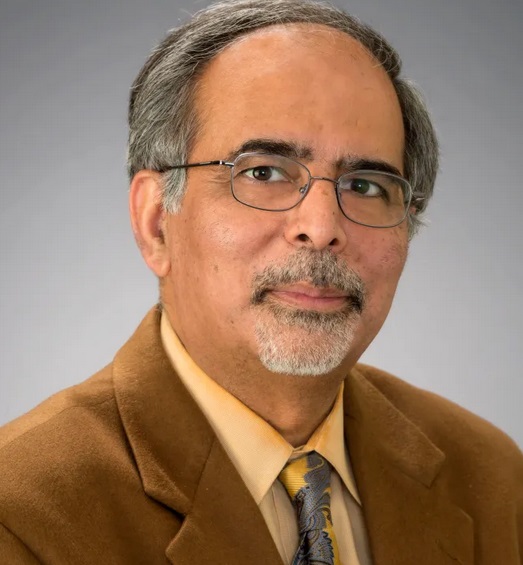
Today I want to walk you through what I consider the very best of what I have gathered on thequran.love. The site is called The Glorious Quran and Science. thequran It began in 2017 as a commentary on the Quran, and over the years it has grown into a library of many hundreds of articles. If you visit the home page, you will see what I like to call a bouquet of flowers: thequran essays on cosmology and physics, on consciousness and the soul, on evolution and the afterlife, on the Bible and the Quran, and on how we can live together as one human family. thequran
Let me say plainly whom this website is for. It is for Muslims who want to love their scripture with their minds as well as their hearts. It is for Jews and Christians who share with us the faith of Abraham. It is for people of other traditions. And it is very much for agnostics and atheists, who often ask the sharpest and most honest questions. Medicine taught me to respect evidence, to listen carefully, and to be humble about what I do not know. I bring that same spirit to these questions. I am not here to win an argument. I am here to share what has persuaded me, and to invite you to look for yourself.
There is a guiding motto behind much of the site. I try to bring all of Christian scholarship, and indeed the best of modern scholarship, to the service of the Glorious Quran. thequran Christian thinkers have wrestled with Darwin, with Einstein, and with the Big Bang for a long time. We Muslims do not need to reinvent the wheel. We can learn from them with gratitude, and then ask what the Quran adds. thequran
So let me begin where the Quran itself so often begins: with the heavens and the earth.
The Quran asks a very simple question in its fifty-second chapter. “Were they created by nothing? Or were they the creators of themselves? Or did they create the heavens and the earth?” Everything we see around us is contingent. It depends on something else for its existence. thequran Your body depends on your parents, on food, on oxygen. The earth depends on the sun. The sun depends on the laws of physics and the history of the cosmos. Sooner or later we have to ask: what does the whole chain depend on? On the site you will find an article titled “How Does the Glorious Quran Introduce God.” thequran It walks through this argument from causation and contingency, verse by verse, and shows that the Quran makes this case in plain language, long before philosophers gave it formal names. thequran
Then comes what I consider the most powerful pointer of all in our time: the fine-tuning of the universe. Over the last several decades, physicists have found that the basic constants of nature, the strength of gravity, the charge of the electron, the energy of empty space, and the initial conditions of the Big Bang, sit on a razor’s edge. arxiv Change many of them even slightly, and there would be no stable stars, no chemistry, no planets, and no one to wonder about any of it. thequran I once wrote an essay titled “All Roads Lead to Rome and All Arguments for God Lead to the Fine Tuning of Our Universe.” My point was that the classical arguments, from causation, from design, and from morality, all converge here. thequran We need an explanation for our universe that is not contingent, but necessary. A Creator who is wise, and who intended life. thequran
Very recently I published a documentary script on the site called “The Unbroken Sky: Fine-Tuning and the God of Abraham.” thequranthequran The title comes from the Quran’s invitation in its sixty-seventh chapter: “You will not see any flaw in what the Lord of Mercy creates. Look again. Can you see any rift?” A seventh-century book asks us to look at the sky, to look again, and to notice the measure and the order. thequran That is exactly what modern cosmology has done. thequran
Now, I want to be intellectually honest with you. Some scientists answer fine-tuning by proposing a multiverse, countless universes with different laws, so that one of them was bound to be just right. I take that idea seriously. On the site you will find essays such as “Lord of the Worlds: Quranic Verses, Multiverse, and the Fine-Tuning of the Cosmos,” and “The Multiverse Hypothesis: No Escape from the Question of God.” My conclusion is this. A multiverse, if it exists, does not remove the fine-tuning. It moves it up one level, because the machinery that produces universes must itself be finely set. thequranthequran And interestingly, the very first chapter of the Quran calls God Rabb al-Alameen, the Lord of all the worlds. A Creator of many worlds is no stranger to the Quran. themuslimtimes Fine-tuning does not compel anyone to believe. It invites. thequran I think that is how God wants it. Faith should be an invitation, not a coercion.
The second theme I want to share concerns the limits of materialism, and here my medical background matters to me a great deal. In medicine we can measure brain waves. We can map which neurons fire, and we can watch the brain move through the stages of sleep. But none of that explains why there is something it is like to be you. Why the redness of a rose feels the way it does. thequran Why you experience love, or grief, or the quiet joy of a prayer. Philosophers call this the hard problem of consciousness. Wikipedia The Quran addresses it with remarkable economy in its seventeenth chapter: “They ask you about the soul. Say, the soul is by the command of my Lord, and you have been given only a little knowledge.” thequran +2 On the site you will find a whole series on this verse, including a commentary titled “The Divine Command and the Enigma of Consciousness.” thequran My argument there is gentle but firm. If our minds are only matter in motion, then even our reasoning about materialism becomes hard to trust. thequran The existence of consciousness, of conscience, and of our hunger for meaning makes the most sense in a universe that was made by a Mind. thequran
I also explore a theme from the great eleventh-century thinker al-Ghazali, often called occasionalism. thequran It is the idea that God is not an absentee landlord who wound up the universe and walked away. thequran He sustains it moment by moment. The Quran calls Him al-Qayyum, the Self-Subsisting Sustainer of all existence, and says, “Every day He is engaged in a new affair.” thequranthequran I find it striking that quantum physics, at its very foundations, has revealed a genuine openness in nature. thequran On the site I have gathered more than thirty essays on this theme under the category “Occasionalism.” thequran One I would point you to is called “The Metaphysics of the Inshallah Universe.” thequran Inshallah, if God wills, turns out to be not only a pious phrase, but a deep philosophy of nature. thequran
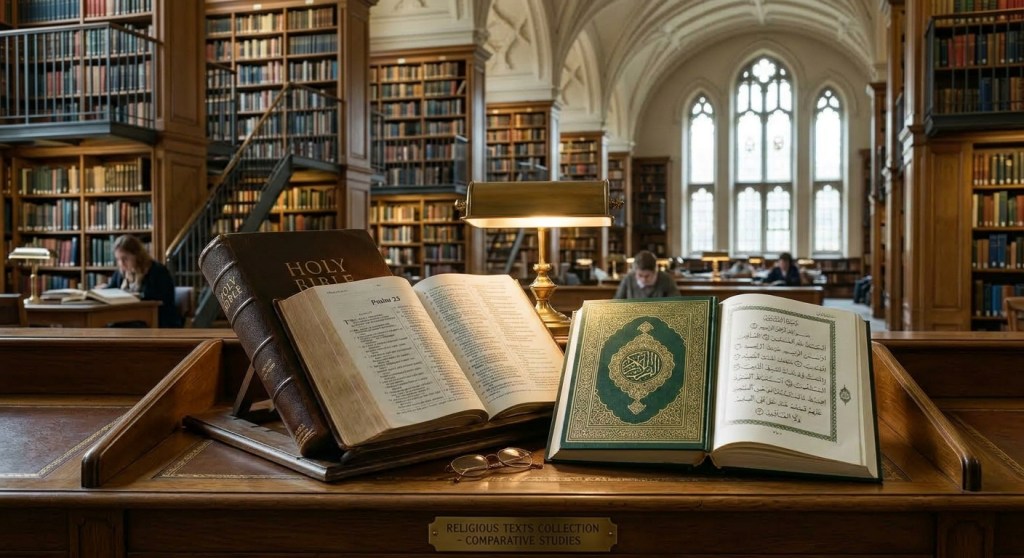
The third theme is the shared witness of the Abrahamic faiths. Jews, Christians, and Muslims all look to Abraham as a father in faith. The Hebrew Bible proclaims, “Hear, O Israel: the Lord our God is one Lord.” Jesus himself, when asked which commandment is first, quoted those very words. And the Quran, in its shortest creed, says, “Say, He is God, the One. God, the Eternal. He neither begets nor is begotten, and there is none like Him.” The Quran invites the People of the Book to come to a common word: that we worship none but the One God. On the site you will find an essay titled “An Invitation to Scriptural Encounter: Abraham, the Prophets, the Qur’an, and the Search for the One God,” thequran and another called “An Invitation to Dialogue: The Qur’an’s Call to Catholic Christians.” thequranthequran In these I try to begin with agreement before disagreement. thequran That is how good doctors talk to patients, and it is how good neighbors should talk to one another.
So here is the unifying thread. The same God whose fingerprints appear in the fine-tuning of physics, whose gift is the mystery of our conscious soul, and whom Abraham, Moses, Jesus, and Muhammad all proclaimed, is One. That is Tawhid. It is not only a doctrine about God. It is a doctrine about the unity of truth. If God is the author of both the Book of Nature and the Book of Revelation, then honest science and true scripture can never truly contradict each other. thequranthequran On the site I have extended this classical idea of two books into what I call the Four Books Thesis: the Book of Revelation, the Book of Nature, the Book of Destiny, and the Book of Deeds. thequran You will find it set out in the essay “The Four Books of God: A Quranic Cosmology in the Age of Quantum Physics.” thequranthequran
That brings me to the second half of what I want to share with you: the miracle of the Glorious Quran.
Let me start with a fact that many people find surprising. In a lecture he gave in 1983, the Nobel laureate physicist Abdus Salam quoted Dr. Muhammad Aijazul Khatib of Damascus University. In contrast to two hundred and fifty verses that are legislative, he said, some seven hundred and fifty verses of the Quran, almost one eighth of it, urge believers to study nature. Think about that. The book that many people imagine is mainly a book of rules spends far more of its verses telling us to look at the stars, the clouds, the bees, the mountains, the embryo, and the alternation of night and day. On the site you will find an article titled “Cataloging 750 Verses of the Holy Quran Inspiring Believers to Study Nature,” where I go through them chapter by chapter. thequran The Quran says, “In the creation of the heavens and the earth, and the alternation of night and day, there are signs for people of understanding.” thequran And those people of understanding, it says, conclude: “Our Lord, You have not created all this without purpose.” thequran
Here I want to add a word of caution, because I believe honesty strengthens faith. The Quran is not a science textbook. It is a book of guidance. I would say it is a book of clues for science, rather than a book of science. thequranthequran On the site there are essays that explore how its descriptions of clouds and rain, of the expanding heaven, and of human development in the womb resonate with modern knowledge. One example is “The Glorious Quran: From Clouds to Afterlife.” thequran But I also warn against forced readings. The deeper miracle is that a book from seventh-century Arabia, which speaks so often about nature, keeps pointing us outward, to observe and to learn.
The second aspect of the miracle is its preservation. The Quran says of itself, “We have sent down the Reminder, and We will surely guard it.” thequran What fascinates me is that some of the strongest testimony to this comes from scholars who were not Muslims, and some who were quite critical of Islam. thequran The nineteenth-century Scottish orientalist Sir William Muir wrote in his Life of Mahomet that the Quran had been so carefully preserved that “there are no variations of importance, we might almost say no variations at all,” among the innumerable copies scattered throughout the vast bounds of the empire of Islam. On the site you will find “Sir William Muir’s Views on the Preservation of the Quran,” and a longer study called “The Eternal Sentinel,” which discusses early manuscripts such as the Birmingham folios. Oxford’s radiocarbon laboratory dated the Birmingham parchment to between the years 568 and 645, with about ninety-five percent probability, which places it close to the lifetime of the Prophet Muhammad. And the Quran is preserved not only on parchment, but in human hearts. Millions of people today, many of them children, have memorized it from cover to cover. thequranthequran
The third aspect is its literary inimitability. The Quran issues a challenge that has stood for fourteen centuries: if you doubt that this is from God, produce a single chapter like it. That challenge was made to a people whose greatest art was poetry. thequranthequran Those who know Arabic describe a book whose rhythm, precision, and power are unlike anything before or after it, and which gave rise to whole sciences of grammar, rhetoric, and calligraphy. thequran On the site, the article “What the Quran Says About Itself” explores this challenge. thequran I would also point you to a short piece I love, “Rumi’s Metaphor of Shy Bride for the Glorious Quran.” thequran Rumi said the Quran is like a bride who does not unveil her face to those who come with force, but only to those who come with love, patience, and sincerity. thequran
The fourth aspect, and one that surprises many Christian friends, is the Quran’s reverence for Jesus and Mary. Mary is the only woman mentioned by name in the Quran, and an entire chapter, the nineteenth, is named after her. None of the twenty-seven books of the New Testament carries her name. thequran The Quran honors her as chosen above the women of the worlds. It affirms the virgin birth of Jesus. It calls him the Messiah, a Word from God, and a spirit from Him. Yes, the Quran differs from mainstream Christianity about the nature of Jesus. It sees him as a great prophet and servant of God, not as God. thequran But even where it disagrees, it does so with reverence, defending the honor of both mother and son. thequran On the site you will find my “Introduction to Surah Mariam.” thequran There I share what I consider the most important verse of the chapter of Mary: “Those who believe and do good deeds, the Most Gracious will create love for them.” The purpose of religion is to create loving families and a compassionate society. If our religion fails to do that, we may be following the wrong interpretation of it. thequran
The fifth aspect is the Quran’s universal ethic. It teaches that all of humanity comes from a single soul. On the site there is a popular piece, “The Glorious Quran: Humanity Came from a Single Soul.” thequranthequran If we share one origin, then racism and tribal arrogance are rebellions against the oneness of God. The Quran’s verse on justice, in its fourth chapter, is so striking that Harvard Law School chose it as one of thirty-three quotations, picked from three hundred and fifty submissions, for its Words of Justice wall in Wasserstein Hall: “Stand out firmly for justice, as witnesses to God, even if it be against yourselves, or your parents, or your relatives.” On the sanctity of life, the Quran says that whoever kills one innocent person, it is as if he has killed all of humanity, and whoever saves one life, it is as if he has saved all of humanity. Wikipedia +2 As a physician, I cannot think of a more beautiful mandate.
And there is the Quran’s pluralism. In its second chapter it says that those who believe, and the Jews, and the Christians, and the Sabians, whoever believes in God and the Last Day and does good, will have their reward with their Lord, and no fear shall be upon them, nor shall they grieve. thequranthequran Scholars have interpreted this verse in different ways, and I discuss that history openly on the site. thequranthequran But I take it, along with many reformist voices, as a rebuke of every religious monopoly on salvation. thequranthequran And here I must speak to my fellow Muslims. The same Quran that refuses to let Jews and Christians claim heaven exclusively for themselves also refuses to let any Muslim sect do it. Sunni and Shia, Sufi and Salafi, Ahmadi and others, we all recite the same Book. thequran From its very beginning, this website was meant to be non-sectarian. thequran The Quran should unite us, not divide us. thequran You will find this theme in a commentary titled “Though They Both Recite the Scripture,” on the second chapter, verse one hundred and thirteen. thequran
Finally, the sixth aspect of the miracle is what the Quran does to people. It opens with the words, “In the name of God, the Most Gracious, the Most Merciful.” thequranthequran Those two names come from an Arabic root related to the womb, the place of nurture and care. I sometimes say that we are all living in a kind of cosmic womb that God has been preparing for thirteen point eight billion years. thequran I do not mean that literally, of course, but as an image of how tenderly we are held. thequran And to every person who feels they have gone too far, the Quran says, “O My servants who have transgressed against yourselves, do not despair of the mercy of God. Surely God forgives all sins.” On the site I have written about that verse as a kind of spiritual therapy for despair. thequran A single verse can change the course of a life. You will see it in the stories on the site of people who came to the Quran as critics, like the American mathematician Jeffrey Lang, and you will see it in lifelong Muslims who rediscover their scripture in the middle of life. thequran
So let me close with an invitation.
If you are a Muslim, I invite you to read the Quran not only with reverence but with curiosity, and to fall in love again with the seven hundred and fifty verses that ask you to study God’s creation. If you are Jewish or Christian, I invite you to read it as a letter from a cousin, one that honors Abraham, Moses, Jesus, and Mary, and calls us back to the One God we share. If you belong to another tradition, I invite you to look for the Golden Rule, the compassion and the justice that run through every chapter. And if you are an agnostic or an atheist, I especially invite you. Bring your skepticism with you. Bring your hardest questions. The Quran asks for reflection, not blind belief. Again and again it asks, “Will you not reason? Will you not reflect?”
Start at thequran.love. Click on the menu item called Highlights, and explore the categories Quran and Science, Cosmology and Physics, Atheism, and Afterlife. thequranthequran Read one article. Then, more importantly, open the Quran itself, in a good translation, and read a chapter slowly. Perhaps start with the opening chapter, then the chapter of Mary, and then the chapter of the Most Gracious, Surah Ar-Rahman. Approach it the way Rumi advised, with patience and with love. thequran
Thank you for spending this time with me. May the One God, the Lord of all the worlds, guide each of us, and all of us together, toward the truth, and toward one another. Peace be with you.


Leave a Reply