
Presented by Gemini for Zia H Shah MD
Audio teaser: Quantum Mechanics and Continuous Divine Action
Abstract
This comprehensive research report systematically investigates the synthesis of classical Islamic occasionalism, modern quantum mechanics, and Quranic theology, as articulated in the scholarly frameworks of Dr. Zia H. Shah MD. For centuries, the Newtonian paradigm of a mechanically self-sufficient, clockwork universe challenged the classical Ash’arite doctrine of continuous divine creation. However, the advent of quantum mechanics has fundamentally eroded Laplacean determinism, revealing a probabilistic cosmos wherein the trajectory of individual subatomic events remains physically underdetermined. By examining the double-slit experiment, wave-particle duality, and the behavior of individual photons at an air-water interface, this analysis establishes the “causal gap” provided by modern physics. This physical indeterminacy supplies the requisite scientific architecture for Al-Ghazali’s occasionalism—a metaphysical doctrine asserting that natural laws merely describe the habitual custom of divine action rather than intrinsic, autonomous powers. To ground this synthesis theologically, the report conducts an exhaustive exegesis of numerous Quranic verses, demonstrating that the text explicitly affirms the ontological prerequisites of occasionalism: Allah’s absolute power (Qudrah), His granular omniscience over the seen and unseen, His continuous sustaining of creation, and His ultimate sovereignty over the human heart. Finally, the analysis explores the broader implications of this “Inshallah Universe,” demonstrating how it resolves the philosophical tensions surrounding the simulation hypothesis, the neuro-quantum architecture of consciousness, and the mechanism of guided evolution.
1. Introduction: The Demise of the Clockwork Cosmos
The historical relationship between the physical sciences and scriptural theology has frequently been defined by the tension between independent natural causality and divine sovereignty. Following the classical synthesis of Newtonian mechanics, the universe was widely conceptualized as a Laplacean clockwork—a closed, deterministic system governed by immutable physical laws. In such a paradigm, God is often relegated to the role of a prime mover who established the initial conditions of the cosmos but subsequently withdrew, allowing nature to operate autonomously. This materialistic determinism philosophically marginalized the Quranic depiction of al-Hayy al-Qayyum (the Ever-Living, the Self-Subsisting Sustainer), suggesting instead that divine intervention could only occur as a violent rupture of natural law, commonly termed a miracle.
However, the theoretical revolutions of the twentieth century profoundly disrupted this deterministic ontology. As articulated in extensive interdisciplinary research, the physical sciences no longer demand a metaphysically self-sufficient universe. Instead, modern physics reveals a foundation characterized by inherent indeterminacy, statistical probability, and non-local interactions. This paradigm shift does not constitute a definitive scientific proof of God; rather, it creates a hospitable ontological space for a theology of continuous divine action. Specifically, it resurrects the explanatory power of Al-Ghazali’s occasionalism—the classical Islamic doctrine that created substances possess no inherent causal efficacy, and that God is the sole, immediate cause of every event.
By synthesizing the underdetermined nature of the quantum event with the exhaustive theological attributes of Allah detailed in the Glorious Quran, an elegant metaphysical framework emerges. Within this “Inshallah Universe,” the regularities of physical science are respected as the reliable habits of God, while the ultimate agency behind every falling leaf, every refracting photon, and every human thought is reclaimed by the Divine.
2. The Quantum Event: Physics, Probability, and the Causal Gap
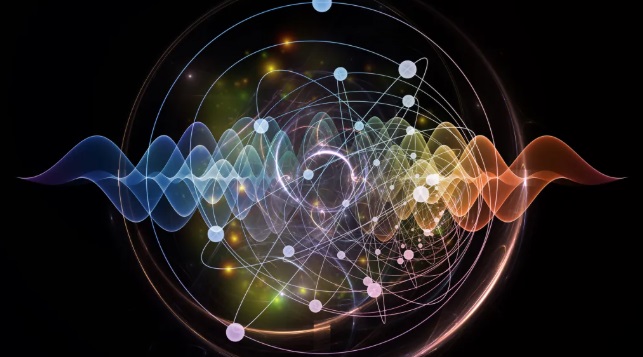
To understand how occasionalism integrates with modern science, one must first examine the breakdown of physical determinism at the subatomic level. Classical physics operates on the assumption that if the initial state of a system and the forces acting upon it are completely known, its future state can be perfectly predicted. Quantum mechanics systematically dismantled this assumption, replacing certainty with probability amplitudes.
2.1 The Double-Slit Mystery and Wave-Particle Duality
The foundational mystery of quantum mechanics is encapsulated in the double-slit experiment, an empirical phenomenon containing what physicists describe as the central enigma of quantum mechanics. When quantum entities, such as electrons or photons, are fired individually toward a barrier with two microscopic slits, they arrive at a detector screen in discrete, indivisible impacts (localized “clicks”). If treated as classical particles, one would expect them to form two distinct bands corresponding to the two slits.
However, over time, the accumulation of these individual impacts forms an interference pattern—a phenomenon strictly characteristic of interacting waves. The mathematical formulation for this interference probability reveals a profound ontological duality: the quantum entity propagates as a wave of probabilities (described by the Schrödinger equation) but manifests upon measurement as a localized particle. Standard quantum mechanics can accurately predict the exact statistical distribution of millions of impacts, but it is fundamentally incapable of predicting the exact location where any single particle will land. The precise outcome of an individual quantum event is physically underdetermined prior to measurement.
2.2 The Ontological Fracture: Interpretations of Quantum Mechanics
Because the mathematical formalism of quantum mechanics predicts probabilities rather than distinct outcomes, theoretical physics has splintered into various philosophical interpretations to explain what is physically occurring. The coexistence of these mutually exclusive interpretations demonstrates a critical philosophical point: the empirical success of quantum physics does not enforce a single materialist ontology.
| Quantum Interpretation | Metaphysical Premise | View on Determinism | Implications for Divine Action |
| Copenhagen (Bohr/Heisenberg) | The wave function represents probability amplitudes that “collapse” into a definite state only upon measurement. Classical concepts do not apply prior to observation. | Inherently probabilistic and non-deterministic. | Provides a genuine “causal gap” where individual outcomes are physically undetermined, allowing room for occasionalist divine will. |
| Many-Worlds (Everett) | The wave function never collapses. Every possible outcome of a quantum event actually occurs in dynamically segregated, branching realities. | Deterministic, but randomness is experienced subjectively by observers within a single branch. | Suggests an exhaustive realization of all mathematical possibilities, though it remains highly speculative regarding consciousness and divine singularity. |
| Bohmian Mechanics | Particles have definite trajectories guided by a hidden “pilot wave.” | Fully deterministic, relying on non-local hidden variables. | Re-establishes a clockwork mechanism, though it requires non-locality (instantaneous universe-wide connections). |
| Occasionalism (Synthesis) | Physical laws map probability distributions, but the actualization of a specific state is directly willed by the Sustainer frame-by-frame. | Deterministic solely from the perspective of Divine Will, probabilistic from the perspective of human measurement. | The statistical regularities are the “habit” of God; the individual event is the active choice of God. |
2.3 The Photon at the Swimming Pool: QED and the Individual Event
The “causal gap” required for occasionalism is brilliantly illuminated through Richard Feynman’s exposition of Quantum Electrodynamics (QED) regarding the behavior of light at an air-water interface.
When a beam of sunlight strikes a transparent surface like a swimming pool or glass, human observation reveals two simultaneous outcomes: some light reflects, revealing the surface of the water, while the rest refracts (transmits) through the water, illuminating the bottom of the pool. Classical physics, utilizing the Fresnel equations, perfectly calculates the statistical ratio of this phenomenon—for instance, an average of 4% of photons reflect, while 96% transmit.
However, when this scenario is reduced to the interaction of a single photon encountering the surface, a profound epistemological wall is reached. Standard physics provides the exact probability distribution, but there is absolutely no physical mechanism, no “hidden variable,” and no internal structural difference within the photon that dictates which path it will take. As Feynman noted, physics cannot explain how the detector makes its “decision” for an individual photon. Bell’s theorem and the Nobel-winning experiments of Aspect, Clauser, and Zeilinger have empirically ruled out the existence of local hidden variables that could secretly predetermine the photon’s path.
It is within this precise causal gap that occasionalism finds its scientific harbor. If physical law does not determine the fate of the individual photon, what does? The materialist concludes it is brute, uncaused chance. The occasionalist concludes it is the immediate, continuous, and active Will of God. God governs the photon without disturbing the statistical physics of the ensemble. The known laws of physics do not decide whether the beam of light is going to refract or reflect; the 4% reflect because God wills it, and the 96% transmit because God wills it.
3. The Metaphysics of Divine Habit: Al-Ghazali’s Occasionalism
To fully grasp the magnitude of this quantum-theological synthesis, the classical roots of occasionalism must be examined. Developed as a sophisticated metaphysical framework by the early Ash’arite theologians and brought to its zenith by Abu Hamid al-Ghazali (1058–1111), occasionalism fundamentally redefined the relationship between cause and effect.
3.1 The Seventeenth Discussion: Fire, Cotton, and Causality
In the Seventeenth Discussion of his seminal work, Tahafut al-Falasifa (The Incoherence of the Philosophers), Al-Ghazali challenged the Aristotelian and Avicennian philosophers who argued that the universe operated through necessary, autonomous secondary causes. The philosophers asserted that once God created the cosmos, entities possessed inherent causal powers—for example, fire possesses the intrinsic, necessary power to burn cotton.
Al-Ghazali rejected this on both epistemological and theological grounds. He argued that human observation only witnesses conjunction, not necessary causation. Observation shows that burning occurs with the application of fire (al-husul ‘indahu), not by the independent power of the fire (al-husul bihi). Because fire is an inanimate object devoid of will, intelligence, or agency, it cannot be the true efficient cause of combustion. God, and God alone, is the agent that creates the blackening of the cotton and the scattering of its ashes at the precise moment the fire touches it.
3.2 Ash’arite Atomism and the Inshallah Universe
This rejection of secondary causality was deeply tied to the Ash’arite doctrine of atomism. The theologians conceptualized a universe composed of indivisible atoms and fleeting accidents (a’rad). Because an accident cannot endure on its own across time, the universe does not persist through its own internal momentum. Instead, it must be continuously re-created by Allah at every discrete instant. Reality, in this analogy, is not like a battery-powered device that runs autonomously once charged; it is like a lightbulb that requires a continuous flow of current. Cut the divine current for one instant, and the cosmos would lapse into nothingness.
If causal necessity is an illusion, why is the universe so orderly? Al-Ghazali’s answer is that God acts according to a consistent habit or custom (Sunnat Allah or ‘Ada). God has made a covenant to consistently create the effect of burning when fire touches cotton. This consistency allows for human reasoning and scientific inquiry. Yet, because the physical laws are merely the habits of a free Creator, God is completely capable of suspending them without contradiction—such as when He willed the fire to become “coolness and safety” for the Prophet Abraham:
Surah Al-Anbiya (21:69):
قُلْنَا يَـٰنَارُ كُونِى بَرْدًۭا وَسَلَـٰمًا عَلَىٰٓ إِبْرَٰهِيمَ
“We said, ‘O fire, be coolness and safety upon Abraham.’”
This framework describes an “Inshallah Universe”. It is a cosmos where the laws of nature are real enough to formulate the equations of quantum electrodynamics, but fundamentally, the next frame of existence is rendered purely “if God wills” (in sha’ Allah).
4. The Quranic Architecture of Occasionalism
The occasionalist synthesis requires a highly specific theology. A universe governed frame-by-frame by the Divine requires a Creator who possesses exhaustive knowledge of the microscopic, absolute power over all matter, intimate presence within human consciousness, and the continuous stamina to sustain existence. The Glorious Quran is not merely compatible with this framework; it explicitly dictates it.
The following subsections systematically analyze the extensive Quranic verses that form the theological bedrock of occasionalism.
4.1 The Leaf: Omniscience and the Granularity of Knowledge
If the precise trajectory of an individual photon is decided by the Divine Will, God’s knowledge must penetrate to the most granular subatomic levels of reality. The Quran repeatedly emphasizes this absolute, microscopic omniscience, explicitly stating that Allah is the Knower of the Unseen (‘Alim al-Ghayb) and the witnessed.
Surah Al-An’am (6:59):
وَعِندَهُۥ مَفَاتِحُ ٱلْغَيْبِ لَا يَعْلَمُهَآ إِلَّا هُوَ ۚ وَيَعْلَمُ مَا فِى ٱلْبَرِّ وَٱلْبَحْرِ ۚ وَمَا تَسْقُطُ مِن وَرَقَةٍ إِلَّا يَعْلَمُهَا وَلَا حَبَّةٍۢ فِى ظُلُمَـٰتِ ٱلْأَرْضِ وَلَا رَطْبٍۢ وَلَا يَابِسٍ إِلَّا فِى كِتَـٰبٍۢ مُّبِينٍۢ
“And with Him are the keys of the unseen; none knows them except Him. And He knows what is on the land and in the sea. Not a leaf falls but that He knows it. And no grain is there within the darknesses of the earth and no moist or dry [thing] but that it is [written] in a clear record.”
[cite: 1, 2]
The imagery of the falling leaf is a profound occasionalist exhibit. A single leaf’s detachment from a branch and its chaotic flutter to the ground is governed by billions of microscopic variables: cellular degradation, atmospheric pressure, wind currents, and gravitational pull. By stating that no leaf falls without His immediate knowledge, the Quran connects the macroscopic event to exhaustive, deterministic divine oversight.
This micro-omniscience is further illustrated in the advice of Luqman to his son:
Surah Luqman (31:16):
يَـٰبُنَىَّ إِنَّهَآ إِن تَكُ مِثْقَالَ حَبَّةٍۢ مِّنْ خَرْدَلٍۢ فَتَكُن فِى صَخْرَةٍ أَوْ فِى ٱلسَّمَـٰوَٰتِ أَوْ فِى ٱلْأَرْضِ يَأْتِ بِهَا ٱللَّهُ ۚ إِنَّ ٱللَّهَ لَطِيفٌ خَبِيرٌ
“O my son, indeed if wrong should be the weight of a mustard seed and should be within a rock or [anywhere] in the heavens or in the earth, Allah will bring it forth. Indeed, Allah is Subtle and Acquainted.”
[cite: 14]
Here, Allah is described as Al-Latif (The Subtle), indicating agency at the finest, most impenetrable levels of reality, below the threshold of human observation. This precise attribute validates the theological mechanism required to resolve the quantum measurement problem.
Furthermore, several key verses in the Quran highlight that Allah is the Knower of the unseen (al-ghayb) and the seen/witnessed (al-shahadah):
- Surah Al-Hashr (59:22): هُوَ ٱللَّهُ ٱلَّذِى لَآ إِلَـٰهَ إِلَّا هُوَ ۖ عَـٰلِمُ ٱلْغَيْبِ وَٱلشَّهَـٰدَةِ ۖ هُوَ ٱلرَّحْمَـٰنُ ٱلرَّحِيمُ “He is Allah, other than whom there is no deity, Knower of the unseen and the witnessed. He is the Entirely Merciful, the Especially Merciful.”
- Surah As-Sajdah (32:6): ذَٰلِكَ عَـٰلِمُ ٱلْغَيْبِ وَٱلشَّهَـٰدَةِ ٱلْعَزِيزُ ٱلرَّحِيمُ “That is the Knower of the unseen and the witnessed, the Exalted in Might, the Merciful.”
- Surah Ar-Ra’d (13:9): عَـٰلِمُ ٱلْغَيْبِ وَٱلشَّهَـٰدَةِ ٱلْكَبِيرُ ٱلْمُتَعَالِ “{[He is] the} Knower of the unseen and the witnessed, the Great, the Exalted.”
- Surah Al-Jumu’ah (62:8): قُلْ إِنَّ ٱلْمَوْتَ ٱلَّذِى تَفِرُّونَ مِنْهُ فَإِنَّهُۥ مُلَـٰقِيكُمْ ۖ ثُمَّ تُرَدُّونَ إِلَىٰ عَـٰلِمِ ٱلْغَيْبِ وَٱلشَّهَـٰدَةِ فَيُنَبِّئُكُم بِمَا كُنتُمْ تَعْمَلُونَ “Say, ‘Indeed, the death from which you flee – indeed, it will meet you. Then you will be returned to the Knower of the unseen and the witnessed, and He will inform you about what you used to do.’”
- Surah Al-Jinn (72:26-27): عَـٰلِمُ ٱلْغَيْبِ فَلَا يُظْهِرُ عَلَىٰ غَيْبِهِۦٓ أَحَدًا – إِلَّا مَنِ ٱرْتَضَىٰ مِن رَّسُولٍۢ فَإِنَّهُۥ يَسْلُكُ مِنۢ بَيْنِ يَدَيْهِ وَمِنْ خَلْفِهِۦ رَصَدًۭا “[He is] Knower of the unseen, and He does not disclose His [knowledge of the] unseen to anyone, except whom He has approved of [from] messengers…”
- Surah Al-An’am (6:101): بَدِيعُ ٱلسَّمَـٰوَٰتِ وَٱلْأَرْضِ ۖ أَنَّىٰ يَكُونُ لَهُۥ وَلَدٌۭ وَلَمْ تَكُن لَّهُۥ صَـٰحِبَةٌۭ ۖ وَخَلَقَ كُلَّ شَىْءٍۢ ۖ وَهُوَ بِكُلِّ شَىْءٍ عَلِيمٌۭ “He is the Originator of the heavens and the earth! … He created everything, and He is All-Knowing of all things.”
These verses cement the epistemological requirement of occasionalism: the Sustainer has flawless, simultaneous access to the totality of quantum information across all spatial and temporal coordinates. The “unseen” functions analogously to the uncollapsed wave function; its ultimate reality is known only to the Creator.
4.2 The Heart: Divine Sovereignty over Consciousness
If the physical universe is governed by occasionalist causation, how does human consciousness and free will function? A common critique of Al-Ghazali is that his framework leads to fatalism. This is addressed by analyzing the Quranic depiction of the human heart (Qalb), conceptualizing consciousness as a “Neuro-Quantum Architecture”. The Quran consistently affirms that Allah encompasses the innermost thoughts, intentions, and neural processes of the individual.
Surah Al-Anfal (8:24):
يَـٰٓأَيُّهَا ٱلَّذِينَ ءَامَنُوا۟ ٱسْتَجِيبُوا۟ لِلَّهِ وَلِلرَّسُولِ إِذَا دَعَاكُمْ لِمَا يُحْيِيكُمْ ۖ وَٱعْلَمُوٓا۟ أَنَّ ٱللَّهَ يَحُولُ بَيْنَ ٱلْمَرْءِ وَقَلْبِهِۦ وَأَنَّهُۥٓ إِلَيْهِ تُحْشَرُونَ
“O you who have believed, respond to Allah and to the Messenger when he calls you to that which gives you life. And know that Allah intervenes between a man and his heart and that to Him you will be gathered.”
[cite: 15]
This verse provides a startling neurological ontology: God is situated closer to the locus of human consciousness than the self is. Allah “intervenes” or “comes between” a person and their heart. In the occasionalist framework, human volition is real, but it is not autonomous; it is a created capacity sustained moment-to-moment by God.
This profound internal sovereignty is corroborated by an extensive sequence of verses stating that God knows every secret, thought, and hidden intention in the human heart:
- Surah Ali ‘Imran (3:29): قُلْ إِن تُخْفُوا۟ مَا فِى صُدُورِكُمْ أَوْ تُبْدُوهُ يَعْلَمْهُ ٱللَّهُ ۗ وَيَعْلَمُ مَا فِى ٱلسَّمَـٰوَٰتِ وَمَا فِى ٱلْأَرْضِ ۗ وَٱللَّهُ عَلَىٰ كُلِّ شَىْءٍۢ قَدِيرٌۭ “Say, ˹O Prophet,˺ ‘Whether you conceal what is in your hearts or reveal it, it is known to Allah. For He knows whatever is in the heavens and whatever is on the earth. And Allah is Most Capable of everything.’”
- Surah At-Taghabun (64:4): يَعْلَمُ مَا فِى ٱلسَّمَـٰوَٰتِ وَٱلْأَرْضِ وَيَعْلَمُ مَا تُسِرُّونَ وَمَا تُعْلِنُونَ ۚ وَٱللَّهُ عَلِيمٌۢ بِذَاتِ ٱلصُّدُورِ “He knows whatever is in the heavens and the earth. And He knows whatever you conceal and whatever you reveal. For Allah knows best what is ˹hidden˺ in the heart.”
- Surah Al-Mulk (67:13): وَأَسِرُّوا۟ قَوْلَكُمْ أَوِ ٱجْهَرُوا۟ بِهِۦٓ ۖ إِنَّهُۥ عَلِيمٌۢ بِذَاتِ ٱلصُّدُورِ “Whether speaking secretly or openly, Allah knows best what is hidden in the heart.”
- Surah Al-Mulk (67:14): أَلَا يَعْلَمُ مَنْ خَلَقَ وَهُوَ ٱللَّطِيفُ ٱلْخَبِيرُ “Should He not know, – He that created? and He is the One that understands the finest mysteries (and) is well-acquainted (with them).”
- Surah Hud (11:5): أَلَآ إِنَّهُمْ يَثْنُونَ صُدُورَهُمْ لِيَسْتَخْفُوا۟ مِنْهُ ۚ أَلَا حِينَ يَسْتَغْشُونَ ثِيَابَهُمْ يَعْلَمُ مَا يُسِرُّونَ وَمَا يُعْلِنُونَ ۚ إِنَّهُۥ عَلِيمٌۢ بِذَاتِ ٱلصُّدُورِ “Indeed, they fold up their breasts [in enmity] that they may hide themselves from Him. Unquestionably, even when they cover themselves in their clothing, He knows what they conceal and what they declare. Indeed, He is Knowing of that within the breasts.”
- Surah Al-Ma’idah (5:7): وَٱذْكُرُوا۟ نِعْمَةَ ٱللَّهِ عَلَيْكُمْ وَمِيثَٰقَهُ ٱلَّذِى وَاثَقَكُم بِهِۦٓ إِذْ قُلْتُمْ سَمِعْنَا وَأَطَعْنَا ۖ وَٱتَّقُوا۟ ٱللَّهَ ۚ إِنَّ ٱللَّهَ عَلِيمٌۢ بِذَاتِ ٱلصُّدُورِ “He says, ‘Surely Allah knows best what is hidden in the heart.’”
- Surah Qaf (50:16): وَلَقَدْ خَلَقْنَا ٱلْإِنسَـٰنَ وَنَعْلَمُ مَا تُوَسْوِسُ بِهِۦ نَفْسُهُۥ ۖ وَنَحْنُ أَقْرَبُ إِلَيْهِ مِنْ حَبْلِ ٱلْوَرِيدِ “And We have already created man and know what his soul whispers to him, and We are closer to him than [his] jugular vein.”
By correlating the omniscience of physical space with the omniscience of psychological space, the Quran establishes a unified field of divine cognition. Human consciousness is not an independent black box outside of God’s causal reach; it is a sustained phenomenon, updated frame-by-frame, known completely by Al-Khabir (The All-Aware).
4.3 Absolute Power, Nested Agency, and the Divine Command
A central pillar of the occasionalist doctrine is the uncompromising assertion of God’s absolute power over all things. The Quran cements this through the ubiquitous Arabic phrase wa-huwa ‘alā kulli shay’in qadīr (“and He is over all things competent/powerful”). If entities possessed independent secondary causal power, God’s power would be implicitly limited by the intrinsic natures of those entities. The Quran explicitly refutes this limitation across numerous verses:
- Surah Al-Baqarah (2:20): يَكَادُ ٱلْبَرْقُ يَخْطَفُ أَبْصَـٰرَهُمْ ۖ… إِنَّ ٱللَّهَ عَلَىٰ كُلِّ شَىْءٍۢ قَدِيرٌۭ “Indeed, Allah is over all things competent [powerful].”
- Surah Ali ‘Imran (3:189): وَلِلَّهِ مُلْكُ ٱلسَّمَـٰوَٰتِ وَٱلْأَرْضِ ۗ وَٱللَّهُ عَلَىٰ كُلِّ شَىْءٍۢ قَدِيرٌۭ “To Allah belongs the dominion of the heavens and the earth, and Allah is over all things competent.”
- Surah Al-Ma’idah (5:120): لِلَّهِ مُلْكُ ٱلسَّمَـٰوَٰتِ وَٱلْأَرْضِ وَمَا فِيهِنَّ ۚ وَهُوَ عَلَىٰ كُلِّ شَىْءٍۢ قَدِيرٌۢ “To Allah belongs the dominion of the heavens and the earth and whatever is within them. And He is over all things competent.”
- Surah Al-An’am (6:17): وَإِن يَمْسَسْكَ ٱللَّهُ بِضُرٍّۢ فَلَا كَاشِفَ لَهُۥٓ إِلَّا هُوَ ۖ وَإِن يَمْسَسْكَ بِخَيْرٍۢ فَهُوَ عَلَىٰ كُلِّ شَىْءٍۢ قَدِيرٌۭ “Should Allah visit you with some distress there is no one to remove it except Him; and should He bring you some good, then He has power over all things.”
- Surah An-Nur (24:45): وَٱللَّهُ خَلَقَ كُلَّ دَآبَّةٍۢ مِّن مَّآءٍۢ ۖ… يَخْلُقُ ٱللَّهُ مَا يَشَآءُ ۚ إِنَّ ٱللَّهَ عَلَىٰ كُلِّ شَىْءٍۢ قَدِيرٌۭ “Allah has created every moving creature from water… Allah creates what He wills. Verily! Allah is Able to do all things.”
- Surah Al-Hadid (57:2-3): لَهُۥ مُلْكُ ٱلسَّمَـٰوَٰتِ وَٱلْأَرْضِ ۖ يُحْىِۦ وَيُمِيتُ ۖ وَهُوَ عَلَىٰ كُلِّ شَىْءٍۢ قَدِيرٌ – هُوَ ٱلْأَوَّلُ وَٱلْـَٔاخِرُ وَٱلظَّـٰهِرُ وَٱلْبَاطِنُ ۖ وَهُوَ بِكُلِّ شَىْءٍ عَلِيمٌ “His is the kingdom of the heavens and the earth; He gives life and causes death, and He has power over all things.”
- Surah At-Taghabun (64:1): يُسَبِّحُ لِلَّهِ مَا فِى ٱلسَّمَـٰوَٰتِ وَمَا فِى ٱلْأَرْضِ ۖ لَهُ ٱلْمُلْكُ وَلَهُ ٱلْحَمْدُ ۖ وَهُوَ عَلَىٰ كُلِّ شَىْءٍۢ قَدِيرٌ “Whatever is in the heavens and whatever is on the earth exalts Allah. To Him belongs dominion, and to Him belongs [due] praise. And He is over all things competent.”
This absolute power resolves the philosophical tension of nested agency. In the occasionalist framework, physical actions are genuinely attributed to human beings on the plane of acquisition (kasb), but efficiently enacted by God. This is perfectly summarized in the Quranic articulation of the boundaries of the human will:
Surah Al-Insan (76:30):
وَمَا تَشَآءُونَ إِلَّآ أَن يَشَآءَ ٱللَّهُ ۚ إِنَّ ٱللَّهَ كَانَ عَلِيمًا حَكِيمًا
“And you do not will except that Allah wills. Indeed, Allah is ever Knowing and Wise.”
[cite: 16]
Surah At-Takwir (81:29):
وَمَا تَشَآءُونَ إِلَّآ أَن يَشَآءَ ٱللَّهُ رَبُّ ٱلْعَـٰلَمِينَ
“And you do not will except that Allah wills – Lord of the worlds.”
Additionally, the physical manifestation of an act is ultimately assigned to divine efficacy:
Surah Al-Anfal (8:17):
فَلَمْ تَقْتُلُوهُمْ وَلَـٰكِنَّ ٱللَّهَ قَتَلَهُمْ ۚ وَمَا رَمَيْتَ إِذْ رَمَيْتَ وَلَـٰكِنَّ ٱللَّهَ رَمَىٰ ۚ وَلِيُبْلِىَ ٱلْمُؤْمِنِينَ مِنْهُ بَلَآءً حَسَنًا ۚ إِنَّ ٱللَّهَ سَمِيعٌ عَلِيمٌۭ
“And you did not kill them, but it was Allah who killed them. And you threw not, [O Muhammad], when you threw, but it was Allah who threw…”
[cite: 1, 6]
These verses delineate the theological mechanics of the Inshallah Universe: the creature’s will is real, but it is enveloped, authorized, and instantiated entirely within the overarching Will of the Creator. The physical motion is truly the individual’s, while the effective result is truly God’s.
4.4 The Sustainer of the Cosmos: Surah Al-Hadid and Surah Al-Mulk
The zenith of the Quranic presentation of occasionalism is found in the opening verses of Surah Al-Hadid (57:1-6), which synthesizes divine sovereignty, continuous creation, and radical omnipresence into a unified cosmological vision.
Surah Al-Hadid (57:1-6):
- سَبَّحَ لِلَّهِ مَا فِى ٱلسَّمَـٰوَٰتِ وَٱلْأَرْضِ ۖ وَهُوَ ٱلْعَزِيزُ ٱلْحَكِيمُ“Whatever is in the heavens and the earth glorifies Allah, for He is the Almighty, All-Wise.”
- لَهُۥ مُلْكُ ٱلسَّمَـٰوَٰتِ وَٱلْأَرْضِ ۖ يُحْىِۦ وَيُمِيتُ ۖ وَهُوَ عَلَىٰ كُلِّ شَىْءٍۢ قَدِيرٌ“To Him belongs the kingdom of the heavens and the earth. He gives life and causes death. And He is Most Capable of everything.”
- هُوَ ٱلْأَوَّلُ وَٱلْـَٔاخِرُ وَٱلظَّـٰهِرُ وَٱلْبَاطِنُ ۖ وَهُوَ بِكُلِّ شَىْءٍ عَلِيمٌ“He is the First and the Last, the Most High and Most Near, and He has perfect knowledge of all things.”
- هُوَ ٱلَّذِى خَلَقَ ٱلسَّمَـٰوَٰتِ وَٱلْأَرْضَ فِى سِتَّةِ أَيَّامٍۢ ثُمَّ ٱسْتَوَىٰ عَلَى ٱلْعَرْشِ ۚ يَعْلَمُ مَا يَلِجُ فِى ٱلْأَرْضِ وَمَا يَخْرُجُ مِنْهَا وَمَا يَنزِلُ مِنَ ٱلسَّمَآءِ وَمَا يَعْرُجُ فِيهَا ۖ وَهُوَ مَعَكُمْ أَيْنَ مَا كُنتُمْ ۚ وَٱللَّهُ بِمَا تَعْمَلُونَ بَصِيرٌۭ“He knows whatever goes into the earth and whatever comes out of it, and whatever descends from the sky and whatever ascends into it. And He is with you wherever you are.”
- لَهُۥ مُلْكُ ٱلسَّمَـٰوَٰتِ وَٱلْأَرْضِ ۚ وَإِلَى ٱللَّهِ تُرْجَعُ ٱلْأُمُورُ“To Him belongs the kingdom of the heavens and the earth. And to Allah all matters are returned.”
- يُولِجُ ٱلَّيْلَ فِى ٱلنَّهَارِ وَيُولِجُ ٱلنَّهَارَ فِى ٱلَّيْلِ ۚ وَهُوَ عَلِيمٌۢ بِذَاتِ ٱلصُّدُورِ“He merges the night into day and the day into night. And He knows best what is hidden in the heart.”[cite: 17, 18]
This majestic passage systematically dismantles the deistic notion of an absentee clockmaker. The text moves seamlessly from the macro-cosmic (“dominion of the heavens”) to the profoundly intimate (“He is with you wherever you are”). The statement that God “knows what penetrates into the earth” applies just as rigorously to the individual photon refracting through the surface of a swimming pool as it does to a seed taking root. Furthermore, the ongoing verbs—”He gives life,” “merges the night into day”—imply continuous, active sustaining. The merging of day and night is not merely the autonomous rotation of the Earth; it is an orbital mechanic sustained directly by the will of the Creator at every moment.
This continuous dependency is vividly illustrated in a haunting rhetorical question found at the conclusion of Surah Al-Mulk:
Surah Al-Mulk (67:30):
قُلْ أَرَءَيْتُمْ إِنْ أَصْبَحَ مَآؤُكُمْ غَوْرًۭا فَمَن يَأْتِيكُم بِمَآءٍۢ مَّعِينٍۭ
“Say, ‘Have you considered: if your water was to become sunken [into the earth], then who could bring you flowing water?’”
[cite: 20]
The natural properties of water—its capillary action, its fluid dynamics, its surface tension—are not intrinsic. They are “borrowed” properties on loan from the Creator. If God were to withdraw the “habit” of molecular cohesion, the water would simply vanish into the earth. The presence of flowing water is not a guarantee of physical law; it is a moment-by-moment gift of the Divine, requiring human gratitude and awe.
5. The Cosmological Synthesis: Guided Evolution and the Four Books
The implications of this quantum-occasionalist synthesis extend beyond abstract physics and theology, fundamentally reframing biological history and epistemology. Occasionalism serves as the connective tissue within Dr. Zia H. Shah’s broader “Four Books of God” thesis, which posits that the Divine reveals Himself through four distinct but harmonized texts: Nature, Scripture, History, and the Self. Because the Creator of the scriptural revelation is the exact same agent sustaining physical reality, the “Book of Nature” and the “Book of Scripture” cannot logically contradict. Any apparent conflict is merely a deficit in human interpretation.
This harmonization is particularly vital in the highly polarized discourse surrounding biological evolution. Within the Four Books framework, Dr. Shah champions the paradigm of “Guided Evolution” (Theistic Evolution). Unlike certain concordist approaches that reject biological common ancestry, the occasionalist framework embraces the mathematical and molecular certainty provided by the fossil record, genetics, and ancient retroviruses embedded in the human genome.
However, where the materialistic neo-Darwinian synthesis attributes the mechanism of evolution to “blind, random chance,” the occasionalist framework intercepts this assumption at the quantum level. Because genetic mutations are fundamentally molecular interactions governed by quantum mechanics (such as the breaking and forming of hydrogen bonds in DNA), they are subject to quantum indeterminacy.
If God controls the outcome of the indeterminate quantum event—as established in the photon reflection analogy—then God can direct the specific genetic mutations required to drive evolution toward a purposeful teleological end without ever “violating” the statistical laws of biology. Evolution ceases to be a chaotic scatter of matter; instead, it becomes the meticulously crafted, “guided” methodology by which the Fashioner (Al-Musawwir) shapes biological diversity over deep time.
The stunning biodiversity of the planet, the echolocation of bats, the metamorphosis of the monarch butterfly, and the integration of ancient retroviruses to form the architecture of human cognition are the deliberate fruits of an evolutionary process guided frame-by-frame from the subatomic foundations of reality. The Quran’s declaration that God “created you in stages” (71:14) is thus reconciled beautifully with the mechanisms of natural selection and mutation, transforming the biological “chasm” into a bridge of divine artistry.
This view parallels the “Simulation Hypothesis” currently debated in theoretical physics and philosophy. In an occasionalist framework, the universe can be understood analogously to a divine simulation rendered “frame-by-frame” by the Self-Subsisting Sustainer (Al-Qayyum). Just as a programmer dictates the physics engine of a simulation, God dictates the statistical laws of quantum mechanics, intervening seamlessly to guide the “code” of DNA toward the realization of conscious observers capable of witnessing His Beauty.
6. Thematic Epilogue: The Photon, the Leaf, and the Heart
The synthesis of Al-Ghazali’s occasionalism with modern theoretical physics and Quranic theology yields a cosmology of breathtaking intellectual and spiritual coherence. The architecture of reality is revealed to be profoundly unified across its most disparate scales.
- The Photon: At the fundamental foundation of physical reality, the deterministic clockwork shatters. The individual quantum event—the refraction or reflection of a single photon at the surface of a swimming pool—escapes the predictive grip of physical law, leaving a causal gap that serves as the interface for the continuous, sustaining Will of the Creator.
- The Leaf: Ascending to the macroscopic world of biological systems, the “blind” forces of nature are recognized as the habitual, mathematical customs of the Divine. The fall of a single leaf, governed by millions of quantum interactions, occurs firmly within the exhaustive knowledge and immediate command of the Sustainer. It is through this granular control that the grand tapestry of Guided Evolution is woven across billions of years.
- The Heart: At the zenith of creation, the human consciousness emerges as the ultimate intersection of the finite physical brain and the infinite metaphysical soul. The Creator is closer to the human being than the jugular vein, standing between a person and their own heart. Human volition is maintained not as an autonomous rebellion against God, but as a continuously granted, nested capacity within the Divine Will.
In the final analysis, the “Inshallah Universe” is not a theological retreat from the rigors of scientific inquiry; rather, it is the elevation of science to its proper station. The equations of quantum mechanics, the biological marvels of evolution, and the complex neuro-quantum structures of the human brain are the decipherable habits of the Divine. By recognizing that physical laws possess no necessary, independent power, the observer is drawn from the visible sign to the invisible Signer. The universe is not a stagnant machine left to run down; it is a radiant, dynamic cosmos being ceaselessly spoken into existence, moment by moment, by the Ever-Present God.



Leave a comment