
The Zaydi Creed: Historical Trajectories, Comparative Jurisprudence, and the Promise of a Quran-Centric Ecumenism
Presented by Gemini
Audio teaser: How Zaydism and Science Dismantle Sectarianism
Abstract
This study provides an exhaustive historical, demographic, and theological analysis of Zaydi Islam (commonly known as Fiver Shi’ism), tracing its evolution from its eighth-century origins in Kufa to its enduring contemporary presence in the northern highlands of Yemen. It maps the complex theological and jurisprudential alignment of Zaydism, which stands as a unique intellectual and legal bridge between Sunni traditionalism and Shi’ite Imamology. While Zaydis maintain an Alid lineage of leadership, their rejection of metaphysical doctrines such as leader infallibility (‘ismah), spiritual occultation (ghaybah), and religious dissimulation (taqiyya) aligns them closely with Sunni legal frameworks.
Furthermore, this report integrates the pluralistic, non-sectarian scholarship of Zia H. Shah to explore how a Quran-centric theology can dismantle sectarian barriers across the global Muslim Ummah. By analyzing the structural limits of prophetic custodianship, the potential of scientific commentary (tafsīr) as a neutral hermeneutical ground, and the psychological mechanisms underlying the trans-sectarian “Architecture of Empathy,” this paper outlines a path toward ecumenical unity rooted in the unadulterated text of the Quran. Ultimately, the study presents interpretive and theological diversity not as a source of mutual exclusion, but as an intentional manifestation of divine grace designed to foster ethical cooperation.
Historical Origins and Theological Genesis of the Zaydiyya
The genesis of Zaydi Islam is situated in the political and theological crises of early Islamic succession disputes following the death of the Prophet Muhammad in 632 CE. While proto-Sunnis accepted the historical legitimacy of the Rashidun caliphate based on community selection, those who aligned with the Shi’atu Ali (the Party of Ali) asserted that legitimate leadership was divinely reserved for Ali ibn Abi Talib and his direct descendants through Fatimah. Following the martyrdom of Husayn ibn Ali at the Battle of Karbala in 680 CE, the Shi’ite movement faced a critical choice between quietist scholarship and active revolutionary struggle.
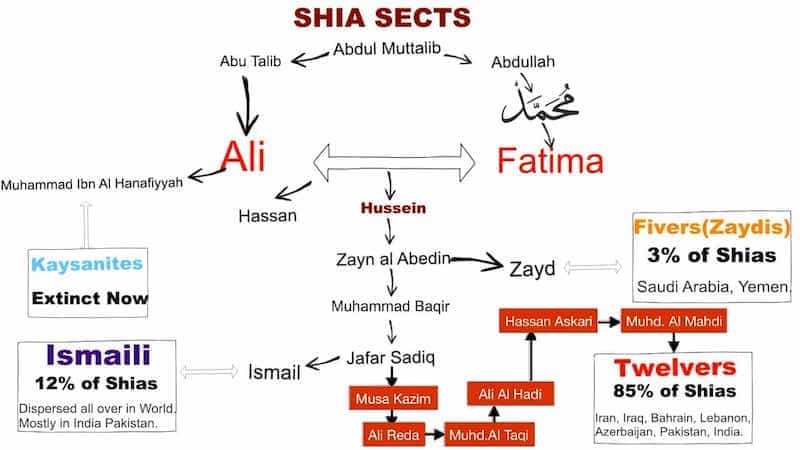
The Zaydi branch consolidated around the political activism of Zayd ibn Ali (d. 740 CE), a grandson of Husayn ibn Ali and a highly respected scholar of Medina. Zayd initiated a failed uprising in Kufa against the Umayyad Caliph Hisham ibn Abd al-Malik (r. 724–743 CE), which culminated in his martyrdom and subsequent crucifixion. While the majority of the Shi’ite community in Medina recognized Zayd’s quietist brother, Muhammad al-Baqir, as the fifth Imam, those who prioritized active rebellion (khurūj) against tyrannical authority broke away to form the Zaydi, or “Fiver,” branch of Shi’ism.
During its early Kufan formation in the eighth century, Zaydism was characterized by a fluid theological negotiation between two internal currents. The Batriyya, who represented a moderate, proto-Sunni faction, accepted the caliphates of Abu Bakr and Umar because Ali had pledged allegiance to them, maintaining that the Imamate of a less-excellent candidate (Imamat al-Mafdul) was legally valid in the presence of a more excellent candidate (al-Afdal). They rejected claims of exclusive esoteric knowledge within the Prophet’s family and utilized individual reasoning (ijtihad and qiyas).
In contrast, the Jarudiyya, founded by Abu al-Jarud, rejected the legitimacy of the early caliphs, asserting that the Prophet had implicitly designated Ali as his successor. By the ninth century, as Kufan traditionalism was absorbed into mainstream Sunnism, the activist Jarudi current prevailed, restricting the legitimate Imamate to the descendants of Hasan and Husayn.
The geographical trajectory of Zaydism led to the establishment of independent states in two remote mountain regions of the Islamic world. Under Hasan ibn Zayd, the Alavids established a Zaydi state in Daylam and Tabaristan (northern Iran) in 864 CE, expanding their influence until their defeat by the Sunni Samanids in 928 CE. The Caspian Zaydi presence was revived in Gilan and Daylam, persisting under local dynasties such as the Buyids and the Karkiya dynasty (1370s–1592 CE) before the Safavid Empire forcefully converted the region to Twelver Shi’ism in the sixteenth century. Additionally, a small historical community of Zaydi Kurds resided between Iran and Iraq, and the Banu Ukhaidhir ruled a Zaydi state in al-Yamama during the ninth and tenth centuries.
The most durable Zaydi state was established in northern Yemen in 897 CE by Imam al-Hadi ila’l-Haqq Yahya, a descendant of Imam Hasan. Invited by local tribes to act as an arbiter in regional disputes, al-Hadi consolidated authority in Sa’dah, codifying Hadawi jurisprudence and adapting Zaydi doctrines to regional tribal structures. The Yemeni Zaydi Imamate survived for over a millennium, navigating challenges such as Ottoman occupations and Wahhabi incursions.
From the fifteenth century onward, a shift termed “Traditionism” by historians like Bernard Haykel saw the gradual merging of Zaydi doctrine with elements of Shafi’i Sunnism. By the mid-eighteenth century, the Qasimi Imamate had adopted dynastic succession and formal state bureaucracies, declaring the traditional activist concept of khurūj unacceptable to preserve state stability. This historical adaptation culminated in the republican revolution of 1962, which officially overthrew the monarchical Zaydi Imamate.
Demographics and Geographic Distribution
In the contemporary era, Zaydi Muslims are almost exclusively concentrated in the northwestern highlands of Yemen and the adjacent southern borders of Saudi Arabia, particularly Najran. Within Yemen, Zaydis represent a highly cohesive and historically dominant population, with estimates ranging between 35% and 45% of the country’s total population. While a 2010 CIA estimate places the Zaydi population at 35%, other organizations, such as the NGO ACAPS, estimate that 45% of Yemeni Muslims are Zaydi Shias, with the remaining 55% adhering to the Shafi’i school of Sunni Islam.
Geographically, Yemen is split by a distinct sectarian-topographical divide. The rugged northern and northwestern highlands, stretching from Dhamar northward through Sana’a, Amran, Hajjah, al-Jawf, and Sa’dah, are the historical bastions of the Zaydi population.
In contrast, the southern coastal regions, the eastern desert expanses, and the western Tihamah plains are populated by Shafi’i Sunnis. However, this regional distribution is not absolute; historical cohabitation has created mixed districts within Zaydi-dominated provinces. For example, while Sa’dah is the spiritual heartland of Zaydism, several of its eastern and northern districts, such as al-Hishwah, al-Zahir, Shida, and Ghamr, host substantial Sunni populations.
The demographic dynamics can be modeled as a function of regional density, where the Zaydi population (PopZ) is defined by the sum of provincial populations (Pi) multiplied by their respective Zaydi density coefficients (δi):
PopZ=i=1∑nδi⋅Pi
In northern strongholds like Sa’dah, the coefficient δi approaches 0.90, whereas in southern coastal provinces like Aden or Hadramaut, it falls below 0.05.
Demographic Distribution of Muslim Sects in Yemen
| Governorate / Region | Dominant Sectarian Profile | Key Demographics and Statistical Source | Local Cohabitation and Geographic Notes |
|---|---|---|---|
| Sa’dah Province | Overwhelmingly Zaydi Shia | >85% Zaydi (CIA / ACAPS) | Includes mixed Shafi’i Sunni pockets in districts such as al-Hishwah, al-Zahir, Shida, and Ghamr. |
| Amran & Sana’a | Predominantly Zaydi Shia | Capital city, Sana’a, maintains a highly integrated urban mix of Zaydi and Shafi’i populations. | Mountainous highlands with deep tribal configurations loyal to the historical Imamate. |
| Dhamar & Hajjah | Predominantly Zaydi Shia | Stronghold of traditional Zaydi Sadah scholarship (UCLA / Scott Lucas). | Southernmost boundary of the continuous Zaydi highland demographic belt. |
| Aden & Southern Coast | Overwhelmingly Sunni Shafi’i | <5% Zaydi presence | Coastal and trading hubs historically disconnected from the Zaydi political highlands. |
| Tihamah & Western Plains | Overwhelmingly Sunni Shafi’i | >90% Sunni Shafi’i | Flat coastal plains characterized by agricultural and maritime socioeconomic structures. |
Doctrinal Commonalities and Divergences
Zaydism occupies an intermediate position in the spectrum of Islamic sects, often described as a “bridge” or a moderate middle ground between Sunni traditionalism and Twelver Shi’ism. While Zaydis assert a Shi’ite identity based on their devotion to the Ahl al-Bayt, their legal methodology and theological rationalism align them closely with Sunni schools of thought and classical rationalist movements.
Theology and Rationalism
Unlike the mainstream Sunni schools of theology (the Ash’ari and Maturidi), which lean toward theological determinism and restrict the capacity of human reason to define moral values independent of revelation, Zaydi theology is deeply rooted in Mu’tazilite rationalism. This rationalist framework, integrated into Zaydi thought during the medieval period, emphasizes several key principles :
- Divine Justice (‘Adl): Zaydis assert that God is intrinsically just and cannot commit or decree evil. They reject the Ash’ari view that moral categories are entirely determined by divine will (wherein an act is good merely because God commands it), arguing instead that good and evil are rational categories that can be distinguished through human intellect.
- Human Agency and Free Will (Qadar): Zaydis reject deterministic fatalism, maintaining that human beings possess free will, are the creators of their own actions, and are thus fully accountable before God.
- The Createdness of the Quran: In alignment with Mu’tazilism, Zaydis argue that the Quran is the created speech of God. They contend that asserting the Quran is uncreated and co-eternal with God compromises the absolute unity (Tawhid) of the divine essence by introducing a multiplicity of eternal entities.
- Anti-Anthropomorphism (Tanzīh): Zaydis strictly reject anthropomorphic interpretations of Quranic descriptions of God (such as God having a “hand” or “sitting on a throne”), employing metaphorical exegesis (ta’wīl) to preserve divine transcendence.
This rationalist stance is exemplified in the writings of historical Zaydi thinkers like Imam al-Mahdi Ahmad bin Yahya (d. 1391 CE). His encyclopedic works synthesized Mu’tazilite theology with Zaydi Imamology, defending human accountability (taklif) and arguing that moral agency derives from rational capacity rather than divine imposition. This causal realism directly countered the deterministic trends of Sunni Ash’arism and the esoteric quietism of early Twelver Shias.
The Theory of the Imamate
The Zaydi conception of political and religious leadership represents a major departure from both Twelver Shi’ism and Sunnism.
In Twelver Shi’ism, the Imamate is a divinely designated, hereditary office held by a sequence of twelve specific, infallible (ma’sum) individuals who possess esoteric, semi-divine knowledge and are capable of performing miracles. The twelfth Imam is believed to have entered a state of mystical concealment (occultation, or ghaybah), from which he will return as the Mahdi.
Zaydism rejects this entire metaphysical framework. For Zaydis, the Imam is a fallible human being, highly vulnerable to error and sin. They reject the concept of a hidden Imam, the doctrine of occultation, and any claims of supernatural or esoteric knowledge.
Instead, the Zaydi Imamate is based on a merit-leadership principle. While the candidate must descend from the lineage of Fatimah (through either Hasan or Husayn), the office is not hereditary. Any qualified Alid who meets strict criteria—including profound legal scholarship (ijtihad), piety, physical soundness, and the courage to lead an armed uprising (khurūj) against unjust authority—can claim the Imamate. The prospective Imam must issue a formal public call to allegiance (da’wa).
This meritocratic approach has historically resulted in periods with multiple rival Imams claiming authority in different regions, as well as lengthy interregnums with no active Imam, during which the community was governed by scholarly consensus.
Jurisprudence and Legal Alignment
In matters of Islamic law (fiqh), the Zaydis follow the teachings of Zayd ibn Ali, preserved in the foundational text Majmu’ al-Fiqh. Zaydi jurisprudence is highly rationalist, emphasizing ijtihad (independent juristic reasoning) and rejecting blind imitation (taqlīd).
Zaydi fiqh is remarkably close to Sunni jurisprudence, particularly the Hanafi and Shafi’i schools. Abu Hanifa, the founder of the Sunni Hanafi school, was a contemporary of Zayd ibn Ali and supported his revolt against the Umayyads, establishing an early intellectual link between the two traditions.
Like Sunnis, Zaydis reject temporary marriage (mut’ah) and the practice of taqiyya (religious dissimulation). In daily ritual practice, Zaydis and Shafi’i Sunnis in Yemen have historically prayed in the same mosques without friction, a cohabitation facilitated by shared liturgical practices, such as the option of praying with arms down at the sides (common to both Zaydis and the Sunni Maliki school).
This jurisprudential proximity was recognized by the wider Muslim world in the mid-twentieth century. On July 6, 1959, Mahmud Shaltut, the Grand Imam of Al-Azhar University—the premier institution of Sunni scholarship—issued a historic ecumenical fatwa. This fatwa declared that practicing Islamic jurisprudence according to the Ja’fari (Twelver) and Zaydi schools was religiously valid and equivalent to following the four traditional Sunni schools of law (madhahib). This ruling marked a high point of intra-Muslim ecumenism, validating the orthodoxy of Zaydi law within the broader framework of Islamic pluralism.
Theological and Liturgical Comparison
| Doctrinal or Jurisprudential Category | Sunni Orthodoxy | Twelver (Ja’fari) Shi’ism | Zaydi (Hadawi) Shi’ism |
|---|---|---|---|
| Source of Legal Authority | Quran, Sunnah, Companion Consensus (Ijma), Analogy (Qiyas). | Quran, Sunnah (including Imam traditions), Infallible Imam Rulings. | Quran, Sunnah, Ahl al-Bayt Consensus, Rational Ijtihad. |
| Imam/Leader Infallibility (‘Ismah) | Rejected; leaders are fallible temporal administrators. | Affirmed; the Twelve Imams are divinely protected from error and sin. | Rejected; Imams are highly educated but fallible scholars. |
| Eschatological Mahdi | Prophesied descendant yet to be born; signs of the Day of Judgment. | The hidden 12th Imam currently in mystical occultation. | Rejected; no occultation or active hidden spiritual hierarchy exists. |
| Religious Dissimulation (Taqiyya) | Broadly forbidden, except under direct threat of death. | Validated as a core theological pillar for community survival. | Rejected; active rebellion and public justice are mandatory. |
| Liturgy & Prayer Posture (Salat) | Crossed arms (except Maliki); forehead on standard rugs. | Arms down; forehead must rest on soil or clay tablet (turbah). | Arms down; similar to Maliki Sunni practice; no clay tablet required. |
| Temporary Marriage (Mut’ah) | Prohibited; deemed abrogated during early Islam. | Permitted and legally practiced. | Prohibited; aligns directly with the Sunni consensus. |
Deconstructing the Sectarian Silos: Prophetic Custodianship and Organized Religion
The persistent fragmentation of the global Muslim Ummah is often blamed on historical and political divisions, but it is deeply reinforced by the institutionalization of “organized religion”. In his critical analysis of sectarian institutions, Zia H. Shah identifies a profound tension between the highly structured, coercive forms of religious authority developed by various sects and the strict limits that the Quran places on prophetic authority.
The Quran repeatedly asserts that the fundamental role of the Prophet Muhammad was not to act as a metaphysical custodian (ḥafīẓ), a compeller (musayṭir), or a political controller over the inner conscience and beliefs of humanity. Rather, his mission was strictly defined as:
- Balāgh: The clear, uncompromised delivery of the divine message.
- Tadhkīr: Reminding and pointing humanity toward primordial truths.
- Indhār: Warning of the spiritual and moral consequences of human choices.
As stated in Surah An-Nisāʾ:
“Whoever obeys the Messenger has indeed obeyed Allah; but those who turn away—We have not sent you over them as a guardian [ḥafıˉẓ].”(Quran 4:80)[8]
Similarly, Surah Al-Anʿām reiterates:
“We have not made you over them a guardian [ḥafıˉẓ], nor are you over them a manager.”(Quran 6:107)[8]
Despite these explicit Quranic boundaries, major Islamic sects have historically constructed robust, centralized institutional frameworks that risk overstepping this moral-advisory role :
                                     (Balāgh & Tadhkīr)
                                             |
                   +-------------------------+-------------------------+
                   |                         |                         |
                                   [Zaydi Islam]
     Scholarly-Procedural          Hierarchical-Clerical          Merit-Leadership
   - Jurisprudential schools     - Marja'iyyah system          - Non-infallible Imam
   - Madrasah credentialing      - Centralized Hawzas          - Academic mujtahid
   - State advisory bodies       - Mandatory Khums tax         - Active political agent
1. Sunni Islam: The Scholarly-Procedural Framework
In Sunni Islam, organized religion manifests as a decentralized, scholarly-procedural network. Authority is distributed across the four primary legal schools (madhahib) and sustained by educational institutions like Al-Azhar.
While the fatwa (legal advisory opinion) is theoretically non-binding, creating a decentralized marketplace of scholarly opinions, modern state co-optation of these institutions has frequently turned religious guidance into a tool of bureaucratic and social control. When the scholarly class (ʿulamāʾ) claims a monopoly over the believer’s conscience, they risk exceeding the Quranic boundaries of pure reminder and knowledge transmission.
2. Twelver Shi’ism: The Hierarchical Clerical System
Twelver Shi’ism presents a highly centralized and visible hierarchical structure. Following the occultation of the twelfth Imam, religious authority became concentrated in the marja’iyyah system. Believers are obligated to select a living marja’ al-taqlid (source of emulation) and follow his legal and moral rulings completely.
This system is supported by major seminaries (hawzas) in Najaf and Qom, and funded by a mandatory religious tax (khums). This hierarchical outsourcing of moral responsibility can create a surrogate priesthood, conflicting with the direct, unmediated relationship between the individual soul and God emphasized in the Quran.
3. Zaydi Shi’ism: The Merit-Leadership Paradigm
Zaydi Islam organizes authority around the merit of the individual Imam. By rejecting the Twelver concept of designated, infallible Imams, Zaydis focus leadership on scholarly competence and political justice.
The Zaydi Imam is primarily an academic mujtahid and an active political agent. However, because Zaydi doctrine mandates active rebellion against unjust rule, the transition of this temporal leadership into state power has historically led to the enforcement of ideological conformity. The meritocratic ideal remains vulnerable to slipping into coercive governance, where the state acts as a metaphysical guardian over the beliefs of its citizens.
Across all these traditions, the historical shift from moral invitation (da’wa) to coercive enforcement represents a departure from the Quranic model. When religious institutions—whether Sunni state bodies, Shi’ite clerical networks, or Zaydi ruling elites—attempt to police private conscience and punish theological deviation, they overstep the limits established by God.
Recognizing these structural limitations is a crucial step toward intra-Muslim pluralism: by dismantling the absolute authority of human religious hierarchies, the Ummah can return to the direct, liberating authority of the Quranic text.
The Quran as a Gravitational Unifying Center
The primary theological foundation that can transcend the 1,400-year-old Sunni-Shiite schism is the absolute, unaltered identity of the Quranic text itself. Authoritative scholars across all major sects—including Sunnis, Twelver Shias, Ismailis, Ahmadis, and Zaydis—consistently reject polemical claims of textual corruption, affirming that the physical and spiritual text of the Quran used globally is identical to the original Uthmanic codex.
The same 114 chapters recited in Sunni Makkah are identical to those recited in Shi’ite Tehran and Zaydi Sana’a. This textual unity provides a singular, immutable authority that can serve as the ultimate gravitational center for the global population of over two billion Muslims.
Transcending Hermeneutical Silos
While the text of the Quran is unified, sectarian divisions have historically been sustained by divergent and insular interpretive methodologies (tafsīr). These heritages often function as intellectual silos, confining believers to parochial frameworks :
- Sunni Tafsīr: Relies heavily on companion-transmitted reports and historical traditions (tafsīr bi’l-ma’thūr), often prioritizing the understandings of early generations over fresh rational inquiry.
- Twelver Shi’ite Tafsīr: Places primary interpretive authority in the infallible narrations and insights of their designated Imams.
- Ismaili Tafsīr: Focuses on esoteric, highly allegorical readings (bāṭin) that require the guidance of a living Imam, rendering the text subjective to those outside the community.
- Modernist and Reformist Tafsīr: Prioritizes rationalism and the contextualization of legal verses to align with contemporary social realities.
Scientific Commentary as a Neutral Common Ground
To transcend these insular methodologies, the scholarship of Zia H. Shah proposes scientific commentary as a neutral, objective common ground for Quranic understanding.
The Quran contains numerous “cosmic verses” that direct humanity to observe the natural world—the movements of the celestial bodies, geological formations, embryological development, and biological diversity. Unlike sectarian legal debates or historical succession disputes, the physical laws of the universe are universally accessible and empirically verifiable.
This approach is grounded in the classical Islamic theological principle of Waḥdat al-Ḥaqq (the Unity of Truth). This principle asserts that because God is One, the “Word of God” (Revelation) and the “Work of God” (the physical Cosmos) cannot contradict each other.
When empirical, scientific discoveries are used to illuminate Quranic verses, the resulting interpretation is rooted in the authority of reality itself. This approach bypasses subjective sectarian heritages, allowing Sunni, Shi’ite, and Zaydi scholars to collaborate in a shared, verifiable endeavor.
By treating nature and scripture as twin parallel revelations (both described in the Quran as āyāt or “signs”), scientific commentary fosters intellectual humility and frees the Quran from the monopoly of any single sect or historical era.
Furthermore, this rational, empirical approach aligns with the core of interpretive pluralism. The Quran itself declares that its verses possess layered meanings, encompassing both outward literal senses (ẓāhir) and deep, spiritual realities (bāṭin). As stated in the classical tradition, “No verse of the Quran has been revealed without its having a back and a belly”.
Acknowleging that divine knowledge is infinite and inexhaustible—metaphorically described in the Quran as requiring oceans of ink—prevents any human institution from claiming a final, exclusive monopoly on truth. This realization transforms theological diversity from a source of conflict into a testament to the scriptural depth of the Quran, allowing varying insights to enrich the collective understanding of the Ummah.
Pluralism, Salvation, and the Architecture of Empathy
A Quran-centric theology provides a comprehensive framework for religious pluralism, actively deconstructing exclusivist claims to salvation. In mainstream sectarian discourse, communities have frequently claimed an absolute monopoly over Paradise, declaring all other sects or creeds to be heretical.
However, the Quran explicitly refutes this exclusivist mindset. Commenting on Surah Al-Baqarah, Zia H. Shah highlights how the text challenges dogmatic claims of exclusive salvation :
“And they say, ’None will enter Paradise unless he be a Jew or a Christian.’ That is [just] their wishful thinking. Say, ’Produce your proof, if you should be truthful.’”(Quran 2:111)[9]
The Quran counters this exclusivism by establishing a universal, non-sectarian principle of salvation:
“Yes, whoever submits his whole self to God and is a doer of good—he will have his reward with his Lord, and no fear shall come upon them, nor shall they grieve.”(Quran 2:112)[9]
This universal promise is repeated across multiple passages, including Surah Al-Baqarah (2:62), Surah Al-Ma’idah (5:69), and Surah Al-Hajj (22:17), which promise divine reward to any individual—whether Muslim, Jew, Christian, or Sabean—who meets three key criteria :
- Belief in God
- Belief in the Last Day (Accountability)
- The Performance of Righteous Deeds
In this framework, salvation is tied directly to sincere submission (aslama) and active, ethical goodness (muhsin), rather than to sectarian labels or tribal affiliations.
This inclusive outlook is supported by modern reformist thinkers such as Javed Ghamidi, who advocates for a pluralistic approach that preserves the purity of the Quranic text while embracing broader, inclusive scholarship. Ghamidi’s methodology highlights that human diversity is an intentional, divinely ordained aspect of creation, designed to foster mutual understanding (lita’arafu) and challenge communities to excel one another in ethical conduct.
The Architecture of Empathy
This theological pluralism is translated into social reality through what Zia H. Shah terms the “Architecture of Empathy”. The spiritual and psychological bonding of the global Ummah is rooted in the biological metaphor of the “Single Body” Hadith:
“The believers in their mutual kindness, compassion, and sympathy are just like one body. When any of the limbs suffers, the whole body responds to it with wakefulness and fever.”[7]
Linguistic analysis of this tradition reveals a sophisticated hierarchy of empathy :
- Mawaddah: Drawing closer through active affection.
- Rahmah: The deep, spiritual compassion born of shared religious bonding.
- Ataf: A supportive, protective wrapping that shields the vulnerable.
In modern times, geopolitical crises have catalyzed a powerful, trans-sectarian empathy that transcends the historical Sunni-Shiite divide. For instance, the humanitarian suffering in Gaza (a Sunni-majority region) is experienced by Shi’ite and Zaydi populations as a direct family tragedy, prompting active political and military solidarity.
Similarly, external threats and military escalations against Shi’ite-majority Iran have provoked widespread solidarity and condemnation of aggression across the Sunni world.
This trans-sectarian empathy, driven by shared suffering and a common commitment to justice, demonstrates that when the core values of the Quran are prioritized, historical grievances and sectarian divisions become secondary to the collective pursuit of human dignity and mutual protection.
Analysis of Zia H. Shah’s Contributions to Islamic Pluralism
To demonstrate how the extensive corpus of Zia H. Shah addresses sectarianism and lays the groundwork for a non-sectarian Islamic future, the table below maps his core academic essays and articles to their primary theological themes and ecumenical applications:
| Academic Article Title | Primary Category | Core Theological/Scientific Argument | Direct Application to Intra-Muslim Harmony |
|---|---|---|---|
| Organized Religion, Sectarian Institutions, and Prophetic Custodianship | Sectarianism | Distinguishes human administrative religious structures from the divine limit of the Prophet as a reminder (tadhkīr) rather than a custodian (ḥafīẓ). | Dismantles the absolute authority of sectarian clerical hierarchies, shifting focus back to direct individual accountability before God. |
| Beyond Sectarian Tafsīr: Scientific Commentary as Common Ground | Sectarianism / Pluralism | Argues that scientific analysis of the Quran’s cosmic verses offers a neutral, empirical ground governed by the principle of Waḥdat al-Ḥaqq (Unity of Truth). | Bypasses insular, century-old sectarian commentaries by anchoring interpretation in the universally observable laws of physics and biology. |
| The Architecture of Empathy: Transcending Sectarianism in the Ummah | Sectarianism | Analyzes the “Single Body” Hadith using psychological frameworks of empathy (Mawaddah, Rahmah, Ataf) during modern geopolitical crises. | Synthesizes Sunni-Shi’ite solidarity over shared distress (e.g., Gaza and Iran), showing that ethical responsibility supersedes sectarian differences. |
| A Pluralistic Vision of Salvation in Islam: Qur’an 2:111–113 in Context | Pluralism | Deconstructs exclusivist claims to Paradise as “wishful thinking,” defining salvation via absolute submission (aslama) and righteousness (muhsin). | Refutes the theological basis of takfīr (excommunication) by demonstrating that salvation is based on ethical action rather than sectarian labels. |
| Surah Tein: The Fig — A Metaphor for Pluralism | Pluralism | Explains the Abrahamic paradigm of monotheism and moral accountability through the symbolic references to Jerusalem, Mount Sinai, and Makkah. | Celebrates historical diversity as an intentional divine framework, encouraging mutual respect among Abrahamic and intra-Muslim sects. |
| Universal Salvation, Conflict, and Scriptural Emphasis | Pluralism | Explores the psychological mechanism where conflict environments shrink the perceived gates of heaven, encouraging exclusive/punitive interpretations. | Warns that sectarian hostility is often a byproduct of geopolitical rivalry rather than authentic scriptural directives. |
| Mutually Assured Sectarian Cold War in Islam: Causes and a Path to Unity | Sectarianism | Analyzes the destructive nature of cold war dynamics between major Middle Eastern powers using sectarian proxy narratives. | Advocates for a structural disarmament of theological polemics, encouraging a return to a unified, non-sectarian Islamic identity. |
| Non-Sectarian Islam: The Proportionate Faith | Sectarianism | Urges a direct, unmediated intellectual engagement with the Quran, dismissing historical sectarian indoctrination. | Empowers lay Muslims to transcend historical scholarly monopolies, viewing the Quran as a universally accessible guide. |
Epilogue: A Thematic Synthesis of Unity and Diversity
The historical journey of Zaydi Islam, spanning over twelve centuries from Kufa to the highlands of Yemen, provides a highly instructive framework for conceptualizing pluralism within the global Ummah. By maintaining an Alid identity while rejecting metaphysical dogmas of leader infallibility, occultation, and religious dissimulation, Zaydism historically functioned as a structural and intellectual bridge between the Sunni and Shi’ite worlds.
Its ability to coexist and intellectually engage with Sunni Shafi’i scholarship—often adopting similar legal conclusions while maintaining its distinct identity—proves that difference does not inherently mandate division.
However, as the contemporary geopolitical landscape remains fractured by sectarian cold wars and proxy rivalries, the historical model of Zaydi-Sunni cohabitation must be elevated into a universal, Quran-centric ecumenism. This transition requires a profound cognitive shift, moving away from insular sectarian heritages and embracing the direct, non-coercive authority of the Quranic text.
By reclaiming the strict limits of prophetic custodianship, the Ummah can dismantle the authoritarian structures of organized religion that seek to police private conscience and enforce theological conformity.
This structural disarmament must be accompanied by a commitment to scientific hermeneutics. By treating the study of the natural world as a parallel revelation, Muslims of all backgrounds can collaborate on neutral intellectual territory. This collective pursuit of truth under the banner of Waḥdat al-Ḥaqq fosters deep intellectual humility, reminding believers that divine knowledge is boundless and cannot be monopolized by any single sect, scholar, or historical era.
Ultimately, the Quranic vision of salvation—predicated on sincere submission to God and active, ethical goodness (muhsin)—replaces the tribalism of takfīr with a broad, inclusive soteriology. Theological and liturgical variations, such as those that distinguish Sunnism, Twelver Shi’ism, and Zaydism, are not spiritual failures. Rather, they are the natural and intended results of a dynamic, living scripture designed to engage the diverse intellects of humanity.
By cultivating the “Architecture of Empathy” and prioritizing the shared, unadulterated text of the Quran over historical grievances, the global Muslim community can transform its internal diversity from a source of conflict into a testament to divine grace and intellectual vitality.





Leave a Reply