
Presented by Claude for Zia H Shah MD
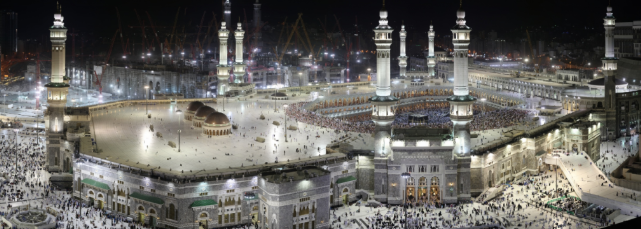
Qur’an 22:25 makes al-Masjid al-Ḥarām a trust held for all humanity. Resident and visitor have equal standing there, and no custodian may bar anyone from it. The verse also brings even the intention of wrongdoing in the sanctuary under divine judgment.
- Exegetes agree on the core meaning. The Quraysh had no right to bar the believers from the Sacred Mosque (most directly at al-Ḥudaybiyya in 6 AH), because God made it “for the people,” equally for resident (al-ʿākif) and visitor (al-bād). The threat against anyone who “intends” deviation with wrongdoing there was read by Ibn Masʿūd, al-Ḍaḥḥāk and Ibn Kathīr to make even the resolve to sin in the Ḥaram punishable.
- The disagreements are grammatical and juristic. On grammar, the predicate (khabar) of inna alladhīna kafarū is unstated, and most supply “We shall make them taste a painful punishment” from the verse’s end. On law, the question is whether “the Sacred Mosque” means the whole Ḥaram, which governs whether Meccan houses may be sold or rented. Al-Shāfiʿī said yes. Abū Ḥanīfa, Mālik, Aḥmad (in one report) and Isḥāq ibn Rāhawayh restricted it, though later Ḥanafī fatwas allowed it.
- Zia H. Shah MD’s essays on thequran.love read Abraham’s House, Zamzam, the destruction of the Army of the Elephant (Sūra 105), the Prophet’s cleansing of the Kaaba and today’s peaceful, multinational Hajj as one continuous āya: God guards the sanctuary and gathers humanity to it as equals. The protection is God’s. The equality and purity of the House are a human trust that 22:25 makes enforceable.
Abstract
This commentary reads Qur’an 22:25 in light of its occasion of revelation and its place in Sūrat al-Ḥajj, where it opens the passage on Abraham’s founding of the House and the proclamation of the pilgrimage (22:26–29). It surveys classical tafsīr (al-Ṭabarī, al-Zamakhsharī, al-Rāzī, al-Qurṭubī, Ibn Kathīr, al-Bayḍāwī, al-Jalālayn, Ibn ʿĀshūr) on four questions:
- the unstated predicate of inna;
- the equality of resident and visitor, and the juristic debate over Meccan property;
- the meaning of ilḥād bi-ẓulm;
- the doctrine that mere intention of wrongdoing in the Ḥaram is punishable.
It then turns to modern commentators: Muhammad Asad, Abul Aʿlā Mawdūdī, Mufti Muhammad Shafiʿ, Sayyid Quṭb, M.A.S. Abdel Haleem and Ṭabāṭabāʾī. Throughout, it draws on Zia H. Shah MD’s essays on Hajj, the Kaaba, Mecca and Sūrat al-Fīl, which read the sanctuary’s history as a continuum of divine signs. A thematic epilogue gathers the threads.
Texts and translations. Arabic follows the standard Ḥafṣ text as on quran.com and tanzil.net. English follows Saheeh International, lightly adapted, unless otherwise stated.
I. The Text
Qur’an 22:25
إِنَّ الَّذِينَ كَفَرُوا وَيَصُدُّونَ عَن سَبِيلِ اللَّهِ وَالْمَسْجِدِ الْحَرَامِ الَّذِي جَعَلْنَاهُ لِلنَّاسِ سَوَاءً الْعَاكِفُ فِيهِ وَالْبَادِ ۚ وَمَن يُرِدْ فِيهِ بِإِلْحَادٍ بِظُلْمٍ نُّذِقْهُ مِنْ عَذَابٍ أَلِيمٍ
“Indeed, those who have disbelieved and avert [people] from the way of Allah and [from] al-Masjid al-Ḥarām, which We made for the people – equal are the resident therein and one from outside – and [also] whoever intends [a deed] therein of deviation [in religion] or wrongdoing – We will make him taste of a painful punishment.” (Saheeh International) qurano
Two modern renderings bring out the interpretive stakes:
- Muhammad Asad: “…which We have set up for all people alike – [both] those who dwell there and those who come from abroad – and all who seek to profane it by [deliberate] evildoing.” wwpa
- Abdel Haleem: “…residents and visitors alike – and who try to violate it with wrongdoing.” myislam
Asad’s “profane” and Abdel Haleem’s “violate” read ilḥād as an assault on the place’s sanctity. Saheeh International’s “deviation [in religion]” keeps the older doctrinal sense. Both readings are rooted in the early authorities.
The sequel, Qur’an 22:26–29, explains why the House cannot be anyone’s private estate:
وَإِذْ بَوَّأْنَا لِإِبْرَاهِيمَ مَكَانَ الْبَيْتِ أَن لَّا تُشْرِكْ بِي شَيْئًا وَطَهِّرْ بَيْتِيَ لِلطَّائِفِينَ وَالْقَائِمِينَ وَالرُّكَّعِ السُّجُودِ ﴿٢٦﴾ وَأَذِّن فِي النَّاسِ بِالْحَجِّ يَأْتُوكَ رِجَالًا وَعَلَىٰ كُلِّ ضَامِرٍ يَأْتِينَ مِن كُلِّ فَجٍّ عَمِيقٍ ﴿٢٧﴾ لِّيَشْهَدُوا مَنَافِعَ لَهُمْ وَيَذْكُرُوا اسْمَ اللَّهِ فِي أَيَّامٍ مَّعْلُومَاتٍ عَلَىٰ مَا رَزَقَهُم مِّن بَهِيمَةِ الْأَنْعَامِ ۖ فَكُلُوا مِنْهَا وَأَطْعِمُوا الْبَائِسَ الْفَقِيرَ ﴿٢٨﴾ ثُمَّ لْيَقْضُوا تَفَثَهُمْ وَلْيُوفُوا نُذُورَهُمْ وَلْيَطَّوَّفُوا بِالْبَيْتِ الْعَتِيقِ ﴿٢٩﴾
“And [mention] when We designated for Abraham the site of the House, [saying], ‘Do not associate anything with Me and purify My House for those who perform ṭawāf and those who stand [in prayer] and those who bow and prostrate. (26) And proclaim to the people the Hajj; they will come to you on foot and on every lean camel; they will come from every distant pass, (27) that they may witness benefits for themselves and mention the name of Allah on known days over what He has provided for them of [sacrificial] animals. So eat of them and feed the miserable and poor. (28) Then let them end their untidiness and fulfill their vows and perform ṭawāf around the Ancient House.’ (29)”
Verse 25 states the charge: the custodians bar people from a House made for all. Verses 26–29 give the title deed: Abraham built it at God’s direction, for pure worship, and opened it to “the people” by a universal proclamation. Wikipedia The Quraysh claimed guardianship by descent from Abraham. rahnuma The Qur’an answers that Abraham’s own charter makes the House common to all who worship God.
II. Occasion and Setting
Ibn Kathīr treats 22:25 as Medinan. He points to its parallel with 2:217, where barring people from the Sacred Mosque is listed among the Quraysh’s gravest crimes: ksu + 2
يَسْأَلُونَكَ عَنِ الشَّهْرِ الْحَرَامِ قِتَالٍ فِيهِ ۖ قُلْ قِتَالٌ فِيهِ كَبِيرٌ ۖ وَصَدٌّ عَن سَبِيلِ اللَّهِ وَكُفْرٌ بِهِ وَالْمَسْجِدِ الْحَرَامِ وَإِخْرَاجُ أَهْلِهِ مِنْهُ أَكْبَرُ عِندَ اللَّهِ ۚ وَالْفِتْنَةُ أَكْبَرُ مِنَ الْقَتْلِ
“They ask you about the sacred month – about fighting therein. Say, ‘Fighting therein is great [sin], but averting [people] from the way of Allah and disbelief in Him and [preventing access to] al-Masjid al-Ḥarām and the expulsion of its people therefrom are greater [evil] in the sight of Allah. And fitnah is greater than killing.’” (2:217)
Asad, citing Ibn ʿAbbās via Ibn Hishām, dates the verse to the end of 6 AH. That was when the Quraysh refused the Prophet and his companions, who had come as pilgrims with sacrificial animals, entry to Mecca at al-Ḥudaybiyya. alim + 3 Sūrat al-Fatḥ names the same offence:
هُمُ الَّذِينَ كَفَرُوا وَصَدُّوكُمْ عَنِ الْمَسْجِدِ الْحَرَامِ وَالْهَدْيَ مَعْكُوفًا أَن يَبْلُغَ مَحِلَّهُ
“They are the ones who disbelieved and obstructed you from al-Masjid al-Ḥarām while the offering was prevented from reaching its place of sacrifice.” (48:25)
Illegitimate custodianship is condemned earlier still:
وَمَا لَهُمْ أَلَّا يُعَذِّبَهُمُ اللَّهُ وَهُمْ يَصُدُّونَ عَنِ الْمَسْجِدِ الْحَرَامِ وَمَا كَانُوا أَوْلِيَاءَهُ ۚ إِنْ أَوْلِيَاؤُهُ إِلَّا الْمُتَّقُونَ وَلَٰكِنَّ أَكْثَرَهُمْ لَا يَعْلَمُونَ
“But why should Allah not punish them while they obstruct [people] from al-Masjid al-Ḥarām and they were not [fit to be] its guardians? Its [true] guardians are not but the righteous, but most of them do not know.” (8:34)
Ibn Kathīr quotes this verse in his comment on 22:25. alim + 2 Taken together, 8:34, 22:25, 48:25 and 2:217 form one doctrine: guardianship of the Sacred Mosque is a moral office held by the God-fearing, not a tribal inheritance, and obstruction forfeits it.
The sanctuary is further protected by limits on fighting there:
وَلَا تُقَاتِلُوهُمْ عِندَ الْمَسْجِدِ الْحَرَامِ حَتَّىٰ يُقَاتِلُوكُمْ فِيهِ ۖ فَإِن قَاتَلُوكُمْ فَاقْتُلُوهُمْ ۗ كَذَٰلِكَ جَزَاءُ الْكَافِرِينَ
“And do not fight them at al-Masjid al-Ḥarām until they fight you there. But if they fight you, then kill them. Such is the recompense of the disbelievers.” (2:191, latter part)
Even those who once barred the believers may not be wronged in return:
يَا أَيُّهَا الَّذِينَ آمَنُوا لَا تُحِلُّوا شَعَائِرَ اللَّهِ … وَلَا آمِّينَ الْبَيْتَ الْحَرَامَ يَبْتَغُونَ فَضْلًا مِّن رَّبِّهِمْ وَرِضْوَانًا ۚ … وَلَا يَجْرِمَنَّكُمْ شَنَآنُ قَوْمٍ أَن صَدُّوكُمْ عَنِ الْمَسْجِدِ الْحَرَامِ أَن تَعْتَدُوا
“O you who have believed, do not violate the rites of Allah… or those coming to the Sacred House seeking bounty from their Lord and [His] approval… And do not let the hatred of a people for having obstructed you from al-Masjid al-Ḥarām lead you to transgress.” (5:2)
This sets the ethical limit for 22:25. Once the believers become guardians, they may not repeat the Quraysh’s sin against “those coming to the Sacred House.”
III. Classical Exegesis
1. The missing predicate
The verse opens with inna and a subject (“those who disbelieved and bar…”), but no predicate follows. Instead it turns to a new conditional clause (“and whoever intends…”). The exegetes resolve this in four ways.
- Supplied from the end of the verse (majority). The Jalālayn commentary derives the predicate of inna from the closing clause: “We shall make them taste a painful chastisement.” surahquran + 2 Ibn ʿĀshūr says it outright: the predicate “is omitted, its implied sense being nudhiqhum min ʿadhābin alīm, indicated by His saying nudhiqhu min ʿadhābin alīm.” quran-tafsir Ṭabāṭabāʾī agrees, and adds that the conditional also gives the reason: they are punished because they intend wrongful ilḥād against people in the sanctuary. shiaonlinelibrary
- Al-Rāzī’s two positions. Either nudhiqhu serves both sentences, or the predicate is omitted “because the answer of the condition points to it.” islamicbook
- Al-Zamakhsharī’s placement. According to al-Ālūsī, al-Zamakhsharī places the implied predicate right after “al-Masjid al-Ḥarām”. Abū Ḥayyān objected that this separates the noun from its relative clause. quranpedia
- Al-Qurṭubī. He places it after wa-l-bād (“they have lost when they perished”). ksu Ibn al-Jawzī cites al-Zajjāj similarly: “those of this description have perished.” greattafsirs Al-Qurṭubī rejects two minority views: that the wāw is redundant so that yaṣuddūna is the predicate, and that nudhiqhu is directly the predicate. ksu
Sayyid Quṭb, in Fī Ẓilāl al-Qur’ān, treats the omission as deliberate rhetoric. quran-tafsir The fate of those who bar the House is left hanging, too grave for a single word.
Why the imperfect after the perfect? The imperfect yaṣuddūna (“they bar”) follows the perfect kafarū (“they disbelieved”).
- Al-Ṭabarī: barring is “a description of them and a continuing state,” which only a noun or imperfect can express. He compares 13:28 (alladhīna āmanū wa-taṭmaʾinnu qulūbuhum). ksu
- Ibn ʿĀshūr: the imperfect marks the barring as habitual, while kafarū “has become like a title for them.” quran-tafsir
- Ṭabāṭabāʾī: they disbelieved before and continue to bar. altafsir
The grammar carries theology. Disbelief is a settled fact and obstruction an ongoing policy. The open syntax keeps the verdict open for any later regime that would bar worshippers from the House.
2. Sawāʾan al-ʿākifu fīhi wa-l-bād
Al-ʿākif is the one who stays: the resident, or the devotee in retreat. Al-bād (from bādiya, the open country) is the one who arrives from outside. surahquransurahquran All agree the two are equal. The question is in what, and where.
Two readings of “the Sacred Mosque.”
- The Mosque itself. Some jurists, as Mawdūdī reports, limited the phrase to the mosque, with equality meaning equal rights of worship. myislamquranx Ibn ʿĀshūr insists: “There is no proof in this verse for the ruling on owning Mecca’s houses, because its context is specific to al-Masjid al-Ḥarām.” He extends it only to sites that complete the rites, such as the masʿā, ʿArafa, Muzdalifa and the jamarāt. quran-tafsir Ṭabāṭabāʾī reads “We made it for the people” as making it a place of worship, not granting ownership. qadatona
- The whole Ḥaram. Ibn ʿAbbās, Mujāhid, Saʿīd ibn Jubayr and Qatāda took al-Masjid al-Ḥarām here to mean the whole sacred territory, as in 2:217, where “its people” were expelled from Mecca, not from a building. quranx Mujāhid, quoted by Ibn Kathīr, says Meccans and others “are equal in it in dwellings.” ksu ʿAṭāʾ says pilgrims “may stay wherever they want.” quranoksu Al-Baghawī records both views. ksu Al-Qurṭubī attributes the whole-Ḥaram reading to Mujāhid and Mālik, and notes that all agree on equality within the Mosque itself. surahquranksu
Al-Ṭabarī prefers equality in honouring the sanctity, performing the rites and staying there. On his view the verse makes no statement about ownership. ksu
May Meccan houses be sold or rented? Ibn Kathīr records a famous debate on this in the Mosque of al-Khayf, between al-Shāfiʿī and Isḥāq ibn Rāhawayh, with Aḥmad ibn Ḥanbal present. quranoalim
- Al-Shāfiʿī: they can be owned, inherited and rented. He cited the Prophet’s reply to Usāma at the Conquest: “Has ʿAqīl left us any dwelling?” alimquranx Mufti Shafiʿ adds that ʿUmar bought Ṣafwān ibn Umayya’s house in Mecca to use as a prison. quranquran-tafsir
- Isḥāq: they can be neither inherited nor rented. He cited ʿAlqama ibn Naḍla’s report that the Prophet, Abū Bakr and ʿUmar died with no one claiming Meccan property except grazing land. alim
- Further reports on the restrictive side. ʿAṭāʾ said ʿUmar forbade doors on Meccan houses so that pilgrims could lodge in their courtyards. quran-tafsir Al-Dāraquṭnī records from ʿAbd Allāh ibn ʿAmr: “whoever charges rent for the houses of Mecca consumes fire.” quran-tafsir Mawdūdī adds a tradition from al-Nakhaʿī against sale and rent, and ʿUmar ibn ʿAbd al-ʿAzīz’s order forbidding rent. qurano + 2
Where the schools came down. Mawdūdī reports that Mālik, Abū Ḥanīfa, al-Thawrī, Aḥmad and Isḥāq held sale of the land and renting of houses unlawful, “at least during the Hajj season.” islamicstudiesmyislam He judges, however, that most jurists accept ownership of buildings (though not of land), and considers that closer to the Qur’an, the Sunna and the Rightly-Guided Caliphs. islamicstudiesalim Hasan Eryılmaz’s 2021 study in Marife: Turkish Journal of Religious Studies (vol. 21, no. 2) frames the split as al-Shāfiʿī against the other three imams, who, in its words, “do not consider it permissible to sell or rent Mecca houses.” Mufti Shafiʿ notes that both views are reported from Abū Ḥanīfa, and that later Ḥanafī fatwas permitted sale and rent. qurangreattafsirs
Islamic law has therefore moved from an early communal reading toward recognized ownership. It keeps a lasting ethic that Mecca’s lodgings exist first to serve pilgrims.
3. Ilḥād bi-ẓulm
Ilḥād means “swerving from the straight course.” quranquran-tafsir Al-Zamakhsharī notes that the root first described the niche dug in the side of a grave. quranpedia Early authorities filled the word with different content:
- shirk (Ibn ʿAbbās; Mujāhid; Qatāda); myislam + 3
- making the forbidden lawful; ksu
- hoarding food in Mecca (Ḥabīb ibn Abī Thābit; discussed by al-Rāzī); learn-quran + 2
- angry oaths such as “No, by God!”; quran + 2
- insulting one’s servant (Saʿīd ibn Jubayr). alimksu
Ibn ʿAbbās also linked the verse to ʿAbd Allāh ibn Unays, who killed a man and fled to the Ḥaram as an apostate. quranx + 2 Al-Ṭabarī refuses to narrow the term. God “did not single out one wrong over another, either by report or by reason,” so it covers every swerve into disobedience there. surahquranquranpedia
The two prepositions bi-.
- Al-Ṭabarī reports a Basran view that the bāʾ of bi-ilḥādin is redundant, like tanbutu bi-l-duhn (23:20). quranksu Ibn ʿĀshūr adopts this, reading it as emphatic, with the bāʾ of bi-ẓulmin meaning “accompanied by.” quran-tafsir
- Ibn Kathīr says yurid is “made to carry the sense of yahummu” (to resolve), “which is why it takes the bāʾ.” ksu
- Al-Zamakhsharī treats the two phrases as parallel circumstantial clauses (ḥāl), with the object of yurid left open “so as to include everything one might aim at.” quranpediaquran-tafsir Al-Zuḥaylī reports that al-Rāzī judged this reading the best. quranpedia
- Al-Bayḍāwī, as transmitted in later glosses that al-Ālūsī follows, allows that the second phrase may give the cause: deviating because of wrongdoing. greattafsirs
Obstruction as profanation. Ibn ʿĀshūr reads “whoever intends…” as a general closing clause. Barring worshippers is itself ilḥād bi-ẓulm, so the threat folds back onto the Quraysh. islamicbook Ṭabāṭabāʾī agrees: Abraham is recalled in verse 26 to show that “barring the believers from the Sacred Mosque is nothing but ilḥād bi-ẓulm.” shiaonlinelibrary Obstruction is a form of desecration.
4. Wa-man yurid: the punishable intention
The verse does not say “whoever does” but “whoever intends.” The classical consensus is that this sets the Ḥaram apart.
- Ibn Masʿūd. Ibn Kathīr, citing Ibn Abī Ḥātim, reports him saying: “If a man intends to do some evil action therein, Allah will make him taste a painful torment.” Another version adds: “even if he is in ʿAdan Abyan,” at the far end of Yemen. alim + 3 Ibn Kathīr judges the chain sound by al-Bukhārī’s conditions but more likely mawqūf (a Companion’s statement) than marfūʿ (the Prophet’s). myislam He concludes: “This is one of the unique features of al-Ḥaram, that the person who is about to do some evil action should be punished if this is his intention, even if he has not yet commenced the action.” alim
- Al-Ḍaḥḥāk, transmitted by al-Ṭabarī: “A man resolves upon a sin in Mecca while he is in another land, and does not do it, and it is written against him.” learn-quransurahquran
- Al-Qurṭubī attributes the doctrine to al-Ḍaḥḥāk and Ibn Zayd. ksu Mufti Shafiʿ reports that he adopted it from Ibn ʿUmar. learn-quran + 2
- Ibn ʿUmar’s two tents. On pilgrimage he pitched one tent inside the Ḥaram boundary and one outside. If he had to rebuke anyone in his household, he did it in the outer tent, explaining that even an angry “No, by God!” counted as ilḥād in the Ḥaram. quran + 2
- Ibn ʿUmar and Ibn al-Zubayr. During Ibn al-Zubayr’s revolt, Ibn ʿUmar warned him against ilḥād in the Ḥaram. He cited the Prophet’s warning that a man of Quraysh would one day make the sanctuary lawful, and told him: “see that it is not you.” learn-quran
- Al-Saʿdī states the rule plainly: “the mere intention of wrongdoing and ilḥād in the Ḥaram necessitates punishment.” learn-quranksu
This sits in deliberate tension with the general prophetic teaching that an evil intention left undone is not recorded against a person. learn-quran The exegetes resolve it through the sanctity of the place. Elsewhere a passing thought is forgiven. In the Ḥaram, a settled resolve is already a trespass.
As moral psychology, the teaching is acute. The sanctuary is meant to purify the inner self, so it holds the inner self to account. A pilgrim can stand in the right place, in the right garments, and still carry a plan to harm, and the verse treats that person as having already profaned the space.
IV. Modern and Contemporary Commentators
Muhammad Asad (The Message of the Qur’an)
- Dates the verse to the end of 6 AH, on the authority of Ibn ʿAbbās via Ibn Hishām. internetmosque
- Notes that ilḥād “circumscribes every perversion of religious tenets.” internetmosque
- Renders the punishment as suffering “in the life to come”: an eschatological warning, not a penal statute. quran
- Elsewhere glosses “the Inviolable House of Worship” as the Kaaba “and, by implication, the whole of the territory of Mecca.” rahnuma
Abul Aʿlā Mawdūdī (Tafhīm al-Qur’ān)
- Frames two juristic questions: is it the building or the Ḥaram, and what does “equal rights” mean? alim
- Gives the fullest English survey of the reports on sale and rent.
- Sides with the majority: buildings may be owned, land may not be sold. alim
- Stresses that the Quraysh were servants of the House, not its owners, and had no right to exclude anyone from Hajj. Wikipedia
Mufti Muhammad Shafiʿ (Maʿārif al-Qur’ān)
- Reads “the way of Allah” as Islam itself, which the Quraysh both rejected and blocked. islamicstudies
- Presents the view that Meccan property is a waqf (endowment) alongside the Ḥanafī fatwa permitting ownership. quran
- Preserves Ibn ʿUmar’s two-tent practice. quran
Sayyid Quṭb (Fī Ẓilāl al-Qur’ān)
- Reads both the unstated predicate and the threat against intention as rhetorical intensification, guarding the House’s sanctity at the level of the will. quran-tafsir
- Draws the social lesson: a House “made for the people” belongs to no clique. quran-tafsir
M.A.S. Abdel Haleem. His rendering, “residents and visitors alike” and “try to violate it with wrongdoing,” presents equality of access as the verse’s operative clause. myislam
Ṭabāṭabāʾī (al-Mīzān)
- Supplies the same predicate as the Sunni grammarians. shiaonlinelibrary
- Reads “made for the people” as a grant of worship, not of land. qadatona
- Treats obstruction as ilḥād bi-ẓulm. madrasatalwahy
On the central point, this Shiʿi voice converges fully with the Sunni mainstream.
Contemporary themes.
- Universal access. If the House is li-l-nās (“for the people”), any policy that bars Muslims on grounds of sect, nationality or politics invites the reproach of 22:25.
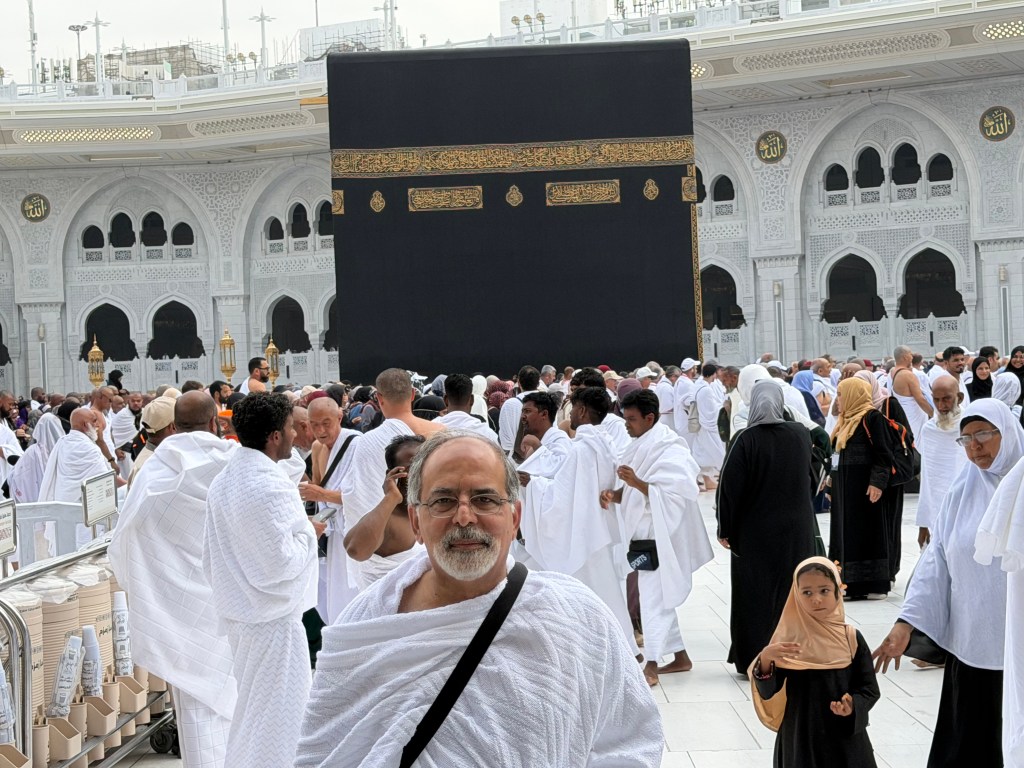
- Equality. The verse grounds the levelling of iḥrām, where king and labourer wear the same two cloths.
- Custodianship as a trust. Read with 8:34, custodianship is a trust that can be forfeited. This bears on modern questions of cost, quotas and the commercialization of lodging, which echo the early jurists’ unease about renting to pilgrims.
V. The Wider Qur’anic Network
The first House (3:96–97)
إِنَّ أَوَّلَ بَيْتٍ وُضِعَ لِلنَّاسِ لَلَّذِي بِبَكَّةَ مُبَارَكًا وَهُدًى لِّلْعَالَمِينَ ﴿٩٦﴾ فِيهِ آيَاتٌ بَيِّنَاتٌ مَّقَامُ إِبْرَاهِيمَ ۖ وَمَن دَخَلَهُ كَانَ آمِنًا ۗ وَلِلَّهِ عَلَى النَّاسِ حِجُّ الْبَيْتِ مَنِ اسْتَطَاعَ إِلَيْهِ سَبِيلًا ۚ وَمَن كَفَرَ فَإِنَّ اللَّهَ غَنِيٌّ عَنِ الْعَالَمِينَ ﴿٩٧﴾
“Indeed, the first House [of worship] established for mankind was that at Bakkah – blessed and a guidance for the worlds. In it are clear signs [such as] the standing place of Abraham. And whoever enters it shall be safe. And [due] to Allah from the people is a pilgrimage to the House – for whoever is able to find thereto a way. But whoever disbelieves – then indeed, Allah is free from need of the worlds.”
The phrase wuḍiʿa li-l-nās (“established for mankind”) is the twin of jaʿalnāhu li-l-nās in 22:25.
The founding (2:125–127)
وَإِذْ جَعَلْنَا الْبَيْتَ مَثَابَةً لِّلنَّاسِ وَأَمْنًا وَاتَّخِذُوا مِن مَّقَامِ إِبْرَاهِيمَ مُصَلًّى ۖ وَعَهِدْنَا إِلَىٰ إِبْرَاهِيمَ وَإِسْمَاعِيلَ أَن طَهِّرَا بَيْتِيَ لِلطَّائِفِينَ وَالْعَاكِفِينَ وَالرُّكَّعِ السُّجُودِ ﴿١٢٥﴾ وَإِذْ قَالَ إِبْرَاهِيمُ رَبِّ اجْعَلْ هَٰذَا بَلَدًا آمِنًا وَارْزُقْ أَهْلَهُ مِنَ الثَّمَرَاتِ مَنْ آمَنَ مِنْهُم بِاللَّهِ وَالْيَوْمِ الْآخِرِ ﴿١٢٦﴾ وَإِذْ يَرْفَعُ إِبْرَاهِيمُ الْقَوَاعِدَ مِنَ الْبَيْتِ وَإِسْمَاعِيلُ رَبَّنَا تَقَبَّلْ مِنَّا ۖ إِنَّكَ أَنتَ السَّمِيعُ الْعَلِيمُ ﴿١٢٧﴾
“And [mention] when We made the House a place of return for the people and [a place of] security. And take, [O believers], from the standing place of Abraham a place of prayer. And We charged Abraham and Ishmael, [saying], ‘Purify My House for those who perform ṭawāf and those who are staying [there] for worship (al-ʿākifīn) and those who bow and prostrate.’ (125) And [mention] when Abraham said, ‘My Lord, make this a secure city and provide its people with fruits – whoever of them believes in Allah and the Last Day.’ (126, first part) And [mention] when Abraham was raising the foundations of the House and [with him] Ishmael, [saying], ‘Our Lord, accept [this] from us. Indeed, You are the Hearing, the Knowing.’ (127)”
The al-ʿākifīn whom Abraham was told to serve share a root with the al-ʿākif of 22:25. They are the very people the Quraysh were barring.
Abraham’s prayer (14:35, 37)
وَإِذْ قَالَ إِبْرَاهِيمُ رَبِّ اجْعَلْ هَٰذَا الْبَلَدَ آمِنًا وَاجْنُبْنِي وَبَنِيَّ أَن نَّعْبُدَ الْأَصْنَامَ ﴿٣٥﴾ … رَّبَّنَا إِنِّي أَسْكَنتُ مِن ذُرِّيَّتِي بِوَادٍ غَيْرِ ذِي زَرْعٍ عِندَ بَيْتِكَ الْمُحَرَّمِ رَبَّنَا لِيُقِيمُوا الصَّلَاةَ فَاجْعَلْ أَفْئِدَةً مِّنَ النَّاسِ تَهْوِي إِلَيْهِمْ وَارْزُقْهُم مِّنَ الثَّمَرَاتِ لَعَلَّهُمْ يَشْكُرُونَ ﴿٣٧﴾
“And [mention] when Abraham said, ‘My Lord, make this city secure and keep me and my sons away from worshipping idols.’ (35) … ‘Our Lord, I have settled some of my descendants in an uncultivated valley near Your sacred House, our Lord, that they may establish prayer. So make hearts among the people incline toward them and provide for them from the fruits that they might be grateful.’ (37)”
The pillar for the people (5:97)
جَعَلَ اللَّهُ الْكَعْبَةَ الْبَيْتَ الْحَرَامَ قِيَامًا لِّلنَّاسِ وَالشَّهْرَ الْحَرَامَ وَالْهَدْيَ وَالْقَلَائِدَ ۚ ذَٰلِكَ لِتَعْلَمُوا أَنَّ اللَّهَ يَعْلَمُ مَا فِي السَّمَاوَاتِ وَمَا فِي الْأَرْضِ وَأَنَّ اللَّهَ بِكُلِّ شَيْءٍ عَلِيمٌ
“Allah has made the Kaaba, the Sacred House, standing for the people and [has sanctified] the sacred months and the sacrificial animals and the garlands. That is so you may know that Allah knows what is in the heavens and what is in the earth and that Allah is Knowing of all things.” (5:97)
A secure sanctuary (28:57; 29:67)
أَوَلَمْ نُمَكِّن لَّهُمْ حَرَمًا آمِنًا يُجْبَىٰ إِلَيْهِ ثَمَرَاتُ كُلِّ شَيْءٍ رِّزْقًا مِّن لَّدُنَّا وَلَٰكِنَّ أَكْثَرَهُمْ لَا يَعْلَمُونَ
“Have We not established for them a safe sanctuary to which are brought the fruits of all things as provision from Us? But most of them do not know.” (28:57, latter part)
أَوَلَمْ يَرَوْا أَنَّا جَعَلْنَا حَرَمًا آمِنًا وَيُتَخَطَّفُ النَّاسُ مِنْ حَوْلِهِمْ ۚ أَفَبِالْبَاطِلِ يُؤْمِنُونَ وَبِنِعْمَةِ اللَّهِ يَكْفُرُونَ
“Have they not seen that We made [Mecca] a safe sanctuary, while people are being taken away all around them? Then in falsehood do they believe, and in the favor of Allah they disbelieve?” (29:67)
The Lord of this House (106:1–4)
لِإِيلَافِ قُرَيْشٍ ﴿١﴾ إِيلَافِهِمْ رِحْلَةَ الشِّتَاءِ وَالصَّيْفِ ﴿٢﴾ فَلْيَعْبُدُوا رَبَّ هَٰذَا الْبَيْتِ ﴿٣﴾ الَّذِي أَطْعَمَهُم مِّن جُوعٍ وَآمَنَهُم مِّنْ خَوْفٍ ﴿٤﴾
“For the accustomed security of the Quraysh – their accustomed security [in] the caravan of winter and summer – let them worship the Lord of this House, who has fed them, [saving them] from hunger, and made them safe, [saving them] from fear.” (106:1–4)
The Lord of this city (27:91; 95:3)
إِنَّمَا أُمِرْتُ أَنْ أَعْبُدَ رَبَّ هَٰذِهِ الْبَلْدَةِ الَّذِي حَرَّمَهَا وَلَهُ كُلُّ شَيْءٍ ۖ وَأُمِرْتُ أَنْ أَكُونَ مِنَ الْمُسْلِمِينَ
“[Say], ‘I have only been commanded to worship the Lord of this city, who made it sacred and to whom [belongs] all things. And I am commanded to be of the Muslims.’” (27:91)
وَهَٰذَا الْبَلَدِ الْأَمِينِ — “And [by] this secure city.” (95:3)
The symbols of God (22:32)
ذَٰلِكَ وَمَن يُعَظِّمْ شَعَائِرَ اللَّهِ فَإِنَّهَا مِن تَقْوَى الْقُلُوبِ — “That [is so]. And whoever honors the symbols of Allah – indeed, it is from the piety of hearts.” (22:32)
The thread is consistent. The House is li-l-nās. Its security and provision call for gratitude and pure worship, and its sanctity is finally “the piety of hearts.” Verse 22:25 is the mirror of 22:32: honouring the symbols comes from piety of heart, and intending to violate them is already a trespass.
VI. Sūrat al-Fīl: The Sanctuary Defended
أَلَمْ تَرَ كَيْفَ فَعَلَ رَبُّكَ بِأَصْحَابِ الْفِيلِ ﴿١﴾ أَلَمْ يَجْعَلْ كَيْدَهُمْ فِي تَضْلِيلٍ ﴿٢﴾ وَأَرْسَلَ عَلَيْهِمْ طَيْرًا أَبَابِيلَ ﴿٣﴾ تَرْمِيهِم بِحِجَارَةٍ مِّن سِجِّيلٍ ﴿٤﴾ فَجَعَلَهُمْ كَعَصْفٍ مَّأْكُولٍ ﴿٥﴾
“Have you not considered how your Lord dealt with the companions of the elephant? Did He not make their plan into misguidance? And He sent against them birds in flocks, striking them with stones of hard clay, and He made them like eaten straw.” (105:1–5)
Zia H. Shah MD’s “Surah Al-Fil: An Academic Commentary” (3 April 2025; https://thequran.love/2025/04/03/surah-al-fil-an-academic-commentary/) reads the sūra through four lenses: classical tafsīr, history, linguistics and theme. thequranthequran
History. Following the classical sources, Shah relates:
- Abraha al-Ashram, the Abyssinian Christian ruler of Yemen, built a cathedral at Ṣanʿāʾ to divert the Arab pilgrimage. thequranthequran
- After it was defiled, he marched on Mecca. The Arab reports speak of 60,000 troops and a lead elephant named Maḥmūd. thequran
- He seized 200 of ʿAbd al-Muṭṭalib’s camels. ʿAbd al-Muṭṭalib asked only for the camels back: “I am the lord of my camels, and the House has its Lord who will defend it.” thequranthequran
- The elephant knelt and would not advance. thequran
- Birds came carrying pebbles the size of chickpeas or lentils. Abraha retreated with his flesh disintegrating and died on the way to Yemen, as reported by Ibn Isḥāq and Ibn Kathīr. thequranthequran
Shah notes that the traditional date of c. 570 CE is tied to the Prophet’s birth. The Murayghān inscription (Ry 506) is dated to year 662 of the Ḥimyarite era, that is, 552 CE. M.J. Kister linked the campaign it records to the Elephant expedition, while Christian Robin (2012) argued for a separate, later campaign. His key point is that the sūra was proclaimed within living memory of the event, and no Qurayshi opponent ever denied it. thequran With al-Rāzī, he calls it an “incontrovertible sign.”
Linguistics. Shah draws out each key term:
- alam tara (“have you not seen”): with al-Ṭabarī, seeing “with the heart.” thequran
- aṣḥāb al-fīl: a derisive synecdoche. thequrantranslate
- kayd (“plot”): al-Rāzī explains it as the hidden envy behind an open assault, Abraha’s wish to ruin the prestige and pilgrimage economy that the Kaaba gave the Arabs. thequrantranslate
- abābīl: a plural with no singular, meaning “flocks upon flocks,” not a species of bird. thequran
- sijjīl: baked clay. Al-Zamakhsharī links it to the Persian sang-o-gil, and it echoes the punishment of Lot’s people (11:82). thequrantranslate
- ka-ʿaṣfin maʾkūl: chewed straw, total annihilation in two words. thequran
He also notes Ibn Isḥāq’s report that smallpox and measles first appeared in Arabia that year. Some moderns build a naturalistic reading on this report, while mainstream belief holds to direct divine action. thequran
Themes. Shah draws three:
- God protects His sacred institutions even while they are in pagan hands, because of the House’s monotheistic destiny. thequran
- Sūrat Quraysh calls the Quraysh to gratitude to “the Lord of this House.” thequran
- The sūra is a “mini-lesson” that oppression and sacrilege invite retribution. thequran
The link to 22:25. Abraha is the model of one “who intends therein deviation with wrongdoing.” His kayd was an irāda, a willed design against the House, and punishment fell before he could carry it out. Read this way, the classical doctrine of the punishable intention reflects how God dealt with the Companions of the Elephant. There is also an irony. The Quraysh owed their prestige to God’s defence of the House against an outsider, thequran and then became its obstructers from within. Sūra 105 expels the outside attacker, and 22:25 indicts the inside abuser.
VII. Zia H. Shah MD on the Kaaba, Hajj and Mecca
Across dozens of essays in the Hajj, Kaaba and Mecca categories of thequran.love, Shah develops a consistent theology.
1. “The Kaaba, Hajj, and Divine Signs” (16 July 2025)
In this essay (https://thequran.love/2025/07/16/the-kaaba-hajj-and-divine-signs-from-abraham-to-the-prophet-muhammad/), Shah presents the sanctuary’s history as “a continuum of divine signs (āyāt) pointing toward belief in God.” thequran The chain runs:
- Abraham and Ishmael raised the foundations on pure monotheism (22:26), making it “the first House of worship established for humanity.” thequranthequran
- The rites re-enact sacred history. Ṭawāf recalls Abraham’s devotion, the jamarāt his rejection of Satan, the sacrifice the ram given in place of his son. thequran
- Zamzam, “a lifeline and a sign,” answered Hagar’s seven runs between Ṣafā and Marwa and made settlement possible. thequranthequran The saʿy is honoured in 2:158 (إِنَّ الصَّفَا وَالْمَرْوَةَ مِن شَعَائِرِ اللَّهِ — “Indeed, Ṣafā and Marwa are among the symbols of Allah”).
- The Year of the Elephant was a “manifest sign of divine guardianship” that prepared Mecca for the Prophet’s mission. thequran + 2
- The Prophet cleansed the 360 idols at the “peaceful conquest of Mecca in 630 CE,” re-rooted Hajj in the talbiya’s pure monotheism, and proclaimed human equality at ʿArafāt, reciting 49:13: thequran + 2
يَا أَيُّهَا النَّاسُ إِنَّا خَلَقْنَاكُم مِّن ذَكَرٍ وَأُنثَىٰ وَجَعَلْنَاكُمْ شُعُوبًا وَقَبَائِلَ لِتَعَارَفُوا ۚ إِنَّ أَكْرَمَكُمْ عِندَ اللَّهِ أَتْقَاكُمْ ۚ إِنَّ اللَّهَ عَلِيمٌ خَبِيرٌ
“O mankind, indeed We have created you from male and female and made you peoples and tribes that you may know one another. Indeed, the most noble of you in the sight of Allah is the most righteous of you. Indeed, Allah is Knowing and Acquainted.” (49:13)
The essay culminates in Hajj as “a global, peaceful gathering of millions.” It cites a forecast of over 2.5 million pilgrims for 2023. Saudi Arabia’s General Authority for Statistics later recorded an actual total of 1,845,045 (1,660,915 of them from abroad), well short of a record. The essay describes Malaysians, Nigerians, Turks, Americans and Chinese in identical iḥrām. It also cites Malcolm X’s April 1964 letter from Mecca, which describes “tens of thousands of pilgrims, from all over the world… of all colors, from blue-eyed blondes to black-skinned Africans.” For Shah, the rarity of violence in such crowds fulfils 2:197: thequranthequran
فَلَا رَفَثَ وَلَا فُسُوقَ وَلَا جِدَالَ فِي الْحَجِّ — “There is to be no sexual relations and no disobedience and no disputing during Hajj.” (2:197)
He reads that rarity as itself a sign. He calls the sanctuary’s history “a scripture without words.” thequran His Hajj, in which race and class fall away, is sawāʾan al-ʿākifu fīhi wa-l-bād made visible, the very thing that 22:25 protects.
2. “Monotheism and Success of Hajj Prophesied Some 4000 Years Ago” (12 April 2025)
Shah notes that 22:27 is phrased as a prediction: “they will come to you.” thequran He reads it as fulfilled every season: “What was once a barren valley now becomes, during Hajj, the scene of one of the greatest human gatherings on earth, united by faith.” thequranthequran
- The first command attached to the site, “Do not associate anything with Me,” makes the Kaaba “a physical embodiment of monotheism.” thequran
- Because the call goes to “all people,” Hajj realizes Abraham’s role as “an imam for all mankind” (2:124) and stands as “a powerful symbol of human unity under God.” thequran
- The cleansing of the idols mirrors the believer’s inner cleansing of the “idols” of pride and greed. thequran This is close kin to the intention-doctrine of 22:25.
3. Unity and the Sunni theology of Hajj (2025)
- “The Kaaba and Hajj: A Timeless Beacon of Unity and Faith” (13 April 2025) calls the Kaaba “the first shrine of pure monotheism on earth.” Its survival “through every upheaval of history” is “testimony to Allah’s commitment to this ‘first House.’” thequran
- “Sunni Theology of Hajj” (5 May 2025) treats iḥrām as both consecration and equality. It stresses Hajj’s lessons of unity, equality, consultation and peacemaking, and cites Malcolm X’s turn from racial separatism to a universal outlook. thequran
4. Zamzam and the “blueprint” of nature (9 July 2022)
In “What Laws of Physics Did Allah Use for the Miracle of ZamZam Spring in Mecca,” Shah notes that the Ṣafā–Marwa course is 450 metres, about 3.15 km over seven laps. He asks whether God broke natural law to bring forth Zamzam, and answers: “No, not at all.” The All-Knowing built His purposes “in the blue print of this universe.” thequran For 22:25, the point is that the sanctuary’s provision in an “uncultivated valley” (14:37) is providence working through creation’s order.
5. The Eternal Sanctuary (8 February 2026)
In “The Eternal Sanctuary: A Comprehensive History and Demographic Evolution of the Kaaba,” Shah traces the House through: thequran
- its Adamic and Abrahamic foundations; thequran
- the Jurhum, Khuzāʿa and Quraysh custodianships and the 360 idols; thequran
- the rebuildings of Ibn al-Zubayr and al-Ḥajjāj (683–693); thequran
- the Ottoman rebuilding after the 1630 flood; thequran
- three Saudi expansions since 1955. thequran
He tabulates pilgrim numbers: 3,161,573 in 2012; 60,000 in the COVID year of 2021; 1,833,164 in 2024; 1,673,230 in 2025, with Umrah reaching 19.5 million. He contrasts the Kaaba’s continuity with the unrebuilt Temple of Solomon. He calls Mecca’s insulation from the wars of Iraq, Syria, Yemen and Gaza a “miracle of peace,” and roots it in the non-violence of al-Ḥudaybiyya, thequran the very episode behind 22:25.
6. The Lord of this City (11 April 2026)
In “Mecca from Barren Valley to Global Axis” and “The Sacred City and Its Lord,” Shah reads 27:91 as naming the Sustainer who has kept Mecca alive for millennia in a barren valley, so that the city’s persistence is itself an āya. thequranthequran He argues that the preservation promised in 15:9 covers both the message (the Qur’an) and the House. He explains Bakka as “crowding” and as the place that “brings tears” to tyrants. He describes the House’s purification as physical, ritual and moral. thequranthequran Of Sūrat al-Fīl he writes: “The sanctity of Mecca is not abstract theology — it is demonstrated history.” thequran
7. History tested against the promise (2025–2026)
Several essays test Abraham’s prayer, “make this city secure,” against the historical record:
- “The Mongol storm that never reached Mecca”: the city was “never directly threatened, besieged, or occupied.” thequran
- “Four centuries as servants of the sanctuary”: Ottoman rule over Mecca and Medina, 1517–1919. thequran
- “Yazid’s Army and Mecca”: the siege of 683, in which the Kaaba burned. thequran
- “History of the Jamarat Ritual” (11 October 2025): the Abrahamic roots of the stoning. thequran
The synthesis “‘My Lord, Make This City Secure’” (10 November 2026), published as “presented by Claude for Zia H Shah MD,” draws the lesson most relevant to 22:25. No outside empire has ever taken Mecca by force: the Elephant, the Crusaders, the Mongols and the Portuguese all failed. Yet the House was burned, plundered or seized by Muslims in 683, 692, 930 and 1979. thequran Its security is therefore “a divine covenant that is also a human trust, not a physical guarantee.” thequran
The companion essay on 95:3, “And by This Secure City” (11 August 2026), treats the Mecca Joint Defence Agreement signed by Saudi Arabia, Turkey and Pakistan on 7 August 2026 as a “human echo of a divine theme,” not a scriptural fulfilment. thequran “Wherever You Turn” (on 2:115–117) adds that the qibla is an ordinance of unity, not a localization of God. thequran
What this means for 22:25. Three episodes stand out:
- the Umayyad bombardment;
- the Qarmaṭian sack of 11 January 930 under Abū Ṭāhir al-Jannābī, when the Black Stone was carried off to al-Aḥsāʾ and held until 951;
- the seizure of the Grand Mosque on 20 November 1979 by militants under Juhayman al-ʿUtaybī.
In the verse’s vocabulary, all three are ilḥād bi-ẓulm committed inside the sanctuary by people who claimed it. That is why the Qur’an threatens intention itself. In Shah’s account, the outside threat was repelled from on high. The inside threat must be restrained by conscience and law.
Thematic Epilogue
Sanctity. The House is the first, the ancient, the inviolable. Its sanctity is decreed “the day He created the heavens and the earth,” but it is made real only in conduct. Verse 22:25 names what violates it: barring God’s servants, and swerving into wrongdoing within its precincts.
Equality of access. Sawāʾan al-ʿākifu fīhi wa-l-bād. The Meccan and the stranger, the aristocrat and the Bedouin, stand equal before the House. Shah’s pilgrims from Malaysia, Nigeria, Turkey, America and China, all in identical white, are this clause made visible. Any wall raised against them, whether tribal, sectarian, political or financial, must answer to this verse.
Inner intention. The verse does not wait for the deed: wa-man yurid. The sanctuary strips away the outward self’s rank and also searches the inward self for hidden designs. Ibn ʿUmar stepping outside the boundary to speak harshly is the believer’s best commentary on it.
The Abrahamic legacy. The verse opens onto Abraham (22:26). The Quraysh rested their claim on Abrahamic descent. The Qur’an rests the House on Abrahamic principle: no partner to God, a purified House, an invitation to all mankind. As Shah argues, the “barren valley” has become “one of the greatest human gatherings on earth.”
Divine protection: the lesson of al-Fīl. The army that came with the most fearsome weapon of its age left “like eaten straw.” The House “has its Lord who will defend it.” Yet Shah’s history is sobering. The outside invader was turned back, while the worst desecrations came from within. Sūra 105 vindicates God’s guardianship. Verse 22:25 charges the believers with guarding the House from themselves.
Hajj as a living sign. Every season, pilgrims re-enact Hagar’s trust, Abraham’s obedience and the Prophet’s purification, then scatter to every “distant pass.” The Hajj is the positive image of 22:25: a House open to all, equal for all, pure in intention. Every peaceful pilgrimage confirms again that the House belongs to God and is open to all His people.


Leave a Reply