
Presented by Zia H Shah MD
1919–2009 — A brotherly invitation to our Swiss readers
Abstract
Mohammed Knut Johan Richard Bernström spent nearly four decades representing Sweden abroad before undertaking the work for which many readers now remember him: interpreting the Qur’an in modern Swedish. Born in 1919, he served as ambassador in Venezuela, Spain, and Morocco, retired in 1983, and embraced Islam in 1986. His Koranens budskap, first published in 1998, brought together linguistic scholarship, religious conviction, and a desire to make the Qur’an accessible to European readers. His journey offers our Swiss brothers and sisters an invitation to examine Islam with intellectual independence, spiritual openness, and freedom of conscience. Its significance lies in the questions he pursued: What makes religious belief credible? How should revelation be understood? And how can conviction coexist with humility toward others? Wikipedia
A Swedish beginning, an international life
Knut Johan Richard Bernström was born in Saltsjöbaden, Sweden, on October 22, 1919, to Seth Bernström, an engineer, and Erna, née von Hillern-Flinsch. He completed a law degree at Stockholm University College in 1943 and entered Sweden’s Ministry for Foreign Affairs in 1944. His early postings took him to Madrid, Paris, Moscow, and Washington. Later assignments brought him to Brazil and Colombia, alongside responsibilities in trade negotiations. Wikipedia
His principal ambassadorial appointments were:
| Appointment | Years |
|---|---|
| Venezuela | 1963–1969 |
| Spain | 1973–1976 |
| Morocco | 1976–1983 |
His concurrent accreditations included Haiti and the Dominican Republic during part of his Venezuelan appointment, and The Gambia, Senegal, and Mauritania during his Moroccan appointment. He retired at his own initiative in 1983. Wikipedia
Diplomacy required him to encounter societies through their languages, institutions, and daily customs. Eventually, one of those encounters became profoundly personal.
Yet his biography should never become an argument from prestige. An ambassador’s conversion does not establish a religion’s truth. What deserves attention is the willingness of an experienced man to reconsider his convictions—and then undertake the patient work of explaining what he had come to believe.
From Catholic commitment to religious questioning
Bernström’s religious life began within Christianity. According to the Swedish scholar of Islam Jan Hjärpe, he came from a family containing both Protestant and Catholic traditions and became Catholic when young. The reforms associated with the Second Vatican Council later unsettled him. He wondered how changes in longstanding religious forms fitted with his understanding of divinely grounded permanence. Fokus
This was his personal difficulty; Catholics themselves understand the relationship between enduring doctrine and liturgical development differently. A respectful biography can acknowledge his dissatisfaction without treating it as a decisive judgment against another faith.
For readers in Switzerland, whether Christian, Muslim, Jewish, agnostic, or otherwise, the larger question is recognizable: How much of our religious outlook rests on examined conviction, and how much on familiar surroundings?
Bernström’s life gives that question unusual force. He did not stop asking it after establishing a successful career.
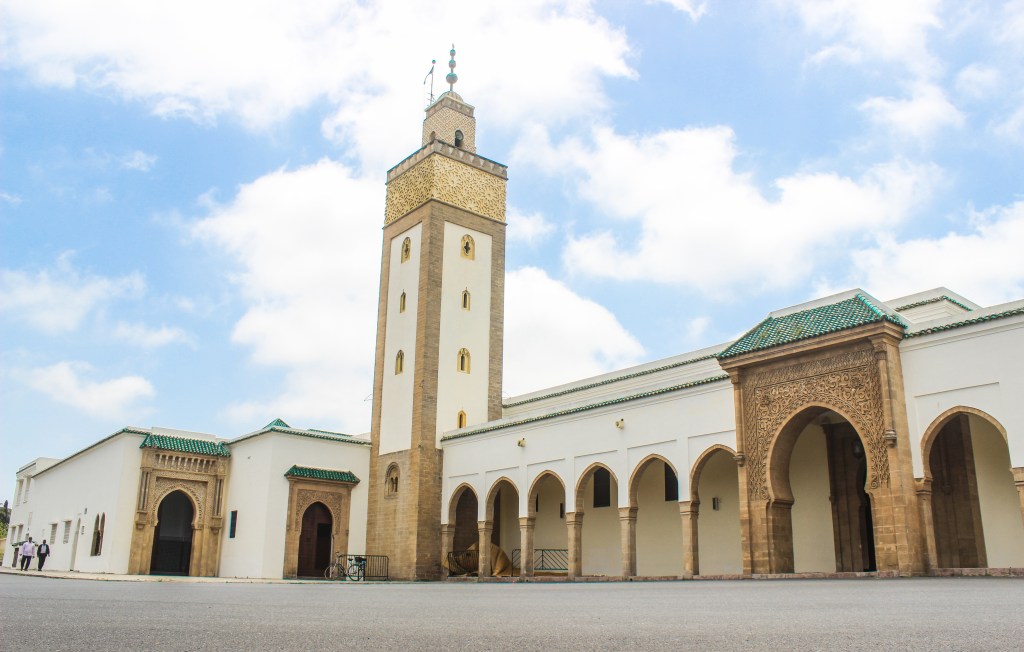
Morocco: The beauty of worship and the demand for reasons
In his autobiographical account, Bernström remembered the call to prayer, prostration, and communal Qur’anic recitation as deeply moving. But beauty alone did not satisfy him. He sought:
“intellectual conviction”
and
“a criterion of truth.” rahma.se
A later conversion account attributes this recollection to him:
“I found myself eager to learn more about Islam and Muslims.”
That report particularly emphasizes his interest in Muslims rising for dawn prayer during cold weather. Its wording comes through a secondary retelling, rather than the Swedish autobiographical essay. rahyafteha
The distinction matters. The familiar story of a diplomat moved by dawn worship captures something compelling, but his own testimony also shows a man demanding reasons.
Dear Swiss brothers and sisters, that combination is worth considering. A beautiful recitation can awaken curiosity. A thoughtful conversation can challenge an assumption. But lasting faith calls for examination: of scripture, history, moral teaching, and the understanding of God that holds them together.
An invitation to Islam should welcome such examination.
The question of evil
One especially striking feature of Bernström’s account is the importance he attached to Surah al-Falaq. Its opening appeal for refuge from evil within creation helped him articulate a monotheistic understanding of evil without positing a rival creator. He also understood moral contrasts as significant to human choice. These reflections contributed to his eventual conviction. rahma.se
That is an account of what persuaded him, rather than a complete solution to the philosophical problem of suffering. The suffering of children, destructive natural events, and the uneven distribution of hardship demand further reflection.
Nevertheless, his approach opens a serious discussion. Islam presents a world in which human beings possess responsibilities, confront temptation, experience vulnerability, and depend upon divine mercy. The invitation is to examine whether this account illuminates our condition.
Religious dialogue becomes more fruitful when difficult questions receive sustained attention. Bernström’s journey reminds us that questions about evil can belong within a search for faith.
Embracing Islam in later life
Bernström became Muslim in 1986 and adopted the name Mohammed. He was in his sixty-seventh year or had turned sixty-seven, depending on the precise conversion date, which the sources consulted do not establish. He died on October 21, 2009, one day before his ninetieth birthday. Wikipedia
His later life challenges the assumption that spiritual discovery belongs principally to youth.
A person can have accumulated professional distinction, travelled extensively, and formed settled habits—and still encounter something that deserves a fresh response. Age need not close the mind. Retirement can become a season of intellectual generosity and demanding service.
For anyone who thinks that serious religious study must wait until life becomes less complicated, his example offers encouragement: begin with the time available.
The work that outlived him: Koranens budskap
In 1998, Proprius published Koranens budskap—The Message of the Qur’an. Stockholm’s public library catalogue identifies Bernström as translator, Muhammad Asad as another contributor, and Arabic as the original language. The edition presented Swedish and Arabic text. Bibliographical records describe it as a Swedish interpretation with commentary by Asad. Stockholms stadsbibliotek
Asad’s contribution deserves explicit recognition. Bernström’s achievement involved sustained engagement with an existing body of interpretation as well as the Arabic scripture.
Hjärpe, who knew Bernström, explained that his central concern was how contemporary Swedish Muslims could understand the Qur’an’s message. Hjärpe regarded the resulting work as strongly interpretive, with expansions and explanatory notes. He also recalled Bernström’s readiness to invite criticism: the Arabic scripture held sacred authority for him, while human understanding remained open to correction. Fokus
That distinction offers an excellent starting point for newcomers. Reading a translation gives access to an interpreter’s understanding of the Qur’an. Comparing translations and consulting commentary can reveal where linguistic or theological choices enter.
Some popular accounts also claim that Bernström memorized the entire Qur’an. Although the claim appears in conversion literature, the stronger biographical and bibliographical sources consulted here do not establish it. His documented accomplishment needs no embellishment.
Mercy at the center
Bernström called Islam the:
“religion of forgiveness and mercy.”
He also described it as the:
“religion of the middle way”
and the:
“religion of patience and tolerance.”
His account stressed freedom of religious choice, balance in living, generosity, and courteous relations with followers of other revelations. rahma.se
Those phrases set a standard for anyone who wishes to invite others to Islam.
An invitation should give people room to think. It should show patience with unfamiliar questions. It should make repentance and moral growth intelligible, and express mercy through conduct.
Muslims presenting Bernström’s story must therefore ask something of themselves: Do our neighbors encounter the patience, honesty, and generosity that we commend?
The credibility of an invitation grows when its bearer practices its teaching.
A brotherly invitation to Switzerland
Our Swiss brothers and sisters, Bernström was Swedish. His story belongs to Sweden’s religious and literary history, yet its questions travel readily across Europe.
You need not share his particular dissatisfaction with Catholicism to find his journey worth studying. You may approach Islam through Christian faith, philosophical uncertainty, admiration for nature, concern about suffering, or a desire for a more disciplined spiritual life.
The invitation is to examine its central claim: that the universe depends upon one Creator, that human life carries moral responsibility, and that God has addressed humanity through revelation.
Explore what Muslims mean by tawḥīd, the oneness of God. Read how the Qur’an speaks of Abraham, Moses, Mary, and Jesus. Investigate Muhammad’s life, his claim to prophethood, and the historical setting of the scripture he conveyed. Ask difficult questions about justice, women and men, freedom of conscience, and religious disagreement.
Begin with a reputable Qur’an translation in the language you understand best. Compare passages where meaning seems uncertain. Speak with knowledgeable Muslims who welcome questions and distinguish their interpretations from divine authority.
A visit to a mosque may help you understand prayer as a lived practice. A quiet moment of your own may also become a beginning:
God, if You are there, guide me toward what is true, and give me the honesty to recognize it.
That is a suggested prayer for the seeker, not a quotation from Bernström.
For those eventually persuaded of Islam’s truth, its profession of faith affirms that there is no deity but God and that Muhammad is God’s messenger. Such a commitment deserves understanding and freedom. A sincere invitation allows both.
Thematic epilogue: A life translated into service
Bernström’s most enduring work made an Arabic scripture accessible in Swedish. There is a wider lesson in that undertaking: religious understanding requires people willing to cross distances through study, listening, and careful explanation.
His life also leaves us with a useful distinction. Personal conviction can be firm while interpretation remains humble. A believer can regard revelation as sacred and still acknowledge the limits of his own reading.
To our Swiss brothers and sisters, his biography offers an open door: investigate, read, question, and encounter Muslims as human beings. Consider whether the worship of one God can deepen your gratitude, strengthen your responsibilities, and enlarge your compassion.
Bernström began his Muslim life late, yet left a substantial work for those who followed. His example invites each of us to consider what remains possible—with the years, abilities, and opportunities still entrusted to us.
May God have mercy upon Mohammed Knut Bernström, and guide all sincere seekers toward truth.




Leave a Reply