
Presented by Gemini for Zia H Shah MD
Audio teaser: Why Einstein Stopped at the Cosmic Veil
Abstract
Pantheism, defined fundamentally as the metaphysical equation of the universe and God, posits an immanent divinity entirely inseparable from the natural cosmos. In this framework, nature, matter, and the physical laws collectively constitute the divine, leaving no room for a transcendent, personal Creator who acts with teleological purpose. This exhaustive report critically examines pantheism through the philosophical genealogies of Baruch Spinoza and the cosmic religiosity of Albert Einstein. Both thinkers expressed a staggering reverence for the universe’s elegant structure, order, and mathematical beauty, recognizing an overarching harmony that transcends human comprehension. Yet, both remained philosophically suspended in a state of naturalistic awe, stopping short of orthodox theism. By analyzing their perspectives in contrast with the Quranic paradigm of the Ulū al-Albāb (the “People of Understanding”), this analysis elucidates how empirical observation of cosmic harmony is intended to be a conduit to moral accountability and teleological purpose, rather than an end in itself. Furthermore, the report explores how pantheism and deism function as intermediary philosophical stations that frequently precipitate a descent into agnosticism and atheism, rendering the divine functionally indistinguishable from inert nature. Through a synthesis of comparative theology, cosmology, and philosophy, this report charts the intellectual trajectory from cosmic wonder to the recognition of the Living God.
1. Introduction: The Epistemology of Cosmic Wonder
The human encounter with the cosmos has perpetually generated a profound sense of awe. When gazing upon the intricate architecture of reality—from the precise mathematical governance of celestial mechanics to the delicate balance of biological life—the observer is confronted with a staggering intelligibility. This rational order demands an explanatory framework. Historically, the pursuit of this framework has bifurcated into two primary philosophical trajectories: the Abrahamic tradition of orthodox monotheism, which posits a profoundly transcendent, personal Creator who authored the cosmos; and pantheism, which equates the cosmos itself with the divine.
At the epicenter of the pantheistic tradition stands the seventeenth-century philosopher Baruch Spinoza, whose rigorous geometric deductions collapsed the Creator into the creation, birthing the concept of Deus sive Natura (God or Nature). Centuries later, the preeminent physicist Albert Einstein resurrected Spinoza’s God, deploying it as the theological foundation for his “cosmic religious feeling”—a profound reverence for the rational harmony of the universe that explicitly rejected the notion of a personal, intervening deity. Both men spent their lives attempting to decode the fundamental laws of existence, yet both retreated into philosophical frameworks that insulated them from a personal God, favoring a deterministic universe devoid of final causes.
While Spinoza and Einstein successfully pierced the veil of chaotic empirical data to recognize a unified cosmic order, Abrahamic theology asserts that they failed to take the final intellectual and spiritual leap. In the Quranic paradigm, the observation of cosmic beauty and order is merely the preliminary stage of the Ulū al-Albāb (the People of Understanding). For these individuals, scientific and philosophical wonder transitions necessarily into an acknowledgment of teleology (purpose), moral accountability, and the worship of a transcendent Sovereign.
This report systematically deconstructs the pantheism of Spinoza and Einstein, examines their shared appreciation for the beauty of the universe, and contrasts their unfinished philosophical ascent with the theological paradigm of the Ulū al-Albāb as described in Quran 3:189-194. It also delineates how pantheism, stripped of divine will and personhood, functions as a highly aestheticized secularism, frequently serving as a historical and philosophical gateway to modern atheism.
2. The Geometric Divinity: Baruch Spinoza’s Substance Monism
To understand the modern secular attraction to pantheism, one must first examine its most rigorous philosophical architect: Baruch Spinoza (1632–1677). Spinoza’s theological framework was so radical for its time that it resulted in his severe excommunication (herem) from the Portuguese-Jewish community of Amsterdam in 1656. The writ condemned his “abominable heresies and monstrous deeds,” declaring that “the Lord will separate him to his injury from all the tribes of Israel”. Spinoza’s heresy lay in his systematic dismantling of the classical Abrahamic understanding of a transcendent Creator.
2.1 Deus sive Natura: God or Nature
Spinoza’s masterpiece, the Ethics (Ethica, ordine geometrico demonstrata), is written in the deductive form of Euclidean geometry, proceeding from definitions and axioms through propositions and scholia. The metaphysical core of this work is “substance monism.” Traditional Abrahamic theology, deeply influenced by thinkers like Moses Maimonides (1138–1204), maintained a strict ontological distinction between the Creator (the Necessary Being) and the creation (contingent beings). Maimonides argued extensively in his Guide for the Perplexed that God is an absolute unity, transcendent, and immaterial, whose nature cannot be positively described (negative theology) and who brought the universe into existence ex nihilo (out of nothing) through a free act of will.
Spinoza obliterated this boundary. Following the conceptual language of his predecessors, Spinoza defined substance as “that which is in itself and is conceived through itself”. However, Spinoza took this definition to a radical extreme, arguing that because no two substances can share an attribute, and because God is defined as a being of infinite attributes, it mathematically follows that only one substance can exist. Everything else—stars, trees, human bodies, human minds—exists not independently, but merely as a “mode,” a temporary modification of that single, infinite Substance.
Spinoza encapsulated this in his famous axiom in Part I, Proposition 15 of the Ethics:
“Whatever is, is in God, and nothing can exist or be conceived without God.”.
He explicitly equated God with the physical and deterministic laws of the universe, coining the emblem of his system: Deus sive Natura (God or Nature). Spinoza distinguishes Natura naturans (“Nature naturing”—the active, productive aspect of the divine laws) from Natura naturata (“Nature natured”—the resulting system of produced modes). The double use of “Natura” signals the absolute ontological unity of God and the world.
2.2 The Annihilation of Will, Teleology, and Final Causes
The theological cost of Spinoza’s monism was total and deliberate. Spinoza’s God possesses no personhood, no intellect (in the human sense), no purposes, and no freedom in the sense of choice. God is “the immanent, not the transitive, cause of all things”. God does not stand outside the world to act upon it; rather, the world flows from God’s nature with blind, mathematical necessity. “In nature there is nothing contingent,” Spinoza declared in Proposition 29, “but all things have been determined from the necessity of the divine nature to exist and produce an effect in a certain way”.
Perhaps Spinoza’s most aggressive departure from Abrahamic orthodoxy is his total rejection of teleology—the doctrine of design and purpose. In the Appendix to Part I of the Ethics, Spinoza attacks the notion of “final causes,” which posits that God acts for the sake of an end or created the universe with a specific goal in mind.
“Nature has no end set before it, and all final causes are nothing but human figments.”.
Spinoza argued that the doctrine of final causes “turns Nature completely upside down,” confusing effects for causes and viewing the universe through a lens of human appetite. He mocked the notion of a God who acts for ends, responds to prayers, or demands moral obedience, viewing such concepts as a projection of human imagination and a retreat to the “sanctuary of ignorance”. If God is perfect and infinite, Spinoza argued, He lacks nothing; therefore, to say God acts for an end is to imply God desires something He lacks, which contradicts His perfection.
2.3 Leibniz’s Critique of Spinozan Determinism
Spinoza’s absolute determinism and rejection of teleology drew sharp criticism from his contemporaries, most notably Gottfried Wilhelm Leibniz (1646–1716). Leibniz perceptively identified that Spinoza’s system eliminated any genuine sense of contingency or free will. If everything flows necessarily from the essence of God, Leibniz argued, then God Himself has no free choice in creation, and the world could not have been otherwise.
Leibniz maintained that while there must be a determining ground for the universe (the Principle of Sufficient Reason), this ground must include God’s free choice to actualize the best of all possible worlds out of infinite contingent possibilities. By denying God an intellect that conceives possibilities and a will that chooses among them, Spinoza reduced the Divine to a blind, mechanical force. Leibniz realized that without contingency, moral freedom for human beings is also annihilated, as human actions are merely determined extensions of the one infinite substance.
3. The Harmony of the Spheres: Albert Einstein’s Cosmic Religious Feeling
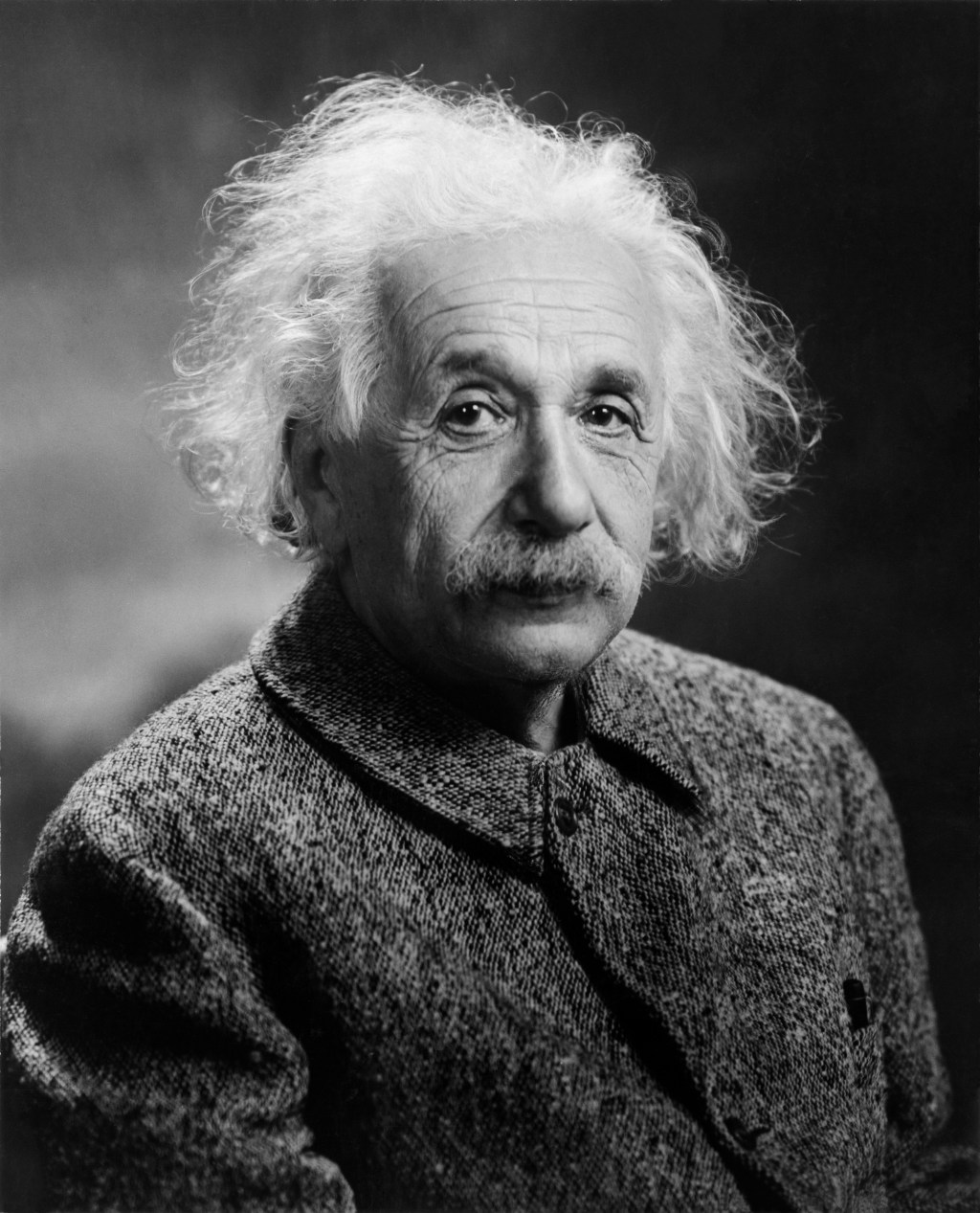
Three centuries later, Albert Einstein (1879–1955), arguably the greatest scientific mind of the twentieth century, found in Spinoza’s geometric pantheism the exact theological vocabulary he needed to articulate his own worldview. Einstein harbored a profound, almost mystical reverence for the universe, yet he vehemently and consistently rejected the monotheistic concept of a personal God who intervenes in human history.
3.1 “I Believe in Spinoza’s God”
Einstein’s religious views were a subject of intense public scrutiny, leading to widespread misinterpretation by both atheists claiming him as a champion and religious groups attempting to appropriate his legacy. In 1929, responding to a telegram from Rabbi Herbert S. Goldstein inquiring whether he believed in God, Einstein provided his most definitive theological statement:
“I believe in Spinoza’s God, who reveals himself in the orderly harmony of what exists, not in a God who concerns himself with the fates and actions of human beings.”.
Einstein viewed traditional religion, with its doctrines of divine reward and punishment, as a primitive evolution of human thought driven by fear. In his essay Science and Religion, he argued that teachers of religion must “give up the doctrine of a personal God, that is, give up that source of fear and hope which in the past placed such vast power in the hands of priests”. In a 1954 letter to philosopher Eric Gutkind, Einstein was even more blunt, describing the word God as “nothing more than the expression and product of human weaknesses,” and viewing traditional religious narratives as “honourable, but still primitive legends which are nevertheless pretty childish”.
3.2 The Cosmic Religious Feeling
Despite his rejection of orthodox theology, Einstein fiercely resisted the label of “atheist” or even a strict “pantheist” in the reductive sense, preferring to align himself with an epistemological humility he termed the “cosmic religious feeling”. When prompted by an Italian immigrant who assumed Einstein was a conventional atheist, Einstein wrote:
“It was, of course, a lie what you read about my religious convictions, a lie which is being systematically repeated. I do not believe in a personal God and I have never denied this but have expressed it clearly. If something is in me which can be called religious then it is the unbounded admiration for the structure of the world so far as our science can reveal it.”.
As detailed by physicist and historian Max Jammer in his comprehensive study Einstein and Religion, Einstein’s religiosity was characterized by an overwhelming awe at the rationality of the universe. For Einstein, this cosmic religion required no dogma, no holy writ, and no anthropomorphic deity. It was an epistemological stance of profound humility before the rational structure of the cosmos.
Einstein frequently utilized the metaphor of a child entering a vast library to explain his position:
“We are in the position of a little child, entering a huge library whose walls are covered to the ceiling with books in many different tongues. The child knows that someone must have written those books. It does not know who or how… The child notes a definite plan in the arrangement of the books, a mysterious order, which it does not comprehend, but only dimly suspects. That, it seems to me, is the attitude of the human mind, even the greatest and most cultured, toward God.”.
3.3 Strict Determinism and the Rejection of Quantum Indeterminacy
Like Spinoza, Einstein’s worldview was inextricably linked to strict determinism. Spinoza’s assertion that “In nature there is nothing contingent” found a 20th-century echo in Einstein’s deep discomfort with the probabilistic, indeterminate nature of quantum mechanics. Einstein believed that the universe was governed by strict, immutable, objective laws that left no room for fundamental chance or free will.
In a famous 1926 letter to Max Born, Einstein expressed his theological objection to quantum randomness:
“Quantum theory yields much, but it hardly brings us close to the Old One’s secrets. I, in any case, am convinced He does not play dice.”.
For Einstein, “The Old One” (a personification of Spinoza’s Deus sive Natura) operated with perfect geometric necessity. If human beings were merely modes of this deterministic substance, operating according to strict physical laws, then libertarian free will was an illusion. Consequently, the concept of a God who judges humans for their actions was logically absurd. Einstein noted, “I cannot conceive of a God who rewards and punishes his creatures, or has a will of the kind we experience in ourselves”.
4. The Epistemology of Wonder: Appreciating Beauty and Order
Both Spinoza and Einstein possessed an extraordinary capacity to appreciate the staggering beauty, organic wholeness, and logical simplicity of the cosmos. Their pantheism was not born of nihilism or materialism, but of an overwhelming sense of wonder and intellectual devotion.
Pantheists emphasize that the cosmos is an integrated whole governed by uniform laws. The very fact that the universe exhibits profound order and unity is viewed as evidence of an overarching, emergent reality. When pantheists speak of God as the universe, they refer to a holistic reality that surpasses any individual component—the divine One is not a mere aggregate of isolated atoms, but an elegant, self-sustaining system.
Einstein’s scientific endeavors were explicitly fueled by a desire to apprehend this underlying unity. He remarked, “I want to know God’s thoughts… the rest are details”. He viewed the pursuit of science not merely as a technical endeavor, but as a spiritual one, famously declaring that “Science without religion is lame, religion without science is blind”.
4.1 Fine-Tuning and the Cosmological Constant
Modern cosmology provides an even sharper backdrop for this sense of awe. The fine-tuning of the universe—where physical parameters are calibrated to mind-boggling precision to allow for a habitable universe—illustrates the “marvelous order” Einstein spoke of. One of the most striking examples is the cosmological constant (denoted Λ), which represents the energy density of the vacuum of space. Originally introduced by Einstein in his equations of general relativity, the cosmological constant must be tuned to an infinitesimal degree; if it were slightly larger, the universe would have expanded too rapidly for galaxies and stars to form, and if slightly smaller, the universe would have collapsed back on itself immediately.
While traditional theists view this fine-tuning as empirical evidence of an intelligent Designer who set the dials with specific, teleological intent, Einstein and Spinoza viewed the laws themselves as the ultimate reality. The beauty was unquestionable, but the inference of a distinct, conscious Architect was rejected. They stood at the precipice of the cosmos, mesmerized by the mathematical poetry of its laws, but refused to look beyond the text to an independent Author.
5. The Unfinished Ascent: The Final Leap of the Ulū al-Albāb
From the perspective of Abrahamic theology—particularly the Islamic doctrine of Tawhid (absolute monotheism)—the pantheistic wonder of Spinoza and Einstein is genuine but tragically incomplete. They achieve a profound apprehension of the universe’s intelligibility, yet they decline the final and decisive intellectual leap outlined in the Quranic paradigm of the Ulū al-Albāb.
The Quran outlines a specific epistemic and spiritual trajectory for human intellect. Not every possessor of basic rationality (‘aql) qualifies as one of the Ulū al-Albāb (the “People of Understanding” or “People of the Pith/Essence”). Rather, these are individuals who pierce through the outer husk (qishr) of observable empirical data to reach the inner kernel (lubb) of absolute truth.
This trajectory is powerfully encapsulated in Surah Ali ‘Imran (Quran 3:189-194), a passage that maps the journey from empirical observation to moral submission.
5.1 The Dominion of the Creator (Quran 3:189)
“And to Allah belongs the dominion of the heavens and the earth, and Allah is over all things competent.” (Quran 3:189).
The passage begins by establishing the absolute sovereignty of a transcendent Creator over the physical universe. In classical Islamic theology, as articulated by thinkers like Al-Ghazali (1058–1111), the universe is not an eternal emanation of God’s essence (as Spinoza would later argue), but a temporal creation brought into existence out of nothing (creatio ex nihilo) by God’s active, determining will. Al-Ghazali’s Tahafut al-Falasifa (The Incoherence of the Philosophers) specifically refuted the notion of a necessary, eternal universe, arguing that the universe is sustained at every moment by the active command of a sovereign God (a framework known as occasionalism).
5.2 Step One: Observation and Wonder (Quran 3:190)
“Indeed, in the creation of the heavens and the earth and the alternation of the night and the day are signs for those of understanding (Ulū al-Albāb).” (Quran 3:190).
The Quran begins the intellectual journey exactly where Spinoza and Einstein began: with empirical observation. The “creation of the heavens and the earth” refers to spatial grandeur, physics, and cosmology, while “the alternation of night and day” points to temporal precision and the mathematical cycles of nature. Classical exegetes like Ibn Kathir and Al-Jalalayn note that these physical phenomena are explicitly designated as Ayat (signs or proofs) for people of intellect. A sign inherently points beyond itself to a Signifier. Einstein’s “cosmic religious feeling” and Spinoza’s Deus sive Natura successfully acknowledge the majesty of these signs, fulfilling the prerequisite of this first stage.
5.3 Step Two: Contemplation and Teleology (Quran 3:191)
“Who remember Allah while standing or sitting or [lying] on their sides and give thought (tafakkur) to the creation of the heavens and the earth, [saying], ‘Our Lord, You did not create this aimlessly (batilan); exalted are You [above such a thing]; then protect us from the punishment of the Fire.’” (Quran 3:191).
Here, the path of the Ulū al-Albāb diverges sharply from the pantheist. The Ulū al-Albāb engage in constant tafakkur (deep cognitive reflection) on the natural world, but this reflection yields a specific, unavoidable theological conclusion: “You did not create this aimlessly (batilan).”.
This is a direct, precise refutation of Spinoza’s Appendix to Part I of the Ethics. Where Spinoza insists that “Nature has no end set before it, and all final causes are nothing but human figments”, the Ulū al-Albāb recognize that a universe characterized by such exact mathematical governance and life-permitting fine-tuning cannot be an accidental fluctuation or a blind, purposeless necessity. The exquisite balance of the cosmos demands teleology—a purposeful design.
Furthermore, the verse transitions abruptly from cosmological observation to moral realization: “then protect us from the punishment of the Fire.” Why does gazing at the stars lead to a prayer for salvation? Because if the universe is created with a deliberate purpose, then human existence is also purposeful. If human existence is purposeful, there must be a standard of moral accountability (represented by the Fire) managed by a Moral Lawgiver. Spinoza and Einstein, bound by strict determinism and a denial of final causes, cannot make this leap. They observe the stars and conclude that human beings are merely cogs in an indifferent cosmic machine.
5.4 Step Three: Recognition of Absolute Justice (Quran 3:192)
“‘Our Lord, indeed whoever You admit to the Fire – You have disgraced him, and for the wrongdoers there are no helpers.’” (Quran 3:192).
The Ulū al-Albāb recognize that a flawless physical universe must be paired with flawless moral justice. Pantheism, by contrast, cannot ground objective morality. As Christian apologist C.S. Lewis and various Islamic theologians have noted, if all is God, then evil is God too. A God identical with everything is indifferent to the distinction between good and evil—He is both the cancer and the cure, the torturer and the tortured. The pantheist substance commands nothing, and thus there is no taklif (moral obligation or accountability). Einstein’s explicit rejection of a God who rewards and punishes strips the universe of ultimate moral justice, leaving the cries of the oppressed permanently unanswered in the grand cosmic scheme.
5.5 Step Four: Submission to Revelation (Quran 3:193-194)
“‘Our Lord, indeed we have heard a caller calling to faith, [saying], ‘Believe in your Lord,’ and we have believed. Our Lord, so forgive us our sins and remove from us our misdeeds and cause us to die with the righteous. Our Lord, and grant us what You promised us through Your messengers and do not disgrace us on the Day of Resurrection. Indeed, You do not fail in [Your] promise.’” (Quran 3:193-194).
The final leap is the transition from philosophy to revelation. Ibn Kathir explains that the “caller calling to faith” refers to the Messengers of God. The Ulū al-Albāb do not rely solely on their own empirical observations or geometric proofs to deduce the exact nature of God; they respond to prophetic revelation. They recognize that human intellect has epistemological limits. While reason can deduce that the universe has a purposeful Creator, only revelation can detail what that Creator desires from humanity and what awaits in the Hereafter.
Einstein and Spinoza remained trapped in the qishr (the outer shell of reality). They mapped the geometric and physical laws of the shell with unprecedented genius, but because they refused the concept of a transcendent, personal Creator, they could not penetrate to the lubb (the inner kernel of meaning). They halted their intellectual ascent at the altar of the physical laws, substituting the brushstrokes for the Painter.
Table 1: Epistemological Trajectories: Pantheism vs. The Ulū al-Albāb
| Philosophical Element | Pantheism (Spinoza & Einstein) | The Ulū al-Albāb (Quran 3:189-194) |
|---|---|---|
| Observation of Nature | Deep reverence for mathematical order and physical laws. | Deep reflection (tafakkur) on the heavens and the earth as Ayat (signs). |
| Teleology (Purpose) | Strictly rejected. Nature operates by blind, deterministic necessity. | Accepted. The cosmos is not created batilan (aimlessly or in vain). |
| Nature of God | God is identical to the cosmos (Deus sive Natura). Impersonal. | God is the transcendent Sovereign over the cosmos. Personal and Active. |
| Moral Accountability | Rejected. No reward, no punishment. Good and evil are human constructs. | Acknowledged. Fear of the Fire and recognition of ultimate moral justice. |
| Epistemology | Pure rationalism/empiricism. Rejection of prophetic revelation. | Integration of rational observation with submission to prophetic revelation. |
6. A Compliment in Disguise? Pantheism as a Station to Atheism
While treating pantheism as a noble, highly intellectual response to cosmic wonder, one must critically assess its historical and philosophical trajectory. In contemporary discourse, pantheism often functions not as a robust theological system, but as an intermediary station on the journey away from traditional theism toward agnosticism and atheism.
When individuals lose faith in a transcendent God or the religious doctrines they inherited, they often adopt pantheism to maintain a sense of profound spirituality while clinging to scientific materialism. Evolutionary biologist and prominent New Atheist Richard Dawkins summarized this dynamic with characteristic bluntness in his book The God Delusion:
“Pantheism is sexed-up atheism. Deism is watered-down theism.”.
Dawkins’ critique is philosophically astute. Reductive pantheism and atheism maintain extensionally equivalent ontologies. If a pantheist points to the universe and says, “That is God,” and an atheist points to the exact same universe and says, “That is all there is,” the disagreement is purely semantic. They possess the exact same inventory of reality: matter, energy, space, time, and physical laws. Spinoza’s God, stripped of will, personhood, and purpose, is functionally indistinguishable from the atheist’s Nature. As a result, pantheism is often described by theists as a “compliment in disguise” to the necessity of God—a verbose and unjustified attribution of divine attributes (like necessity, eternity, and unity) to an inert universe.
6.1 The Secular Co-optation of Cosmic Religiosity
The intellectual genealogy of modern secularism heavily relies on Spinoza and Einstein. Spinoza’s rehabilitation during the Pantheismusstreit (Pantheism Controversy) in the late eighteenth century made his philosophy the presiding spirit of German Romanticism and Idealism. By equating God with Nature, Spinoza provided a safe harbor for intellectuals to discard Biblical theology without immediately adopting the harsh social stigma of atheism.
Einstein’s “cosmic religious feeling” accelerated this trend in the 20th century. His soaring rhetoric was adopted by figures like Carl Sagan, Stephen Hawking, Neil deGrasse Tyson, and modern naturalistic pantheist movements. Sagan famously declared in Cosmos, “The cosmos is within us. We are made of star-stuff. We are a way for the universe to know itself,” actively attempting to replace conventional faith with a secular religion based on the magnificence of the universe. Similarly, contemporary figures like Sam Harris and Fritjof Capra utilize the language of mysticism and interconnectedness to evoke a sense of the sacred without the supernatural.
Movements like “Naturalistic Pantheism” focus on science-inspired awe completely stripped of supernatural elements. They borrow the emotive vocabulary of religion—reverence, awe, sacredness, transcendence—and apply it to a cold, deterministic vacuum. In this framework, pantheism becomes a psychological coping mechanism for the existential dread of a purposeless universe. It allows the modern secularist to feel “spiritual” without submitting to the moral, teleological, or behavioral demands of a Living God. Einstein, by publicly denouncing a personal God while maintaining a deeply “religious” identity, inadvertently provided the primary intellectual blueprint for this modern spiritual secularism.
7. Theological Distinctions: Pantheism vs. Wahdat al-Wujud
To prevent profound theological confusion, a critical distinction must be drawn between the pantheism of Spinoza and the Sufi Islamic doctrine of Wahdat al-Wujud (Unity of Being/Existence), primarily associated with the Andalusian mystic and philosopher Muhyiddin Ibn Arabi (1165–1240). Because both systems assert a profound, underlying unity of existence, they are frequently—and erroneously—conflated by secular critics, orthodox theologians, and even some philosophers.
While superficially similar in their monistic language, metaphysical analysis reveals them to be diametrically opposed. Pantheism is an upward reduction: it elevates the physical, material universe to the status of God. Wahdat al-Wujud is a downward emanation: it asserts that true, independent, absolute existence belongs exclusively to God, and the cosmos possesses no true reality of its own.
For Spinoza, God is the physical universe (the attribute of Extension) and the mental universe (the attribute of Thought). There is no God beyond the boundaries of the cosmos. In contrast, Ibn Arabi maintained strict Islamic panentheism and transcendence. In Wahdat al-Wujud, the universe is merely a shadow, a reflection, or a theatre for the manifestation (tajalli) of the Divine Names and Attributes.
As one commentator succinctly frames the difference: “In pantheism, God is the universe, whereas in Wahdat al-Wujud, God manifests as the universe… In Pantheism, God is interacting with himself on the physical plane, whereas in Wahdat al-Wujud it is all a dream, God’s dream”. Ibn Arabi states that the contingent things of the world “have not even smelt a whiff of wujud [true, independent existence]”. God constantly manifests Himself, and the universe is continually destroyed and renewed at every instant by the Divine Command, relying utterly on God’s active will.
Therefore, Wahdat al-Wujud preserves the vital distinction between the Eternal Creator and the contingent creation, maintaining God’s infinite transcendence, active will, and personhood—attributes that are totally annihilated in Spinoza’s Deus sive Natura.
Table 2: Spinoza’s Pantheism vs. Ibn Arabi’s Wahdat al-Wujud
| Metaphysical Concept | Spinoza’s Pantheism (Deus sive Natura) | Ibn Arabi’s Wahdat al-Wujud (Unity of Being) |
|---|---|---|
| Ontological Status of the Universe | The universe is God. The cosmos has absolute, necessary existence. | The universe is a shadow or reflection. Only God possesses absolute existence (wujud). |
| Transcendence | Denied. God is entirely immanent within the physical and mental limits of the cosmos. | Affirmed. God is infinitely transcendent, yet His Names and Attributes manifest immanently in creation. |
| Divine Will and Agency | Denied. God operates by blind, deterministic mathematical necessity. | Affirmed. God actively creates, sustains, and renews the universe at every instant by His Will. |
| Personhood of God | Rejected. God has no intellect, will, or purposes. | Affirmed. God is a conscious, willing Agent who responds to creation. |
8. Thematic Epilogue: The Veil, the Face, and the Unveiling of the Word
The philosophical tragedy of Spinoza and Einstein is not that they looked at the wrong things, but that they stopped looking too soon. They observed the staggering, awe-inspiring architecture of the universe and declared the building to be the Architect.
In classical Islamic gnosis, the 13th-century poet and mystic Jalal al-Din Rumi employs the metaphor of the “Shy Bride” to describe the unfolding of Divine Knowledge (Ma’rifa). The cosmos, much like the text of a sacred scripture, carries both a veil and a face. The “veil” represents the Jalal (Majesty)—the strict, rigorous, mechanical laws of grammar, mathematics, and physics that protect the sacred. The “face” represents the Jamal (Beauty)—the conscious, merciful, purposeful reality of the Divine that accepts the seeker.
Every phenomenon in the universe has two faces: the face turned toward itself (the physical laws, the material composition, the “Not He”) and the face turned toward God (the ontological dependence on the Creator, the “He”). Spinoza and Einstein observed the veil with unprecedented clarity. Through geometric proofs and the theory of relativity, they mapped every thread of the cosmic garment. They stared at the veil so intensely, and perceived its rational beauty so clearly, that they fell in love with it, ultimately declaring that the veil itself was the Bride.
The Ulū al-Albāb, however, recognize that the veil is meant to be lifted. They possess the “two-eyed” vision: the Eye of Reason (‘aql) to map the physical laws, and the Eye of the Heart (qalb) to perceive the Author operating behind them. By transitioning from scientific wonder to moral accountability, from observing the stars to seeking salvation from the Fire, they successfully pierce the outer husk (qishr) to reach the inner jewel (lubb) of existence.
Pantheism, ultimately, is a state of suspended intellectual animation. It is the refusal to cross the threshold from the “how” of the universe to the “why” of existence. To step beyond the pantheism of Spinoza and Einstein is not to abandon their profound scientific reverence, but to fulfill it. It is to recognize that the orderly harmony of the cosmos is not a blind, deterministic prison, but the deliberate, magnificent signature of the Living God.





Leave a Reply