
By Zia H. Shah, MD
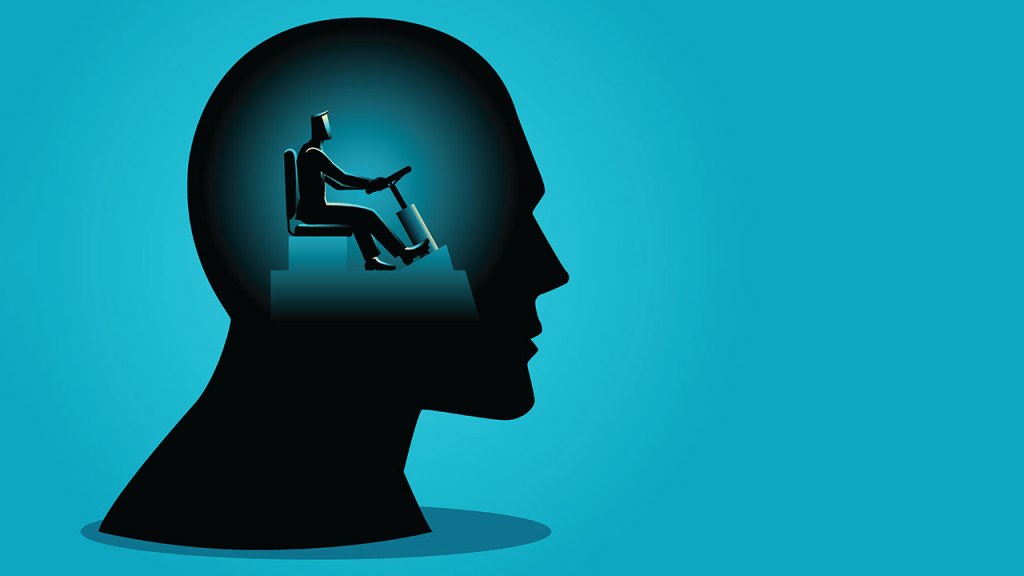
Libertarian free will is the true account of human agency: in a real choice, the self is a genuine originator of what happens, and could have done otherwise given everything that came before. The main reason most professional philosophers reject this view is not that it has been refuted. They have read the most certain thing we know, our own conscious agency, in the light of something far less certain, a materialist picture of the world, instead of the other way round.
- In both PhilPapers surveys, compatibilism is the majority view among philosophers (59.1% in 2009; 59.2% in 2020). Libertarianism had 13.7% in 2009 and 18.8% in the broader 2020 sample. “No free will” had 12.2% in 2009 and 11.2% in 2020. Bourget and Chalmers’s 2023 write-up of the 2020 survey in Philosophers’ Imprint reports that libertarianism correlates at r = −0.42 with physicalism about the mind and r = 0.44 with theism. That pattern suggests the debate is being settled by people’s prior commitments about what the world is made of, not by the facts of agency.
- Quran 3:7 teaches that we should read what is peripheral and ambiguous in the light of what is decisive and foundational. The decisive data, the muhkamat of our existence, are consciousness, the self, and the felt act of choosing; Augustine and Descartes both found that these survive radical doubt. Causal closure and materialist metaphysics are inferences built on top of those data. They cannot overturn them.
- If even one act of genuine libertarian choice occurs, the causal closure of the physical is false and metaphysical materialism falls with it. That is why compatibilism has to redefine freedom. The usual objections (luck, neuroscience, interaction) turn out on inspection to be much weaker than they are made to sound.

ABSTRACT
Philosophers have argued about free will for more than two thousand years, and today’s professionals remain divided. In the 2009 PhilPapers Survey of 931 philosophers at leading departments, 59.1% accepted or leaned toward compatibilism, 13.7% toward libertarianism, 12.2% toward “no free will,” and 14.9% gave some other answer. thequran The 2020 survey had a broader sample of 1,758 respondents. It found 59.2% compatibilism, 18.8% libertarianism and 11.2% no free will. thequran This essay argues that the minority is right. The case rests on an interpretive principle the Quran states in 3:7: the decisive, foundational verses (muhkamat), “the mother of the Book,” govern how we read the ambiguous ones (mutashabihat). Philosophy works the same way. Augustine’s Si fallor, sum and Descartes’ cogito show that the experiencing, thinking, choosing self is the most certain datum we have. Materialism, determinism and the causal closure of the physical are theoretical extrapolations from third-person physics. They are secondary, and they should be read in the light of the self rather than used to dissolve it. The essay briefly and fairly explains hard determinism and illusionism, compatibilism (Hume, Frankfurt, P. F. Strawson, Dennett, Churchland) and hard incompatibilism (Pereboom, Galen Strawson). It then argues that compatibilism works by lowering the bar so that free will fits physicalism, and that genuine libertarian agency of the kind Chisholm described would refute materialism outright. It answers the strongest objections: the luck objection, the Libet experiments and the later reinterpretation by Schurger and colleagues, and the interaction problem. It closes with a thematic epilogue on human dignity and moral accountability.
1. A Puzzle About Experts
Suppose you are a physician and a patient tells you, “I have a terrible headache.” You can order scans, run blood tests and measure inflammatory markers. One thing you cannot sensibly do is tell her that her headache does not exist because your scans show nothing. Her report of pain is not one hypothesis among others for the scans to confirm or reject. It is the thing the scans are trying to explain. If the theory and the pain disagree, the theory gives way.
I begin there because the free will debate has made exactly this mistake. Each of us has direct, first-person acquaintance with deliberating and choosing. I weigh two options, feel both of them pulling at me, and then I settle the matter. The settling is mine. Yet many professional philosophers have decided that this experience must be reinterpreted, shrunk, or explained away so that it fits a particular theory of physical reality.
The numbers show how far this has gone. The PhilPapers Surveys, run by David Bourget and David Chalmers, asked professional philosophers: “Free will: compatibilism, libertarianism, or no free will?” thequran In 2009, 550 of 931 respondents (59.1%) accepted or leaned toward compatibilism, 128 (13.7%) toward libertarianism, 114 (12.2%) toward no free will, and 139 (14.9%) chose “Other.” philpapers The 2020 survey went to a wider population. Of 1,758 respondents, 59.16% leaned compatibilist, 18.83% libertarian and 11.21% no free will, with 13.54% “Other.” philpeople Respondents in 2020 could endorse more than one option. One caution matters here: when the 2020 survey compared only the same kind of departments surveyed in 2009, libertarianism was essentially flat, 13.75% in 2009 against 12.81% in 2020. The higher 2020 figure mostly reflects who was asked, not a wave of conversions. thequran
I believe libertarian free will is the only logical and true position. That leaves a fair question: if it is true, why has a large majority of academic philosophers gone the other way? My answer is that they have put the cart before the horse. They have tried to define the fundamental in terms of the peripheral and secondary. The right method on any question is to define the peripheral and secondary in terms of the fundamental.
The surveys themselves point to this diagnosis. In the 2020 data, as reported in Bourget and Chalmers’s 2023 Philosophers’ Imprint paper, acceptance of libertarianism correlates negatively with physicalism about the mind (r = −0.42, n = 1,448) and with naturalism (r = −0.37). It correlates positively with mind–body dualism (r = 0.38) and with theism (r = 0.44, n = 1,468). In plain terms, a philosopher’s view on free will closely tracks their prior view on what reality is made of. Most compatibilists did not reach their view by looking hard at the experience of choosing. They reached it by first accepting a materialist picture of the world and then asking what sort of “freedom” could survive in it.
2. The Principle of the Mother of the Book
The Quran sets out an interpretive principle that is a good guide to philosophy in general:
“He it is Who has sent down to you the Book; in it there are verses that are fundamental or decisive in meaning — these are the corner stone of the Book — and there are others that are susceptible of different interpretations. But those in whose hearts is perversity pursue those that are susceptible of different interpretations, seeking discord and wrong interpretation…” (Quran 3:7) thequran
The muhkamat, the decisive verses, are called umm al-kitab, “the mother of the Book.” The mutashabihat, the ambiguous or allegorical verses, are to be read in their light. The verse also observes that those with a “crookedness” (zaygh) in their hearts pick out the ambiguous passages to serve an agenda.
In an earlier essay, “After Monotheism, the Two Most Seminal Verses of the Quran,” I argued that this verse lays down a principle that applies beyond scripture: “any writing should be examined and understood in light of its fundamental claims and subjects and not peripheral ones.” I also drew a corollary: “whichever verses or message we choose as pivotal or central, begin to define the whole of our understanding.” thequran Choosing a center is the decisive interpretive act. Choose the wrong one and everything else bends out of shape around it. In that essay I named my own center: “Monotheism, human accountability and the message of compassion and justice.” thequran I want to stress the second item, human accountability. Accountability means nothing unless we are the real authors of what we do.
I paired 3:7 with 4:82: “Why don’t they ponder over the Quran? Had it been from anyone other than All-Knowing God, they would have found ample contradiction in it.” thequran That verse sets a test of internal consistency. A sound understanding resolves contradictions instead of multiplying them. I also borrowed advice from Francis Bacon: “Read not to contradict … but to weigh and consider.” thequran
Now apply these two principles, read the periphery by the center and test for consistency, to the book of reality instead of the book of revelation. What is the umm al-kitab of human knowledge? What do we know with a certainty nothing else can match?
3. The Muhkamat of Reality: The Self That Cannot Be Doubted
Augustine: “If I am deceived, I am”
Writing between about 413 and 426 CE, after the Visigoths sacked Rome in 410, Augustine of Hippo answered the skeptics of the Platonic Academy, who argued that we can know nothing for certain. In The City of God (De Civitate Dei, Book XI, chapter 26), he wrote: Si enim fallor, sum, “For if I am deceived, I am.” The reasoning is short and cannot be broken. Something that does not exist cannot be deceived. researchgate So even if I am wrong about everything else, the fact that I am wrong shows that there is an “I” who is wrong. Error needs someone to be in error.
Descartes: “I think, therefore I am”
In the seventeenth century René Descartes made the same insight the foundation of modern philosophy. He decided to doubt everything that could possibly be doubted. kiddle Perhaps his senses deceived him. Perhaps he was dreaming. Perhaps an all-powerful “evil demon” was feeding him false beliefs. Doubt could reach all of that. It could not reach the doubter. Doubting is a kind of thinking, and thinking needs a thinker.
The wording has its own history, and it is worth stating accurately. Descartes first published the formula in French, je pense, donc je suis, in Part IV of the Discourse on the Method (1637), choosing French so that ordinary readers could follow it. WikipediaWikipedia In the Meditations on First Philosophy (1641), the most careful statement of the argument, the famous Latin sentence does not actually appear. There he writes, “I am, I exist,” which is necessarily true whenever he asserts or conceives it. everythingifs The Latin phrase ego cogito, ergo sum appears in the Principles of Philosophy (1644), Part I, article 7. There Descartes calls it “the first and most certain” piece of knowledge that occurs to anyone who philosophizes in an orderly way. wordpress It became the founding point of continental rationalism, a fixed point from which certain knowledge could be rebuilt. epfl
Berkeley: “To be is to be perceived”
In 1710 George Berkeley pressed the primacy of the mind further still. In A Treatise Concerning the Principles of Human Knowledge (Part I, §3) he said of physical objects: “Their esse is percipi, nor is it possible they should have any existence out of the minds or thinking things which perceive them.” philosophyideasmarxists You do not have to accept Berkeley’s full idealism to see his point. Everything we know about the “material world” reaches us through perception, a conscious mind’s experience. Matter is something we infer. Mind is something we are acquainted with directly.
Plato, and a gentle correction
A line often quoted in Plato’s name says: “The mind is the reality; the body is the shadow.” I have looked for it and cannot find it anywhere in Plato’s dialogues. It appears to be a modern paraphrase, and it should not be presented as his words. The idea behind it is genuinely Platonic, though. In the Allegory of the Cave (Republic VII, 514a–517a), prisoners chained in a cave watch shadows on a wall, and they “would deem reality to be nothing else than the shadows of the artificial objects” (515c, Shorey’s translation). tuftstopostext The philosopher is the one who turns around and climbs toward the real. In Alcibiades I (130c), a dialogue traditionally attributed to Plato though its authorship is disputed, Socrates concludes that a human being is “nothing else than soul.” tuftsgoodreads The authentic Plato supports the spirit of the misattributed line.
What these thinkers establish
Put these voices side by side and one conclusion stands out. The first datum is not matter. The first datum is the conscious self. We are not first sure of atoms and then cautiously infer minds. We are first sure of minds, our own above all, and from there we build theories about atoms. Physics is a magnificent achievement, but every equation in it was written, checked and believed by a conscious agent who weighed evidence and chose to accept a conclusion.
Here is the step that many philosophers miss: the experience of choosing belongs among these foundational data. The cogito is not a passive “I think” in which thoughts just happen. Descartes’ method is itself an exercise of will. He decides to doubt, withholds assent, and resolves to accept only what is clear and distinct. Augustine’s “if I am deceived” presupposes a self that can be deceived and therefore also a self that can guard against deception. The self that cannot be doubted is an acting self. It attends, deliberates, accepts and rejects. Our awareness of authoring our choices is as immediate as our awareness of existing. These are the muhkamat of reality.
Determinism, causal closure and materialism are the mutashabihat. They are grand theoretical constructions, contested and open to many readings, that sit downstream of the data. To read the decisive in the light of the ambiguous is exactly what 3:7 warns against.
4. The Rival Positions, Briefly and Fairly
An honest advocate has to state the opposing views as their best defenders would. Here they are in plain language.
Hard determinism, “no free will,” and illusionism
Determinism is the thesis that the state of the world at any moment, together with the laws of nature, fixes exactly one possible future. informationphilosopher Hard determinists accept determinism and conclude that free will, in any sense that matters, does not exist. Your choices are links in a causal chain running back through your genes, upbringing and brain chemistry to the Big Bang. A related position notes that modern physics may not be fully deterministic, since quantum events may be genuinely random, and replies that randomness doesn’t help. A choice produced by a random event is no more yours than one produced by a determined event. On this view, free will is caught between determinism and chance and survives neither. Wikipedia Illusionists add that our strong sense of freedom is a story the brain tells itself, perhaps useful for evolution but untrue.
Compatibilism
Compatibilists, who are the majority, say that free will and moral responsibility are compatible with determinism. Wikipedia They do this by redefining free will. Freedom no longer means the power to have done otherwise given the same past. It means acting according to your own desires, reasons or character, without external coercion. The tradition is long:
- David Hume distinguished “the liberty of spontaneity… that which is oppos’d to violence” from “the liberty of indifference… that which means a negation of necessity and causes” (Treatise, 2.3.2.1). He kept the first and rejected the second. In the Enquiry he defined a “hypothetical liberty,” the power of acting or not acting according to the determinations of the will, and said it is “universally allowed to belong to every one who is not a prisoner and in chains.” stanfordstanford
- Harry Frankfurt, in “Alternate Possibilities and Moral Responsibility” (1969), built clever thought experiments, now called “Frankfurt cases.” In them, someone is responsible for an act even though a hidden device would have forced the same act had they wavered. His conclusion was that responsibility does not need alternative possibilities. princeton In “Freedom of the Will and the Concept of a Person” (1971) he defined freedom of the will structurally. You are free when your will conforms to your “second-order volitions,” your desires about which desires should move you. theotodmancliffsnotes
- P. F. Strawson, in “Freedom and Resentment” (read to the British Academy in 1962), argued that moral responsibility rests on our natural “reactive attitudes,” such as resentment, gratitude and indignation. Wikipedia These are so built into human relationships that no metaphysical discovery about determinism could, or should, uproot them. stanford
- Daniel Dennett, in Elbow Room: The Varieties of Free Will Worth Wanting (1984) and Freedom Evolves (2003), argued that evolution has given us real capacities for deliberation and self-control. On his account these are “the varieties of free will worth wanting,” and the libertarian’s contra-causal freedom is not one of them. mit
- Patricia Churchland, in Touching a Nerve: The Self as Brain (2013) and Braintrust (2011), identifies the self with the brain. She suggests that what we call free will is better understood as neurobiological self-control, the prefrontal capacity to regulate impulses. philopedia
Hard incompatibilism
Hard incompatibilists, led by Derk Pereboom in Living Without Free Will (2001), agree with libertarians against compatibilists that determinism would rule out the free will needed for moral responsibility in the strong, “basic desert” sense. They agree with hard determinists that we probably lack it anyway, whether or not determinism is true. coordinatesofthought Pereboom’s well-known “four-case” manipulation argument starts with an agent whose every decision is engineered by neuroscientists. It then moves step by step to ordinary determinism and asks where a principled difference appears. stanford Galen Strawson’s “Basic Argument” adds that to be truly responsible you would have to be the cause of yourself (causa sui), which he thinks is impossible. Pereboom concludes that we should give up retributive blame and keep forward-looking practices such as moral education and reconciliation. Wikipedia
Libertarianism
Libertarians, finally, hold that free will is incompatible with determinism, that determinism is false at least for human choices, and that we really do choose between alternative possibilities that are open. bartleby Many libertarians, including Thomas Reid, Roderick Chisholm and Timothy O’Connor, add that the agent, the self, is the cause of a free decision, not merely the events going on inside the agent. This is called “agent causation.” studymoose Others, notably Robert Kane, look for freedom in “self-forming actions” at moments of real inner conflict, where the outcome is not fixed in advance and the agent’s own effort settles it.
The pattern is worth noticing. Hard incompatibilists and libertarians share the most important point: compatibilist “freedom” is not the real thing. Pereboom’s manipulation argument is among the most effective weapons against compatibilism. researchgate In this sense the incompatibilist camp, libertarians and hard incompatibilists together, is right about what freedom means. The only dispute between them is whether we have it. On that question the cogito points one way.
5. Compatibilism: Lowering the Ontological Bar
The efforts of Hume, Frankfurt, the Strawsons, Dennett and Churchland are often brilliant. Together they show something important. To keep metaphysical materialism intact, along with the causal closure of the physical domain, the traditional, intuitive idea of libertarian free will has to be fundamentally altered, downgraded or explained away. For all its elegance and practical usefulness in preserving moral responsibility, compatibilism is essentially an exercise in lowering the ontological bar, the standard for what is allowed to exist. It redefines freedom as spontaneity (Hume), structural mesh between levels of desire (Frankfurt), social convention and reactive attitude (P. F. Strawson), evolved competence (Dennett) or neurobiological self-control (Churchland). It does this because physicalism cannot logically tolerate an uncaused cause.
Look at how far each redefinition sits from what the ordinary person means. When a mother agonizes over whether to tell her child a painful truth, she is not wondering whether her first-order and second-order desires will mesh. She takes herself to face a fork in the road where both paths are really open, and she takes herself to be the one who will choose the path. Peter van Inwagen made the incompatibilist case precise in An Essay on Free Will (1983) with his Consequence Argument: “If determinism is true, then our acts are the consequences of the laws of nature and events in the remote past. But it is not up to us what went on before we were born, and neither is it up to us what the laws of nature are. Therefore, the consequences of these things (including our present acts) are not up to us.” Wikipedianumberanalytics The argument is logically valid, and its premises are hard to deny. Compatibilists have spent four decades looking for a gap in it.
Hume himself, in a candid moment, was close to admitting what he was doing. He called spontaneity “the most common sense of the word” and “the only… species of liberty, which it concerns us to preserve.” stanford The key word is concerns us. Hume did not show that liberty of indifference is unreal. He showed that his empiricist philosophy could not accommodate it, so he declared it unnecessary. That is reading the decisive in the light of the doubtful.
Dennett’s phrase “the varieties of free will worth wanting” gives the strategy away. When a theory cannot supply what people actually want, the move is to tell them they never really wanted it. Imagine a physician who cannot cure a disease announcing that the cure was never worth wanting. A compatibilist “freedom” that a thermostat, a chess program or a well-trained dog could have in principle is not the freedom that makes a person accountable before conscience, before society and, as I believe, before God.
6. If Freedom Is Real, Materialism Falls
Now suppose the opposite. Suppose humans really do have libertarian free will, or at least that there is compelling introspective, rational and phenomenological evidence that they do. Then the whole theoretical picture shifts. The confirmed reality of libertarian free will would be the strongest refutation of metaphysical materialism ever devised.
Recall the central pillar of physicalism. Jaegwon Kim stated the causal closure of the physical domain this way: every physical event that has a cause has a sufficient physical cause. In Mind in a Physical World (1998) and Physicalism, or Something Near Enough (2005), Kim combined this with an “exclusion” principle: an effect that already has a sufficient physical cause cannot also have a separate mental cause, unless it is overdetermined. He concluded that if the mind is to make any causal difference at all, mental states must be identical to physical states. arxivphilopedia Kim’s argument has a clear structure, and that clarity is useful. It shows exactly where everything rests: on closure. unfinishablemap
Consider what Roderick Chisholm described in his 1964 Lindley Lecture at the University of Kansas, “Human Freedom and the Self.” Chisholm argued that when we act freely, “there is some event A, presumably some cerebral event, which is caused not by any other event, but by the agent.” He drew the conclusion directly: “If we are responsible… then we have a prerogative which some would attribute only to God: each of us, when we act, is a prime mover unmoved.” kustudocu If an agent has this capacity, then a physical event, say the firing of motor neurons that raises an arm, is started not by a preceding chain of purely physical causes but by an irreducible act of volition.
If mental causation involves genuine “downward causation,” where a non-physical mind or an irreducibly emergent self changes the course of physical processes in the brain, then the principle of causal closure is false at once. William Hasker, a philosopher of emergence, has argued in The Emergent Self (1999) that robust libertarian freedom requires an emergent dualism, the kind of ontological pluralism that physicalism explicitly rules out. On his view, matter “when suitably configured… generates a field of consciousness that is able to function teleologically and to exercise libertarian free will, and the field of consciousness in turn modifies and directs the functioning of the physical brain.” Hasker even titled a chapter “Why the Physical Isn’t Closed.” mngbookshopdokumen Strong emergence, where the mind has causal powers that its physical parts lack, opens a fatal breach in the physicalist worldview.
A self that stands outside the deterministic web of physics and starts new causal chains means that the universe is not causally sealed. The physical domain would be porous and open to the interventions of conscious agency. So the compatibilist project unintentionally marks out the exact boundary of the materialist fortress. If a single genuine act of libertarian free will breaches the wall of causal closure, the whole structure of metaphysical materialism collapses. In its place stands a universe richer, more mysterious and more ontologically varied than the mechanistic worldview allows.
Notice what this shows about the order of reasoning. Materialists do not reject libertarian freedom because they have observed its absence. Nobody has ever traced a human decision from atoms to action and found the causal chain complete. They reject it because it would refute materialism. That is not evidence. It is a prior commitment.
7. Positive Arguments: Why the Chooser Is Real
First, the argument from immediate acquaintance. Following Augustine and Descartes, our awareness of ourselves as deliberating agents is among the most certain things we know. When a theory conflicts with our most certain data, the rational move is to doubt the theory. Thomas Reid made this common-sense point against Hume in the eighteenth century: the natural conviction that we are active beings has as much authority as any philosophical argument against it. Arguably it has more, because the argument itself relies on our trust in our own faculties.
Second, the argument from rational deliberation, or self-refutation. The biologist J. B. S. Haldane put it memorably in Possible Worlds (1927): “If my mental processes are determined wholly by the motions of atoms in my brain, I have no reason to suppose that my beliefs are true. They may be sound chemically, but that does not make them sound logically. And hence I have no reason for supposing my brain to be composed of atoms.” Wikipedia Reasoning means being moved by grounds, by the logical force of evidence, and not merely by causes. If every thought I have is fixed in advance by physical events that care nothing for truth, then my belief in determinism was fixed the same way, and I have no rational standing to call it true. The determinist who argues with me is assuming that both of us can weigh his argument and choose to accept it on its merits. This is exactly the kind of internal contradiction that 4:82 trains us to look for, and a worldview containing it fails the test of consistency.
Third, the argument from moral experience. Immanuel Kant saw that the moral law and freedom stand or fall together. In the Groundwork of the Metaphysics of Morals (1785) he wrote: “every being that cannot act otherwise than under the idea of freedom is just because of that really free in a practical respect” (4:448, Gregor’s translation). colinmclear In the Critique of Practical Reason (1788) he went further. He called freedom “the keystone of the whole structure of a system of pure reason” and explained that “freedom is indeed the ratio essendi of the moral law, [and] the moral law is the ratio cognoscendi of freedom.” cambridge The moral law is how we come to know freedom, and freedom is what makes the moral law possible. Whenever you feel the pull of “ought,” you are in touch with your own freedom, because “ought” makes no sense where “can” is absent.
Fourth, the argument from accountability. Both compatibilists and hard incompatibilists admit that strong desert-based responsibility, the kind that justifies deep praise and blame, requires more than compatibilism provides. Pereboom says so openly and gives it up. But our whole moral, legal and spiritual life presupposes it: courts distinguish the sane from the insane, we take remorse seriously, we forgive. The Quran’s teaching of human accountability presupposes it too: “And that there is nothing for man but what he strives for” (53:39). A worldview that has to call all of this an illusion has paid too high a price for its consistency with physics.
8. Answering the Strongest Objections
“Isn’t an undetermined choice just luck?”
This is the most serious philosophical objection, sometimes called the “luck” or “intelligibility” objection. If nothing prior fixes whether I choose A or B, then which one happens looks random and therefore not under my control.
The answer is that the objection assumes what it needs to prove: that the only possible causes are events, so that whatever is not caused by a prior event must be uncaused and therefore random. Agent-causal libertarianism rejects that assumption. A free choice is caused. It is caused by the agent, who acts for reasons. Chisholm, Reid and O’Connor all hold that the self is a real cause and not a stage on which events play out. Reasons explain the choice by giving its purpose, without mechanically necessitating it. When I choose to keep a costly promise, the explanation is “because I gave my word,” and the explanation is complete even though I could have done otherwise. Luck is what happens to me. Choice is what I do. To lump them together is to ignore the very category, the agent, that the cogito reveals.
“Hasn’t neuroscience shown that the brain decides before we do?”
In 1983 Benjamin Libet and colleagues recorded the “readiness potential,” a slow buildup of electrical activity over the motor areas of the brain. Their results, published in Brain (vol. 106, pp. 623–642) by Libet, Gleason, Wright and Pearl, were later summarized by Libet: the potential “begins 550 ms before the act,” and subjects “became aware of intention to act 350–400 ms after RP starts, but 200 ms before the motor act.” Many popular writers concluded that the brain “decides” unconsciously and consciousness merely watches. bethinking
That conclusion went too far, for three reasons. First, Libet himself did not accept it. He held that consciousness keeps a veto, sometimes called “free won’t,” in the roughly 200 milliseconds before action. closertotruth Second, the task, flexing your wrist whenever you feel like it with nothing at stake, is about as far from a real moral decision as an experiment could get. Third, and most important, in 2012 Aaron Schurger, Jacobo Sitt and Stanislas Dehaene published a reanalysis in the Proceedings of the National Academy of Sciences (vol. 109, no. 42). They showed that the readiness potential’s shape can be reproduced by a “leaky stochastic accumulator”: ongoing, spontaneous neural noise that crosses a threshold. In their words, when the imperative to move is weak, “the precise moment at which the decision threshold is crossed leading to movement is largely determined by spontaneous subthreshold fluctuations in neuronal activity.” chapmanbiorxiv The famous ramp-up may come from averaging many trials time-locked to movement onset, not from a hidden decision being made. chapmanbiorxiv The best-known neuroscientific “refutation” of free will turns out, on closer study, to be background noise in a task in which nothing was being decided.
As a physician I respect the brain deeply. Brain injury, disease and drugs plainly affect agency, and clinical medicine shows this every day. But showing that the mind depends on the brain is not the same as showing that the mind is nothing but the brain. A pianist depends on her piano, and a broken piano silences her. That does not make the piano the musician.
“How could something non-physical move matter?”
This is the “interaction problem.” Princess Elisabeth of Bohemia put it to Descartes in a letter of 6 May 1643, asking him “how the soul of a human being (it being only a thinking substance) can determine the bodily spirits, in order to bring about voluntary actions.” How could an immaterial self push physical particles?
There are three answers. First, the materialist has no better account of how anything causes anything. Hume himself taught that we never observe causal “necessity,” only regular sequences. Causation between minds and brains is no more mysterious than causation in general; it is just less familiar. Second, physics as currently understood does not clearly forbid such influence. Under standard interpretations, quantum mechanics treats many microscopic outcomes as not fixed by prior physical states. The physicist Friedrich Beck and the neurophysiologist Sir John Eccles proposed in PNAS (1992) that “mental intention (the volition) becomes neurally effective by momentarily increasing the probability of exocytosis in selected cortical areas,” and they argued this could happen “without violation of the conservation laws.” That suggestion is speculative, and I do not rest my case on it. But it shows that “physics forbids it” is a philosophical claim and not a measured result. Third, and decisively, the interaction problem asks how mind affects matter. It gives no reason to doubt that it does. We know that we choose with greater certainty than we know any mechanism. A doctor who cannot yet explain how a drug works does not deny that the patient recovered.
“Doesn’t hard incompatibilism offer a humane alternative?”
Pereboom deserves credit for honesty. He sees that compatibilist freedom is not the real thing, and he suggests that giving up retributive anger could make us gentler. nd But his hope that relationships would survive without desert-based responsibility shows something revealing. We cannot actually live as hard incompatibilists. We still thank our benefactors, grieve our own failures, and admire courage. P. F. Strawson was right that the reactive attitudes cannot be uprooted. stanford He drew the wrong conclusion. Their persistence is not a useful fiction that survives despite metaphysics. It is evidence, the muhkamat of moral life, that the metaphysics which condemns them is mistaken.
9. Why the Majority Went Astray
We can now answer the question we started with. Compatibilism is popular because, among academic philosophers, physicalism is taken as the default and the ordinary data of agency are treated as secondary, needing whatever reinterpretation physicalism demands. The 2020 correlations show it: libertarianism goes with rejecting physicalism, and compatibilism goes with accepting it. philarchive This is not a conspiracy, and most compatibilists are careful, honest thinkers. It is a case of choosing the wrong center. In the terms of my earlier essay, “whichever verses or message we choose as pivotal or central, begin to define the whole of our understanding.” thequran Choose third-person physics as your center and the first-person self becomes an awkward fact to be managed. Choose the self as your center, as Augustine and Descartes did, and physics becomes a magnificent but partial description of the stage on which agents act.
Quran 3:7 also warns about a certain way of reading: pursuing the ambiguous while neglecting the clear. Elaborate thought experiments with neuroscientist-manipulators, counterfactual interveners and Laplacean demons are the mutashabihat of philosophy, imaginative constructions open to endless interpretation. Philosophy needs them. But when they are used to overrule the clear, everyday fact of one’s own agency, interpretation has gone wrong.
THEMATIC EPILOGUE: The Chooser and the Mother of the Book
Augustine sat in a North African city as the Roman world shook around him and wrote four Latin words that no skeptic could answer: Si enim fallor, sum. If I am deceived, I am. About twelve centuries later, a Frenchman by a stove in winter, determined to doubt everything, found that he could not doubt the one who doubted. Both men had reached the same bedrock: the self that knows, errs, doubts, and decides. Neither had to prove it from anything more basic, because nothing is more basic.
Quran 3:7 calls the decisive verses umm al-kitab, the mother of the Book. A mother comes first. She gives birth and does not take her origin from her children. In the book of human knowledge, the mother is the conscious, choosing self. Physics, neurochemistry and the theories of causal closure are her children. They are brilliant and powerful, and they are always growing, but they are born from her: from minds that observe, hypothesize, test and choose to believe. When a child turns and tells the mother she does not exist, the right response is to remember the order of generation, not to give in.
My earlier essay ended with the hope that, by keeping the fundamental verses before our minds, we would find the Quran “easy to understand and to remember,” as 54:17 promises. thequran Something similar holds for the free will debate. Once we put the fundamental first, much of the puzzle clears. We do not need a theory of the brain to tell us whether we choose, any more than a patient needs an MRI to tell her whether she hurts. Theories serve the data, and the data begin with us.
The stakes are human dignity itself. If we are only links in a chain of causes, then our courage, our repentance and our love are weather inside the skull. Praise is a form of conditioning and blame a form of maintenance. But if we are what we seem to be, agents who stand at real forks in real roads, then each person is, in Chisholm’s bold phrase, a “prime mover unmoved” in the small sphere of their own acts. That is not a claim to divinity. It is a trust given by the One who alone is the Prime Mover of all things. On that view, accountability is not a social convention but a moral fact. The Quranic promise that “there is nothing for man but what he strives for” is not poetic exaggeration. It describes who we are.
The physicalist fortress stands on the claim that no such chooser exists. Every morning, though, each of us crosses that wall many times: in every honest word that could have been a lie, every kindness that could have been withheld, every prayer that could have gone unsaid. Si fallor, sum. And since I am, and I choose, I answer for my choices. That is the decisive verse of the human condition, and everything else should be read in its light.






Leave a Reply