
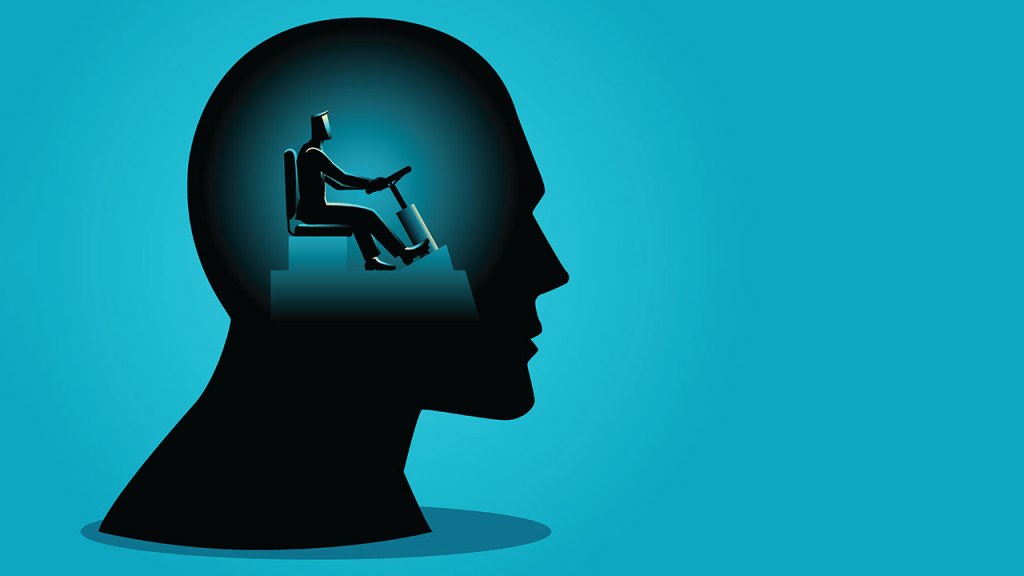
Presented by Claude for Zia H. Shah MD
Libertarian free will is a minority view among professional philosophers, but a substantial one. The 2020 PhilPapers Survey found that 18.8% of 1,758 respondents accept or lean toward it, against 59.2% for compatibilism and 11.2% for “no free will.” philpeople Among theist philosophers it is the majority view (about 53%). The case for it from neuroscience, the logic of reasoning, the reality of consciousness, and the Abrahamic scriptures is much stronger than its minority standing suggests.
- The numbers: Compatibilism leads among philosophers (59% in both 2009 and 2020). Libertarianism holds about 14–19% and “no free will” about 10–12%. Libertarianism correlates strongly with theism (r = 0.45), with rejecting physicalism, and with specializing in philosophy of religion. Ordinary people across cultures overwhelmingly say our universe is indeterministic.
- The science: The neuroscience that was supposed to abolish free will has turned out to be weak evidence. The Libet readiness potential looks largely like averaged neural noise (Schurger 2012). It is absent before deliberate, consequential choices (Maoz 2019). Soon/Haynes-type predictions reach only about 60% accuracy. Jeffrey Schwartz’s PET studies show patients changing the metabolism of their own caudate nucleus by directing their attention.
- The verdict: A coherent, defensible position is that the self is a real agent, grounded in a consciousness that cannot be denied without self-refutation. Scripture agrees: “Whoever wills, let him believe; whoever wills, let him disbelieve” (Quran 18:29); “Choose life” (Deuteronomy 30:19). Compatibilism keeps the word “freedom” but gives up what libertarians care about most: a real, open, two-way power of the self.
Abstract
This essay defends libertarian free will: the view that human persons are, at least sometimes, the originating source of their choices, with more than one future genuinely open to them. It first reports what philosophers actually believe, using the 2009 and 2020 PhilPapers Surveys and the experimental-philosophy research on lay intuitions. It then answers the claim that “neuroscience has disproved free will.” It covers Libet’s readiness potential and its reinterpretation by Schurger and Maoz, the limits of Haynes’s fMRI predictions, the veto window, quantum indeterminacy and its limits, and the evidence that mind shapes brain from placebo research and psychotherapy. The work of UCLA psychiatrist Jeffrey M. Schwartz runs through the argument: his Four Steps for OCD, PET evidence of “self-directed neuroplasticity,” his concept of “mental force,” his quantum Zeno model with physicist Henry Stapp, and his use of Adam Smith’s “Impartial Spectator.” Philosophically, the essay defends agent causation and Robert Kane’s self-forming actions. It presses the argument from reason, defends the Consequence Argument, answers Frankfurt cases, and rebuts Harris, Sapolsky, Pereboom, Galen Strawson and Dennett. Drawing on three October 2026 essays at thequran.love, it argues that free will stands or falls with the reality of consciousness, and that consciousness cannot coherently be denied. Finally, it gathers the witness of the Quran (with Arabic text) and the Bible, and reviews the classical solutions to the problem of foreknowledge and the Islamic debates over qadar, kasb, occasionalism and the Ahmadiyya view.
1. What Philosophers Believe
1.1 The PhilPapers Surveys
David Bourget and David Chalmers surveyed professional philosophers in 2009 (“What Do Philosophers Believe?”, Philosophical Studies, 2014) and again in 2020 (“Philosophers on Philosophy: The 2020 PhilPapers Survey,” Philosophers’ Imprint, 2023). Both asked: “Free will: compatibilism, libertarianism, or no free will?”
2009 (931 faculty at 99 leading departments):
| Position | Accept or lean toward |
|---|---|
| Compatibilism | 59.1% (550/931) |
| Libertarianism | 13.7% (128/931) |
| No free will | 12.2% (114/931) |
| Other | 14.9% (139/931) |
2020 (1,758 respondents in the target group; a respondent could endorse more than one option): philpapers
| Position | Accept or lean toward |
|---|---|
| Compatibilism | 59.16% (57.68% exclusively) |
| Libertarianism | 18.83% (18.20% exclusively) |
| No free will | 11.21% (10.58% exclusively) |
| Agnostic/undecided | 4.55% |
| Alternative view / combination / question unclear / no fact | ~8.3% combined |
The 2020 population was broader than the 2009 one, so the rise to 18.8% for libertarianism should not be read as growth. The survey’s like-for-like comparison of comparable departments (648 respondents in 2020) shows compatibilism moving from 59.08% to 62.81%, libertarianism from 13.75% to 12.81%, and “no free will” from 12.24% to 10.03%. philpeople Over the decade the field has been stable. Compatibilism dominates, and libertarianism and free-will denial are minorities of similar size.
1.2 Who the libertarians are
In the 2020 target population, libertarianism’s strongest correlations were with: fine-tuning as evidence of design (r = 0.50), theism (r = 0.45, n = 1,531), physicalism about mind (r = −0.43), dualism about consciousness (r = 0.40), and metaphilosophical naturalism (r = −0.39). philpeople Among areas of specialization, philosophy of religion predicted libertarianism most strongly (r = 0.28) and correlated negatively with compatibilism (r = −0.22). researchgate
The cross-tabulations make these numbers concrete:
- Theists vs. non-theists. 167 of 314 theists (about 53%) accept or lean toward libertarianism, against 134 of 1,217 non-theists (about 11%). For compatibilism it is about 40% of theists against about 70% of non-theists. Only 11 of 314 theists (about 3.5%) say there is no free will. philpeople
- Physicalists vs. non-physicalists. 64 of 855 physicalists (about 7.5%) are libertarians, against 228 of 611 non-physicalists (about 37%). philpeople
- Philosophy of religion. In 2009, 21% of libertarians listed it as a specialization, against 2.6% of non-libertarians. philpapers
In the 2009 factor analysis, Bourget and Chalmers found an “anti-naturalism” cluster. Libertarianism loaded on it at 0.66, theism at 0.63, and rejection of physicalism at 0.63. lesswrong Views on free will are not isolated opinions. They sit inside whole worldviews.
Critics take this as evidence that libertarianism is a “religious” holdover. The better reading is that libertarianism goes naturally with a worldview that takes consciousness seriously. The data show the free-will question tracking the mind-body question, and Section 5 develops that connection. Majority opinion in a discipline is also not proof. About 67% of the same respondents were atheists, Wikipedia and lay readers need not defer to the field on free will any more than on God.
1.3 What ordinary people believe
- Nahmias, Morris, Nadelhoffer and Turner (2005, Philosophical Psychology 18:561–584) gave people concrete deterministic scenarios. A large majority (76% in their headline case, typically 65–85%) judged that the agents acted freely and were responsible. eddynahmias Follow-up work changed the picture when determinism was described mechanistically, as decisions fully caused by brain chemistry. Nahmias, Coates and Kvaran (“Free Will, Moral Responsibility, and Mechanism: Experiments on Folk Intuitions,” Midwest Studies in Philosophy 31:214–242, 2007) concluded that “many more people have the intuition that mechanism precludes” free will and moral responsibility. In Nahmias’s later “Folk Fears about Freedom and Responsibility: Determinism vs. Reductionism,” only about 18% (4 of 22) of readers of a neuro-reductionistic scenario said the agents acted of their own free will, against about 72% for a psychological description. What people fear is the mind being bypassed.
- Nichols and Knobe (2007, Noûs 41:663–685) asked people to compare a deterministic universe with an indeterministic one. Over 90% said ours is like the indeterministic one. Asked abstractly, 86% said full moral responsibility is impossible under determinism. yalephilosophersannual Only emotionally vivid cases drew compatibilist verdicts (72%). whyevolutionistrue
- Sarkissian et al. (2010, Mind & Language 25:346–358) found the same pattern in the United States, India, Hong Kong and Colombia. Majorities picked the indeterministic universe as ours (about 82%, 85%, 65% and 77%) and judged responsibility incompatible with determinism. The authors called the convergence “striking.” wileynih
The fair conclusion is that ordinary people across cultures believe our world is open and, in the abstract, that responsibility requires that openness. rationalrealm Libertarians are stating the default human understanding of agency, not defending a quirk.
1.4 Why libertarians say rival views “deny” free will
Dr. Shah holds that every rival view denies free will to some degree. That claim needs careful statement. Hard determinists and free-will skeptics (Sapolsky, Pereboom, Galen Strawson, Harris) deny it openly. Illusionists about free will (Saul Smilansky) say we lack libertarian freedom but should keep believing in it. Compatibilists sincerely affirm free will, understood as acting from one’s own reasons without coercion, and they should be described that way. The libertarian objection is that under determinism the compatibilist’s “could have done otherwise” means only “would have done otherwise had the past or the laws been different.” That is a counterfactual about another world, not a power exercised in this one. The compatibilist keeps the word but gives up origination. In that precise sense, every non-libertarian view gives up the open, two-way power that ordinary people and the scriptures take freedom to be.
2. The Scientific Defense
2.1 Libet’s readiness potential: from verdict to artifact
In 1983 Benjamin Libet found that a slow EEG ramp, the readiness potential (RP), began roughly 550 ms before a spontaneous wrist flex. Subjects reported becoming aware of the urge only about 200 ms before the movement. The popular conclusion was that the brain decides before “you” do. Libet himself kept a conscious veto, a “free won’t.” Later work has weakened the deterministic reading further:
- Schurger, Sitt and Dehaene (2012, PNAS 109:E2904–E2913) modelled the RP as a leaky stochastic accumulator, random neural fluctuations drifting toward a threshold. When EEG epochs are averaged time-locked to movement, those random fluctuations add up to a smooth ramp. When the imperative to move is weak, “the precise moment at which the decision threshold is crossed leading to movement is largely determined by spontaneous subthreshold fluctuations in neuronal activity.” nihbiorxiv On this model the RP is not a decision already made. It may be an artifact of averaging noise. researchgate
- Maoz, Yaffe, Koch and Mudrik (2019, eLife 8:e39787) compared arbitrary choices with deliberate ones, in which participants chose which non-profit received a real $1,000 donation. The RP was clear before arbitrary choices and “completely absent” before deliberate ones (Bayes factor 0.332). Co-author Liad Mudrik, a neuroscientist at Tel Aviv University, told MIT Technology Review (13 April 2026): “If Libet would have chosen to focus on deliberate decisions, then maybe the entire debate about neuroscience proving free will to be an illusion would have been spared from us.”
- Schultze-Kraft, Haynes and colleagues (2016, PNAS 113:1080–1085) pitted subjects against a brain–computer interface that detected their RPs in real time. Subjects could still cancel movements until a “point of no return” about 200 ms before onset. pnash1
The strongest neuroscientific case against free will therefore rests on a signal that may be noise, that does not appear before meaningful decisions, and that does not commit the agent anyway.
2.2 Soon and Haynes: ten seconds, sixty percent
Soon, Brass, Heinze and Haynes (2008, Nature Neuroscience 11:543–545) reported that frontopolar and parietal activity carried information about a left/right button choice “up to 10 s before it enters awareness.” Decoding accuracy, however, peaked at about 60%, where chance is 50%. semanticscholarblogspot Lages and Jaworska (2012, Frontiers in Psychology 3:56) replicated two of these choice tasks behaviorally. Training a linear classifier only on participants’ preceding responses, with no brain data at all, they “obtained an average prediction accuracy of 61.6 and 64.1%, respectively,” because people are poor at generating random sequences. A slight bias on arbitrary choices shows that brain states incline choices, which every libertarian accepts. It does not show that they necessitate them.
2.3 Quantum indeterminacy: real, relevant and limited
Laplacean determinism is no longer the physics of the world. Neuroscientist Kevin Mitchell (Free Agents: How Evolution Gave Us Free Will, Princeton, 2023) writes that “there is nothing in the laws of physics that rules out the possibility of agency or free will, a priori.” mindmatters Indeterminacy shows up as molecular noise that organisms can harness. jstor Two qualifications are needed. First, randomness alone is not control (the “luck objection”). Second, Max Tegmark (2000, Physical Review E 61:4194–4206) calculated decoherence times in neurons of about 10⁻¹³ to 10⁻²⁰ seconds, far shorter than neural dynamics (10⁻³ to 10⁻¹ seconds), which counts against grand “quantum brain” theories. arxiv What physics establishes is negative but important: the claim that the future is closed is a metaphysical assumption, not a finding.
2.4 Emergence and top-down causation
Mitchell describes organisms as systems governed by what signals mean for their goals, and Christian List (Why Free Will Is Real, 2019) locates real alternatives at the psychological level of description. princeton Both write as naturalists, but their work undercuts the reductionist inference that “the neurons did it, so you didn’t.”
2.5 Mind over brain: placebo, psychotherapy and neuroplasticity
- Placebo. Levine, Gordon and Fields (1978, The Lancet 2:654–657) showed that placebo pain relief after dental surgery is reversed by the opioid blocker naloxone. An expectation, which is a mental state, releases endogenous opioids. thelancetjneurosci
- Psychotherapy. The first meta-analysis of PET and SPECT studies on the question (“Impact of treatment on resting cerebral blood flow and metabolism in obsessive compulsive disorder,” Scientific Reports 7:17464, 2017) found “small reductions in activity in the caudate nucleus and orbitofrontal cortex after treatment with a serotonin reuptake inhibitor or cognitive behavioral therapy.” A purely psychological treatment produced measurable brain change.
- Neuroplasticity. Practice and attention remodel the adult brain, and which practice and which attention are largely chosen.
This evidence refutes epiphenomenalism, the claim that the mind is a passenger. The remaining question is whether the self that directs attention is a real originator, and that is the question Jeffrey Schwartz addressed.
3. Jeffrey M. Schwartz: The Physician Who Watched the Mind Change the Brain
3.1 Brain lock and the Four Steps
Jeffrey M. Schwartz, a research psychiatrist at UCLA, used PET with Lewis Baxter, Michael Phelps and colleagues to show that obsessive-compulsive disorder involves an overactive circuit linking orbitofrontal cortex, caudate nucleus and thalamus. He called it “brain lock.” In Brain Lock (with Beverly Beyette, 1996) he set out the Four Steps: Wikipedianeurolaunch
- Relabel: name the intrusive thought an obsession and the urge a compulsion. “It’s not me—it’s my OCD.” perlego
- Reattribute: attribute it to a faulty brain signal. Wikipedia
- Refocus: turn to a wholesome activity even while the urge persists. “It’s not how you feel, but what you do that counts.” buddhistrecoveryWikipedia
- Revalue: see the obsession as worthless. neurolaunch
3.2 The Impartial Spectator
Schwartz grounded the Relabel step in Adam Smith’s Theory of Moral Sentiments:
“In Relabeling, you bring into play the Impartial Spectator, a concept that Adam Smith used as the central feature of his book The Theory of Moral Sentiments. He defined the Impartial Spectator as the capacity to stand outside yourself and watch yourself in action, which is essentially the same mental action as the ancient Buddhist concept of mindful awareness.” (Brain Lock) perlego
The Impartial Spectator is a self that is not identical with the brain state it observes and can decline that state’s demand. Libet’s “free won’t” here leaves the laboratory and enters a human life.
3.3 PET evidence of self-directed neuroplasticity
Baxter, Schwartz and colleagues (1992, Archives of General Psychiatry 49:681–689) found that caudate glucose metabolism changed with both fluoxetine and behavior therapy. semanticscholarresearchgate Schwartz, Stoessel, Baxter, Martin and Phelps (1996, Archives of General Psychiatry 53:109–113) replicated the finding: “Behavior therapy responders had significant (P < .05) bilateral decreases in caudate glucose metabolic rates that were greater than those seen in poor responders.” The abnormal coupling of orbital cortex, caudate and thalamus also weakened. nih No drug was given. The patients changed their brains by repeatedly choosing where to direct their attention. Schwartz called this self-directed neuroplasticity.
3.4 Mental force and the quantum Zeno effect
In The Mind and the Brain (with Sharon Begley, 2002), Schwartz argued that willful attention exerts a real “mental force.” With physicist Henry Stapp and neuroscientist Mario Beauregard, he proposed a physical model (“Quantum Physics in Neuroscience and Psychology,” Philosophical Transactions of the Royal Society B 360:1309–1327, 2005). researchgateroyalsocietypublishing In orthodox von Neumann quantum theory, the theory itself does not fix which question is posed to nature. Stapp identifies that choice with effortful attention. Posing the same question rapidly and repeatedly holds a brain pattern in place through the quantum Zeno effect. The paper concludes: “brain behavior that appears to be caused by mental effort is actually caused by mental effort: the causal efficacy of mental effort is no illusion.” newdualism The model is a contested minority proposal, and critics cite decoherence. Wikipedia Its value is that it gives a mathematically explicit, physics-respecting account in which mental effort is a cause.
3.5 You are not your brain
In You Are Not Your Brain (with Rebecca Gladding, 2011), the method extends to everyday habits. The targets are “deceptive brain messages,” and the Impartial Spectator becomes the Wise Advocate, which “knows what you are thinking, can see the deceptive brain messages for what they are and where they came from.” The book quotes Viktor Frankl: “Everything can be taken from a man but one thing: the last of the human freedoms—to choose one’s attitude in any given set of circumstances.” goodreadseverand The Quran states the same principle for societies: “Allah will not change the condition of a people until they change what is in themselves” (13:11).
4. The Philosophical Defense
4.1 Agent causation
Libertarianism holds that free will requires alternative possibilities and ultimate sourcehood, and that we have both. Thomas Reid (Essays on the Active Powers of Man, 1788) located freedom in the agent’s “active power.” Roderick Chisholm (“Human Freedom and the Self,” 1964) wrote that in free action “each of us… is a prime mover unmoved.” Timothy O’Connor (Persons and Causes, 2000) developed agent causation as an emergent power of conscious beings. Randolph Clarke (Libertarian Accounts of Free Will, 2003) argued that agent causation is the one libertarian account that secures the extra control libertarians want, though he was cautious about whether it is true. The charge that it is “mysterious” applies to every account, since every account of causation ends in something basic. Schwartz’s Impartial Spectator declining an urge is agent causation described clinically.
4.2 Kane’s self-forming actions
Robert Kane (The Significance of Free Will, 1996) argues that most acts flow from settled character. In moments of moral struggle, though, we perform self-forming actions. In these, indeterminism leaves either outcome open, and whichever we choose, we choose for reasons and with effort, and so shape our own character. This fits the evidence of Section 2. Trivial choices show biasing signals, while deliberate, value-laden choices behave differently (Maoz). Schwartz’s patients, struggling against an urge, are performing self-forming actions.
4.3 The Consequence Argument
Peter van Inwagen (An Essay on Free Will, 1983) argued: “If determinism is true, then our acts are the consequences of the laws of nature and events in the remote past. But it is not up to us what went on before we were born, and neither is it up to us what the laws of nature are. Therefore, the consequences of these things (including our present acts) are not up to us.” Compatibilist attacks on the transfer principle, and their conditional analyses of “could have done otherwise,” have not displaced the central intuition. That intuition is shared across four cultures in the data in Section 1.3.
4.4 Frankfurt cases
Harry Frankfurt (1969) imagined a controller who would force Jones’s choice if Jones showed signs of choosing otherwise, but never needs to intervene. Libertarians have three replies. (1) The dilemma defense (Kane, Widerker, Ginet): if the prior sign determines the choice, the case begs the question; if not, alternatives remain open. (2) The flicker of freedom: Jones could still have begun to choose otherwise. (3) Sourcehood: at most the case shows that alternatives are not always required at the moment of action. It does not show that being the source of the choice is unnecessary.
4.5 The argument from reason
- Epicurus: “He who says that all things happen of necessity cannot criticize another who says that not all things happen of necessity. For he has admitted that this too happens of necessity.”
- J. B. S. Haldane (1927): “If my mental processes are determined wholly by the motions of atoms in my brain, I have no reason to suppose that my beliefs are true… and hence I have no reason for supposing my brain to be composed of atoms.”
- C. S. Lewis (Miracles, 1947): if every thought is fully explained by non-rational causes, no thought is held because it is true, and that includes naturalism.
- J. R. Lucas (The Freedom of the Will, 1970) and Popper and Eccles (The Self and Its Brain, 1977) argued that determinism, if true, could only be caused in us, never rationally held.
- Alvin Plantinga’s Evolutionary Argument Against Naturalism (1993): if our faculties were selected only for survival, their reliability is low or inscrutable, which defeats naturalism itself.
Deliberation requires that I can follow the better argument because it is better. Free-will skeptics write books to change our minds, and in doing so they address us as people who can respond to reasons. That is the very power their conclusion denies.
4.6 Phenomenology and moral responsibility
Every person deliberating experiences the future as open and the choice as theirs. That experience is evidence, as perception is, and it can be overridden only by stronger evidence. Section 2 showed that the evidence against it is weak. Peter Strawson’s “reactive attitudes” (1962) of gratitude, resentment and forgiveness presuppose that the person could have acted otherwise. Proposals to replace desert with a “quarantine” model (Pereboom) or a medical model (Sapolsky) concede that the moral world we actually inhabit is built on libertarian assumptions.
4.7 Answering the skeptics
Sam Harris (Free Will, 2012) says thoughts simply appear. That describes watching the mind, not choosing. Schwartz’s patients have intrusive thoughts that appear unbidden, and they decline them. Harris’s Waking Up (2014) also treats consciousness as the one thing that cannot be an illusion.
Robert Sapolsky (Determined, 2023) traces behavior through neurons, hormones, genes and culture: “turtles all the way down.” Critical reviewers judged that the conclusion outruns the evidence. They include John Martin Fischer, who wrote in Notre Dame Philosophical Reviews (November 2023) that “Science, of course, is relevant; but that does not make free will a scientific question,” and Uri Maoz, whose review “Freedom from free will” appeared in Science (382:163, 12 October 2023). Showing that many factors influence a choice does not show that they fix it. academia Sapolsky also sets consciousness aside, and he concedes that his view is a minority one. goodreadsinquisitivebiologist PhilPapers puts it at about 11% of philosophers.
Derk Pereboom’s four-case manipulation argument (Living Without Free Will, 2001) shows, if it shows anything, that determinism undermines responsibility. That is an argument for incompatibilism, and incompatibilism combined with the evidence for freedom yields libertarianism.
Galen Strawson’s Basic Argument (1994) says that to be responsible we must be responsible for how we are, which leads to an infinite regress. Kane’s self-forming actions break the regress, because we need only to have shaped our character, not created it from nothing. Agent causation dissolves the regress altogether. Being causa sui in the absolute sense belongs to God alone, and human freedom is real but derivative.
Daniel Dennett offers “the varieties of free will worth wanting.” His compatibilism, though, is continuous with his illusionism about consciousness, and that is where the deeper battle lies.
5. Consciousness: The Witness Who Cannot Be Denied
5.1 Why free will depends on consciousness
A choice requires someone who weighs reasons and settles the matter. If consciousness is an illusion, the chooser disappears. That is why Dr. Shah’s three essays of 22 October 2026 at The Glorious Quran and Science bear directly on free will. thequran
5.2 The illusionist turn
Those essays let the illusionists speak for themselves. Dennett called consciousness an “evolved user-illusion.” Keith Frankish wrote that “phenomenal consciousness, as usually conceived, is illusory,” and that “Illusionism replaces the hard problem with the illusion problem.” Thomas Metzinger wrote: “Nobody ever was or had a self.” Michael Graziano titled a 2019 paper “We are machines that claim to be conscious.” Francis Crick wrote that “your sense of personal identity and free will, are in fact no more than the behavior of a vast assembly of nerve cells,” denying consciousness and free will in one sentence. Alex Rosenberg (The Atheist’s Guide to Reality, 2011) tied the denial explicitly to atheism. thequran
5.3 The illusion of illusion
The essays’ central argument is that an illusion requires someone who is deceived. As “When the Witness Denies Himself” puts it: “an illusion is a way things seem, and ‘seeming’ is already consciousness. So the illusionist does not get rid of the mind. He gets rid of his own grounds for believing anything, including illusionism.” Galen Strawson, himself a naturalist, called the denial of consciousness “the silliest claim ever made,” and noted that “to seem to feel pain is to be in pain.” Augustine had already said si fallor, sum, “if I am deceived, I exist.” thequran The same logic applies to free will. Calling the experience of deliberating misleading undercuts the faculty through which anyone reaches that conclusion.
5.4 The colour argument
Dr. Shah’s own contribution is this:
“I believe that denial of God has brought the atheists to a point where they have to deny even their own consciousness or very existence. The colors in nature do not have independent existence. A green tree becomes green when our color vision perceives it as such. To a color blind it is not green and is some shade of gray… So, atheists are not only denying God’s existence, but by calling their consciousness an illusion, they change all of universe or all of existence into an illusion.” thequran
Galileo (The Assayer, 1623) said that colours “reside only in the consciousness. Hence if the living creature were removed, all these qualities would be wiped away and annihilated.” thequran As “The Illusion of Illusion” puts it, the colour-blind person and the trichromat “demonstrate the reality of subjective experience precisely by disagreeing about it.” thequran The deliberating self is no more an add-on to the world than colour is. Deny the chooser, like the seer, and the world the theory was meant to explain goes with it.
5.5 The scientific case for the primacy of consciousness
The essays add points that bear directly on agency. Correlation is not identity: without the subject’s report “there is no neuroscience of consciousness, only a neuroscience of button presses,” and Libet’s own paradigm relies on that report. The metabolic argument: the brain is about 2% of body mass but uses about 20% of resting energy, and evolution does not pay for an epiphenomenon. The clinical argument: naloxone-reversible placebo, the predictive value of subjective dyspnea, and CBT for insomnia all show experience doing causal work, and Schwartz’s PET studies show willed attention doing it. Physics and the observer: Planck, Schrödinger and Wigner kept the mind in the foundations of physics, and Stapp continues that tradition. thequran (One correction to the sources: “The Ontological Primacy of Consciousness” attributes the phrase “We are machines that claim to be conscious” to Patricia Churchland. It is Graziano’s title, as the companion essay correctly states.) thequranthequran
5.6 The Quranic diagnosis
وَلَا تَكُونُوا۟ كَٱلَّذِينَ نَسُوا۟ ٱللَّهَ فَأَنسَىٰهُمْ أَنفُسَهُمْ ۚ أُو۟لَٰٓئِكَ هُمُ ٱلْفَٰسِقُونَ
“And be not like those who forgot Allah, so He made them forget themselves. Those are the defiantly disobedient.” (59:19)
وَيَسْـَٔلُونَكَ عَنِ ٱلرُّوحِ ۖ قُلِ ٱلرُّوحُ مِنْ أَمْرِ رَبِّى وَمَآ أُوتِيتُم مِّنَ ٱلْعِلْمِ إِلَّا قَلِيلًا
“And they ask you about the soul. Say, ‘The soul is of the affair of my Lord. And mankind have not been given of knowledge except a little.’” (17:85)
A worldview that forgets God loses first the soul, then consciousness, then the self, and finally the self’s freedom. A self that is “of the command” (amr) of God shares, in a creaturely way, in the power to command, and that is the theological root of libertarian freedom.
6. The Theological Defense
6.1 The Quran: the language of choice
(Arabic in Uthmani orthography; English after Sahih International.)
18:29
وَقُلِ ٱلْحَقُّ مِن رَّبِّكُمْ ۖ فَمَن شَآءَ فَلْيُؤْمِن وَمَن شَآءَ فَلْيَكْفُرْ
Wa quli al-ḥaqqu min rabbikum, fa-man shā’a fal-yu’min wa man shā’a fal-yakfur. “And say, ‘The truth is from your Lord, so whoever wills, let him believe; and whoever wills, let him disbelieve.’” quranquranx
76:3
إِنَّا هَدَيْنَٰهُ ٱلسَّبِيلَ إِمَّا شَاكِرًا وَإِمَّا كَفُورًا
“Indeed, We guided him to the way, be he grateful or be he ungrateful.”
91:7–10
وَنَفْسٍ وَمَا سَوَّىٰهَا ﴿٧﴾ فَأَلْهَمَهَا فُجُورَهَا وَتَقْوَىٰهَا ﴿٨﴾ قَدْ أَفْلَحَ مَن زَكَّىٰهَا ﴿٩﴾ وَقَدْ خَابَ مَن دَسَّىٰهَا ﴿١٠﴾
“And [by] the soul and He who proportioned it, and inspired it [with discernment of] its wickedness and its righteousness. He has succeeded who purifies it, and he has failed who corrupts it.”
The soul is given both possibilities, and its success or failure is its own doing.
13:11
إِنَّ ٱللَّهَ لَا يُغَيِّرُ مَا بِقَوْمٍ حَتَّىٰ يُغَيِّرُوا۟ مَا بِأَنفُسِهِمْ
“Indeed, Allah will not change the condition of a people until they change what is in themselves.”
2:256
لَآ إِكْرَاهَ فِى ٱلدِّينِ ۖ قَد تَّبَيَّنَ ٱلرُّشْدُ مِنَ ٱلْغَىِّ
“There shall be no compulsion in religion. The right course has become clear from the wrong.”
53:39
وَأَن لَّيْسَ لِلْإِنسَٰنِ إِلَّا مَا سَعَىٰ
“And that there is not for man except that for which he strives.”
74:38
كُلُّ نَفْسٍۭ بِمَا كَسَبَتْ رَهِينَةٌ
“Every soul, for what it has earned, will be retained.”
17:15
مَّنِ ٱهْتَدَىٰ فَإِنَّمَا يَهْتَدِى لِنَفْسِهِۦ ۖ وَمَن ضَلَّ فَإِنَّمَا يَضِلُّ عَلَيْهَا ۚ وَلَا تَزِرُ وَازِرَةٌ وِزْرَ أُخْرَىٰ
“Whoever is guided is only guided for himself. And whoever errs only errs against himself. And no bearer of burdens will bear the burden of another.”
41:46
مَّنْ عَمِلَ صَٰلِحًا فَلِنَفْسِهِۦ ۖ وَمَنْ أَسَآءَ فَعَلَيْهَا ۗ وَمَا رَبُّكَ بِظَلَّٰمٍ لِّلْعَبِيدِ
“Whoever does righteousness, it is for his own soul; and whoever does evil does so against it. And your Lord is not ever unjust to His servants.”
Punishing acts that could not have been avoided would be ẓulm, injustice. Divine justice therefore requires real freedom.
6:148
سَيَقُولُ ٱلَّذِينَ أَشْرَكُوا۟ لَوْ شَآءَ ٱللَّهُ مَآ أَشْرَكْنَا وَلَآ ءَابَآؤُنَا … قُلْ هَلْ عِندَكُم مِّنْ عِلْمٍ فَتُخْرِجُوهُ لَنَآ ۖ إِن تَتَّبِعُونَ إِلَّا ٱلظَّنَّ
“Those who associated others with Allah will say, ‘If Allah had willed, we would not have associated [anything], nor would our fathers’… Say, ‘Do you have any knowledge that you can produce for us? You follow nothing but assumption.’”
Here the polytheists offer the determinist excuse, and the Quran calls it conjecture (ẓann). Scripture recognized long ago that determinism offered as an excuse is a moral evasion presented as metaphysics.
6.2 The Bible: “Choose life”
- Genesis 4:7: “If thou doest well, shalt thou not be accepted? and if thou doest not well, sin lieth at the door. And unto thee shall be his desire, and thou shalt rule over him.” The urge is real, and Cain can master it.
- Deuteronomy 30:19: “I have set before you life and death, blessing and cursing: therefore choose life, that both thou and thy seed may live.”
- Joshua 24:15: “Choose you this day whom ye will serve… but as for me and my house, we will serve the LORD.”
- Ezekiel 18:20, 32: “The soul that sinneth, it shall die. The son shall not bear the iniquity of the father… wherefore turn yourselves, and live ye.”
- Galatians 6:7: “Whatsoever a man soweth, that shall he also reap.”
- Matthew 23:37: “How often would I have gathered thy children together, even as a hen gathereth her chickens under her wings, and ye would not!”
- Revelation 3:20: “Behold, I stand at the door, and knock: if any man hear my voice, and open the door, I will come in to him.”
6.3 Foreknowledge and freedom
- Rabbi Akiva (Pirkei Avot 3:15): ha-kol tzafui ve-ha-reshut netunah, “Everything is foreseen, and freedom is given.”
- Maimonides (Mishneh Torah, Hilchot Teshuvah 5) calls free choice “a pillar of the Torah.” Anyone may become as righteous as Moses or as wicked as Jeroboam, and God’s knowledge is not like ours.
- Augustine (On Free Choice of the Will, III): foreknowledge does not cause what it knows, just as memory does not cause the past.
- Boethius (Consolation of Philosophy, V): God is eternal, “the complete possession all at once of illimitable life.” He sees our free acts in an eternal present rather than foreseeing them.
- Luis de Molina (Concordia, 1588): through middle knowledge, God knows what free creatures would do in any circumstance and governs providentially without overriding them. Plantinga used this idea in his Free Will Defense.
All of these share one principle: knowledge follows its object and does not determine it.
6.4 The Islamic debates
The Mu’tazila argued from divine justice (‘adl) that humans create their own acts. The Jabriyya held that humans are compelled like “a feather in the wind,” a position mainstream theology rejected. The Ash’aris taught kasb: God creates all acts, citing 37:96 (وَٱللَّهُ خَلَقَكُمْ وَمَا تَعْمَلُونَ, “while Allah created you and that which you do”), but the human acquires them. The doctrine’s obscurity became proverbial (“more subtle than al-Ash’ari’s kasb”). The Maturidis gave real weight to human choice (ikhtiyār), which God’s creating follows. That is much closer to libertarianism.
6.5 Al-Ghazali’s occasionalism and responsibility
Al-Ghazali (Tahāfut al-Falāsifa, Seventeenth Discussion) denied any necessary connection between created causes and their effects. Fire does not burn by its own nature; God creates the burning on the occasion of contact. Occasionalism can support human responsibility. (1) It removes the determinist’s chain. No created cause necessitates anything, and nature’s regularities are God’s custom (‘āda), not iron law. (2) On a Maturidi-style reading, the human will is a rational, self-determining occasion on which God creates the act. God honors the choice, as 13:11 describes. (3) It fits a quantum universe. Dr. Shah has used occasionalism “to make room for mind in a quantum universe.” Lawful probabilities are God’s ‘āda in statistical form. Stapp’s mind poses the question, and God settles the outcome in keeping with real created choices. The verse “you do not will except that Allah wills” (76:30; 81:29) can be read to mean that our power to will is God’s sustained gift, not a fiction.
6.6 The Ahmadiyya perspective
Hazrat Mirza Tahir Ahmad, the fourth Ahmadiyya Khalifa, wrote in An Elementary Study of Islam (“Predestiny and Free Will”): alislam
“There is no evidence to indicate that each man’s life is pre-ordained, and that he has no choice or option in choosing between good and bad, right and wrong. The Holy Quran categorically rejects the concept of compulsion, and clearly states that every human being is free to choose between good and evil.” alislam
He distinguishes areas of real freedom and accountability from areas of divine decree, such as birth and endowment, where a person has “little choice.” alislam Pathway to Paradise summarizes: “Within the boundaries of Divine Decree, man is given free will.” alislam This is bounded but genuine origination, which is exactly the libertarian claim. (Ahmadiyya editions count the Bismillah as verse 1, so their verse numbers often run one higher.)
6.7 Why theism and libertarianism belong together
The r = 0.45 correlation has a reason behind it. If ultimate reality is a conscious, free Creator, then consciousness and agency are an image of the source of being, not accidents: “I breathed into him of My spirit” (Quran 15:29); “God created man in his own image” (Genesis 1:27). A universe that comes from Mind can contain minds that truly act. A universe that comes from mindlessness has to explain them away, and the illusionists show where that leads.
7. Thematic Epilogue: The Hand on the Latch
A physician learns early that the body has its own urges: the cough that insists, the craving that returns. A sleep physician learns more. At night the brain builds worlds the sleeper did not choose, and on waking the sleeper must decide again what is real. Medicine is a quiet, extended argument for free will. We tell patients to stop smoking, to wear the mask, to walk each morning, and we hold them, and ourselves, accountable. No clinician speaks to a patient as a pack of neurons. We speak to the one who will rise or not rise from the bed.
Jeffrey Schwartz brought that intuition into the scanner and found the mind there: in the cooling caudate of a patient who felt the urge to wash a thousand times and chose not to. Adam Smith’s Impartial Spectator, the Quran’s soul “inspired with its wickedness and its righteousness,” and the God who told Cain “thou shalt rule over him” all describe the same figure. It is the self who stands one step back from its own brain and says, this is not me; I will choose otherwise.
The determinist’s chain, the illusionist’s mirror and the skeptic’s turtles all need an observer to describe them. The argument that we cannot choose has to be chosen as the better argument. The claim that consciousness is unreal has to appear to someone. At the end of every reduction the witness remains, breathed, the Quran says, from the command of God.
The scriptures put all this as an invitation, not a puzzle. “Behold, I stand at the door, and knock.” “Whoever wills, let him believe.” “Therefore choose life.” God does not force the door. The latch is on our side, held in being by Him but lifted by us. That is the dignity of the human person and its burden, and it is what Rabbi Akiva meant: all is foreseen, and freedom is given. Philosophers may vote as they will, and neuroscientists may average their signals. Each morning the chooser wakes and chooses, and no argument against that can be made without using it.




Leave a Reply