
Presented by Claude
Estimated running time: about 20 minutes (roughly 2,950 words of narration at 145–150 words per minute)
COLD OPEN
A woman walks into a doctor’s office and says, “I have a terrible headache.”
The doctor orders scans and blood work, every test medicine has. Every result comes back normal.
Now imagine the doctor looking up from the screen and saying: “Then your headache doesn’t exist.”
[PAUSE]
We would call that absurd. Her pain is not a theory waiting for the scans to confirm it. It is the very thing the scans are trying to explain. If the theory and the pain disagree, the theory loses. thequran
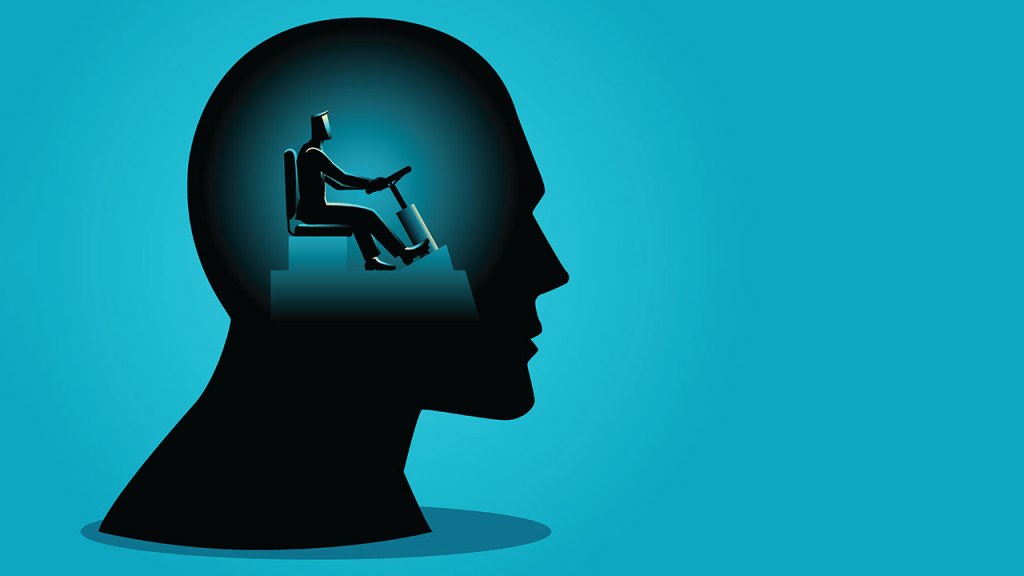
This film is about a mistake of exactly that kind. Not about headaches, but about choices. About the moment you stand at a fork in the road, feel both paths pulling at you, and then settle the matter yourself. Many brilliant people have concluded that this moment is not what it seems, and that you are not really the author of what you do.
This documentary argues that they have it backwards. Before the brain scans, before the equations, before the theories, the chooser comes first.
PART ONE: THE QUESTION
So let’s state the question plainly. When you choose, are you really choosing?
Philosophers call the “yes” answer libertarian free will. The word has nothing to do with politics. It means two things. First, in a genuine choice, you, the self, are a real originator of what happens. Second, you could have done otherwise, even with everything in the past exactly as it was. thequran
Why should anyone outside a philosophy department care? Because almost everything we value rests on it. When a court separates a guilty defendant from one who is legally insane, it assumes some people are the authors of their acts. When you forgive a friend, you assume there was something to forgive. When you admire a firefighter’s courage or feel remorse for your own cruelty, you assume a person stood at a real crossroads and chose. Take away the chooser, and praise becomes a kind of conditioning, blame becomes a kind of maintenance, and love becomes weather inside the skull. thequran
The essay behind this film, by the physician Zia H. Shah, states its thesis without hedging: libertarian free will is not merely defensible. It is the true account of human agency. thequran
PART TWO: A PUZZLE ABOUT EXPERTS
But there is an awkward fact. Most professional philosophers disagree.
In 2009, the philosophers David Bourget and David Chalmers surveyed 931 philosophers at leading departments with a simple question: free will, compatibilism, libertarianism, or no free will? Of those 931, 550, or 59.1 percent, accepted or leaned toward compatibilism, a view we will unpack shortly. Just 128, or 13.7 percent, chose libertarianism. And 114, or 12.2 percent, said there is no free will at all.
In 2020 they asked again, this time a broader group of 1,758 philosophers. Compatibilism: 59.16 percent. Libertarianism: 18.83 percent. No free will: 11.21 percent. One honest caution, which the survey’s own website makes: the 2020 results should not be compared directly with 2009, because the populations differ. In the survey’s like-for-like comparison of the same kinds of departments, libertarianism actually slipped, from 13.75 percent in 2009 to 12.81 percent in 2020.
So if libertarian free will is true, why do most experts reject it?
The survey itself offers a clue. In Bourget and Chalmers’s 2023 write-up of the 2020 data, acceptance of libertarian free will correlates negatively with physicalism, the view that the mind is nothing more than physical stuff, at minus 0.42, and positively with belief in God, at 0.44. In other words, what a philosopher thinks about free will closely tracks what they already think reality is made of. thequran
Dr. Shah’s diagnosis: the majority has put the cart before the horse. They began with a theory of matter, then asked what kind of freedom could survive inside it. They defined the fundamental in terms of the secondary, when the right method is the reverse. thequran
PART THREE: THE MOTHER OF THE BOOK
To explain that method, the essay turns to the Quran, chapter 3, verse 7.
The verse says the Book contains two kinds of verses. Some are muhkamat: decisive, clear, foundational. The Quran calls them umm al-kitab, “the mother of the Book.” Others are mutashabihat, open to more than one reading. wikishia The clear verses govern how we read the ambiguous ones. patheos And the verse warns that those with crookedness in their hearts chase the ambiguous passages to serve an agenda. islamhashtagthequran
A second verse, 4:82, adds a test: had the Quran come from anyone other than God, people would have found much contradiction in it. A sound reading resolves contradictions rather than multiplying them. thequran
Dr. Shah applies these two principles, read the uncertain in light of the certain and test for consistency, not only to the book of revelation but to the book of reality. So the question becomes: what is the mother of the book of human knowledge? What do we know more surely than anything else? thequran
PART FOUR: THE SELF THAT CANNOT BE DOUBTED
Go back some sixteen centuries. Rome has been sacked by the Visigoths. In North Africa, Augustine of Hippo is writing The City of God, and in Book Eleven he answers skeptics who claimed nothing can be known for certain. winthrop His reply: Si enim fallor, sum. “For if I am deceived, I am.” stanfordthequran Something that does not exist cannot be deceived. Even if I am wrong about everything else, my being wrong proves there is an “I” who is wrong. wursten
About twelve centuries later, René Descartes resolved to doubt everything that could possibly be doubted. Perhaps his senses lied. Perhaps he was dreaming. winthrop Perhaps a powerful demon was feeding him illusions. philarchive But doubt could not reach the doubter. He published the insight in French in 1637: “I think, therefore I am.” In his Principles of Philosophy of 1644, the famous Latin appears, ego cogito, ergo sum, which he called the first and most certain thing anyone reasoning in an orderly way will meet. Wikipediathequran
Notice what follows. The first thing we know is not matter. It is the conscious self. We are not first certain of atoms and then cautiously infer minds. We are first certain of our own minds, and from there we build theories about atoms. Every equation in physics was written, checked and believed by a conscious person who weighed evidence and decided to accept it. thequran
And here is the step the essay says many philosophers miss. The self that cannot be doubted is not a passive spectator. Descartes decided to doubt. He withheld agreement. He resolved to accept only what was clear. The certain self is an acting self, one that attends, weighs, accepts and rejects. Our awareness of authoring our choices is as immediate as our awareness of existing. thequran
That is the decisive verse of reality. And the grand theories that say every event is fixed by physics? Those, the essay argues, are the ambiguous verses: impressive, contested, and built downstream of the data. To overturn the decisive by the ambiguous is exactly what the Quran warns against. thequran
PART FIVE: THE RIVALS, STATED FAIRLY
An honest advocate states the other side as its best defenders would.
Start with determinism: the idea that the state of the world at any moment, together with the laws of nature, fixes exactly one possible future, like a line of dominoes set up at the Big Bang. Hard determinists accept this and conclude that free will, in any sense that matters, does not exist. Your choices are links in a chain running back through your genes, upbringing and brain chemistry. thequran
Some add a twist. In quantum mechanics, the physics of the very small, some events appear genuinely random. But randomness, they say, doesn’t help. A choice produced by a coin-flip inside your head is no more yours than one produced by dominoes. Illusionists go further: our strong feeling of freedom is simply a story the brain tells itself. thequran
Then come the compatibilists, the majority. They say free will is compatible with determinism, but only by redefining it. Freedom no longer means you could have done otherwise with the same past. It means acting on your own desires without being forced. thequran
The lineage is distinguished. David Hume, in his Enquiry, defined liberty as “a power of acting or not acting, according to the determinations of the will,” a liberty, he said, “universally allowed to belong to every one who is not a prisoner and in chains.” Harry Frankfurt, in 1969, devised thought experiments in which a hidden device would have forced your action had you wavered; you never wavered, so you seem responsible anyway. P. F. Strawson argued in 1962 that resentment, gratitude and indignation are so woven into human life that no discovery about determinism could uproot them. stanfordthequran Daniel Dennett’s 1984 book Elbow Room carried the subtitle “The Varieties of Free Will Worth Wanting,” arguing that evolved capacities for deliberation and self-control are the only freedom worth having. mitthequran And Patricia Churchland identifies the self with the brain and recasts free will as neural self-control. thequran
Finally, hard incompatibilists, led by Derk Pereboom in his 2001 book Living Without Free Will. coordinatesofthought They agree with libertarians that determinism would destroy real responsibility, and agree with determinists that we probably lack it anyway. unfinishablemap Pereboom’s famous argument begins with a man whose decisions are engineered by neuroscientists, then moves step by step to ordinary determinism, asking where any real difference appears. stanfordthequran
Notice: libertarians and hard incompatibilists agree on the key point. Compatibilist “freedom” is not the real thing. They differ only on whether we have the real thing. thequran
PART SIX: LOWERING THE BAR
Here the essay sharpens its argument. Compatibilism, it says, is often brilliant, but at bottom it lowers the bar. To keep materialism intact, freedom is redefined as spontaneity, or a mesh between levels of desire, or social reaction, or evolved competence, or self-control in the brain’s frontal lobes. Why? Because a purely physical universe cannot tolerate a self that genuinely starts things. thequran
Compare how an ordinary person experiences choice. A mother agonizing over whether to tell her child a painful truth is not wondering whether her desires will mesh. She believes both paths are open, and that she is the one who will choose. thequran
In 1983, the philosopher Peter van Inwagen sharpened the problem into what he called the Consequence Argument. If determinism is true, our acts are consequences of the laws of nature and events in the remote past. But what happened before we were born is not up to us, and neither are the laws of nature. So neither are their consequences, including what we do today. Wikipediainformationphilosopher
And when Dennett speaks of the freedom “worth wanting,” the essay hears a confession. Imagine a physician who cannot cure a disease announcing that the cure was never worth wanting. A freedom that a thermostat or a chess program could in principle possess is not the freedom that makes a person answerable before conscience, before society and, the author believes, before God. thequran
PART SEVEN: IF FREEDOM IS REAL, MATERIALISM FALLS
Now flip the question. Suppose we really do have libertarian free will. What follows?
Materialism’s central pillar is called causal closure. The philosopher Jaegwon Kim stated it carefully: any physical event that has a cause has a physical cause. Trace anything in your body backward and you never need to leave the physical world. newdualismstanford Kim added an exclusion principle: if the brain already fully causes your action, nothing is left for a separate mind to do. arxiv
Against this stands Roderick Chisholm’s 1964 lecture at the University of Kansas, “Human Freedom and the Self.” When we act freely, Chisholm argued, some event, presumably in the brain, is caused not by another event but by the agent. kuthequran This is agent causation: the self, not merely events inside it, is the cause. thequran His conclusion was bold: each of us, when we act, is “a prime mover unmoved.” studocu
If that happens even once, causal closure is false. thequran The philosopher William Hasker, in his 1999 book The Emergent Self, argued that genuine libertarian freedom requires a mind with powers its physical parts lack, a mind that in turn directs the brain. He even titled a chapter “Why the Physical Isn’t Closed.” informationphilosopherdegruyterbrill
So the stakes are clear. A single genuine free choice would breach the wall. And notice: no one has ever traced a human decision from atoms to action and found the chain complete. Materialists reject free will because it would refute materialism. That is not evidence. It is a prior commitment. thequran
PART EIGHT: WHY THE CHOOSER IS REAL
The essay offers four positive reasons.
First, immediate acquaintance. Our awareness of ourselves as choosers is among the most certain things we know. When a theory collides with our most certain data, the theory should bend. The Scottish philosopher Thomas Reid pressed this point against Hume in the eighteenth century. thequran
Second, reason itself. In 1927 the biologist J. B. S. Haldane wrote that if his mental processes were determined wholly by the motions of atoms in his brain, he would have no reason to suppose his beliefs true, “and hence I have no reason for supposing my brain to be composed of atoms.” oxfordreference Reasoning means being moved by grounds, not merely causes. The determinist who argues with you assumes you can weigh his case and choose to accept it. That is the kind of contradiction verse 4:82 trains us to notice. thequran
Third, moral experience. Immanuel Kant saw that duty and freedom stand or fall together. In his Critique of Practical Reason of 1788, he called freedom “the keystone of the whole system of pure reason,” and wrote that freedom is the ratio essendi of the moral law, while the moral law is the ratio cognoscendi of freedom: freedom is what makes morality possible, and morality is how we come to know we are free. Whenever you feel the pull of “ought,” you touch your own freedom, because “ought” makes no sense without “can.”
Fourth, accountability. Courts, remorse and forgiveness all presuppose it. So does the Quran: “man can have nothing but what he strives for,” chapter 53, verse 39. quranx A worldview that must call all this illusion has paid too high a price for consistency with one theory of physics. thequran
PART NINE: ANSWERING THE OBJECTIONS
Now, the hardest challenges.
Objection one: if nothing fixes whether I choose A or B, isn’t the outcome just luck? The objection assumes the only causes are events, so anything not caused by a prior event must be random. Agent causation denies that. A free choice is caused, by the agent, acting for reasons. When I keep a costly promise “because I gave my word,” that explanation is complete, though I could have done otherwise. Luck is what happens to me. Choice is what I do. thequran
Objection two: hasn’t neuroscience shown that the brain decides before we do?
In 1983, Benjamin Libet and colleagues published a study in the journal Brain. nih Volunteers flexed their wrists whenever they felt like it while electrodes recorded a slow build-up of brain activity called the readiness potential. That build-up began about 550 milliseconds before movement, yet volunteers reported awareness of the urge only about 200 milliseconds before, a gap of roughly 350 milliseconds. Headlines followed: your brain decides, and you merely find out. psychologytoday
Consider three things. First, Libet himself resisted that conclusion; he argued consciousness keeps a veto, sometimes called “free won’t.” closertotruth +2 Second, flicking a wrist on a whim, with nothing at stake, is about as far from a real moral decision as an experiment can get. informationphilosopher Third, and most important: in 2012, Aaron Schurger, Jacobo Sitt and Stanislas Dehaene published a reanalysis in the Proceedings of the National Academy of Sciences. They showed the readiness potential’s shape can be reproduced by spontaneous neural noise drifting until it crosses a threshold, with the famous ramp emerging when many trials are averaged and lined up to the moment of movement. josegudemdatticusli Researchers still debate what the signal reflects. ox But the best-known “refutation” of free will may be little more than background noise in a task where nothing was being decided. thequranx
As a physician, Dr. Shah respects the brain deeply. Injury, disease and drugs plainly affect agency. But showing that the mind depends on the brain is not showing that the mind is nothing but the brain. A pianist depends on her piano, and a broken piano silences her. That does not make the piano the musician. thequran
Objection three: how could anything non-physical move matter? This is old. In May 1643, Princess Elisabeth of Bohemia asked Descartes how a soul, being only a thinking thing, could move the body to produce voluntary actions. ndringmar
Three replies. First, no one has a deep account of how anything causes anything; Hume taught that we never observe causal necessity, only regular sequence. thequran Second, physics does not clearly forbid it. In 1992, the physicist Friedrich Beck and the Nobel-winning neurophysiologist Sir John Eccles proposed in the Proceedings of the National Academy of Sciences that intention might act by momentarily raising the probability of chemical release at nerve junctions. closertotruthstanford That proposal is speculative and contested, and the essay does not rest on it. But it shows “physics forbids it” is a philosophical claim, not a measurement. thequranresearchgate Third, and decisively, the interaction problem asks how mind moves matter. It gives no reason to doubt that it does. A doctor who cannot yet explain how a drug works does not deny that the patient recovered. thequran
Objection four: wouldn’t abandoning free will make us gentler? Pereboom deserves credit for honesty. But no one can actually live that way. We still thank benefactors, grieve our failures, admire courage. Strawson was right that these attitudes cannot be uprooted. stanford He drew the wrong conclusion. Their persistence is not a useful fiction. It is evidence that the theory condemning them is mistaken. thequran
PART TEN: CHOOSING THE CENTER
So why did the majority go astray? Not by conspiracy. Most compatibilists are careful, honest thinkers. They chose the wrong center. Make third-person physics your center, and the first-person self becomes an awkward fact to be managed. Make the self your center, as Augustine and Descartes did, and physics becomes a magnificent but partial description of the stage on which agents act. thequran
CLOSING: THE CHOOSER AND THE MOTHER OF THE BOOK
The Quran calls its decisive verses the mother of the Book. A mother comes first. She gives birth; she does not take her origin from her children. thequran
In the book of human knowledge, the mother is the conscious, choosing self. Physics, chemistry and neuroscience are her children: brilliant, powerful, always growing, but born from minds that observe, test and choose to believe. When a child tells its mother she does not exist, the right response is not surrender. It is to remember who came first. thequran
We do not need a brain scan to tell us whether we choose, any more than a patient needs an MRI to tell her whether she hurts. thequran
[PAUSE]
If we are only links in a chain, then courage, repentance and love are weather in the skull. But if we are what we seem to be, agents at real forks in real roads, then each of us is, in Chisholm’s phrase, a prime mover unmoved within the small circle of our own acts. thequran Not a claim to divinity, the author stresses, but a trust given by the One who alone is the Prime Mover of all things. thequran
Every day, you cross the wall that materialism says cannot be crossed. In every honest word that could have been a lie. Every kindness that could have been withheld. Every prayer that could have gone unsaid. thequran
Si fallor, sum. If I am deceived, I am.
And since I am, and I choose, I answer for my choices. thequran
The chooser comes first.



Leave a Reply