
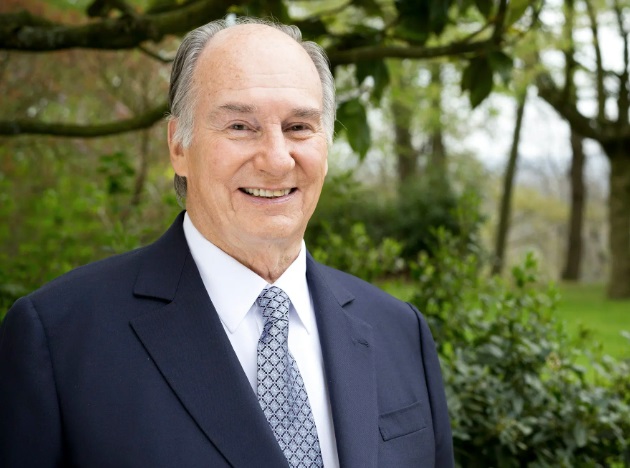
Aga Khan IV and the Quran: Verified Facts, Abstract, and Thematic Epilogue
Presented by Claude for Zia H Shah MD
Abstract
The Speaking Quran and the Silent Record: Aga Khan IV and the Limits of Imamic Hermeneutical Authority
Nizari Ismaili doctrine assigns the Imam of the Time a singular relationship to the Quran. The community’s Constitution affirms that the Prophet appointed ʿAlī “to continue the Taʾwīl and Taʿlīm of Allah’s final message,” and that this office continues through hereditary Imams. themuslimtimes Classical Nizari thought, as described by Farhad Daftary and the Encyclopaedia Iranica, centres on taʿlīm, the authoritative teaching of the Imam. iis Contemporary community and apologetic literature calls the Imam the Qurʾān-e nāṭiq (“speaking Quran”) and draws on Shia readings of Quran 3:7 and 35:32 to present him as the heir and sole authoritative interpreter of scripture.
This essay tests those claims against the documentary record of Prince Karim Aga Khan IV, the 49th Imam. His imamate ran from 11 July 1957 to his death in Lisbon on 4 February 2025, some sixty-seven years, and few religious leaders’ public lives are as well documented. The record shows no tafsīr, no systematic commentary, and no published taʾwīl. This is so even though he himself described his religious mission in 1967 as “a symbolic exegesis of the Qur’an.” His only book, Where Hope Takes Root: Democracy and Pluralism in an Interdependent World (2008), collects thirteen speeches on civil society and pluralism. barakah In his speeches he cited a small set of verses: above all 4:1 on humanity’s creation “from a single soul,” together with verses on the signs of God in nature, the pursuit of knowledge, and the absence of compulsion in religion. He used them for ethical and civic ends rather than for interpretation. His lasting achievements were institutional, among them the Aga Khan Development Network, the Aga Khan University and the Institute of Ismaili Studies.
The essay concludes that the documentary record supports a picture of a wise, scripturally inspired leader. It does not support the more expansive claims that he was the unique, living, authoritative interpreter of the Quran. The essay then places this gap within a wider pattern of elevating leaders’ authority across Shia and Sunni communities.
1. What the doctrine actually claims
Constitutional level. The Preamble of the Ismaili Constitution makes four claims relevant here:
- Clause (B): “the Holy Prophet… designated and appointed his cousin and son-in-law Hazrat Mawlana Ali… to be the first Imam to continue the Ta’wil and Ta’lim of Allah’s final message and to guide the murids.” The Imamat then continues by heredity. themuslimtimes
- Clause (D): the Imam’s authority is “testified by Bay’ah,” which binds murids in “loyalty, devotion and obedience to the Imam.” simerg
- Clause (F): “The Imam’s Ta’lim lights the murids’ path to spiritual enlightenment and vision.” themuslimtimes
- Article 1: the Imam has “absolute and unfettered power and authority” over religious and Jamati matters, including sole authority to interpret religious traditions. themuslimtimes
This is the strongest official statement that interpreting the Quran (ta’wil) and authoritative teaching (ta’lim) belong to the Imam’s office.
Academic level. Farhad Daftary (Encyclopaedia Iranica, “Hasan Sabbah”) describes Hasan-i Sabbah’s “new preaching” as “the reformulation of the established Shiʿite doctrine of taʿlim (authoritative instruction).” In this teaching, people need an authoritative teacher “who would be none other than the Ismaʿili Imam of the time.” The doctrine “served as the central teaching of the Nizari Ismaʿilis.” iranicaonline The Iranica entry “Bāṭen” notes that the various Shiʿite schools, Ismailis included, “all believed the imam to be endowed, through divine afflatus (elhām), with knowledge of the bāṭen and consequent ability to explain the inner, true meaning of the Qurʾān and the law through allegorical interpretation (taʾwīl).” iranicaonline The IIS-published history (Daftary) describes the classical Ismaili distinction between zahir (the outward meaning) and batin (the inner meaning), with the Imams as guardians of both. scribd
Community/apologetic level. Contemporary Ismaili writers go further:
- They call the Imam the Quran-e-natiq (speaking Quran) and the written text the Quran-e-samit (silent Quran). thequran
- The Ismaili Gnosis writers argue that Aga Khan IV “serves as the current master and lord of the ta’wil and ta’lim of Allah’s final message.” They also claim that “the Imam packages and conveys the ta’wil in at least six distinct forms of ta’lim,” including rituals such as the daily Du’a. ismailignosisismailignosis
- The same writers openly ask: “why do we not find explicit farmans or speeches in which the Imam explains the ta’wil of the Qur’an?” ismailignosis Their answer is that ta’wil is passed on indirectly, through ritual, institutions and senior teachers (hujjas), rather than through commentary.
This is an important finding for your essay. The apologists themselves recognise the documentary gap and explain it by saying the Imam’s interpretation is non-textual.
The Imam’s own words. In a 1967 Jeune Afrique interview with Anne Loesch, Aga Khan IV said: “my mission is situated on three levels. Firstly, religious: it concerns a symbolic exegesis of the Qur’an: interpreting the Divine Word, adapting the needs of each community to the time… Wherever one finds an Ismaili community, there exists a commission of theologians that engages in this research. But nothing is decided without me… Our religion is esoteric… It is a perpetual initiation.” ismailignosis The text survives only as a translation from French. nanowisdoms Even so, it shows that he accepted the interpretive role in principle. For decades afterwards, though, no published exegesis appeared, from him or from any named “commission.”
2. How he actually used the Quran in public
Across the speech record, a small, stable set of verses and themes recurs:
- Quran 4:1 (unity of humankind from “a single soul”). This is his signature verse. It appears in the 2006 Tutzing Tolerance Award speech, as the first of “two touchstones which I have long treasured.” amaana It closes the address to both Houses of the Parliament of Canada (Ottawa, 27 February 2014): “Central to my life has been a verse in the Holy Quran which addresses itself to the whole of humanity… I know of no more beautiful expression about the unity of our human race — born indeed from a single soul.” pamirtimes It reappears in the 2015 Jodidi Lecture at Harvard, “The Cosmopolitan Ethic in a Fragmented World.” harvard In other addresses he paired 4:1 with a paraphrase of verses on hearts “joined… in love.” the
- Pluralism and non-compulsion. In the Évora University Symposium address (Portugal, 12 February 2006) he rooted pluralism in “the essential unity of the human race” (“Does the Holy Qur’an not say that mankind is descended from ‘a single soul?’”). He also invoked “no compulsion in religion” (2:256) against imposing interpretations. ismailignosis Elsewhere he cited 2:115 (“Wherever you turn, there is the face of Allah”). goodreads
- Signs in creation and intellect. At the inauguration of the Aga Khan University’s Faculty of Health Sciences (Karachi, 11 November 1985) he said “Allah’s creation is limitless and continuous” and that “it is man’s intellect that enables him to expand his vision of that creation.” ismailimailblogspot In Kampala (22 August 2007) he said: “The Quran tells us that signs of Allah’s Sovereignty are found in the contemplation of His Creation – in the heavens and the earth, the night and the day, the clouds and the seas.” ismailimail At the American University in Cairo (15 June 2006) he stressed that “the search for knowledge has been central to our cultures.” ismailimail
- Aesthetics and symbolism. At the IIS colloquium “Word of God, Art of Man: The Qur’an and its Creative Expressions” (London, 19 October 2003), he referred to the Light Verse (24:35), which “hints at a cosmos full of signs and symbols.” ismailimail He called the Quranic discourse “rich in parable and allegory, metaphor and symbol… lending itself to a wide spectrum of interpretations.” ismailignosis This affirms that the text can be read in many ways rather than claiming one authoritative reading.
- Knowledge. At the 2007 Louvre round table he said: “The Qur’an itself repeatedly recommends Muslims to become better educated in order better to understand God’s creation.” ismailimail
Characterisation. He used verses the way an ethicist or civic leader uses them: one or two lines, quoted in translation, as a moral warrant for pluralism, human dignity, knowledge and stewardship. He did not offer philological analysis, verse-by-verse commentary, reconciliation of difficult or ambiguous verses (mutashabihat), or legal derivation. His deeper spiritual guidance went into farmans to the jamat, which are largely unpublished and restricted. So the private record is not fully testable. This caveat belongs in the essay.
3. Institutional legacy
His main legacy was institutional. According to the Aga Khan Foundation’s memorial notice, AKDN agencies work with “an annual budget of approximately US$1 billion for its non-profit activities,” “employ some 96,000 people,” and are “active in more than 30 countries.” The main institutions are:
- The Aga Khan Development Network, founded 1980. 49thshelf
- The Institute of Ismaili Studies, announced 1977. Wikipedia
- The Aga Khan University, opened in 1983 with its Karachi faculty inaugurated in 1985.
- The Aga Khan Trust for Culture, the Global Centre for Pluralism (with Canada, 2006) and the Aga Khan Museum. the
The IIS, which he founded, set up a Qur’anic Studies Unit in 2000 (one IIS newsletter gives 2001). According to the IIS, its Qur’anic Studies Series with Oxford University Press had reached twenty volumes by 2022. That work is by academics, not by the Imam. In a sense he delegated interpretation to institutions rather than practising it himself.
4. Comparative evidence (stated neutrally)
- Twelver Shia. Classical hadith (al-Kafi) makes the Imams the rasikhun fi’l-‘ilm of 3:7 and the “chosen” heirs of 35:32. al-islamismaili During the Occultation, Usuli jurisprudence requires laity to follow a living marja’ al-taqlid. Since the nineteenth century some leading maraji’ have been called na’ib al-imam (“deputy of the Hidden Imam”). encyclopedia Khomeini’s velayat-e faqih turned this into political sovereignty, though senior clerics such as Khoei and Sistani rejected or limited it. Substack +2 The authority claimed sits with an absent Imam, which makes it inherently hard to test.
- Dawoodi Bohras. Jonah Blank, in Mullahs on the Mainframe (2001) and a 2021 Brill chapter, finds that the Da’i al-Mutlaq is “considered kal ma’sum, a state just short of absolute infallibility.” He also finds that “even in comparison with other Shīʿa groups the level of spiritual authority enjoyed by the Bohra daʿwat is highly unusual.” scispace The mithaq oath of allegiance demands complete obedience. h-net
- Sufi orders. Britannica’s article on Sufi thought and practice gives the classic saying without naming an author: “It is said that the disciple should be in the hands of the master ‘like a corpse in the hand of the washer.’” The path runs through “annihilation in the master” before annihilation in the Prophet and in God. Much of South Asian Barelvi devotion to pirs and saints belongs to this charismatic Sufi framework.
- Ahmadiyya. Mirza Ghulam Ahmad claimed to be the Promised Messiah and Mahdi, and a “subordinate prophet.” Wikipedia Ahmadis regard the Khalifatul Masih as “the second manifestation of God’s power.” Wikipedia The Lahore Ahmadiyya branch itself contests the larger community’s elevation of his status, which shows the dynamic is disputed even within the movement. ahmadiyya
- Gülen movement. Liza Dumovich (KU Leuven) studied Gülen’s followers ethnographically in “Reasoned emotions: Fethullah Gülen’s charisma between rationality and transcendence” (Contemporary Islam, 2026; online October 2025). She “analyzes followers’ emotional dispositions and how they articulate their affective attachment to their charismatic leader.” Followers call him “Hocaefendi” (“esteemed teacher”) and show “trust in their leader’s hidden knowledge.” Scholars also note that Gülen had “no formal statutory power” and that his authority was charismatic. researchgate
These cases differ in theology and structure. The common pattern is sociological: a leader’s charisma and office come to be treated as access to privileged interpretive knowledge.
Epilogue: The Measure of a Long Life
I want to be clear at the outset about what this essay does not argue. I do not doubt that Prince Karim Aga Khan IV was a wise man, or that he drew real guidance from the Quran, as countless serious and devout Muslims have done in every century. The verse he called “central to my life,” the reminder that humankind was created “from a single soul,” was not ornament in his speeches. It was a conviction he lived out. His achievements were also real. He built a development network that, by the Aga Khan Foundation’s account, employs some 96,000 people on a non-profit budget of approximately US$1 billion a year. Alongside it came hospitals and schools across South Asia and East Africa, a university, rural support programmes, restored monuments and gardens from Cairo to Delhi and Kabul, and a research institute that has done much for the serious study of Ismaili and wider Islamic thought. Measured by humanitarian and institutional standards, his sixty-seven years were extraordinarily productive, and no honest assessment can treat them lightly.
My concern lies elsewhere. It is with the claims made about him, and in particular about his relationship to the Quran. In Ismaili community and apologetic literature the Imam is the “speaking Quran” while the written text is “silent.” He is the heir of the Book and the master of its inner meaning, the one person through whom its true sense can be known. Some of this has a constitutional basis. The Preamble of the Ismaili Constitution speaks of the Imam’s office “to continue the Ta’wil and Ta’lim of Allah’s final message,” and the classical Nizari doctrine of ta’lim made the Imam of the Time the necessary teacher of religious truth. The Prince himself, in a 1967 interview, described his religious mission as “a symbolic exegesis of the Qur’an.”
These are claims about something specific, which is interpretation. Interpretation, when it takes place, leaves traces. The Islamic tradition is full of them: commentaries by jurists, mystics, philosophers and, in the Fatimid period, by Ismaili da’is such as al-Qadi al-Nu’man, whose works on ta’wil survive. Against that tradition, the record of Aga Khan IV is striking for what is missing. Over nearly seven decades of public life he produced no tafsir, no systematic commentary, and no published ta’wil of any sura. His one book is a collection of speeches on democracy and pluralism. His public use of the Quran was sincere and often moving, but its pattern is consistent. He quoted a verse in translation, usually one of the same few, to support an ethical or civic point. He never opened up the text’s difficulties. He never reconciled its ambiguous passages, which is precisely what 3:7 refers to. He never offered a reading that only the holder of his office could have given. Some of his own followers have noticed this. One Ismaili writer openly asks why “we do not find explicit farmans or speeches in which the Imam explains the ta’wil of the Qur’an,” and answers that the Imam teaches it indirectly, through ritual and institutions. That answer may satisfy faith. But it concedes the historical point, because a claim that can only be satisfied invisibly is no longer a claim about the record.
This weakness, the tendency to greatly inflate the hermeneutical standing of a community’s leader, is not peculiar to the Ismailis. It may well be found in every Shia tradition, and in many Sunni ones too. Twelver Shi’ism reads 3:7 and 35:32 as references to the Imams, and in the Imam’s absence it has given living jurists the title “deputy of the Hidden Imam.” Under velayat-e faqih that title became political sovereignty. Among the Dawoodi Bohras, the anthropologist Jonah Blank finds the Da’i al-Mutlaq regarded as “kal ma’sum,” almost infallible, with spiritual authority he calls “highly unusual” even by Shia standards. Sufi manuals tell the disciple to be in the shaykh’s hands “like a corpse in the hand of the washer.” The Ahmadiyya trace a line of caliphs from a founder they hold to be the Promised Messiah. Gülen’s followers spoke of his “hidden knowledge.” In each case, the leader’s charisma and office come to be treated as privileged access to the meaning of revelation.
What makes the Ismaili case unusually clear is not that its claims are larger. It is that they can be tested. The Twelver Imam is hidden, and his authority is exercised through others. Sufi shaykhs and earlier Imams lived before recording technology and modern archives, so their reputations rest on hagiography that can no longer be checked. Aga Khan IV, by contrast, led for sixty-seven years, one of the longest religious leaderships of the modern era. He did so as a public figure in the full light of the press, parliaments, universities and his own institutions’ archives. His speeches were transcribed, his interviews published, and his travels photographed. If a living, authoritative interpreter of the Quran had been at work, this is where the evidence would be. It is not there. What is there is a cultivated, humane man who loved a handful of verses and built institutions in their spirit.
None of this diminishes him. It only puts him back on a human scale, which is perhaps the scale he himself kept to in public. The Quran he quoted most often speaks to “mankind,” not to an elite of interpreters. The most respectful tribute to his memory may be to take that universality seriously and to let his considerable record speak for itself, without claims it cannot support.




Leave a Reply