
By Gemini
[AUDIO CUE: The documentary begins with a rich, immersive soundscape of human existence. The low, rhythmic hum of a bustling city street. A coffee machine whirring. The ticking of a clock. The ambient noise fades slightly, making room for a single, steady heartbeat that anchors the auditory rhythm.]
NARRATOR
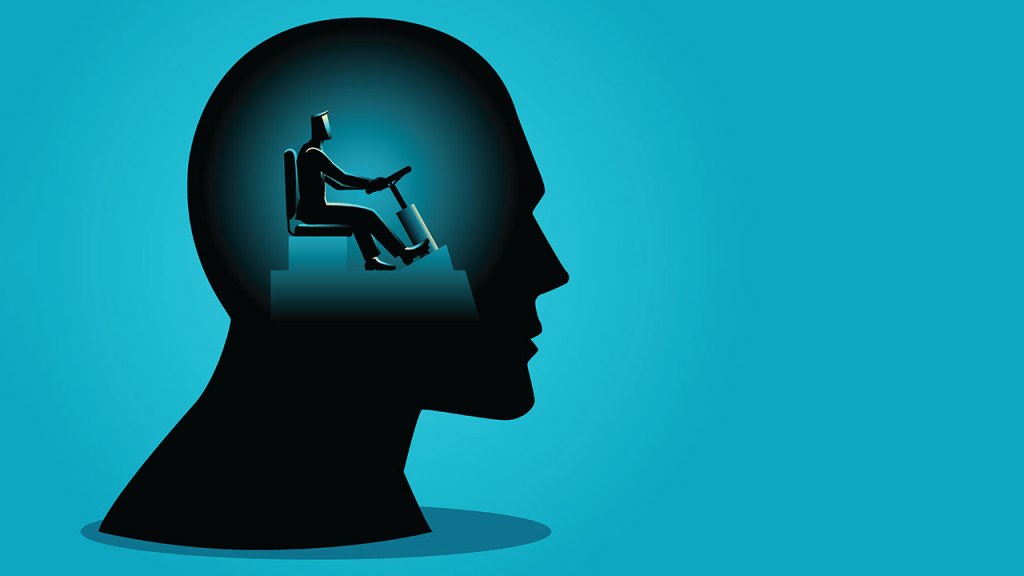
Every day, you navigate a labyrinth of choices. Some are trivial: coffee or tea? Some are profoundly life-altering: what career to pursue, whom to love, whether to forgive a friend who betrayed you. In the precise moment of decision, you feel an undeniable weight. You feel that the future is an open road, and you—and only you—are steering the wheel.
[AUDIO CUE: The ticking clock stops abruptly. A low, ominous, synthesized bass drone swells, absorbing the heartbeat.]
NARRATOR
But what if you aren’t? For the past century, a vocal consensus in the fields of neuroscience and academic philosophy has argued that this feeling of absolute freedom is nothing but an elaborate, biological illusion. They claim that you are a complex machine, driven by the inescapable, blind laws of physics, neurochemistry, and prior causes stretching back to the dawn of time. They argue that the chooser does not come first; the universe does, and you are just along for the ride.
[AUDIO CUE: The bass drone resolves into a clear, bright, and sweeping orchestral theme—hopeful, driving, and deeply inquisitive.]
NARRATOR However, a rigorous counter-movement is currently reasserting the primacy of human agency, proving that science and philosophy have fundamentally misunderstood the nature of choice. Based on the groundbreaking analysis, “The Chooser Comes First: An Unapologetic Defense of Libertarian Free Will” by Dr. Zia H. Shah, MD, this documentary will pull back the curtain on the most consequential debate in human history.
We will explore how modern materialism has put the cart before the horse, why the most famous neuroscience experiment against free will has been thoroughly debunked, and why the most profound truth of your existence is exactly what it feels like: in a real choice, your conscious self is a genuine originator of what happens.
You are not merely a shadow cast by the physical world. You are a prime mover, unmoved.
[AUDIO CUE: Title card music swells, reaches a crescendo, and smoothly transitions into a gentle, contemplative piano melody.]
Act I: The Materialist Dogma and the Academic Divide
NARRATOR To understand this defense of libertarian free will, we must first define what it actually entails. Libertarian free will is the philosophical position that human beings possess genuine agency, act as the ultimate originators of their choices, and, given the exact same history and circumstances, could have chosen to act otherwise. It is the outright rejection of strict determinism—the idea that every event is perfectly necessitated by the past and the laws of nature.
But if this concept feels so intuitively true, why do so many modern, professional philosophers reject it?
The answer lies not in an irrefutable scientific discovery, but in a deeply entrenched metaphysical bias. Modern philosophy heavily prioritizes physicalism—the worldview that only physical matter and energy exist. When faced with the phenomenon of conscious, first-person agency, physicalists attempt to explain it away to protect their rigid materialist framework.
[AUDIO CUE: A digital “typing” or “data calculation” sound effect plays subtly beneath the narration, giving a sense of empirical investigation.]
NARRATOR This academic bias is not anecdotal; it is empirically documented. In 2009, and again in 2020, philosophers David Bourget and David Chalmers conducted the massive PhilPapers Surveys, polling thousands of professional philosophers on their core beliefs.
The 2020 survey revealed a stark landscape of belief regarding human agency.
| Philosophical Position | Percentage of Philosophers (2020 Survey) | Definition of Position |
| Compatibilism | 59.2% | Free will exists but is redefined to fit within a strictly deterministic universe. True alternative possibilities do not exist. |
| Libertarianism | 18.8% | Genuine, undetermined free will exists; humans are originators of their actions, and determinism is false. |
| No Free Will | 11.2% | Hard determinism or hard incompatibilism; human agency is a complete illusion. |
| Other / Undecided | 13.5% | Various alternative or skeptical positions. |
Data sourced from Bourget and Chalmers’ PhilPapers Surveys.
NARRATOR
Nearly 60 percent of philosophers accept Compatibilism, while roughly 19 percent hold to Libertarianism. But what drives this divide? Bourget and Chalmers discovered a fascinating statistical correlation. A philosopher’s stance on free will is heavily dictated by their prior metaphysical commitments.
Libertarianism correlates negatively with physicalism about the mind and naturalism. Conversely, it correlates positively with mind-body dualism and theism.
In other words, philosophers who begin with the absolute assumption that the universe is nothing but physical particles bouncing off one another are mathematically and philosophically forced to reject libertarian free will. They accept physicalism first, and then they lower the definition of “freedom” to fit physicalist constraints.
[AUDIO CUE: A warm, authoritative voice (VOICE ACTOR 1) steps in, accompanied by the faint rustling of pages, setting a philosophical tone.]
VOICE ACTOR 1 (Philosopher)
Consider a medical analogy to understand this logical fallacy. A patient goes to a doctor complaining of a severe, blinding headache. The doctor runs a series of advanced MRI and CT brain scans. The results come back perfectly clear. The doctor looks at the patient and says, “The scans show nothing. Therefore, your pain does not exist.”
NARRATOR This is precisely how materialist philosophy treats free will. The subjective, conscious experience of pain—or in our case, the experience of choosing—is the primary, foundational datum of reality. The brain scans, the neural maps, and the laws of physics are secondary tools we use to attempt to explain that experience. When the secondary tools fail to capture the primary experience, the flaw lies in the tools, not in the reality of the experience.
Act II: The Un-doubtable Self and The Mother of the Book
[AUDIO CUE: Gregorian chant-style vocalizations echo faintly in the background, transitioning into the plucking of a Renaissance lute.]
NARRATOR
The realization that the self is the primary truth of existence is not new. It is the absolute bedrock of Western epistemology, stretching back over a millennium.
In the early 5th century, Augustine of Hippo recognized that human consciousness and agency are the starting points of all knowledge. In his masterwork, De Civitate Dei (The City of God), he addressed the radical skeptics who doubted the reality of existence. He wrote a brilliant, logically air-tight defense of the self: “Si enim fallor, sum”—”For if I am mistaken, then I am”.
Augustine argued that even if someone doubts everything, the act of doubting proves their existence. If a mind did not exist, it could not be deceived.
Over twelve hundred years later, the French philosopher René Descartes arrived at the exact same conclusion to defeat systematic doubt. In his 1637 Discourse on the Method, Descartes penned the most famous phrase in modern philosophy: “Je pense, donc je suis”—”I think, therefore I am”.
In 1710, George Berkeley further solidified this by famously stating “Esse is percipi”—to be is to be perceived, highlighting that matter is merely an inference drawn from perception, whereas the perceiving mind is directly experienced.
The lesson here is profound and inescapable. The doubting, thinking, choosing self is immune to skepticism. It is the primary, unquestionable reality. Matter, physics, and determinism are inferences drawn by the mind; they cannot be logically weaponized to dissolve the mind.
To correct this academic error, Dr. Zia H. Shah proposes an interpretive framework borrowed from an ancient text: the Quran.
[AUDIO CUE: A solitary, resonant note of an Oud (Arabic lute) plays, blending seamlessly with a modern, contemplative synthesizer pad.]
NARRATOR Verse 7 of the third chapter of the Quran establishes a foundational hermeneutic, or method of interpretation. It states that the scripture contains decisive, fundamental verses—known in Arabic as muhkamat. These are referred to as Umm al-Kitab, the “Mother of the Book”. It also contains ambiguous or allegorical verses, known as mutashabihat.
The verse warns that those with deviation in their hearts will chase the ambiguous, seeking confusion and imposing their own desired interpretations. The proper method of truth-seeking is to interpret the ambiguous, secondary data strictly in the light of the decisive, primary data.
When we apply this Quranic principle of muhkamat to human knowledge and reality, the philosophical fog lifts.
Consciousness, the undeniable self, and the felt experience of choosing—the Si fallor, sum—are the decisive data of existence. They are the muhkamat. The theories of strict physicalism, the causal closure of the physical domain, and determinism are theoretical extrapolations from third-person physics. They are the mutashabihat.
The fundamental error of modern compatibilists and hard determinists is that they read the decisive reality of the self through the lens of ambiguous materialist theories, rather than reading materialist theories in light of the undeniable self.
If even one single, genuine act of libertarian choice occurs in the universe, the strict causal closure of the physical domain is shattered, and physicalist materialism falls.
Act III: The Myth of the Subconscious Decision
[AUDIO CUE: Fast-paced, tense electronic music mimics firing synapses, heart monitors, and scientific machinery.]
NARRATOR
But the determinists have historically pushed back. In the late 20th century, they believed they had finally found the silver bullet to kill free will forever, not in the realm of ancient philosophy, but in the neuroscience laboratory.
In 1983, a neuroscientist named Benjamin Libet conducted an experiment that shocked the world. Libet asked volunteers to stare at a rapidly moving clock and spontaneously flick their wrists whenever they felt the urge to do so. He instructed them to note the exact time on the clock when they made the conscious decision to move, which he referred to as “W-time”.
Simultaneously, Libet measured their brain activity using an Electroencephalogram, or EEG. What he found became the most famous—and most violently misunderstood—datum in modern neuroscience.
Libet observed a slow buildup of electrical activity in the brain’s motor cortex, known as the Bereitschaftspotential, or “readiness potential”. This electrical buildup began approximately 350 to 500 milliseconds before the subjects reported the conscious intention to move.
[AUDIO CUE: A jarring sound—like a heavy metal door slamming shut.]
NARRATOR The media and determinist philosophers erupted. The conclusion seemed inescapable: your brain decides to move before you are consciously aware of it. By the time you feel like you are making a choice, your unconscious neurobiology has already made it for you.
Free will was aggressively declared an illusion. Libet himself tried to salvage human agency by suggesting a concept called “free won’t”—the idea that consciousness couldn’t initiate a movement, but in the final 150 to 200 milliseconds, it could veto an unconscious urge before the muscle actually fired.
But for decades, the Libet experiment stood as the ultimate scientific argument against the chooser.
Until 2012.
[AUDIO CUE: The tense electronic music shifts into a clearer, more open and triumphant tone. A bright, acoustic guitar enters.]
NARRATOR Nearly thirty years later, neuroscientist Aaron Schurger and his colleagues revolutionized our understanding of the readiness potential, completely overturning Libet’s grim conclusion.
Schurger built a stochastic accumulator model demonstrating that the brain is constantly humming with spontaneous, random neural fluctuations. When you are instructed to perform a spontaneous, meaningless action without any external cue—like flicking your wrist for no reason—your brain has to rely on this internal noise.
Schurger proved that the “readiness potential” is not a subconscious decision to move. Instead, it is simply the natural ebb and flow of neural noise gradually approaching a threshold. When that noise crosses a specific threshold, the movement is triggered. The brain isn’t secretly deciding ahead of time; it is just balancing internal noise until a spontaneous action tips the scales.
As Schurger’s research shows, drawing grand philosophical conclusions about the death of free will from the Libet experiment relies on three massive category errors.
[AUDIO CUE: VOICE ACTOR 2 (Scientist) enters, speaking with clinical precision.]
VOICE ACTOR 2 (Scientist) The First Category Error: A spontaneous movement is not a philosophical decision. Libet’s subjects did not weigh reasons, ponder moral consequences, or pursue a goal. They just flicked their fingers. There is a cosmic difference between a random finger movement and the agonizing decision to change careers or forgive an enemy. Studying a meaningless twitch tells us nothing about complex human freedom.
The Second Category Error: Neurophysiology is not a hidden “unconscious.” An EEG measuring neural buildup is exactly like a thermometer measuring a fever. A thermometer doesn’t cause the fever; it just measures a physiological state. The readiness potential does not prove a hidden agent is making choices in the dark. To say “the unconscious has decided” conflates an electrical measurement with a psychological intention.
The Third Category Error: The Two-Decision-Maker Fallacy. If we argue that the “unconscious brain” decides and the “conscious mind” just watches or issues a veto, we artificially split a single human into two competing entities. This doesn’t solve the problem of agency; it merely shifts it, creating a bizarre scenario where a person is possessed by their own subliminal brain.
NARRATOR The science is abundantly clear: the Libet experiment did not kill free will. The conscious agent remains completely intact.
But if neuroscience cannot defeat the chooser, can modern philosophy?
Act IV: The Compatibilist Compromise and The Four-Case Manipulation
[AUDIO CUE: A slow, methodical cello begins to play. A tone of serious academic inquiry, slightly melancholic.]
NARRATOR With neuroscience failing to disprove agency, we must confront the philosophical arguments. Many philosophers, desperate to maintain their physicalist worldview without sacrificing the idea of moral responsibility, adopted a compromise position called Compatibilism.
Prominent thinkers like David Hume, Harry Frankfurt, P.F. Strawson, Daniel Dennett, and Patricia Churchland argue that free will is perfectly compatible with a strictly determined universe.
How do they manage this? By lowering the ontological bar. They simply redefine what “free will” means.
For compatibilists, freedom does not mean you could have chosen otherwise. It simply means that your actions align with your internal desires, or what Harry Frankfurt called “second-order volitions”—desires about your desires. Patricia Churchland identifies free will merely as the neurobiological capacity for prefrontal self-control.
But to the libertarian, this is a fake, downgraded substitute. It is a linguistic sleight-of-hand. If your internal desires, your second-order volitions, and your neurobiology were ultimately pre-programmed by the Big Bang, the laws of physics, and genetic lotteries, you are nothing but a highly complex marionette who happens to love their strings.
[AUDIO CUE: A dissonant, heavy cello chord strikes and holds.]
NARRATOR This glaring flaw in compatibilism was masterfully exposed by a philosophy known as Hard Incompatibilism, championed by thinker Derk Pereboom.
Pereboom designed a devastating thought experiment known as the “Four-Case Manipulation Argument”. He asks us to imagine a man named Professor Plum, who murders a woman named Ms. White for selfish reasons.
Pereboom presents four scenarios, each moving closer to normal human existence.
| Scenario | Description of Plum’s Condition | Is Plum Morally Responsible? |
| Case 1 | Plum is actively manipulated by neuroscientists who use radio-like technology to directly alter his neural states, forcing him to reason egoistically and kill White. | No. He is a puppet of the scientists. |
| Case 2 | Plum was programmed at birth by neuroscientists to have a psychological profile that guarantees he will reason egoistically and eventually kill White. | No. He is merely executing a pre-installed program. |
| Case 3 | Plum is raised in a hyper-aggressive community that strictly indoctrinates him to act egoistically, resulting in him killing White. | No. He is a victim of insurmountable sociological conditioning. |
| Case 4 | Plum is an ordinary human in a universe where physicalist determinism is true. His genetics, environment, and the laws of physics inevitably caused him to kill White. | ? |
Structure of Pereboom’s Four-Case Manipulation Argument.
NARRATOR Pereboom argues that there is absolutely no morally relevant difference between the remote-controlled robot of Case 1 and the ordinary, causally determined human of Case 4. If determinism is true, Plum’s actions are always forced by factors beyond his control. Therefore, under determinism, no one is ever morally responsible.
The hard incompatibilist perfectly agrees with the libertarian: compatibilist freedom is an illusion. It is lipstick on a deterministic pig.
But while Pereboom uses this manipulation argument to conclude that free will doesn’t exist, the libertarian flips the script entirely.
[AUDIO CUE: The music shifts completely. The dissonant cello fades out, replaced by a warm, rising crescendo of strings and a steady, confident piano rhythm.]
NARRATOR
The fatal flaw in Pereboom’s argument is the assumption that Case 4—ordinary human existence—is deterministic.
The dispositional reply to Pereboom points out that in the manipulation cases (Cases 1, 2, and 3), Professor Plum’s true rational abilities are being artificially masked by an external force. Manipulation is an invasion of the self. But in the real world, the self is the originator.
We are not Professor Plum in a determined universe. We possess what the Scottish Enlightenment philosopher Thomas Reid called active power.
Act V: Agent Causation and The Unmoved Mover
NARRATOR Thomas Reid posited that agents—conscious selves—are the only entities in the universe that possess a will, and therefore, they are the only true efficient causes.
VOICE ACTOR 1 (Philosopher) Think about throwing a baseball through a window. The ball flying through the air didn’t “decide” to shatter the glass, and the physical laws of nature didn’t “choose” to break the window. Physical laws only describe regularities; they do not create them. The agent who threw the ball exerted active power to bring about a change. Event causation—one domino hitting another—is secondary. Agent causation is primary.
NARRATOR In the 20th century, philosopher Roderick Chisholm elevated this concept, declaring that when a human being makes a truly free moral choice, they take on a divine prerogative. They become, in Chisholm’s words, a “prime mover unmoved”.
When you act, you are not just a domino falling in a line of physical dominos stretching back to the Big Bang. You are initiating a brand-new causal chain. As Chisholm notes, “In doing what we do, we cause certain events to happen, and nothing—or no one—causes us to cause those events to happen”.
Philosopher Robert Kane further refined this by identifying what he calls Self-Forming Actions, or SFAs. These are the crucible moments of genuine inner struggle. Imagine you are on your way to a vital meeting that will secure your career, but you witness an assault in an alleyway.
You experience a dual effort of the will. One effort is pushing you to fulfill your ambition and keep walking. The other effort is pushing you to fulfill your moral duty and help the victim. In these moments, the outcome is not pre-determined by your past. The network of your brain is in a state of thermodynamic chaos. Your exertion of effort resolves the indeterminacy. Whichever choice you make, you succeed in doing what you were simultaneously trying to do. You forge your own character.
But how does this immaterial effort interact with the physical brain? Doesn’t this violate the laws of physics?
[AUDIO CUE: Music softens into a sense of wonder and cosmic scale. A shimmering, ethereal synthesizer joins the piano, representing the subatomic realm.]
Act VI: Quantum Mechanics and the Physics of Freedom
NARRATOR For centuries, scientists believed in the causal closure of the physical domain—the idea that every physical event must have a purely physical cause. If you believe this, free will is impossible.
But modern physics leaves the door wide open for human agency. The discovery of Quantum Mechanics shattered the old, clockwork, deterministic universe of Isaac Newton. At the fundamental level of reality, the universe is probabilistic, not strictly deterministic.
Under quantum theory, specifically the Born Rule, physical laws only provide a probability of different outcomes; they do not dictate a single, necessitated future. This quantum indeterminism provides the exact ontological gap required for Agent Causation.
A conscious agent does not have to break the laws of physics to have free will. Instead, the agent acts as the entity that collapses the quantum wave function, leveraging probabilistic outcomes to bring their intentions into the physical world.
As one researcher noted, quantum randomness itself is not free will—randomness is just chance. But quantum randomness makes room for agent causation. It means the future is not fixed, allowing the conscious self to step in and determine which of the probable outcomes becomes actual reality.
The causal closure of the physical world is a metaphysical myth masquerading as science. Every time you deliberately speak a truth instead of a lie, every time you choose kindness over cruelty, your conscious self is reaching across the physicalist wall, translating an immaterial moral intention into physical reality.
[AUDIO CUE: The music swells to its final, majestic climax. Strong, emotional, resolute, yet deeply reverent.]
Act VII: Human Dignity and The Striving Self
NARRATOR If the chooser does not come first, then humanity is a tragic farce. If hard determinism is true, then love is just a chemical reflex, justice is a biological illusion, and the atrocities of history were just as mathematically inevitable as gravity.
But libertarian agency rescues human dignity. It anchors moral accountability not as a convenient social fiction, but as an objective, undeniable fact of the cosmos.
We return finally to the profound cosmological syllogism found in the 52nd chapter of the Quran, an argument arguably more concise than any in the history of philosophy:
“Were they created without any agent? Were they the creators? Did they create the heavens and the earth? No! They do not have faith.”.
This presents an exhaustive trilemma. The universe did not pop into existence uncaused from nothing. The universe did not create itself. The only coherent option is a transcendent Creator.
The material universe, with its unthinking physical laws and shifting matter, cannot create itself, nor can it hold itself accountable. Yet, humans are granted a divine spark—a small, sacred sphere of agency delegated by God, the ultimate Prime Mover, allowing us to act as originators of our moral choices.
There is a Quranic principle that perfectly encapsulates this defense of human freedom: “There is nothing for man but what he strives for”.
[AUDIO CUE: The music gently pulls back, leaving only a sustained, warm string chord. The faint sound of the heartbeat from the very beginning returns, steady and strong.]
NARRATOR
The effort you feel when you make a difficult choice is not a glitch in your biology. It is not an illusion generated by your neurochemistry, nor is it the delayed realization of a readiness potential. It is the very essence of your existence.
You are a thinking, choosing substance.
Je pense, donc je suis.
Si fallor, sum.
The materialist models fail because they try to explain the world by erasing the only thing we actually know for certain: the self. But when we place the conscious agent back at the center of the equation, the universe makes sense. Accountability makes sense. You make sense.
In the vast, interconnected tapestry of existence, the chooser comes first.
[AUDIO CUE: The final chord rings out, resonating deeply before slowly fading into absolute silence. The heartbeat plays one final, strong beat.]
NARRATOR
(Quietly, with finality)
And the rest… is up to you.



Leave a Reply