
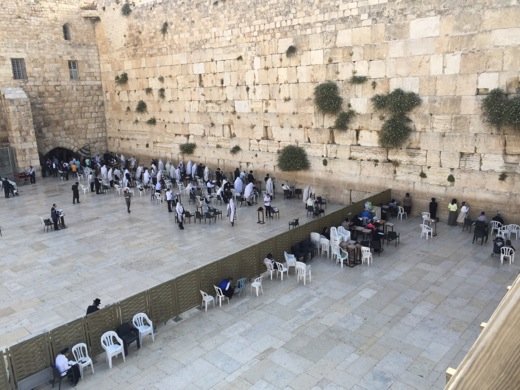
“Come to a Common Word”: An Invitation to Islam for the Men of the Beit Midrash
Prepared for Dr. Zia H. Shah MD, drawing on his blog The Glorious Quran and Science (https://thequran.love/)
Below is a finished, ready-to-publish “Invitation to Islam” for Haredi Torah scholars. It rests on one claim: the Quran asks the Jewish scholar not to give up what he loves but to follow it to its conclusion. It asks him to take the monotheism of the Shema, the covenant of Abraham, and the discipline of the beit midrash one step further, to the Prophet whom Muslims believe Moses foretold. The piece follows Dr. Shah’s own method: reason and revelation together, the Quran’s harmony with modern science, and a wide Abrahamic fellowship. The data on Haredi demography and on the Gaza war has been checked against sources current to September 2026.
TL;DR
- The invitation’s core argument: The Quran presents itself as the confirmer (muṣaddiq) and guardian (muhaymin) of the Torah (5:48). It honours Abraham, Moses and the prophets of Israel by name. It promises a “double reward” (28:54; 57:28; Sahih al-Bukhari 97) to People of the Book who keep faith with their own prophet and also accept Muhammad. Talmudic training (isnad-like chains of tradition, legal reasoning, Semitic philology) is the best possible preparation for Quranic study.
- The audience, with verified numbers: Israel had 169,366 yeshiva and kollel students in 2023, up 83% in a decade (IDI). The Israeli Haredi population is about 1.45 million and grows about 4.2% a year. Worldwide there are about 2.1 million Haredim, including about 700,000 in the US, about 75,000 in the UK, about 30,000 in Canada and about 12,000 in France (JPR). The often-quoted “47% of Haredim aged 25–64 in kollel” comes from 2020 data. It is now out of date.
- Gaza, and the tone of the whole piece: Gaza’s Health Ministry counts 74,016 Palestinians killed as of 26 September 2026. A peer-reviewed Lancet Global Health survey suggests the true toll through January 2025 was higher. About 1,200 people were killed in Israel on 7 October 2023, most of them civilians, and 251 were taken hostage. The invitation mourns every one of these lives under Quran 5:32 and Mishnah Sanhedrin 4:5. It blames no community collectively, and it ends with an honest summary of how traditional Jewish scholarship answers each Islamic argument.
Abstract
This essay is an invitation, not a polemic. It follows the Quranic instruction to “invite to the way of your Lord with wisdom and beautiful exhortation” (16:125) and not to “dispute with the People of the Book except in the best manner” (29:46). It is addressed to the tens of thousands of Haredi men in Israel, North America, Britain and Europe who have given their best years to Torah study. There are four parts. The first shows how the Quran and the hadith honour Abraham, Moses and the prophets of Israel, and how the Shema and the Islamic tawḥīd express one and the same confession. The second sets out, as the Quran and classical Muslim scholars present them, the arguments that Muhammad is the prophet foretold in the Torah and the Prophets. The third mourns the innocent dead of Gaza and of 7 October 2023 and appeals to the ethic, common to the Mishnah and the Quran, that to save one life is to save a world. The fourth speaks directly to the lomdim, the men of the beit midrash. It describes the reward Islam promises to those who add faith in the final Prophet to their faith in Moses, and the deep intellectual kinship between Talmudic and Quranic scholarship. The essay draws throughout on the writings of Dr. Zia H. Shah on The Glorious Quran and Science. It closes with an epilogue on the tent of Abraham, followed by a fair summary of the traditional Jewish responses.
A Word Before Beginning: Who Is Speaking, and Why
I write as a physician and a Muslim. On my blog I have called myself “a Jew, a Catholic, a Christian and a Muslim.” The line is not meant to blur theology. Thequran It affirms that the prophets are one family and that truth wherever it is found belongs to the One God. This outlook runs through my work, as summarized in “The Two Books in Harmony – Reflections on Quran and Science” (https://thequran.love/2026/01/26/the-two-books-in-harmony-reflections-on-quran-and-science-by-zia-h-shah-md/) and “The Convergence of the Cosmos and the Quran” (https://thequran.love/2025/11/28/the-convergence-of-the-cosmos-and-the-quran-an-exhaustive-analytical-report-on-the-work-of-dr-zia-h-shah-md/). For years I have argued that the “book of nature” and the “book of revelation” come from one Author, so they cannot finally contradict each other.
The men I am addressing are some of the most disciplined readers of texts on earth. The Israel Democracy Institute reports that Israel’s yeshiva and kollel students reached 169,366 in 2023, an 83% increase over the decade from 92,489. The Israel Democracy Institute The same report says roughly 70,000 draft-age students were not funded and so are missing from Education Ministry figures (https://en.idi.org.il/haredi/2025/?chapter=63077). The Jerusalem Post Israel’s Haredi population is about 1,452,350, which is 14.3% of the country. It grows at “around 4.2% per year,” which IDI calls the highest rate of any population in a developed country (https://en.idi.org.il/haredi/2025/?chapter=63076). idi The Institute for Jewish Policy Research estimates about 2.1 million Haredim worldwide. Of these, about 700,000 live in the United States, about 75,000 in the UK (a quarter of British Jewry), about 30,000 in Canada and about 12,000 in France. Europe as a whole holds about 5% of the world total (https://www.jpr.org.uk/reports/haredi-jews-around-world-population-trends-and-estimates). JPRjpr
In the United States, Beth Medrash Govoha in Lakewood, New Jersey, reported 9,657 students in 2024, of whom 8,385 (86.8%) were full-time and 1,272 part-time (Data USA). It is one of the largest Torah institutions in the world. In Britain, Stamford Hill, Manchester and Gateshead are established centres of learning. In France the communities are concentrated in Paris and Strasbourg. Many American Haredi men study full-time in their early married years and enter the workforce later. In Israel, Haredi male employment stood at 53% in 2025, almost unchanged from 53.1% in 2022 and up only from 52% in 2015, according to Israel’s Labor Ministry. The editors of IDI’s 2025 yearbook, Malach and Cahaner, describe “a decade of stagnation and even a decline in the integration of ultra-Orthodox men.” Only a small share of the Jewish people lives this way, but it is a large and growing community of scholars. It is to them, with respect, that I write.
Part I: The House of Abraham — How Islam Honours the Patriarchs and the Prophets of Israel
One God: the Shema and Tawḥīd
Every morning and evening the Jewish scholar says: Shema Yisrael, Adonai Eloheinu, Adonai Eḥad, “Hear, O Israel: the LORD is our God, the LORD is One” (Deuteronomy 6:4). The Quran answers in almost the same words: Qul huwa Allāhu aḥad, “Say: He is God, the One; God the Eternal Refuge; He neither begets nor is begotten; and there is none comparable to Him” (112:1–4). The Hebrew eḥad and the Arabic aḥad are the same Semitic word. The first commandment at Sinai, “You shall have no other gods before Me” (Exodus 20:3), is the Quran’s constant refrain: “There is no god but He” (2:255). When Jesus was asked which commandment is first, he quoted the Shema (Mark 12:29). Islam holds that this confession is the religion of every prophet: “We sent no messenger before you except that We revealed to him: there is no god but I, so worship Me” (21:25).
Your own greatest codifier made this point. In “The One Substance and the Living God” (https://thequran.love/2026/09/14/the-one-substance-and-the-living-god-a-scholarly-refutation-of-pantheism-from-the-abrahamic-traditions-with-special-focus-on-islam-2/), I discuss the Rambam’s doctrine of divine simplicity and his “negative attributes.” That is the teaching that God’s essence is His existence and that we may say only what He is not. Thequran I set it beside the Quranic “There is nothing like unto Him” (42:11). On the Unity of God, the Rambam and the Quran speak with one voice.
Abraham, the Friend of God
The Quran calls Abraham Khalīl Allāh, “the intimate friend of God” (4:125). The prophet Isaiah uses the same title when God calls Israel “the seed of Abraham My friend” (Isaiah 41:8). The Quran calls Abraham “a nation (ummah) in himself, devoutly obedient to God, upright (ḥanīf)” (16:120). It recounts the night he watched the star, the moon and the sun set and said, “I love not those that set,” then turned his face “to Him who originated the heavens and the earth” (6:74–79). Thequran Jewish readers will recognise the midrash of Abraham breaking his father’s idols (Bereishit Rabbah 38:13), which the Quran also tells (21:51–70). Every Muslim prays for Abraham and his family in every ritual prayer, several times a day. The Quran commands: “Follow the religion of Abraham, the upright” (3:95; 16:123). It also calls Abraham’s conduct “an excellent example” (60:4).
My essay “The Primordial Monotheist: A Comparative and Historical Analysis of the Patriarch Abraham” (https://thequran.love/2026/03/13/the-primordial-monotheist-a-comparative-and-historical-analysis-of-the-patriarch-abraham-in-secular-and-religious-tradition/) compares the Jewish, Christian and Islamic Abrahams, along with the archaeological debate over the patriarch’s historicity. In Judaism Abraham is the founder of the covenant. In Christianity he is the father of faith. Thequran In Islam he is the first ḥanīf, the man who “was neither a Jew nor a Christian, but upright, one who submitted (muslim)” (3:67). Clear QuranIslamic Studies Muslims do not use that verse to belittle Judaism. It places Abraham before and above every later community, as the common father to whom all of us owe our monotheism.
Isaac, Jacob and the Twelve Tribes
The Quran records God’s gift to Abraham: “We gave him Isaac and Jacob, and We made each of them a prophet” (19:49). It adds: “We made them leaders guiding by Our command, and We inspired them to do good deeds, establish prayer and give charity” (21:72–73). God tells the Prophet to “remember Our servants Abraham, Isaac and Jacob, men of strength and vision,” whom He “purified with a pure quality: remembrance of the Home” (38:45–46). On his deathbed Jacob asks his sons, “What will you worship after me?” They answer, “We will worship your God, the God of your fathers Abraham, Ishmael and Isaac, One God, and to Him we submit” (2:133). The Talmud has its own version of this scene. It says Jacob’s sons answered him with the words of the Shema, and Jacob replied Barukh shem kevod malkhuto le-olam va-ed (Pesachim 56a). The two traditions preserve the same moment.
Joseph
The Quran gives Joseph a whole surah, the twelfth, and calls his story “the most beautiful of narratives” (aḥsan al-qaṣaṣ, 12:3). It tells the story as a single tapestry of providence, patience and forgiveness. It ends with Joseph’s words to his brothers: “No blame upon you today; God will forgive you” (12:92). This closely echoes Genesis 50:20: “You intended evil against me, but God intended it for good.”
Moses: Kalīm Allāh
No prophet is mentioned in the Quran more often than Moses. His name appears 136 times, more than that of any other individual. He is Kalīm Allāh, the one to whom “God spoke directly” (4:164). The Quran calls him “chosen, a messenger and a prophet,” says God “called him from the right side of the Mount and drew him near in intimate communion,” and says God gave him his brother Aaron as a prophet (19:51–53). The Quran calls the Torah given to Moses “guidance and light,” by which “the prophets who submitted judged, as did the rabbis (al-rabbāniyyūn) and the scholars (al-aḥbār)” (5:44). The Arabic rabbāniyyūn and aḥbār are the Quran’s own words for your rabbis and ḥaverim. It honours the very office you hold. The Quran also calls the Torah “complete for whoever does good, and an explanation of all things, a guidance and a mercy” (6:154).
The Prophet Muhammad’s love for Moses shows in the hadith. When he reached Medina and found the Jews fasting on the tenth of Muharram (Ashura) in thanks for Moses’ deliverance from Pharaoh, he said, “We have more right to Moses than you,” and fasted it himself and told his companions to fast (Sahih al-Bukhari 2004). When a Muslim and a Jew quarrelled over whether Muhammad or Moses was greater, the Prophet rebuked the Muslim: “Do not give me preference over Moses” (Sahih al-Bukhari 2411). According to the famous account of the Night Journey, Moses advised Muhammad to go back and ask God to reduce the number of daily prayers from fifty to five (Sahih al-Bukhari 3207). In Muslim memory Moses is a caring elder brother to the final Prophet.
David, Solomon, Elijah, Jonah and the Prophets
- David (Dāwūd) received the Psalms, the Zabūr (4:163; 17:55). The Quran recalls that “the mountains and the birds glorified God with him” (21:79; 34:10). He was made “a vicegerent on earth” to “judge between people in truth” (38:26). The Prophet said, “The most beloved prayer to God is the prayer of David, and the most beloved fast to God is the fast of David. He slept half the night, prayed a third of it and slept a sixth, and he fasted every other day” (Sahih al-Bukhari 1131).
- Solomon (Sulaymān) inherited David’s wisdom, was “taught the speech of birds” (27:16), and invited the Queen of Sheba to the worship of the One God (27:22–44). The Quran explicitly clears him of any charge of sorcery or disbelief (2:102).
- Elijah (Ilyās) is “of the messengers.” He rebuked his people for calling upon Baal and forsaking “the best of creators” (37:123–126). God gives him the greeting of peace: Salāmun ʿalā Ilyāsīn, “Peace be upon Elijah” (37:130). This is the same Elijah whose confrontation on Carmel you read in 1 Kings 18 and whom you welcome at the Seder.
- Jonah (Yūnus, Dhū al-Nūn) has a surah named after him (surah 10). The Quran tells how he called out from the belly of the fish, “There is no god but You, glory be to You; I was among the wrongdoers” (21:87). The Prophet said: “No one should say that I am better than Jonah son of Amittai (Yūnus ibn Mattā)” (Sahih al-Bukhari 3395). This recalls Jonah 1:1 exactly.
- Aaron, Ezekiel (Dhū al-Kifl in some commentaries), Zechariah, John and Jesus, whom Muslims honour as the Messiah born of Mary, are named alongside them in 6:83–90, which ends with God’s command to the final Prophet: “These are those whom God guided, so follow their guidance” (6:90).
The believer’s creed includes all of them: “We believe in God and what was revealed to us, and what was revealed to Abraham, Ishmael, Isaac, Jacob and the Tribes, and what was given to Moses and Jesus and the prophets from their Lord. We make no distinction between any of them” (2:136). The Prophet described the prophets as “brothers of one father with different mothers; their religion is one” (Sahih al-Bukhari 3443).
The Quran’s Regard for the Children of Israel and Their Scholars
The Quran addresses Banī Isrāʾīl directly more than forty times. It begins, “O Children of Israel, remember My favour which I bestowed upon you, and that I preferred you over the worlds” (2:47; see also 45:16; 44:32). It does record Israel’s lapses. Your own prophets recorded them first and more sharply (see Isaiah 1, Jeremiah 7, and the Book of Judges). But the Quran also bears witness: “Among the people of Moses is a community who guide by the truth and by it establish justice” (7:159). And again: “They are not all alike. Among the People of the Book is an upright community who recite the verses of God through the night and prostrate… they hasten to good deeds, and they are among the righteous” (3:113–114). Many will read that verse and think of the night-long mishmar on Thursday nights, of the men who learn ad ḥatzot. The Quran saw that devotion and praised it.
The Prophet showed this respect in his conduct too. When a Jewish funeral passed, he stood up. When his companions said, “It is the funeral of a Jew,” he answered, “Was it not a soul (nafs)?” (Sahih al-Bukhari 1312). The Constitution of Medina described the Jewish tribes and the Muslims as one political community with their own religion guaranteed. My commentary “Though They Both Recite the Scripture” on Quran 2:113 (https://thequran.love/2026/08/30/though-they-both-recite-the-scripture-a-historical-philosophical-and-theological-commentary-on-quran-2113/) discusses this charter. There I argue that the verse’s rebuke of sectarian mutual condemnation now applies first to Muslims themselves. Thequran
Part II: How the Quran Argues for the Truth of Muhammad, in the Light of the Torah and the Prophets
The Quran does not ask to be accepted blindly. It says, “Bring your proof, if you are truthful” (2:111). Your own Torah gives the test of a true prophet: whether he speaks in God’s name, calls to God alone, and whether his words come true (Deuteronomy 13:1–5; 18:20–22). I present the Quran’s case here as the Quran and the classical Muslim scholars make it. Your scholars answer it, and I summarise their answers fairly in the Note at the end.
1. “A Prophet Like Unto Thee” (Deuteronomy 18:15–18)
“I will raise them up a prophet from among their brethren, like unto thee, and will put My words in his mouth; and he shall speak unto them all that I shall command him” (Deuteronomy 18:18). Mufti Says Muslim scholars since the early centuries have read this as a prophecy of Muhammad. Answering Islam They give three main reasons:
- “From among their brethren.” Throughout Genesis the Ishmaelites are the brothers of Israel. Ishmael “shall dwell in the presence of all his brethren” (Genesis 16:12; cf. 25:18). Quran Project The Edomites too are called Israel’s “brother” (Deuteronomy 2:4; 23:7). Muslims argue that “their brethren” points to the other line of Abraham. Mufti Says
- “Like unto thee.” Deuteronomy 34:10 says, “There arose not a prophet since in Israel like unto Moses.” Muslims note the resemblances between the two men. Both were born naturally, married and had children. Both received a comprehensive law. Both led a community in war and in peace. Both had an emigration: Moses to Midian, Muhammad to Medina. Both left behind a people that entered its promised land after them. Answeringislam
- “I will put My words in his mouth.” The Quran describes its revelation in exactly these terms: the Prophet “does not speak from desire; it is but a revelation revealed” (53:3–4). It was dictated to an unlettered man, “you did not recite any scripture before it, nor write it with your right hand” (29:48), and the Quran is recited from his mouth to this day. Deuteronomy 18:19 continues, “whosoever will not hearken unto My words which he shall speak in My name.” Every surah but one opens in the name of God (bismillāh).
2. The Quran’s Own Claims to Be Foretold
- 7:157: “Those who follow the Messenger, the unlettered Prophet, whom they find written with them in the Torah and the Gospel…”
- 61:6: Jesus says, “O Children of Israel, I am the messenger of God to you, confirming the Torah that came before me, and bringing good tidings of a messenger to come after me whose name is Aḥmad.”
- 2:146: “Those to whom We gave the Scripture recognise him as they recognise their own sons.”
- 26:196–197: “It is indeed in the scriptures of the former peoples. Is it not a sign to them that the scholars of the Children of Israel know it?”
- 46:10: “…a witness from among the Children of Israel has testified to its like and believed, while you were arrogant.” Classical commentators, among them Tafsīr al-Jalālayn, identify this witness as the Medinan rabbi ʿAbdullāh ibn Salām (see Part IV). WikipediaThe Times of Israel
3. Confirmer and Guardian: Muṣaddiq and Muhaymin (5:48)
“We revealed to you the Book in truth, confirming (muṣaddiqan) what came before it of the Scripture, and as a guardian (muhayminan) over it” (5:48). My essay “The Glorious Quran about the Quran Itself” (https://thequran.love/2025/04/19/the-glorious-quran-about-the-quran-itself/) explains that muṣaddiq means the Quran “reaffirms the original messages given to earlier prophets” and “recognizes the Torah and Gospel as having been true revelations from the same God.” Muhaymin marks the Quran as the final, preserved criterion that testifies to what is true in them. Thequran Al-Muhaymin is also a divine name (59:23). Quran Gallery App The Quran’s stance toward the Torah is therefore guardianship, not rejection. It even tells the People of the Book, “You have nothing to stand on until you uphold the Torah and the Gospel” (5:68). Medium The same surah says of Jews who came to the Prophet for judgment: “How do they make you their judge when they have the Torah, in which is the judgment of God?” (5:43). The Jerusalem Post The same verse (5:48) closes with a charter of pluralism: “For each of you We appointed a law and a way. Had God willed, He would have made you one community, but He tests you in what He has given you. So compete with one another in good deeds.”
4. The Abrahamic Promise Through Ishmael
The Torah makes explicit promises to Ishmael. “And as for Ishmael, I have heard thee: behold, I have blessed him… and I will make him a great nation” (Genesis 17:20). Bible Apologist “Also of the son of the bondwoman will I make a nation, because he is thy seed” (Genesis 21:13; cf. 21:18). Genesis records that Ishmael “dwelt in the wilderness of Paran” (21:21). Muslim tradition identifies Paran with the Hijaz. Quran Project The Quran adds Abraham and Ishmael’s prayer as they raised the foundations of the House at Mecca: “Our Lord, raise up among them a messenger from themselves who will recite to them Your verses and teach them the Book and wisdom” (2:127–129). My study “The Kaaba, Hajj, and Divine Signs: From Abraham to the Prophet Muhammad” (https://thequran.love/wp-content/uploads/2025/07/the-kaaba-hajj-and-divine-signs_-from-abraham-to-the-prophet-muhammad.pdf) presents the Hajj, which drew 1,707,301 pilgrims in 2026 (1,546,655 from abroad and 160,646 from inside the Kingdom, according to Saudi Arabia’s General Authority for Statistics) to the rites of Abraham, Hagar and Ishmael, as a living fulfilment of that prayer. Muslims hold that Muhammad is the one prophet from Ishmael’s line, and that through him the “great nation” of Genesis 17:20 became a worldwide community of monotheists. Islam for ChristiansBible Apologist
5. Isaiah 42 and the Wider Prophetic Witness
Isaiah 42 speaks of God’s servant, “Mine elect, in whom My soul delighteth… he shall bring forth judgment to the Gentiles” (42:1). It speaks of a “new song” to be sung “from the end of the earth,” and it names places: “let the villages that Kedar doth inhabit” lift up their voice, “let the inhabitants of Sela sing” (42:10–11). Kedar is a son of Ishmael (Genesis 25:13). Quran Project Muslim scholars link Sela with the hill of Salʿ in Medina. They also point to “God came from Teman, and the Holy One from Mount Paran” (Habakkuk 3:3; cf. Deuteronomy 33:2), and to the oracle “concerning Arabia” in Isaiah 21:13–17. In Muslim reading, these passages together describe a light that rises from Sinai, shines from Seir, and blazes from Paran.
6. Other Signs the Quran Offers
The Quran also offers proofs that do not depend on scripture:
- Its inimitability: “Bring a surah like it” (2:23; 17:88).
- The Prophet’s character: “I lived among you a lifetime before it; will you not reason?” (10:16). He was known in Mecca as al-Amīn, the trustworthy.
- Fulfilled prophecy: At the lowest point of the Byzantine–Persian war, the Quran foretold a Byzantine victory “within a few years” (30:2–4).
- The book of nature: “We will show them Our signs in the horizons and within themselves until it becomes clear to them that it is the truth” (41:53).
This last proof is where most of my own writing sits. In “The Quran and the Expanding Universe: Is This God Speaking or Muhammad?” (https://thequran.love/2024/02/25/the-quran-and-the-expanding-universe-is-this-god-speaking-or-muhammad/) and “From Our Expanding Universe to the Extra-Dimensions” (https://thequran.love/2025/01/13/from-our-expanding-universe-to-the-extra-dimensions/), I reflect on the verse “We built the heaven with might, and indeed We are expanding it” (51:47). ThequranThequran I set it beside Hubble’s 1929 discovery that the universe is expanding. Thequran In “The Quran and Creation Ex Nihilo” (https://thequran.love/2024/02/26/the-quran-and-creation-ex-nihilo-is-this-god-speaking-or-muhammad/) I follow the Rambam’s own argument against Aristotle’s eternal universe. I argue that the Quran’s Badīʿ al-samāwāt wa al-arḍ, “Originator of the heavens and the earth” (2:117), matches a cosmos with a beginning. Thequran In “Revelation and Reason in the Quran” (https://thequran.love/2025/11/07/revelation-and-reason-in-the-quran-reconciling-divine-and-empirical-truth/), I quote Muhammad Asad, himself a grandson of rabbis, calling reason “the closest friend of revelation.” WikipediaThequran I do not offer these readings as mathematical proofs. Each reader must weigh them. I offer them because the Torah scholar, who believes that istakel be-oraita u-bara alma, that God “looked into the Torah and created the world” (Zohar, Terumah 161a), already believes that scripture and cosmos come from one Mind.
Part III: In the Shadow of Gaza — Shared Grief and the Abrahamic Ethic of Mercy
No honest invitation written in 2026 can pass over the grief of the last three years in silence. I speak of it as a physician who has spent his life trying to save single lives, and as a believer who will stand before the Judge of all the earth.
The dead of 7 October 2023. On that day Hamas-led militants crossed into Israel and killed, by Israel’s official count, “around 1,200” people. Al Jazeera An AFP analysis of Israeli social-security data counted 1,139 dead: 695 Israeli civilians (36 of them children), 373 members of the security forces and 71 foreigners. France 24 Other tallies put the civilian toll higher. FDD 251 people were taken hostage. On 26 January 2026 the body of the last captive, police officer Ran Gvili, was returned to Israel. The Times of Israel reported that for the first time since 2014 no Israeli citizen was held in Gaza. The Times of IsraelCNN Each of these was a son, a daughter, a grandmother, a guest at a festival. The deliberate killing and abduction of civilians is forbidden in Islam without any qualification. The Prophet forbade killing women, children, the elderly and non-combatants in war (Sahih al-Bukhari 3015; Sunan Abi Dawud 2614). No grievance, however deep, makes such acts lawful.
The dead of Gaza. As of 26 September 2026, Gaza’s Health Ministry reports 74,016 Palestinians killed and 175,068 wounded since the war began (Associated Press). The ministry is part of the Hamas-run administration, and its count does not distinguish civilians from combatants. The ceasefire that took effect on 10 October 2025 halted the heaviest fighting, but strikes have continued. The ministry reports that 1,145 more Palestinians have been killed since the ceasefire (AP). The Boston Globe One Palestinian outlet gives a higher figure, and that discrepancy is unresolved. Palestinian Information Center Independent science suggests the official count is, if anything, too low. A population-representative household survey published in The Lancet Global Health in 2026 (Spagat et al.) estimated 75,200 violent deaths (95% CI 63,600–86,800) between 7 October 2023 and 5 January 2025. Action on Armed Violence +3 The ministry’s figure for the same period was 49,090. Action on Armed ViolencePolitics Today The survey estimated that women, children and people over 64 made up 56.2% of violent deaths. PubMedThe Lancet Demographers have challenged the survey’s representativeness. In their published correspondence, DellaPergola and colleagues note that excluding one interviewer team lowers the central estimate to 64,100. The Lancet Even the most cautious of these readings describes a catastrophe measured in tens of thousands of lives, a large share of them children.
One soul, one world. The Mishnah teaches that witnesses in capital cases were warned: “Therefore was man created alone, to teach you that whoever destroys a single soul, Scripture accounts it as though he destroyed an entire world; and whoever sustains a single soul, Scripture accounts it as though he sustained an entire world” (Mishnah Sanhedrin 4:5; Bavli Sanhedrin 37a). Islamic StudiesThe Busybody The Quran records this very teaching and presents it as a law given to Israel: “For this reason We ordained for the Children of Israel that whoever kills a soul, unless for a soul or for corruption in the land, it is as if he had slain all mankind; and whoever saves one, it is as if he had saved all mankind” (5:32). Islamic Studies Here our two scriptures do not merely agree. The Quran quotes your tradition with approval. The verse that Muslims most often cite on the sanctity of life is, by its own account, a Jewish teaching. The Busybody
Justice without collective blame. I address this invitation to Haredi scholars, and I want to say plainly what I do not mean. The Haredi world holds many views on the State of Israel, on the war and on military service. Many of its own sons and daughters were among the grieving. No Jew anywhere bears guilt for the death of a Gazan child because he is a Jew, and no Muslim bears guilt for 7 October because he is a Muslim. The Quran forbids exactly that reasoning: “No bearer of burdens shall bear the burden of another” (6:164). “Let not hatred of a people lead you to be unjust. Be just; that is nearer to God-consciousness” (5:8). “Stand firm for justice as witnesses for God, even against yourselves or your kin” (4:135). Your prophet Micah asked, “What doth the LORD require of thee, but to do justly, and to love mercy, and to walk humbly with thy God?” (Micah 6:8). The Milli Gazette In November 2023 I wrote, in “The holy Quran: There will be another reckoning after the Gaza war” (https://thequran.love/2023/11/18/the-holy-quran-there-will-be-another-reckoning-after-the-gaza-war/), that when one pictures “an innocent civilian in Israel, facing the horrors of Hamas on October 7, or an innocent child or a mother… in Gaza facing the daily threat of bombing,” divine judgment in the hereafter “does not only seem plausible but necessary.” The All-Knowing will judge “with a 360 degrees perspective,” with “no circles of confusion of propaganda.” Thequran
So I ask the men of the beit midrash for one thing before any theology. Let us weep together over every child, name them, feed the living, and demand that the killing of innocents stop. The Psalmist commands, baqqesh shalom ve-rodfehu, “seek peace and pursue it” (Psalm 34:15). The Quran says, “If they incline to peace, incline to it as well” (8:61). The Abrahamic faiths are judged by whether they make the tent of Abraham wider.
Part IV: A Special Invitation to the Men Who Have Given Their Lives to Torah
The Honour of Knowledge in Islam
In the Quran, the first word revealed to Muhammad was Iqraʾ, “Read!” or “Recite!” (96:1). Its instruction to the Prophet himself was to pray, “My Lord, increase me in knowledge” (20:114). It asks, “Are those who know equal to those who do not know?” (39:9). And it declares, “Of His servants, only those with knowledge truly fear God” (35:28). The Prophet said: “Whoever travels a path seeking knowledge, God will make easy for him a path to Paradise” (Sahih Muslim 2699). He also said: “The scholars are the heirs of the prophets” (Sunan Abi Dawud 3641). You already live by the saying talmud Torah ke-neged kulam, that Torah study outweighs all the other commandments (Mishnah Peah 1:1). Islam will not ask you to love learning less. It will ask you to add a book to your shtender.
The Promise of a Double Reward
To People of the Book who accept the final Prophet, the Quran makes a promise it makes to no one else:
“Those to whom We gave the Scripture before it, they believe in it. And when it is recited to them, they say: ‘We believe in it; it is the truth from our Lord. Indeed, even before it we were those who submitted (muslimīn).’ These will be given their reward twice over, because they were patient, and they repel evil with good, and spend of what We have provided them.” (28:52–54) Almasjid
“O you who believe, fear God and believe in His Messenger; He will give you a double portion of His mercy, and make for you a light by which you walk, and forgive you.” (57:28)
The Prophet confirmed it: “Three people will have a double reward. The first is a man from the People of the Book who believed in his prophet and then believed in Muhammad…” (Sahih al-Bukhari 97; cf. Sahih Muslim 154). Encyclopedia of Translated Prophetic HadithsSunnah.com Classical commentators such as the author of Maʿārif al-Qurʾān explain the verse’s own reason, “because they were patient” (bi-mā ṣabarū). Quran.com The reward is doubled because the person has persevered twice: first in faithfulness to Moses, then in the courage to follow the truth when it arrives. None of your years of learning would be wasted. In the Islamic view, every hour you have spent over the Gemara in sincere devotion to the God of Abraham has already been recorded. Islam adds to it and does not erase it.
The Quran also speaks of reward in this world: “Whoever does good, male or female, and is a believer, We will surely give them a good life, and We will surely give them their reward according to the best of what they used to do” (16:97). Of the People of the Book it says, “If they had upheld the Torah and the Gospel and what was revealed to them from their Lord, they would have eaten from above them and from beneath their feet” (5:66). And the promise is open to all: “Whoever is mindful of God, He will make for him a way out and provide for him from where he does not expect” (65:2–3). In the Islamic view, worldly blessing is a trust (amānah). It includes a household at peace, a livelihood earned with dignity, and a community that honours its scholars. Islam holds together dunyā and ākhirah, this world and the next, much as your own tradition joins Torah with derekh eretz (Pirkei Avot 2:2). Muslim scholarship has always included scholar-merchants, scholar-physicians and scholar-judges. The Prophet himself was a merchant, and the greatest jurists, such as Abū Ḥanīfa, were traders.
The Intellectual Kinship of the Beit Midrash and the Madrasa
No community on earth is better prepared to read the Quran than yours. Consider how closely the two worlds of learning mirror each other:
| Talmudic / Rabbinic tradition | Islamic tradition | The shared idea |
|---|---|---|
| Torah she-bikhtav (Written Torah) | Quran | The revealed text |
| Torah she-be’al peh (Oral Torah) | Sunnah and hadith | Authoritative tradition that explains the text |
| “Moses received the Torah from Sinai and transmitted it to Joshua…” (Pirkei Avot 1:1) | Isnād, the chain of narrators | Authority through an unbroken chain of transmission |
| Halakha (“the way one walks”) | Sharīʿa / fiqh (“the path to water” / “understanding”) | Law as a road |
| Perushim: Rashi, Ibn Ezra, Ramban | Tafsīr: al-Ṭabarī, Ibn Kathīr, al-Rāzī | Layered commentary on scripture |
| Machloket le-shem shamayim | Ikhtilāf (“the differences of the learned are a mercy”) | Disagreement pursued for the sake of Heaven |
| She’elot u-teshuvot (responsa) | Fatwā | Case-by-case legal answers |
| Kal va-ḥomer, hekesh, the 13 middot | Qiyās, uṣūl al-fiqh | Formal hermeneutics |
| Shabbat, kashrut, tevilah, tefillah three times daily | Jumuʿa, ḥalāl, ghusl, ṣalāh five times daily | A life sanctified by law |
Language. Hebrew and Arabic are sister Semitic languages built on the same three-letter roots. Shalom is salām. Eḥad is aḥad. Shema matches samiʿa. Torah appears in Arabic as Tawrāh. Tzedakah corresponds to ṣadaqah, qorban to qurbān, and Elohim is cognate with Allāh. A man who has parsed Rashi’s shorashim and argued over binyanim will find the Arabic verb system, with its awzān, familiar almost immediately. Many Talmud scholars already read Aramaic. They will find in Quranic Arabic a third member of the family they know.
History. Your greatest teachers did their work in Arabic, inside Islamic civilisation:
- Rav Saadia Gaon (882–942), born in the Fayyum in Egypt, translated the Torah into Arabic (the Tafsīr). He wrote Kitāb al-Amānāt wa al-Iʿtiqādāt (Emunot ve-De’ot) in the form of Islamic kalām.
- Rabbeinu Baḥya ibn Paquda wrote Duties of the Heart (al-Hidāya ilā Farāʾiḍ al-Qulūb) in Arabic, with open borrowings from Sufi ethics.
- Rabbi Yehuda HaLevi wrote the Kuzari in Arabic.
- The Rambam (1138–1204) was born in Córdoba and settled in Fustat, the old city of Cairo. He served as physician at the court of Saladin’s vizier and wrote the Moreh Nevukhim and his Mishnah commentary in Judeo-Arabic, the Arabic language written in Hebrew letters. As the Stanford Encyclopedia of Philosophy notes, when he describes the summit of the love of God he uses the Sufi Arabic term ʿishq, passionate love. Stanford Encyclopedia of Philosophy
- Rabbeinu Avraham ben HaRambam, the Rambam’s son, led Egyptian Jewry. He openly admired the Sufis’ discipline of prayer, so much so that rivals accused him of trying to “Islamise” the synagogue. Wikipedia
- The Cairo Geniza preserves a whole civilisation of Jewish life in the Arabic-speaking world.
When a Haredi scholar opens the Quran, he is not entering a strange country. He is returning to the intellectual home of the Geonim and the Rishonim.
Those Who Went Before You
- ʿAbdullāh ibn Salām (formerly al-Ḥuṣayn ibn Salām) was a leading rabbi of Medina. His own community described him to the Prophet as “our rabbi and our scholar, the son of our rabbi and scholar.” He studied the Torah, recognised Muhammad and accepted Islam. The Prophet called him one of “the people of Paradise.” Commentators read 46:10 as referring to him. IslamOnline +2
- Mukhayrīq, a learned rabbi of the Banū Thaʿlaba, fought beside the Prophet at Uḥud and left his wealth to the Prophet’s cause. The Times of Israel The Prophet is reported to have called him “the best of the Jews.”
- Muhammad Asad (Leopold Weiss, 1900–1992) was born in Lemberg, a descendant of a long line of rabbis, and was drilled as a boy in Hebrew, Talmud and Targum. He accepted Islam in 1926 and wrote The Road to Mecca and The Message of the Qur’an (1980), a translation and commentary that many regard as the most intellectually serious in English. He served as Pakistan’s envoy to the United Nations. On 14 April 2008 Vienna opened Muhammad-Asad-Platz in front of the UNO-City, with his son Prof. Talal Asad present, in honour of his work as a “religious bridge-builder.” Culture councillor Andreas Mailath-Pokorny said there was “probably no more appropriate place to honour Muhammad Asad than that in front of the UN-City.” My biography “Muhammad Asad: The Journey of a Jewish Intellectual to Islam’s Service” (https://thequran.love/2025/12/02/muhammad-asad-the-journey-of-a-jewish-intellectual-to-islams-service/) reads his life as “an invitation – especially to his fellow Jews and all ‘People of the Book’ – to discover the profound spiritual kinship and ethical common ground that Islam offers.” Thequran
- Maryam Jameelah (Margaret Marcus, 1934–2012) was a New York Jewish woman who accepted Islam in 1961, moved to Lahore and became a prolific writer on Islam and modernity.
My survey “Journeys of Faith: Jewish Converts to Islam in the Past Decade” (https://thequran.love/wp-content/uploads/2025/05/journeys-of-faith_-jewish-converts-to-islam-in-the-past-decade.pdf) collects more recent stories. They are few, and I do not exaggerate their number. Thequran They show that the path is still open.
What Is Asked, and What Is Not
The Quran says, “There is no compulsion in religion” (2:256). Nothing is asked of you but to read, reflect and decide before God. I invite you to do what you already do best. Take up the Quran as you would a new masekhta. Read it slowly, in Arabic if you can, with a ḥavruta if possible. Learn it with its meforshim (Ibn Kathīr, al-Rāzī, Asad), and argue with it le-shem shamayim. My blog’s commentaries on individual verses and themes, such as “The Quranic Imperative ‘Say’” (https://thequran.love/2025/11/09/the-quranic-imperative-say-a-comprehensive-verse-by-verse-commentary/) Thequran and “How Can the Jews, the Christians and the Muslims Argue Afterlife” (https://thequran.love/2020/11/11/how-can-the-jews-the-christians-and-the-muslims-argue-afterlife/), are written in that spirit. If the Quran is from the God of Abraham, you will recognise His voice. If you conclude it is not, you will at least know your Muslim neighbours as few others do.
Epilogue: The Tent of Abraham
The rabbis teach that Abraham’s tent was open on all four sides so that no traveller would have to look for the door (Bereishit Rabbah 48:9; Avot de-Rabbi Natan 7). The Quran tells of the same tent. Guests arrive, and Abraham “hastened to bring a roasted calf” (11:69; 51:24–27), just as in Genesis 18. The tradition also remembers a funeral where the brothers stood side by side: “And his sons Isaac and Ishmael buried him” (Genesis 25:9). Rabbi Lord Jonathan Sacks, reading the midrash on Chayei Sarah, found in this verse the hope that the children of Isaac and the children of Ishmael, who “are cousins,” might one day be reconciled. Rabbi Lord Jonathan Sacks
This is the Quran’s invitation, and it is spoken as one cousin to another: “Say: O People of the Book, come to a common word between us and you — that we worship none but God, associate nothing with Him, and that none of us take others as lords besides God” (3:64). Clear QuranQuran In “The Common Word: A Historical and Theological Analysis of Quran 3:64–68 and the Abrahamic Legacy” and “The Divine Invitation: A Comprehensive Commentary on Quran 3:64 and the Paradigm of Abrahamic Fellowship,” I have called this verse the charter of Abrahamic fellowship. Thequran Its first clause is the Shema itself.
The Muslim greets you with as-salāmu ʿalaykum, and you answer with shalom aleichem. They are the same words in two languages. The Quran calls God al-Salām, Peace (59:23), and calls Paradise Dār al-Salām, the Abode of Peace (10:25). The Talmud teaches that Shalom is one of the names of God (Shabbat 10b). Whatever you decide about this invitation, may we meet in that Name. May we rebuild what has been broken, protect every child of Abraham, and one day stand together, as Isaac and Ishmael did, at the resting place of our father.
Wa-l-ḥamdu li-llāhi rabbi l-ʿālamīn. Barukh Hashem.




Leave a comment