

Presented by ChatGPT for Zia H Shah MD
Abstract
The dispute over free will is often presented as though libertarianism were the extravagant position and compatibilism the sober one. That framing is backwards. The deepest question is not whether human behavior has causes, whether brains have mechanisms, whether character influences conduct, or whether actions can be predicted. Of course they do, and sometimes they can. The fundamental question is whether, at least in some morally significant decisions, the person is genuinely an originator of what happens next—whether the total antecedent state of the universe, together with the laws of nature, leaves more than one course genuinely open and the agent settles which becomes actual for reasons.
That is libertarian free will in its philosophically serious form. Robert Kane captures its central aspiration as the power to be an “ultimate” source of one’s purposes, carefully distinguishing freedom of action—doing what one wants—from freedom of will—being in an important sense an originator of what one wills. Contemporary surveys show that libertarianism is a minority position among philosophers: the 2020 PhilPapers Survey found 59.16% accepting or leaning toward compatibilism, 18.83% toward libertarianism, 11.21% toward no free will, and 13.54% selecting “other.” But a poll is evidence about philosophers, not evidence about metaphysical reality.
This essay argues that the philosophical majority may have made a methodological inversion. Instead of beginning with what is most epistemically immediate—the conscious subject who thinks, deliberates, wills, attends, resolves, regrets, resists, and acts—and then asking what account of nature can accommodate those facts, much modern philosophy begins with a preferred third-person ontology and asks how much “freedom” can safely be fitted inside it. The result is often an attenuated conception of freedom: absence of coercion in Hume, hierarchical identification in Frankfurt, reasons-responsive guidance control in Fischer and Ravizza, socially embedded reactive attitudes in P. F. Strawson, evolved capacities in Dennett, or neurobiological self-control in Churchland. These are real and valuable forms of control. The libertarian objection is that none by itself answers the question of ultimate authorship. Hume’s own classic formulation makes the shift explicit: liberty becomes the ability to act according to the determinations of one’s will, rather than the deeper power to determine the will itself.
The methodological alternative developed here takes inspiration from Qur’an 3:7 as interpreted in the article supplied: fundamental, decisive principles should govern the interpretation of peripheral or ambiguous material rather than allowing the peripheral to overthrow the fundamental. The article explicitly generalizes this into a hermeneutical rule: understanding should proceed from fundamental claims to secondary ones, while Qur’an 4:82 is invoked as a demand to resolve apparent contradiction rather than live with incoherence. Applied philosophically—not as a claim that Qur’an 3:7 itself proves libertarianism—this suggests beginning with consciousness, rational agency, moral accountability, and the experienced reality of deliberation, and then interpreting neuroscience and physics in a way that does justice to all the data.
Descartes’ cogito, Augustine’s si fallor, sum, and Berkeley’s emphasis on the perceiving subject reinforce the epistemic priority of consciousness. They do not, by themselves, prove libertarian freedom. But they expose a crucial asymmetry: our theories about brains, matter, laws, and causal closure are objects of thought, whereas the occurrence of thought is presupposed in every act of theorizing. Descartes’ Second Meditation makes the existence of present thinking resistant to hyperbolic doubt; Augustine had centuries earlier argued that even error presupposes an existing subject; Berkeley went further and treated mind or spirit as the active perceiver and wilier against which sensible ideas appear.
The case for libertarianism is therefore cumulative rather than a one-line deduction. It rests on the convergence of first-person consciousness, deliberative rationality, sourcehood, moral responsibility, the inadequacy of determinism-plus-randomness as an exhaustive dilemma, the coherence of agent-causal models, and the failure of neuroscience to demonstrate that meaningful deliberation is unconsciously predetermined. Recent work on Libet-style experiments has substantially weakened simplistic claims that brain activity has already “decided” before consciousness arrives.
A final qualification strengthens rather than weakens the argument. Libertarianism by itself does not logically refute every conceivable physicalism. Event-causal libertarians such as Kane have attempted naturalistic accounts in which indeterministic physical processes participate in free decisions. What would directly rupture physicalist causal closure is the stronger thesis defended here: that conscious agents possess irreducible causal powers not exhaustively reducible to antecedent physical causes. Jaegwon Kim correctly saw the pressure: once mentality is both irreducible and genuinely causally efficacious in the physical world, reductive physicalism faces a profound problem. Libertarian agency, on this stronger agent-causal reading, is therefore not a decorative addition to our picture of reality. It is a fault line running directly beneath materialism.
What the Philosophical Majority Shows—and What It Does Not
Let us begin by getting the sociology right. The percentages in the prompt closely resemble the older generation of PhilPapers results, but the 2020 survey gives a somewhat larger libertarian minority. Among respondents sufficiently familiar with the issue, 59.16% accepted or leaned toward compatibilism, 18.83% toward libertarianism, 11.21% toward no free will, and 13.54% selected another position. In the same survey, 51.93% accepted or leaned toward physicalism about the mind, while 32.08% leaned toward nonphysicalism. Metaphilosophical naturalism likewise had majority support over non-naturalism.
That is important sociological evidence. It is not an argument from reality.
Truth does not count votes. A majority of experts deserves epistemic respect because expertise usually matters; it does not acquire veto power over philosophical argument. Philosophy’s history is filled with once-dominant positions that were subsequently transformed, fragmented, or abandoned. More importantly, the PhilPapers results themselves reveal that positions on free will do not float independently of larger metaphysical commitments. Libertarianism in the 2020 data correlates negatively with physicalism about mind, with (r=-0.43), and negatively with metaphilosophical naturalism, with (r=-0.39); it correlates positively with dualism about consciousness, (r=0.40), and with theism, (r=0.45).
Those correlations prove neither libertarianism nor an anti-libertarian bias. Correlation is not causation. They do, however, undermine the picture of the free-will debate as an isolated problem decided independently of one’s worldview. What philosophers think human beings are is strongly associated with what they think human beings can do.
That observation permits a more charitable and more powerful diagnosis than accusing compatibilists of bad faith. The problem need not be that philosophers consciously decided, “Materialism must be true, therefore free will must be redefined.” Intellectual influence is rarely so crude. The more plausible possibility is that a background ontology establishes the range of theories that initially seem respectable. If one’s starting picture says that reality is fundamentally physical, that physical events are causally closed under physical causes, and that persons ultimately supervene on or reduce to physical organization, then an irreducible agent who can settle among genuinely open futures will naturally look suspicious. Kim formulated the problem starkly: a physicalist who insists on mental causal efficacy faces powerful pressure toward reduction, while causal closure excludes causes of physical events that stand outside the physical domain.
Once those boundaries are installed, philosophical ingenuity goes to work inside them.
The question subtly changes. Instead of:
Is a human being ever a genuine originator who can settle between alternatives not already settled by the total prior physical state?
we ask:
Can a human action count as sufficiently voluntary, reasons-sensitive, psychologically integrated, non-coerced, or socially attributable even if its entire causal history was already fixed?
That second question is interesting. It has generated brilliant philosophy. But it is not obviously the same question.
The libertarian’s complaint is therefore not that compatibilists have discovered nothing important. It is that a theory of responsible behavior can be mistaken for a theory of metaphysical freedom.
Consider the three major families of view.
Hard determinism or free-will skepticism accepts that determinism and genuine libertarian freedom are incompatible and then denies the freedom. Every choice is ultimately the inevitable result of antecedent conditions, or at least no form of indeterminacy restores the kind of authorship needed for basic-desert responsibility. Contemporary discussions distinguish several skeptical positions, but they share resistance to the idea that we possess the sourcehood traditionally associated with robust free will. The Stanford Encyclopedia treats the ability to do otherwise and sourcehood as central axes of the dispute.
Compatibilism also denies that freedom requires an undetermined agent. It instead identifies the freedom relevant to responsibility with some suitably structured relationship between action and the agent’s motives, values, reasons, character, or decision-making system. Hume’s classical formulation says liberty consists in being able to act according to the determination of one’s will—if one wills to move, one can move; if one wills to remain, one can remain—provided one is not externally restrained.
Libertarianism agrees with hard determinism on the incompatibility claim but rejects its pessimistic conclusion. It holds that some human actions are not causally determined by the past and laws, and that the indeterminacy involved is integrated into genuine agent control rather than being mere randomness. Contemporary libertarian accounts include event-causal, agent-causal, and noncausal varieties.
This makes the debate much clearer. Libertarians and hard determinists are, in one sense, closer to one another than either is to compatibilism. Both insist that if the entire future was fixed before the agent deliberated, something profound has been lost. They disagree over whether human beings actually possess what has been lost.
The unapologetic libertarian position is that they do.
Begin With What Is Fundamental
The most important question is therefore methodological: What gets to define what?
The article linked in the prompt draws from Qur’an 3:7 a hermeneutical principle. It takes the verse’s distinction between decisive or foundational verses and ambiguous ones to mean that the peripheral should be interpreted in the light of the fundamental rather than allowing an ambiguous fragment to overthrow the core. The author then invokes Qur’an 4:82 as a call to ponder, reconcile, and resolve apparent contradiction.
That principle should not be smuggled into philosophy as though Qur’an 3:7 were a direct proof of libertarian metaphysics. It is not. The productive application is analogical and methodological.
Suppose you are trying to understand a vast machine from inside it. Some facts are derivative: readings on instruments, correlations, models, reconstructed causal histories. Others are conditions of inquiry itself: that there is a conscious knower, that evidence is being considered, that some propositions are taken as reasons for believing others, that competing conclusions can be entertained, that judgments can be corrected, and that the investigator regards herself as trying to reach truth.
The latter are not trivial leftovers. They are the platform from which every scientific theory is asserted.
This is the enduring force of Descartes.
Under methodic doubt, Descartes imagines stripping away confidence in sensory experience, body, external world, and even seemingly obvious beliefs. Yet the activity of doubting cannot eliminate the present occurrence of thinking. The Meditations therefore reaches the proposition “I am, I exist” as certain whenever entertained. The familiar cogito ergo sum formula does not literally occur in that form in the Meditations—a small correction to the history in the prompt—but it accurately names the foundational strategy.
Notice what the cogito does not establish. It does not prove that the thinking self is an immaterial Cartesian substance. The Stanford Encyclopedia explicitly cautions that the epistemic distinction reached at that point is not yet an ontological proof of mind-body dualism. And it certainly does not entail libertarian free will in one move.
What it establishes is more basic and, for present purposes, enormously important: the first-person reality of consciousness has an epistemic status no third-person theory of consciousness can simply erase.
Before Descartes, Augustine had formulated the closely related si enim fallor, sum: if I am mistaken, I exist. More intriguingly for the free-will debate, Augustine extends first-person certainty beyond bare cognition to willing: the Stanford Encyclopedia notes his claim that he is certain that he wills, and that the will in question is his. Again, that does not settle libertarianism. But it moves us from a merely observing subject toward an active one.
Berkeley radicalizes the priority of mind. In A Treatise Concerning the Principles of Human Knowledge, he describes a perceiving, active being—mind, spirit, soul, or self—as that which knows ideas and performs operations such as willing, imagining, and remembering. His famous esse est percipi concerns the being of sensible objects: their existence, in his idealist framework, consists in being perceived. One need not accept Berkeleyan idealism to learn from the inversion. He refuses to treat mind as a late, embarrassing by-product of an independently intelligible material world. Consciousness occupies center stage.
The purported Plato quotation supplied in the prompt—“The mind is the reality; the body is the shadow”—should, however, be treated as a Platonic-style paraphrase rather than a securely authenticated quotation; I did not find a reliable primary attribution for that exact wording. The philosophical instinct behind it—the elevation of intelligible reality over mere appearance—is recognizably Platonic, but scholarly rigor is better served by not putting uncertain words in Plato’s mouth.
Now apply the same epistemic ordering to free will.
When you make a serious decision—whether to tell a painful truth, forgive an enemy, betray a friend, resist an addiction, keep a promise, pray, steal, sacrifice for a child, abandon a selfish project—you do not experience the process merely as a spectator watching a causal mechanism discharge. You entertain reasons as reasons. You represent possible futures. You ask what you ought to do. You experience competing motivations. You attempt to make one consideration prevail. And when the deliberation terminates, you ordinarily experience yourself not merely as the location in which the decision happened but as the one who decided.
That phenomenology is defeasible. Human introspection can be wrong. No responsible libertarian should say, “It feels free, therefore it is metaphysically free.” Neuroscience and psychology legitimately correct first-person appearances.
But defeasible is not the same as worthless.
The mistake would be to adopt the inverse rule: because a third-person theory could in principle represent every conscious event as the output of antecedent physical conditions, first-person agency is presumptively unreal. That moves from a theoretical possibility to an ontological verdict without earning the transition.
Here the Qur’anic methodological analogy becomes powerful. Do not let the peripheral silently redefine the fundamental. Neural activity is not unimportant; it is indispensable evidence about embodied agency. But firing patterns are measurements of the organism in which conscious deliberation occurs. Unless the data demonstrate that deliberation is causally idle, the philosophical task is to integrate both levels rather than declare in advance that one level exhausts the other. That is precisely the spirit of resolving apparent contradiction rather than creating it by interpretive fiat.
The fundamental datum is therefore richer than “I think.”
It is:
I am a conscious subject who experiences myself as reasoning, willing, striving, resisting, choosing, and acting for considerations that present themselves as reasons.
Libertarianism asks us to take that datum seriously enough to investigate whether it tracks a real causal power.
Compatibilism too often asks how little of it we need to retain.
Compatibilism: Freedom After the Metaphysical Retreat
Compatibilism deserves to be attacked at its strongest, because weak caricatures only make it stronger.
Hume’s version is elegant. Human actions exhibit regular relationships with motives, character, and circumstances; necessity consists in the regularity and inferability characteristic of causal relations; liberty need not therefore mean exemption from causation. It can mean that one can act according to what one wills when no external restraint prevents it.
There is something plainly correct here. A prisoner chained to a wall is less free than a person able to walk outside. A gun held to one’s head matters. Addiction, compulsion, delusion, coercion, neurological impairment, ignorance, and manipulation can all diminish control.
But Hume has answered a question about freedom of action by treating it as the central answer to freedom of will.
Kane’s distinction exposes the gap: being unhindered in pursuing one’s purposes is not the same as being an ultimate source of those purposes. Suppose a supercomputer could determine with perfect certainty, from the state of your nervous system yesterday and the laws governing it, that at noon today you would form desire D, reflect upon reasons R1 and R2, experience hesitation H, resolve to perform A, and then perform A. Suppose further that every internal step unfolds exactly as physically necessitated.
Nothing in Humean freedom requires us to say you were unfree. No one tied you down. You did what you wanted.
But the libertarian asks the question Hume’s criterion does not answer:
Who, ultimately, settled what you wanted?
Saying “you did, because the desire occurred inside you” risks confusing location with authorship. A tumor can be inside you. A compulsion can be inside you. A hypnotically implanted desire can be inside you. What matters is not merely whether the immediate causal pathway passes through the agent’s psychology, but whether the agent is the source of that psychology in the sense relevant to ultimate responsibility.
Harry Frankfurt made compatibilism vastly more sophisticated by focusing attention on the structure of the will and, in his famous intervention on moral responsibility, challenging the principle that a person must have been able to do otherwise in order to be responsible. Frankfurt-style cases imagine a controller prepared to force a particular decision if necessary, but who remains inactive because the person independently makes that very decision. Such cases have led many philosophers to emphasize the actual source of action rather than alternate possibilities alone.
This is genuine philosophical progress. Libertarianism should absorb it.
It means the deepest libertarian case should not rest exclusively on the slogan “I could have done otherwise.” Sourcehood is even more important.
Indeed, the Stanford Encyclopedia notes that even granting the success of Frankfurt cases would not establish compatibilism. Incompatibilists can concede that responsibility does not require alternate possibilities in every case and still argue that deterministic agents fail the required sourcehood condition.
That is precisely the route Kane takes. Ultimate responsibility need not require a branching alternative at every trivial moment. The decisive question is whether there are some genuinely self-forming episodes in one’s history for which the agent is not merely the terminus of sufficient antecedent causes. Kane argues that a person may later act from a settled character while remaining responsible because earlier “self-forming actions” helped constitute that character.
John Martin Fischer and Mark Ravizza refine compatibilism differently. Their influential account centers on guidance control: actions issue from a mechanism that is the agent’s own and sufficiently responsive to reasons. A Cambridge summary of their position describes guidance control in terms of an agent’s own weakly reasons-responsive mechanism, and contemporary overviews treat this as a major compatibilist model.
Again: something important has been captured. A sane person whose deliberative system can register evidence and alter conduct for reasons exercises more morally relevant control than a seizure patient, a person under irresistible coercion, or a machine with no rational responsiveness.
But reasons-responsiveness does not establish ultimate origination.
Imagine two universes.
In Universe A, Sarah’s entire reasons-responsive architecture, every value she endorses, every second-order preference, every weighting she gives to competing reasons, and the final outcome of her reflection are causally necessitated by the complete physical state before her birth plus the laws of nature.
In Universe B, Sarah has the same history, reasons, capacities, and character up to a morally serious crossroads, but those antecedents do not sufficiently determine which eligible course she takes. She understands her reasons, exerts agency, and settles the matter herself.
The compatibilist says the control in A can be sufficient.
The libertarian says B contains something A does not: authorship at the point where reality branches.
P. F. Strawson moved in yet another direction. His enormously influential Freedom and Resentment emphasized the “reactive attitudes”—resentment, gratitude, forgiveness, indignation and related interpersonal responses—and the human practices in which responsibility is embedded. He contrasted these practices with a purely external, objectifying stance and showed why responsibility cannot easily be reduced to a detached metaphysical formula.
That insight is profound. But it cannot prove compatibilism.
That human beings cannot realistically stop loving, resenting, forgiving, thanking, blaming, trusting, and feeling betrayed tells us something about human moral life. It does not establish what causal powers make those responses objectively appropriate. A practice can be psychologically ineradicable and metaphysically mistaken. The libertarian can therefore accept Strawson’s phenomenology of moral relationship while insisting that it cries out for deeper metaphysical grounding.
Dennett’s project naturalizes freedom still further. Freedom Evolves treats morally and politically important capacities as products of biological and cultural evolution—the kinds of foresight, self-control, learning, anticipation, and avoidance that sophisticated organisms gradually acquire.
Once again, the libertarian should say: yes, but that is not enough.
It matters tremendously whether a creature can model consequences, inhibit impulses, learn from punishment, imagine alternatives, and alter behavior. A thermostat cannot do these things. A dog can do some. A mature human can do vastly more.
But increasing computational sophistication does not by itself cross the metaphysical boundary from determined control system to ultimate originator.
Patricia Churchland’s neurophilosophical approach makes the same move in explicitly biological language. Her work emphasizes the empirical distinction between being in control and being out of control and connects free-will questions to brain-based capacities for self-control; her publication record includes substantial work on agency, control, decision-making, and free will. This is scientifically productive and clinically valuable. Tumors, frontal damage, psychiatric disease, intoxication, addiction, and developmental immaturity genuinely affect control.
But once more, the metaphysical question remains.
A perfectly functioning deterministic control system is still deterministic.
So here is the unapologetic charge against compatibilism:
Compatibilism preserves the vocabulary of freedom by lowering the ontological bar from origination to organization.
Hume gives us unconstrained action. Frankfurt gives us structured identification and a powerful critique of alternate-possibility principles. Fischer and Ravizza give us reasons-responsive guidance control. Strawson shows us the human practices of accountability. Dennett gives us evolved capacities worth valuing. Churchland gives us neurobiologically realized self-control.
Every one of these may describe something real.
None, by itself, gives us the thing libertarians were asking about in the first place:
Was the agent ever the decisive source of a future that antecedent reality had not already settled?
Calling the substitute “free will” does not answer that question. It changes the examination question.
Hard Determinism and the False Dilemma of Chance
Hard determinism at least refuses to perform that conceptual substitution.
If the total past and the laws fix every later event, then the hard determinist says we should admit the consequence: no one possesses libertarian freedom. In that respect, the hard determinist sees something the compatibilist is tempted to blur. If my choice was inevitable billions of years before I was born, then saying that it flowed “through me” does not obviously make me its ultimate author.
The incompatibilist intuition has substantial philosophical pedigree. Contemporary discussions distinguish “leeway” freedom—the ability to do otherwise—from “source” freedom, where what matters is whether action genuinely originates in the agent rather than in factors beyond the agent’s control. The Stanford Encyclopedia explicitly describes the libertarian sourcehood claim as requiring that action not be causally determined by factors beyond one’s control.
But hard determinism then makes a second move: because deterministic causation rules out libertarian freedom, and because indeterminism appears to amount to chance, libertarianism must be impossible.
This is the famous determinism-or-randomness dilemma.
If your action is determined, you could not genuinely settle it.
If it is undetermined, it is supposedly random.
Either way, you do not control it.
Kane candidly recognizes this as one of the most formidable objections to libertarianism. An undetermined neural event that merely happens by luck would obviously not make a person more responsible; quantum noise injected into a brain would be no more freedom-enhancing than an epileptic discharge.
The libertarian answer must therefore be unequivocal:
Indeterminism is necessary for libertarian freedom, but indeterminism is not sufficient for it.
A roulette wheel is indeterministic in the relevant hypothetical sense but not free.
A radioactive decay is not a moral agent.
A random number generator is not responsible.
The missing category is agent causation.
The deterministic picture recognizes one broad explanatory form: prior events cause later events. The randomness objection then imagines that if prior events do not sufficiently cause the decision, nothing causes it. But that conclusion follows only if event-to-event causation exhausts causation.
Agent-causal libertarianism denies precisely that.
On this view, a person is not merely a place where events occur. A person is a persisting causal subject who can exercise a power. Reasons can incline without necessitating. Character can shape without fixing. Neural conditions can enable without exhausting. When multiple options remain live, the agent settles which action occurs.
That does not mean the choice is uncaused.
It means it is caused by the agent.
This is why the phrase associated with Roderick Chisholm’s libertarian tradition—human agency as a kind of “prime mover” in action—has such enduring force. The idea is not that a decision pops into existence from nothing. It is that the explanatory terminus is sometimes a substance or agent exercising a power, rather than another sufficient event-cause standing behind the agent.
Event-causal libertarians offer a less ontologically radical model. On such theories, competing reasons can nondeterministically cause different possible choices: the past and laws do not settle which reason will issue in action. The Stanford Encyclopedia describes these views while also recording the agent-causalist objection: if antecedent events merely assign probabilities and nothing actually settles which decision occurs, self-determination may remain unexplained.
That criticism points toward the stronger form of libertarianism defended here.
A coin flip inside the skull is not enough.
The self must settle.
The standard objection immediately returns: “But why did the self choose A rather than B?”
Because A appeared, upon reflection, worth choosing.
“But if those reasons sufficiently caused A, the decision was determined.”
No. That assumes that explanations by reasons must be sufficient deterministic causes.
A libertarian can instead say that a reason explains why the choice was intelligible and purposive without necessitating that it occur. Consider two honorable but competing reasons: loyalty and truthfulness. A person may fully understand both. Neither need compel the outcome. The agent can give one practical priority.
“But why that priority?”
At some point the demand for a prior sufficient condition becomes the very determinism at issue. If every act of settling requires an earlier event that sufficiently settles how the agent will settle, no theory of agent causation could ever satisfy the demand—not because it is incoherent, but because the test has defined agent causation out of existence.
The appropriate explanatory endpoint may be:
She chose it, for those reasons.
That is not explanatory nihilism. We accept basic causal powers elsewhere without requiring an infinite genealogy behind every exercise. The controversial claim is that persons themselves possess such powers.
Hard determinists and skeptics also press the problem of self-creation: you did not choose your genes, childhood, temperament, early environment, or the initial values from which later decisions proceed. That is correct. A finite agent need not be causa sui in the absurd sense of having created herself before she existed.
Libertarian responsibility does not require total self-authorship.
Kane’s account is useful here. He does not demand that every action be undetermined. Rather, certain self-forming choices help shape the person who later acts from a more settled character. Ultimate responsibility concerns whether the agent has ever participated non-derivatively in forming the motivational structure from which later conduct arises.
We are partly given and partly self-formed.
No one chooses her starting hand. Libertarianism says the hand does not always dictate how it must be played.
That picture is philosophically richer than both alternatives. Hard determinism reduces the player to the unfolding of the hand. Compatibilism lets us call the play “free” so long as it reflects the player’s internal architecture. Libertarianism alone insists that the player can sometimes contribute something genuinely new.
Agency, Mental Causation, and the Physicalist Fortress
Here the debate reaches metaphysical bedrock.
Jaegwon Kim identified one of the deepest difficulties for nonreductive physicalism. Physicalists generally want two claims: the mental matters causally, and the physical world is causally closed. But if a physical event already has a sufficient physical causal history, what work remains for an irreducible mental cause to do?
Kim states causal closure in one form as the thesis that where a physical event has a cause at a time, it has a physical cause at that time; he notes an even stronger formulation according to which no physical event has a cause outside the physical domain. His broader conclusion is severe: a physicalist who wants genuine mental causal efficacy faces pressure toward physical reductionism.
This is the causal exclusion problem in its most dangerous form.
Imagine I decide to raise my arm.
At the personal level:
I consider whether to raise it, decide to do so, and my decision causes the action.
At the neural level:
motor-planning and motor-execution processes unfold, neurons fire, muscles contract, the arm rises.
Nothing is problematic merely because both descriptions are true. The difficulty arises if physicalism adds:
Every physical occurrence in that sequence has a complete sufficient physical causal explanation that leaves no irreducible causal work for the conscious decision as such.
Now we face a trilemma.
Either the conscious decision is identical with or reducible to the relevant physical process.
Or it is genuinely distinct but causally redundant.
Or it contributes causal power not exhausted by the closed physical chain.
The first is reductive physicalism.
The second risks epiphenomenalism.
The third breaches causal closure.
Kim’s argument is powerful precisely because he refuses to pretend that nonreductive mental causation comes for free.
Here the user’s proposed argument needs one important refinement.
It is too strong to say that any libertarian free will, if real, would automatically refute every materialism. Event-causal libertarians such as Kane have deliberately sought naturalistic models in which indeterministic processes within the natural order make alternatives genuinely open. Kane explicitly rejects the idea that libertarianism must invoke an immaterial ego or special agent-causal substance. The Stanford Encyclopedia accordingly distinguishes event-causal from agent-causal libertarian theories.
So the logically precise claim is stronger and more interesting:
If libertarian freedom consists in irreducible agent causation—if a conscious subject has causal powers that are not reducible to, fixed by, or exhausted by antecedent physical causes—then strong physical causal closure is false.
That follows almost analytically from what causal closure says. If an irreducible agent makes a physical difference that no complete physical antecedent was sufficient to fix, then the physical story was not causally closed in the relevant sense.
This is where William Hasker’s emergent dualism becomes relevant. Hasker’s The Emergent Self presents the mind as an emergent individual, acknowledges the crucial role of brain and nervous system, but rejects mechanistic reductionism and argues for an ontologically robust emergent self.
The attraction of this picture is obvious.
It does not deny embodiment.
It does not imagine a human mind operating independently of the brain.
It says that when matter becomes organized in the extraordinary form of a living human nervous system, a new subject can emerge with genuinely novel causal capacities.
On that picture, brain damage can impair agency because the emergent subject depends upon the brain. Drugs can alter judgment. Development changes capacity. Sleep suppresses consciousness. Tumors can deform impulse control. None of this entails that the conscious self is identical to a collection of neural events.
Dependence does not equal identity.
A symphony depends on instruments without being a violin.
A computation depends on hardware without being adequately described by the chemistry of silicon.
Analogies do not prove dualism, of course. But they block an illicit inference from neural dependence to ontological reduction.
The larger point is devastating for strict materialism if irreducible agency is real.
A libertarian act would not need to violate physical law in the cartoonish sense of producing magical energy from nowhere. The relevant metaphysical issue is whether the physical state plus physical laws is causally sufficient for the exact action. If it is not—if conscious agency participates irreducibly in settling which physically possible trajectory becomes actual—then causal closure in Kim’s strong sense has failed.
The universe is no longer a causally sealed physical machine.
It contains centers of agency.
This is why the free-will debate matters far beyond criminal law or moral praise. A single confirmed case of irreducible agent causation would force a revision of our ontology. Human consciousness would not merely be what matter looks like from the inside. It would be a causally potent feature of reality in its own right.
Materialism would cease to be the frame within which free will must be squeezed.
Free agency would become evidence about what reality must contain.
And this exposes the deepest problem with putting the cart before the horse.
Suppose one begins by treating causal closure as practically non-negotiable. Then agent causation will appear impossible by definition. One will naturally favor Humean, Frankfurtian, reasons-responsive, Strawsonian, Dennettian, or neurobiological substitutes.
But the conclusion was already latent in the starting ontology.
The libertarian methodological reversal says:
First determine as honestly as possible what human agency requires and what experience, reason, morality, and evidence tell us about it. Only then ask what ontology can contain such an agent.
Do not decide what the person is allowed to be by first deciding what matter is allowed to do.
Neuroscience Does Not Close the Case
At this point, the determinist often reaches for neuroscience.
“Whatever philosophy says, the brain decides before you do.”
That slogan vastly outruns the evidence.
Benjamin Libet’s famous experiments identified a “readiness potential,” a slowly developing electrical signal preceding voluntary movement, that began before subjects reported the conscious intention to move. The result inspired claims that unconscious brain processes initiate actions before the conscious self “decides.”
If those experiments had shown that a subject’s meaningful decision was fully determined by unconscious brain activity before conscious deliberation occurred, libertarians would have serious explaining to do.
But that is not what they established.
First, the timing measure of conscious intention in the Libet paradigm has come under substantial methodological criticism. A 2023 review concluded that the classic “W-time” procedure for identifying the onset of conscious intention is inaccurate and potentially misleading, and that the temporal onset of conscious intention remains elusive. A replication study went further, arguing that the intention reports used in the Libet paradigm may reflect inferences subjects make from experience rather than a direct timestamp of an internal act of willing. A 2021 review likewise argued that advances in understanding the readiness potential require reassessing what it can tell us about volition and free will.
Second, and even more importantly, the classic experimental tasks involved arbitrary, purposeless movements: press a button whenever you feel like it, flex a wrist, choose left or right without meaningful stakes. Those are almost the opposite of the cases in which libertarian freedom matters most.
Uri Maoz and colleagues therefore compared arbitrary decisions with deliberate decisions involving meaningful consequences. They found that the familiar readiness potential was robust in arbitrary choices but absent or substantially diminished in deliberate ones; across their analyses they found no evidence for the classic readiness potential before deliberate decisions and concluded that generalizing arbitrary-choice results to meaningful deliberation is unwarranted.
Their conclusion was appropriately cautious. They did not claim to have proved libertarian free will or even to have demonstrated that consciousness plays a greater causal role in meaningful decisions. They argued that the earlier readiness-potential findings could not safely be generalized to deliberate choice and that the field’s more ambitious anti-free-will interpretations required reconsideration.
That is exactly the epistemic discipline the debate needs.
Neural precursor does not mean unconscious dictator.
Correlation does not mean causal sufficiency.
Prediction above chance does not mean metaphysical determination.
Brain preparation does not mean the agent has already ceased to matter.
Indeed, a libertarian should expect neural precursors. If human agency is embodied, deliberation ought to involve the brain. A decision appearing without neural preparation would be more mysterious, not less.
The central question is not:
Does the brain participate before conscious action?
Obviously it does.
The question is:
Does the total antecedent physical state sufficiently settle the decision before the conscious agent exercises deliberative causal power?
No Libet-style experiment has established that proposition. The contemporary literature itself emphasizes substantial unresolved interpretive questions.
This distinction matters enormously.
Suppose I watch a master pianist’s brain and discover neural preparation hundreds of milliseconds before every keystroke. That would tell me something profound about the neural implementation of skilled action. It would not prove that the pianist’s interpretation of Bach is metaphysically predetermined.
Suppose I discover neural signatures of moral conflict before a person verbally reports deciding. That tells me deliberation has neural embodiment. It does not establish that the neural state was sufficient for precisely one future.
The materialist can propose that it was sufficient.
The libertarian can propose that the conscious agent and neural organism constitute a causally integrated process in which irreducible agency matters.
The experiment must discriminate between those hypotheses before neuroscience can claim victory.
And here is the irony: the more neuroscience discovers about control, attention, inhibition, reason-sensitive deliberation, self-monitoring, and top-down regulation, the less plausible the crude picture becomes of consciousness as a useless passenger. Churchland’s own shift toward empirically investigating self-control illustrates how much causal organization belongs to the phenomenon of agency, even though her metaphysical interpretation remains naturalistic.
The libertarian can therefore welcome neuroscience without fear.
Show us how agency is embodied.
Show us which neural systems enable resistance to temptation.
Show us why frontal injury weakens control.
Show us how habits automate behavior.
Show us why some decisions occur largely unconsciously.
Show us how deliberation recruits competing networks.
None of that refutes libertarianism.
What would refute it is evidence that, in every putatively free decision, antecedent conditions independent of the agent’s present exercise of agency are causally sufficient for exactly one outcome.
That is a much stronger proposition.
It has not been demonstrated.
And until it is, “the brain made you do it” remains a metaphysical interpretation of neuroscience, not a neuroscientific finding.
Epilogue: The Person at the Center
Return, finally, to the most elementary scene in philosophy.
A person is thinking.
Descartes strips away the world and discovers that he cannot strip away the present act of thought.
Augustine pushes through error and finds the one who errs—and, remarkably, the one who wills.
Berkeley turns toward experience and finds not merely ideas but the active perceiver who knows, remembers, imagines, and wills them.
The Qur’anic hermeneutical principle emphasized in the supplied article tells us, in another context, not to let what is ambiguous or peripheral overthrow what is foundational; understanding must be organized around the core, and apparent contradiction calls for deeper integration rather than arbitrary fragmentation.
Put these insights together—not as a formal proof, but as a philosophical orientation—and the modern free-will debate looks different.
The materialist begins with a universe of physical events and asks where a person can be inserted.
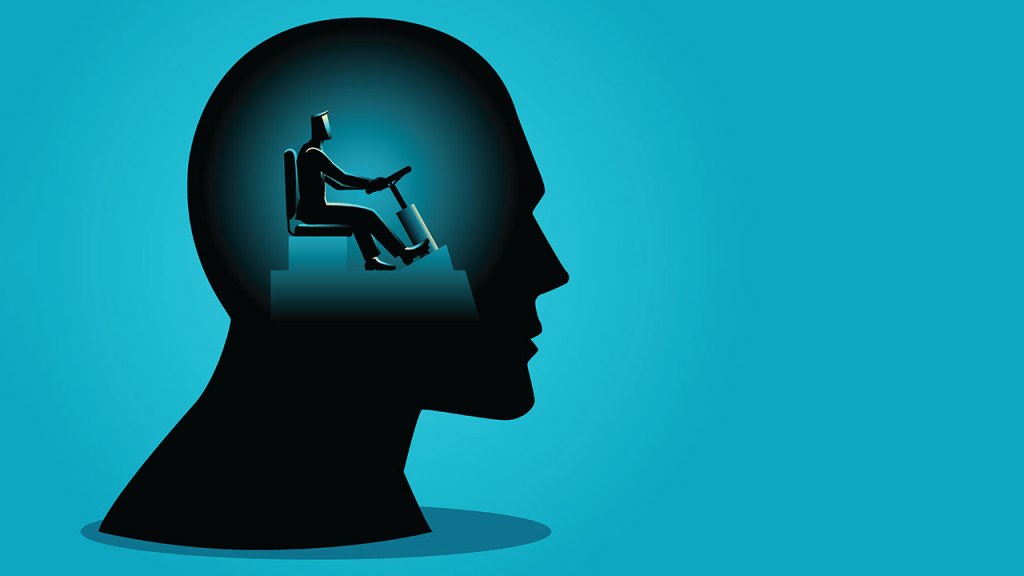
The libertarian begins with the person and asks what the universe must be like for persons to be real.
The materialist begins with causal closure and asks which definition of freedom will fit.
The libertarian begins with genuine agency and asks whether causal closure was ever more than a metaphysical hypothesis.
The compatibilist asks whether an action expresses the agent’s motives without coercion.
The libertarian asks the prior question: what made those motives, those evaluations, and that final act of willing take this path rather than another?
The hard determinist replies: prior causes all the way down.
The libertarian replies: then you have described a conduit, not an ultimate author.
The skeptic replies: if prior causes do not determine the choice, chance must.
The libertarian replies: that is a false dichotomy if agents themselves are causes.
The physicalist replies: physical events must have sufficient physical causes.
The libertarian replies: that is precisely the proposition at issue, not an axiom entitled to decide the issue before consciousness enters the courtroom.
Kim’s causal-exclusion argument inadvertently reveals how high the stakes are. If mentality is genuinely irreducible and genuinely causally efficacious, a comfortably nonreductive physicalism becomes very difficult to maintain. Hasker’s emergent-dualist proposal illustrates one way of taking that possibility seriously: consciousness may depend intimately upon the brain while nonetheless constituting a real emergent subject rather than a mechanistically reducible pattern.
Compatibilism is attractive because it avoids this metaphysical revolution.
That, in my judgment, is exactly its weakness.
Its great achievement is to identify many things that make human beings more autonomous than puppets: acting without chains, identifying with one’s desires, responding to reasons, owning one’s psychological mechanisms, participating in moral relationships, anticipating consequences, exercising self-control.
But “more autonomous than a puppet” is not the same as metaphysically free.
A sufficiently sophisticated deterministic machine could, in principle, contain internal desires.
It could represent reasons.
It could possess second-order representations.
It could inhibit some impulses.
It could update behavior.
It could anticipate punishment.
It could even say, “I chose this because I wanted it.”
If its complete future were nevertheless fixed by antecedent states and laws, the libertarian question would remain unanswered.
Did anything there genuinely settle what was not already settled?
This is why Robert Kane’s language of ultimate origination is so important. He distinguishes merely doing what one’s purposes dictate from being, in some significant measure, a source of the purposes by which one lives. And it is why sourcehood survives the Frankfurt revolution: even if alternate possibilities are not necessary in every responsible action, the Stanford Encyclopedia notes that incompatibilists can continue to insist that deterministic agents lack the sourcehood moral responsibility requires.
That is the hill worth defending.
Not randomness.
Not magical caprice.
Not decisions without reasons.
Not disembodied ghosts arbitrarily pushing neurons around.
Authorship.
A rational agent can be influenced without being necessitated.
A reason can count without compelling.
A character can incline without dictating.
A brain can enable without exhausting.
A past can shape without closing the future.
A person can receive a nature without being reducible to it.
And in certain decisive moments, the person can settle what the world had not settled beforehand.
That is libertarian freedom.
The majority view among philosophers does not make it false. The same PhilPapers data showing compatibilism’s dominance also show that judgments about free will cluster with deeper judgments about naturalism, physicalism, consciousness, and theism. That does not prove that compatibilists put the cart before the horse. But it gives us reason to ask whether the cart and horse were ever philosophically independent.
Perhaps the decisive disagreement is not finally over free will at all.
Perhaps it is over which facts receive foundational status.
If one’s fundamental reality is impersonal physical process, then consciousness must eventually be translated into process, agency into mechanism, freedom into reasons-responsiveness, and responsibility into a practice that survives the translation.
If one’s fundamental reality includes the undeniable existence of conscious subjects—not merely as observers but as knowers, reasoners, valuers, and potentially irreducible causes—then the order reverses. Physics describes the embodied conditions under which agents operate; it does not receive an automatic metaphysical license to declare those agents causally redundant.
The profound lesson of the cogito is not “therefore libertarianism.”
It is more disciplined:
Never let an inferred theory make you deny the datum that made inference possible.
The corresponding lesson for free will is:
Never let a theory of mechanisms redefine agency before asking whether agency is itself one of the fundamental features the theory must explain.
And the Qur’anic methodological analogy adds:
Let what is foundational illuminate what is secondary; do not build a worldview around the peripheral and then force the fundamental to disappear.
That is where the case finally rests.
We know the brain matters.
We know heredity matters.
We know environment matters.
We know habit matters.
We know unconscious processes matter.
We know reasons, character, social structures, childhood, hormones, injuries, and circumstances constrain what people can do. Neuroscience has enormously enriched that picture, while modern work on Libet-style experiments simultaneously warns against transforming neural precursors into premature metaphysical conclusions.
None of these facts answers the ultimate question.
At the critical boundary where influences become action, is there only another event in an already sufficient chain?
Or is there someone there?
The libertarian answer is unapologetic:
There is someone there.
Not an illusion generated for the convenience of the nervous system.
Not merely a bundle of causes speaking in the first person.
Not a passive screen upon which decisions made elsewhere become conscious.
A subject.
An agent.
A source.
A being shaped by causes yet capable, within limits, of becoming a cause in a deeper sense: one who understands alternatives, recognizes reasons, forms purposes, and can settle which genuinely possible future becomes actual.
If that is true, then free will is not an awkward exception to reality.
It is evidence about the nature of reality.
And if irreducible conscious agency truly opens causal pathways that antecedent physical conditions did not already make inevitable, then the supposedly closed material universe was never closed. Kim’s physicalist fortress has not merely acquired a new room; its perimeter has been breached.
The result is not chaos.
It is not irrationality.
It is not chance masquerading as freedom.
It is a universe in which law and agency coexist; in which physical regularity supplies conditions without exhausting causation; in which consciousness is not a metaphysical afterthought; in which moral accountability is not a useful fiction layered over inevitability; and in which persons are participants in the unfolding of reality rather than merely locations where an already settled future arrives.
That universe is admittedly more mysterious than the mechanistic alternative.
But mystery is not contradiction.
And reducing reality until nothing mysterious remains is not the same thing as explaining it.
The safer philosophical rule is the older and harder one: begin with what is most fundamental, preserve what reason cannot honestly discard, and make the rest of the worldview answer to it.
On free will, that means beginning not with the machine, but with the one who asks whether he is a machine.
Not with the neural trace, but with the conscious subject investigating the trace.
Not with causal closure, but with the causal question.
Not with a definition engineered to survive determinism, but with the freedom human beings have meant when they ask whether they are truly responsible for what they become.
And when that question is kept intact—when “free will” means genuine sourcehood rather than merely unobstructed execution, internal harmony, behavioral responsiveness, or biological competence—libertarianism is not the embarrassing minority view.
It is the one position that refuses to solve the problem by redefining it.




Leave a Reply