

Presented by Claude for Zia H Shah MD
Abstract
This commentary examines Qurʾān 20:53–55 — three verses embedded in the Moses–Pharaoh dialogue of Sūrat Ṭā-Hā in which God is described as having “made the earth a cradle (mahd)” for humankind, “threaded pathways (subul)” through it, and “sent down water from the sky,” so as to “bring forth pairs (azwāj) of diverse plants (nabāt shattā),” before commanding, “Eat and pasture your cattle — surely in that are signs for people of understanding (ulī al-nuhā),” and concluding, “From it (the earth) We created you, into it We shall return you, and from it We shall bring you forth another time.” Reading the passage through the classical lexica and exegetes (al-Ṭabarī, al-Zamakhsharī, al-Rāzī, al-Qurṭubī, Ibn Kathīr) alongside modern science, I argue that these three verses compress a remarkably complete cosmology of habitability: the earth as a fine-tuned cradle for life; the hydrological cycle as the engine of that life; the diversity and pairing (sexuality) of plants as a functional and reproductive marvel; the trophic dependence of humans and animals on vegetation; and the material continuity of the human body with the earth from which it comes and to which it returns. The theological spine is the Qurʾānic resurrection argument from the revival of vegetation: the God who quickens dead earth with rain can quicken dead bodies — an inference that verse 55 makes explicit. I integrate verified botanical data — the Royal Botanic Gardens, Kew’s finding of “about 391,000 species of vascular plants currently known to science, of which about 369,000 species (or 94 percent) are flowering plants,” roughly 2,000 new species named annually, and 21 percent of plant species threatened with extinction Thequran — and situate the passage within the Islamic teleological tradition (Ibn Rushd’s dalīl al-ʿināya and dalīl al-ikhtirāʿ) and the “two books” motif, drawing throughout on the botanical and afterlife writings of Zia H. Shah, MD. The conclusion is that the passage is best read not as a coded scientific prediction but as an open-ended summons to contemplation whose evidential force grows with every advance in the sciences of life.
1. The Text and Its Setting
The three verses read:
ٱلَّذِى جَعَلَ لَكُمُ ٱلْأَرْضَ مَهْدًۭا وَسَلَكَ لَكُمْ فِيهَا سُبُلًۭا وَأَنزَلَ مِنَ ٱلسَّمَآءِ مَآءًۭ فَأَخْرَجْنَا بِهِۦٓ أَزْوَٰجًۭا مِّن نَّبَاتٍۢ شَتَّىٰ ﴿٥٣﴾ كُلُوا۟ وَٱرْعَوْا۟ أَنْعَـٰمَكُمْ ۗ إِنَّ فِى ذَٰلِكَ لَـَٔايَـٰتٍۢ لِّأُو۟لِى ٱلنُّهَىٰ ﴿٥٤﴾ مِنْهَا خَلَقْنَـٰكُمْ وَفِيهَا نُعِيدُكُمْ وَمِنْهَا نُخْرِجُكُمْ تَارَةً أُخْرَىٰ ﴿٥٥﴾
Alladhī jaʿala lakumu l-arḍa mahdan wa-salaka lakum fīhā subulan wa-anzala mina l-samāʾi māʾan fa-akhrajnā bihi azwājan min nabātin shattā. Kulū wa-rʿaw anʿāmakum; inna fī dhālika la-āyātin li-ulī al-nuhā. Minhā khalaqnākum wa-fīhā nuʿīdukum wa-minhā nukhrijukum tāratan ukhrā.
“[It is He] who made the earth a cradle for you, and threaded therein pathways for you, and sent down water from the sky — and with it We have brought forth pairs of diverse plants. Eat, and pasture your cattle. Surely in that are signs for people of understanding. From it (the earth) We created you, and into it We shall return you, and from it We shall bring you forth another time.” (20:53–55)
The passage sits within the confrontation between Moses and Pharaoh. When Pharaoh asks, “Who then is the Lord of you two, O Moses?” (20:49), Moses answers that his Lord is “He who gave to each thing its form and nature, then guided it aright” (20:50). Most exegetes — including Maududi in Tafhīm al-Qurʾān and Ibn Kathīr — hold that Moses’ own speech concludes at verse 52, and that verses 53–55 are a divine amplification, an iʿtirāḍ (parenthetical admonition) appended by God to Moses’ testimony. This is why the grammatical voice shifts within verse 53 from the third person (“He who made … and sent down”) to the first-person plural of divine majesty (“We have brought forth”), a hallmark of Qurʾānic iltifāt (rhetorical person-shift) that heightens the immediacy of the sign.
2. Key Terms and Their Semantic Fields
Mahd / mihād (مهد / مهاد) — “cradle, bed.” The root m-h-d denotes making a place plain, even, smooth, and prepared — as one prepares a bed. Ibn Kathīr notes that the word was recited both as mahdan and mihādan, and glosses it as “a place of rest that you settle down upon … that you stand upon, sleep upon, or travel upon its back.” The image is domestic and tender: the earth as an infant’s cradle. Sayyid Quṭb, in Fī Ẓilāl al-Qurʾān, draws out the metaphor beautifully — “human beings are the children of the earth in whose lap they grow up and on whose produce they feed,” Qur’an Wiki and the earth “has been levelled for them so that they can walk on it, pursue their life affairs, cultivate it and benefit by its treasures.” Qur’an Wiki The same root recurs at 43:10 (mahdan), 78:6 (mihādan), 2:22 and 20:53. The lexica (Lane, Hans Wehr) confirm the range “bed; cradle; to spread out evenly; to pave (a road); to make level.” The term connotes not a flat cosmography but a prepared, habitable, nurturing surface — a point to which the science of planetary habitability gives fresh depth.
Subul (سبل) — “pathways, roads.” The plural of sabīl, glossed by Ibn Kathīr through the parallel at 21:31, “And We placed therein broad highways that they may be guided.” Al-Rāghib and the classical commentators read it as the natural passes, valleys, and routes threaded through mountains and terrain that make the earth traversable — mobility being a precondition of trade, settlement, and civilization.
Azwāj (أزواج) — “pairs, kinds, mates.” The plural of zawj. The classical lexicographers are unanimous that the word is polysemous: Ibn Manẓūr’s Lisān al-ʿArab states that its root meaning is “al-ṣinf wa-l-nawʿ (kind and type) of anything,” while “any two coupled things — whether alike or opposite — are a zawjān, and each one of them is a zawj.” Al-Rāghib al-Iṣfahānī’s Mufradāt records the same triple range: each of two mating counterparts (male and female); any two coupled things; and by extension any ṣinf (kind, variety). Lane’s Lexicon gives “a sort, or species; syn. lawn and ḍarb and ṣinf.” thequran This polysemy is the interpretive crux of the verse: classical exegetes generally read azwājan min nabātin shattā as “various kinds of plants,” while modern commentators have foregrounded the “pair/mate” sense in light of the discovery of plant sexuality (Section 6).
Shattā (شتّى) — “diverse, various, scattered, disparate.” From the root sh-t-t (to disperse, to be scattered/divergent). It emphasizes heterogeneity: not merely many plants, but plants of divergent natures, forms, tastes, and uses — even when, as other verses note (e.g., 13:4), they are “watered with one water.” The juxtaposition of one water and divergent kinds is itself an argument for a designing agency beyond the merely material cause.
Ulū al-nuhā (أولو النهى) — “people of understanding / of sound reason.” Nuhā derives from the root n-h-y, “to forbid, restrain.” The scholars explain that ʿaql (intellect) is called nuhā because sound reason restrains its possessor from folly and base conduct. The phrase thus denotes not merely the clever but the wise — those whose intellect governs their appetites. That the “signs” are addressed specifically to ulī al-nuhā signals that the evidential reading of nature is a moral-rational achievement, not an automatic perception.
3. Classical Tafsīr
The classical commentators read the passage as a compact proof of tawḥīd (divine unity) and providence, culminating in a proof of the resurrection.
Al-Ṭabarī and the early authorities gloss mahd as a place of settlement and subul as the roads God eased for human passage, and read the bringing-forth of diverse vegetation by a single descending water as evidence of a single, wise, sustaining Lord — precisely the answer Pharaoh had demanded.
Ibn Kathīr unifies the three verses under Moses’ theology of the one Lord “who made the earth as a bed,” “opened ways for you therein,” and “sent down water … and brought forth with it various kinds of vegetation.” On verse 55 he preserves the classical tripartite scheme: “From the earth We created you” — that is, by creating Adam from dust — “and into it We shall return you” — by burial — “and from it We shall bring you forth” — at the Resurrection.
Maududi (Tafhīm al-Qurʾān) crystallizes verse 55 into the doctrine that “every man has to pass through three stages: (1) from birth to death, (2) from death to Resurrection, and (3) from the Day of Resurrection to Eternity,” and observes that, according to this verse, all three stages are enacted upon this same earth. He also stresses that the sign is legible only to “those who use their common sense in their search for the Truth.”
Al-Rāzī and al-Zamakhsharī, in their treatments of the parallel botanical verses (e.g., 26:7, 22:5), develop the rhetorical argument from multiplicity: the combination of comprehensiveness (“every kind”) and superabundance (“how many!”) is taken as a demonstration of kamāl al-qudra, the perfection of divine power, manifest in the encompassing diversity of vegetation.
A recurring classical insight, reported by Ibn Kathīr across the rain-verses, is that “almost every time the Qurʾān mentions the reviving of earth with rain, it says ‘thus you shall be raised from the dead’” — the exegetical observation that anchors the resurrection argument examined in Section 8.
4. The Earth as a Cradle: Habitability and Fine-Tuning
Modern planetary science lends the metaphor of mahd an unexpected precision. Earth occupies what astronomers call the circumstellar “habitable zone” or “Goldilocks zone” — the orbital band around a star within which liquid water can persist on a planetary surface, “not too hot and not too cold.” NASA defines the habitable zone as “the distance from a star at which liquid water could exist on orbiting planets’ surfaces.” NASA Science But habitability, researchers increasingly emphasize, requires far more than orbital distance: a stable star, a terrestrial planet of the right size to retain an atmosphere and drive plate tectonics, a magnetic field, the right chemical inventory, and orbital stability over billions of years. As Peter Ward and Donald Brownlee argued in Rare Earth, complex life appears to require “a terrestrial-type planet of appropriate size with a stable orbit, inside the habitable zone of a stable star,” Astronomy.com among a long list of further conditions. A 2026 study from ETH Zurich in Nature Astronomy (Walton, Rogers, Bonsor et al., “The chemical habitability of Earth and rocky planets prescribed by core formation”) even identified a chemical “Goldilocks zone” during planetary core formation, finding that a planet “may have water and still be chemically unfit for life from the very beginning” if oxygen levels during core formation kept phosphorus and nitrogen out of the biosphere.
The broader fine-tuning literature notes that “many properties of the universe fall within extremely narrow and improbable ranges” necessary for complex life — a designation, as commentators note, “routinely used by scientists and scholars of all stripes” Christian Post and neutral as to metaphysics. Whatever one concludes philosophically (Section 7), the empirical picture is that the earth is not a generic rock but an exquisitely prepared, nurturing habitat — a mahd in a sense the seventh-century audience could grasp devotionally and the twenty-first century can quantify. The “threaded pathways” (subul) likewise map onto the geographic reality that terrain, valleys, ocean currents, and mountain passes make the planet navigable and its resources reachable.
5. Rain from the Sky: The Water Cycle
“And sent down water from the sky” (wa-anzala mina l-samāʾi māʾan) names the single most important process for terrestrial life: the hydrological cycle. Water evaporates from oceans and surfaces, rises, condenses on cloud condensation nuclei (aerosols including dust, sea salt, and organic particles carried by winds), forms clouds, is driven by winds, and precipitates as rain and snow, which then infiltrates soil, recharges aquifers, feeds springs, and flows through rivers back to the sea — a closed loop powered by solar energy. The scientific articulation of this cycle is surprisingly recent: it was Bernard Palissy (16th c.), Pierre Perrault, Edme Mariotte, and Edmund Halley (17th c.) who established quantitatively that rainfall alone suffices to feed rivers and springs — Perrault by measuring rainfall in the Seine watershed against the river’s flow.
The Qurʾān returns to this theme dozens of times, and Zia H. Shah, MD, has made the water cycle the “starting point for the novice to study the Qurʾān,” noting the striking convergence of verses such as 15:22 (winds as lawāqiḥ, “fertilizing”), 23:18 (water sent down “in due measure” and “lodged in the earth”), 30:48, 39:21, and 13:17 (“He sends down water from the sky so that the rivers flow according to their measure”). Shah highlights that the word lawāqiḥ carries a dual valence — winds literally pollinate plants (anemophily) and carry the aerosol nuclei “without which cloud formation would be inefficient, and precipitation might not occur as readily.” Here Ṭā-Hā 20:53 compresses the whole system into its salient link: sky-water is the cause (bihi, “with it”) of vegetation. The Qurʾān, in Shah’s framing, is “a book of guidance, not a science textbook,” yet its āyāt (signs) “often align with scientific understanding.”
6. Pairs of Diverse Plants: Diversity, Sexuality, and Photosynthesis
6.1 The scale of plant diversity
If verse 53 celebrates azwājan min nabātin shattā, “pairs of diverse plants,” modern botany reveals a diversity far exceeding anything the original audience could have enumerated. Science currently documents on the order of 380,000–400,000 known plant species. The Royal Botanic Gardens, Kew, in its landmark State of the World’s Plants 2016 — the first global baseline assessment of all vascular plants, led by Science Director Kathy Willis — reported that “there are about 391,000 species of vascular plants currently known to science, of which about 369,000 species (or 94 percent) are flowering plants.” Mongabay Encyclopædia Britannica gives angiosperms (flowering plants) as “about 352,000 species … approximately 80 percent of all the known green plants now living,” while Wikipedia’s synthesis records “about 380,000 known species of plants, of which the majority, some 260,000, produce seeds.” Wikipedia
These figures require careful handling, because the tally of “kinds” is itself a moving, methodology-dependent construct. A 2016 Phytotaxa synthesis (Christenhusz & Byng) counted “ca 374,000” accepted plant species, of which “approximately 308,312 are vascular plants, with 295,383 flowering plants,” alongside “algae ca 44,000, liverworts ca 9,000, hornworts ca 225, mosses 12,700, lycopods 1,290, ferns 10,560 and gymnosperms 1,079.” Kew’s later World Checklist of Vascular Plants placed accepted vascular species around 350,000 out of well over a million published names, most of which prove to be synonyms. (Two taxonomic clarifications are worth flagging, since popular summaries often garble them: ferns are vascular plants, not “non-vascular,” and gymnosperms such as conifers are seed plants, not non-vascular. The genuinely non-vascular plants are the bryophytes — mosses, liverworts, and hornworts.)
The pace of discovery and loss both testify to the verse’s “how many.” Kew reports that “about 2,000 new plant species are discovered or described every year” Mongabay — in 2015 the figure was 2,034 vascular species, most from Australia, Brazil, and China. Against this, the same State of the World’s Plants 2016 found that “21 percent of all plant species — or one in every five plant species — is likely threatened with extinction” Mongabay (assessed against IUCN Red List criteria). A 2019 study (Humphreys, Govaerts, Ficinski, Nic Lughadha & Vorontsova, Nature Ecology & Evolution 3:1043–1047) found that of roughly 1,234 reported extinctions, 571 seed-plant species are presumed genuinely extinct since Linnaeus’s Species Plantarum (1753) — while “431 rediscovered and 232 synonymized” — a toll “more than twice the number of birds, mammals and amphibians recorded as extinct (a combined total of 217 species).” Royal Botanic Gardens, Kew The command “eat, and pasture your cattle” thus carries, for ulī al-nuhā today, an implicit summons to stewardship.
6.2 Photosynthesis: the base of the cradle’s economy
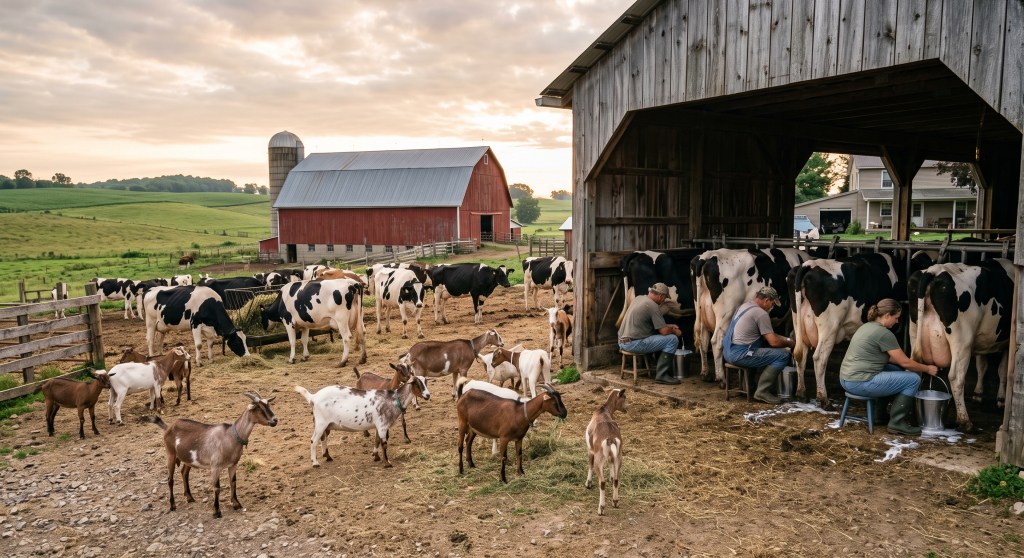
The command “kulū wa-rʿaw anʿāmakum” (“eat, and pasture your cattle”) names the trophic reality that plants are the primary producers on which all animal life — human and livestock alike — depends. Photosynthesis, as Matthew Johnson’s review “Photosynthesis” in Essays in Biochemistry (60(3):255–273, 2016) puts it, “sustains virtually all life on planet Earth providing the oxygen we breathe and the food we eat; it forms the basis of global food chains.” That review quantifies its scale: “Photosynthesis converts ∼200 billion tonnes of CO₂ into complex organic compounds annually and produces ∼140 billion tonnes of oxygen into the atmosphere.” nih “Almost all the oxygen in the atmosphere is because of the process of photosynthesis,” Encyclopedia Britannica Britannica notes; without it, “most organisms would disappear, and Earth’s atmosphere would eventually become nearly devoid of gaseous oxygen.” Encyclopedia Britannica The two-word imperative of verse 54 therefore points to the entire energetic foundation of the biosphere: sunlight → plants → herbivores (the pastured cattle) → humans.
6.3 The “pair” (zawj) and plant sexuality
The most-discussed dimension of the verse is the term azwāj. Zia H. Shah recounts that this was the passage that first drew him into the systematic study of the Qurʾān: “The Arabic word used for ‘diverse pairs of plants’ is azwājan, the plural of a ‘mate’ or ‘spouse.’” As he documents in his commentary “Gender and Reproduction in Plant Life,” the Qurʾān refers to plants or fruits as “pairs” more than a dozen times — including 13:3 (“of all fruits He has made in it two kinds/pairs”), 20:53, 22:5 (“every joyous pair”), 31:10, 36:36, and 51:49 (“of everything We created pairs”). Shah observes that “the Qurʾān exclusively highlights this sexual method of plant reproduction … while not explicitly discussing asexual propagation” — a selectivity he finds striking, since sexual reproduction (the union of male and female gametes producing new genetic individuals) is the biologically precise sense.
The historical point that gives this reading its force is that plant sexuality was established experimentally only in the modern era. Rudolf Jakob Camerarius demonstrated it in his 1694 letter De sexu plantarum epistola (through experiments on mulberry, spinach, maize, and castor), it was systematized in Linnaeus’s eighteenth-century “sexual system” of classification, and Christian Konrad Sprengel in the 1790s first recognized that flowers function to attract insects for cross-pollination — work Darwin later confirmed. Botanically, the “pair” reading maps onto real structures: flowers may be perfect (bisexual) or imperfect (unisexual); species may be monoecious (separate male and female flowers on one plant, e.g., maize) or dioecious (separate male and female individuals, e.g., date palms, willows). Pollination — by wind, water, insects, or birds — effects the pairing.
Two cautions, which Shah’s own work and its critics both raise, keep this reading honest. First, ancient date-farmers practiced artificial pollination for millennia (Assyrian reliefs depict it), so the practical fact of plant pairing was known even though its mechanism was not theorized until 1694; the classical exegetes accordingly read azwāj here primarily as “kinds.” Second, the “scientific miracle” (iʿjāz ʿilmī) genre that presses such verses as encrypted predictions has been sharply criticized — by the physicist-astronomer Nidhal Guessoum, among others — as methodologically hazardous, retrofitting shifting science onto a fixed text. The more defensible reading, consistent with the polysemy of zawj and with Guessoum’s “multi-level reading” of cosmic verses, is that the verse frames the phenomenon — supplying the posture of attentive looking and the expectation of ordered, paired, beneficial multiplicity — rather than predicting Camerarius.
7. Philosophical Dimensions: Design, Order, and Teleology
The passage instantiates the classic form of Islamic natural theology: observe the ordered, beneficial world; infer the wise Maker. Ibn Rushd (Averroes), in al-Kashf ʿan manāhij al-adilla, distilled the Qurʾān’s theistic reasoning into two arguments grounded in its āyāt: the dalīl al-ʿināya (the argument from providence — that everything is fitted to human welfare and purpose) and the dalīl al-ikhtirāʿ (the argument from invention — that living things bear the marks of having been made). Ṭā-Hā 20:53–55 is a near-perfect specimen of the combined form: the manufacture and diversity of vegetation and the fine preparation of the earth (ikhtirāʿ), coupled with their manifest beneficence — the cradle, the pathways, the food, the pasture — for humans and animals (ʿināya).
The epistemology at work is the “two books” motif so central to Zia H. Shah’s project: the Qurʾān-e tadwīnī (the written Book) and the Qurʾān-e takwīnī (the Book of Nature), authored by one Source and therefore incapable of ultimate conflict. On this view, as Shah frames it, knowing the mechanism of a sign does not dissolve it but can deepen the awe: understanding “how a tiny seed contains the genetic code and stored energy to grow when water triggers it” enriches rather than empties the metaphor of divine quickening. Crucially, the ʿināya/ikhtirāʿ argument is not a “God-of-the-gaps” inference from ignorance; it reasons from the intelligibility, fecundity, and beneficence of the natural order as a whole. On that construal every newly described species — every additional instance of ordered, functional, “diverse” life — is one more data point of exactly the pattern the verse points at. The catalogue’s growth is cumulative evidence, not a retreating frontier.
The verse’s address to ulī al-nuhā — people of restraining reason — also frames a moral epistemology: the sign is available to all yet legible only to those who look with naẓar (contemplative sight) rather than mere sensation. This is teleology as vocation, not as automatic deduction.
8. Theological Dimensions: Providence, Gratitude, and the Resurrection Argument
8.1 Providence and gratitude
The passage is saturated with the language of gift: the earth made for you (lakum) a cradle, pathways threaded for you, water sent down, food brought forth, cattle to pasture. This is rubūbiyya (divine lordship) expressed as sustaining care. The natural response the verse cultivates is shukr (gratitude) — the recognition, as Zia H. Shah repeatedly stresses in his botanical writings, that “the sudden bloom of life in a once-arid land stirs a sense of wonder — exactly the response the Qurʾān seeks to cultivate.” The warning implicit elsewhere (e.g., 23:18, “indeed We are able to take it away,” and 30:51, the wind that turns crops yellow) reminds the reader that the cradle’s provision is contingent on the Provider, not self-generated.
8.2 The resurrection argument from the revival of vegetation
The theological climax is verse 55: “From it We created you, into it We shall return you, and from it We shall bring you forth another time.” This makes explicit the inference the Qurʾān draws again and again from the revival of dead earth. The logic, as Ibn Kathīr states it, is that the same divine power that revives lifeless soil into fecund vegetation “can bring the bodies to life after being decayed bones and scattered dust.” The parallel verses form a tight cluster: 22:5 (“you see the earth barren, but when We send down water upon it, it stirs to life and swells and puts forth every joyous pair … thus is the Resurrection”); 35:9 (“We drive the clouds to a dead land and revive the earth after its death — similar is the Resurrection”); 41:39 (“among His signs is that you see the earth humbled, but when We send down water it quivers and swells; He who gives it life will surely give life to the dead”); 43:11; 50:9–11 (“We sent down blessed water … and gave life thereby to a dead land — thus is the coming-forth”); and 30:19 (“He brings the living from the dead and the dead from the living, and revives the earth after its death; thus will you be brought forth”).
Zia H. Shah develops this into what he calls “the rain-revival parable and the botanical origin of humankind.” As he frames the biology across his afterlife writings: “if God can revive a parched land, He can revive a disintegrated skeleton.” Thequran Verse 55 fuses two moments of this parable — the material origin of the human being from the earth and its material return and re-emergence. Both are read by Shah in light of the botanical metaphor of 71:17, wa-Allāhu anbatakum mina l-arḍi nabātan (“God caused you to grow from the earth like a plant”). “The phrase ambatakum min al-arḍi nabātā … uses a botanical metaphor to describe human origins,” Shah writes; “classical commentators like al-Jalālayn and al-Ṭabarī linked this to the creation of Adam from dust,” while a modern reading sees “a description of human physical development arising from the same earthly materials and processes that produce plant life, highlighting our connection to the terrestrial biosphere.”
8.3 The material origin of the body
Science makes the “from it We created you … and into it We shall return you” strikingly literal. The human body is composed overwhelmingly of the light elements abbreviated CHNOPS — carbon, hydrogen, nitrogen, oxygen, phosphorus, and sulfur — which together with calcium constitute about 99 percent of body mass (oxygen ~65%, carbon ~18.5%, hydrogen ~9.5%, nitrogen ~3.2%, calcium ~1.5%, phosphorus ~1%). These are precisely the elements cycled through soil, water, and vegetation. In the wider cosmic frame that Shah invokes, these elements were forged in stars — the SDSS-III APOGEE survey of ~150,000 stars (analysis led by Sten Hasselquist of New Mexico State University) confirmed the “we are made of stardust” formula: as Space.com reported the finding, “a new survey of 150,000 stars shows just how true the old cliché is: Humans and their galaxy have about 97 percent of the same kind of atoms,” measuring precisely “the atoms that make up 97% of the mass of the human body.” Whether one reads verse 55 through soil chemistry or stellar nucleosynthesis, the material continuity of the human being with the earth and cosmos is not metaphor but measurement — and death, burial, and decomposition literally return those elements “into it.”
The three clauses of verse 55 thus recapitulate a single arc that Maududi schematized as the three stages of human existence, all enacted on this one earth: origination, return, and re-emergence. The resurrection is presented not as an arbitrary miracle but as the completion of a pattern the believer witnesses every spring.
9. The Evolving-Understanding Thesis
Read as a coded scientific claim, 20:53–55 would be fragile, hostage to each decade’s botany. Read as an open-ended summons to contemplation, it is robust and self-renewing — the reading most consonant both with the classical exegetes’ focus on the sign (āyah) and with the methodological cautions of contemporary Muslim scientists. The seventh-century audience could name a few hundred plants and read the verse truly. The eighteenth century learned that each “kind” was itself sexed and paired. The twenty-first century counts on the order of 350,000–391,000 accepted species, adds about 2,000 a year, and watches DNA phylogenetics redraw the very meaning of “kind.” Each advance is fresh commentary on azwājan min nabātin shattā. The verse supplies the posture (attentive looking), the expectation (ordered, paired, beneficial multiplicity), and the humility (the magnitude exceeds the observer) — and then closes, in verse 55, by folding the whole botanical meditation into the promise of the believer’s own resurrection.
Epilogue: The Cradle and the Grave
There is a profound and deliberate symmetry in these three verses that only becomes visible when they are read as a single movement. They open with the earth as a cradle — the place where the infant of humanity is laid, fed, and made to grow — and they close with the earth as the grave and the site of resurrection: “into it We shall return you, and from it We shall bring you forth another time.” Between cradle and grave runs the water from the sky and the green life it quickens, so that the same rain that makes the plants “pairs of diverse kinds” becomes, by the verse’s own logic, the emblem of the rain that will one day quicken the dead. The earth that receives the seed and returns it as a harvest is the earth that receives the body and will return it as a resurrected person.
This is why the passage is addressed to ulī al-nuhā, people of governing reason. The signs are not esoteric; they are the most ordinary things in the world — soil, roads, rain, plants, cattle, food, death. The achievement asked of the reader is not to discover new facts but to see the familiar rightly: to recognize in the botanical cycle a parable of providence and in the material body a pledge of return. As Zia H. Shah’s body of work argues across the categories of botany and the afterlife, the more precisely modern science describes the mechanisms — the hydrological cycle, photosynthesis, plant sexuality, the CHNOPS chemistry of the flesh, the stellar origin of its atoms — the more richly the contemplative reader can inhabit the verse’s summons. Knowledge of the cradle does not dissolve the wonder of the One who prepared it; it deepens the gratitude, and it lends new weight to the promise that the God who spread the cradle and sends the rain is the God who will, from this same earth, “bring you forth another time.”



Leave a comment