
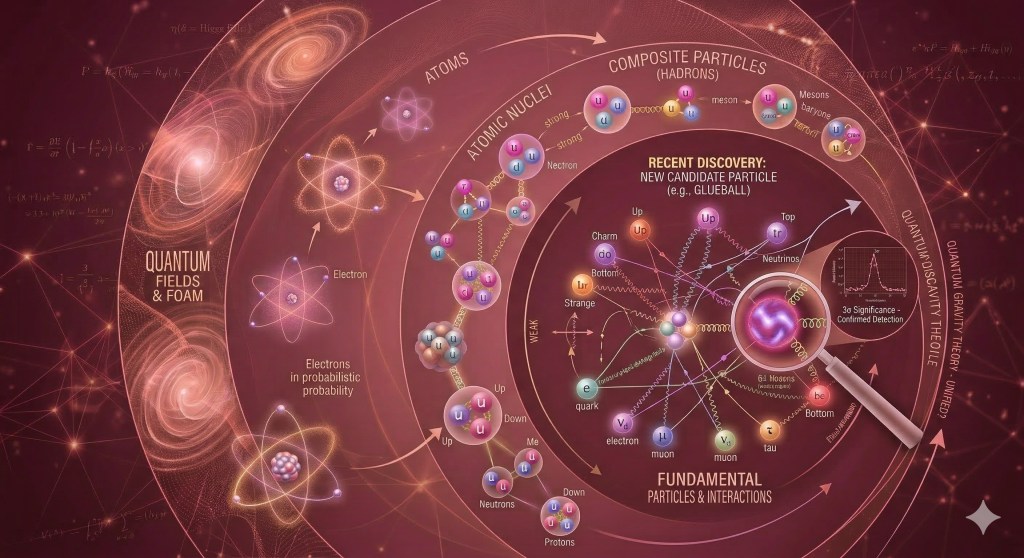
Audio teaser: Ghazali’s occasionalism and quantum physics
Presented by Gemini
Abstract
The unresolved foundational crisis of quantum mechanics—manifested in the persistent coexistence of mutually exclusive yet mathematically equivalent interpretations—fundamentally shatters the classical, self-subsisting “clockwork universe” championed by secular materialism. Rather than reducing this profound quantum ambiguity to a cold, meaningless “brute fact” or the rigid determinism of a strict atheist, this study proposes that the very plurality and strangeness of these interpretations serve as an epistemic gateway to a transcendent reality. By positioning the Many-Worlds Interpretation alongside the Copenhagen model, Bohmian pilot-waves, spontaneous collapse theories, and Quantum Bayesianism (QBism), the analysis demonstrates that classical matter lacks intrinsic, self-sustaining causal efficacy. This radical contingency opens the door to a modern, scientifically rigorous reading of Abu Hamid al-Ghazali’s occasionalist metaphysics. Integrating the pioneering “Four Books Thesis” developed by physician-philosopher Dr. Zia H. Shah MD, this paper frames the quantum wave function and its probabilistic collapse not as blind randomness, but as the moment-by-moment, frame-by-frame rendering of the “Divine Habit” (‘adah). Ultimately, the awe and epiphany generated by modern physics are repositioned as a possible route to Al-Ghazali’s occasionalism, offering a unified, information-theoretic framework where reality is continuously sustained by the direct volition of the Creator.
The Crisis of Interpretation: The Fragmented Landscape of Quantum Theory
For nearly a century, quantum mechanics has stood as the most empirically successful theory in the history of science, generating predictions of unparalleled accuracy. Yet, a profound crisis persists at its foundation: physicists remain unable to reach a consensus on what the mathematical formalism of the theory actually says about the nature of reality. The core of this difficulty lies in the “measurement problem”—the question of how a smooth, deterministic quantum wave function representing a superposition of multiple potential states collapses into the single, concrete classical reality observed in daily life.
To a layperson, this is often illustrated by the famous thought experiment of Schrödinger’s cat, in which a cat in a sealed box is placed in a simultaneous quantum superposition of being both “alive” and “dead” until an observer opens the box to check its state. In the classical world, a coin is either heads or tails; in the quantum world, before it is observed, the coin behaves as if it is spinning in mid-air, embodying both possibilities at once.
This interpretive impasse is not a minor disagreement but a fundamental schism. In foundational surveys, the traditionally dominant Copenhagen interpretation no longer commands anything resembling a majority, often receiving only 36% to 42% of responses, while the remainder of the scientific community is deeply fragmented among competing paradigms. As the physicist N. David Mermin famously quipped, “New interpretations appear every year. None ever disappear”.
Crucially, every standard interpretation of quantum mechanics yields the exact same mathematical predictions for current laboratory experiments. Because these models cannot be distinguished by empirical divergence alone, the debate transcends simple laboratory physics and enters the realm of deep metaphysics. Physicists are forced to grapple with fundamental questions of ontology, determinism, and the very definition of what is “real”. This unresolved plurality suggests that the classical materialist assumption of a self-contained, easily accessible objective reality is structurally inadequate. Instead, the modern interpretations debate exposes a deeply hidden, highly plastic mathematical order underlying the cosmos.
The Five Pillars of Quantum Interpretation
To understand how the mathematical machinery of quantum physics permits such radically diverse ontological views, one must examine the five primary interpretive frameworks that currently dominate the scientific discourse.
The Copenhagen Interpretation
Developed primarily by Niels Bohr and Werner Heisenberg in the 1925–1927 period, the Copenhagen interpretation is the oldest and historically most widely taught framework. It posits that a physical system is completely described by a wave function, which is intrinsically probabilistic rather than descriptive of a concrete, localized object. Under this view, physical properties do not exist with definite values prior to the act of measurement—a philosophical stance known as the rejection of counterfactual definiteness.
During an observation, the system undergoes an irreversible process where the wave function abruptly “collapses” to a single state. To make this work, Heisenberg introduced a sharp “Heisenberg cut” between the quantum system being observed and the classical, macroscopic measuring device. Bohr, however, argued that the “cut” is not a physical boundary but a linguistic necessity, as human observers must describe experimental results in classical language.
Because the Copenhagen model avoids offering a concrete account of what occurs behind the scenes, critics often find it evasive. The theoretical physicist Scott Aaronson has described Copenhagen as “shut-up and calculate except without ever shutting up about it,” highlighting Bohr’s “studied refusal to offer any account of the actual constituents of the world”. It was David Mermin who summarized this pragmatic, minimalist attitude with the famous dictum: “Shut up and calculate!”.
The Many-Worlds of Hugh Everett III
Dissatisfied with the ad hoc nature of wave-function collapse and the arbitrary Heisenberg cut, Hugh Everett III proposed the Many-Worlds Interpretation (MWI) in 1957. MWI is mathematically minimalist, containing only two primary postulates:
- The physical state of the universe is represented by a vector in a high-dimensional mathematical space known as Hilbert space.
- This quantum state evolves continuously and deterministically in accordance with the Schrödinger equation.
In Many-Worlds, there is no wave-function collapse. Instead, when a measurement occurs, the observer and the measurement apparatus become deeply entangled with the quantum system. Through the process of environmental decoherence, the universal wave function splits into mutually unobservable, branching histories. All possible outcomes of a quantum event are physically realized in these parallel branches.
Everett asserted that this was the “only completely coherent approach to explaining both the contents of quantum mechanics and the appearance of the world”. To explain how observers experience only one history, Everett offered an analogy:
“As an analogy one can imagine an intelligent amoeba with a good memory. As time progresses the amoeba is constantly splitting, each time the resulting amoebas having the same memories as the parent. Our amoeba hence does not have a life line, but a life tree”.
Proponents of Everettian quantum mechanics, such as theoretical physicist Sean Carroll, argue that these parallel branches are not independently postulated but are direct mathematical consequences of taking the Schrödinger equation seriously. Carroll writes:
“Quantum reality is a wave function; classical positions and velocities are merely what we are able to observe when we probe that wave function”.
Furthermore, Carroll clarifies that “the branches aren’t ‘located’ anywhere… they simply exist simultaneously, along with our own, effectively out of contact with it”.
Pilot-Wave Theory and Bohmian Mechanics
First proposed by Louis de Broglie and later extensively developed by David Bohm in 1952, Bohmian mechanics is a realist, deterministic, and explicitly nonlocal alternative. Unlike Copenhagen or Many-Worlds, Bohmian mechanics asserts that physical particles possess definite, objective trajectories in classical space at all times. These particles are guided in their motion by a real, physical “pilot wave” that satisfies the Schrödinger equation.
This interpretation restores determinism to the subatomic world, but it does so at a significant philosophical cost. It is highly nonlocal, meaning that a change in the state of a particle here instantaneously alters the guiding force acting on a particle across the universe, satisfying the requirements of Bell’s theorem. Additionally, Bohmian mechanics is often criticized as “philosophically uneconomical” because it requires both a wave function and a set of real particle positions, the latter of which remain permanently hidden from direct, independent scientific measurement.
Nonetheless, Bohm himself viewed this interconnectedness as a profound revelation. He observed:
“Rather, we say that inseparable quantum interconnectedness of the whole universe is the fundamental reality, and that relatively independent behaving parts are merely particular and contingent forms within this whole”.
Bohm believed that physics had lost its way by focusing purely on equations, stating that “Behind it all is surely an idea so simple, so beautiful, that when we grasp it we will all say to each other, how could it have been otherwise?”.
Objective Collapse Models
Objective collapse theories, such as the Ghirardi-Rimini-Weber (GRW) model or the Penrose-Diósi model, seek to resolve the measurement problem by physically modifying the Schrödinger equation. These theories assert that wavefunction collapse is a real, spontaneous physical process that occurs randomly in nature without requiring any conscious observer or classical measurement apparatus.
In these models, microscopic particles exist in superpositions for long periods, but as the number of particles in a system increases, the probability of a spontaneous collapse scales exponentially. Roger Penrose has famously suggested that this collapse threshold is driven by gravity when the gravitational self-energy of a superposition reaches a critical state.
However, objective collapse models face severe empirical constraints. Despite increasingly sensitive experiments, no spontaneous “Heisenberg cut” or threshold of collapse has ever been observed, even when physicists successfully place massive, complex molecules into coherent quantum superpositions.
QBism: Quantum Bayesianism
At the opposite philosophical pole sits QBism, or Quantum Bayesianism, developed by Carlton Caves, Christopher Fuchs, and Rüdiger Schack. Inspired by the subjectivist probability theory of Bruno de Finetti, QBism asserts that the wave function does not represent an objective physical reality at all. Instead, QBists view the wave function as a subjective “user’s manual”—a mathematical tool that an individual agent uses to calculate their personal expectations and manage their beliefs about the consequences of their actions on a physical system.
Under QBism, “collapse” is not a physical process but a simple updating of an agent’s beliefs in light of new lived experiences, completely resolving the paradoxes of nonlocality and spooky action at a distance. As Christopher Fuchs explains:
“There is a sense in which this unhinging of the Born Rule from being a ‘law of nature’ in the usual conception—i.e., treating it as a normative statement, rather than a descriptive one—makes the QBist notion of quantum indeterminism a far more radical variety than anything proposed in the quantum debate before. It says in the end that nature does what it wants, without a…”.
Fuchs famously summarized this radically personalized ontology by declaring that “quantum mechanics is a law of thought”.
| Interpretation | Mathematical Primacy | Nature of the Wave Function | Mechanism of “Collapse” | Deterministic vs. Stochastic | Primary Philosophical Stance |
|---|---|---|---|---|---|
| Copenhagen | Wave function & classical language | Epistemic representation of knowledge/possibilities | Triggered by measurement/Heisenberg cut | Intrinsically Stochastic | Pragmatism / Complementarity |
| Many-Worlds | Schrödinger equation alone | Ontic reality; universal physical state | No collapse; branch separation via decoherence | Strictly Deterministic | Radical Realism / Multiverse |
| Pilot-Wave | Wave function & particle positions | Dualistic guiding field for real particles | No collapse; continuous wave-particle evolution | Strictly Deterministic (Nonlocal) | Classical Realism / Holism |
| Objective Collapse | Modified Schrödinger equation | Ontic field subject to physical decay | Spontaneous physical threshold (e.g., gravity) | Spontaneously Stochastic | Physical Realism |
| QBism | Probability calculus & agents | Subjective degree of belief / expectation | Normative Bayesian update in agent’s mind | Agent-dependent / Non-deterministic | Radical Subjectivism / Pragmatism |
The Plurality of Reality as a Gateway to Occasionalism
The stark lack of scientific consensus on the ontology of quantum mechanics reveals a profound philosophical truth: the rigid, mechanistic determinism of classical physics has collapsed. Under the Newtonian paradigm, secular thought envisioned the universe as a closed, self-subsisting causal chain stretching from the Big Bang to the present. This deterministic model was famously illustrated by Pierre-Simon Laplace’s thought experiment of a vast intellect (Laplace’s Demon) that, knowing the exact position and momentum of every particle at one moment, could compute the entirety of the cosmic past and future. In such a clockwork universe, there was no logical space for ongoing divine action; the cosmos ran on “autopilot,” leading secular thinkers like Bertrand Russell to declare that “the universe is just there, and that’s all”.
However, the plurality of quantum interpretations dismantles this closed loop of natural causes. If the absolute, objective existence of localized matter in classical spacetime is an illusion, then the universe cannot be viewed as a self-sufficient machine. Whether one adopts the deterministic branching of Many-Worlds, the spontaneous transitions of objective collapse, or the radical subjectivism of QBism, the underlying physical substrate is revealed to be profoundly contingent and dependent on coordinates that lie beyond classical space and time.
This radical ontological openness provides a powerful scientific opening for the classical Islamic theology of occasionalism, championed by the eleventh-century scholar Abu Hamid al-Ghazali in his landmark work, Tahāfut al-Falāsifa (The Incoherence of the Philosophers). Ghazali’s occasionalism was formulated as a direct critique of the Aristotelian natural philosophy of Muslim Neoplatonists like Ibn Sina (Avicenna), who asserted that natural causes possessed necessary, inherent connections to their effects.
Ghazali famously argued that what humans perceive as necessary cause and effect in the natural world is merely a habitual sequence of events willed and orchestrated directly by God at every successive moment. He wrote:
“In our view, the connection between what are believed to be the cause and the effect is not necessary. Take any two things. This is not That; nor can That be This. The affirmation of one does not imply the affirmation of the other; nor does its denial imply the denial of the other. The existence of one is not necessitated by the existence of the other; nor its non-existence by the non-existence of the other”.
To illustrate this, Ghazali provided the famous example of fire coming into contact with cotton. Secular philosophers asserted that fire, by its very nature, must burn cotton upon contact. Ghazali countered that fire is an inanimate object with no independent causal power. Instead, God is the sole immediate cause of both the flame and the disintegration of the cotton at each specific instance. He argued:
“We say it is God—who through the intermediacy of angels, or directly—is the agent of the creation of blackness in cotton…sourcen it”.
Underpinning this theology is the Ash’arite doctrine of metaphysical atomism. Unlike classical Greek atoms, which were permanent and self-subsisting, Ash’arite atoms (jawahir) and their temporal qualities (a’rad, or accidents) possess no duration over time. They are created by God and vanish instantly, requiring God to perpetually re-create them at every successive moment.
In this occasionalist framework, the universe is not a pre-wound clock running on autopilot; it is a “constantly rendered scene” or a “story unfolding in real time”. An apple falls to the ground not because of an intrinsic, autonomous gravitational force, but because God creates the apple a fraction lower at each successive instant, creating the illusion of continuous physical motion. This perspective elevates God to an immediate, intimate Sustainer (Al-Qayyum), directly present in the continuous creation of every atomic state. Detailed theological and philosophical treatments of this framework are systematically curated in the scholarly repository available at https://thequran.love/category/occasionalism/.
The Four Books Thesis: An Informational Cosmology
The task of translating this medieval occasionalist metaphysics into the vocabulary of modern theoretical physics and information theory has been systematically undertaken by physician-philosopher Dr. Zia H. Shah MD. Utilizing his medical background in sleep medicine and pulmonology to explore the neurobiology of consciousness alongside theoretical physics, Dr. Shah expands the classical “Two Books” metaphor—which posits that God is the author of both the Book of Scripture and the Book of Nature—into a highly integrated cosmological framework known as the “Four Books Thesis”. His extensive publications on this synthesis are preserved and made accessible to the public at https://thequran.love/category/four-books-thesis/.
Shah’s cosmology frames the universe as a highly structured, divine quantum simulation governed by four interconnected informational records. Rather than relying on discrete, fragmented bulleted points, this cosmology functions as a continuous, unified informational loop:
The cosmological paradigm begins with the first record, the Book of Revelation (Qur’an-e tadwini), which represents the spoken and written Word of God, providing the ultimate ethical, moral, and spiritual coordinate system. Dr. Shah integrates his medical background in sleep disorders to suggest that the brain’s sleep architecture, particularly during REM states and hypnagogic periods, serves as a biological interface designed to receive this divine, non-local informational input, utilizing the brain’s “virtual reality generator” to process revelation.
Transitioning to the physical realm, the second record, the Book of Nature (Qur’an-e takwini), is the cosmos itself, treated as a readable, structured text. Through the lens of occasionalism, the “laws of nature” are not autonomous metaphysical necessities of matter, but represent the “Divine Habit” (’adah) or custom (sunnat Allah)—the stable, reliable sequence of frame-by-frame creation that God freely maintains.
Running parallel is the third record, the Book of Destiny (Al-Lawh al-Mahfuˉẓ / The Preserved Tablet), which functions as the pre-programmed informational grid of physical laws, boundary conditions, and universal constants. Shah characterizes this as the “cosmological source code” or “Master Record” of the universe, ensuring that physical processes run with consistent, mathematical regularity.
Finally, the fourth record is the Book of Deeds (Kitaˉb al-Aʿmaˉl), which compiles the continuous, unerring recording of human volition and moral choices.
To ground this cosmology in modern physics, Dr. Shah synthesizes the Four Books Thesis with John Archibald Wheeler’s famous “It from Bit” paradigm. Wheeler asserted that physical reality (“it”) is not composed of primary material substances, but is fundamentally derived from binary informational choices (“bits”). Shah aligns this directly with the Quranic concept that “for every term there is a book,” framing the entire cosmos as an informational substrate where every physical entity—down to a single “speck of dust”—is a fundamental unit of information mathematically recorded and known to the Creator.
Crucially, Shah enlists the Holographic Principle—the breakthrough in quantum gravity which demonstrates that the complete physical information of a three-dimensional volume can be fully encoded on its two-dimensional boundary. Shah equates the Quranic “Preserved Tablet” or “Mother of the Book” (Umm al-Kitab) with this cosmic holographic boundary.
This synthesis yields profound theological and scientific consequences:
- Information Conservation and Unitarity: In quantum mechanics, quantum information cannot be destroyed, a fundamental principle known as unitarity. Shah demonstrates that the physical resolution of the black hole information paradox, which confirms that information is conserved on a holographic boundary, provides a precise scientific mechanism for the “Book of Deeds”. No human choice or physical state is ever deleted or lost; every event is permanently inscribed on the holographic boundary of the cosmos.
- Re-defining Resurrection: Through this informational lens, resurrection is no longer viewed as an unscientific, biological absurdity, but rather as an information-theoretic event. It represents the retrieval and “re-rendering” of the complete, conserved quantum information profile of an individual’s conscious existence stored within the cosmic holographic archive.
Quantum Indeterminacy as the Divine Rendering Interface
The critical junction where Al-Ghazali’s occasionalism and Dr. Zia H. Shah’s informational cosmology merge with the mathematical machinery of quantum physics is found in the concept of quantum indeterminacy.
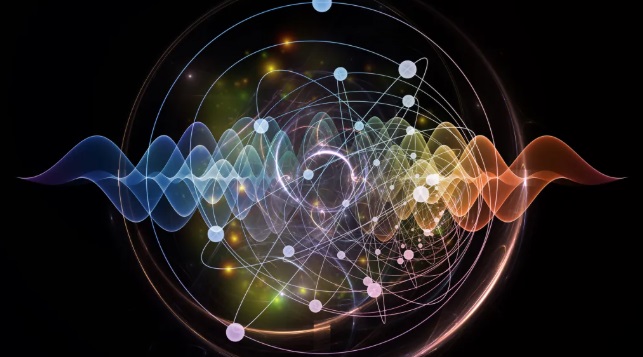
Under the rigid, classical Newtonian framework, any ongoing, active divine intervention was logically impossible without “breaking” the inviolable laws of physics, pushing theology into a corner where God could only be conceived as an absentee clockmaker. Quantum mechanics completely subverts this restriction. At the subatomic level, nature is fundamentally non-deterministic; the Schrödinger equation does not yield a single, definite outcome, but rather a wave function ψ representing a mathematical landscape of potentiality and probability.
Dr. Shah proposes that what secular science labels as macroscopic “randomness” is, in reality, the unconstrained, sovereign choice of God. In this framework, quantum indeterminacy acts as the precise physical “interface” for occasionalism. God does not violate the laws of physics to act in the world; rather, the statistical laws of quantum probability represent the reliable, mathematical “habits” of God (sunnat Allah), while God directly determines the outcome of every specific quantum event by causing the “collapse of the wave function” at every successive instant.
This mechanism gives rise to a modern “Metaphysics of Inshallah,” wherein every physical transition—from the decay of a radioactive isotope to the synaptic firing of a human thought—is immediately dependent on the fresh, renewing will of the Creator. As Zia H. Shah MD explains:
“Al-Ghazali’s doctrine of Occasionalism is essentially the metaphysics of ‘Inshallah.’ It is an attempt to rigorously explain reality as the Qur’an depicts it – utterly contingent on God at every moment”.
Under this reading, saying “Inshallah” (“if God wills”) is not merely a polite verbal formula; it is a scientifically grounded acknowledgment of quantum reality’s continuous sustenance. Quantum entanglement—where particles remain instantaneously coordinated across vast distances without any classical signal—serves as a striking, empirical vocabulary describing how God continuously coordinates and sustains the entire cosmos in unbroken wholeness.
When contrasted with the alternative interpretations, this Ghazalian-Shah paradigm offers a highly elegant and philosophically economical cosmology:
- The Many-Worlds Interpretation seeks to preserve strict, mathematical determinism by postulating an infinite, unobservable cascade of physical parallel universes branching at every split-second. Occasionalism achieves the same deterministic mathematical rigor but shunts the parallel branches back into the realm of pure potentiality, arguing that the wave function represents the informational blueprint (the Book of Destiny), while the actualized history is the single, frame-by-frame rendering of the Divine Will.
- QBism retreats into absolute, solipsistic subjectivism, asserting that reality is merely a collection of personal experiences inside an observer’s mind, denying the existence of an objective external world. Occasionalism avoids this Cartesian fallacy by affirming that while the wave function is indeed informational and not a material substance, it represents the objective, active governance of the Creator, ensuring a reliable, shared reality for all conscious agents.
Thus, the very plurality of quantum mechanics—the fact that the mathematical formalism resists a single, self-subsisting materialistic interpretation—is not a scientific failure, but a profound clue. It reveals that the physical universe is not an independent, self-contained machine, but is fundamentally open, plastic, and entirely contingent on a continuous, divine, informational rendering.
Thematic Epilogue: Transcending the Illusion of Matter
The profound sense of epistemic disquiet that has haunted quantum foundations since the 1927 Solvay Conference is not a dead end, but a powerful invitation. For a century, the scientific community has struggled to fit the mathematical reality of the quantum world into the rigid, materialist assumptions of classical physics, resulting in a fractured landscape of competing, bizarre ontologies.
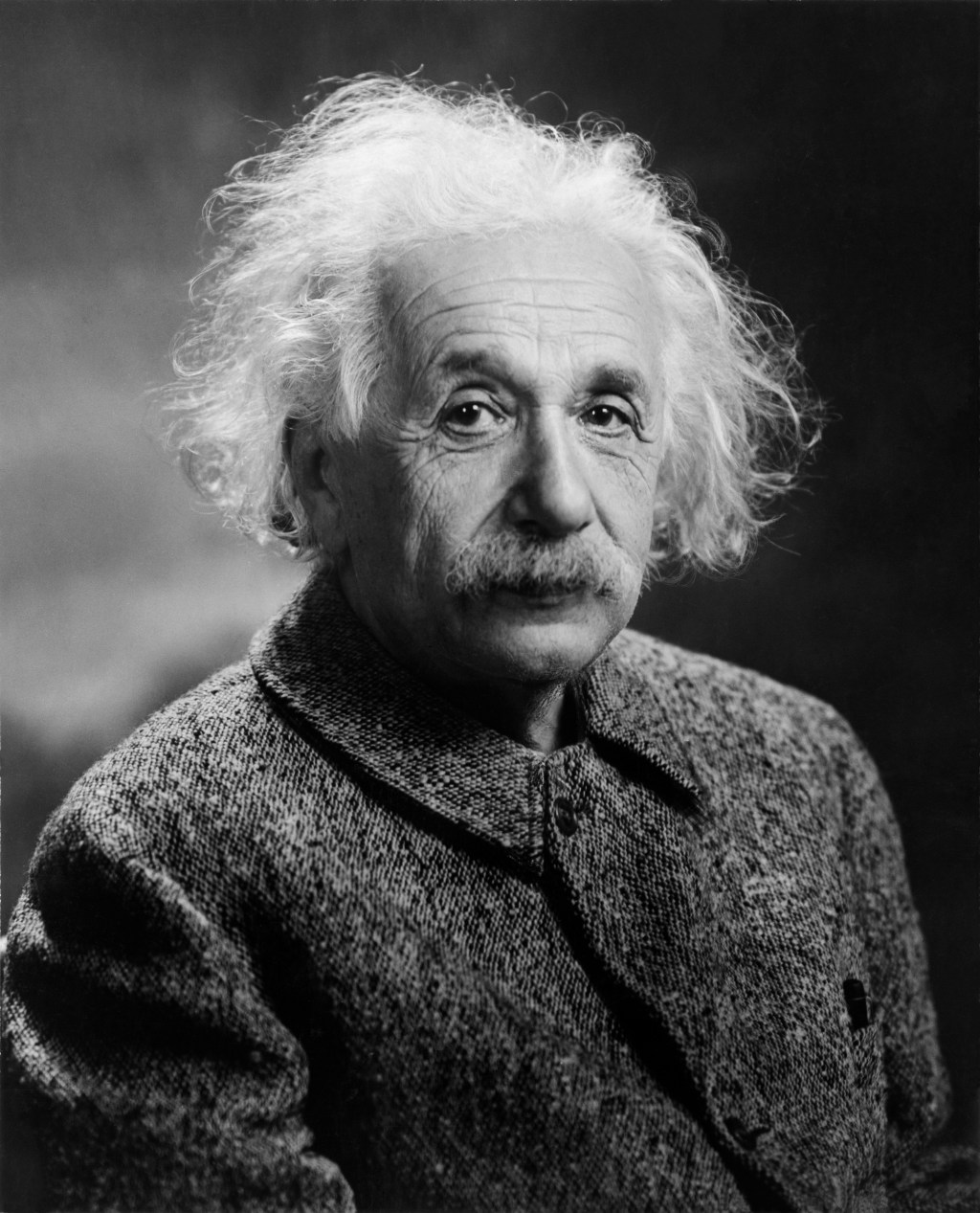
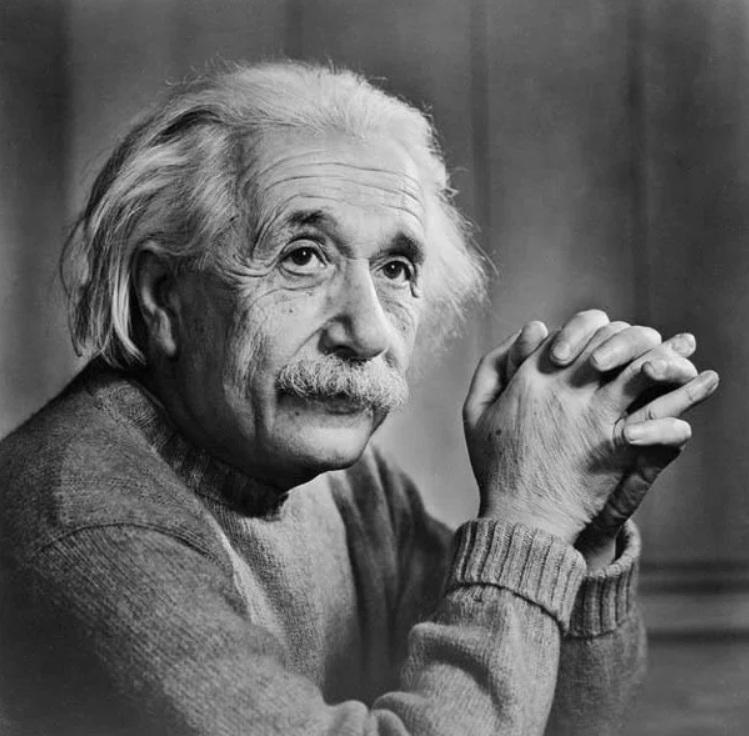
Yet, when one steps back from the mathematical formalisms, a deeper perspective emerges. Albert Einstein, reflecting on his childhood encounter with a simple pocket compass at the age of four, recalled:
“Something deeply hidden had to be behind things”.
Einstein spent his entire life searching for this hidden reality, writing that “this huge world stands before us like a great eternal riddle, at least partially accessible to our inspection and thinking”.
The pluralities and strangeness of quantum mechanics—the deterministic splitting of Many-Worlds, the guided trajectories of Bohmian pilot-waves, the subjective expectations of QBism—all point toward the exact same conclusion: physical matter is not a self-subsisting, independent substance. Instead of taking this miraculous reality as a cold, meaningless “brute fact” or a deterministic prison of strict atheist determinism, this cosmic awe and epiphany can be utilized as a direct route to Al-Ghazali’s occasionalism.
When synthesized through the “Four Books Thesis” of Dr. Zia H. Shah MD, the quantum wave function is transformed from a mathematical enigma into a sublime exhibit of continuous divine sustenance (Al-Qayyum). The universe is revealed to be a magnificent, informational tapestry, woven frame-by-frame, moment-by-moment, by the direct volition of the Creator. In this “Inshallah universe,” every breath, every subatomic transition, and every conscious thought is a fresh, renewing gift from the Divine, resolving the ancient tension between science and faith, and inviting the human soul into a state of profound, intellectual and spiritual peace. Scholars, theologians, and seekers of truth are invited to explore the extensive collections detailing these concepts at the curated databases of https://thequran.love/category/occasionalism/ and https://thequran.love/category/four-books-thesis/ to continue this profound synthesis of science and the divine word.


Leave a Reply