
Presented by Claude for Zia H Shah MD
Abstract
On 7 August 2026, in the holy city of Mecca, Saudi Arabia, Turkey, and Pakistan signed the Mecca Joint Defense Agreement — a trilateral collective-security treaty stipulating that “any armed attack against any one of the three States shall be regarded as an attack against them all.” This essay offers an interdisciplinary reading of the pact, integrating its political, military, and theological dimensions. It argues that the agreement marks a genuine inflection point in a multipolarizing regional order — a hedge by three middle powers against the perceived erosion of the U.S. security umbrella following the 2026 Iran war — while cautioning that its operational teeth remain untested and its cohesion constrained by sectarian, strategic, and alliance-entanglement pressures. Throughout, the essay engages the theological commentary of Zia H. Shah, MD (Chief Editor of The Muslim Times and founder of thequran.love), on Qur’an 95:3, wa hādhā al-balad al-amīn (“And by this secure city”), reading the choice of Mecca as the signing venue as a “human echo of a divine theme”: security as both a divine gift and a human trust. The essay closes with concrete recommendations for how the governments and peoples of the three states can develop the pact for their national interests and for the flourishing of the Muslim world, and with a thematic epilogue tying the theological and geopolitical threads together. Breaking Defense
Introduction: A Treaty in the Secure City
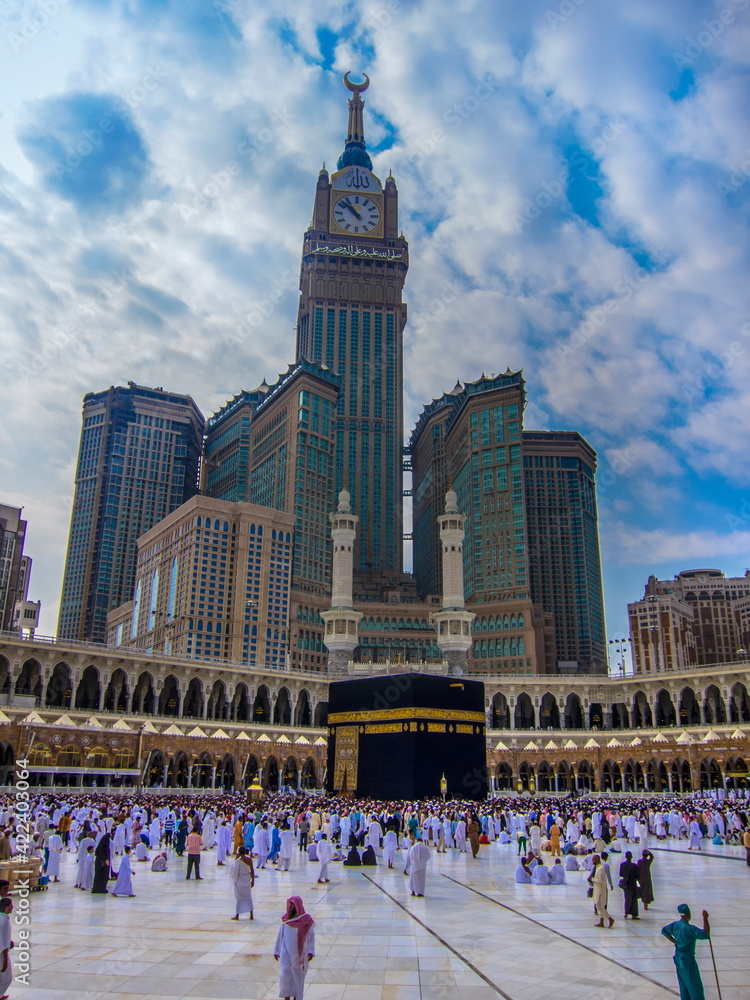
There is a resonance too striking to pass unremarked. In a barren valley of western Arabia stands a city the Qur’an calls al-balad al-amīn — “the secure city” (Qur’an 95:3). Fourteen centuries after that oath was proclaimed, three heads of state gathered within it to pledge that an attack on one would be an attack on all. The Mecca Joint Defense Agreement was signed on Friday, 7 August 2026, at Al-Safa Palace in Mecca by Saudi Crown Prince and Prime Minister Mohammed bin Salman, Turkish President Recep Tayyip Erdoğan, and Pakistani Prime Minister Shehbaz Sharif, each accompanied by their foreign and defense ministers. Sharif, joined by Pakistan’s army chief Field Marshal Asim Munir, had performed the ʿUmra pilgrimage in Mecca the day before.
As Zia H. Shah observes in his commentary on Qur’an 95:3, published at thequran.love on 11 August 2026, “As Al Jazeera observed, ‘sealing the agreement in Mecca, home to Islam’s holiest site, adds symbolic heft.’” This essay takes up Shah’s central interpretive move — reading the pact as a “human echo of a divine theme,” never as a concordist “fulfillment” of scripture — and extends it into a fuller political and military analysis.
Part I — The Political Dimension
What the pact says, and what it does not
According to the joint statement published by the Saudi Press Agency and Pakistan’s Ministry of Foreign Affairs, the agreement “is intended to strengthen collective deterrence against any act of aggression, and stipulates that any armed attack against any one of the three States shall be regarded as an attack against them all,” adding that it “further provides for the enhancement of all aspects of defence cooperation among the three States.” The three parties declared a “shared commitment to further strengthening their collective security and to promoting peace, security and stability in the region and beyond, in pursuit of a secure and prosperous future.” Notably, the full text of the treaty has not been publicly released, and the statement does not spell out the precise military obligations of each party. Breaking DefenseAl Jazeera
Turkish Foreign Minister Hakan Fidan drew the NATO comparison explicitly, saying that “technically, the Mecca Joint Defense Agreement is the same as Article 5 of the NATO Treaty concerning collective defense,” while stressing that “there is no common threat that we have put in writing” and that the pact “does not target any country that does not attack its signatories.” Fidan explained that a member under attack “would have to request assistance and specify what kind of support it needed,” so that the response “would depend on the circumstances” — a conditional formulation more qualified than NATO’s automatic language. He announced that the alliance would establish a ministerial committee, political and military committees, and a permanent general secretariat based in Saudi Arabia, and that preparations “had been under way for nearly two years and eight months,” indicating it was not merely a reaction to current tensions. The Express Tribune + 2
Motivations: a hedge born of American doubt
The pact was signed in the shadow of the 2026 Iran war, which had begun on 28 February 2026 with U.S. and Israeli airstrikes on Iran. In retaliation, Iran and allied forces — including Houthi fighters in Yemen and Shiʿi militias in Iraq — struck U.S. bases and Gulf states including Saudi Arabia, and Iran’s closure of the Strait of Hormuz triggered a global fuel crisis. Saudi Arabia, struck repeatedly and increasingly doubtful of the reliability of the U.S. security umbrella, sought additional layers of protection.
The Trump administration offered no official response in the hours and days after the signing, a silence analysts read as significant. Kristian Coates Ulrichsen of Rice University’s Baker Institute noted that “regional states have harbored growing doubts about the reliability of the US security partnership for more than a decade.” Sina Toossi of the Center for International Policy called it “one of the first major geopolitical signs that the regional order is being reshaped by the US-Israeli war on Iran.” The Middle East Monitor framed it as “a new Sunni security architecture born of American doubt,” noting that unlike the Western-sponsored Baghdad Pact of 1955, “nobody drafted it in Foggy Bottom.” Al Jazeera + 2
Regional and global reactions
Iran. Tehran’s reaction was measured. Foreign Minister Abbas Araghchi responded on X on 7 August 2026 with a call for Muslim unity: “When Muslims stand together, we can face every challenge by malicious outsiders head-on,” adding, “Time to rely only on ourselves and embrace true brotherhood.” Foreign Ministry spokesman Esmaeil Baghaei said on 10 August 2026 that Tehran saw no reason to be concerned that the pact was directed against Iran, framing it as a sign that regional states were shifting toward “greater reliance on their own capabilities rather than outside powers.” A more critical note came from MP Ebrahim Rezaei, who wrote that “the Saudis should understand that a paper agreement with Turkey and Pakistan will not bring them security.” Islam Times + 2
Israel. Israel initially declined official comment. Analysts read the pact as complicating normalization. Dr. Yoel Guzansky of the Institute for National Security Studies said the pact “doesn’t shut the door completely on normalization” but described its orientation as “anti-Israeli,” warning that Saudi alignment with Ankara and Islamabad could pressure Riyadh toward “a more confrontational policy toward Israel.” Pakistani Defense Minister Khawaja Asif’s call a day later for “a united military front” against Israel, describing it as “a threat to the entire Muslim world,” drew particular attention in the Israeli press. The Jerusalem Post + 2
India. India’s Ministry of External Affairs spokesperson Randhir Jaiswal said on 7 August 2026 that “this is also a development that we are closely following, and we shall keep you updated.” (India had reacted more sharply to the earlier September 2025 bilateral Saudi–Pakistan pact, saying it would “study the implications of this development for our national security.”) Indian commentators noted the prospect of Turkish drone technology flowing more freely to Pakistan, and analysts observed India leaning harder on Greece, Cyprus, and Israel in response. ANI News + 2
China and Russia. No official Chinese Foreign Ministry statement on the pact could be located; Chinese state-affiliated and Hong Kong media (Global Times, South China Morning Post) framed it as confirmation of a multipolar order and an opening for Beijing. Analysts noted both China and Russia view a West Asia that “sets its own security agenda independent of Western dictation” as favorable to their interests. Dailyparliamenttimes
Egypt and expansion. Fidan named Egypt a “natural partner” likely to join once technical issues were resolved, though Egyptian media reported Cairo did not consider joining a priority, citing concerns over Yemen, the Red Sea, and its U.S. military financing. Turkey, Saudi Arabia, Pakistan, and Egypt had formed a grouping dubbed the “R4” to coordinate on regional issues. Former Qatari premier Sheikh Hamad bin Jassim Al Thani expressed hope all GCC states would join. Clashreport
Part II — The Military Dimension
Complementary capabilities
Analysts consistently describe the three states as bringing distinct and complementary strengths. Turkey contributes NATO’s second-largest military and an increasingly sophisticated domestic defense industry. Saudi Arabia contributes substantial financial resources: it has spent more than $300 billion on defense over the past five years, ranking seventh globally and first in the Middle East (per IISS figures), with annual defense spending exceeding $65 billion, and it remains the world’s top oil exporter. Pakistan contributes extensive military experience and the distinction of being the Muslim world’s only nuclear-armed state. The Jerusalem Post summarized the combination as “Saudi Arabia’s economic power, Turkey’s military strength, and Pakistan’s nuclear arsenal.” The Jerusalem Post
Turkey’s defense industry is a particular asset. Its defense and aerospace sector reached $10.05 billion in exports in 2025 — up 48% year-on-year, with goods totaling $9.87 billion and services $184 million, up from $7.15 billion in 2024, according to Haluk Görgün, head of Turkey’s Defense Industries Secretariat. Drone-maker Baykar posted $2.2 billion in exports in 2025 (88% of its $2.5 billion total revenue), retaining the global armed-drone export lead for a third consecutive year. Since August 2023, Baykar has operated under an agreement with Saudi Arabian Military Industries (SAMI) to co-produce its Bayraktar Akinci combat drone inside Saudi Arabia, with — in SAMI’s words — “up to 70% of the Bayraktar Akıncı UAVs…built for the Saudi military” to be “locally produced.” Baykar CEO Haluk Bayraktar called the original 2023 accord “the biggest export agreement in the history of the [Turkish] Republic in defence and aviation.” Turkey has also sought Saudi partnership in its Kaan fighter-jet program and a potential $6 billion arms deal involving warships, tanks, and missiles.
The nuclear question
The pact’s most consequential ambiguity concerns Pakistan’s nuclear arsenal — a stockpile of approximately 170 warheads, according to the Federation of American Scientists’ Nuclear Notebook, “a number that could potentially grow to around 200 by the late 2020s at the current growth rate.” Commentators broadly doubt the pact extends a Pakistani nuclear umbrella to its partners. Defense analyst Mansoor Ahmed of the Australian National University noted Pakistan’s nuclear posture “remains oriented toward the perceived threat from India.” During the September 2025 bilateral pact, Pakistani officials sent mixed signals — Defense Minister Khawaja Asif said Pakistani capabilities “will be made available” to Saudi Arabia, but later said nuclear weapons were “not on the radar.” The Belfer Center concluded the earlier pact “stops short of explicitly extending Pakistan’s nuclear deterrent to Saudi soil,” while noting long-standing rumors that Saudi Arabia helped finance Pakistan’s nuclear program in the 1980s. As CSIS observed, Pakistan’s agreement was “the first time that a state with nuclear weapons outside of the Nonproliferation Treaty has made an extended nuclear deterrence commitment to another state” — yet the commitment’s credibility remains uncertain. Wikipedia + 3
The credibility test
Skeptics note that the pact’s mutual-defense clause has yet to be tested. The Atlantic Council observed that Saudi Arabia has had a mutual-defense agreement with Pakistan since September 2025 and with the GCC since 2000, yet “none of these has translated into the kind of response associated with NATO’s Article 5.” When Houthi forces struck Jizan in Saudi Arabia days after the signing, neither Turkish nor Pakistani forces moved — leading the Jerusalem Post to observe the clause remained “useful and untested.” The Atlantic Council’s judgment is measured: “This agreement is not a NATO-like alliance, and it does not signal a discrete new regional bloc. But that does not mean it is not significant.” Pakistan has reportedly already sent some troops and air defense to Saudi Arabia. The diplomatic edge — Riyadh’s ability to leverage Islamabad to quietly manage escalation with Tehran — may prove more impactful than any battlefield mobilization. The Jerusalem PostAtlantic Council
Part III — The Theological Dimension
Mecca as al-balad al-amīn
Here Zia Shah’s commentary on Qur’an 95:3 becomes indispensable. Sūrat al-Tīn opens with a cluster of oaths — “By the fig and the olive, and Mount Sinai, and this secure city” — culminating in the declaration that “We have certainly created man in the best of moulds” (95:4). Shah notes that the Arabic al-balad al-amīn pairs al-balad (“the city”) with al-amīn, an adjective sharing the root (ʾ-m-n) with amn (security), amāna (trustworthiness), and īmān (faith) — and the very epithet by which Mecca knew Muhammad before his prophethood: al-Amīn, “the Trustworthy.”
Shah marshals the classical exegetes. Al-Ṭabarī glosses the verse as “this city that is safe from its enemies,” anchoring its security to Qur’an 29:67, “Have they not seen that We made [Mecca] a secure sanctuary?” Al-Zamakhsharī offers the memorable image that the city is amīn “the way a trustworthy person is trustworthy — its trustworthiness is that it safeguards whoever enters it.” Al-Rāzī enumerates the ways Mecca is secure, including God’s protection from the army of the Elephant. Al-Qurṭubī states God swore by Mecca “because it is the trace and legacy of Abraham and the home of Muhammad.” Ibn Kathīr reports the identification with Mecca is beyond dispute and preserves the tradition linking the three sacred sites to three resolute messengers — Jesus, Moses, and Muhammad — an “inter-prophetic,” pluralist reading Shah emphasizes throughout.
Gift and command: the two registers
The crux of Shah’s theological argument, which this essay adopts, is that the security of Mecca is read in two registers at once. First, it is a divine declaration of blessing — Mecca is secure because God made it so, the answer to Abraham’s prayer, “My Lord, make this a secure city” (Qur’an 2:126), and the reality set against a world in which “people are being snatched away all around them” (29:67). Second, it is a legislative command — the ḥaram is a precinct where, in Shah’s summary of classical fiqh, “the shedding of blood is strictly prohibited, human injustice is barred, and even the natural environment is granted divine legal immunity.”
The two registers meet in the grammar of amīn itself: because Mecca confers security, those who dwell in it are obligated to preserve it. As Shah puts it, “the descriptive blessing grounds the prescriptive duty.” This is the hinge on which his reading of the 2026 pact turns: “To read the 2026 agreement as a ‘fulfillment’ of 95:3 would be to collapse the two registers and to mistake a treaty of states for a promise of God. The more disciplined reading … is that the pact is a human echo of a divine theme.”
Shah also honestly notes that the sanctuary’s peace has been violated — the Umayyad siege of 683 CE, the Qarmatian sack of 930 CE, and the 1979 seizure of the Grand Mosque (in whose recapture, he notes as “a notable historical footnote,” Pakistani commandos assisted). These violations do not refute the theology; they clarify it, for the peace of the ḥaram is a moral and legal rule that human beings are commanded to uphold — and when they violate it, the sin lies with the violators.
Precedents for pact-making in Islamic tradition
The Mecca Agreement is not without deep precedent in Islamic political thought, though these must be invoked carefully rather than triumphally.
The Constitution of Medina (622 CE), drafted by the Prophet Muhammad after the Hijra, established the Muslim emigrants, the Ansar, and several Jewish tribes as a single confederal community (umma) with a collective-defense provision: signatories pledged to defend Medina against external attack — an “attack on one is an attack on all” logic that predates NATO’s Article 5 by thirteen centuries. Its pluralism (Jews retained religious autonomy as full participants in the city’s defense) offers a model against sectarian narrowness. History Sphere
The Hilf al-Fudul (“Alliance of the Virtuous”), formed in Mecca around 590 CE before Muhammad’s prophethood, was a pact to defend the oppressed regardless of tribe or origin. Muhammad, who attended as a young man, later said: “I was present in the Hilf al-Fudul, and I would not like to exchange it for anything. If I were invited to it during the time of Islam, I would respond.” This is the ethical touchstone: an alliance justified not by tribal or sectarian solidarity but by the universal principle of justice. As the Middle East Monitor perceptively noted, “the universalist rhetoric of the Hilf al-Fudul sits uneasily with the sectarian realities of the strategic landscape” — a tension the pact’s architects must consciously resolve. THE SUBMITTERSMiddle East Monitor
The Ottoman guardianship of the two holy mosques (the title Khādim al-Ḥaramayn al-Sharīfayn, adopted by Selim I after 1517 and now held by the Saudi king) supplies the historical model of a Muslim power assuming responsibility for the sanctuary’s protection. Modern pan-Islamic cooperation through the Organisation of Islamic Cooperation (57 member states, the second-largest intergovernmental body after the UN, founded 1969 after the Al-Aqsa arson) and the Muslim World League provides institutional scaffolding — though the OIC’s record of translating solidarity into action has been mixed.
Part IV — Putting the Agreement to Best Advantage
If the pact is, in Shah’s phrase, a “human enactment” of the command that peace “must be sought, built, and guarded,” then the question for governments and peoples alike is how to grow it constructively. The following are staged, concrete pathways.
For the governments
1. Institutional deepening. The single most important near-term step is to make the announced architecture real: convene the ministerial committee, stand up the political and military committees, and establish the Saudi-based general secretariat with a professional staff, a common threat-assessment cell, and interoperability standards. NATO’s cohesion rests less on Article 5’s text than on decades of integrated command, joint exercises, and standardization; the Mecca pact’s credibility will rise or fall on whether it builds similar machinery. Fidan’s own framing is apt: “We have started here as three countries and we have to take very humble but concrete steps.”
2. A joint defense-industrial base. The Baykar–SAMI drone co-production model should be generalized into a trilateral defense-industrial ecosystem: joint ventures in drones, air defense, naval vessels, munitions, and cyber, pooling Turkish engineering, Saudi capital, and Pakistani manufacturing scale and battle experience. This reduces costly dependence on external suppliers, builds jobs and technological sovereignty, and gives the alliance material substance beyond a paper clause.
3. Economic integration. Security pacts endure when married to prosperity. Linking Pakistan’s Gwadar and Karachi ports to Jeddah, integrating trade and energy corridors, and channeling Gulf capital into Turkish and Pakistani industry would knit the three economies together — echoing the Qur’anic pairing of amn (security) with rizq (provision) in Abraham’s prayer (2:126), the “two pillars of human flourishing,” in Shah’s phrase: freedom from fear and freedom from want.
4. Careful, principled expansion. Bringing in Egypt, Gulf states, and others would add strategic depth, but expansion should be disciplined by shared principles rather than mere numbers, lest the alliance dilute into incoherence as the Baghdad Pact did.
For the peoples
5. Unity across sectarian lines. The gravest risk is that the pact hardens into a “Sunni bloc” against Shiʿi Iran, betraying the universalism of the Hilf al-Fudul. The peoples and scholars of the three nations — and the OIC and Muslim World League — should insist the pact remain, in Saudi officials’ own words, not “a sectarian bloc.” Keeping the door genuinely open to Iran and all Muslim states, and framing the alliance around protection rather than confrontation, would honor the Constitution of Medina’s pluralist precedent.
6. Protection of the holy sites and the humanitarian dimension. A collective-security framework anchored in Mecca carries a unique moral charge: the protection of the Ḥaramayn and the safety of pilgrims. Extending the pact’s logic to disaster response, humanitarian relief, refugee protection, and the security of Hajj and ʿUmra would give it a service-oriented character consonant with the title Khādim al-Ḥaramayn — “servant,” not “ruler,” of the sanctuaries.
7. Soft power and knowledge. Beyond arms, the alliance’s deepest dividend could be in education, science, health, and culture — the domains The Muslim Times and thequran.love themselves champion. Joint universities, research consortia, and scholarly exchange would build the “best of moulds” (95:4) human capital that any durable civilization requires.
Epilogue: The Gift and the Trust
An oath sworn fourteen centuries ago in a small Meccan valley bound together a fig, an olive, a mountain, and a city — the emblems of Jesus, of Moses, and of Muhammad — and drew from them a single conclusion: that the human being, made “in the best of moulds,” is answerable. In that oath, as Zia Shah reads it, the security of the city was both witness and gift: the answer to Abraham’s ancient prayer, and an island of safety in a world where “people are being snatched away all around them.”
Fourteen centuries later, in the same city, three heads of state pledged that an attack on one would be an attack on all. The convergence is arresting, and, as Shah insists, it would be easy to over-read. The Qur’an’s security is a divine bestowal; a defense pact is a human labor. Yet the two are not strangers. The verse that swears by the secure city also, in the exegetes’ reading, obliges those who dwell in it to keep it secure — the blessing grounds the command. The Mecca Joint Defense Agreement, whatever its geopolitics and whatever its fate, is at its best a human enactment of that command: the recognition, staged deliberately in the balad amīn, that peace is not self-sustaining but must be sought, built, and guarded — and that it remains, in the end, a trust held under a higher sovereignty.
That is the theme that gathers the divine oath, Abraham’s prayer, the Year of the Elephant, the Constitution of Medina, the Hilf al-Fudul, and the events of August 2026 into one meditation: security as both gift and responsibility. Whether the Mecca pact becomes a genuine pillar of collective security or remains a symbolic gesture will depend on the wisdom, restraint, and moral seriousness of its architects and their peoples. If it can hold to the universalism of the Alliance of the Virtuous rather than the narrowness of sect, and marry the sword to justice and the treaty to prosperity, it may yet honor the summons the secure city has always carried: that its peace be honored, within its precincts and far beyond them, by the One who “has fed them against hunger and made them secure against fear.”



Leave a Reply