

Epigraph:
ہزاروں خواہشیں ایسی کہ ہر خواہش پہ دم نکلے
بہت نکلے میرے ارماں لیکن پھر بھی کم نکلے
By Ghalib
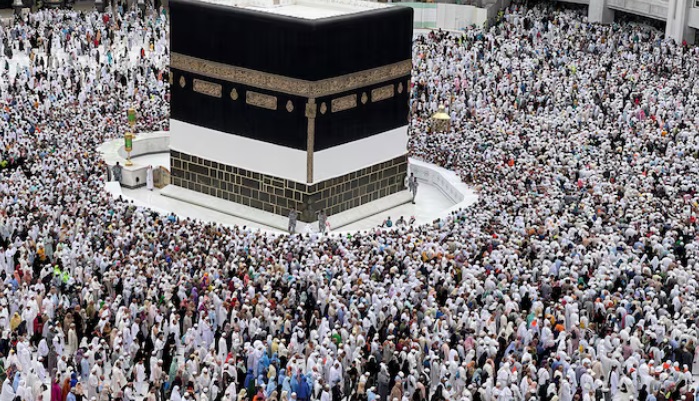
Presented by Zia H Shah MD with the help of ChatGPT
Executive Summary
The source article was accessible at the time of writing, and its central framing is worth preserving: Quran 39:27–29 presents tawḥīd not only as a true doctrine but as a force that gathers scattered human life into coherence. In the source article’s formulation, monotheism is both unified—internally consistent, clear, and free of contradiction—and unifying—capable of integrating the psyche, ethics, and society under one ultimate allegiance. That core thesis is retained here and expanded through classical tafsīr, Arabic philology, and contemporary scholarship.
Classical commentators converge on the main interpretive line. Al-Ṭabarī reads 39:27 as God’s deployment of every needed example to warn the idolaters; 39:28 as an Arabic revelation free of obscurity; and 39:29 as a parable contrasting the mushrik who serves many rival claimants with the sincere believer devoted wholly to one Lord. Ibn Kathīr calls 39:27–29 “the parable of shirk,” while al-Qurṭubī supplements the theological point with lexical and grammatical analysis, especially of mutashākisūn and salaman/sāliman.
Linguistically, the passage moves with unusual precision. Verse 27 establishes the Qur’an’s pedagogical method through mathal, the parable. Verse 28 then describes the revelation as qurʾānan ʿarabiyyan ghayra dhī ʿiwaj—an Arabic Qur’an without crookedness, ambiguity, deviation, or internal discord. Verse 29 translates that epistemic clarity into a social and existential image: a slave torn among disputatious partners versus one belonging wholly to a single master. The sequence is not accidental. It moves from explanation, to linguistic transparency, to a lived anthropology of worship.
The Ghalib couplet quoted as the epigraph above, deepens the article’s psychological register. The poet’s “thousands of desires” dramatize the endless multiplication of wants, and modern psychology offers an illuminating analogy: cognitive dissonance describes distress produced by conflicting cognitions, while reward research distinguishes “wanting” from “liking,” showing that craving can outrun satisfaction. Ghalib’s verse is therefore not a statement about shirk in the juristic sense, but it is a powerful image for the interior condition to which the Qur’anic parable points: a heart governed by proliferating absolutes rather than reoriented by one final center.
Quran 6:162 then functions as the wider horizon of the same theology. If 39:29 gives the image of divided and undivided servitude, 6:162 states its total consequence: prayer, sacrifice, life, and death are all for Allah alone. Al-Ṭabarī explicitly glosses this as exclusive consecration, Ibn Kathīr as a repudiation of idolatrous ritual, and al-Qurṭubī as a formulation broad enough to include sacrifice, worship, religion, and all devoted action. The article’s thematic epilogue, accordingly, should end not with doctrine in abstraction but with a reassembled human being.
Abstract
This article is an embellished and expanded expository treatment of Quran 39:27–29, preserving the visible central claims of the source article while deepening them through primary tafsīr, Arabic linguistic notes, and contemporary scholarship. The source article correctly foregrounds the contrast between the chaos of polytheistic allegiance and the coherence of devotion to one God; it also treats tawḥīd as both a truth-claim and an integrative principle for inner and social life. Those emphases are maintained here.
The argument proceeds in five steps. First, it situates the passage within the broader Makkan rhetoric of Sūrat al-Zumar, a surah dedicated to proving monotheism and refuting shirk, while noting a modern scholarly caution that the exact historical profile of the Qur’an’s opponents is more complex than inherited polemical labels sometimes imply. Second, it analyzes verses 27–29 through al-Ṭabarī, Ibn Kathīr, and al-Qurṭubī, with attention to key Arabic terms such as mathal, ʿiwaj, mutashākisūn, and salaman/sāliman. Third, it explains why the movement from parable to linguistic clarity to unified servitude is best read as an epistemic-to-existential progression. Fourth, it uses Ghalib’s couplet as a literary window into the psychology of proliferating desire, relating that imagery—by analogy, not by legal equation—to fragmentation, dissonance, and insoluble appetite. Fifth, it places Quran 6:162 before the epilogue as the comprehensive credo of exclusive consecration: ritual, action, life, and death ordered to Allah alone.
Introduction
Sūrat al-Zumar is a Makkan surah whose themes and purpose, as summarized by Quran.com from Ibn ʿĀshūr, are to demonstrate monotheism and resurrection, refute shirk and idolatry, and console the Prophet. That setting matters because 39:27–29 is not an isolated aphorism. It is part of a broader Makkan discourse in which truth, worship, judgment, repentance, and the exposure of false loyalties belong together. Likewise, Sūrat al-Anʿām is described as a comprehensive Makkan defense of monotheism that systematically refutes polytheism; 6:162 therefore belongs naturally beside 39:27–29 rather than as an extraneous appendage.
The source article’s visible architecture presents 39:27–29 as a compact theology of unity. It stresses that the Qur’an gives needed parables, that the revelation is clear and straight, and that the image of the slave with quarrelling partners versus the slave of one master is the decisive emblem of polytheism versus sincere devotion. It further argues that tawḥīd is not merely abstract metaphysics but an integrating principle for knowledge, ethics, inner peace, and communal order. This expansion accepts that architecture as its starting point.
A useful modern scholarly nuance should be added at the outset. Traditional Muslim literature and classical tafsīr overwhelmingly identify the Qur’anic mushrikūn as Arabian idolaters, especially in the Ḥijāz. G. R. Hawting notes, however, that if one read the Qur’an without the full weight of later traditional biography and polemic, the exact picture of those opponents would be less self-evident, and “polytheism” and “idolatry” are not always neutral descriptive categories. That caution does not overturn classical tafsīr; it simply reminds the reader that theological condemnation and historical reconstruction are related but not identical enterprises.
A final conceptual clarification is also useful. Celene Ibrahim notes that the noun tawḥīd itself does not occur in the Qur’an, even though the Qur’an unmistakably teaches God’s oneness and exclusive worthiness of worship. She further argues that core beliefs about tawḥīd organize Islamic thought and unify Muslims across diverse backgrounds and sects, and that misunderstanding God leads to faulty moral action whereas proper understanding fosters upright conduct. That insight harmonizes closely with the source article’s intuition that monotheism here is both unified and unifying.
Main Analysis
The source article’s preserved thesis
The governing insight of the source article is that Quran 39:27–29 describes two forms of unity at once. The first is textual and doctrinal unity: revelation is intelligible, internally coherent, and purposive. The second is existential unity: the human self, when ordered to one Lord alone, is no longer dispersed among rival claimants. The original article explicitly links this to the contrast between “chaos” in polytheism and “harmony” in strict monotheism, as well as to the idea that serving many “masters” creates inner conflict whereas serving the One aligns belief and life.
That preserved thesis becomes stronger when placed beside Ibrahim’s observation that tawḥīd is not only an assertion about God but also an active human awareness of God, embodied most publicly in the shahādah. In this account, monotheism is at once metaphysical, ethical, and formative: beliefs about God shape conduct, and pious conduct reinforces right belief in a self-perpetuating cycle. The source article’s phrase “unifying monotheism” is thus not rhetorical excess; it accurately names a long-standing Islamic intuition that creed and character are mutually implicated.
Historical, rhetorical, and linguistic architecture of Quran 39:27–29
Verse 27 opens with the Qur’an’s didactic method: “We have certainly set forth for people in this Qur’an every kind of parable, so that they may remember.” Al-Ṭabarī explains that God has given the idolaters examples from prior nations as warning and deterrence. Ibn Kathīr adds a subtle rhetorical observation: parables make meanings easier for minds to grasp. Al-Qurṭubī sharpens the same point by saying that the Qur’an contains every parable people need. The verse is therefore not merely decorative. It declares that revelation teaches by compressing realities into intelligible images.
The key term mathal carries precisely that burden. In Arabic usage it can denote likeness, example, or parable; Almaany glosses it as a symbolic account with moral significance, and the source article rightly foregrounds it as the gateway to a vivid comparison between spiritual states. The move is pedagogical but also anthropological: the Qur’an does not only state propositions; it gives the soul something it can imagine, inhabit, and judge.
Verse 28 then names the medium of that pedagogy: “an Arabic Qur’an, without any crookedness.” Al-Ṭabarī glosses ghayra dhī ʿiwaj as “without obscurity” or “without confusion” and notes grammatically that qurʾānan ʿarabiyyan functions as a circumstantial specification of “this Qur’an.” Ibn Kathīr interprets the phrase as “plain Arabic,” free of crookedness, deviation, or confusion. Al-Qurṭubī preserves a range of classical glosses—without contradiction, without ambiguity, without faulty speech, without doubt—showing how rich the phrase became in tafsīr.
The lexeme ʿiwaj deepens that exegetical range. Lane records that in religious contexts it can signify corruptness or deviation from rectitude, not merely a bent line in a physical sense. That makes the verse stronger than a simple claim about stylistic elegance. The Qur’an is not only eloquent; it is unwarped in meaning, direction, and moral force. Its Arabicness is not tribal ornament but communicative adequacy: it meets its first hearers in their language so that warning may become understanding and understanding may become taqwā.
Then comes verse 29, the culmination: “Allah sets forth a parable: a man in whom are partners, quarrelling among themselves, and a man wholly belonging to one man—are the two equal as a parable?” Al-Ṭabarī reads the image directly as the contrast between one who worships many gods and one who worships Allah alone. Ibn Kathīr calls it the parable of the polytheist versus the sincere believer and states that the two are not equal. Al-Qurṭubī elaborates the experiential texture of the parable: the servant of many masters suffers toil, conflicting demands, and the impossibility of satisfying all claims; the servant of one master has a single line of accountability.
The phrase shurakāʾ mutashākisūn is central. Al-Qurṭubī, citing earlier grammarians, glosses mutashākisūn as mutually different, harsh, difficult, contentious, and quarrelsome. Almaany similarly explains the term as disputing, ill-tempered, or mutually antagonistic. The first servant is therefore not merely multiply owned; he is multiply claimed by partners who themselves are out of joint. Polytheism is imaged as structurally conflictual allegiance.
The counterpart phrase rajulan salaman li-rajulin receives equally important lexical attention. Ibn Kathīr takes it to mean a slave belonging entirely to one master. Al-Qurṭubī says salaman means “exclusively” or “purely” for a single owner and notes the famous reading variant sāliman, which also conveys the sense of undivided or unshared possession; he insists that both canonical readings are meaningful. Theologically, the point is simple and decisive: tawḥīd is not one claim added to several, but the abolition of rival ultimacies.
Taken together, the three verses form a deliberate progression. Verse 27 says revelation teaches by examples. Verse 28 says the teaching is linguistically and semantically straight. Verse 29 turns that straightness into a moral anthropology: a human being cannot be whole while rendered over to rival absolutes. This is why the source article’s formula “unified and unifying monotheism” is exegetically persuasive rather than merely stylistic.
Unity, fragmentation, and the psychology of worship
Classical tafsīr does not use modern psychological vocabulary, but it unmistakably describes psychological and existential fragmentation. Al-Qurṭubī’s servant of many masters is fatigued because demands multiply and diverge; Ibn Kathīr’s idolater is unequal in condition to the believer precisely because his devotion is dispersed. This makes the parable more than a legal or speculative proposition. It is an account of what divided worship does to agency, perception, and rest.
Modern psychology offers analogies that illuminate, without replacing, the tafsīr tradition. Contemporary work on cognitive dissonance describes psychological discomfort that arises when a person is confronted by conflicting cognitions or commitments. Recent work on reward likewise distinguishes “wanting” from “liking”: human beings can be powerfully driven to pursue what they do not proportionately enjoy. Research on the “hedonic treadmill” further notes that adaptation can lead to an ongoing cycle of escalating wants and only temporary satisfaction. These are not exegetical authorities, but they help modern readers appreciate why the Qur’an’s image of many claimants over one servant is experientially acute.
In that light, shirk can be understood—not reduced, but understood—as the absolutization of multiple claimants upon the self. In premodern Arabia those claimants were represented in classical tafsīr as deities and idols. In any age, however, rival ultimacies can take more elusive forms: prestige, appetite, tribe, state, market, self-image, or fear. The source article makes a version of this point when it speaks of “many masters” and internal conflict; the Qur’anic parable itself supports the logic, because its force lies in divided lordship, not in statue-worship as an image alone. Still, the distinction matters: not every strong desire is shirk, but every desire becomes spiritually dangerous when it is elevated into final sovereignty.
Contemporary scholarship helps clarify why this is so central in Islam. Ibrahim argues that core beliefs about tawḥīd organize Islamic thought across backgrounds and sects and that deluded beliefs about God produce faulty moral action, while proper understanding of God’s nature encourages upright behavior. This aligns closely with the Qur’anic sequence here: right cognition of ultimate reality is meant to become right ordering of the self.
Ghalib Commentary
Ghalib’s celebrated couplet appears on Rekhta in the standard text requested by the user.
ہزاروں خواہشیں ایسی کہ ہر خواہش پہ دم نکلے
بہت نکلے میرے ارماں لیکن پھر بھی کم نکلے
A close English rendering is: “Thousands of desires—each one enough to take my breath away; many of my longings were fulfilled, yet still too few were fulfilled.” Rekhta glosses the verse as an image of endless human wanting, where each desire is life-draining and even fulfillment does not produce sufficiency because the heart keeps generating new demands.
Psychologically, the couplet is brilliant because it captures three things at once. First, desire multiplies faster than satisfaction. Second, desire is exhausting: each wish feels total while it lasts. Third, fulfilled wishes do not terminate wishing. Modern reward research makes the same problem analytically visible by distinguishing “wanting” from “liking,” and hedonic-treadmill research explains why acquisition so often fails to produce durable rest. Ghalib’s artistry turns those mechanisms into existential music.
The link to Quran 39:29 should be made with precision. Ghalib is not offering a tafsīr of shirk, nor should poetic longing be simplistically mapped onto formal theological error. The connection is analogical: the couplet images the fragmented interior that emerges when the self is ruled by proliferating claimants. The Qur’anic servant of many quarrelling partners is not merely externally oppressed; he is structurally denied repose. Ghalib’s desiring self is similarly denied repose because each longing rises like a temporary sovereign and then yields only to another. The poem therefore helps modern readers feel the anthropology encoded in the Qur’anic parable.
Read this way, the couplet becomes a literary commentary on pseudo-plural sovereignty within the heart. A thousand desires can function like a thousand little gods: each demands urgency, each competes for ultimacy, and each leaves the self thinner than before. Tawḥīd, in contrast, does not abolish all desire; it orders desire under one Lord. The issue is not desire as such, but whether desire remains a servant or becomes a master.
Quran 6:162 Section
قُلْ إِنَّ صَلَاتِي وَنُسُكِي وَمَحْيَايَ وَمَمَاتِي لِلَّهِ رَبِّ الْعَالَمِينَ
If Quran 39:29 gives the parable of divided versus undivided servitude, Quran 6:162 states the creed of undivided servitude in directly confessional terms: “Surely my prayer, my sacrifice, my life, and my death are all for Allah, Lord of all worlds.” Since Sūrat al-Anʿām is itself a Makkan defense of monotheism, the verse reads less like a detached devotional formula than like the comprehensive answer to the many-master condition exposed in 39:29.
Al-Ṭabarī interprets the verse as a command to the Prophet to declare, against those who ask him to follow idolatrous practice, that his prayer, slaughter, life, and death belong to Allah alone, purely and without any partner. He glosses nusukī here as sacrificial slaughter and emphasizes that all of these are to be for God khāliṣan—exclusively. The totality is striking: ritual, bodily act, biography, and mortality are all enclosed within one axis of consecration.
Ibn Kathīr makes the anti-idolatrous polemical context equally explicit. Allah commands the Prophet to announce to idolaters that his prayer is for Allah, his rituals are in Allah’s name alone, and this directly contradicts the pagan practice of worshipping and sacrificing to other than God. He then links the verse to the broader religion of all prophets: Islam, in the sense of surrender to the One without partners. In this reading, 6:162 is not merely devotional sincerity; it is public noncompliance with every divided cult.
Al-Qurṭubī, characteristically, widens the semantics. Nusuk may mean sacrifice, but also religion, worship, or even all righteous acts and devotions. He also discusses muḥyāya and mamātī, noting that they can mean what I do in my life and what I direct after my death, or more broadly that my living and dying belong to Allah. In other words, the verse expands from sacrificial exclusivity to existential totality. It is a theology not only of prayer but of orientation.
Placed after 39:27–29, the logic becomes beautifully clear. Verse 39:29 asked whether the servant of many masters and the servant of one master are equal. Verse 6:162 answers by showing what life under the one master looks like when translated into confession and practice: worship has one addressee, sacrifice one recipient, life one governing purpose, death one final belonging. Monotheism is therefore not exhausted by metaphysical monism or doctrinal correctness; it becomes the unity of intention.
Comparative Tafsir Table
| Verse | Al-Ṭabarī | Ibn Kathīr | Al-Qurṭubī | Analytical synthesis |
|---|---|---|---|---|
| 39:27 | God has set forth every needed example for the mushrikūn, especially by warning them through the fate of prior nations, so that they may remember and desist. | Parables are used because they bring meanings closer to people’s minds and help them remember. | The Qur’an contains “every parable they need.” | The verse establishes revelation as pedagogically generous: truth is not withheld but rendered graspable. |
| 39:28 | Ghayr dhī ʿiwaj means without obscurity or confusion; qurʾānan ʿarabiyyan is grammatically a circumstantial specification. | The Qur’an is plain Arabic, free from crookedness, deviation, or confusion. | Classical glosses include without contradiction, ambiguity, faulty speech, or doubt. | Revelation’s unity is semantic, rhetorical, and moral. Lane’s lexical note on ʿiwaj as deviation from rectitude in religion reinforces the point. |
| 39:29 | A direct parable of the person who worships many gods versus the believer devoted wholly to one God. | The idolater with many quarrelling partners and the sincere believer with one master are plainly unequal. | Mutashākisūn means conflicting, harsh, contentious; salaman means purely for one owner; the servant of many masters suffers toil and cannot satisfy all claims. | Polytheism is construed as divided servitude; monotheism as integrated allegiance. The verse is theological, psychological, and social at once. |
| 6:162 | Prayer, sacrifice, life, and death are Allah’s alone, khāliṣan, without any partner. Nusuk is sacrificial slaughter. | The verse repudiates the idolaters’ worship and sacrifice to others; prayer and ritual belong to Allah alone. | Nusuk may mean sacrifice, religion, worship, or all righteous acts; muḥyāya and mamātī broaden the verse to total existential consecration. | 6:162 is the practical and confessional expansion of 39:29: one Lord implies one intention across ritual, action, life, and death. |
Thematic Epilogue
Quran 39:27–29 does not merely argue that God is one. It shows what one-ness does. It clarifies thought through parable, straightens language by removing crookedness, and then redraws the human condition itself as a question of lordship. A self ruled by many absolutes cannot be whole. A self rendered over to the One is not narrowed but gathered. That is why classical tafsīr reads the parable so unanimously, and why the source article’s theme of “unified and unifying monotheism” captures something real in the passage’s structure.
Ghalib’s couplet helps the modern reader hear the inner acoustics of the Qur’anic image. The problem is not that human beings desire, grieve, aspire, or ache. The problem is that desire multiplies into sovereignty. What should have remained a constellation of finite wants begins to behave like a pantheon. Each demand says “now,” each claims ultimacy, and the self becomes a servant with too many owners. In that sense, the poem is a devastating literary analogue to the Qur’an’s anthropology of fragmentation.
Quran 6:162 supplies the cure in a single line of breathtaking totality. Prayer is for Allah. Sacrifice is for Allah. Life is for Allah. Death is for Allah. The whole human arc, from ritual to biography to mortality, is returned to one center. This is not religious minimalism. It is maximal coherence. Al-Ṭabarī’s language of exclusive dedication, Ibn Kathīr’s polemic against sacrificial associationism, and al-Qurṭubī’s widening of nusuk into worship and devoted action all converge on the same point: tawḥīd is the reordering of the whole person.
Thematic epilogues about tawḥīd often end by saying that God is one. This one should end differently: the heart becomes one when it knows that God is One. The Qur’an’s parable is therefore not only about theology above the self, but about mercy within the self. Revelation gives examples so that people may remember; it speaks without crookedness so that people may understand; it images one master so that people may become undivided. In that undividedness, monotheism is not only believed. It is lived.
For references to Microsoft Word file:




Leave a Reply