
Nothing Hidden, Everything Shaped: Genetic Disease, Evolution, and Guided Evolution in Qur’an 3:5–6
Presented by Claude for Zia H Shah MD
Abstract
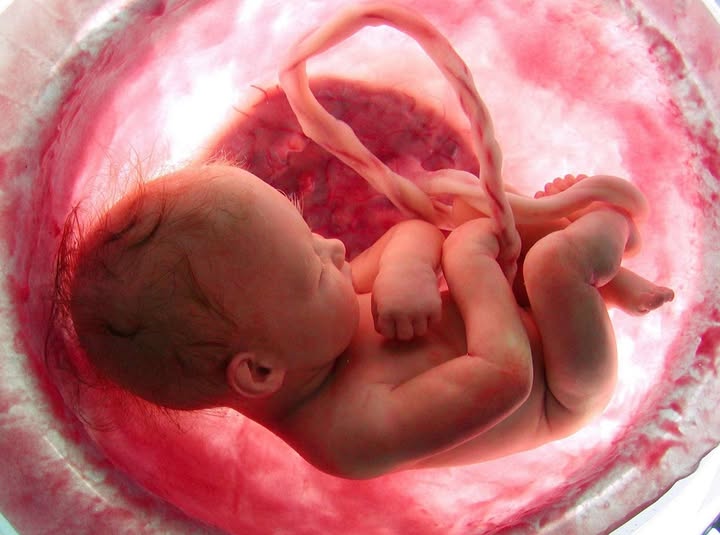
Qur’an 3:5–6 makes two claims that modern genetics can now test against the finest grain of reality: that nothing in the created order is hidden from God, and that every human being is given form in the womb by God, in whatever manner He wills. This commentary reads those claims through the lens of the roughly 6,000 to 10,000 genetic disorders now catalogued in the medical literature. It argues that these disorders are not a scandal for theology but its confirmation: they are the visible residue of the single mutational process that generates all biological novelty, and the Qur’an, uniquely among scriptures, explicitly names “unformed” embryos, mingled genetic inheritance, and the losses of the womb as objects of divine knowledge and instruments of divine purpose. Genetic disease is therefore evidence for evolution; and evolution, once the omniscience of verse 5 is admitted, is evidence for guided evolution. The commentary proceeds through the three operative words of the passage — lā yakhfā (nothing hidden), yuṣawwiru (He shapes), and kayfa yashāʾ (as He wills) — then surveys the biology of disease as evolution’s engine, sets out four philosophical arguments from evolution to guidance, addresses the theodicy of the malformed embryo, and gathers the cumulative case for guided evolution developed by Zia H. Shah, MD, across his writings on the placenta, on beauty as a path to God, and on the wider architecture of creation. A thematic epilogue returns to the closing names of the verse, al-ʿAzīz al-Ḥakīm, and to the verse that follows, which places the interpretation of such signs in the hands of “those firmly rooted in knowledge.”
I. The Text and Its Setting
إِنَّ اللَّهَ لَا يَخْفَىٰ عَلَيْهِ شَيْءٌ فِي الْأَرْضِ وَلَا فِي السَّمَاءِ ﴿٥﴾ هُوَ الَّذِي يُصَوِّرُكُمْ فِي الْأَرْحَامِ كَيْفَ يَشَاءُ ۚ لَا إِلَٰهَ إِلَّا هُوَ الْعَزِيزُ الْحَكِيمُ ﴿٦﴾
Truly, nothing in the earth or in the heaven is hidden from Allah. He it is who shapes you in the wombs however He wills. There is no god but He, the Mighty, the Wise. (3:5–6)
(Numbered 3:6–7 in editions that count the Basmalah.)
The traditional occasion of revelation places these verses in the encounter between the Prophet and the Christian delegation from Najrān, who pressed the divinity of Jesus. The Qur’an’s reply is not a metaphysical treatise but a biological observation: whoever was shaped in a womb is a creature. Al-Rāzī, in his Tafsīr al-Kabīr, draws out the logic — the one who is formed cannot be the Former — and notes that “however He wills” includes the sexes, the complexions, the statures, the health and infirmity of every child.
But the passage does not end at verse 6. Verse 7 immediately follows, and it is one of the most important hermeneutical statements in the entire Qur’an:
هُوَ الَّذِي أَنزَلَ عَلَيْكَ الْكِتَابَ مِنْهُ آيَاتٌ مُّحْكَمَاتٌ هُنَّ أُمُّ الْكِتَابِ وَأُخَرُ مُتَشَابِهَاتٌ … وَمَا يَعْلَمُ تَأْوِيلَهُ إِلَّا اللَّهُ ۗ وَالرَّاسِخُونَ فِي الْعِلْمِ يَقُولُونَ آمَنَّا بِهِ كُلٌّ مِّنْ عِندِ رَبِّنَا
He it is who sent down to you the Book; in it are verses that are definite — they are the foundation of the Book — and others that are open to interpretation … And none knows its interpretation except Allah, and those firmly rooted in knowledge say: We believe in it; all of it is from our Lord. (3:7)
The sequence is deliberate. Omniscience (v. 5), formation in the womb (v. 6), and then the hermeneutical principle that the Qur’an contains verses whose full meaning unfolds to those “firmly rooted in knowledge” (v. 7). The classical reading of al-rāsikhūn fī l-ʿilm was the scholars of the religious sciences. There is no reason to exclude from it the embryologist, the geneticist, and the evolutionary biologist, whose knowledge now reaches further into the womb than any exegete of the third Islamic century could have imagined. Verse 7, in other words, licenses this commentary.
II. Three Words
II.1 Lā yakhfā — Nothing hidden
The verb khafiya means to be concealed from sight. Verse 5 denies that anything, anywhere, is in that condition relative to God. The Qur’an repeatedly specifies that this includes the womb:
وَيَعْلَمُ مَا فِي الْأَرْحَامِ
…and He knows what is in the wombs. (31:34)
هُوَ أَعْلَمُ بِكُمْ إِذْ أَنشَأَكُم مِّنَ الْأَرْضِ وَإِذْ أَنتُمْ أَجِنَّةٌ فِي بُطُونِ أُمَّهَاتِكُمْ
He knows you best, when He produced you from the earth and when you were embryos in the wombs of your mothers. (53:32)
Notice the pairing in 53:32: God knew us when He produced us from the earth and when we were embryos. The two moments are placed side by side as two phases of one knowledge — the deep-time origin and the individual gestation. That is the exact shape of the modern synthesis: phylogeny and ontogeny, the history of the species and the history of the individual, governed by the same genome.
What was hidden from every generation before ours, and is hidden no longer, is the molecular content of the womb. In 1956 humans were shown to have 46 chromosomes; in 1959 Lejeune found the third copy of chromosome 21 that causes Down syndrome; in 2003 the human genome was read end to end; today a fetal genome can be sequenced from cell-free DNA in the mother’s blood at ten weeks. Every step of this history has been a step from khafāʾ toward disclosure, and every disclosure has revealed more disorder than anyone anticipated. The medical literature now recognizes between 6,000 and 10,000 distinct genetic conditions — roughly 10,000 monogenic and chromosomal disorders by the estimates of the WHO and major databases, 6,000 to 7,000 by more conservative clinical registries — with new entities named every month as sequencing outpaces nosology.
II.2 Yuṣawwiru — He shapes
Taṣwīr is the giving of ṣūrah, form. It is the act of the artist and the potter, and it is the act named in the divine name al-Muṣawwir. The Qur’an uses this root for the human body in three registers:
وَلَقَدْ خَلَقْنَاكُمْ ثُمَّ صَوَّرْنَاكُمْ ثُمَّ قُلْنَا لِلْمَلَائِكَةِ اسْجُدُوا لِآدَمَ
We created you, then We shaped you, then We said to the angels: prostrate to Adam. (7:11)
وَصَوَّرَكُمْ فَأَحْسَنَ صُوَرَكُمْ
…and He shaped you and made your shapes beautiful. (40:64; also 64:3)
الَّذِي خَلَقَكَ فَسَوَّاكَ فَعَدَلَكَ ﴿٧﴾ فِي أَيِّ صُورَةٍ مَّا شَاءَ رَكَّبَكَ ﴿٨﴾
Who created you, then proportioned you, then balanced you; in whatever form He willed, He assembled you. (82:7–8)
The first passage is sequential: creation, then shaping, then the address to the angels concerning Adam. Muslim commentators from al-Ṭabarī onward puzzled over this “then… then” (thumma… thumma), since it seems to place a lapse of time between the creation of humanity and the shaping of humanity, and another between that shaping and the exaltation of Adam. Guided evolution reads the sequence at face value: a long history of creation, a long history of shaping, and then the emergence of a being worthy of the angels’ prostration.
The second passage adds beauty. The third adds variation — “in whatever form He willed” — and, crucially, the verb rakkaba, “to assemble, to compose from parts.” The human body is assembled. Genetics has made this literal: each of us is a composition, and the composition process has a documented error rate.
II.3 Kayfa yashāʾ — However He wills
This is the phrase that resolves the whole passage, and it is easily misread. It does not mean arbitrariness. In Qur’anic usage, mā yashāʾ / kayfa yashāʾ marks the freedom of God with respect to particulars — the specific outcome among many possible outcomes, none of which is forced on Him by any external necessity. The same formula governs the diversity of animal forms:
وَاللَّهُ خَلَقَ كُلَّ دَابَّةٍ مِّن مَّاءٍ ۖ فَمِنْهُم مَّن يَمْشِي عَلَىٰ بَطْنِهِ وَمِنْهُم مَّن يَمْشِي عَلَىٰ رِجْلَيْنِ وَمِنْهُم مَّن يَمْشِي عَلَىٰ أَرْبَعٍ ۚ يَخْلُقُ اللَّهُ مَا يَشَاءُ
Allah created every moving creature from water; among them are those that move on their bellies, those that move on two legs, and those that move on four. Allah creates what He wills. (24:45)
And it governs additions to creation:
يَزِيدُ فِي الْخَلْقِ مَا يَشَاءُ ۚ إِنَّ اللَّهَ عَلَىٰ كُلِّ شَيْءٍ قَدِيرٌ
He adds to creation what He wills; truly Allah has power over all things. (35:1)
Yazīdu fī l-khalq — “He increases in creation.” Creation, in the Qur’an’s vocabulary, is not a closed inventory but an open ledger to which God adds. Where does the addition come from, in the biological world? From mutation. There is no other source of heritable novelty. When the Qur’an says God “adds to creation what He wills,” and the geneticist says that all novelty enters the biosphere through mutation, they are describing the same door from opposite sides — and the same door admits genetic disease.
III. The Ledger of Genetic Disease
A physician who wishes to think honestly about these verses must first look steadily at the ledger. It is long.
The count. Somewhere between 6,000 and 10,000 named genetic conditions; the Online Mendelian Inheritance in Man catalogue alone now exceeds 7,000 phenotypes with a known molecular basis. About 72–80% of all rare diseases are genetic, and because there are so many of them, “rare” is misleading: an estimated 300 million people worldwide live with a rare disease. In Shah’s summary of the epidemiology, roughly 1 in 50 people carries a known single-gene disorder and about 1 in 263 a chromosomal disorder — and a far larger fraction has some health consequence traceable to their genes.
The categories.
Monogenic. A single gene, a single lesion, a predictable inheritance. Cystic fibrosis (CFTR), sickle-cell disease (HBB), Huntington’s disease (HTT), Duchenne muscular dystrophy (DMD), the thalassemias, Tay-Sachs, phenylketonuria — and thousands of rarer entries, many named after the single family in which they were first observed. Founder effects concentrate them: the Ashkenazi Jewish population carries elevated frequencies of Tay-Sachs, Gaucher, Canavan, and familial dysautonomia; the Old Order Amish, of Ellis–van Creveld syndrome and maple syrup urine disease; Finns, of their own distinctive “Finnish disease heritage.” Each such cluster is a genetic bottleneck made visible — a population passing through a narrow door and carrying a few damaged alleles to high frequency on the other side.
Chromosomal. Trisomies 21, 18, and 13; the sex-chromosome aneuploidies (45,X Turner; 47,XXY Klinefelter; 47,XYY; 47,XXX); and a vast catalogue of deletions and duplications, from cri-du-chat (5p−) to DiGeorge (22q11.2) to the microdeletions now detected only by chromosomal microarray. Most aneuploid conceptions never come to term. The rate of maternal meiotic error rises steeply with age, so that at 20 the risk of trisomy 21 is about 1 in 1,500 and at 45 about 1 in 30.
Multifactorial. The great common diseases — coronary artery disease, type 2 diabetes, hypertension, most cancers, schizophrenia, autism — in which hundreds or thousands of variants of small effect combine with environment. Genome-wide association studies have mapped tens of thousands of such loci. Here “disease” is not a lesion but a tilt of the whole genome.
Two further categories, less often listed. Mitochondrial disorders, transmitted only through the mother, arising in the 16,569-base-pair circular genome that is the fossil of an ancient bacterial symbiont. And somatic mutation — the mutations acquired after conception, in the body’s own cells, whose accumulation is the mechanism of cancer. Cancer is evolution by natural selection within a single body: a clone of cells acquires mutations that free it from the restraints of the tissue, and it outcompetes its neighbours. Oncology is, in this sense, applied evolutionary biology, and every tumour is a demonstration that mutation and selection are not historical hypotheses but present-tense processes visible on a pathology slide.
The ledger, then, is not an appendix to human biology. It is human biology, seen from the side of loss.
IV. Why Disease Is the Engine
IV.1 The single source
There is one fact about evolution that every reader of these verses must hold clearly in view: selection creates nothing. Natural selection sorts; genetic drift samples; recombination reshuffles. Only mutation introduces anything new into a lineage. The gene for lactase persistence, the fused chromosome 2, the duplicated opsin gene that gave primates trichromatic colour vision, the FOXP2 variants associated with speech — every one began as a copying error, a slipped strand, an unrepaired lesion, or a viral insertion. The same class of event, in a different gene or a different codon, is a genetic disease.
This is why a species without genetic disease is a contradiction in terms. To have no deleterious mutations you would need a genome that never changes, and a genome that never changes cannot evolve. The 10,000 disorders are not a defect in the machinery of life; they are the machinery of life, observed at the moment it produces something the environment does not want.
IV.2 The mingled drop and the cost of sex
إِنَّا خَلَقْنَا الْإِنسَانَ مِن نُّطْفَةٍ أَمْشَاجٍ نَّبْتَلِيهِ فَجَعَلْنَاهُ سَمِيعًا بَصِيرًا
We created man from a mingled drop, that We might test him; and We made him hearing and seeing. (76:2)
Nuṭfah amshāj — a drop of mixtures. Sexual reproduction is the mixing of two genomes, and it exists, evolutionary biologists argue, largely to cope with mutation. An asexual lineage accumulates deleterious mutations irreversibly — Muller’s ratchet — because no offspring can have fewer mutations than its parent. Recombination breaks the ratchet: it lets a population assemble offspring that carry fewer bad alleles than either parent, and purge the rest. The “mingled drop” is nature’s answer to the mutational load. And 76:2 says this mingling was ordained nabtalīhi — “that We might test him.” The verse joins, in a single breath, genetic recombination and the moral trial of human existence. Every human being is a fresh genetic experiment, and every human life is a trial.
IV.3 The trade-offs
The dividing line between “adaptation” and “disease” is drawn not by the allele but by the environment. Consider a set of examples beyond the familiar case of sickle cell:
- G6PD deficiency, the most common human enzymopathy, affecting some 400 million people. It causes hemolytic crises in response to fava beans, certain drugs, and infection — and it protects against malaria. Its distribution, like sickle cell’s, follows the malaria belt.
- APOL1 risk variants, common in people of West African ancestry, dramatically raise the risk of kidney disease — and confer resistance to Trypanosoma brucei, the cause of sleeping sickness. A single allele: kidney failure in Cleveland, survival in the Congo basin.
- The thalassemias, hemoglobin C, hemoglobin E, and the Duffy-null blood group: a whole gallery of hemoglobin and red-cell variants, each a disease in one frame and a shield in another.
- Antagonistic pleiotropy. Many disease alleles are harmful late in life and beneficial early. The p53 tumour suppressor protects against cancer in youth at the cost of accelerated tissue ageing; alleles favouring robust inflammatory responses protect the child and damage the elder. Evolution “cares” about reproduction, not longevity, and much of the disease of old age is the bill for the vigour of youth.
- Introgression. Modern humans outside Africa carry 1–2% Neanderthal DNA, and populations in Oceania carry Denisovan DNA. Some of these archaic alleles are protective — immune-system genes, the EPAS1 high-altitude adaptation of Tibetans — and some raise the risk of diabetes, lupus, and depression. Our ancestors’ matings with other human species left both gifts and burdens in our genome.
In every case the same conclusion follows. The allele is not a mistake in the design; it is a design that is contextual. And context, over deep time, is what an omniscient Creator sees whole and a blind process sees not at all.
IV.4 Diversity as a sign
The Qur’an repeatedly presents variation itself as a sign of God, and it does so in language that a geneticist reads with a start of recognition:
وَمِنْ آيَاتِهِ خَلْقُ السَّمَاوَاتِ وَالْأَرْضِ وَاخْتِلَافُ أَلْسِنَتِكُمْ وَأَلْوَانِكُمْ ۚ إِنَّ فِي ذَٰلِكَ لَآيَاتٍ لِّلْعَالِمِينَ
Among His signs is the creation of the heavens and the earth, and the diversity of your tongues and your colours. Truly in that are signs for those who know. (30:22)
وَمِنَ النَّاسِ وَالدَّوَابِّ وَالْأَنْعَامِ مُخْتَلِفٌ أَلْوَانُهُ كَذَٰلِكَ ۗ إِنَّمَا يَخْشَى اللَّهَ مِنْ عِبَادِهِ الْعُلَمَاءُ
And among people, and moving creatures, and cattle, are diverse colours likewise. Truly, those who fear Allah among His servants are the ones with knowledge. (35:28)
Diversity of colour in humans and animals is the visible surface of allelic diversity; the same passage that names it names the ʿulamāʾ, the knowers, as those who most truly stand in awe. Variation — including the variation we call disease — is placed before the scientist as a sign.
V. From Evolution to Guided Evolution: Four Arguments
Evolution is established. The question is whether it is guided. Four arguments, each independent of the others, move from the first claim to the second.
V.1 The nomological argument
Evolution presupposes laws it cannot explain: a chemistry in which carbon chains, a physics in which stars forge that carbon, a molecular world in which one polymer can store information and template its own copy. These are not products of evolution but its preconditions. Whoever is the author of the laws is the author of everything the laws permit, mutation included. Verse 5 asserts that this Author is not ignorant of what His laws produce.
Islamic theology has always held this view in a particularly strong form. For al-Ghazālī and the Ashʿarī tradition, natural regularity is ʿādat Allāh, the custom of God, sustained at every instant by His will — an occasionalism in which fire does not burn cotton by its own power, but God creates the burning at the moment of contact. Shah has revived this framework explicitly, arguing that it makes evolution not merely compatible with divine action but identical with it: every mutation is a kun, a “Be”:
إِنَّمَا أَمْرُهُ إِذَا أَرَادَ شَيْئًا أَن يَقُولَ لَهُ كُن فَيَكُونُ
His command, when He wills a thing, is only to say to it “Be,” and it is. (36:82)
One need not go all the way to occasionalism. Thomas Aquinas’s doctrine of secondary causation — that God acts through the causal powers of creatures, so that natural explanation and divine agency are not rivals — yields the same conclusion. Either way, the laws are His, and so are their outcomes.
V.2 The epistemic argument
“Random mutation” is a claim about the relation between mutation and fitness: mutations do not arise because they would be useful. It is not a claim about causation (each mutation has a physical cause) and it is not a claim about knowledge (nothing about the concept requires that a mutation be unforeseeable in principle). A process can be random relative to the organism’s needs and fully determinate relative to a knower who sees the whole causal chain. Verse 5 asserts exactly such a knower. Once granted, the word “blind” simply drops out of the description: the process is blind to the organism, but it is not blind tout court, because it is seen.
The Qur’an’s own formulation of this is qadar — measure:
إِنَّا كُلَّ شَيْءٍ خَلَقْنَاهُ بِقَدَرٍ
Truly We have created everything by measure. (54:49)
الَّذِي خَلَقَ فَسَوَّىٰ ﴿٢﴾ وَالَّذِي قَدَّرَ فَهَدَىٰ ﴿٣﴾
Who created and proportioned, and who measured and guided. (87:2–3)
Qaddara fa-hadā — measured, then guided — is the most compact statement of guided evolution in any scripture.
V.3 The structural argument
The space of possible organisms is not flat. Evolution is channelled: the same solutions recur. Eyes with lenses evolved dozens of times; echolocation, powered flight, venom, warm-bloodedness, and live birth all arose repeatedly and independently. Simon Conway Morris has made this the centrepiece of a case that evolution, given enough time, would produce intelligent, tool-using, language-bearing life almost inevitably — that the landscape itself is shaped toward certain ends.
Two further structural facts bear directly on genetic disease. First, the mutation rate is tuned: DNA replication with proofreading and mismatch repair errs about once per billion bases per division, a fidelity high enough to preserve the genome and low enough to allow adaptation. Too much fidelity and life freezes; too little and lineages dissolve in error catastrophe. Second, genomes are evolvable: they are organized — modular, redundant, with regulatory switches upstream of conserved toolkits — in ways that make useful variation more likely than it would be in a random string. Both facts say the same thing: the process that produces disease was set up to produce more than disease.
Denis Noble, whose work Shah has featured, adds a third: organisms are not passive vehicles of their genes but active agents that regulate their own genomes, buffer mutation, and shape their selective environments. Life participates in its own evolution — which is precisely what one would expect if the process were purposive rather than merely mechanical.
V.4 The axiological argument
The strongest argument is the one that begins from value. A process aimed at survival should produce survivors. It has no reason to produce a universe that is mathematically intelligible, a biosphere drenched in beauty beyond any adaptive need, and a creature that can perceive both and be moved to worship. Yet it did. This is the argument Shah has developed most fully, under the names aesthetic surplus and cosmic comprehensibility, and it is treated in Section VII below. The Qur’anic anchor is:
الَّذِي أَحْسَنَ كُلَّ شَيْءٍ خَلَقَهُ ۖ وَبَدَأَ خَلْقَ الْإِنسَانِ مِن طِينٍ
Who made beautiful everything He created, and began the creation of man from clay. (32:7)
V.5 Islamic precedents
The idea that God creates by gradation is not a modern accommodation. Al-Jāḥiẓ, in the ninth-century Kitāb al-Ḥayawān, described the struggle for existence among animals and the transformation of species under environmental pressure. Ibn Khaldūn, in the Muqaddimah, wrote of a graded chain of being in which each realm — mineral, plant, animal — reaches up to and connects with the next, so that the highest stage of one becomes the lowest of the next. Rūmī sang of dying as mineral and rising as plant, dying as plant and rising as animal, dying as animal and becoming human, and asked when he had ever grown less by dying. Muhammad Iqbal, in The Reconstruction of Religious Thought in Islam, cited these very passages to argue that the Qur’anic vision of creation is inherently developmental, and that the emergence of the human self is the climax of a long ascent. Guided evolution, in short, has Muslim ancestors.
VI. The Theodicy of the Malformed Embryo
The honest objection is not scientific. It is the objection of the neonatologist standing over a child with trisomy 18, or the parent watching Duchenne take a son’s legs and then his lungs. Why would a wise Creator guide a process that yields this?
The Qur’an’s answer is unusual among scriptures in that it does not look away. It names the malformed embryo in the same sentence as the divine act of creation:
ثُمَّ مِن مُّضْغَةٍ مُّخَلَّقَةٍ وَغَيْرِ مُخَلَّقَةٍ لِّنُبَيِّنَ لَكُمْ ۚ وَنُقِرُّ فِي الْأَرْحَامِ مَا نَشَاءُ إِلَىٰ أَجَلٍ مُّسَمًّى
…then from a lump, formed and unformed, that We may make clear to you; and We settle in the wombs whom We will for an appointed term. (22:5)
اللَّهُ يَعْلَمُ مَا تَحْمِلُ كُلُّ أُنثَىٰ وَمَا تَغِيضُ الْأَرْحَامُ وَمَا تَزْدَادُ ۖ وَكُلُّ شَيْءٍ عِندَهُ بِمِقْدَارٍ
Allah knows what every female bears, and what the wombs diminish and what they increase; and everything with Him is by measure. (13:8)
Three things follow.
First, the unformed is known, not discarded. Ghayr mukhallaqah is spoken by God about His own work. The child lost at eight weeks to triploidy, the child born with a heart that cannot be repaired — neither is outside the sentence “We created you.” Verse 5 says nothing is hidden; 13:8 says the losses of the womb are counted. In a materialist cosmos the miscarried embryo is simply a failed replicator. In the Qur’anic cosmos it is known by name and returns to the One who knew it.
Second, the unformed is a sign — “that We may make clear to you.” Congenital malformation has been, historically, the primary teacher of embryology. We learned what the neural tube does by studying its failure to close; what the heart’s septa do by studying their absence; what a chromosome does by studying its triplication. Every genetic disease is a natural experiment that reveals the function of a gene. This is not a consolation offered to the suffering; it is a fact about how knowledge of the womb has advanced, and the Qur’an states it.
Third, the world is a trial, and the trial requires law. Nabtalīhi in 76:2 — “that We may test him” — attaches to the very act of genetic mingling. A world in which every deleterious mutation were miraculously reversed would be a world without stable law, and therefore without science, without medicine, without the possibility of choosing to care for the vulnerable. The Qur’an frames existence as exactly this kind of arena:
الَّذِي خَلَقَ الْمَوْتَ وَالْحَيَاةَ لِيَبْلُوَكُمْ أَيُّكُمْ أَحْسَنُ عَمَلًا ۚ وَهُوَ الْعَزِيزُ الْغَفُورُ
Who created death and life to test which of you is best in deed; and He is the Mighty, the Forgiving. (67:2)
The response to genetic disease that this framing demands is not resignation but medicine. The vocation of the geneticist, the counsellor, the surgeon repairing an atrioventricular canal, the pharmacologist designing a CFTR modulator, the team delivering gene therapy for spinal muscular atrophy — these are the “best in deed” of 67:2. Guided evolution produced a creature capable of intervening in evolution’s costs. That, too, is part of the guidance.
VII. The Guided-Evolution Corpus of Zia H. Shah, MD
Across The Glorious Quran and Science, Shah has built a cumulative case for guided evolution from many independent lines of evidence. Its main elements are gathered here.
VII.1 The foundational thesis
Shah advocates that biological evolution is a divinely guided process consistent with Islamic thought — evolution as Allah’s chosen method of creation — and argues that this neither dismisses the science nor sidelines God, but envisions God as the author of the evolutionary algorithm who established the physical and genetic laws, set the initial conditions, and guided life toward intended outcomes. His commentaries on Sūrat Nūḥ (71:11–20), on the “botanical metaphor” of 71:17 and 67:24, and on the rain-revival parable as an anticipation of life’s common origin supply the Qur’anic framework:
وَقَدْ خَلَقَكُمْ أَطْوَارًا
And He has created you in stages. (71:14)
وَاللَّهُ أَنبَتَكُم مِّنَ الْأَرْضِ نَبَاتًا
And Allah has caused you to grow from the earth as a growth. (71:17)
VII.2 Genetic and congenital disease
In the two articles closest to the present verses, Shah argues that genetic disorders and congenital defects, far from embarrassing faith, strongly support evolution over separate creation — because thousands of accumulated mutations, shared pseudogenes such as GULO across primates, adaptive trade-offs such as sickle cell, error-prone meiosis, atavisms, and endogenous retroviruses are exactly what an evolutionary history predicts. He then argues that within guided evolution the features that seem imperfect or cruel can be reinterpreted as part of a larger plan, and that nature’s long history of trial and error is not a series of mistakes but the intended method of achieving complexity and diversity. He also uses population genetics to argue that a sudden origin of humanity from a single created pair is implausible — a conclusion that harmonizes with, rather than threatens, the Qur’an’s language of growth and stages.
VII.3 The placenta
The organ of the womb itself is Shah’s signature example. Its outer syncytiotrophoblast is built by syncytins — envelope genes of ancient retroviruses, captured into the mammalian germline and domesticated to fuse cells and to suppress the maternal immune response against the half-foreign fetus. Primates, rodents, ruminants, carnivores, and marsupials each carry different syncytins, from different viruses, captured at different times — the same solution reached repeatedly from viral raw material.
Shah’s series — “Placenta: What a Retrovirus Did, Humanity Cannot,” “Placenta From A Retrovirus: Accident Or Guided Evolution?,” “Viral Architects of the Placenta,” “The Placenta’s Evolution Over Millennia,” and “The Marvel of Placenta: A Clue to Guided Evolution and Afterlife” — draws three conclusions. First, the placenta is a paradigm of exaptation, a chance infection repurposed, and hence a refutation of special creation of each species in finished form. Second, the repeated independent recruitment of viral genes to the same function across the mammalian tree is the pattern of a shaped landscape rather than of luck. Third — and most distinctively — the placenta is an argument for the afterlife: the fetus is nourished through an organ it will discard, in a world of darkness that is entirely a preparation for a world of light it cannot conceive. Shah reads 22:5 (which opens with the resurrection) and 75:36–40 through this lens, in “Arguing the Afterlife from the Miracle of Mammalian Pregnancy,” “From Mother’s Placenta to Afterlife,” “From ʿAlaqah to Accountability,” and “Ancient Viruses and the Logic of Resurrection.” The transition from womb to world is the Qur’an’s own template for the transition from this world to the next:
أَلَيْسَ ذَٰلِكَ بِقَادِرٍ عَلَىٰ أَن يُحْيِيَ الْمَوْتَىٰ
Is not He, then, able to give life to the dead? (75:40)
VII.4 Beauty as a path to God
Shah’s second pillar is aesthetic, developed in “Beauty Leads to God — A Blind and Random World Should be Tasteless,” “Beauty in Nature as a Path to God: An Islamic Perspective,” “Beauty as the Signature of God: An Argument from Aesthetic Splendor for Guided Evolution Across Nine Million Species,” “The Aesthetic Anomaly,” “Beauty as Revelation,” and “Every Beauty Points to the Creator” (on 59:24), with case studies of fireflies, butterflies, peacocks, and the golden-ratio spirals of sunflowers.
The argument has four steps. (1) Selection explains adequacy, not splendour: 19,000 species of butterfly, the bioluminescence of fireflies, the phyllotaxis of the sunflower, the colours of a coral reef, exceed by orders of magnitude anything reproductive fitness demands. (2) The human capacity to perceive and be moved by this beauty has no proportionate survival value. (3) The same anomaly appears in physics and mathematics — the universe is intelligible, and its deepest laws are the ones physicists find most beautiful, as Dirac, Weyl, and Wigner each remarked. (4) Beauty is therefore a signature, the mark of the Muṣawwir whose names are “the most beautiful”:
هُوَ اللَّهُ الْخَالِقُ الْبَارِئُ الْمُصَوِّرُ ۖ لَهُ الْأَسْمَاءُ الْحُسْنَىٰ ۚ يُسَبِّحُ لَهُ مَا فِي السَّمَاوَاتِ وَالْأَرْضِ ۖ وَهُوَ الْعَزِيزُ الْحَكِيمُ
He is Allah, the Creator, the Originator, the Fashioner; His are the most beautiful names. Whatever is in the heavens and the earth glorifies Him, and He is the Mighty, the Wise. (59:24)
This verse and 3:6 share the root of fashioning and the same closing names. In “From Suffering to Splendor” Shah makes the pastoral application directly relevant to our theme: the sceptic who fixes on genetic disease and predation is reading half the ledger. The process that yields Huntington’s yields the Monarch’s wing; the two must be weighed together.
VII.5 The wider architecture
Around these two pillars, Shah has arranged further supports, each in its own essay:
- Domestication and taskhīr — the neural-crest biology of tameability, read as the fulfilment of the Qur’an’s claim that livestock were subjected for human use, and as evidence of purpose in mammalian evolution.
- The mammary gland and the providential meteorite — milk from modified skin glands; the K–Pg impact clearing the way for mammals; both read as providence.
- Jinn and Archaea — 15:26–27, “created before you from scorching fire,” read as an intimation of the extremophile microbial world beneath all higher life.
- “Heaven Held Back” (22:65) — the stability of the cosmos across the deep time evolution requires, as itself sustained.
- Occasionalism and kun fa-yakūn — natural law as the habitual pattern of God’s continuous act.
- Language as the fingerprint of a divine teacher (2:30–33; 55:3–4), and the “linguistic-genomic thesis” pairing the Qur’an’s root-system with the genome.
- Zoology and botany as exhibits (29:60; 26:7) — every species an item in a gallery meant to be seen.
- Denis Noble and the agency of life — the organism as an active participant in its own evolution.
- The simulation hypothesis — if a simulated world would obviously be guided, the naturalist must explain why a real one should not be.
- The Four Books thesis — revelation and nature read as one Author’s coherent corpus, so that a discovery in genetics is a verse read in a second scripture.
None of these is a proof. Together they form what philosophers call a cumulative case: many independent lines of evidence, each modestly probable on theism and improbable on blind naturalism, converging on a single conclusion.
VIII. Al-ʿAzīz al-Ḥakīm and the Rooted in Knowledge
Verse 6 closes with two names, and verse 7 opens the door to interpretation. Read together, they say what a doctrine of guided evolution needs to say.
Al-ʿAzīz — the Mighty, the One whose will cannot be overridden. If the evolutionary process could escape its Author, genetic disease would be a defeat. It cannot; it does not.
Al-Ḥakīm — the Wise, the One whose will is never pointless. If the process were sovereign but aimless, genetic disease would be cruelty. It is not; the process is aimed, and the aim includes a creature who can perceive the aim and relieve the pain.
Then the rāsikhūn fī l-ʿilm. It is those rooted in knowledge — including, now, the knowledge of the genome — who are equipped to say of the formed and the unformed alike, “We believe in it; all of it is from our Lord.” The verse does not ask them to stop knowing. It asks them to know and believe, and it promises that the signs will keep coming:
سَنُرِيهِمْ آيَاتِنَا فِي الْآفَاقِ وَفِي أَنفُسِهِمْ حَتَّىٰ يَتَبَيَّنَ لَهُمْ أَنَّهُ الْحَقُّ
We shall show them Our signs on the horizons and within themselves, until it becomes clear to them that it is the truth. (41:53)
Epilogue: The Open Ledger
Every religion has had to answer for the crooked child. Most have answered by looking away — by calling deformity a curse, an omen, a punishment for the parents’ sins. The Qur’an’s answer is different and, to a physician, startling. It writes the unformed embryo into the sentence “We created you.” It says the wombs’ losses are counted. It says the mingled drop was mingled to test us. It says God adds to creation what He wills. And it closes with two names that forbid both despair and indifference.
Modern genetics, without intending to, has confirmed the shape of this answer. It has shown that there is one process — mutation — through which everything new enters the living world, and that this process has no way to produce the wing without also producing the wound. It has shown that the alleles we call diseases are, over and over, adaptations seen from the wrong side: shields against malaria, sleeping sickness, cholera, altitude; the price of youthful vigour; the residue of ancient matings. It has shown that our own bodies are assembled from a viral fusion protein and a fused chromosome and a broken vitamin gene. And it has shown, in the tuning of the mutation rate and the channelling of evolutionary paths, that the process which makes disease possible was set up to make far more than disease.
What genetics cannot show, and what verse 5 supplies, is that all of this is seen. The moment one grants a knower for whom nothing is hidden, the word “blind” falls away from the description of evolution. The process is blind to the organism. It is not blind to God. And a process that is measured, known, and aimed — qaddara fa-hadā — is guided by definition.
Zia H. Shah has spent years insisting that we read the whole ledger. On one page, the 10,000 disorders. On the facing page, the retrovirus that became a womb, the 19,000 butterflies, the sunflower’s spiral, the intelligible cosmos, and the creature who can read both pages and weep at both. The ledger is open — yazīdu fī l-khalq mā yashāʾ, He adds to creation what He wills — and we are among its later entries. We were shaped in wombs we did not choose, by a process we are only beginning to understand, toward an end we cannot yet see. The fetus does not know the world it is being made for. Neither, entirely, do we. But we know the names of the One who is shaping us.
رَبَّنَا مَا خَلَقْتَ هَٰذَا بَاطِلًا سُبْحَانَكَ فَقِنَا عَذَابَ النَّارِ
Our Lord, You did not create this in vain. Glory be to You; protect us from the punishment of the Fire. (3:191)


Leave a Reply