
The Mammary Gland, the Providential Meteorite, and the Qur’anic Case for Guided Evolution
Presented by Claude In the tradition of, and for, Zia H. Shah, MD — thequran.love
Abstract
This essay advances a single cumulative argument: that the evolutionary origin of the mammary gland from ancestral skin glands, and the providential asteroid that cleared the ecological stage for the mammalian radiation, together read more coherently as the work of a Guiding Intelligence than as the output of blind, undirected chance. The scientific facts are accepted in full: common descent, deep time (more than 310 million years of synapsid history), and the mechanisms of mutation, drift, and natural selection. What is contested is only the metaphysical gloss that these mechanisms are purposeless. Drawing on Olav T. Oftedal’s synapsid hypothesis for the origin of lactation from apocrine-like glands secreting moisture and antimicrobials onto parchment-shelled eggs; on the co-option of the Hoxd limb/genital enhancer landscape (Duboule laboratory), PTHrP, BMP4, Wnt, and the ectodysplasin toolkit into mammary morphogenesis; on the derivation of caseins from the tooth/bone secretory calcium-binding phosphoprotein (SCPP) family (Kawasaki and Weiss); on the origin of α-lactalbumin from the antibacterial enzyme lysozyme; on the exaptation of the innate-immune enzyme xanthine oxidoreductase and the immune protein butyrophilin into the milk-fat-globule secretion machinery; on the retroviral (syncytin) and transposon-driven (MER20) rewiring of the placenta and endometrium (Lynch and Wagner); and on the convergent evolution of human lactase persistence — this essay argues that lactation is an irreducibly integrated ensemble assembled from genes whose prior functions lay in teeth, bone, limbs, genitalia, and the immune and metabolic systems. It then turns to the Cretaceous–Paleogene extinction: the Alvarez iridium anomaly, the Chicxulub crater, the ~60° “deadliest possible” impact angle, and Kaiho and Oshima’s finding that only ~13% of Earth’s surface was hydrocarbon-rich enough to trigger the extinction. The argument is philosophical and theological, informed by — not a substitute for — empirical science. It claims that the milk verse of the Qur’an (16:66), read through the polyvalent word ʿibrah (“a crossing-over”), invites precisely this movement: from the visible sign to the invisible Signifier, from mechanism to meaning.
I. Introduction: The Two Books and the Third Camp
Muslims have long spoken of two books that never truly contradict: the Book of Revelation and the Book of Nature. Dr. Zia H. Shah, MD — an internist, pulmonologist, and sleep physician, Chief Editor of The Muslim Times, and author of the blog The Glorious Quran and Science (thequran.love) — has spent hundreds of articles developing this conviction into a paradigm he calls guided evolution. In his essay “Evolution: Natural Selection or Divine Choice?” he divides the field into three camps — Guided Evolution, Blind Evolution, and Creationism — and declares plainly, “This is the camp of Guided Evolution, where I belong.” thequran
Shah’s position is neither creationist nor materialist. He accepts common ancestry as established beyond reasonable doubt, backed by encyclopedic evidence from molecular biology and genetics, and he accepts natural selection, mutation, and drift as real. What he rejects is only the philosophical gloss — Richard Dawkins’s “blind watchmaker” — that these mechanisms are ontologically purposeless. “What appears to be natural selection to the naturalist,” he writes, “can be considered, with equal validity, to be Divine Providence.” thequran He is, in his words, “all for methodological naturalism, as God of Islam is Al-Baatin or hidden … But, I do not believe in metaphysical naturalism.” thequran
Shah believes that guided evolution is a tradition that reads the Qur’an’s language of creation “in stages” (71:14) not as a threat to be defended against but as an anticipation to be celebrated. It is a tradition, too, that has never been shy of the strongest science: Shah frequently marshals Francis Collins, Simon Conway Morris, Kenneth Miller, Michael Denton, and the anthropic reasoning of Fred Hoyle against the metaphysical over-reach of Dawkins, Jerry Coyne, and Daniel Dennett.
This essay applies that paradigm to a story the popular literature rarely tells in one frame: how a humble skin gland became the organ of milk, and how a well-aimed asteroid cleared the way for the creatures that would bear it. Both, I will argue, exhibit the signature of a God who “gave everything its creation, then guided it” (20:50).
II. The Milk Verse: Qur’an 16:66 at Length
The centerpiece of this reflection is the sixty-sixth verse of Surah al-Naḥl (“The Bee”):
وَإِنَّ لَكُمْ فِي الْأَنْعَامِ لَعِبْرَةً ۖ نُّسْقِيكُم مِّمَّا فِي بُطُونِهِ مِن بَيْنِ فَرْثٍ وَدَمٍ لَّبَنًا خَالِصًا سَائِغًا لِّلشَّارِبِينَ
Wa inna lakum fi’l-anʿāmi la-ʿibratan; nusqīkum mimmā fī buṭūnihi min bayni farthin wa damin labanan khāliṣan sāʾighan li’l-shāribīn.
“And in the cattle too there is a lesson (ʿibrah) for you. We give you to drink of that which is in their bellies, from between the fæces and the blood — pure milk, agreeable to those who drink it.” (16:66, in the Ahmadiyya tradition of Maulawi Sher Ali)
Let me dwell, as the verse asks, on five of its words.
1. ʿIbrah — the crossing-over
The Arabic ʿibrah is usually translated “lesson” or “instructive sign,” but its root, ʿ-b-r (ʿabara), means to cross over, to traverse — a river, a valley, a road. The same root gives us ʿibārah (an expression that carries meaning across), taʿbīr (the interpretation of dreams, a crossing from image to significance), and iʿtibār (to take heed, to draw an inference). As a Harvard study of Qur’anic vocabulary notes, ʿabara means “to cross over, to traverse … By extension, it can mean ‘to ponder or study’ — i.e., ‘to traverse’ a text in order to understand it.” Harvard University An Arabic prayer plays on the two vowellings: “O God, make us of those who take warning from this world (yaʿbaru) and do not merely pass through it (yaʿburu).” Harvard University
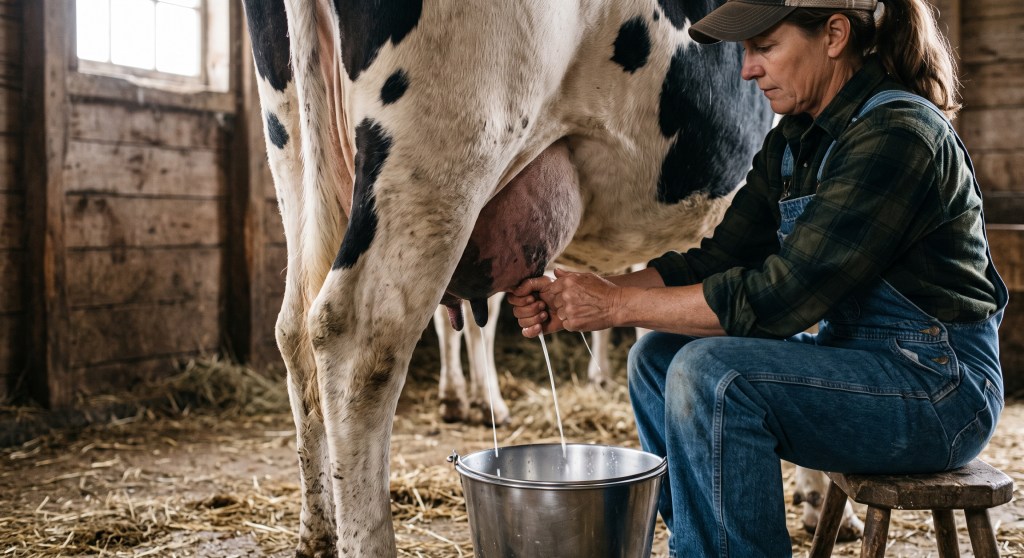
To call milk an ʿibrah, then, is to issue an invitation: cross over. Cross from the white drink in the cup to the crimson blood from which it was filtered; cross from the visible animal to the invisible Cherisher who designed it; cross from the mechanism to the Maker. Dr. Shah’s own writing captures this precisely: the term “comes from the root ʿAbara (to cross over), implying the ability to transfer a specific lesson from the past to a general law.” Thequran The milk verse is not a static fact but a bridge, and the whole of this essay is an attempt to walk across it.
2. Min bayni farthin wa damin — “from between the fæces and the blood”
The physiological claim embedded here is startlingly precise. The classical commentator Ibn ʿAbbās, cited in Maʿārif al-Qurʾān, already grasped the outline: when the fodder eaten by an animal settles in its stomach, the nutritive fraction is separated, “blood goes to the veins, milk goes to the udder,” and the residue is excreted as dung. Quran.com Modern physiology fills in the mechanism. Nutrients absorbed from the digested contents of the rumen and gut — the farth, chyme — enter the bloodstream (dam); in ruminants, microbial fermentation in the rumen produces short-chain volatile fatty acids (acetate, propionate, butyrate) that are absorbed across the gut wall into the portal blood. The blood then perfuses the mammary gland, where secretory epithelial cells lining microscopic sacs — the alveoli — extract these precursors and synthesize milk. The verse locates milk’s origin “between” the two systems with anatomical exactness: downstream of digestion, drawn from the blood, yet itself neither dung nor blood.
The scale of the blood supply is staggering. According to CSIRO Publishing’s dairy physiology reference, “about 500 L of blood pass through the udder to produce 1 L of milk”; Cornell Cooperative Extension’s note on mammary anatomy adds that “when the cow is producing 60 liters of milk per day, 30,000 liters of blood are circulating through the mammary gland.” William Harvey did not describe the circulation of the blood until 1628 — a full millennium after the revelation — so the coupling of dam (blood) to milk synthesis in 16:66 is, on the theistic reading, a pointer that only later science could cash out.
3. Khāliṣan — “pure,” and the blood–milk barrier
The milk emerges khāliṣ: pure, unmixed, clarified. Here again biology answers to the word. The mammary epithelium is sealed by tight junctions that constitute the “blood–milk barrier,” rigorously controlling what crosses from plasma into the alveolar lumen. Blood cells, most plasma proteins, and the visible red of the blood are excluded; what passes is a selectively synthesized, brilliant-white secretion. The milk is drawn from the blood yet is khāliṣ of it — exactly the paradox the verse names.
4. Sāʾighan — “agreeable, easy to swallow”
The final descriptor, sāʾigh, means palatable, sliding easily down the throat. Milk is not merely nutritious but pleasant — engineered, one might say, for the willing acceptance of the drinker (li’l-shāribīn). The lactose that sweetens it, as we shall see, is itself the product of a re-purposed antibacterial enzyme.
5. Buṭūnihi — the masculine pronoun
Commentators across the centuries have noted a grammatical anomaly: the pronoun in fī buṭūnihi (“in its belly / their bellies”) is masculine singular (-hi), even though its antecedent al-anʿām (“cattle”) is normally treated as a feminine plural — which is why the parallel verse 23:21 uses the expected feminine buṭūnihā. Al-Qurṭubī explains that Surah al-Muʾminūn (23:21) considers the plural sense (hence feminine -hā), while Surah al-Naḥl (16:66) considers the collective noun al-anʿām as a grammatical category (hence masculine singular -hi). Quran.com Ibn Jarīr al-Ṭabarī, seconded by al-Rāzī, demonstrates from pre-Islamic poetry that such a shift is licensed in classical Arabic; al-Zamakhsharī reads the singular as an allusion to “cattle” as a species or type. Islamicstudies.info Ṭabarī and Rāzī further note that the verse uses nusqīkum (“We give you to drink”) rather than the more usual asqaynākum, and that this form carries the connotation of permanence — a continued, recurring bestowal, milk given again and again, generation upon generation. Islamicstudies.info
The parallel verse deserves to be set beside it:
وَإِنَّ لَكُمْ فِي الْأَنْعَامِ لَعِبْرَةً ۖ نُّسْقِيكُم مِّمَّا فِي بُطُونِهَا وَلَكُمْ فِيهَا مَنَافِعُ كَثِيرَةٌ وَمِنْهَا تَأْكُلُونَ
Wa inna lakum fi’l-anʿāmi la-ʿibratan; nusqīkum mimmā fī buṭūnihā wa lakum fīhā manāfiʿu kathīratun wa minhā taʾkulūn.
“And in the cattle also there is a lesson for you. We give you to drink of that which is in their bellies, and in them are many benefits for you, and of them you eat.” (23:21)
The two verses differ by a single letter — buṭūnihi against buṭūnihā — and around that letter a thousand years of grammatical reflection has turned. It is a small monument to the Qur’anic invitation to look, and look again.
6. The company the verse keeps: the bee
It is no accident that the milk verse sits two verses before the bee. In 16:68–69, the very next divine sign is the honey of the bee:
وَأَوْحَىٰ رَبُّكَ إِلَى النَّحْلِ أَنِ اتَّخِذِي مِنَ الْجِبَالِ بُيُوتًا وَمِنَ الشَّجَرِ وَمِمَّا يَعْرِشُونَ ثُمَّ كُلِي مِن كُلِّ الثَّمَرَاتِ فَاسْلُكِي سُبُلَ رَبِّكِ ذُلُلًا ۚ يَخْرُجُ مِن بُطُونِهَا شَرَابٌ مُّخْتَلِفٌ أَلْوَانُهُ فِيهِ شِفَاءٌ لِّلنَّاسِ
Wa awḥā rabbuka ilā al-naḥli ani ittakhidhī mina al-jibāli buyūtan… yakhruju min buṭūnihā sharābun mukhtalifun alwānuhu fīhi shifāʾun li’l-nās.
“And thy Lord inspired (awḥā) the bee: ‘Make thou houses in the hills and in the trees and in what they build… There comes forth from their bellies a drink of varying hues, wherein is healing for mankind.’” (16:68–69)
The parallel is exquisite and surely deliberate: milk comes forth min buṭūnihi (from its belly); honey comes forth min buṭūnihā (from her belly). Both are pure products drawn from within a living animal’s interior; both are divine gifts to humanity. And the bee receives waḥy — divine inspiration, revelation — the same word used for revelation to prophets. Here is guidance embedded in biology itself: an insect “taught” by God to build hexagonal combs and manufacture medicine. This is the Qur’anic template for guided evolution in miniature: lawful, instinctual, biological behavior described as the direct communication of the divine will. If the bee’s honey-making is waḥy, why not the cow’s milk-making? And why not the 300-million-year assembly of the gland that makes it?
III. From Sweat to Sustenance: How the Mammary Gland Was Assembled
The deepest support for reading 16:66 as an ʿibrah comes not from the verse alone but from the astonishing back-story of the organ that makes milk. The mammary gland is not a simple invention; it is a mosaic — a co-opted, re-purposed, deeply integrated descendant of ancient skin glands, assembled over more than 300 million years from parts that once did entirely different jobs.
Lactation is older than mammals
The foundational synthesis belongs to Olav T. Oftedal of the Smithsonian, whose two 2002 papers in the Journal of Mammary Gland Biology and Neoplasia — “The mammary gland and its origin during synapsid evolution” and “The origin of lactation as a water source for parchment-shelled eggs” — reframed the whole question. Oftedal’s thesis: “Lactation appears to be an ancient reproductive trait that predates the origin of mammals.” The synapsid branch of the amniote tree separated from other taxa in the Pennsylvanian, more than 310 million years ago, and “evolved a glandular rather than scaled integument.” The mammary gland, he argues, “derives from an ancestral apocrine-like gland that was associated with hair follicles” thequran — a structure still visible in the nipple-less mammary patch of the monotremes (platypus and echidna) and in the “vestigial mammary hair” of early marsupial development.
Oftedal’s proposed sequence is elegant. Early synapsids laid parchment-shelled eggs — porous, leathery, prone to desiccation. He hypothesizes that hypertrophied skin glands, clustered as “mammo-pilo-sebaceous units” and associated with hair follicles, first evolved to secrete moisture and antimicrobial compounds onto these vulnerable eggs, protecting them from drying and microbial attack. Only later were these secretions “co-opted to provide nutrients to hatchlings.” thequran In other words, milk began as something closer to a protective, antiseptic sweat than a food. The nutritive, energy-rich milk of advanced Triassic cynodonts (more than 200 million years ago) came last, not first thequran — a progression consistent with their very small body size, epipubic bones, and limited tooth replacement. In the monotremes, the young still lap milk from a patch of skin rather than suckling a teat; the evolutionary seam between hair, oil gland, and milk gland is still stitched into the anatomy.
There is a poetry here that the theist will not miss: the first “milk” was a mother’s secretion to keep her eggs from dying of thirst. Provision and mercy were the function from the very beginning.
The developmental echo: the milk line
The ancestry from skin appendages is re-enacted in every mammalian embryo. Mammary glands begin as the milk line (mammary ridge), a band of ectoderm running from forelimb to hindlimb, marked by Wnt signaling (e.g., Wnt10b). thequran Along this line, mammary placodes condense into buds — the same word, placode, used for the first thickening that gives rise to hair, teeth, feathers, and scales. This shared “skin appendage placode” toolkit is the developmental fingerprint of common descent.
Group 1 — The “Architect” genes: morphogenesis by regulatory hijacking
The overarching finding — summarized in reviews and confirmed by the 2026 transcriptomic study of Marie Saitou at CIGENE (published in Genome Biology and Evolution) — is that mammary evolution “did not invent entirely new genes.” As the CIGENE summary of Saitou’s work puts it, “the mammalian breast evolved through changes in how existing genes are used in a specific tissue, rather than through the appearance of entirely new mammal-specific genes.” cigene Breast tissue relies on conserved epithelial programs shared with the salivary gland, pancreas, stomach, and skin — programs older than mammals themselves. cigene
The Hoxd genes and the mammary bud enhancer. The most striking case of “regulatory hijacking” comes from the laboratory of Denis Duboule. In their 2016 PNAS paper, “Control of Hoxd gene transcription in the mammary bud by hijacking a preexisting regulatory landscape,” Schep, Duboule, and colleagues showed that Hoxd genes — whose ancient, primary jobs are patterning the limbs and external genitalia — are switched on in the developing mammary bud by a long-distance enhancer that lies within the same regulatory “landscape” (the telomeric T-DOM domain) that controls Hoxd expression in limbs and gut. In their words, the regulatory activity “was already operational before the appearance of mammals,” and mammary Hoxd regulation “evolved by hijacking a preexisting regulatory landscape that was already at work … in structures such as the limbs or the intestinal tract.” The same genomic machine that builds fingers and genitals was recruited, wholesale, to build the milk gland. (Popular coverage from UCLA and EurekAlert framed this as “how mammary glands appeared in the course of evolution.”)
PTHrP (Parathyroid Hormone-related Protein). PTHrP is a primitive paracrine signal active in cartilage, bone, and tooth development. In the embryonic mammary bud, it mediates the essential epithelial–mesenchymal crosstalk: loss of PTHrP, or its receptor PTHR1, arrests the mammary bud; overexpression converts ordinary ventral skin into hairless nipple skin. PubMed Central As the literature notes, PTHrP is expressed “in cartilage, bone, skin, hair follicle, mammary gland … and tooth eruption,” ScienceDirect acting through the same PTH1R receptor everywhere. Here is a single tool — a calcium-regulating, epithelial-mesenchymal messenger first deployed to erupt teeth and grow cartilage — re-tasked to specify the mammary mesenchyme.
BMP4, Wnt/β-catenin, LEF1, TBX3, FGF10/FGFR2b, NRG3. Downstream and alongside PTHrP, the bud is sculpted by Bone Morphogenetic Protein 4 (co-opted from general integumentary and skeletal patterning, working to form the dense mammary-specific stroma), canonical Wnt/β-catenin signaling, and the transcription factors LEF1 and TBX3, with FGF10/FGFR2b and neuregulin-3 (NRG3) positioning the placodes. Every one of these is a general-purpose developmental gene borrowed from the shared body-building toolkit.
The ectodysplasin (EDA/EDAR/EDARADD → NF-κB) pathway. This TNF-family signaling module is, as the reviews state, “active during the development of ectodermal organs, including teeth, hairs, feathers, and mammary glands.” ScienceDirect In humans, mutations in EDA cause hypohidrotic ectodermal dysplasia — “sparse hair, missing teeth, and defects in exocrine glands including the breast.” PLOS The very same three-gene switch that decides where a hair or a tooth will form also decides where a mammary placode will form. The mammary gland is, developmentally and genetically, a specialized skin appendage that took a different fork at a shared molecular crossroads.
Group 2 — The milk-fluid genes: nutrition from teeth and immunity
Caseins from the SCPP family — milk from the genes of teeth and bone. The caseins (CSN1S1, CSN1S2, CSN2/β-casein, CSN3/κ-casein) are the phosphoproteins that make milk white and hold calcium and phosphate in a soluble, supersaturated suspension — a genuine piece of calcium-delivery nanotechnology in the form of the casein micelle. In their landmark 2003 PNAS paper, Kazuhiko Kawasaki and Kenneth Weiss showed that “the genes for enamel matrix proteins (EMPs), milk caseins, and salivary proteins comprise a family descended from a common ancestor by tandem gene duplication,” all traceable to an ancestral SPARCL1-like gene thequran that itself arose from SPARC. This is the secretory calcium-binding phosphoprotein (SCPP) family, clustered on human chromosome 4. As Kawasaki and Weiss put it, “casein makes milk supersaturated with Ca-phosphate, which was critical to the successive mammalian divergence.” thequran A 2011 analysis (Kawasaki and colleagues, in Molecular Biology and Evolution, “Evolution of Milk Casein Genes from Tooth Genes before the Origin of Mammals”) traced the Ca-sensitive caseins to a common ancestor shared with the tooth genes ODAM, SCPPPQ1, and FDCSP. The protein that mineralizes a tooth and the protein that carries calcium to a nursing infant are evolutionary cousins. The same chemistry that armed the ancestral jaw with enamel, and once built the very parchment eggshell that milk first moistened, was recruited to fill the infant’s cup with calcium.
α-lactalbumin from lysozyme — sugar from an antibiotic. Perhaps the most celebrated case of neofunctionalization: milk sugar (lactose) is manufactured by lactose synthase, a two-part enzyme comprising β-1,4-galactosyltransferase (a widespread Golgi enzyme) and its regulatory subunit α-lactalbumin (LALBA). On its own, galactosyltransferase transfers galactose onto N-acetylglucosamine; but when α-lactalbumin binds it, it re-specifies the enzyme to transfer galactose onto glucose, making lactose. And α-lactalbumin is a direct descendant, by gene duplication some 300–400 million years ago, of lysozyme c — the ancient antibacterial enzyme of tears, saliva, and skin that hydrolyzes bacterial cell walls. thequran The two proteins still share roughly 35–40% sequence identity, the same disulfide bonds, and the same fold. An enzyme evolved to puncture bacteria was re-tasked to specify the sugar that sweetens milk. Oftedal notes the deep implication: because α-lactalbumin arose from lysozyme before the amniotes split into synapsids and sauropsids, “the capacity to produce lactose was an ancient trait” that long preceded its use in milk. The tool waited, so to speak, for its calling.
The supporting cast: lactoferrin, β-lactoglobulin, WAP, mucins, immunoglobulin transport. Milk’s other proteins tell the same story of recruitment from immunity and transport. Lactoferrin (LTF) is an iron-binding member of the transferrin family — an antimicrobial iron-sequestering protein also found in tears, saliva, and neutrophil granules. PubMed Central β-lactoglobulin belongs to the lipocalin family of small hydrophobic-molecule carriers (it binds retinol and fatty acids). biorxiv Whey acidic protein (WAP) carries protease-inhibitor (four-disulfide-core) domains. Mucin MUC1 coats the milk-fat globule. The polymeric immunoglobulin receptor (pIgR) ferries maternal antibodies (secretory IgA) into milk, giving the newborn a passive-immunity transfusion. Lysozyme itself persists in milk as a direct antimicrobial. Milk is, in a real sense, the immune system decanted into a drink — the ancestral “antiseptic sweat” of Oftedal’s synapsid, still doing its first job even as it took on its second.
Group 3 — The lipid-secretion machinery: fat wrapped by immune and metabolic enzymes
To deliver energy-dense fat without destroying the cell that makes it, the mammary epithelium performs a remarkable feat of membrane engineering: it wraps each fat droplet in a bud of its own apical plasma membrane and pinches it off, producing the milk fat globule enclosed in the milk fat globule membrane (MFGM). Three proteins run this machine — and two of them are borrowed from the immune and metabolic systems.
XDH (xanthine oxidoreductase, XOR). XOR is an ancient enzyme of purine metabolism and innate immunity (it generates antimicrobial reactive oxygen and is found in many tissues). In the lactating cell it takes on an obligate structural role: as the PNAS paper “Butyrophilin controls milk fat globule secretion” describes, cytosolic XOR binds the cytoplasmic tail of membrane butyrophilin, and this complex, together with adipophilin on the droplet surface, envelops and releases the fat globule. Knockout studies confirm XOR “is required for butyrophilin1a1 clustering in the membrane during milk lipid secretion” and “mediates membrane docking of milk-fat droplets.”
BTN1A1 (butyrophilin 1A1). Butyrophilin is a member of the butyrophilin immune-protein family (relatives of the B7/immunoglobulin superfamily involved in T-cell regulation). Expressed almost only during lactation, it is the membrane anchor of the secretion complex.
PLIN2/ADPH (adipophilin). The third member of the tripartite XOR–BTN1A1–PLIN2 complex coats the nascent lipid droplet.
So the milk-fat globule — the very cream of the milk — is secreted by a machine cobbled together from a metabolic/immune enzyme (XOR), an immune-family membrane protein (BTN1A1), and a lipid-droplet protein (PLIN2). Nutrition, once more, is delivered by the tools of defense.
Group 4 — The neuroendocrine choreography
None of this matters without delivery and control. Prolactin (PRL), acting through its receptor PRLR and the STAT5 / ELF5 transcriptional axis, drives milk synthesis. Yet prolactin is not a mammalian invention: it is an ancient vertebrate hormone whose primordial role, still seen in fish, is osmoregulation. As the Manzon review (General and Comparative Endocrinology, 2002) puts it, “in fish, PRL plays an important role in freshwater osmoregulation by preventing both the loss of ions and the uptake of water.” PubMed Prolactin is now recognized as a pleiotropic hormone “with a growing list of over 300 known functions” (Bole-Feysot et al., Endocrine Reviews, 1998), and PRL-like hormones have been traced back to the jawless lamprey. PubMed A hormone that once managed water and salt in a fish’s gill now manages the manufacture of a water-based food in a mammal’s breast — a fitting echo of milk’s own origin as a source of moisture for a drying egg.
Oxytocin (OXT/OXTR) drives the let-down reflex: the infant’s suckling sends afferent signals to the hypothalamus, the posterior pituitary releases oxytocin, and the basket-like myoepithelial cells around each alveolus contract, ejecting milk into the ducts. It is a textbook positive-feedback loop — no suckling, no signal; no signal, no milk — binding mother and child in a single neuroendocrine circuit. And the milk oligosaccharide machinery (the most diverse in the human of all species) builds complex sugars that feed not the infant directly but its gut microbiome, seeding a lifelong symbiosis.
The argumentative heart
Here, then, is the point this essay presses. Lactation was not the work of a single new gene. It is a large, coordinated ensemble drawn from utterly different prior functions:
- from limbs and genitalia (the Hoxd enhancer landscape),
- from teeth and bone (PTHrP; the caseins of the SCPP/enamel family),
- from hair, teeth, and skin (the ectodysplasin placode toolkit),
- from the innate immune system (lysozyme → α-lactalbumin; lactoferrin; lysozyme in milk; XOR; butyrophilin; pIgR-borne antibodies),
- from metabolism (XOR again; the lipocalin β-lactoglobulin),
- from osmoregulation (prolactin).
These converged — simultaneously and in mutual dependence — into a single integrated organ and a single integrated behavior, complete with a neuroendocrine reflex that welds two organisms into one nursing dyad. Remove α-lactalbumin and the milk cannot flow (α-lactalbumin-null mice produce milk too viscous for pups to extract). Remove PTHrP and the bud never forms. Remove oxytocin and the milk never lets down. The parts are interdependent; the whole is functional only when assembled.
Mainstream evolutionary biology has a name for this kind of assembly: exaptation (Gould and Vrba) and co-option, enabled by gene duplication and the redeployment of a conserved developmental “toolkit” (the deep homology of Sean B. Carroll’s evo-devo). And it is entirely fair to state the mainstream reply plainly: biologists regard each of these co-options as an ordinary, well-documented evolutionary event, and many would call the inference from “many coordinated co-options” to “therefore a designer” an argument from incredulity — the mere feeling that something looks too orchestrated to be unguided.
The author’s response is not to deny the mechanism but to reframe its meaning. The theist happily grants every co-option, every duplication, every selective sweep. What the theist observes is a pattern: the same toolkit, reused again and again, with foresight-like economy, to build a life-giving organ out of the genes of teeth, limbs, and immunity — and doing so, crucially, in an order where the first function (moisture and antisepsis for eggs) already bespeaks provision and mercy. As the Qur’an says of the whole created order,
الَّذِي أَحْسَنَ كُلَّ شَيْءٍ خَلَقَهُ … مَّا تَرَىٰ فِي خَلْقِ الرَّحْمَٰنِ مِن تَفَاوُتٍ ۖ فَارْجِعِ الْبَصَرَ هَلْ تَرَىٰ مِن فُطُورٍ
…mā tarā fī khalqi al-Raḥmāni min tafāwut; fa’rjiʿi al-baṣara hal tarā min fuṭūr.
“You will see no incongruity in the creation of the Gracious God. Then look again: seest thou any flaw?” (67:3–4)
The reuse of a single toolkit across teeth and milk and limbs is not, to this eye, a flaw or a sign of blind tinkering; it is exactly the economy one expects of one Author writing with a coherent hand. That an argument can be given a naturalistic gloss does not make the theistic reading irrational; it makes it a genuine interpretive choice — which is precisely Shah’s point about metaphysics versus method.
IV. The Placenta: A Parallel Case of Guided Co-option
If milk is one masterpiece of exaptation, the placenta is another — and it makes the same argument in a different key, because here the borrowed material is viral.
The syncytiotrophoblast, the fused multinucleated layer at the maternal–fetal interface, is built by fusogenic proteins called syncytins — which are the envelope (env) genes of ancient endogenous retroviruses, domesticated for the host’s own use. In humans, Syncytin-1 is encoded by ERVW-1 (from the HERV-W provirus) and Syncytin-2 by ERVFRD-1 (HERV-FRD); both are expressed almost exclusively in the placenta and mediate the cell-cell fusion that forms the syncytiotrophoblast. PubMed Central The virus’s tool for invading a cell (membrane fusion) was captured to build the organ of nourishment. Mice lacking Syncytin-A (the murine orthologue) die in utero from placental failure. PubMed Central The env gene’s ancestral immunosuppressive domain, meanwhile, appears co-opted toward maternal-fetal immune tolerance PubMed Central — the near-miraculous suspension of the mother’s immune rejection of her genetically foreign child.
Deeper still, the work of Vincent J. Lynch and Günter Wagner shows that the very genetic wiring of pregnancy was rewired by transposable elements — “genomic parasites.” In their 2011 Nature Genetics paper, “Transposon-mediated rewiring of gene regulatory networks contributed to the evolution of pregnancy in mammals,” Lynch, Leclerc, May, and Wagner identified 1,532 genes recruited into endometrial stromal-cell expression during the origin of placental pregnancy, and found that “about 13% of recruited genes are within 200 kb of a Eutherian-specific transposable element (MER20),” concluding that “the transposable element, MER20, contributed to the origin of a novel gene regulatory network dedicated to pregnancy.” Their 2015 Cell Reports paper (“Ancient Transposable Elements Transformed the Uterine Regulatory Landscape and Transcriptome during the Evolution of Mammalian Pregnancy”) extended this: “thousands of cis-regulatory elements that mediate decidualization … are derived from ancient mammalian transposable elements,” including 930 copies of MER20 wired into the decidual network. The decidual stromal cell itself is an evolutionary novelty of placental mammals (Kin, Nnamani, Lynch et al., 2015), absent in marsupials. Even decidual prolactin — that osmoregulatory hormone again — got its pregnancy-specific promoter from stitched-together transposons MER20 and MER39 (Emera and Wagner, PNAS 2012).
The theological reading is irresistible: a virus, the very emblem of disease and parasitism, was made the servant of the tenderest of all biological relationships. A transposon, a stretch of “selfish DNA,” became the switchboard of motherhood. If the milk gland shows provision drawn from teeth and immunity, the placenta shows provision drawn from pathogens — the enemy turned, by a Guiding Hand, into the architecture of nurture. The Qur’anic account of the embryonic stages resonates here:
ثُمَّ خَلَقْنَا النُّطْفَةَ عَلَقَةً فَخَلَقْنَا الْعَلَقَةَ مُضْغَةً فَخَلَقْنَا الْمُضْغَةَ عِظَامًا فَكَسَوْنَا الْعِظَامَ لَحْمًا ثُمَّ أَنشَأْنَاهُ خَلْقًا آخَرَ ۚ فَتَبَارَكَ اللَّهُ أَحْسَنُ الْخَالِقِينَ
Thumma khalaqnā al-nuṭfata ʿalaqatan fa-khalaqnā al-ʿalaqata muḍghatan fa-khalaqnā al-muḍghata ʿiẓāman fa-kasawnā al-ʿiẓāma laḥman thumma anshaʾnāhu khalqan ākhar; fa-tabāraka Allāhu aḥsanu al-khāliqīn.
“Then We fashioned the sperm-drop into a clot; then We fashioned the clot into a lump; then We fashioned the lump into bones, then We clothed the bones with flesh; then We developed it into another creation. So blessed be Allah, the Best of creators.” (23:14; cf. 22:5)
The staged, developmental language — khalqan ākhar, “another creation” — is, in the Ahmadiyya reading, of a piece with 71:14:
وَقَدْ خَلَقَكُمْ أَطْوَارًا
Wa qad khalaqakum aṭwārā.
“And He has created you in different stages and different conditions.” (71:14)
V. The Providential Meteorite: Chicxulub and the Age of Mammals
For all the machinery of milk to matter, the milk-bearers had to inherit the earth. And they did so through one of the most contingent, most improbably well-aimed catastrophes in the planet’s history.
The Alvarez hypothesis and the smoking gun
In 1980, Luis and Walter Alvarez, with Frank Asaro and Helen Michel, discovered a worldwide iridium anomaly — a thin clay layer at the Cretaceous–Paleogene (K–Pg) boundary enriched in iridium, an element rare in Earth’s crust but abundant in asteroids (first identified at Gubbio, Italy). princeton They proposed that a ~10 km asteroid had struck the Earth 66 million years ago. WordPress The “smoking gun” arrived in 1991: the Chicxulub crater, a ~180 km-wide impact structure buried beneath the Yucatán Peninsula, Berkeley Lab News Center dated precisely to the boundary. The 2016 scientific drilling (IODP-ICDP Expedition 364) of the crater’s peak ring confirmed the impact model and found the iridium anomaly within the basin, “unequivocally linking the Chicxulub impact basin to the global K–Pg boundary layer.” ScienceDirect
The impact and the extinction
The impactor — estimated at 10–14 km across arxiv — delivered an energy equivalent of roughly 100 teratons of TNT WordPress (about 4.2 × 10²³ J), striking, per NSF summaries, at an estimated 20 kilometers per second and at a steep angle. It triggered tsunamis, wildfires, and a global pall of dust, soot, and sulfate aerosols that blocked the sun, collapsed photosynthesis, and plunged the planet into an “impact winter.” The mass extinction eradicated an estimated 76% of species on Earth (Lowery et al., Nature, 2018), commonly stated as “75% or more,” including all non-avian dinosaurs. The 160-million-year reign of the dinosaurs ended in an afternoon, and the “Age of Mammals” began.
The remarkable contingencies
What makes this event read, to the theist, as providential fine-tuning rather than mere bad luck for the dinosaurs is the astonishing specificity of the circumstances:
The angle. In 2020, Gareth Collins and colleagues at Imperial College London published the first fully 3D simulations of the impact, concluding it struck at roughly 60° from horizontal — “one of the deadliest possible angles.” As Collins put it, “For the dinosaurs, the worst-case scenario is exactly what happened … Sixty degrees is a more lethal impact angle because it ejects a larger amount of material fast enough to engulf the planet.” A near-vertical or a grazing impact would have thrown up far less climate-altering debris. Only about one quarter of all impacts fall between 60° and vertical. nih
The target rock. Chicxulub struck a seabed uniquely rich in sulfate-bearing gypsum/anhydrite and carbonate — rocks that, when vaporized, flung enormous quantities of sulfur aerosols and CO₂ into the stratosphere, maximizing the cooling. Lyell Collection Had the same asteroid struck ordinary crust, the effect would have been far milder.
The location. Most striking of all, Kunio Kaiho and Naga Oshima of Tohoku University showed in 2017 (Scientific Reports, “Site of asteroid impact changed the history of life on Earth: the low probability of mass extinction”) that the catastrophic global cooling “could have occurred if the asteroid hit the hydrocarbon-rich areas occupying approximately 13% of the Earth’s surface.” nih Strike anywhere on the other ~87% — most of the oceans, most of the continents — and there would have been no impact winter of extinction-level severity, no end to the dinosaurs, and, in all likelihood, no ascendancy of mammals. “The site of asteroid impact, therefore, changed the history of life on Earth.” nih
Compound the improbabilities — an impactor of the right size, arriving at the deadliest angle, striking the small sulfate- and hydrocarbon-rich bullseye that covered barely a tenth of the planet — and the “random” asteroid begins to look, to the eye of faith, like an arrow loosed with intent. This is the anthropic/fine-tuning argument transposed from cosmology to paleontology: the same reasoning by which Fred Hoyle, contemplating the carbon-12 resonance, remarked that a superintellect had “monkeyed with physics.”
Lactation as survival technology
And here the two halves of this essay fuse. Why did mammals survive when the dinosaurs did not? The consensus answer: the survivors were small, burrowing, nocturnal, endothermic generalists — able to shelter underground from the heat pulse and cold, ScienceDaily to subsist on seeds, detritus, insects, and carrion in a collapsed food web. Biology Insights But there is one survival technology the textbooks too often pass over: lactation itself.
A lactating mother is a portable, internal food-manufacturing system. When the external food web collapses — when no fruit ripens, no leaf grows, no prey stirs — a mammalian mother can still convert her own body reserves into a complete, sterile, antibody-laden food for her young. Milk buffers the offspring from the environment. The reptile that must find food for its hatchlings in a frozen, sunless wasteland fails; the mammal that carries the food supply within her own flesh endures. The very organ whose 300-million-year assembly we have traced — born as moisture for a drying egg, built from the genes of teeth and immunity — became, at the hour of greatest catastrophe, the ark that carried warm-blooded life through the flood of fire and darkness.
The Qur’an’s language of divine measure and provision frames this precisely:
وَخَلَقَ كُلَّ شَيْءٍ فَقَدَّرَهُ تَقْدِيرًا
Wa khalaqa kulla shayʾin fa-qaddarahu taqdīrā.
“…and He created everything, and determined it with precise determination.” (25:2)
The angle, the target rock, the 13% bullseye, the small warm survivor with milk in her breast — each a qadar, a measured decree, converging on a single outcome: a world made ready for the mammals, and ultimately for the human being who would read the milk verse and understand it.
VI. Domestication: A Sustenance System Prepared for Humanity
The story does not end with the first mammals. It bends, over 66 million more years, toward a particular species and a particular gift. In the last ten millennia, humanity domesticated exactly the animals the Qur’an calls al-anʿām — cattle, camels, goats, sheep, and buffalo — and drew from them the milk of 16:66. The Qur’an presents this as no accident but as a preparation:
أَوَلَمْ يَرَوْا أَنَّا خَلَقْنَا لَهُم مِّمَّا عَمِلَتْ أَيْدِينَا أَنْعَامًا فَهُمْ لَهَا مَالِكُونَ وَذَلَّلْنَاهَا لَهُمْ فَمِنْهَا رَكُوبُهُمْ وَمِنْهَا يَأْكُلُونَ
Awa lam yaraw annā khalaqnā lahum mimmā ʿamilat aydīnā anʿāman fahum lahā mālikūn; wa dhallalnāhā lahum fa-minhā rakūbuhum wa minhā yaʾkulūn.
“Do they not see that We have created for them, of what Our hands have fashioned, the cattle of which they are masters? And We have subjected them to them, so that some of them they use for riding and some they eat.” (36:71–72)
وَالْأَنْعَامَ خَلَقَهَا ۗ لَكُمْ فِيهَا دِفْءٌ وَمَنَافِعُ وَمِنْهَا تَأْكُلُونَ
Wa’l-anʿāma khalaqahā; lakum fīhā difʾun wa manāfiʿu wa minhā taʾkulūn.
“And the cattle He has created; for you in them is warmth and other uses, and of them you eat.” (16:5)
This is the Qur’anic theme of taskhīr — the subjection of nature to humanity (cf. 31:20; 45:13). And it is matched, remarkably, by a reciprocal adaptation in our own genome. Most mammals switch off the lactase gene after weaning; drinking milk as an adult should cause lactose intolerance. Yet several human populations independently evolved lactase persistence — the lifelong ability to digest milk — precisely where dairying arose. This is one of the most celebrated cases of recent, convergent human evolution: the European allele −13910*T, and the distinct African and Arabian alleles −14010*C, −13907*G, −13915*G, and −14009*G, Science.gov each arising on a different haplotype background, each an independent mutation in the same enhancer region (within the MCM6 gene) upstream of the LCT gene. PubMed As Tishkoff and colleagues wrote in Nature Genetics (2007), this is “a marked example of convergent evolution due to strong selective pressure resulting from shared cultural traits — animal domestication and adult milk consumption.” PubMed
The Arabian context is especially fitting for a Qur’anic reflection: the −13915*G variant, common among the nomadic Arabs of the Peninsula and the Beja of East Africa, ResearchGate is associated with the culture of the camel — the anʿām par excellence of the desert, and the animal whose milk sustained the very Bedouin to whom the milk verse was first recited. Convergent evolution here looks less like coincidence and more like a lock and key filed to fit: the animal prepared to give milk, and the human prepared, again and again and independently, to receive it.
This is the same logic Simon Conway Morris presses in Life’s Solution: Inevitable Humans in a Lonely Universe — that evolutionary convergence, “the recurrent tendency of biological organization to arrive at the same ‘solution’ to a particular ‘need,’” reveals channels and attractors in the space of the possible, as if the outcomes were, in some sense, meant. Lactase persistence, evolving four or five separate times toward the same phenotype, is convergence written into our own bodies within recorded history. Michael Denton, in Nature’s Destiny, presses a parallel structuralist case: that the laws of nature are fine-tuned not merely for life in general but for the specific biology we possess. The theist need not accept every detail of Conway Morris or Denton to hear, in the repeated independent invention of milk-drinking, an echo of design.
VII. Answering the Objection
Intellectual honesty requires stating the counter-case at full strength. The mainstream biologist will say: none of this needs guidance. Exaptation and co-option are ubiquitous and well-understood; gene duplication supplies raw material; natural selection, acting on variation, does the shaping; convergence reflects the finite number of physical solutions to a problem, not a cosmic intention; and the asteroid’s happy aim is survivorship bias — we marvel at the 13% bullseye only because we are here to marvel, exactly as we would not be had it missed. To leap from “this is an astonishing, integrated system” to “therefore, God” is, on this view, an argument from incredulity dressed in the language of wonder.
The author accepts the force of this and answers not by denying the science but by locating the disagreement where it truly lies: in metaphysics, not mechanism. Three replies:
First, the naturalistic account and the theistic account are not rival scientific hypotheses; they are rival interpretations of the same, agreed-upon science. Methodological naturalism — studying nature as if it were a closed causal system — is a superb research strategy, and Shah endorses it wholeheartedly. Metaphysical naturalism — the further claim that nature is a closed causal system with no author — is a philosophical addition, not a finding. The data underdetermine the metaphysics. One may read the reused toolkit as blind tinkering or as an Author’s coherent style; the fossils and genes do not decide between them.
Second, the “argument from incredulity” charge cuts both ways. To insist that an ensemble of this integration must be unguided — because guidance is disallowed a priori — is itself a metaphysical stance masquerading as neutrality. The theist’s inference is not “I cannot imagine how this happened, therefore God,” but rather “given that a Guiding Intelligence is antecedently plausible on other grounds (the contingency of the universe, the existence of consciousness, the moral law, the phenomenon of revelation), the exquisite, foresight-like reuse of biological toolkits and the improbable aim of the K–Pg impact are what we should expect, and thus count as confirming instances.” That is ordinary abductive reasoning, not a fallacy.
Third, and most deeply, the Qur’an itself dissolves the supposed conflict between mechanism and meaning. This is the theological center of gravity of the whole essay:
سَبِّحِ اسْمَ رَبِّكَ الْأَعْلَى الَّذِي خَلَقَ فَسَوَّىٰ وَالَّذِي قَدَّرَ فَهَدَىٰ
Sabbiḥi’sma rabbika’l-aʿlā. Alladhī khalaqa fa-sawwā. Wa’lladhī qaddara fa-hadā.
“Glorify the name of thy Lord, the Most High, Who creates and perfects, and Who determines (qaddara) and then guides (fa-hadā).” (87:1–3)
قَالَ رَبُّنَا الَّذِي أَعْطَىٰ كُلَّ شَيْءٍ خَلْقَهُ ثُمَّ هَدَىٰ
Qāla rabbunā alladhī aʿṭā kulla shayʾin khalqahu thumma hadā.
“He said: Our Lord is He Who gave everything its proper form and then guided it.” (20:50)
The verbs are the whole argument in miniature: qaddara (He measured, apportioned, fixed the quantities and constants — the very language of fine-tuning) and fa-hadā / thumma hadā (and then He guided). To specify a mechanism by which milk is made “between the fæces and the blood,” or a mechanism by which mammals inherited the earth, is not to eliminate the hidāyah, the guidance; it is to describe the instrument through which the guidance was exercised. As Shah’s platform puts it, the atheist objection “assumes that specifying a mechanism eliminates a purpose. But this is a category error.” thequran A description of how a symphony’s notes follow the laws of acoustics does not abolish the composer. The Qur’an names God Al-Baatin, the Hidden — precisely the God who works through the lawful order rather than in violation of it. Quantum indeterminacy, for Shah, is one plausible “interface, the buffer zone, the meeting point” thequran at which a hidden God guides an apparently law-bound world without ever leaving fingerprints a microscope could find.
This is why the Qur’an so relentlessly directs the reflective mind — ulū al-albāb, “those possessed of understanding” — to read the natural order as a text:
إِنَّ فِي خَلْقِ السَّمَاوَاتِ وَالْأَرْضِ وَاخْتِلَافِ اللَّيْلِ وَالنَّهَارِ لَآيَاتٍ لِّأُولِي الْأَلْبَابِ
Inna fī khalqi’l-samāwāti wa’l-arḍi wa’khtilāfi’l-layli wa’l-nahāri la-āyātin li-ulī’l-albāb.
“In the creation of the heavens and the earth and in the alternation of night and day there are indeed Signs for men of understanding.” (3:190)
And it insists that the animals themselves are not mere resources but communities, moral patients within the same providential order:
وَمَا مِن دَابَّةٍ فِي الْأَرْضِ وَلَا طَائِرٍ يَطِيرُ بِجَنَاحَيْهِ إِلَّا أُمَمٌ أَمْثَالُكُم
Wa mā min dābbatin fī’l-arḍi wa lā ṭāʾirin yaṭīru bi-janāḥayhi illā umamun amthālukum.
“There is not an animal that crawls in the earth, nor a bird that flies on its two wings, but they are communities like you.” (6:38)
The synapsid nursing her eggs, the monotreme secreting milk from a patch of skin, the cow filtering blood into the whiteness of milk, the camel of the Bedouin, the human infant at the breast — all are umam amthālukum, communities like us, links in one continuous, guided chain. And that chain has a rhythm the Qur’an itself measures out: the two full years of suckling of 2:233 (ḥawlayni kāmilayn) and the thirty months of gestation-and-weaning of 46:15, from whose difference the classical scholars inferred a six-month minimum gestation — the Qur’an legislating for the very lactation whose deep history we have traced.
VIII. Epilogue: The Crossing-Over
Begin at the beginning: a small, furred synapsid, more than three hundred million years ago, in a world with no flowers and no birds, presses a clutch of leathery eggs against the damp glands of her belly. The secretion that keeps them from drying is not yet milk. It is closer to an antiseptic sweat — water and a few antibacterial molecules borrowed from the immune system, weeping from glands that grew up beside her hairs. But it is already an act of provision. Already, at the root of the mammalian line, a mother is giving of her own body so that her young might live.
Cross over. Two hundred million years later, in the Triassic dusk, her cynodont descendants have thickened that secretion into something richer — fats wrapped by an enzyme that once fought bacteria, sugars made by an enzyme that once was an antibiotic, calcium carried by proteins that also build teeth. The recipe of milk is being written, gene by borrowed gene, from the toolkits of teeth and limbs and immunity, as if a single Author were composing with a single, economical hand.
Cross over. Sixty-six million years ago, a mountain of rock ten kilometers wide falls out of the sky at the one angle, onto the one small patch of sulfurous seabed, that can end a world. The sky goes black. The forests burn and then freeze. The great reptiles, magnificent and exposed, die in their millions. But underground, in her burrow, a warm creature the size of a shrew waits out the long night — and when her young cry in the darkness, she feeds them from her own flesh, milk made from a body that needs no sun, no leaf, no living prey. The catastrophe that ends one age is the doorway to another, and lactation is the key that fits the lock.
Cross over. Ten thousand years ago, on the edge of a desert, a human hand closes gently around the teat of a camel, and warm milk — labanan khāliṣan sāʾighan, pure and pleasant — streams into a wooden bowl. In the drinker’s own blood, an ancient gene that should have fallen silent at weaning keeps quietly working, kept alive by a single letter of DNA changed independently here, in Arabia, as it was changed in Africa and in Europe, wherever human beings learned to keep the milk-giving beasts. The animal was prepared to give; the human was prepared, again and again, to receive.
Cross over, one last time. A verse descends in Mecca: wa inna lakum fī’l-anʿāmi la-ʿibrah — “in the cattle there is an ʿibrah for you,” a crossing-over, a lesson, a bridge. It sits between the story of the bee, whom God inspired to make healing honey, and the promise that God “created you in stages.” It names, with an accuracy no seventh-century herdsman could have known, the passage of milk from between the fæces and the blood. And it asks of the one who drinks only this: that he cross the bridge the milk itself has built — from the white drink in the cup back along the crimson thread of the blood, back through the alveolus and the borrowed genes and the buried crater and the drying eggs of the first synapsid mother, all the way to the One who qaddara fa-hadā, who measured out and then guided; the Best of creators, in whose making, look as long as you will, you will find no flaw.
From the sweat of an ancient skin to the milk of a mother’s breast; from the fireball over Yucatán to the feast of the nursing young; from the sign to the Signifier. That crossing is the whole of the matter. It is the ʿibrah. And it is offered, the verse says, li’l-shāribīn — to those who will drink, and understand.



Leave a Reply