
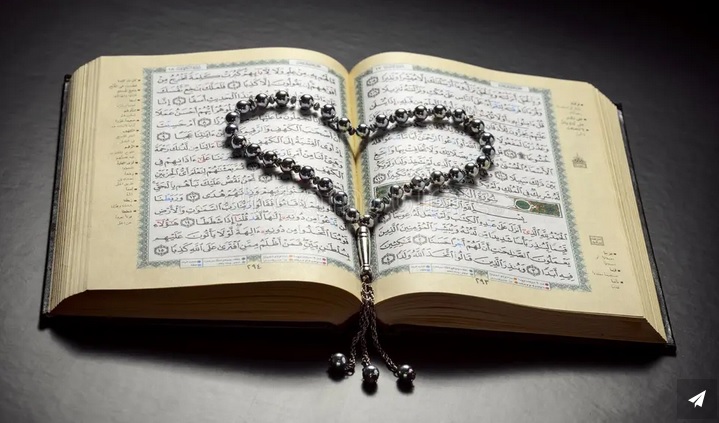
A Comprehensive Commentary on the Refrain of Sūrah al-Qamar
Presented by ChatGPT
Abstract
Among the most memorable declarations in the Qur’an is the refrain:
وَلَقَدْ يَسَّرْنَا الْقُرْآنَ لِلذِّكْرِ فَهَلْ مِنْ مُدَّكِرٍ
Wa-laqad yassarnā al-Qurʾāna li-l-dhikri fa-hal min muddakir.
M. A. S. Abdel Haleem translates it: “We have made it easy to learn lessons from the Quran: will anyone take heed?”
One textual clarification is important. The complete sentence occurs four times in Sūrah al-Qamar—54:17, 54:22, 54:32, and 54:40—not five times. Its concluding question, فَهَلْ مِنْ مُدَّكِرٍ—“Is there anyone who will take heed?”—occurs six times, because it also appears in variant refrains at 54:15 and 54:51. The impression of a fivefold refrain may arise because the sūrah surveys five historical communities: the peoples of Noah, ʿĀd, Thamūd, Lot, and Pharaoh.
The verse brings together divine grace and human responsibility. God has already made the Qur’an accessible—through its recitability, memorability, central moral clarity, narrative power, and capacity to awaken the conscience. Yet accessibility does not compel receptivity. The second half therefore asks whether anyone will actively become a muddakir: one who remembers, reflects, accepts admonition, learns from history, and changes direction.
Classical commentators variously emphasize memorization, recitation, understanding, moral admonition, spiritual recollection, and divine assistance to the sincere seeker. These meanings are complementary. The Qur’an is accessible without being exhaustible, clear in its fundamental summons while inexhaustibly rich in its linguistic, theological, legal, and spiritual depths.
The three essays by Zia H. Shah, MD, rightly emphasize that no commentator or teacher should be confused with revelation itself, that decisive Qur’anic teachings should guide the interpretation of ambiguous passages, and that Qur’anic coherence should be sought through reflection. These insights are best balanced by an equally Qur’anic respect for learning, Prophetic explanation, linguistic expertise, plural scholarship, intellectual humility, and the recognition that the reader, no less than the teacher, is fallible.
The Arabic Text, Transliteration, and an Interpretive Translation
Arabic
وَلَقَدْ يَسَّرْنَا الْقُرْآنَ لِلذِّكْرِ فَهَلْ مِنْ مُدَّكِرٍ
Transliteration
Wa-laqad yassarnā al-Qurʾāna li-l-dhikri fa-hal min muddakir.
Interpretive translation
“And surely We have made the Qur’an readily accessible for remembrance and admonition; is there, then, anyone at all who will take it to heart?”
This interpretive rendering deliberately combines several dimensions of dhikr: remembering, retaining, reflecting, receiving admonition, and allowing what is remembered to transform one’s life.
A Necessary Textual Clarification: Four Complete Refrains and Six Questions
The complete declaration is found at:
| Verse | Narrative setting | Form |
|---|---|---|
| 54:15 | The ark and the story of Noah are left as a sign | Concluding question only: فَهَلْ مِنْ مُدَّكِرٍ |
| 54:17 | Conclusion of the account of Noah’s people | Complete refrain |
| 54:22 | Conclusion of the account of ʿĀd | Complete refrain |
| 54:32 | Conclusion of the account of Thamūd | Complete refrain |
| 54:40 | Conclusion of the account of Lot’s people | Complete refrain |
| 54:51 | Direct warning to the Prophet’s contemporaries after the account of Pharaoh | Concluding question only: فَهَلْ مِنْ مُدَّكِرٍ |
Thus:
- وَلَقَدْ يَسَّرْنَا الْقُرْآنَ لِلذِّكْرِ فَهَلْ مِنْ مُدَّكِرٍ occurs four times.
- فَهَلْ مِنْ مُدَّكِرٍ occurs six times.
- Five historical communities are presented: Noah, ʿĀd, Thamūd, Lot, and Pharaoh.
This is not a minor counting detail. The sixfold recurrence of the question creates a broader architecture than the fourfold complete refrain. Historical signs, revealed words, destroyed civilizations, and the contemporary audience are all placed beneath one question: Will anyone learn before history has to repeat itself?
Ten English Translations
The following renderings demonstrate the semantic breadth of يَسَّرْنَا, الذِّكْر, and مُدَّكِر.
| Translator | Translation |
|---|---|
| 1. M. A. S. Abdel Haleem | “We have made it easy to learn lessons from the Quran: will anyone take heed?” |
| 2. Mustafa Khattab, The Clear Quran | “And We have certainly made the Quran easy to remember. So is there anyone who will be mindful?” |
| 3. Abdullah Yusuf Ali | “And We have indeed made the Qur’an easy to understand and remember: then is there any that will receive admonition?” |
| 4. Muhammad Taqi Usmani | “Indeed We have made the Qur’ān easy for seeking advice. So, is there one to heed to the advice?” |
| 5. Marmaduke Pickthall | “And in truth We have made the Qur’an easy to remember; but is there any that remembereth?” |
| 6. Sahih International | “And We have certainly made the Qur’ān easy for remembrance, so is there any who will remember?” |
| 7. Abul Aʿla Maududi | “We have made this Qur’an easy as a reminder. Is there, then, any who will take heed?” |
| 8. A. J. Arberry | “Now We have made the Koran easy for Remembrance. Is there any that will remember?” |
| 9. The Study Quran | “And indeed We have made the Quran easy to remember; so is there any who remembers?” |
| 10. Muhammad Asad | “Hence, indeed, We made this Qur’an easy to bear in mind: who, then, is willing to take it to heart?” |
What the Differences Reveal
No single English word reproduces the full range of dhikr.
- “Remember” preserves the most direct lexical connection.
- “Learn lessons” captures the narrative context of destroyed civilizations.
- “Take heed” emphasizes moral response.
- “Admonition” conveys warning and correction.
- “Mindful” suggests sustained moral awareness.
- “Understand and remember” explicitly joins intellectual comprehension with retention.
- “Take it to heart” emphasizes inward appropriation and transformation.
Abdel Haleem’s “learn lessons” is particularly fitting in Sūrah al-Qamar, because the refrain repeatedly follows historical narratives. Yet translations such as Pickthall, Arberry, and The Study Quran preserve the important memory dimension, while Muhammad Asad’s “take it to heart” brings out the existential and volitional force of muddakir.
The verse does not merely say that the Qur’an can be read. It says that it has been facilitated so that its message may be remembered, understood, internalized, and acted upon.
A Word-by-Word Commentary
1. وَلَقَدْ — Wa-laqad: “And surely,” “And indeed”
The expression combines three elements:
- وَ — wa, “and,” connecting the declaration with what has preceded;
- لَـ — la, an emphatic particle;
- قَدْ — qad, which, when joined to a past-tense verb, reinforces the certainty and completion of the action.
The verse therefore begins not with a possibility but with a divine assurance:
God has certainly accomplished the act of making the Qur’an accessible.
The reader is not being asked to decide whether God has made the Qur’an accessible. That is declared. The question concerns the reader’s response.
The emphatic opening is especially significant because some people experience the Qur’an as distant, difficult, or inaccessible. The verse does not deny that readers may face linguistic, educational, psychological, or cultural obstacles. Rather, it declares that the nature, structure, and purpose of the revelation contain a divine movement toward human beings. Its fundamental invitation is not designed as an esoteric secret available only to an initiated elite.
2. يَسَّرْنَا — Yassarnā: “We made easy,” “We facilitated”
The verb comes from the root ي س ر, associated with ease, readiness, and facility. It is a Form II verb, carrying the causative sense of making something easy or placing it within reach.
The subject is the majestic divine “We”:
We made accessible.
Ease is not presented as an accidental literary feature. It is an intended act of divine communication.
The Qur’an is not said merely to be easy by nature; God says that He has made it easy. This language directs attention to divine pedagogy. Revelation is an accommodation of transcendent truth to human language, memory, imagination, conscience, and reason. The Infinite addresses finite minds through narratives, images, parables, commands, questions, rhythms, repetitions, promises, and warnings.
The verb is in the past tense. The facilitation has already been given. God has sent the message in human language, organized it for recitation, repeated its central truths, illustrated them through history and nature, and invited the reader to return again and again.
Yet taysīr, or facilitation, is not identical to trivialization. A mountain path may be made passable without becoming shallow. A profound truth may be clearly communicated without being exhausted by a first reading.
3. الْقُرْآنَ — Al-Qurʾān: “The Qur’an,” “The Recitation”
The name Qurʾān is connected with recitation and reading. The Book is therefore named not merely as an object resting on a shelf but as a revelation meant to be voiced, heard, remembered, recited, pondered, and lived.
This oral dimension is central to the verse’s promise. The Qur’an’s sound patterns, cadences, parallel structures, recurring narratives, and refrains facilitate communal recitation and personal memorization. The refrain in Sūrah al-Qamar exemplifies the very quality it announces: the sentence that declares the Qur’an memorable is itself made memorable through repetition.
The verse is therefore partly performative. It does not only describe the Qur’an’s memorability; through rhythm and recurrence, it demonstrates it.
4. لِلذِّكْرِ — Li-l-dhikr: “For remembrance,” “For admonition”
The preposition لِـ — li is essential. The verse does not make an unlimited claim that every possible dimension of the Qur’an is equally easy for every person under every circumstance. It says that the Qur’an has been made easy for dhikr.
The phrase defines the purpose and sphere of the promised ease.
The semantic range of dhikr
The root ذ ك ر can convey:
- remembering;
- mentioning;
- recalling something forgotten;
- retaining something in memory;
- being mindful;
- receiving admonition;
- learning from a warning;
- recollecting God;
- recognizing moral truth;
- bringing knowledge into present consciousness.
The Qur’an itself is elsewhere called al-dhikr, “the Reminder” or “the Remembrance,” as in 15:9. Thus the Reminder has been made easy for remembering. Revelation comes from God, but its message is designed to become present in the human heart.
In the context of Sūrah al-Qamar, dhikr is more than verbal memorization. The people of Noah, ʿĀd, Thamūd, Lot, and Pharaoh are not narrated merely so that their names may be stored in memory. Their histories are given so that their patterns may be recognized:
- arrogance after receiving warning;
- the dismissal of messengers;
- collective moral blindness;
- the normalization of injustice;
- the illusion of invulnerability;
- the sudden collapse of apparently secure societies.
To remember them Qur’anically is to recognize the possibility of becoming like them.
5. فَهَلْ — Fa-hal: “So is there?” “Then is there?”
The فَـ — fa connects the divine declaration to the human response:
God has made the Qur’an accessible; so, is anyone prepared to respond?
The word هَلْ — hal introduces a question, but this is not a request for information. God is not asking because He lacks knowledge. The interrogative is rhetorical, invitational, searching, and admonitory.
It carries several simultaneous meanings:
- Who will come forward?
- Who will pay attention?
- Who will break the cycle?
- Who will allow these words to become personally relevant?
- Who will accept guidance before consequences arrive?
- Is there even one person prepared to take this seriously?
Al-Jalālayn therefore reads the question as carrying an imperative force: let someone remember, learn, and take heed.
6. مِنْ مُدَّكِرٍ — Min muddakir: “Anyone at all who will take heed”
The particle مِنْ — min in this existential question intensifies its universality:
Is there anyone at all?
No social, ethnic, clerical, educational, or sectarian qualification is attached. The invitation is radically open.
The linguistic formation of muddakir
مُدَّكِر is an active participle from the root ذ ك ر. Its underlying Form VIII structure is traditionally analyzed as مُذْتَكِر. Through phonetic substitution and assimilation, the adjacent consonants merge, yielding مُدَّكِر—pronounced approximately mud-dakir. The Qur’anic Arabic Corpus classifies it as an indefinite, masculine, Form VIII active participle governed by min.
It should not be confused with مُذَكِّر — mudhakkir, meaning “one who reminds others.” A muddakir is the person who personally remembers, recollects, takes warning, or allows himself or herself to be admonished.
The word therefore indicates more than a passive hearer. It points to someone who actively:
- listens;
- retains;
- reflects;
- recognizes;
- accepts;
- reforms.
The Qur’an is made accessible, but the human being must become receptive.
The Literary Architecture of Sūrah al-Qamar
The Opening: Signs Can Be Visible Yet Rejected
Sūrah al-Qamar begins with the nearness of the Hour, the sign of the moon, and the refusal of the unbelievers to accept what they witness. They turn away, label the sign magic, and follow their desires. The problem presented at the beginning of the sūrah is therefore not simply lack of evidence. It is the capacity of desire, pride, habit, and social conformity to reinterpret or dismiss evidence.
This opening is crucial for understanding the refrain. The Qur’an may be made easy for remembrance, but no text can force an unwilling heart to remember. Divine clarity does not abolish human freedom. The sūrah juxtaposes the availability of signs with the psychology of rejection.
The Five Historical Communities
The central portion of the sūrah surveys five communities.
1. The people of Noah
Noah is rejected as possessed or mad. He calls upon God, the flood comes, and he is carried upon the ark. The ark is left as a sign, followed first by:
فَهَلْ مِنْ مُدَّكِرٍ
“Is there anyone who will take heed?” (54:15)
Then comes the complete refrain at 54:17.
The Noah section thus contains a double summons. Humanity has two forms of remembrance before it:
- the historical sign left by the flood and the ark;
- the verbal sign of the Qur’an that interprets history.
The physical event and the revealed text converge upon the same question.
2. ʿĀd
The people of ʿĀd reject their messenger and are overtaken by a violent wind. After the punishment and warning comes the refrain at 54:22.
3. Thamūd
Thamūd reject Ṣāliḥ, are tested through the she-camel, and kill her. Their confidence collapses before a single overwhelming blast. The refrain follows at 54:32.
4. The people of Lot
Lot’s people persist in grave wrongdoing and attempt to assault his guests. Lot and his household, apart from the one who remains behind, are saved. The refrain follows at 54:40.
5. Pharaoh and his people
Warnings come to Pharaoh’s people, but they deny the signs and are seized. This account is brief because the pattern is by now unmistakable. The sūrah then turns directly to its present audience:
Have your unbelievers received some exemption?
Are they superior to the earlier peoples?
Do they possess immunity from judgment?
Finally, at 54:51, the sūrah declares that peoples like them have already been destroyed and asks again:
فَهَلْ مِنْ مُدَّكِرٍ
“Is there anyone who will take heed?”
The exact wording and sequence show that the final question is no longer directed primarily toward ancient nations. It is addressed to every later community that imagines itself exempt from the moral structure of reality.
The Contrast Between Difficult Punishment and Easy Guidance
One of the most powerful literary contrasts in the sūrah is the alternation between two declarations:
- How terrible were My punishment and warnings?
- We have made the Qur’an easy for remembrance; is there anyone who will take heed?
Punishment is described as terrible. Guidance is described as facilitated.
The contrast implies:
What God made easy was the path of warning, remembrance, and return. What became terrible was the consequence of persistently refusing that easy path.
The historical communities did not perish because divine guidance was intrinsically inaccessible. They received warning after warning but chose collective forgetfulness. The refrain therefore presents the Qur’an as mercy immediately after accounts of judgment. The reader need not experience the flood, storm, blast, or shower of stones. One may learn through words rather than through catastrophe.
The refrain offers humanity the possibility of moral learning without historical repetition.
Why Is the Refrain Repeated?
Repetition in the Qur’an is not mere duplication. Each occurrence arrives after a different human story and therefore acquires a new resonance.
1. A mnemonic function
The recurrence makes the sentence memorable. The verse demonstrates its own claim: the Qur’an has been made easy to remember, and the repeated declaration becomes lodged in the memory.
2. A structural function
The refrain marks the conclusion of successive narrative units. It is a recurring interpretive key: these are not isolated stories but manifestations of a common moral pattern.
3. A theological function
Each repetition reaffirms that warning precedes judgment. Divine justice is not arbitrary. God sends messengers, signs, opportunities, explanations, and reminders.
4. A moral function
The refrain prevents the reader from observing ancient peoples from a safe distance. At the end of each story, attention is redirected from “them” to “me”:
What am I supposed to remember?
Where does their pattern exist in my society?
Where does it exist in my own character?
5. An existential function
The repeated question demands a decision in the present. It does not ask whether previous people remembered. It asks whether anyone now will remember.
6. A merciful function
The question is repeated because the door remains open. After each narrative of refusal, a fresh invitation is issued. Repetition is not only insistence; it is patience.
The Classical Tafsīr Tradition
Classical commentators did not limit the verse to one meaning. Their interpretations form a cumulative picture.
Al-Ṭabarī: Clarification and Moral Admonition
Al-Ṭabarī understands the verse as declaring that God has facilitated, clarified, and explained the Qur’an for those willing to remember, take warning, and be admonished. He reports early statements to the effect that the seeker of good or knowledge will receive divine help.
The emphasis is not merely that the sounds are easy to pronounce. The Qur’an has been rendered accessible as guidance. Yet the benefit is connected to sincere seeking.
Al-Qurṭubī: Memorization and Readiness for Recollection
Al-Qurṭubī gives particular attention to memorization. The Qur’an has been facilitated so that those who desire to memorize it may be assisted. He also recognizes the broader meaning of being prepared for recollection and admonition.
The repetition of the sentence, in his reading, intensifies alertness and understanding.
Al-Jalālayn: Memorize and Be Admonished
Al-Jalālayn concisely combines memorization with moral response. God has facilitated the Qur’an for memorization and prepared it for remembrance. The rhetorical question carries an implicit exhortation: let someone memorize, remember, and accept admonition.
Ibn Kathīr: Easy in Wording and Meaning
Ibn Kathīr joins several dimensions:
- its wording has been made easy for recitation;
- its expression has been made accessible to the tongue;
- its meanings are available to those who seek them;
- its guidance assists people in avoiding wrongdoing;
- the sincere seeker of knowledge is helped.
He connects the verse with other Qur’anic declarations about revelation being sent for reflection and being facilitated in the Prophet’s language, including 38:29 and 19:97.
Fakhr al-Dīn al-Rāzī: Memory, Wisdom, Fitrah, and Ever-Renewed Meaning
Al-Rāzī offers a particularly rich discussion. Among the dimensions he considers are:
- the Qur’an’s relative ease of memorization and recitation;
- its suitability for moral admonition;
- the attraction its discourse exerts upon the heart;
- the fact that repeated engagement does not exhaust its meaning;
- its enduring status as a reminder and miracle.
He observes that many ordinary forms of speech become tiresome through repetition, whereas the Qur’an can disclose further meaning upon repeated reading. Its familiarity does not necessarily produce exhaustion; it can produce deepening recognition.
Rāzī also connects remembrance with the recovery of an original moral awareness. Revelation does not merely insert alien data into the mind. It awakens truths toward which the human fiṭrah possesses an affinity.
Ibn ʿĀshūr: Ease of Expression Without Exhaustion of Meaning
Ibn ʿĀshūr explains that the Qur’an is facilitated in both wording and meaning. Its eloquent arrangement, expressive force, and oral qualities aid retention, while its central meanings are sufficiently clear to guide.
At the same time, he does not reduce Qur’anic ease to superficial simplicity. Repeated reflection can uncover implications that no single reader exhausts. The community of interpreters, studying across generations, may discover relations and applications beyond what any one individual perceived.
This is a crucial balance: clarity of guidance is compatible with inexhaustibility of wisdom.
Al-Saʿdī: Accessible Words and Comprehensive Guidance
Al-Saʿdī understands the verse as encompassing both words and meanings. The Qur’an is facilitated for recitation and memorization, while its teachings are made available for understanding and reflection.
For him, dhikr includes:
- beliefs;
- commands and prohibitions;
- moral lessons;
- accounts of reward and punishment;
- true reports;
- warnings and promises.
The verse encourages recitation, learning, teaching, and contemplation, while promising assistance to the sincere seeker.
Maʿārif al-Qur’an: Accessibility at Different Levels
Maʿārif al-Qur’an recognizes two prominent meanings:
- the Qur’an is facilitated for memorization;
- the Qur’an is facilitated for receiving advice and warning.
It also emphasizes that accessibility operates at different levels. A lay reader may readily grasp central moral guidance, while detailed jurisprudential derivation, linguistic analysis, or resolution of difficult passages may require specialized knowledge.
The verse therefore cannot reasonably mean that every reader can derive every legal or theological conclusion without discipline or training.
Maududi: Clear Admonition Is Not Unregulated Interpretation
Maududi similarly cautions against treating the verse as permission for anyone, regardless of language, context, or method, to derive any conclusion whatsoever. The immediate context concerns the Qur’an as a clear reminder through which people may learn from the fate of earlier communities.
The ease promised is first and foremost ease in receiving its warning and fundamental guidance. It does not eliminate the need for Arabic, Prophetic teaching, historical context, jurisprudential method, or responsible scholarship in specialized fields.
A Synthesis of the Classical Interpretations
The exegetical tradition suggests at least six complementary forms of Qur’anic facilitation.
1. Ease of recitation
The Qur’an is structured to be voiced. Its cadence, recurring phrases, phonetic balance, and measured units facilitate oral transmission.
2. Ease of memorization
Its rhythmic organization, thematic repetitions, narrative sequences, and recurring vocabulary make large-scale memorization possible to an extraordinary degree.
This does not mean that memorization requires no effort. The Prophet Muhammad ﷺ instructed believers to review the Qur’an regularly, comparing what is not reviewed to a tethered camel liable to escape. Ease and disciplined repetition therefore cooperate rather than contradict one another.
3. Ease of central moral comprehension
The Qur’an’s foundational summons is not hidden:
- worship the one God;
- recognize accountability;
- practice justice;
- show compassion;
- protect the vulnerable;
- repent from wrongdoing;
- cultivate gratitude;
- prepare for the life to come.
One may require years to investigate every theological and legal implication, but one does not need years to understand that arrogance, oppression, dishonesty, cruelty, and ingratitude are condemned.
4. Ease of receiving admonition
The Qur’an speaks through recognizable human patterns. Noah, Pharaoh, Abraham, Moses, Joseph, Mary, and the communities of the past embody recurring possibilities within human character and civilization.
Narrative makes moral truth portable. A story can be remembered when an abstract proposition is forgotten.
5. Ease of repeated return
The Qur’an’s guidance is not confined to a single encounter. A verse may address a reader differently in youth, adulthood, illness, grief, responsibility, prosperity, or approaching death.
The text remains the same, but the reader changes. The Qur’an has been made suitable for repeated recollection.
6. Divine assistance to sincere seekers
Several classical reports connect the verse with divine help for those sincerely seeking knowledge or goodness. This does not replace study; it gives study a theological horizon. Human effort is real, but understanding is also a gift.
What “Made Easy” Does Not Mean
It does not mean that the Qur’an is simplistic
Accessible speech need not be shallow. A child may understand that God is one and that justice is good, while philosophers and theologians continue examining the metaphysical implications of divine unity and moral obligation.
The ocean is accessible at the shore without being shallow everywhere.
It does not mean that every verse is equally transparent
The Qur’an itself distinguishes between decisive and ambiguous or multivalent passages in 3:7. Some verses state foundational principles; others require contextualization, comparison, linguistic knowledge, or restraint.
Thus, “made easy for remembrance” cannot mean that no interpretive difficulty exists.
It does not mean that every first impression is correct
A person may misunderstand even an ordinary sentence through haste, prejudice, limited vocabulary, or selective quotation. Sacred text does not eliminate these human possibilities.
The teacher can be fallible, but so can the solitary reader.
It does not eliminate Arabic
Translations are indispensable for most of humanity, but each translation selects among possible meanings. The ten renderings above demonstrate this. “Remember,” “take heed,” “learn lessons,” “receive admonition,” and “take it to heart” are all defensible, but none alone reproduces the Arabic field of meaning.
It does not eliminate context
The refrain follows stories of communities that reject warning. Its immediate meaning is therefore moral and historical, not merely a detached statement about the technical ease of every legal or metaphysical question.
It does not eliminate Prophetic explanation
The Qur’an states that the Prophet ﷺ was commissioned to explain what had been revealed to people (16:44). His teaching, practice, and moral embodiment are part of the earliest interpretive setting of the Qur’an.
It does not eliminate scholarship
The Qur’an advises those who do not know to ask people of knowledge (16:43). The Prophet ﷺ praised those who “learn the Qur’an and teach it.”
Scholarship becomes problematic not by existing, but when human interpretation is declared immune from examination or is confused with revelation itself.
It does not promise effortless retention
Something may be facilitated yet still require attention and practice. The command to review the Qur’an confirms that divine facilitation works through human discipline.
Divine Grace and Human Freedom
The verse is divided almost perfectly between divine action and human response:
Divine action:
“We have certainly made the Qur’an easy for remembrance.”
Human response:
“Is there anyone who will take heed?”
God facilitates but does not compel.
This structure protects both grace and responsibility. If the first half were absent, religion might appear to be a purely human ascent toward inaccessible truth. If the second half were absent, human beings might be treated as passive objects without freedom or moral agency.
Instead:
- God sends;
- God clarifies;
- God repeats;
- God warns;
- God invites;
- the human being must listen, remember, and respond.
This is fully compatible with libertarian moral agency. The Qur’an can be clear, persuasive, beautiful, and spiritually compelling without coercively determining the response. The opening of Sūrah al-Qamar describes people who see signs and still turn away because they follow their inclinations. Accessibility does not abolish the possibility of rejection.
The central human obstacle may therefore not always be intellectual inability. It may be:
- pride;
- fear of social consequences;
- attachment to inherited status;
- desire for moral autonomy;
- resentment;
- inattentiveness;
- selective memory;
- unwillingness to change.
The refrain asks not merely whether someone can understand, but whether someone is willing to remember.
Dhikr as More Than Memory
Modern usage can reduce memory to the storage and retrieval of information. Qur’anic dhikr is richer. It refers to knowledge becoming morally and spiritually present.
A person may remember Pharaoh’s name but fail to remember Pharaoh’s lesson. A society may preserve the archaeological remains of a civilization while reproducing its arrogance. A reader may memorize a verse while resisting its demands.
Qur’anic remembering therefore moves through several stages:
Recitation → retention → reflection → recognition → repentance → reform
Recitation
The words enter the voice and hearing.
Retention
They become available to memory.
Reflection
Their relationships and implications are considered.
Recognition
The reader recognizes the described patterns in history, society, and self.
Repentance
The reader acknowledges where correction is required.
Reform
Remembered revelation becomes conduct.
Without the final stages, memorization may remain only at the level of sound. With them, recitation becomes spiritual and moral consciousness.
The Refrain as a Philosophy of History
Sūrah al-Qamar does not present history as a random succession of powerful and weak civilizations. It treats history as morally intelligible.
The recurring patterns include:
- messengers or warnings arise;
- elites defend established power;
- evidence is dismissed;
- wrongdoing is normalized;
- reformers are mocked or accused;
- temporary success is mistaken for permanent security;
- consequences eventually expose the illusion.
The refrain asks human beings to derive general lessons from particular histories. This is an exercise in moral induction: one studies repeated cases and recognizes a governing pattern.
Yet the Qur’anic philosophy of history is not crudely mechanical. It does not authorize people to identify every natural disaster as direct punishment or to declare themselves able to read God’s hidden judgment in particular events. Rather, it establishes broad moral truths:
- arrogance is self-blinding;
- injustice destabilizes communities;
- unaccountable power corrupts judgment;
- warnings ignored repeatedly become harder to hear;
- material strength cannot guarantee ultimate security;
- moral consequences may be delayed but are not thereby abolished.
The revealed narrative makes these patterns “easy for remembrance” so that later societies need not learn everything through their own destruction.
The Three Essays by Zia H. Shah, MD
1. “Surah Qamar: The Moon—The Quran Has Been Made Easy”
The 2017 essay gives the refrain exceptional methodological importance. It emphasizes that readers often experience the Qur’an as unnecessarily difficult when they have effectively outsourced their entire understanding to a single commentator, sectarian inheritance, or teacher whose judgments are treated as though they were themselves divine revelation.
The essay appeals particularly to 3:7 and 4:82:
- Qur’an 3:7 distinguishes decisive verses from those that are ambiguous or capable of multiple readings.
- Qur’an 4:82 invites reflection upon the Qur’an’s coherence and absence of genuine contradiction.
It proposes that recurring fundamental teachings—especially divine unity, accountability, compassion, and justice—should provide an interpretive framework for less obvious passages.
This is a valuable corrective. A commentary is an attempt to understand revelation; it is not revelation. The status, fame, sanctity, or antiquity of a commentator does not transform every interpretive judgment into an infallible decree.
At the same time, the principle requires careful formulation. A modern reader should not simply label whatever agrees with personal preference “decisive” and whatever feels difficult “ambiguous.” The hierarchy of meanings must be argued through:
- Arabic language;
- immediate context;
- the Qur’an’s recurring teachings;
- Prophetic explanation;
- established historical knowledge;
- rational coherence;
- the range of responsible scholarship.
The decisive verses should govern the ambiguous, but identifying how they do so remains an intellectual and moral responsibility.
2. “The Only Thing Standing Between You and Your Quran Is Your Own Teacher”
The 2022 essay provocatively resists the idea that any teacher, denomination, ethnicity, or intellectual tradition possesses a monopoly over the Qur’an. It encourages readers to learn widely, to compare interpretations, and to reject contradictions or inconsistencies regardless of the prestige of the person proposing them. It also urges learning across national, racial, denominational, and even broader Abrahamic intellectual boundaries.
Its most durable insight is not that teachers are unnecessary, but that teachers should not become gatekeepers who stand in place of the text.
A healthy teacher:
- teaches the language;
- explains context;
- opens access to earlier scholarship;
- distinguishes strong evidence from speculation;
- acknowledges disagreement;
- invites questions;
- helps students encounter the Qur’an directly.
An unhealthy teacher:
- equates personal opinion with God’s judgment;
- suppresses questions;
- conceals legitimate alternatives;
- demands loyalty to a school over loyalty to truth;
- encourages dependence rather than growth.
The proper conclusion is therefore neither clerical monopoly nor interpretive isolation.
A teacher should open the Qur’an to the student, not stand between the student and the Qur’an.
The Prophetic model confirms the positive role of teaching. The Prophet ﷺ was not a priest controlling access to divine forgiveness, but he was unquestionably a teacher, reciter, explainer, moral exemplar, and guide. The hadith praising those who learn and teach the Qur’an prevents an anti-authoritarian insight from becoming an anti-scholarly one.
3. “After Monotheism: The Two Most Seminal Verses of the Quran”
The 2021 essay identifies 3:7 and 4:82 as foundational principles of interpretation after monotheism.
Qur’an 3:7: hierarchy of clarity
Not all verses perform the same function. Some establish decisive foundations; others require interpretation in light of those foundations.
This protects the reader from building an entire theology upon an isolated metaphor, ambiguous expression, or decontextualized clause.
Qur’an 4:82: coherence
The Qur’an invites sustained reflection upon its unity and internal coherence. Interpretations that make the Qur’an fundamentally self-contradictory should therefore be re-examined.
The essay presents monotheism, accountability, compassion, and justice as a recurring prism through which Qur’anic teachings may be integrated. It also emphasizes that commentaries remain human judgments, open to critical assessment.
This method can be expressed as follows:
Clear and recurrent Qur’anic principles should guide the interpretation of less clear passages, while apparent tensions should provoke deeper reflection rather than hasty dismissal.
Yet coherence should not become forced harmonization. Different passages may address different circumstances, levels of meaning, audiences, or moral problems. Unity does not require flattening every distinction.
Access Without Anarchy: A Balanced Qur’anic Hermeneutic
The three essays help recover the direct address of the Qur’an. They challenge the assumption that ordinary believers must remain permanently dependent upon one inherited interpreter.
But there are two opposite dangers:
The danger of monopolized interpretation
“Only our teacher, school, sect, or institution truly understands the Qur’an.”
The danger of solitary infallibility
“I need no language, history, Prophetic teaching, or scholarship; my immediate impression is necessarily correct.”
The cure for monopolized interpretation is not solitary infallibility. It is accountable, plural, evidence-based reading.
A balanced method includes the following principles:
- Begin with the Qur’anic text itself.
Read the whole passage rather than an isolated fragment. - Attend to Arabic where possible.
Even readers who are not specialists can gradually learn key roots and compare translations. - Interpret the Qur’an through the Qur’an.
Recurrent and decisive teachings provide context for less obvious passages. - Consult Prophetic explanation and practice.
The earliest lived interpretation cannot simply be ignored. - Compare multiple commentators.
Agreement may reveal a strong common core; disagreement may expose genuine complexity. - Distinguish certainty from interpretation.
“The verse says” should not be used when one really means “I understand the verse to mean.” - Test for coherence.
An interpretation should be considered in relation to divine unity, accountability, justice, compassion, wisdom, and the broader Qur’anic message. - Remain morally self-critical.
The reader should ask whether an interpretation emerges from evidence or from the desire to confirm what one already prefers. - Remain revisable.
Intellectual humility is not weakness. It is recognition that revelation is divine while understanding remains human.
This method honors both halves of the refrain. God has made the revelation accessible, but human beings must undertake the work of becoming muddakirūn—people who remember thoughtfully and responsibly.
Monotheism, Accountability, Compassion, and Justice in Sūrah al-Qamar
The four recurrent themes emphasized in Zia H. Shah’s essays are strongly present in this sūrah.
Monotheism
The historical events are placed under one divine sovereignty. God sends warnings, saves whom He wills according to wisdom, judges communities, records deeds, and ultimately receives the righteous in the presence of the Mighty Sovereign.
The sūrah’s conclusion describes the righteous in gardens and rivers:
فِي مَقْعَدِ صِدْقٍ عِنْدَ مَلِيكٍ مُقْتَدِرٍ
“In a seat of truth, in the presence of an all-powerful Sovereign.” (54:55)
History, revelation, judgment, and final felicity all belong to one Lord.
Accountability
The stories are not merely about ancient political collapse. They point toward final accountability. Near the end, the sūrah states that everything people do is recorded and that every matter, small or great, is written down (54:52–53).
Human beings may forget their actions, but reality does not lose them. The invitation to dhikr—human remembrance—stands before the certainty of divine record.
Compassion
The sūrah is severe in its warnings, but warning itself is mercy. Before judgment come:
- messengers;
- signs;
- explanations;
- repeated opportunities;
- historical examples;
- the Qur’an made easy for remembrance.
God does not leave humanity without guidance and then hold it accountable for what it could not know. The recurring refrain is a door opened after every historical catastrophe.
Justice
The punishments described are not arbitrary eruptions. They follow sustained rejection, oppression, corruption, and refusal of repeated warnings. Meanwhile, Noah, Lot, and those who believe are saved.
The sūrah does not present all human beings as morally indistinguishable. Justice recognizes the difference between oppression and resistance, arrogance and humility, rejection and repentance.
These four themes come together in the refrain:
- Monotheism: God is the One who reveals and facilitates.
- Accountability: the listener must respond.
- Compassion: the warning is made accessible before judgment.
- Justice: persistent refusal has consequences.
The Democratizing Force of “Is There Anyone?”
The phrase فَهَلْ مِنْ مُدَّكِرٍ contains no restriction to scholars, clergy, Arabs, men, rulers, mystics, or members of one historical school.
“Is there anyone?”
This universality has profound implications.
The Qur’an addresses:
- the scholar and the laborer;
- the philosopher and the child;
- the native speaker and the learner;
- the ruler and the marginalized;
- the saint and the sinner;
- the person born into Islam and the person encountering it for the first time.
But universality of address does not mean uniformity of expertise. Every person may receive the central summons, while not every person possesses equal competence in grammar, law, history, medicine, philosophy, or hadith criticism.
These two truths are compatible:
No human being is excluded from encountering the Qur’an.
No human being individually exhausts the Qur’an.
The Qur’an is not the private property of specialists, yet specialists may serve the community by clarifying dimensions that require sustained study.
The Spiritual Psychology of Forgetfulness
Why does the Qur’an repeatedly ask whether anyone will remember?
Because human beings do not merely lack information. They forget what they already know.
We forget:
- mortality when healthy;
- dependence when prosperous;
- accountability when powerful;
- gratitude when accustomed to blessing;
- compassion when angry;
- justice when self-interest is threatened;
- God when preoccupied with the world.
The Qur’anic concept of heedlessness, ghaflah, is not always ignorance. It is often a failure to keep known truth present.
This explains the importance of repetition. The Qur’an repeats not because the first statement was deficient, but because human attention is unstable. Moral truth must be renewed within consciousness.
The people of earlier civilizations may have known intellectually that power is temporary, yet lived as though theirs were permanent. Pharaoh may have known human vulnerability, yet acted as though he possessed sovereignty. The refrain asks the contemporary reader to convert abstract knowledge into present awareness.
The opposite of dhikr is therefore not simply absence of information. It is living as though known truth were not true.
The Qur’an Is Easy to Approach but Impossible to Exhaust
The apparent paradox may be expressed in two propositions:
- The Qur’an has been made easy for remembrance.
- The Qur’an has generated centuries of linguistic, legal, theological, philosophical, mystical, literary, and ethical reflection.
These statements do not contradict one another.
A text may possess levels of accessibility:
Immediate level
God is one. Human beings are accountable. Justice matters. Mercy is commanded. Pride destroys. Repentance is possible.
Reflective level
How do divine mercy and justice relate? What is the nature of human freedom? How should general commands apply in changing circumstances?
Specialized level
What are the grammatical possibilities of a construction? How do canonical readings affect interpretation? What is the reliability of a transmitted report? How do legal maxims govern a novel case?
Contemplative level
How does a verse illuminate personal consciousness, history, nature, suffering, hope, and the relationship between the finite and the Infinite?
The verse promises access to remembrance, not the abolition of all depth. The Qur’an can guide a new reader today while continuing to challenge the greatest scholar after a lifetime.
Its ease is not the ease of emptiness. It is the ease of an open door.
A Practical Discipline for Becoming a Muddakir
Read the whole narrative unit
The refrain at 54:17 should be read with the account of Noah, 54:22 with ʿĀd, 54:32 with Thamūd, and 54:40 with Lot. Context transforms repetition into cumulative instruction.
Recite aloud
Sūrah al-Qamar’s force is partly auditory. Hearing its warnings, cadences, and refrain discloses dimensions that silent scanning may miss.
Compare translations
Abdel Haleem highlights learning lessons, Pickthall highlights remembering, Yusuf Ali combines understanding and memory, and Asad emphasizes taking the message to heart. Together they reveal the breadth of dhikr.
Observe repeated words and structures
Note the relationship among:
- warning;
- rejection;
- punishment;
- remembrance;
- facilitation;
- record;
- final nearness to God.
Consult commentators from different periods
Reading al-Ṭabarī, al-Rāzī, Ibn Kathīr, Ibn ʿĀshūr, al-Saʿdī, and contemporary scholars helps distinguish a broad interpretive consensus from the special insights of individual thinkers.
Ask the personal question
After every narrative, complete the refrain personally:
What must I remember?
What am I refusing to see?
What pattern must I interrupt?
What change does this verse require?
Review regularly
The Prophet’s teaching concerning regular review shows that becoming a muddakir is a sustained practice, not a single moment.
Translate remembrance into action
The Qur’an is most fully remembered when it shapes:
- speech;
- financial conduct;
- family relationships;
- treatment of opponents;
- use of authority;
- care for the vulnerable;
- repentance after failure.
A verse retained in memory but excluded from conduct has not yet completed its work.
The Refrain and Other Qur’anic Refrains
The Qur’an employs refrains for different spiritual purposes.
In Sūrah al-Raḥmān, the recurring question—
“Which of your Lord’s favors will you both deny?”
—awakens gratitude.
In Sūrah al-Mursalāt, the repeated warning—
“Woe on that Day to those who deny!”
—awakens fear and accountability.
In Sūrah al-Qamar—
“We have made the Qur’an easy for remembrance; is there anyone who will take heed?”
—awakens reflective moral agency.
The refrain of al-Qamar stands between warning and hope. It recounts terrible consequences but insists that the reader is not imprisoned by historical repetition. One can remember, repent, and choose differently.
A Verse About Revelation—and About the Reader
At first glance, the verse seems to describe the Qur’an:
We made the Qur’an easy.
But its climax describes the reader:
Is there anyone who will become a muddakir?
The ultimate subject of the verse is therefore the relationship between revelation and human consciousness.
The Qur’an may be:
- present in the house but absent from thought;
- memorized on the tongue but absent from conduct;
- beautifully recited but socially ignored;
- defended in controversy but neglected in conscience;
- treated as sacred while its demands for justice and mercy are resisted.
The verse asks whether the external Book will become internal remembrance.
The issue is not merely possession of scripture. The earlier communities also possessed signs, traditions, warnings, and memories. The decisive question is whether revelation becomes a living criterion.
The Final Movement: From Warning to the “Seat of Truth”
Sūrah al-Qamar does not end with destruction. After its narratives and warnings, it turns to divine record and final fulfillment:
- everything done is recorded;
- every small and great matter is inscribed;
- the God-conscious are in gardens and rivers;
- they are in a seat of truth;
- they are near an all-powerful Sovereign.
This ending reveals the ultimate purpose of remembrance. The refrain is not intended to leave the reader terrified before ruined civilizations. It invites a journey:
from heedlessness to remembrance,
from remembrance to repentance,
from repentance to righteousness,
from righteousness to the presence of the Sovereign.
The God who warns is also the God who invites. The One who records every deed is the One who offers a path toward the maqʿadi ṣidq, the seat of truth.
The recurring question therefore carries hope:
No matter how many before you refused, will you remember?
The history of rejection does not determine the reader’s choice.
Thematic Epilogue: The Question That Remains
The moon may become a sign. The ark may remain as a sign. Winds may erase a civilization’s illusion of permanence. A blast may silence a people who believed themselves secure. Stones may descend upon a society that had normalized corruption. Pharaoh’s power may vanish beneath the very waters over which he imagined himself sovereign.
Yet after the signs, the histories, the warnings, and the judgments, the Qur’an does not leave humanity only with ruins.
It leaves humanity with a question:
فَهَلْ مِنْ مُدَّكِرٍ
Is there anyone who will take heed?
The question is repeated because God’s invitation remains open. It is addressed to the child beginning to recite, the scholar surrounded by books, the ruler surrounded by flatterers, the sinner contemplating repentance, the believer whose recitation has become habitual, and the skeptic who wonders whether revelation can still speak.
God has made the words near. Will the human being make the heart present?
The Qur’an’s ease is not a promise that no verse will challenge us, that no teacher will be needed, or that no intellectual labor will be required. It is the promise that the way into remembrance has been opened. Its central light is not reserved for an initiated caste. Its histories are intelligible, its moral summons is direct, its warnings are repeated, its rhythms carry it into memory, and its decisive truths illuminate its more difficult passages.
But the open door must still be entered.
The verse begins with divine generosity—“We have made easy”—and ends with human responsibility—“Will anyone take heed?” Between those two clauses lies the entire drama of revelation: God speaks, history bears witness, conscience recognizes, freedom decides, and every decision is recorded.
The Qur’an is truly remembered when recitation becomes reflection, reflection becomes recognition, recognition becomes repentance, and repentance becomes a life of monotheism, accountability, compassion, and justice.
Then the refrain is no longer only something repeated in Sūrah al-Qamar. It becomes a reality within the reader:
The Reminder has reached a remembering heart.
References
Primary Qur’anic passages
The principal passage is Sūrah al-Qamar 54:1–55, especially 54:15, 17, 22, 32, 40, and 51–55. Related methodological and thematic passages include 3:7; 4:82; 15:9; 16:43–44; 19:97; 38:29; 44:58; and 47:24. The sequence and exact distribution of the refrain can be verified directly in the text of Sūrah al-Qamar.
Classical and modern tafsīr
Al-Ṭabarī, Jāmiʿ al-bayān, commentary on 54:17.
Al-Qurṭubī, Al-Jāmiʿ li-aḥkām al-Qurʾān, commentary on 54:17.
Al-Maḥallī and al-Suyūṭī, Tafsīr al-Jalālayn, commentary on 54:17.
Ibn Kathīr, Tafsīr al-Qurʾān al-ʿAẓīm, commentary on 54:9–17.
Fakhr al-Dīn al-Rāzī, Mafātīḥ al-ghayb, commentary on 54:17.
Muḥammad al-Ṭāhir Ibn ʿĀshūr, Al-Taḥrīr wa-l-tanwīr, commentary on 54:17.
ʿAbd al-Raḥmān al-Saʿdī, Taysīr al-Karīm al-Raḥmān, commentary on 54:17.
Muḥammad Shafīʿ, Maʿārif al-Qur’an, commentary on 54:17.
Abul Aʿla Maududi, Tafhīm al-Qurʾān, commentary on 54:17.
Hadith
Ṣaḥīḥ al-Bukhārī, no. 5027, concerning the virtue of learning and teaching the Qur’an.
Ṣaḥīḥ al-Bukhārī, no. 5033, concerning the need to review and retain the Qur’an.
Linguistic reference
Quranic Arabic Corpus, grammatical and morphological analysis of 54:17, especially مُدَّكِرٍ as an indefinite Form VIII active participle from the root ذ ك ر.
Essays by Zia H. Shah, MD
Zia H. Shah, “Surah Qamar: The Moon—The Quran Has Been Made Easy,” August 14, 2017.
Zia H. Shah, “After Monotheism: The Two Most Seminal Verses of the Quran,” October 19, 2021.
Zia H. Shah, “The Only Thing Standing Between You and Your Quran Is Your Own Teacher,” August 11, 2022.
English translations consulted
M. A. S. Abdel Haleem, The Qur’an; Mustafa Khattab, The Clear Quran; Abdullah Yusuf Ali, The Holy Qur’an; Muhammad Taqi Usmani, The Meanings of the Noble Qur’an; Marmaduke Pickthall, The Meaning of the Glorious Koran; Sahih International; Abul Aʿla Maududi, Towards Understanding the Qur’an; A. J. Arberry, The Koran Interpreted; Seyyed Hossein Nasr and colleagues, The Study Quran; and Muhammad Asad, The Message of the Qur’an.



 The Glorious Quran and Science
Leave a comment