
Presented by Gemini for Zia H Shah MD
Audio teaser: Why the Universe Needs a Cause:
Abstract
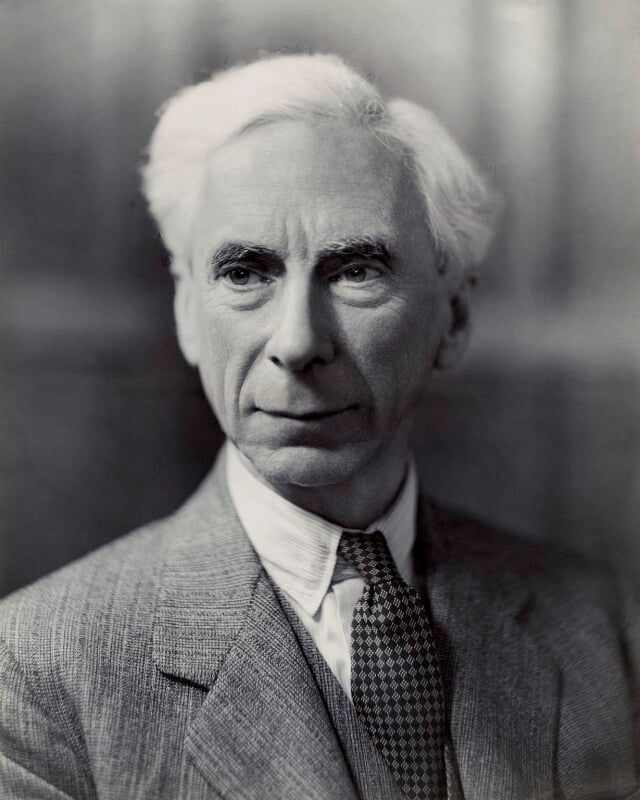
This report provides an exhaustive philosophical and theological analysis of the Cosmological Argument, contrasting the mid-twentieth-century analytic debate between Bertrand Russell and Fr. Frederick Copleston with the classical ontological paradigm articulated in the Holy Quran. In their famous 1948 BBC radio exchange, Lord Russell defended the position that the universe is an ultimate “brute fact,” declaring that asking for a cause or sufficient reason for the cosmos as a whole is intellectually illegitimate. This report demonstrates how Russell’s dismissal of causal necessity and self-subsistent necessary existence (aseity) creates a profound epistemic crisis that threatens the foundations of rational inquiry and scientific methodology.
In contrast to Russellian skepticism, the report presents the cosmological argument grounded in Surah At-Tur (52:35–36). By analyzing the original Arabic text alongside six major English translations, this study shows how the Quran presents an exhaustive logical disjunction—a dialectical razor—that systematically eliminates uncaused contingency (ex nihilo without a creator), self-creation (causa sui), and human cosmic agency, thereby necessitating a transcendent Necessary Existent (Wajib al-Wujud). Incorporating classical exegesis from Fakhr al-Din al-Razi’s Mafatih al-Ghayb, the metaphysical developments of Avicenna (Ibn Sina), Thomas Aquinas, and Gottfried Wilhelm Leibniz, as well as the historical testimony of Jubayr ibn Mut’im, this analysis illustrates that the Quranic argument provides the indispensable foundation for human rationality, scientific causality, and metaphysical intelligibility.
The Russell-Copleston Debate and the Crisis of Causal Rationality
The famous 1948 BBC radio debate between Bertrand Russell and the Jesuit historian of philosophy Fr. Frederick Copleston remains one of the most significant encounters between logical empiricism and classical natural theology in twentieth-century philosophy. Copleston initiated the exchange by formulating an Argument from Contingency rooted in the Third Way of Thomas Aquinas and the Principle of Sufficient Reason (PSR) articulated by Gottfried Wilhelm Leibniz. Copleston argued that the observable world consists of contingent beings—entities that do not contain within themselves the reason for their own existence. Because an infinite regress of contingent causes merely postpones an explanation without providing one, Copleston asserted that reason demands a Necessary Being: an entity that contains the sufficient reason for its own existence within its essence, and which cannot not exist.
Bertrand Russell contested this classical metaphysical construction by challenging the semantic and epistemological validity of its central terms. Russell asserted that the concept of “necessity” can only be coherently applied to analytic propositions—logical tautologies whose denial creates a self-contradiction—and cannot be predicated of real entities or existing things. For Russell, claiming that God is a “necessary being” conflates syntax with metaphysics. When pressed by Copleston to explain why the cosmos as an aggregate exists, Russell famously resorted to an uncompromising brute-fact ontology, stating: “I should say that the universe is just there, and that’s all.”
This skepticism culminated in the following downbeat exchange:
Copleston: … But your general point then, Lord Russell, is that it’s illegitimate even to ask the question of the cause of the world?
Russell: Yes, that’s my position.
Copleston: If it’s a question that for you has no meaning, it’s of course very difficult to discuss it, isn’t it?
Russell: Yes, it is very difficult. What do you say – shall we pass on to some other issue?
Russell’s refusal to engage the cosmological query exemplifies a deliberate termination of rational inquiry. As Copleston later observed of Russell’s stance: “If one refuses even to sit down at the chessboard and make a move, one cannot be checkmated.” However, Russell’s stubborn refusal to seek an explanation for the universe does not validate his philosophical position. By declaring the universe an unexplained “brute fact,” Russell introduced a severe epistemological rupture into the structure of human thought.
Human reasoning and the entire scientific enterprise rely upon the principle of causality—the fundamental axiom that contingent physical states of affairs have intelligible causes and explanatory conditions. Science operates on the assumption that nature is fundamentally intelligible, seeking the proximate and ultimate reasons for physical phenomena. If one asserts that the universe—the vast, hyper-complex totality of all physical matter, energy, space, and time—exists without any cause, condition, or explanation whatsoever, the principle of causality is abandoned at the most comprehensive level of reality.
If the cosmos as a whole can exist as an uncaused brute fact, there is no logical prohibition against uncaused brute facts occurring arbitrarily within the universe. Such an assumption undermines the scientific method: any unexplained natural phenomenon could simply be dismissed as an uncaused anomaly rather than an invitation to discover a deeper law of physics. By designating the universe a brute fact, Russell did not solve the cosmological problem; rather, he dismantled the rational framework that makes both science and logic possible.
| Metaphysical Dimension | Fr. Frederick Copleston (Classical Metaphysics) | Bertrand Russell (Logical Empiricism) |
|---|---|---|
| Foundational Framework | Leibnizian Principle of Sufficient Reason & Thomistic Contingency | Logical Atomism & Empirical Skepticism |
| Concept of Necessary Being | Metaphysical Aseity: An entity whose essence entails existence (de re) | Syntactic/Analytic: A property restricted to tautological statements (de dicto) |
| Ontological Status of Cosmos | Contingent collection requiring an external, transcendent cause | Ultimate “Brute Fact”: Uncaused, self-contained, and inexplicable whole |
| Scope of Causality | Universal applicability; every contingent fact requires an adequate explanation | Restricted to intra-cosmic empirical relationships; inapplicable to the universe as a whole |
| Methodological Outcome | Systematic ascent to a Transcendent First Cause | Arbitrary termination of cosmological and metaphysical inquiry |
The Quranic Cosmological Paradigm: Text and Translations of Surah At-Tur (52:35–36)
Thirteen centuries before the Russell-Copleston debate, the Holy Quran presented the definitive formulation of the cosmological argument in Surah At-Tur (52:35–36). Rather than relying on abstract assumptions, these verses execute a sharp, dialectical cross-examination of human origin and cosmic existence through a sequence of rigorous rhetorical questions.
Arabic Text
The foundational Arabic text of Surah At-Tur, Verses 35 and 36, is structured as follows:
أَمْ خُلِقُوا مِنْ غَيْرِ شَيْءٍ أَمْ هُمُ الْخَالِقُونَ ﴿٣٥﴾ أَمْ خَلَقُوا السَّمَاوَاتِ وَالْأَرْضَ ۚ بَلْ لَا يُوقِنُونَ ﴿٣٦
Comparative English Translations
To appreciate the precision of the Quranic syntax and its logical force, the following table presents six widely studied English translations of verses 52:35–36.
| Translator | Surah At-Tur (52:35) Translation | Surah At-Tur (52:36) Translation |
|---|---|---|
| Sahih International | “Or were they created by nothing, or were they the creators [of themselves]?” | “Or did they create the heavens and the earth? Rather, they are not certain.” |
| Abdullah Yusuf Ali | “Were they created of nothing, or were they themselves the creators?” | “Or did they create the heavens and the earth? Nay, they have no certainty.” |
| Marmaduke Pickthall | “Or were they created out of naught? Or are they the creators?” | “Or did they create the heavens and the earth? Nay, but they have no certainty.” |
| A. J. Arberry | “Or were they created out of nothing? Or are they the creators?” | “Or did they create the heavens and the earth? No, they have no firm belief.” |
| Abul A’la Maududi | “Did they come into being without any creator? Or were they their own creators?” | “Or is it they who created the heavens and the earth? No; the fact is that they lack faith.” |
| M. H. Shakir | “Or were they created without there being anything, or are they the creators?” | “Or did they create the heavens and the earth? Nay, they have no certainty.” |
Exegetical and Logical Architecture of Surah At-Tur (52:35–36)
Deconstruction of the Ontological Trilemma
The passage in Surah At-Tur (52:35–36) forms a complete logical disjunction concerning the origination of contingent existence. The Arabic particle ‘Am (أَمْ), repeated throughout the passage, functions as a disjunctive interrogative (“Or rather…”), mapping out every logically conceivable explanation for the existence of human beings and the physical cosmos. The passage presents an exhaustive trilemma that forces the human intellect to confront the impossibility of uncaused contingency.
The first alternative—Am khuliqū min ghayri shay’in (“Or were they created by nothing / brought into being without a creator?”)—interrogates whether a contingent entity that possesses a beginning in time can transition from non-existence into existence without an actualizing cause. In formal logic, absolute non-existence possesses zero causal efficacy. To assert that an entity can be brought into existence by “nothing” is to claim that an effect can occur without any cause whatsoever, violating the principle of causality. This first alternative corresponds directly to the “brute fact” hypothesis advocated by Bertrand Russell at the cosmic scale. The Quranic phrasing exposes this notion as a rational absurdity.
The second alternative—Am humu l-khāliqūn (“Or were they the creators of themselves?”)—examines the concept of self-creation (causa sui). For an entity to create itself, it must exert causal agency prior to its own existence. Because causal agency presupposes existence, the entity would have to exist before it existed. This represents a direct logical contradiction, violating the law of non-contradiction.
The third alternative—Am khalaqū s-samāwāti wa-l-arḍ (“Or did they create the heavens and the earth?”)—expands the inquiry from human origination to the entire material cosmos. If human beings were not created by nothing and did not create themselves, could they—or any internal physical component of the world—be the ultimate source of the universe? Empirical observation refutes human cosmic agency: human beings are late, dependent arrivals within a pre-existing cosmic order governed by laws they did not establish.
By stating and dismantling these three options, the text leaves a single logically necessary conclusion: human beings and the universe were brought into existence by a transcendent, uncreated, necessary Creator who stands outside the web of physical contingency. The verse concludes with the diagnosis: Bal lā yūqinūn (“Nay, they have no certainty”). The refusal to acknowledge the divine First Cause does not stem from a lack of logical proof, but from a psychological state of uncertainty and willful denial.
Exegetical Commentary: Fakhr al-Din al-Razi’s Mafatih al-Ghayb
In his monumental commentary Mafatih al-Ghayb (The Keys to the Unseen), the renowned scholar Fakhr al-Din al-Razi (d. 1210 CE) analyzed Surah At-Tur (52:35–36) as a formal logical demonstration (burhan). Al-Razi noted that the Quran translates advanced ontological principles into a direct, universally accessible argument.
Al-Razi explained that any entity must be either Necessary in its existence (Wajib al-Wujud) or Contingent in its existence (Mumkin al-Wujud). A contingent entity is one whose essence does not guarantee its existence; left to itself, its existence and non-existence are equally possible. Therefore, for a contingent entity to exist, there must be a determinant or actualizer (murajjih) that tips the scale of possibility in favor of existence over non-existence.
Al-Razi observed that when verse 52:35 asks whether humans were created “from nothing,” it examines whether the scale of possibility could tip without a murajjih. Since non-existence cannot function as an actualizer, uncaused contingency is rationally impossible. Furthermore, when the verse asks if humans created themselves, it examines whether a contingent entity can serve as its own murajjih. Al-Razi demonstrated that an entity lacking existence cannot bestow existence upon itself. Consequently, al-Razi concluded that the Quranic argument leads the intellect directly to an uncaused, self-subsistent Actualizer whose existence is inherently necessary.
Historical Testimony: The Account of Jubayr ibn Mut’im
The impact of this Quranic logic is illustrated by a famous historical event recorded in Sahih al-Bukhari. Jubayr ibn Mut’im, a pagan leader of the Quraysh, traveled to Madinah following the Battle of Badr to negotiate the ransom of prisoners. Arriving at dusk, he entered the Prophet’s Mosque while the Prophet Muhammad (ﷺ) was leading the evening prayer (Maghrib), reciting Surah At-Tur.
Jubayr later described his reaction upon hearing the passage:
“I heard the Prophet (ﷺ) reciting Surah At-Tur during the Maghrib prayer. When he reached these verses—‘Or were they created by nothing, or were they the creators [of themselves]? Or did they create the heavens and the earth? Rather, they are not certain’ (52:35–36)—my heart was about to fly!”
Jubayr testified that this was the moment faith entered his heart, ultimately leading to his conversion to Islam. As a master of classical Arabic eloquence, Jubayr recognized that the passage was an unanswerable logical argument that rendered polytheism and uncaused existence rationally unsustainable. The passage dismantled his pagan worldview by forcing his intellect to acknowledge the necessary divine cause.
Metaphysical Synthesis: Avicennian Contingency, Aquinas, Leibniz, and the Refutation of Aseity Denial
Avicenna (Ibn Sina) and the Burhan al-Siddiqin
The logical structure of Surah At-Tur directly shaped the development of classical Islamic philosophy (falsafa), reaching its metaphysical synthesis in the work of Ibn Sina (Avicenna, d. 1037 CE). Avicenna formulated the Burhan al-Siddiqin (Proof of the Truthful), widely regarded as one of the most sophisticated cosmological arguments in philosophical history.
Avicenna’s argument does not depend on proving that the universe had a temporal beginning; rather, it analyzes the modal nature of existence itself. Avicenna categorized all reality into two modal states:
- Contingent in itself (Mumkin al-Wujud bi-dhatihi): An entity whose essence does not entail existence. Left to itself, its existence is merely possible, requiring an external cause to exist.
- Necessary in itself (Wajib al-Wujud bi-dhatihi): An entity whose essence is identical to its existence, such that its non-existence is logically impossible.
Avicenna pointed out that the entire physical universe is a collection of contingent entities. Because no contingent entity contains the reason for its own existence, the aggregate of all contingent entities is also contingent. Attempting to explain this collection through an infinite regress of contingent causes fails, because a chain composed entirely of dependent entities remains dependent overall. Therefore, to explain why contingent reality exists at all, the causal chain must terminate in an entity that possesses absolute self-subsistence—aseity.
Transmission to Western Philosophy: Aquinas and Leibniz
Avicenna’s modal distinction between contingent and necessary existence profoundly influenced medieval Scholasticism and early modern European philosophy. Thomas Aquinas adapted Avicenna’s framework into his Third Way (Summa Theologiae, I, q. 3, a. 2). Aquinas argued that if all things were merely contingent, then at one time nothing would have existed, and even now nothing could exist, since non-existence cannot produce existence. Therefore, there must exist a being that is intrinsically necessary, possessing its own cause of existence—God.
In the seventeenth century, Gottfried Wilhelm Leibniz formalized this tradition through his Principle of Sufficient Reason (PSR). Leibniz asserted in his Monadology (§32) that “no fact can be real or existing, no statement true, without there being a sufficient reason why it is thus and not otherwise.” Leibniz emphasized that even if one assumes the universe to be eternal, tracing a sequence of past physical states provides only proximate, partial reasons for existence. A complete explanation requires stepping outside the temporal series of contingent facts to locate an ultimate, necessary cause.
| Intellectual Tradition | Thinker / Text | Core Metaphysical Contribution | Analytical Premise |
|---|---|---|---|
| Quranic Revelation | Surah At-Tur (52:35–36) | Establishes the disjunctive elimination of uncaused origination and self-creation | Rejects 0→X (something from nothing without a cause) and X→X (self-creation) |
| Islamic Classical Philosophy | Ibn Sina (Avicenna), Al-Isharat[cite: 9] | Formulates the Burhan al-Siddiqin: Contingent entities require a Necessary Existent | Mumkin al-Wujud necessitates Wajib al-Wujud[cite: 9] |
| Western Scholastic Theology | Thomas Aquinas, Summa Theologiae[cite: 5, 13] | Constructs the Third Way based on possibility and necessity (ex possibili et necessario) | Universal contingency implies a First Necessary Being |
| Early Modern Rationalism | G. W. Leibniz, Monadology[cite: 6, 12] | Establishes the Principle of Sufficient Reason (PSR) across temporal sequences | Every contingent truth requires an ultimate, complete explanation |
| Twentieth-Century Analytics | Debate: Fr. Copleston vs. Bertrand Russell | Clashes over PSR; Copleston defends necessary being, Russell asserts “brute fact” | Russell asserts the universe is an unexplained brute fact |
The Refutation of Russell’s Aseity Rejection
Bertrand Russell’s rejection of necessary existence rested on two main objections: first, that “necessity” applies only to analytic logical statements; and second, that assuming the universe requires a cause commits the fallacy of composition. Both objections collapse under philosophical scrutiny.
First, Russell’s restriction of necessity to linguistic propositions (de dicto necessity) conflates logical tautologies with metaphysical necessity (de re necessity). Logical necessity concerns internal relations within language, whereas metaphysical necessity concerns the fundamental structure of reality—why non-existence is impossible for a self-subsistent entity. God’s aseity (being self-subsistent, Wajib al-Wujud) does not mean God is a logical tautology; rather, it means God’s essence is identical to existence itself. Asking why “Existence Itself” exists is an ill-formed question, as pure existence is the ground of all reality. Russell’s claim that necessary existence is meaningless fails because it ignores the distinction between linguistic definitions and fundamental ontology.
Second, Russell argued that assuming the universe as a whole requires a cause because its parts require causes commits the fallacy of composition. He illustrated this by stating that while every individual human has a mother, the human race as a whole does not have a mother. However, this critique misinterprets the nature of contingency. The universe is not an independent metaphysical entity over and above its contingent constituent parts; it is precisely the aggregate of space, time, matter, and physical laws. If every individual component of the cosmos is contingent (dependent on external conditions and capable of non-existence), then the entire collection is necessarily contingent. Asserting that a collection of dependent items becomes uncaused and necessary simply by gathering them together is an assumption without logical foundation.
Thematic Epilogue
The 1948 exchange between Bertrand Russell and Frederick Copleston illustrates a decisive divide in modern philosophy. Russell’s assertion that the universe is an ultimate “brute fact” represents the logical endpoint of empirical skepticism: when reason refuses to look beyond immediate physical observations, it is forced to abandon the search for an ultimate explanation altogether. By declaring that asking for a cause of the world is a meaningless question, Russell did not resolve the cosmological issue; he simply withdrew from philosophical inquiry.
This retreat into brute facts introduces a profound vulnerability into human thought. Rationality and scientific discovery depend on the assumption that physical phenomena have intelligible explanations. If the vast, ordered cosmos can exist as an uncaused brute fact, the principle of causality is broken at the highest level, leaving human knowledge built upon an arbitrary foundation.
In contrast, the Quranic discourse in Surah At-Tur (52:35–36) provides an uncompromising defense of rational causality. By challenging the human intellect with an exhaustive logical disjunction, the Quran demonstrates that uncaused contingency and self-creation are untenable. This classical insight—developed through Avicenna’s distinction between contingent and necessary existence, refined by Scholastic theology, and formalized in Leibniz’s Principle of Sufficient Reason—shows that human reason leads logically to a transcendent, self-subsistent Creator (Wajib al-Wujud). Far from being a linguistic mistake, necessary existence is the indispensable foundation that makes reality, science, and human reasoning fully intelligible.
Sources used in the report
thequran.love
Can He Who Creates Be Compared to One Who Cannot Create? – The Glorious Quran and Science
patheos.com
Copleston & Russell On A Brute Universe And The Future Of The Cosmological Argument
beardchronicles.wordpress.com
Cosmological Argument – Copleston vs. Russell and Strengths & Weaknesses
jamesdholt.com
6. Arguments against the Cosmological – jamesdholt.com
oxfordphilsoc.org
Is there any need to explain why there is a universe at all? Would God be an explanation?
philosophydungeon.weebly.com
Sufficient Reason – PHILOSOPHY DUNGEON
alevelphilosophyandreligion.com
The Cosmological argument – A Level Philosophy & Religious Studies
edwardfeser.blogspot.com
Avicenna, Aquinas, and Leibniz on the argument from contingency – Edward Feser
scribd.com
Islamic Proofs for God’s Existence | PDF | Islamic Philosophy
honeyfortheheart.wordpress.com
Tafsir of Surah At-Tur Ayat 1-49 (end) | honey for the heart – WordPress.com
thelastdialogue.org
Surah Tur Virtues & Benefits — Spiritual Rewards, Healing & Life Lessons
plato.stanford.edu
Cosmological Argument – Stanford Encyclopedia of Philosophy
Opens in a new window
philosophydungeon.weebly.com
Argument from Contingency – philosophy dungeon
Opens in a new window
thelastdialogue.org
Surah Tur Timeline – Historical Context & Key Events | The Last Dialogue
recitequran.com
At-Tur [52:36] – Recite Quran
quran.com
Surah At-Tur Ayahs 35-36 – Read, Listen, Translation, Tafsir – Quran.com
myislam.org
Read Surah At-Tur with Translation, Transliteration and Tafsir – My Islam
corpus.quran.com
Verse (52:35) – English Translation – The Quranic Arabic Corpus
dokumen.pub
Islam’s Quantum Question: reconciling muslim tradition and modern science 9780755611072, 9781848855182 – DOKUMEN.PUB
islamicstudies.info
Surah 52. At-Tur – Islamicstudies.info
Opens in a new window
englishtafsir.com
52. Surah At Tur (The Mount) – Sayyid Abul Ala Maududi – Tafhim al-Qur’an
Opens in a new window
thelastdialogue.org
Surah Tur Word By Word English | Translation, Grammar & Transliteration | The Last Dialogue
Opens in a new window
scribd.com
Whole – Fitzgerald – Creation in Al-Tafsir Al-Kabir of Fakhr Al-Din | PDF | Quran – Scribd
Opens in a new window
thequran.love
The Architecture of Divine Volition: A Comprehensive Synthesis of
Opens in a new window
thelastdialogue.org
Surah Tur Ultimate FAQs: Surprising Questions & Answers | The Last Dialogue
alim.org
Hadith Narrator Index – Letter J (Page 2) – Alim.org




Leave a Reply