
Epigraph
وَمَا خَلَقْنَا السَّمَاءَ وَالْأَرْضَ وَمَا بَيْنَهُمَا لَاعِبِينَ
And We created not the heaven and the earth and all that is between the two in play. (Al Quran 21:16)
Presented by Zia H Shah MD
Abstract
Quran 21:16—“We did not create the heavens and the earth and everything in between for sport/play”—is a compact metaphysical claim with wide-ranging implications: it denies that the universe is an aimless spectacle, and it rejects the idea that reality is an unintelligible “brute fact” with no deeper ground.
This commentary develops the verse along three mutually illuminating lines. Scientifically, the universe appears structured by stable regularities (“laws of nature”) that make prediction, explanation, and technology possible; this pervasive lawfulness is itself philosophically puzzling, not least in its deep mathematical expressibility. Philosophically, attempts to treat laws or the cosmos as brute facts remain contested, while alternative explanatory frameworks (emergence, multiverse, “mathematical universe,” simulation, theism) each bear distinctive costs and explanatory ambitions. Theologically, Quran 21:16 functions as a negative boundary-marker: whatever else one claims about the world, one must not claim that it is “mere play.” It thus frames nature as meaningful, morally charged, and intelligible enough to warrant reflection and responsibility.
Text and interpretive horizon
Quran 21:16 is rendered across major English translations with a consistent core: God did not create “the heaven(s) and the earth and what is between them” in play (or “for sport,” “just for fun”). The Arabic phrase closes with لَاعِبِينَ (lāʿibīn), grammatically a masculine plural active participle, rooted in ل ع ب (l-ʿ-b), the semantic field of play.
Classical and modern tafsir traditions commonly read this as a denial of frivolity in creation. The Maʿārif al-Qurʾān commentary (as hosted by Quran.com) explicitly contrasts laʿib (play “having no useful objective”) with lahw (pastime as amusement), and then argues that even “the minutest particle” has purpose/utility—an inference from cosmic order to divine omniscience and unity. A similar emphasis appears in tafsir material associated with Tafsīr al-Jalalayn, which glosses the point as: not frivolity, but demonstration of power and beneficence to servants.
The immediate literary neighborhood strengthens this “anti-vanity” reading. Quran 21:17 introduces lahw (diversion/pastime) as a rhetorical impossibility for God, and 21:18 pivots from “not play” to a moral-metaphysical dynamic: truth is “hurled” against falsehood until falsehood collapses. In Ibn Kathir’s commentary as presented on Quran.com, this cluster is framed in terms of “justice and wisdom” and is explicitly linked to accountability and recompense, drawing in cross-references like Quran 38:27 (“not… aimlessly/in vain”)—the very move that connects cosmic purpose to moral seriousness.
Within the wider Quranic discourse, 21:16 resonates with a recurring devotional-philosophical refrain: “Our Lord! You have not created this in vain.” It also aligns with verses that pair creation “in truth” with eschatological meaning (e.g., Quran 15:85; 44:38–39), and with the direct rebuke of existential absurdism addressed to human beings: “Did you think that We had created you without purpose…?” (Quran 23:115).
Scientific order and the question of laws
Modern science does not typically speak in the language of “purpose,” but it is built on an expectation that nature is patterned and discoverable—precisely what philosophers call the problem of laws of nature: what are they, and in what sense do they “hold”? Some philosophical accounts treat laws as compact descriptions of the world’s regularities; others treat them as somehow governing or necessitating events. Either way, the lawfulness of nature is not a trivial datum: it is the condition for explanation, prediction, and the cumulative success of the sciences.
Two features of scientific lawfulness are especially relevant to Quran 21:16’s denial of “mere play.”
First, the universe exhibits stable large-scale structure that allows retrospective reconstruction of cosmic history (e.g., from relic radiation of the Big Bang). The European Space Agency European Space Agency highlights how detailed mapping of the cosmic microwave background (CMB) functions as a window into early-universe conditions. Likewise, NASA NASA presents the Big Bang framework as an empirically constrained narrative in which early-universe fluctuations seed later structure formation. Whatever one’s metaphysics, this is not the picture of a universe that behaves like a capricious theater; it is a universe with recoverable regularities.
Second, nature is describable—often stunningly precisely—in mathematics. In his classic essay, physicist Eugene Wigner famously called the fit between mathematical language and physical law a “miracle” and a “wonderful gift… [we] neither understand nor deserve,” urging gratitude for its persistence. The point is not theological by itself; it is epistemic and philosophical: why should abstract structures so effectively model physical reality? The question becomes sharper, not weaker, as physics grows more mathematical.
A Quranic commentary can therefore draw a careful distinction. Science explains how regularities operate—through models, measurements, and mechanisms—but science (as science) is typically silent about why there are such regularities at all rather than chaos or radical discontinuity. In that sense, Quran 21:16 can be heard not as a competing scientific hypothesis, but as a metaphysical refusal: the intelligibility and structure of the cosmos is not a cosmic accident without meaning.
Meteors, catastrophe, and the “safe canopy” motif
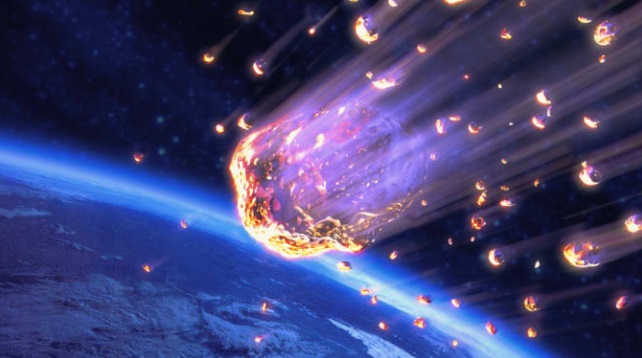
A cluster of recent essays from The Glorious Quran and Science uses meteors and impact history as a bridge between scripture, science, and philosophical reflection. They argue that Quranic phrases like “what is between the heaven and the earth” and depictions of the sky as protective can be reread—without mythologizing—as invitations to interpret cosmic hazards within a broader moral-teleological frame.
Before mapping that proposal onto the science, two historical cautions matter. Human beings have observed “shooting stars” for millennia, but scientific recognition of meteorites as extraterrestrial objects solidified late, with events such as the 1803 L’Aigle fall and its investigation persuading much of the scientific community. This matters because it highlights a recurring theme: phenomena can be long-experienced yet poorly-understood, and deeper understanding can radically reframe meaning without changing the phenomenon itself.
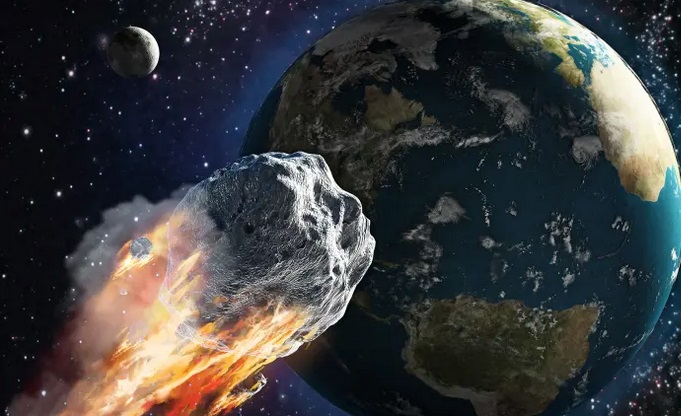
From the standpoint of contemporary planetary science, our world is continuously exposed to small-body debris in the solar system. On Earth, NASA summarizes that more than 100 tons of dust and sand-sized particles fall daily, and that objects smaller than ~25 meters typically burn up in the atmosphere with limited damage—though rarely larger objects can threaten civilization. The 2013 airburst over Chelyabinsk is a modern reminder of this background risk: NASA reports an entry speed of ~18 km/s, fragmentation high in the atmosphere, and energy release on the order of hundreds of thousands of tons of TNT equivalent.
The same hazard scale extends upward to deep time. The Lunar and Planetary Institute documents how diagnostic impact evidence—iridium-rich layers, impact spherules, and shocked quartz—was used to link deposits near the Cretaceous–Paleogene boundary with the impact that produced the Chicxulub crater, anchoring the event in a multi-line evidential chain rather than legend. While popular retellings often speak as if the story is simple, scientific literature still debates how to apportion causal weight between impact effects and contemporaneous volcanism (e.g., the Deccan Traps), with different models arguing for different combinations of “press” (longer stress) and “pulse” (sudden catastrophe). The upshot for a Quranic commentary is not to force scripture into the gaps of unsettled debates, but to observe that the cosmos includes both stability and rupture—regularity punctuated by rare discontinuities that reshape the biosphere.
The “safe canopy” motif in the cited essays focuses on the idea that multiple layers of protection reduce existential risk: the atmosphere ablates many bolides; orbital architectures reduce impact frequency; and modern monitoring/deflection efforts add a human layer of “secondary providence.” This framing overlaps with mainstream science in at least three concrete ways:
Earth’s atmosphere is indeed a major filter against smaller objects, a point NASA makes directly by linking size thresholds to likely burnout and by describing events like Chelyabinsk in terms of atmospheric breakup. Earth’s magnetic environment also functions as a partial shield against solar particle flux: NASA describes the magnetosphere as protective but permeable, with disturbances producing space weather. And atmospheric chemistry provides additional protection: NOAA NOAA explains that stratospheric ozone filters ultraviolet radiation and protects life.
The essays go further by emphasizing the dynamical role of Jupiter as a “cosmic vacuum cleaner.” Here scientific nuance is essential: the claim that Jupiter straightforwardly “shields” life is not settled in a simplistic way. Dynamical simulations by arXiv authors (Horner & Jones) report that a giant planet can, depending on parameters, reduce or enhance impact rates from certain asteroid populations; “friend or foe” is model-dependent rather than slogan-ready. A theology of “non-vain” creation need not fear this nuance: a world with subtle trade-offs and complex dynamics can still be purposeful, but its purpose is not always readable as immediate “risk minimization.”
Finally, the modern planetary-defense layer is well documented. NASA’s Planetary Defense Coordination Office is tasked with finding, tracking, and characterizing hazardous asteroids and comets, and NASA notes future missions such as NEO Surveyor to expand detection capacity. The DART impact test—an intentional collision—measurably altered an asteroid moonlet’s orbit by about 32 minutes, demonstrating kinetic deflection as a real (not merely theoretical) mitigation tool. The International Asteroid Warning Network formalizes global coordination functions for hazardous-object monitoring and information sharing.
In a Quran 21:16 commentary, these scientific facts can be read as signs in a specific sense: not “proof-texted predictions,” but phenomenological reminders that the universe is coherent enough to be studied, dangerous enough to inspire humility, and stable enough to sustain responsibility—conditions that press the question of meaning rather than dissolving it.
From brute fact to intelligible ground
To say “the cosmos is not in play” is, philosophically, to resist two reductions: (a) reduction to purposeless spectacle, and (b) reduction to brute factuality. The second term needs care. In analytic philosophy, a “brute fact” is commonly characterized as an unexplained fact—one that “bottoms out” without reason.
The controversy begins immediately: should one expect explanation “all the way down”? The Principle of Sufficient Reason (PSR)—in broad form—demands that everything have a reason/ground, while many philosophers argue that reality may include explanatory bedrock that is not further explainable. The debate is not merely academic: whether it is intellectually responsible to accept brute facts affects how one interprets the success of science and the legitimacy of metaphysical questions about laws.
The essay “Where Did the Laws of Nature Come From and Do They Change?” usefully maps several major explanatory postures—emergence, multiverse, “mathematical universe,” brute fact, simulation, and divine design—while explicitly flagging “brute facts” as one of the options. To deepen this map, we can add two clarifications.
First, physics itself offers real examples of “effective-law change” across regimes: symmetry patterns at high temperature can differ from those at low temperature, so that what looks like a stable law at one scale is an emergent regularity of deeper dynamics. But this does not eliminate the metaphysical question; it relocates it. If electroweak symmetry breaking is explained by a field’s finite-temperature dynamics, one can still ask why there is that structure, that field content, and those meta-constraints at all.
Second, “mathematical universe” and simulation hypotheses—both referenced in the essay’s taxonomy—can be construed as ways of explaining why laws are mathematical. Yet their explanatory punch is ambiguous. Max Tegmark argues that external reality just is a mathematical structure, effectively collapsing the distinction between being and mathematical form. Nick Bostrom proposes a trilemma in which a “simulation” outcome is one live possibility given certain assumptions about posthuman civilizations and computational capacity. But both approaches tend to leave something like a PSR-shaped remainder: if reality is a mathematical structure, why that structure rather than another? If the world is a simulation, what explains the simulator’s substrate and its own “laws”?
This is where Quran 21:16 can be philosophically provocative. It does not merely say “the world is orderly.” It says the world is not frivolous—not without seriousness, intent, or truth. In modern terms, it leans toward a worldview where intelligibility is not accidental and where explanation is a proper human posture toward reality, not a category mistake. The “Atheists Deny God, But Not Mathematics or Laws of Nature” essay dramatizes the point rhetorically: even if one rejects God, one still relies on the reality and reliability of mathematical lawfulness, inviting the question of their ultimate ontological and explanatory status.
Two additional philosophical bridges connect this to standard debates about purpose:
The fine-tuning discussion—carefully treated in the philosophical literature—frames “purpose” not as a scientific conclusion but as an inference to the best explanation under certain assumptions about the sensitivity of life-permitting conditions to parameter values. And cosmological-argument traditions, including contingency arguments, explicitly address whether the universe (or its laws) can be “necessary” or must have a ground beyond itself—often with “brute fact” as a central objection or fallback.
Theological synthesis: creation “in truth,” law as sign
The Quran’s denial of “play” is not only metaphysical; it is moral and devotional. In Ibn Kathir’s framing of the 21:16–20 unit, the anti-vanity claim is tied to justice: God created “in truth,” not for play, so that recompense and moral distinction are real, and the denial of purpose is linked to disbelief in return and judgment. This logic is echoed in the Quran’s broader pattern: creation is “with truth” and oriented toward an “appointed term” and the coming Hour (15:85), while “in play” is explicitly denied (44:38–39). In other words, the Quran does not treat nature as a neutral backdrop; it treats it as a theater of accountability, where order and meaning cohere.
This theological posture does not require claiming that scripture is a scientific textbook. In fact, one of the meteor-focused essays explicitly argues that Quranic language about a protective sky should be read “in light of our best knowledge,” acknowledging that earlier readers interpreted with earlier cosmologies. That methodological humility can be made more rigorous: Quran 21:16 is a claim about ultimate meaning, while science supplies proximate mechanisms. Confusing the two can produce bad science and brittle theology; distinguishing them can produce intellectually resilient theism.
A second theological deepening concerns causation and “laws.” Islamic intellectual history includes robust debate over whether created things have intrinsic causal power or whether God is the only true cause—an outlook often associated with Ashʿarite occasionalism. In the language of the Stanford Encyclopedia of Philosophy, discussions of causation in Arabic and Islamic thought explicitly connect divine omnipotence, regularity, and conceptions of agency. For a commentary on 21:16, the payoff is this: whether one adopts a strong occasionalism or a more “secondary-cause” model, the stable regularities we call “laws” do not become purposeless. They become either (a) the consistent habit (ʿāda) by which God governs creation, or (b) the intelligible structure God endows creation with—either way, the lawfulness of nature is the opposite of a cosmic prank.
Within that theological frame, meteor impacts become symbolically powerful without becoming pseudo-prophecy. The “Heavenly Shield and Cosmic Catastrophe” essay connects Quran 22:65 (“He keeps the heavens from falling…”) to the layered scientific story of shielding and rare catastrophe, interpreting even extinction-level events as potentially purposeful within providential history. Scientific caution remains necessary—impact/volcanism debates show how complex such history is—but the theological point does not depend on a simplistic causal monoculture. It depends on the denial that reality is “mere play” and on the affirmation that the cosmos is a morally meaningful arena in which truth and falsehood matter.
Epilogue
Quran 21:16 is not merely an anti-nihilistic slogan; it is a discipline of perception. It trains the mind to look at the heavens, the earth, and “what is between them” and refuse to call the whole thing “just how it is.” In a scientific age, “what is between” includes meteor streams, orbital resonances, atmospheric ablation, magnetic shields, and a planetary-defense infrastructure that can—within limits—convert knowledge into protection. In a philosophical age, “what is between” includes the conceptual space between description and explanation, between regularity and governance, between brute fact and intelligible ground. In a theological age, “what is between” is the bridge from cosmos to conscience: if the world is not a toy, then neither is the human life lived inside it.
The commentary’s final claim is therefore not that every mechanism transparently reveals its purpose, but that purpose is the right horizon for interpreting a world that is lawful, mathematically expressible, historically consequential, and morally charged. The denial of “play” does not end inquiry; it sanctifies inquiry—because in a non-vain creation, seeking understanding is not a futile gesture against the void, but a response to truth.
For references please go to the word file:



Leave a Reply