
Presented by Gemini
Abstract
This research report provides an exhaustive theological and psychological examination of the narrative of Abraham (Ibrahim) as presented in Surah Al-Anbiya (The Prophets), verses 51 through 73. Utilizing the modern English translation of M.A.S. Abdel Haleem, the analysis meticulously deconstructs the Arabic text to illuminate the concept of rushd (divine rectitude) and its role in challenging the socio-religious structures of ancient Mesopotamia. The report identifies the central theme as a conflict between the primordial intellect (aql) and inherited tradition (taqlid). By analyzing the rhetorical strategies employed by Abraham—specifically his use of iconoclasm as a scientific experiment to test the divinity of idols—the study reveals the subsequent manifestation of cognitive dissonance within his community. The commentary integrates classical exegesis with contemporary psychological frameworks to explain the mechanism of “relapse” into disbelief even after the realization of truth. The report concludes with a thematic epilogue that bridges this ancient discourse with modern ideological landscapes, arguing that the Abrahamic exposure of irrationality provides a vital framework for engaging with the “secular idols” of contemporary atheism, agnosticism, and consumerist polytheism.
Historical and Socio-Psychological Framework of Surah Al-Anbiya
The twenty-first chapter of the Quran, Al-Anbiya, was revealed at a critical juncture in the life of the Prophet Muhammad, specifically during the late Meccan period. This era followed the “Year of Sorrow,” marked by the deaths of his protector Abu Talib and his wife Khadijah, as the persecution by the Quraysh intensified and their hearts appeared increasingly sealed to the message. The surah serves as a “divine alarm bell,” intended to rouse a society deeply immersed in worldly play (lahw) and heedlessness (ghaflah) regarding the impending spiritual reckoning. The narrative of Abraham within this chapter is not merely historical; it is a strategic rhetorical tool directed at the Meccan polytheists who claimed lineage from Abraham while violating his core mission of monotheism.
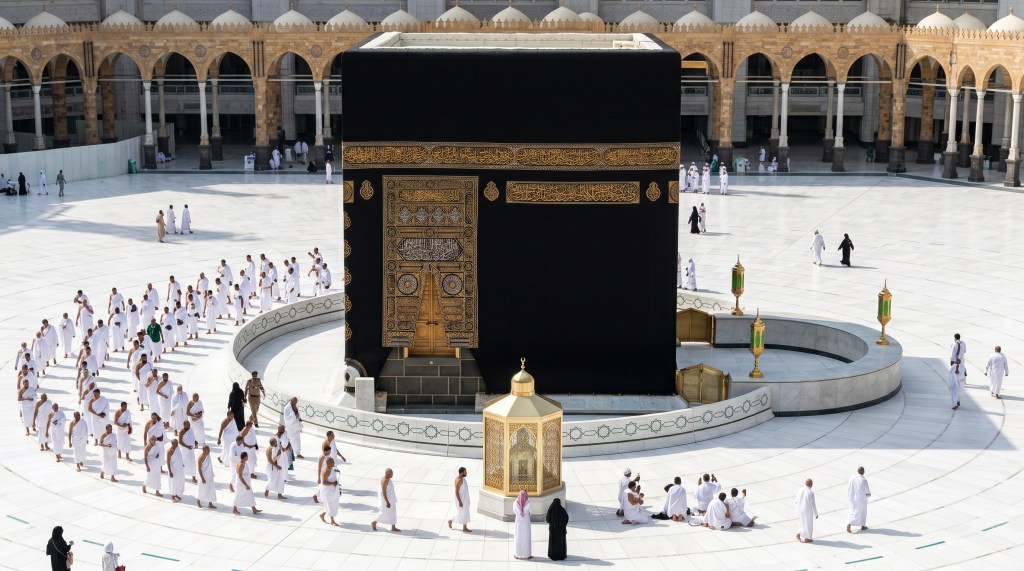
Abraham is presented here as a structural safeguard against personality-centered devotion, embodying the “Excellent Example” (uswatun hasanah). While the Quraysh took pride in their role as custodians of the Ka’bah built by Abraham, the Quranic narrative deconstructs their religious vanity by highlighting that Abraham’s true legacy was not a physical building or a lineage, but a rigorous commitment to Tawhid (the Oneness of God) achieved through rational inquiry and divine guidance.
| Dimension of Abraham’s Personality | Description and Quranic Evidence |
|---|---|
| Intellectual Seeker | Engages in methodical reason to question the logic of inanimate deities. |
| Social Revolutionary | Challenges the “compliance culture” and ancestral traditions of his community. |
| Paragon of Tawhid | Known as Hanif (the Upright One) and Khalil-ullah (Friend of Allah). |
| Universal Exemplar | Designated as a leader for all humanity, cutting across tribal and national boundaries. |
Verse-by-Verse Commentary
Verse 51
Arabic Text: وَلَقَدْ آتَيْنَا إِبْرَاهِيمَ رُشْدَهُ مِنْ قَبْلُ وَكُنَّا بِهِ عَالِمِينَ
Abdel Haleem Translation: “Long ago We bestowed right judgement on Abraham and We knew him well.”
The term rushd is central to the Abrahamic mission, signifying a comprehensive form of rectitude, wisdom, and sound judgment that enables a person to distinguish between the correct path and error. Scholars have translated this as “consciousness of what is right,” “probity,” “integrity,” and “sound judgment”. This verse asserts that Abraham’s monotheism was not an accidental discovery but a divinely bestowed quality granted “long ago” (min qablu), indicating that from his youth, he was endowed with the intellectual and spiritual capacity to perceive the Truth.
The phrase “We knew him well” (wa kunna bihi ‘alimina) implies that God’s selection of Abraham for prophethood was not arbitrary. It signifies that God was aware of Abraham’s inherent merit, his intellectual anxiety, and his profound concern for the fate of his people. This serves as an implicit rejoinder to the Quraysh, who often asked why Muhammad was chosen for prophethood instead of one of their powerful tribal leaders; the text indicates that divine choice is based on an internal mettle that the Creator alone can fully evaluate.
Verse 52
Arabic Text: إِذْ قَالَ لِأَبِيهِ وَقَوْمِهِ مَا هَٰذِهِ التَّمَاثِيلُ الَّتِي أَنْتُمْ لَهَا عَاكِفُونَ
Abdel Haleem Translation: “He said to his father and his people, ‘What are these images to which you are so devoted?’”
The transition from Abraham’s internal rushd to external action begins with a sharp inquiry. He targets the objects of worship using the word tamathil, meaning “lifeless statues” or “images”. By using this specific noun, Abraham immediately grounds the discourse in the physical reality of the idols, stripping away the metaphysical layers of divinity the people had superimposed upon them. His own father, identified as Azar in the Quran, was not only a worshipper but a principal sculptor and vendor of these statues, making Abraham’s confrontation an act of profound personal courage that prioritized truth over filial piety.
The term akifun (devoted) refers to those who are “attached” or “dwelling” in the service of these idols, suggesting a state of spiritual and intellectual inertia. Abraham is not merely asking a question; he is holding up a mirror to the absurdity of human beings subordinating themselves to objects they fashioned with their own hands. This highlights the “cognitive dissonance” early in the narrative: the people claim these stones are gods yet know they are inanimate.
Verse 53
Arabic Text: قَالُوا وَجَدْنَا آبَاءَنَا لَهَا عَابِدِينَ
Abdel Haleem Translation: “They replied, ‘We found our fathers worshipping them.’”
Lacking a rational or empirical defense for their practices, the people retreat into the safety of tradition. The appeal to the “forefathers” (aba’ana) was the bedrock of the polytheistic belief system in both ancient Mesopotamia and seventh-century Mecca. This response indicates that their devotion was not born of conviction, but of “blind compliance” and a desire to maintain social and cultural continuity. This “habit over truth” mindset is the first major psychological barrier Abraham must dismantle.
Verse 54
Arabic Text: قَالَ لَقَدْ كُنْتُمْ أَنْتُمْ وَآبَاؤُكُمْ فِي ضَلَالٍ مُبِينٍ
Abdel Haleem Translation: “He said, ‘You and your fathers have clearly gone astray.’”
Abraham’s response is a direct challenge to the authority of the past. He asserts that if the foundations of a belief are false, then the antiquity of that belief does not make it true. By labeling both the current generation and their venerated ancestors as being in “manifest error” (dalalin mubin), Abraham commits a social transgression that threatens the very identity of his tribe. He rejects the notion that the past is inherently wiser, pointing out that knowledge and sciences often develop over time, yet his people have remained stagnant in a primitive error.
Verse 55
Arabic Text: قَالُوا أَجِئْتَنَا بِالْحَقِّ أَمْ أَنْتَ مِنَ اللَّاعِبِينَ
Abdel Haleem Translation: “They asked, ‘Have you brought us the truth or are you just playing about?’”
The people are so convinced of the validity of their tradition that they initially dismiss Abraham’s message as a joke or a prank. They cannot conceive of a world where their central gods are irrelevant, so they categorize Abraham as a “player” (la’ibin) to avoid the discomfort of his logic. This dismissiveness is a common psychological defense against information that threatens a person’s deeply held worldview.
Verse 56
Arabic Text: قَالَ بَلْ رَبُّكُمْ رَبُّ السَّمَاوَاتِ وَالْأَرْضِ الَّذِي فَطَرَهُنَّ وَأَنَا عَلَىٰ ذَٰلِكُمْ مِنَ الشَّاهِدِينَ
Abdel Haleem Translation: “He said, ‘Listen! Your true Lord is the Lord of the heavens and earth, He who created them, and I am a witness to this.’”
Abraham redirects their attention from the small statues in the temple to the vast structure of the universe. He uses the verb fatara, which signifies the original initiation of creation. He defines the true Lord not as a local, tribal idol, but as the universal Power responsible for the totality of the heavens and the earth. His declaration that he is a “witness” (shahidin) signifies that his monotheism is not based on blind faith but on the direct perception of the fitrah and rational observation of the natural world.
Verse 57
Arabic Text: وَتَاللَّهِ لَأَكِيدَنَّ أَصْنَامَكُم بَعْدَ أَن تُوَلُّوا مُدْبِرِينَ
Abdel Haleem Translation: “‘By God, I have a plan for your idols after you go away and turn your backs.’”
Having failed to reach them through verbal logic alone, Abraham resolves to “show” them the truth through action. He waits for a specific moment—often identified in commentaries as a day of national festival when the town was deserted—to execute his plan. The fact that he plans to act while they have “turned their backs” underscores the vulnerability of the idols; if they were truly gods, they would not require constant human attendance to remain safe.
Verse 58
Arabic Text: فَجَعَلَهُمْ جُذَاذًا إِلَّا كَبِيرًا لَّهُمْ لَعَلَّهُمْ إِلَيْهِ يَرۡجِعُونَ
Abdel Haleem Translation: “So he smashed them into pieces, except the biggest of them, so that they might turn to it [for answers].”
Abraham’s act of iconoclasm was a calculated “scientific experiment” in theology. By reducing the idols to fragments (judhadhan), he physically demonstrated their powerlessness. Leaving the largest idol intact, with the axe perhaps placed in its hand, was a strategic setup for a rhetorical trap. He wanted to force a “reality check” upon his people. The phrase “so that they might turn to it” indicates his desire to force them into a logical corner where they would have to demand answers from a silent stone.
Verse 59
Arabic Text: قَالُوا مَنْ فَعَلَ هَٰذَا بِآلِهَتِنَا إِنَّهُ لَمِنَ الظَّالِمِينَ
Abdel Haleem Translation: “They said, ‘Who has done this to our gods? He must be a wrongdoer.’”
The people return to find their sanctuary in ruins. Their outrage is immediate, and they label the perpetrator a zalim (unjust/wrongdoer). This reaction highlights the irony of their state: they feel “injustice” has been done to inanimate stone, yet they ignore the injustice of their own spiritual deviation. Their first instinct is to find a culprit to punish, rather than to question why their gods could not protect themselves.
Verse 60
Arabic Text: قَالُوا سَمِعْنَا فَتًى يَذْكُرُهُمْ يُقَالُ لَهُ إِبْرَاهِيمُ
Abdel Haleem Translation: “Some said, ‘We heard a young man talking about them: he is called Abraham.’”
The identification of Abraham as a fatan (youth) emphasizes the generational clash at play. It highlights that he was a young seeker of truth standing against an established order of elders. The term “talking about them” (yadhkuruhum) suggests that his previous criticisms had made him a known dissident in the community.
Verse 61
Arabic Text: قَالُوا فَأْتُوا بِهِ عَلَىٰ أَعْيُنِ النَّاسِ لَعَلَّهُمْ يَشْهَدُونَ
Abdel Haleem Translation: “They said, ‘Then bring him before the eyes of the people, so that they may witness.’”
Abraham’s strategic goal is realized: his trial is made a public spectacle. He wanted the entire community, not just a small group of priests, to witness the demonstration of the idols’ impotence. By bringing him before “the eyes of the people,” the authorities inadvertently provided Abraham with the largest possible platform for his monotheistic argument.
Verse 62
Arabic Text: قَالُوا أَأَنْتَ فَعَلْتَ هَٰذَا بِآلِهَتِنَا يَا إِبْرَاهِيمُ
Abdel Haleem Translation: “They asked, ‘Abraham, was it you who did this to our gods?’”
The question is framed in a way that assumes Abraham’s guilt and seeks a confession. The phrase “our gods” (alihatina) shows that despite the rubble before them, the people remained emotionally and socially bonded to these objects.
Verse 63
Arabic Text: قَالَ بَلْ فَعَلَهُ كَبِيرُهُمْ هَٰذَا فَاسْأَلُوهُمْ إِنْ كَانُوا يَنْطِقُونَ
Abdel Haleem Translation: “He said, ‘No, it was this, the biggest of them, that did it. Ask them, if they can speak.’”
Abraham’s response is a masterpiece of rhetorical “metaphoric attribution” (isnad majazi). He is not telling a lie in the conventional sense, as he and the audience both know the statue is incapable of the act. Rather, he is presenting a logical reductio ad absurdum: “If these are gods, then why do you find it impossible that the greatest among them destroyed the others out of jealousy?”. By inviting them to “ask them,” he forces the people to confront the absolute silence of their deities.
Verse 64
Arabic Text: فَرَجَعُوا إِلَىٰ أَنْفُسِهِمْ فَقَالُوا إِنَّكُمْ أَنْتُمُ الظَّالِمُونَ
Abdel Haleem Translation: “They turned to one another, saying, ‘It is you who are in the wrong,’”
For a brief moment, Abraham’s trap works. The people “return to themselves” (raja’u ila anfusihim), a phrase indicating a return to the primordial state of fitrah and rational reflection. They admit to one another that they are indeed the zalimun (wrongdoers/unjust ones) for worshipping helpless statues. This is the pinnacle of the cognitive dissonance Abraham induced: their actions (worship) and their realization (idols are useless) are now in direct conflict.
Verse 65
Arabic Text: ثُمَّ نُكِسُوا عَلَىٰ رُءُوسِهِمْ لَقَدْ عَلِمْتَ مَا هَٰؤُلَآءِ يَنْطِقُونَ
Abdel Haleem Translation: “but then they lapsed again and said, ‘You know very well these gods cannot speak.’”
The psychological description in this verse is profound. The phrase nukisu ‘ala ru’usihim literally means “they were turned down upon their heads”. It signifies a total perversion of the mind and a violent regression to their original state of disbelief. Rather than resolving the dissonance by changing their actions (leaving idolatry), they resolve it by doubling down on their absurdity: they use the idols’ very inability to speak as a defense against Abraham’s interrogation. This “turning upside down” of the mind represents the ultimate failure of the intellect when confronted by the overwhelming pressure of tradition and pride.
Verse 66
Arabic Text: قَالَ أَفَتَعْبُدُونَ مِنْ دُونِ اللَّهِ مَا لَا يَنْفَعُكُمْ شَيْئًا وَلَا يَضُرُّكُمْ
Abdel Haleem Translation: “Abraham said, ‘How can you worship things that neither benefit nor harm you, instead of God?’”
Abraham seizes upon their admission. He highlights the “utility” argument: a deity that cannot speak cannot act, and a deity that cannot act can neither provide benefit nor inflict harm. He exposes the core of their irrationality—that they are subordinating their human dignity to matter that is fundamentally inferior to themselves.
Verse 67
Arabic Text: أُفٍّ لَّكُمْ وَلِمَا تَعْبُدُونَ مِن دُونِ اللَّهِ أَفَلَا تَعْقِلُونَ
Abdel Haleem Translation: “‘Fie on you and on what you worship instead of God! Do you not have any sense?’”
The exclamation uff expresses intense frustration and disgust. Abraham’s question, “Do you not have any sense?” (afala ta’qiluna), is a challenge to their humanity. He is asserting that the defining characteristic of a human being—the ‘aql (reason)—is being discarded in favor of blind habit.
Verse 68
Arabic Text: قَالُوا حَرِّقُوهُ وَانْصُرُوا آلِهَتَكُمْ إِنْ كُنْتُمْ فَاعِلِينَ
Abdel Haleem Translation: “They said, ‘Burn him and help your gods, if you are going to do anything.’”
Having lost the intellectual battle, the people resort to physical violence—a common historical pattern when falsehood is defeated by truth. The irony of “helping your gods” by killing a human being is the final proof of the idols’ helplessness. They attempt to resolve their cognitive dissonance not through reason, but through the suppression of the one who highlighted the inconsistency.
Verse 69
Arabic Text: قُلْنَا يَا نَارُ كُونِي بَرْدًا وَسَلَامًا عَلَىٰ إِبْرَاهِيمَ
Abdel Haleem Translation: “We said, ‘Fire, be cool and safe for Abraham.’”
God intervenes directly, commanding the fire to be bardan wa-salaman (coolness and safety). Commentators note that coldness alone can be as destructive as heat (as in the Zamharir of Hell), so the added quality of “safety” was essential for Abraham’s protection. This miracle is a testament to the fact that the Creator of the laws of nature can transcend them to protect the one who stands for His Oneness. It served as a final, unmistakable sign to the people that Abraham was supported by a Power far greater than their stone gods.
Verse 70
Arabic Text: وَأَرَادُوا بِهِ كَيْدًا فَجَعَلْنَاهُمُ الْأَخْسَرِينَ
Abdel Haleem Translation: “They planned to harm him, but We made them suffer the greatest loss.”
The “plan” (kayd) of the community—to silence Abraham and restore the prestige of their idols—fails utterly. Abraham emerges from the fire unharmed, while the people are left in a state of intellectual and moral disgrace. They are the akhasarin (greatest losers), having not only failed in their attempt to kill Abraham but having also discarded the opportunity for salvation.
Verse 71
Arabic Text: وَنَجَّيْنَاهُ وَلُوطًا إِلَى الْأَرْضِ الَّتِي بَارَكْنَا فِيهَا لِلْعَالَمِينَ
Abdel Haleem Translation: “We saved him and Lot [and sent them] to the land We blessed for all people.”
Abraham and his nephew Lot (Lut) emigrate from the land of their nativity. The “blessed land” refers to Ash-Sham (Greater Syria) and Palestine, regions characterized by their fertility and their role as the cradle of many future prophets. This migration represents a physical separation from the culture of shirk, marking the beginning of a new chapter in the history of monotheism.
Verse 72
Arabic Text: وَوَهَبْنَا لَهُ إِسْحَاقَ وَيَعْقُوبَ نَافِلَةً وَكُلًّا جَعَلْنَا صَالِحِينَ
Abdel Haleem Translation: “and We gave him Isaac and Jacob as an additional gift, and made each of them righteous.”
God rewards Abraham’s sacrifice—of his home, his family ties, and his physical safety—with the gift of righteous progeny. The word nafilatan (additional gift) refers to Jacob (Yaqub) being the grandson of Abraham through Isaac (Ishaq). This verse establishes the “Prophetic Lineage,” ensuring that the truth Abraham stood for would be carried forward by his descendants.
Verse 73
Arabic Text: وَجَعَلْنَاهُمْ أَئِمَّةً يَهْدُونَ بِأَمْرِنَا وَأَوْحَيْنَا إِلَيْهِمْ فِعْلَ الْخَيْرَاتِ وَإِقَامَ الصَّلَاةِ وَإِيتَاءَ الزَّكَاةِ وَكَانُوا لَنَا عَابِدِينَ
Abdel Haleem Translation: “We made all of them leaders, guiding others by Our command, and We inspired them to do good works, to keep up the prayer, and to give alms: they were Our true worshippers.”
The narrative concludes by identifying Abraham, Isaac, and Jacob as a’immatan (leaders/exemplars). Their leadership is not based on political power but on “guiding by Our command”. They are characterized by their consistent service to God—good deeds, prayer, and charity—proving that the internal conviction of Tawhid must necessarily manifest in a life of ethical and spiritual practice.
Comparative Analysis of Abrahamic Narratives
The Quranic account of Abraham’s mission emphasizes the intellectual and theological conflict over the biographical or genealogical details often found in other traditions.
| Feature | Quranic Perspective (21:51-73) | Biblical/Talmudic Traditions (Reference) |
|---|---|---|
| Origin of Monotheism | Bestowed Rushd “long ago”; innate intellectual seeker. | Some Talmudic traditions speak of Terah hiding Abraham in a cave for 10 years. |
| Father’s Role | Azar is an idolater and antagonist to Abraham’s message. | Biblical account in Genesis mentions Terah moving the family from Ur to Haran. |
| The Trial of Fire | Clearly stated miracle where the fire is commanded to be “coolness and safety”. | Mentioned in the Talmud/Midrash (Nimrod’s fire) but not in the canonical Hebrew Bible. |
| Destruction of Idols | Public act to induce cognitive dissonance and prove powerlessness. | Detailed in Midrashic literature similarly, though the Quranic focus is on the rhetorical trap. |
Thematic Epilogue: Cognitive Dissonance and the Modern “Idols”
The narrative of Abraham in Surah Al-Anbiya provides a timeless blueprint for exposing the psychological mechanisms of denial. Abraham’s rhetorical trap was designed to create a “rhetorical deadlock,” forcing his people to confront the inconsistency between their perceived reality and their observed truth. This condition, known as cognitive dissonance, occurs when individuals hold conflicting beliefs or when their actions contradict their knowledge.
Abraham’s people briefly admitted their wrong, yet their “minds were turned upside down,” leading them back into the comfort of denial. This psychological “relapse” remains highly relevant in contemporary society, where new forms of “idols” have replaced the stone statues of antiquity.
The Agnostic’s Threshold: From Uncertainty to Inquiry
Modern agnosticism is often rooted in the “argument from ignorance,” claiming that if a proposition (the existence of God) has not been proven, one cannot conclude it is true or false. Abraham’s rushd, however, suggests that the universe itself is a “sign” (ayah) that demands rational investigation.
Abraham challenged the agnostics of his day—those who worshipped celestial bodies because they “appeared” divine—by pointing out their ephemerality. To the modern agnostic, Abrahamic reason suggests that the “fine-tuning” of the universe and the presence of moral intuition are data points that cannot be ignored. The cognitive dissonance for the agnostic arises when they experience a “longing for meaning” (fitrah) but intellectually suppress it due to a narrow definition of knowledge.
The Atheist’s Paradox: The Idols of Scientism
Modern atheism often relies on “materialist” or “natural explanations” of the universe, explicitly refusing the possibility of the divine. Abraham’s destruction of the idols was, in essence, a proto-scientific method: a testing of the hypothesis that “these idols are gods”. When the experiment failed, the logical conclusion was to reject the hypothesis.
The cognitive dissonance for the modern atheist arises when they claim absolute “gnostic certainty” in the non-existence of God from within a limited, three-dimensional physical perspective. Abraham’s question, “Do you not have any sense?”, applies to those who believe that the intricate, ordered universe could exist without an Originator. Abraham exposes that “blind faith” is not unique to theists; it can also manifest in the dogmatic adherence to materialism in the face of the universe’s profound complexity.
The Polytheist Resurgent: Secular Idols of the 21st Century
Polytheism (shirk) has not disappeared; it has merely evolved. In the modern “secular” age, the religious impulse has been redirected toward “ideologies, political parties, or power-holders”.
Abraham’s critique of “devotion to images” remains applicable to several modern manifestations:
- Consumerism: The idea that well-being and happiness depend fundamentally on obtaining material possessions. This “unrestricted consumerism” commodifies the religious experience and distracts from the pursuit of spiritual truth.
- Nationalism: The uncritical “devotion” to tribal or national identity, often following “forefathers” in paths of injustice or aggression.
- Compliance Culture: The “danger of blind compliance” when a society is collectively on a path of falsehood. Abraham’s people chose the “habit” of idolatry over the “change” of monotheism because they feared social isolation and the loss of their comfortable traditions.
Abraham’s exposure of cognitive dissonance reveals that human beings will often “choose to reject the truth” to keep their lifestyle and social standing intact. Whether it is the worship of stones, the worship of “the self” and its desires, or the worship of global economic growth, the mechanism is the same: the subordination of the ‘aql (reason) to a false deity that can neither benefit nor harm. Abraham stands as the eternal “Universal Exemplar,” calling humanity to discard the “lifeless statues” of every age and return to the One who “created the heavens and the earth”.




Leave a Reply