
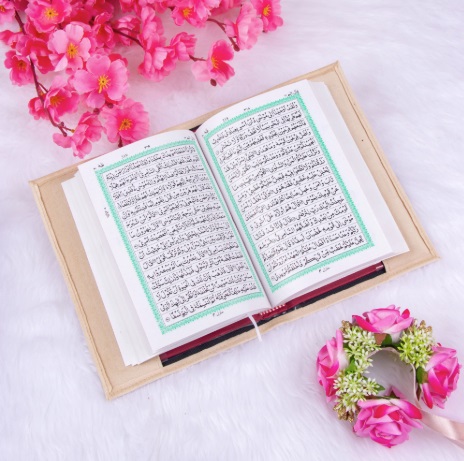
Presented by Claude
- The paired divine attribute “Al-Latif Al-Khabir” (variously rendered “the Subtle, the Aware” / “the All Subtle, the All Aware”) appears in exactly five verses of the Qur’an: 6:103 (Al-An’am), 22:63 (Al-Hajj), 31:16 (Luqman), 33:34 (Al-Ahzab), and 67:14 (Al-Mulk).
- The single name “Latif” occurs seven times in the Qur’an (per the Utrujj Foundation: “The name Al Latif has been mentioned in the Quran seven times”), but in the other two locations (12:100 and 42:19) it is paired with different attributes (al-ʿAlim al-Hakim and al-Qawiyy al-ʿAziz, respectively), not with al-Khabir. Utrujj
- Each of the five verses is presented below with the Surah name and number, the full Uthmani Arabic text, and the verbatim English rendering by M. A. S. Abdel Haleem (Oxford World’s Classics, Oxford University Press).
Key Findings
The phrase appears in three grammatical forms across the five verses:
- Definite nominative pair — اللَّطِيفُ الْخَبِيرُ (al-laṭīfu l-khabīr): 6:103 and 67:14, where Allah is the explicit subject (“He is the…”).
- Indefinite nominative pair — لَطِيفٌ خَبِيرٌ (laṭīfun khabīr): 22:63 and 31:16, following the particle إِنَّ (“Indeed Allah is…”).
- Indefinite accusative pair — لَطِيفًا خَبِيرًا (laṭīfan khabīrā): 33:34, following كَانَ (“Allah is ever…”).
All five are terminal clauses of doctrinal verses that fold back on a theological argument — God’s transcendence beyond sight (6:103), His subtle agency in nature (22:63), His exhaustive knowledge of even the smallest hidden act (31:16), the special status of revelation in the Prophet’s household (33:34), and His knowledge of His own creation (67:14).
Details
1. Al-An’am 6:103
Arabic: لَّا تُدْرِكُهُ ٱلْأَبْصَـٰرُ وَهُوَ يُدْرِكُ ٱلْأَبْصَـٰرَ ۖ وَهُوَ ٱللَّطِيفُ ٱلْخَبِيرُ Islam Awakened +3
Abdel Haleem (Oxford World’s Classics): “No vision can take Him in, but He takes in all vision. He is the All Subtle, the All Aware.” IslamiCityQuran
Note: The classic theological statement on God’s transcendence — He cannot be perceived by sight, yet His perception encompasses all sight.
2. Al-Hajj 22:63
Arabic: أَلَمْ تَرَ أَنَّ ٱللَّهَ أَنزَلَ مِنَ ٱلسَّمَآءِ مَآءً فَتُصْبِحُ ٱلْأَرْضُ مُخْضَرَّةً ۗ إِنَّ ٱللَّهَ لَطِيفٌ خَبِيرٌ Islam Awakened
Abdel Haleem (Oxford World’s Classics): “Have you [Prophet] not considered how God sends water down from the sky and the next morning the earth becomes green? God is truly most subtle, all aware;” Quran O +2
Note: Abdel Haleem ends the verse with a semicolon because, in his prose-style rendering, verses 63 and 64 run on as a single argument from natural sign to divine sovereignty.
3. Luqman 31:16
Arabic: يَـٰبُنَىَّ إِنَّهَآ إِن تَكُ مِثْقَالَ حَبَّةٍ مِّنْ خَرْدَلٍ فَتَكُن فِى صَخْرَةٍ أَوْ فِى ٱلسَّمَـٰوَٰتِ أَوْ فِى ٱلْأَرْضِ يَأْتِ بِهَا ٱللَّهُ ۚ إِنَّ ٱللَّهَ لَطِيفٌ خَبِيرٌ AlimQuranhive
Abdel Haleem (Oxford World’s Classics): “[And Luqman continued], ‘My son, if even the weight of a mustard seed were hidden in a rock or anywhere in the heavens or earth, God would bring it [to light], for He is all subtle and all aware.” My Islam
Note: Spoken by the sage Luqman to his son. The pair here functions as the basis for moral accountability — nothing escapes divine notice.
4. Al-Ahzab 33:34
Arabic: وَٱذْكُرْنَ مَا يُتْلَىٰ فِى بُيُوتِكُنَّ مِنْ ءَايَـٰتِ ٱللَّهِ وَٱلْحِكْمَةِ ۚ إِنَّ ٱللَّهَ كَانَ لَطِيفًا خَبِيرًا Quran.com +2
Abdel Haleem (Oxford World’s Classics): “Remember what is recited in your houses of God’s revelations and wisdom, for God is all subtle, all aware.” My Islam
Note: Addressed to the wives of the Prophet. The accusative form لَطِيفًا خَبِيرًا (laṭīfan khabīran) is grammatically distinctive among the five.
5. Al-Mulk 67:14
Arabic: أَلَا يَعْلَمُ مَنْ خَلَقَ وَهُوَ ٱللَّطِيفُ ٱلْخَبِيرُ Islam Awakened +2
Abdel Haleem (Oxford World’s Classics): “How could He who created not know His own creation, when He is the Most Subtle, the All Aware?” My IslamQuran.com
Note: The shortest verse of the five and rhetorically the most condensed. Abdel Haleem renders it as a rhetorical question matching the Arabic interrogative أَلَا.
The Semantic and Theological Integration of Al-Latif and Al-Khabir in the Quranic Narrative: A Detailed Analysis of Five Divine Occurrences in the M.A.S. Abdel Haleem Translation
The study of the Divine Names in the Quran, known as al-Asma al-Husna, constitutes a foundational pillar of Islamic metaphysics and theology. Among the diverse array of ninety-nine names, the systematic pairing of specific attributes reveals a deliberate architectural design aimed at illustrating the multifaceted nature of Divine action and knowledge. One of the most conceptually dense pairings is that of Al-Latif (The Subtle, The All-Gentle) and Al-Khabir (The All-Aware, The Well-Acquainted). This specific combination appears exactly five times within the Quranic corpus, serving as a recurring motif that bridges the gap between God’s transcendence and His immanence. To examine these mentions through the lens of M.A.S. Abdel Haleem’s contemporary translation is to engage with a text that prioritizes linguistic clarity and thematic coherence, stripping away archaic structures to reveal the nuanced interplay of “subtlety” and “awareness” that defines the Divine relationship with the created order.
The Conceptual Framework of Al-Latif and Al-Khabir
The linguistic roots of these two names provide the essential starting point for any rigorous theological analysis. Al-Latif is derived from the Arabic tri-literal root L-T-F, which encompasses a broad spectrum of meanings. Primarily, it refers to that which is fine, thin, or delicate, such as a substance that lacks density and is thus imperceptible to the crude senses. In a secondary sense, it denotes extreme gentleness, kindness, and grace in action, particularly when a benefit is delivered to a recipient through hidden or unexpected channels. Al-Ghazali famously posited that the name Al-Latif is only fully realized when gentleness in action is synthesized with a profound nuance in knowledge. It describes a Creator who identifies the ultra-fine, unapparent interests of His creatures and delivers them in a way that is non-aggressive and subtle.
In contrast, Al-Khabir stems from the root KH-B-R, which signifies internal, expert, and experimental knowledge. While the more common Divine name Al-Alim (The All-Knowing) refers to the general encompassment of all information, Al-Khabir specifically implies an acquaintance with the hidden depths, the secrets, and the underlying mechanisms of things. In modern Arabic usage, a Khabir is an expert who possesses specialized knowledge of a particular field. When applied to the Divine, it suggests a knowledge that is not merely observational but fundamentally restorative and penetrative, aware of both the cause and the ultimate consequence of every event.
The pairing of these two names in the Quran creates a semantic synergy: Al-Latif emphasizes the Divine ability to perceive and act upon the microscopic and the intangible, while Al-Khabir emphasizes the depth and expertise of that perception. Together, they describe a God who is simultaneously beyond the reach of human perception yet more intimately acquainted with the secrets of the heart and the intricacies of the cosmos than any created being could fathom.
| Semantic Category | Al-Latif (The Subtle) | Al-Khabir (The All-Aware) |
|---|---|---|
| Root Meaning | Fine, subtle, gentle, intangible | Expert, interior knowledge, aware of secrets |
| Action Context | Delivering grace via hidden paths | Knowing the inner mechanism and consequences |
| Attribute Focus | Divine Gentleness/Transcendence | Divine Expertise/Immanence |
| Total Occurrences | 7 (Individually) | 45 (Individually) |
| Paired Mentions | 5 (Together) | 5 (Together) |
Surah Al-An’am (6:103): The Limits of Vision and Divine Transcendence
The first mention of the pairing Al-Latif Al-Khabir occurs in Surah Al-An’am, a Makkan surah renowned for its rigorous defense of monotheism and its elaborate descriptions of the natural world as evidence of Divine power. The verse appears within a discourse on the impossibility of ascribing partners to God and the limitations of human sensory perception.
Arabic Text and Translation
Arabic: لَّا تُدْرِكُهُ ٱلْأَبْصَـٰرُ وَهُوَ يُدْرِكُ ٱلْأَبْصَـٰرَ ۖ وَهُوَ ٱللَّطِيفُ ٱلْخَبِيرُ Abdel Haleem: “No vision can encompass Him, but He encompasses all vision. For He is the Subtle, the All-Aware”.
Contextual and Theological Nuance
In the verses immediately preceding this declaration, the Quran invites humanity to observe the “cleaving of the grain and the date-stone” and the “emergence of the morning from the darkness,” framing God as the ultimate source of life and order. Having established God as the Creator of the heavens and the earth, verse 103 addresses the ontological gap between the Creator and the created. The verb tudrikuhu (to encompass or grasp Him) is crucial; while human beings can see the signs of God, they cannot grasp His Essence.
The concluding pairing of Al-Latif Al-Khabir provides the logical justification for this sensory boundary. He is Al-Latif—so subtle and pure in His essence that He remains beyond the reach of physical eyesight, which was created to interact only with the dense, material world. Yet, He is Al-Khabir—He is not a distant, disinterested deity, but one who is expertly aware of the very mechanisms of the vision that seeks Him. This verse serves as a corrective to both the naivety of those who demand a physical manifestation of God and the arrogance of those who deny His existence based on His intangibility.
From a second-order perspective, this verse establishes the philosophical foundation for “cognitive humility.” It suggests that the inability to see God is not an absence but a consequence of the Refined Subtlety of the Divine Essence. In the M.A.S. Abdel Haleem translation, the choice of “Subtle” and “All-Aware” effectively captures this tension: the Subtle One is invisible, but the All-Aware One is ever-present.
Surah Al-Hajj (22:63): The Subtle Revivification of the Earth
The second occurrence of the pairing shifts from the metaphysical to the biological, appearing in Surah Al-Hajj. This surah, which contains both Makkan and Medinan elements, focuses on the power of God to bring life from death, specifically in the context of the eventual Resurrection.
Arabic Text and Translation
Arabic: أَلَمْ تَرَ أَنَّ ٱللَّهَ أَنزَلَ مِنَ ٱلسَّمَآءِ مَآءًۭ فَتُصْبِحُ ٱلْأَرْضُ مُخْضَرَّةً ۗ إِنَّ ٱللَّهَ لَطِيفٌ خَبِيرٌۭ Abdel Haleem: “Do you not see how God sends water down from the sky and the earth becomes verdant? God is All-Subtle and All-Aware”.
Natural Manifestations of Lutf
In this verse, the Divine “subtlety” is manifested through the quiet, incremental process of vegetation. The Quran asks the reader to contemplate the rain—a common physical event—and its transformative effect on a dry, barren landscape. The earth becomes “verdant” (mukhdarratan), a transformation that involves millions of hidden, microscopic processes: the swelling of seeds, the chemical triggers of germination, and the cellular expansion of roots.
The application of Al-Latif here emphasizes that God’s grace (Luṭf) operates through hidden paths (subulin khafiyyah). Human observers see the green field, but they do not perceive the complex “photosynthesis” or the intricate Divine management of the subsoil. By pairing this with Al-Khabir, the verse highlights that this revivification is not a random natural occurrence but a controlled act of an Expert who is “aware” of every grain hidden in the dust.
The broader implication suggested by this data is that God’s interaction with the physical world provides a template for His interaction with the human soul. Just as He “subtly” revives the dead earth through rain, He “subtly” revives the parched spirit through revelation and hidden blessings (Rizq). The expert awareness (Khibra) of God ensures that the revival occurs at the exact moment and in the exact measure required.
Surah Luqman (31:16): The Retrieval of the Infinitesimal
The third mention of the pairing is located within the advice of Luqman the Wise to his son. This verse is central to the Quranic ethics of accountability and the Divine encompassment of even the most minute human actions.
Arabic Text and Translation
Arabic: يَـٰبُنَىَّ إِنَّهَآ إِن تَكُ مِثْقَالَ حَبَّةٍۢ مِّنْ خَرْدَلٍۢ فَتَكُن فِى صَخْرَةٍ أَوْ فِى ٱلْأَبْصَـٰرُ ٱلسَّمَـٰوَٰتِ أَوْ فِى ٱلْأَرْضِ يَأْتِ بِهَا ٱللَّهُ ۚ إِنَّ ٱللَّهَ لَطِيفٌ خَبِيرٌۭ Abdel Haleem: “[And Luqman continued], ‘My son, if even the weight of a mustard seed were hidden in a rock or anywhere in the heavens or earth, God would bring it [to light], for He is all-subtle and all-aware’”.
The Ethics of Divine Awareness
The “mustard seed” (khardal) is a rhetorical archetype for the smallest imaginable unit of matter or conduct. Luqman’s message is one of absolute moral transparency: no deed is so small that it can be lost, and no location is so remote that it can provide sanctuary from Divine scrutiny. Whether a deed is entombed in a “solid rock” or scattered in the “vastness of the heavens,” God will “bring it forth” for the final accounting.
In this context, Al-Latif refers to God’s ability to reach and manipulate the microscopic—He is “subtle” enough to navigate the pores of a rock or the vacuum of space to retrieve a single seed. Al-Khabir describes His “expertise” in identifying the exact nature and moral weight of that seed. This pairing acts as both a deterrent against “small” sins and a source of profound hope for “small” virtues that might go unnoticed by fellow human beings.
This verse has profound implications for the concept of the “Self” in Islam. It suggests that the internal state of the heart—the “hidden” intentions that are lighter than a mustard seed—are fully transparent to Al-Khabir. The Abdel Haleem translation emphasizes the retrieval aspect (“bring it to light”), reinforcing the idea that the Subtle One is the ultimate Archivist of the universe.
Surah Al-Ahzab (33:34): Sanctity and Wisdom in the Domestic Sphere
The fourth occurrence is found in Surah Al-Ahzab, a surah revealed in Madinah that addresses the social and domestic regulations of the Prophet Muhammad’s household and the broader Muslim community.
Arabic Text and Translation
Arabic: وَٱذْكُرْنَ مَا يُتْلَىٰ فِى بُيُوتِكُنَّ مِنْ ءَايَـٰتِ ٱللَّهِ وَٱلْحِكْمَةِ ۚ إِنَّ ٱللَّهَ كَانَ لَطِيفًا خَبِيرًا Abdel Haleem: “Remember what is recited in your houses of God’s revelations and wisdom, for God is all subtle, all aware”.
Domestic Revelation and Expertise
This verse is addressed specifically to the wives of the Prophet (Ummahat al-Mu’minin). They are commanded to “remember” (wadhkurna) and “recite/mention” the revelations and the wisdom (often interpreted as the Sunnah) occurring within their homes. The inclusion of Al-Latif Al-Khabir at the end of this injunction serves several functions. First, it reminds the household that God is “aware” of what happens in the most private areas of the home; His knowledge is not barred by physical walls. Second, it suggests that the very act of choosing these specific houses for the residence of the Prophet and the descent of revelation was an act of Divine “subtlety” and “expertise”.
Scholarly re-examinations of this verse highlight its role in asserting the intellectual and religious authority of women in the early Islamic state. By calling God Al-Latif and Al-Khabir in this specific context, the Quran underscores that He is “expertly acquainted” with the character of these women and the “subtle” ways in which they would carry the message of Islam to future generations. Abdel Haleem’s translation of hikma as “wisdom” alongside “revelations” maintains the dual nature of the guidance being provided: the written text and the subtle, lived example of the Prophet.
Surah Al-Mulk (67:14): The Ontological Necessity of Creator Awareness
The final mention appears in Surah Al-Mulk, the surah of Sovereignty. This surah is traditionally recited for its themes of protection and its vivid descriptions of God’s absolute control over life, death, and the unseen.
Arabic Text and Translation
Arabic: أَلَا يَعْلَمُ مَنْ خَلَقَ وَهُوَ ٱللَّطِيفُ ٱلْخَبِيرُ Abdel Haleem: “How could He who created not know His own creation, when He is the Most Subtle, the All Aware?”.
The Argument from Design
The verse poses a rhetorical question that serves as a logical proof for Divine Omniscience. It argues that the act of creation (khalq) inherently requires an absolute, expert knowledge of the created object. A maker cannot be ignorant of the mechanisms, vulnerabilities, and internal states of what he has fashioned. God has designed every “vein of the body” and every “fiber of the heart”; thus, He is the ultimate Khabir (Expert) of the human condition.
The pairing of Al-Latif Al-Khabir here summarizes the Divine methodology of creation. He is Al-Latif because His creative power operates at an “unfathomable” and “all-penetrating” level—from the subatomic to the galactic. He is Al-Khabir because He possesses the “hidden truths and realities” of everything He has brought into existence. In the M.A.S. Abdel Haleem translation, the phrase “How could He… not know” captures the sense of absurdity that the Quran associates with the idea of a Creator who is disconnected from His creation.
Comparative Analysis of Translation and Usage
The systematic use of Al-Latif and Al-Khabir across these five verses demonstrates a clear thematic distribution. While Al-Alim (The All-Knowing) and Al-Hakim (The All-Wise) often appear together to describe the scope and purpose of Divine knowledge, the pairing of Al-Latif and Al-Khabir is reserved for instances where the Quran emphasizes the intricacy and interiority of that knowledge.
| Verse | Contextual Domain | Emphasis of Al-Latif | Emphasis of Al-Khabir |
|---|---|---|---|
| 6:103 | Human Vision | Invisibility/Transcendence | Encompassment of perception |
| 22:63 | Natural Order | Hidden growth/Biology | Expert management of life |
| 31:16 | Moral Justice | Retrieval of the minute | Knowledge of hidden deeds |
| 33:34 | Domestic Life | Refined guidance/Wisdom | Knowledge of private conduct |
| 67:14 | Logic of Creation | Intricate design/Subtlety | Necessary knowledge of the Maker |
Translation Nuances in the Abdel Haleem Edition
M.A.S. Abdel Haleem’s translation choices reflect a desire to capture the “spirit and original meaning” while remaining accessible to modern readers. Unlike older translations that might render Al-Latif as “Subtile” or “Benignant,” Abdel Haleem consistently utilizes “Subtle” or “Most Subtle,” which successfully conveys the dual meaning of “intangible” and “delicate in action”. His rendering of Al-Khabir as “All-Aware” or “All Aware” (sometimes “Expert” in other scholarship, but consistently “All-Aware” in his Quranic text) emphasizes the active nature of Divine knowledge.
The efficacy of this translation is most evident in 31:16 and 67:14, where the flow of the English prose mirrors the logical “punch” of the Arabic original. By identifying dialogue and using contemporary paragraphing, Abdel Haleem ensures that the “Subtle” nature of God is not lost in archaic syntax.
Theological and Existential Implications
The recurring pairing of “the Subtle” and “the All-Aware” provides a significant psychological framework for the Quranic believer. It offers a synthesis of three key spiritual states: trust (Tawakkul), mindfulness (Muraqabah), and optimism (Raja’).
Trust in the Hidden Paths of Grace
The manifestation of Luṭf in nature (22:63) and in the retrieval of the mustard seed (31:16) encourages a deep trust in the “unseen” hand of God. The believer is taught that even when a situation seems barren, the Subtle One is working through “hidden paths” to deliver grace. This is a recurring theme in Quranic exegesis; for instance, the scholar al-Sa’di noted that Al-Latif is He who acts with luṭf towards His allies, easing them towards ease and distancing them from difficulty in ways they do not even realize.
Mindfulness of the All-Aware
The pairing with Al-Khabir ensures that this trust does not devolve into complacency. Knowing that God is “All-Aware” of the “contents of every heart” (67:13-14) and the “weight of a mustard seed” (31:16) creates a state of perpetual moral vigilance. It suggests that the expert knowledge of God is not a passive archive but an active, judgmental, and restorative presence. This is particularly underscored in the domestic command of 33:34, where the private life of the believer is brought into the light of Divine expertise.
Transcendence without Distance
Finally, the “Vision” verse (6:103) provides a solution to the problem of Divine transcendence. It posits that God is not “far away” simply because He is invisible; rather, His invisibility is a function of His Subtlety. He is so refined that He cannot be “grasped” by vision, yet He is so “Aware” that He “grasps” all vision. This ensures that the believer feels the proximity of the Divine without anthropomorphizing the Divine Essence.
The integration of these five verses in the Quranic narrative demonstrates a consistent theological project: to present a God who is entirely beyond human comprehension in His essence, yet entirely accessible and expertly active in His actions and knowledge. Through the precise translation of M.A.S. Abdel Haleem, these ancient Arabic names are rendered into a contemporary idiom that preserves their power to inform the modern spiritual and intellectual life. The Subtle One and the All-Aware One together form a Divine profile that is both terrifying in its encompassment and comforting in its gentleness.




Leave a Reply