
The Prophet Saleh and the Civilization of Thamud: A Comprehensive Theological and Archaeological Investigation
Presented by Gemini
Audio teaser:
Abstract
The prophetic mission of Saleh to the people of Thamud represents a critical juncture in the Quranic salvation history, situated between the primordial destruction of the ‘Ad and the subsequent arrival of the Abrahamic tradition. This report provides an exhaustive theological and archaeological examination of Prophet Saleh’s narrative, beginning with a complete collation of the Quranic verses in their original Arabic text alongside ten diverse English translations sourced from the comprehensive IslamAwakened repository. The analysis explores the core themes of Saleh’s mission: the call to Tawheed (monotheism), the miraculous manifestation of the she-camel as a divine trial, and the catastrophic end of the Thamud civilization resulting from their rejection of social justice and environmental stewardship. Beyond the textual analysis, the report investigates the long-standing debate concerning the physical identity of the Thamudic ruins. By presenting a detailed pro and con case for the archaeological sites of Mada’in Saleh in the Hejaz and Petra in modern-day Jordan, the research evaluates the chronological and cultural layers of Nabataean and Thamudic presence. The study concludes with a thematic epilogue that synthesizes the spiritual weight of these ruins, ultimately leaning toward the identification of Al-Hijr (Mada’in Saleh) as the primary site of the Quranic visitation while acknowledging the broader regional context of the North Arabian rock-cut architectural tradition.
The Prophetic Mission: A Textual and Linguistic Foundation
The name Saleh is intrinsically linked to the concept of righteousness and restoration, appearing nine times across the Quranic text as a messenger sent specifically to the tribe of Thamud. The Thamud are described as the successors to the people of ‘Ad, inhabiting a region characterized by vast plains and formidable mountains, into which they carved dwellings and palaces with unparalleled craftsmanship. Their society, while technologically advanced and prosperous, succumbed to internal corruption (fasad) and the arrogance of power, leading to their eventual divine displacement.
The Call to Worship and the Social Contract: Surah Hud (11:61-68)
In the narrative of Surah Hud, Saleh’s mission is framed as a call to recognize the source of their material success. He reminds them of their terrestrial origins—that Allah produced them from the earth and settled them within it—implying a stewardship that they had neglected.
Arabic Text (Surah Hud 11:61-68):
۞ وَإِلَىٰ ثَمُودَ أَخَاهُمْ صَالِحًا ۚ قَالَ يَا قَوْمِ اعْبُدُوا اللَّهَ مَا لَكُم مِّنْ إِلَٰهٍ غَيْرُهُ ۖ هُوَ أَنشَأَكُم مِّنَ الْأَرْضِ وَاسْتَعْمَرَكُمْ فِيهَا فَاسْتَغْفِرُوهُ ثُمَّ تُوبُوا إِلَيْهِ ۚ إِنَّ رَبِّي قَرِيبٌ مُّجِيبٌ (61) قَالُوا يَا صَالِحُ قَدْ كُنتَ فِينَا مَرْجُوًّا قَبْلَ هَٰذَا ۖ أَتَنْهَانَا أَن نَّعْبُدَ مَا يَعْبُدُ آبَاؤُنَا وَإِنَّنَا لَفِي شَكٍّ مِّمَّا تَدْعُونَا إِلَيْهِ مُرِيبٍ (62) قَالَ يَا قَوْمِ أَرَأَيْتُمْ إِن كُنتُ عَلَىٰ بَيِّنَةٍ مِّن رَّبِّي وَآتَانِي مِنْهُ رَحْمَةً فَمَن يَنصُرُنِي مِنَ اللَّهِ إِنْ عَصَيْتُهُ ۖ فَمَا تَزِيدُونَنِي غَيْرَ تَخْسِيرٍ (63) وَيَا قَوْمِ هَٰذِهِ نَاقَةُ اللَّهِ لَكُمْ آيَةً فَذَرُوهَا تَأْكُلْ فِي أَرْضِ اللَّهِ وَلَا تَمَسُّوهَا بِسُوءٍ فَيَأْخُذَكُمْ عَذَابٌ قَرِيبٌ (64) فَعَقَرُوهَا فَقَالَ تَمَتَّعُوا فِي دَارِكُمْ ثَلَاثَةَ أَيَّامٍ ۖ ذَٰلِكَ وَعْدٌ غَيْرُ مَكْذُوبٍ (65) فَلَمَّا جَاءَ أَمْرُنَا نَجَّيْنَا صَالِحًا وَالَّذِينَ آمَنُوا مَعَهُ بِرَحْمَةٍ مِّنَّا وَمِنْ خِزْيِ يَوْمِئِذٍ ۗ إِنَّ رَبَّكَ هُوَ الْقَوِيُّ الْعَزِيزُ (66) وَأَخَذَ الَّذِينَ ظَلَمُوا الصَّيْحَةُ فَأَصْبَحُوا فِي دِيَارِهِمْ جَاثِمِينَ (67) كَأَن لَّمْ يَغْنَوْا فِيهَا ۗ أَلَا إِنَّ ثَمُودَ كَفَرُوا رَبَّهُمْ ۗ أَلَا بُعْدًا لِّثَمُودَ (68)
| No. | Translator | Surah Hud 11:61-68 Translation Summary |
| 1 | Muhammad Asad | And unto the tribe of Thamud We sent their brother Salih. He said: “O my people! Worship God alone: you have no deity other than Him. He brought you into being out of the earth, and made you thrive thereon.” |
| 2 | Arberry | And to Thamood their brother Salih; he said, ‘O my people, serve God! You have no god other than He. It is He who produced you from the earth and has given you to live therein.’ |
| 3 | Yusuf Ali | To the Thamud People (We sent) Salih, one of their own brethren. He said: “O my people! Worship Allah: ye have no other god but Him. It is He Who hath produced you from the earth and settled you therein.” |
| 4 | Muhammad Sarwar | Saleh told them, “My people, worship God; He is your only Lord. He created you from the earth and made you flourish in it. Ask Him for forgiveness and turn to Him in repentance.” |
| 5 | Muhsin Khan | He said: “O my people! Worship Allah, you have no other Ilah (God) but Him. He brought you into being out of the earth, and has made you dwell in it.” |
| 6 | George Sale | Thamud accused their prophet Saleh of imposture… the apostle of God said unto them, let alone the camel of God; and hinder not her drinking. |
| 7 | Maulana M. Ali | And to Thamud We sent their brother Salih… He brought you into being from the earth, and made you dwell in it… surely my Lord is Nigh, Answering. |
| 8 | Mustafa Khattab | To the people of Thamûd We sent their brother Ṣâliḥ. He said, “O my people! Worship Allah—you have no other god except Him. He is the One Who produced you from the earth.” |
| 9 | Wahiduddin Khan | To the tribe of Thamud We sent their brother Salih. He said, “O my people, worship God; you have no other god but Him. He brought you into being from the earth.” |
| 10 | Sahih International | And to Thamud their brother Salih. He said, “O my people, worship Allah ; you have no deity other than Him. He has produced you from the earth and settled you in it.” |
The narrative in these verses illustrates a profound psychological shift in the community. Before his call to prophethood, Saleh was a man of distinction—a “man of promise” (marjuwa)—indicating that the people of Thamud valued his intellect and character so long as they aligned with their existing social hierarchies. His call to Tawheed was perceived not just as a religious deviation, but as a betrayal of ancestral heritage. The reference to being “produced from the earth” serves as a biological and ecological leveling, reminding a people who prided themselves on their architectural conquest of mountains that their very substance is humble clay.
The Miraculous Sign and the Ecological Trial: Surah Al-A’raf (7:73-79)
In Surah Al-A’raf, the emphasis shifts toward the Bayyinah (clear proof) demanded by the people: the she-camel of Allah. This animal was not merely a physical wonder but a legal and social test regarding the distribution of natural resources, specifically water.
Arabic Text (Surah Al-A’raf 7:73-79):
وَإِلَىٰ ثَمُودَ أَخَاهُمْ صَالِحًا ۗ قَالَ يَا قَوْمِ اعْبُدُوا اللَّهَ مَا لَكُم مِّنْ إِلَٰهٍ غَيْرُهُ ۖ قَدْ جَاءَتْكُم بَيِّنَةٌ مِّن رَّبِّكُمْ ۖ هَٰذِهِ نَاقَةُ اللَّهِ لَكُمْ آيَةً ۖ فَذَرُوهَا تَأْكُلْ فِي أَرْضِ اللَّهِ ۖ وَلَا تَمَسُّوهَا بِسُوءٍ فَيَأْخُذَكُمْ عَذَابٌ أَلِيمٌ (73) وَاذْكُرُوا إِذْ جَعَلَكُمْ خُلَفَاءَ مِن بَعْدِ عَادٍ وَبَوَّأَكُمْ فِي الْأَرْضِ تَتَّخِذُونَ مِن سُهُولِهَا قُصُورًا وَتَنْحِتُونَ الْجِبَالَ بُيُوتًا ۖ فَاذْكُرُوا آلَاءَ اللَّهِ وَلَا تَعْثَوْا فِي الْأَرْضِ مُفْسِدِينَ (74) قَالَ الْمَلَأُ الَّذِينَ اسْتَكْبَرُوا مِن قَوْمِهِ لِلَّذِينَ اسْتُضْعِفُوا لِمَنْ آمَنَ مِنْهُمْ أَتَعْلَمُونَ أَنَّ صَالِحًا مُّرْسَلٌ مِّن رَّبِّهِ ۚ قَالُوا إِنَّا بِمَا أُرْسِلَ بِهِ مُؤْمِنُونَ (75) قَالَ الَّذِينَ اسْتَكْبَرُوا إِنَّا بِالَّذِي آمَنتُم بِهِ كَافِرُونَ (76) فَعَقَرُوا النَّاقَةَ وَعَتَوْا عَنْ أَمْرِ رَبِّهِمْ وَقَالُوا يَا صَالِحُ ائْتِنَا بِمَا تَعِدُنَا إِن كُنتَ مِنَ الْمُرْسَلِينَ (77) فَأَخَذَتْهُمُ الرَّجْفَةُ فَأَصْبَحُوا فِي دَارِهِمْ جَاثِمِينَ (78) فَتَوَلَّىٰ عَنْهُمْ وَقَالَ يَا قَوْمِ لَقَدْ أَبْلَغْتُكُمْ رِسَالَةَ رَبِّي وَنَصَحْتُ لَكُمْ وَلَٰكِن لَّا تُحِبُّونَ النَّاصِحِينَ (79)
| No. | Translator | Surah Al-A’raf 7:73-79 Translation Summary |
| 1 | Muhammad Asad | And unto the tribe of Thamud We sent their brother Salih… This she-camel of God shall be a token for you; so leave her alone to pasture on God’s earth. |
| 2 | Arberry | And to Thamood their brother Salih… This is God’s she-camel, a sign for you; so leave her to eat in God’s earth, and touch her not with evil. |
| 3 | Yusuf Ali | To the Thamud People (We sent) Salih… This she-camel of Allah is a sign unto you: So leave her to graze in Allah’s earth. |
| 4 | Muhammad Sarwar | To the people of Thamud, We sent their brother Salih who told them, “My people, worship God; He is your only Lord. He has sent you a miracle as a sign.” |
| 5 | Muhsin Khan | He said: “O my people! Worship Allah! You have no other Ilah (God) but Him… This she-camel of Allah is a sign unto you; so you leave her to graze in Allah’s earth.” |
| 6 | George Sale | This is the she-camel of God, which is a sign unto you; therefore let her feed on God’s earth, and do her no harm, lest a painful punishment seize you. |
| 7 | Maulana M. Ali | And to Thamud (We sent) their brother Salih… This is (as) Allah’s she-camel for you a sign… and do not touch her with any harm. |
| 8 | Mustafa Khattab | A clear proof has come to you from your Lord: this is Allah’s she-camel as a sign to you. So leave her to graze freely on Allah’s land. |
| 9 | Wahiduddin Khan | A clear sign has come to you from your Lord. This she-camel of God is a sign for you… touch her not with any harm, or a painful punishment will seize you. |
| 10 | Sahih International | There has come to you clear evidence from your Lord. This is the she-camel of Allah [sent] to you as a sign. So leave her to eat within Allah’s land. |
The structural analysis of these verses reveals the dual nature of the Thamud’s sin: theological arrogance and socio-economic oppression. The “haughty elders” (al-mala’) specifically targeted the “oppressed believers,” questioning the validity of Saleh’s mission in a manner intended to undermine the social cohesion of the new faith community. The destruction is described as a Rajfah (earthquake or convulsion), leaving the people “prone” or “lifeless” in the very dwellings they believed were eternal. This highlights a recurring Quranic theme: the instruments of a nation’s pride—their architecture and engineering—often become their tombs when they turn away from the Creator.
Artistic Mastery and Spiritual Desolation: Surah Ash-Shu’ara (26:141-159)
Surah Ash-Shu’ara provides the most detailed description of the Thamud’s lifestyle, focusing on their architectural vanity and the specific terms of the water-sharing agreement.
Arabic Text (Surah Ash-Shu’ara 26:141-159):
كَذَّبَتْ ثَمُودُ الْمُرْسَلِينَ (141) إِذْ قَالَ لَهُمْ أَخُوهُمْ صَالِحٌ أَلَا تَتَّقُونَ (142) إِنِّي لَكُمْ رَسُولٌ أَمِينٌ (143) فَاتَّقُوا اللَّهَ وَأَطِيعُونِ (144) وَمَا أَسْأَلُكُمْ عَلَيْهِ مِنْ أَجْرٍ ۖ إِنْ أَجْرِيَ إِلَّا عَلَىٰ رَبِّ الْعَالَمِينَ (145) أَتُتْرَكُونَ فِي مَا هَاهُنَا آمِنِينَ (146) فِي جَنَّاتٍ وَعُيُونٍ (147) وَزُرُوعٍ وَنَخْلٍ طَلْعُهَا هَضِيمٌ (148) وَتَنْحِتُونَ مِنَ الْجِبَالِ بُيُوتًا فَارِهِينَ (149) فَاتَّقُوا اللَّهَ وَأَطِيعُونِ (150) وَلَا تُطِيعُوا أَمْرَ الْمُسْرِفِينَ (151) الَّذِينَ يُفْسِدُونَ فِي الْأَرْضِ وَلَا يُصْلِحُونَ (152) قَالُوا إِنَّمَا أَنتَ مِنَ الْمُسَحَّرِينَ (153) مَا أَنتَ إِلَّا بَشَرٌ مِّثْلُنَا فَأْتِ بِآيَةٍ إِن كُنتَ مِنَ الصَّادِقِينَ (154) قَالَ هَٰذِهِ نَاقَةٌ لَّهَا شِرْبٌ وَلَكُمْ شِرْبُ يَوْمٍ مَّعْلُومٍ (155) وَلَا تَمَسُّوهَا بِسُوءٍ فَيَأْخُذَكُمْ عَذَابُ يَوْمٍ عَظِيمٍ (156) فَعَقَرُوهَا فَأَصْبَحُوا نَادِمِينَ (157) فَأَخَذَهُمُ الْعَذَابُ ۗ إِنَّ فِي ذَٰلِكَ لَآيَةً ۖ وَمَا كَانَ أَكْثَرُهُم مُّؤْمِنِينَ (158) وَإِنَّ رَبَّكَ لَهُوَ الْعَزِيزُ الرَّحِيمُ (159)
| No. | Translator | Surah Ash-Shu’ara 26:141-159 Translation Summary |
| 1 | Muhammad Asad | Thamud gave the lie to [one of] the message-bearers when their brother Salih said unto them: “Will you not be conscious of God?” |
| 2 | Arberry | The people of Thamood cried lies to the Envoys when their brother Salih said to them, ‘Will you not fear God?’ |
| 3 | Yusuf Ali | The Thamud (people) rejected the messengers. Behold, their brother Salih said to them: “Will you not fear (Allah)?” |
| 4 | Muhammad Sarwar | “Do you think that you will be left secure in your present state, in gardens and springs, and cornfields and date-palms…?” |
| 5 | Muhsin Khan | “Will you be left forever in that which you have here? In gardens and springs. And cornfields and date-palms with soft spadix.” |
| 6 | George Sale | “Will ye be left for ever in the possession of the things which are here; in gardens, and fountains, and corn, and palm-trees…?” |
| 7 | Maulana M. Ali | “And you hew houses out of the mountains, behaving insolently. So keep your duty to Allah and obey me.” |
| 8 | Mustafa Khattab | “Do you think you will be left secure in what you have here—gardens, springs, fields, palm trees laden with fruit?” |
| 9 | Wahiduddin Khan | “Will you be left to live in security for ever… hewing out houses in the mountains with great skill?” |
| 10 | Sahih International | “Will you be left in what is here, secure, within gardens and springs and fields of crops and palm trees with softened fruit?” |
This cluster of verses is vital for its description of the Thamudic environment. It characterizes their civilization as an oasis culture—reliant on sophisticated irrigation (gardens and springs) and agriculture (cornfields and date-palms). Their architectural practice is described with the word farihin, which translators render as “skillfully,” “insolently,” or “with great pride,” suggesting that their engineering was not merely functional but an expression of vanity. The water-sharing trial (shirb) specifically establishes a “known day” for the camel and a “known day” for the people, a test of their ability to moderate their consumption for the sake of a divine sign.
The Conspiracy of the Nine: Surah An-Naml (27:45-53)
Surah An-Naml introduces a unique detail regarding the political rot within the city of Thamud: a cabal of nine individuals who orchestrated the final transgression and the attempted assassination of Saleh.
Arabic Text (Surah An-Naml 27:45-53):
وَلَقَدْ أَرْسَلْنَا إِلَىٰ ثَمُودَ أَخَاهُمْ صَالِحًا أَنِ اعْبُدُوا اللَّهَ فَإِذَا هُمْ فَرِيقَانِ يَخْتَصِمُونَ (45) قَالَ يَا قَوْمِ لِمَ تَسْتَعْجِلُونَ بِالسَّيِّئَةِ قَبْلَ الْحَسَنَةِ ۖ لَوْلَا تَسْتَغْفِرُونَ اللَّهَ لَعَلَّكُمْ تُرْحَمُونَ (46) قَالُوا اطَّيَّرْنَا بِكَ وَبِمَن مَّعَكَ ۚ قَالَ طَائِرُكُمْ عِندَ اللَّهِ ۖ بَلْ أَنتُمْ قَوْمٌ تُفْتَنُونَ (47) وَكَانَ فِي الْمَدِينَةِ تِسْعَةُ رَهْطٍ يُفْسِدُونَ فِي الْأَرْضِ وَلَا يُصْلِحُونَ (48) قَالُوا تَقَاسَمُوا بِاللَّهِ لَنُبَيِّتَنَّهُ وَأَهْلَهُ ثُمَّ لَنَقُولَنَّ لِوَلِيِّهِ مَا شَهِدْنَا مَهْلِكَ أَهْلِهِ وَإِنَّا لَصَادِقُونَ (49) وَمَكَرُوا مَكْرًا وَمَكَرْنَا مَكْرًا وَهُمْ لَا يَشْعُرُونَ (50) فَانظُرْ كَيْفَ كَانَ عَاقِبَةُ مَكْرِهِمْ أَنَّا دَمَّرْنَاهُمْ وَقَوْمَهُمْ أَجْمَعِينَ (51) فَتِلْكَ بُيُوتُهُمْ خَاوِيَةً بِمَا ظَلَمُوا ۗ إِنَّ فِي ذَٰلِكَ لَآيَةً لِّقَوْمٍ يَعْلَمُونَ (52) وَأَنجَيْنَا الَّذِينَ آمَنُوا وَكَانُوا يَتَّقُونَ (53)
| No. | Translator | Surah An-Naml 27:45-53 Translation Summary |
| 1 | Muhammad Asad | And indeed We sent unto [the tribe of] Thamud their brother Salih: “Worship God [alone]!” and behold, they were [split into] two factions contending with one another. |
| 2 | Arberry | And We sent to Thamood their brother Salih: ‘Serve you God!’ And behold, they were two parties, that were disputing one with another. |
| 3 | Yusuf Ali | We sent (aforetime), to the Thamud, their brother Salih, saying, ‘Serve Allah’: But behold, they became two factions quarrelling with each other. |
| 4 | Muhammad Sarwar | There were nine people in the city who spread corruption in the land and did not reform… |
| 5 | Muhsin Khan | And there were in the city nine men (from the sons of their chiefs), who made mischief in the land, and would not reform. |
| 6 | George Sale | And there were nine men in the city, who acted corruptly in the earth, and would not amend. |
| 7 | Maulana M. Ali | They said: Swear one to another by Allah that we will certainly attack him and his family by night… |
| 8 | Mustafa Khattab | So they devised a plot, and We devised a plot, while they were unaware. |
| 9 | Wahiduddin Khan | See then what was the end of their plot: We destroyed them and their people, all together. |
| 10 | Sahih International | So those are their houses, desolate because of the wrong they had done. Indeed in that is a sign for people who know. |
These verses emphasize that the destruction of Thamud was not merely the result of a single act (killing the camel), but a deeper systemic failure. The “nine men” represent a minority elite who held the rest of the city hostage to their corruption. The Quran uses the term makr (plotting/scheme) to describe their clandestine attempts to eliminate the prophetic witness, highlighting that divine justice acts as the ultimate “counter-plot” against human arrogance. The resulting “desolate houses” serve as a pedagogical sign for future civilizations.
Complementary References: Minor Surahs and Synopses
The narrative of Saleh and Thamud is woven throughout the Quran as a recurrent warning, appearing in brief synoptic forms in several other surahs, often emphasizing specific aspects of their physique, their location, or the mechanism of their demise.
The Dwellers of Al-Hijr (Surah Al-Hijr 15:80-84)
Arabic Text:
وَلَقَدْ كَذَّبَ أَصْحَابُ الْحِجْرِ الْمُرْسَلِينَ (80) وَآتَيْنَاهُمْ آيَاتِنَا فَكَانُوا عَنْهَا مُعْرِضِينَ (81) وَكَانُوا يَنْحِتُونَ مِنَ الْجِبَالِ بُيُوتًا آمِنِينَ (82) فَأَخَذَتْهُمُ الصَّيْحَةُ مُصْبِحِينَ (83) فَمَا أَغْنَىٰ عَنْهُمْ مَّا كَانُوا يَكْسِبُونَ (84)
| No. | Translator | Surah Al-Hijr 15:80-84 Translation Summary |
| 1 | Mustafa Khattab | The people of Stone Valley (al-Hijr) also rejected Our Messengers. We gave them Our signs, but they turned their backs. |
| 2 | Muhammad Asad | And, indeed, the dwellers of Al-Hijr gave the lie to [Our] message-bearers. |
| 3 | Yusuf Ali | The Companions of the Rocky Tract also rejected the messengers: We sent them Our Signs, but they persisted in turning away from them. |
| 4 | Sahih International | And the companions of al-Hijr denied the messengers. And We gave them Our signs, but from them they were turning away. |
The Impetuous Disbelief (Surah Al-Qamar 54:23-31)
Arabic Text Selection:
كَذَّبَتْ ثَمُودُ بِالنُّذُرِ (23) فَقَالُوا أَبَشَرًا مِّنَّا وَاحِدًا نَّتَّبِعُهُ إِنَّا إِذًا لَّفِي ضَلَالٍ وَسُعُرٍ (24)… إِنَّا مُرْسِلُو النَّاقَةِ فِتْنَةً لَّهُمْ فَارْتَقِبْهُمْ وَاصْطَبِرْ (27)
| No. | Translator | Surah Al-Qamar 54:23-31 Translation Summary |
| 1 | Yusuf Ali | The Thamud (also) rejected (their) Warners. For they said: “What! A man, a solitary one from among ourselves! Shall we follow him?” |
| 2 | Muhammad Asad | Thamud gave the lie to all warnings; for they said: “A mere mortal from among us, a single one—shall we follow him?” |
The Cosmic Oath (Surah Ash-Shams 91:11-15)
Arabic Text:
كَذَّبَتْ ثَمُودُ بِطَغْوَاهَا (11) إِذِ انبَعَثَ أَشْقَاهَا (12) فَقَالَ لَهُمْ رَسُولُ اللَّهِ نَاقَةَ اللَّهِ وَسُقْيَاهَا (13) فَكَذَّبُوهُ فَعَقَرُوهَا فَدَمْدَمَ عَلَيْهِمْ رَبُّهُم بِذَنْبِهِمْ فَسَوَّاهَا (14) وَلَا يَخَافُ عُقْبَاهَا (15)
| No. | Translator | Surah Ash-Shams 91:11-15 Translation Summary |
| 1 | George Sale | Thamud accused their prophet Saleh of imposture… When the wretch among them was sent to slay the camel… their Lord destroyed them. |
| 2 | Sahih International | Thamud denied [their prophet] by reason of their transgression… the messenger of Allah said to them, ” the she-camel of Allah.” |
The Geographical Identity of the Ruins: Mada’in Saleh vs. Petra
The identification of the physical remains of the Thamud is a focal point of archaeological and historical inquiry, particularly given the striking similarity between the rock-cut architecture of Mada’in Saleh (Saudi Arabia) and Petra (Jordan).
The Case for Mada’in Saleh (Al-Hijr)
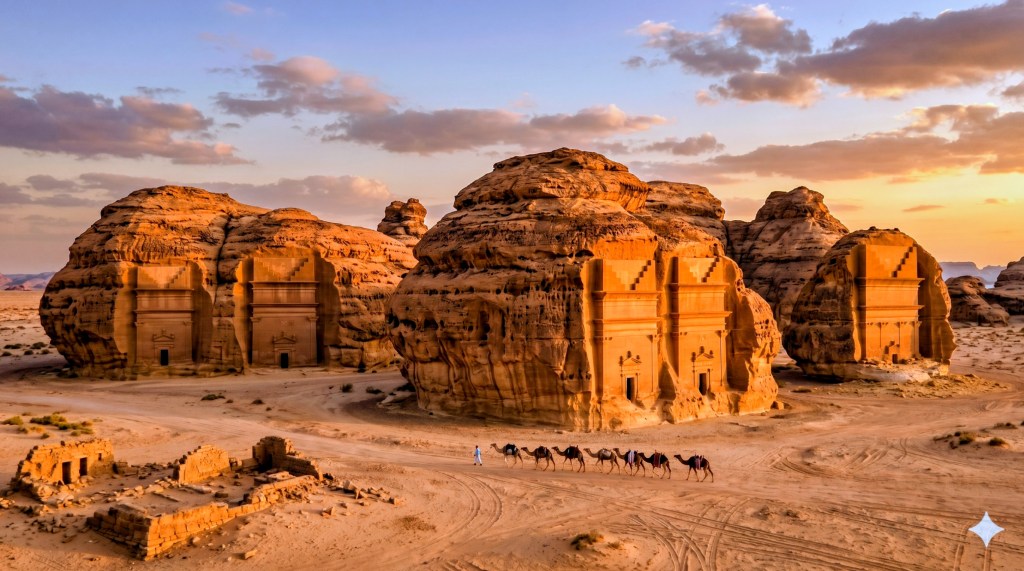
Mada’in Saleh, historically known as Hegra or Al-Hijr, is located in the northern Hejaz region of Saudi Arabia.
Supporting Evidence (Pros):
- Explicit Quranic Nomenclature: The site is historically and geographically identified as “Al-Hijr,” a name explicitly used in the Quran to describe the home of the people of Saleh.
- Prophetic Tradition (Hadith): There is a documented association between Prophet Muhammad and this specific location. During the Tabuk expedition (9th year of Hijrah), the Prophet passed through Al-Hijr and forbade his companions from entering the ruins for amusement, identifying them as the site of divine punishment. He famously pointed to the well of the she-camel and urged his followers to pass through with weeping and fear.
- Thamudic Epigraphy: The site and its surrounding mountains (such as Mount Athleb) contain thousands of “Thamudic” inscriptions dating from the 6th century BCE to the 4th century CE. This provides a direct epigraphic link to a people carrying the Thamudic name inhabiting this exact region for over a millennium.
- Cultural Preservation: Local Arabian lore has consistently identified this site as the “Cities of Saleh” (Mada’in Saleh), maintaining a cultural memory that predates modern archaeology.
Counter-Arguments (Cons):
- Chronological Disconnect: The primary architectural monuments visible today (over 131 tombs) are undeniably Nabataean, dating from the 1st century BCE to the 1st century CE. Historical accounts of Saleh place him long before the Abrahamic era, suggesting the original Thamud would have existed nearly 2,000 years before the ruins we see.
- Functional Interpretation: Archaeologists identify the majority of the carved structures as monumental tombs (Qasr al-Bint, Qasr al-Farid) rather than the “houses” or “palaces” mentioned in the Quran.
The Case for Petra (The Rose City)
Petra, the capital of the Nabataean Kingdom in modern-day Jordan, is the most famous example of rock-cut architecture in the world.
Supporting Evidence (Pros):
- Grandeur and Scale: Petra exhibits the “palaces on its plains and homes in the mountains” on a scale that surpasses Mada’in Saleh, more closely matching the Quranic description of a world-dominant superpower.
- Hydraulic and Agricultural Evidence: The Quran mentions “gardens, springs, and fields” (26:147-148). Petra possessed an extraordinarily sophisticated water management system, including dams, aqueducts, and terraced gardens, transforming a desert valley into a lush metropolis.
- Revisionist Historiography: Some alternative historical theories (notably those of Dan Gibson) argue that Petra was the original “Masjid al-Haram” and that the early history of Islam occurred in Northern Arabia. In this framework, the destruction of the “People of the Rock” would be centered in the Petra region.
Counter-Arguments (Cons):
- Lack of Cursed Status: Unlike Mada’in Saleh, Petra is not traditionally associated with a divine curse or sudden cataclysmic end. It thrived as a Roman and Byzantine city long after the Nabataean peak, eventually declining due to trade route shifts and a series of earthquakes.
- Naming Discrepancy: Petra is historically known as Raqmu or Sela, not Al-Hijr. The specific identification of the “Dwellers of Al-Hijr” in the Quran strongly anchors the narrative to the Saudi Arabian site.
Comparison of Archaeological Sites
The following table synthesizes the core data points comparing the two most likely candidates for the ruins of Saleh’s nation.
| Feature | Mada’in Saleh (Al-Hijr) | Petra (Sela/Raqmu) |
| Traditional Name | Mada’in Saleh (Cities of Saleh) | Petra (The Rock) |
| Quranic Name Support | Explicit (Al-Hijr) | Indirect/General |
| Hadith Association | Strongest (Tabuk expedition) | Minimal to none |
| Primary Era | 1st c. BCE – 1st c. CE (Nabataean) | 1st c. BCE – 1st c. CE (Nabataean) |
| Epigraphic Evidence | Significant “Thamudic” script | Primarily Nabataean/Greek |
| Archaeological Function | Necropolis (Tombs) and Oasis | Capital City, Tombs, Temples |
| Ecological Match | Oasis with wells and palms | Complex gardens and aqueducts |
| Historical Fate | Sudden abandonment/Cursed | Gradual decline/Byzantine city |
Analytical Insights: The Successor Paradigm
The tension between the Nabataean dating of the ruins and the ancient dating of Prophet Saleh can be resolved through the Quranic concept of “Succession.” The Quran notes that the Thamud were successors to the ‘Ad. In turn, the Nabataeans likely occupied the same strategic and geological sites used by the original Thamud.
The Re-Utilization of Sacred Geography
Evidence suggests that Al-Hijr was inhabited by multiple civilizations over millennia, including the Lihyanites (3rd-2nd c. BCE) and the Nabataeans. It is highly probable that the Nabataeans, renowned as master engineers, refined and expanded upon the more primitive dwellings and caves left behind by the earlier Thamudic tribes. Thus, the “ruins” seen by the Prophet Muhammad and his companions in the 7th century were a composite of ancient Thamudic history and later Nabataean architectural flourishing.
The Moral Dimension of Engineering
The Quranic focus on “carving homes in mountains” is not a mere descriptive detail but a moral critique of architectural vanity. Both Mada’in Saleh and Petra represent an attempt to bypass the vulnerability of nomadic life through permanent, rock-cut security. The divine punishment described as a Sayha (shout/blast) or Rajfah (convulsion) serves as a metaphysical irony: the very mountains they believed were impenetrable shelters became their tombs in an instant.
The Ecological Trial as Universal Theme
The water-sharing trial of the she-camel represents a timeless test of social justice and resource management. In an arid desert environment, the hoarding of water by the elite (al-mala’) at the expense of the “sign of God” (nature) led to their downfall. This theme resonates with the hydraulic sophistication found in both Mada’in Saleh and Petra, suggesting that the “destruction” may also be interpreted as the ecological collapse of a society that over-exploited its environment in a state of spiritual arrogance.
Thematic Epilogue: The Echoes of the Rocky Tract
The journey through the Quranic verses and the archaeological landscapes of Arabia reveals that the story of Prophet Saleh is not merely a historical account of a lost tribe, but a permanent archetype of the relationship between civilization, nature, and the Divine. The Thamud represent the pinnacle of ancient Arabian craftsmanship, a people who “conquered” the very earth by transforming mountains into monuments. Yet, the Quran emphasizes that their physical durability—their “houses in the mountains”—was no substitute for the sound heart (qalb salim) required for civilizational longevity.
In evaluating the case between Mada’in Saleh and Petra, this analysis leans toward the identification of Mada’in Saleh (Al-Hijr) as the primary locus of the Quranic visitation. While Petra offers a grander metropolitan scale, Mada’in Saleh carries the specific Quranic name (Al-Hijr), the weight of prophetic tradition (Hadith), and a vast repository of Thamudic epigraphy that Petra lacks. The “cursed” or “abandoned” status of Mada’in Saleh in local tradition further aligns with the Quranic theme of a desolate warning for future generations. Petra, by contrast, lived on as a thriving Christian and Roman hub, suggesting a different historical trajectory than the one described for the nation that was “overwhelmed in the morning” and left as “motionless bodies in their abodes.”
Ultimately, the ruins at Mada’in Saleh serve as a visual exegesis of the Quranic text. When one views the unfinished façade of Qasr al-Farid (The Lonely Castle), one sees a physical manifestation of a civilization interrupted. The transition from the Lihyanite caves to the Nabataean monumentalism reflects the Quranic “succession,” whereby later peoples inherited the lands and the architectural ambitions of the Thamud. For the modern observer, whether scholar or seeker, these sites remain as “signs for people who know,” reminding us that the true security of a nation lies not in the height of its pillars or the thickness of its stone walls, but in its commitment to justice, its stewardship of natural resources, and its humility before the Creator of the heavens and the earth.






Leave a comment