


Presented by Claude
The Architecture of Existence: A Scientific, Philosophical, and Theological Commentary on Qurʾān 30:24–26
By way of the Signs of the Storm, the Standing Heavens, and the Universal Submission
Abstract
Qurʾān 30:24–26, drawn from Sūrat al-Rūm (The Romans), presents three consecutive āyāt — signs — that together constitute one of the most theologically dense triads in the entire Quranic corpus. Verse 24 deploys the lightning-storm as a dual sign of fear and hope, married to the resurrection of the dead earth by descending rain. Verse 25 — the philosophical and metaphysical centrepiece of this commentary — asserts that the heavens and earth stand firm (taqūm) by the divine Command (Amr), pivoting immediately to the resurrection as the logical consummation of the same sustaining power. Verse 26 completes the triad by declaring that everything in the heavens and earth belongs entirely to God, and all are bound to Him in submission (qānitūn).
This commentary offers an exhaustive, interdisciplinary reading of each verse across three registers: the scientific, the philosophical, and the theological. For verse 24, the analysis engages modern meteorology, atmospheric electricity, hydrology, and the biogeochemical role of thunderstorms in nitrogen fixation and soil enrichment. For verse 25 — which receives the fullest and most embellished treatment — the commentary draws extensively on four major contemporary articles published on TheQuran.Love by Dr. Zia H. Shah MD, integrating their synthesis of classical Ash’arite occasionalism (particularly the Tahāfut al-Falāsifa of Abū Ḥāmid al-Ghazālī), the divine attribute Al-Qayyūm, quantum indeterminacy, Bell’s theorem, physical information theory (Shannon entropy, Landauer’s principle, the holographic principle), the simulation hypothesis, and the fine-tuning of cosmological constants. For verse 26, the analysis explores the Quranic concept of universal tasbīḥ, the distinction between voluntary and involuntary submission, and the cosmological implications of the uniformity of physical law as an expression of creaturely qunūt. The commentary draws throughout on classical exegetes — al-Ṭabarī, Ibn Kathīr, al-Zamakhsharī, Fakhr al-Dīn al-Rāzī, and al-Qurṭubī — and situates their readings in conversation with modern Islamic philosophy and philosophy of science.
The thematic epilogue argues that these three verses form a unified ontological statement: existence is a perpetually renewed gift (Amr), phenomenologically marked by the very ambivalence of the storm; its continuation is an act of sovereign holding (imsāk) that modern physics increasingly illuminates without exhausting; and its proper response is the creature’s total self-orientation toward the One who holds it in being. The commentary concludes that the “Two Books” paradigm — Scripture and Nature as co-testimonials to a single divine Author — finds its most compressed and luminous expression in this triad.
I. Introduction: The Sign (Āya) as Epistemological Category
Before approaching the three verses individually, it is necessary to reflect on the category that governs them all: the āya (sign, pl. āyāt). The Arabic word āya is semantically rich, denoting simultaneously a miracle, a verse of the Qurʾān, and a sign inscribed in nature. This triple reference is not accidental. The Qurʾānic discourse refuses the sharp modern boundary between “text” and “world”: both are inscriptions by the same Author, and both demand an act of reading.
Sūrat al-Rūm, verses 20–27, forms a literary unit in which God enumerates His āyāt with a repeated refrain: wa-min āyātihi (“And among His signs…”). The series begins with the creation of humanity from dust (30:20), moves through the institution of marital love and tranquility (30:21), the diversity of human languages and colours (30:22), the cycles of sleep and waking (30:23), and arrives at the triple phenomenon of storm, cosmic sustenance, and universal submission in verses 24–26. This structure invites a cumulative reading: each sign re-articulates, from a new angle, the single truth that the world is ontologically suspended from a transcendent, active, personal source.
Al-Ghazālī famously described the universe as a place in which every phenomenon invites a “double-look” (nazar): an empirical gaze that reveals the mechanism, and a metaphysical gaze that asks who sustains the mechanism. The āyāt of al-Rūm are precisely this double-look institutionalised in scripture.
II. Commentary on Qurʾān 30:24 — The Lightning: Sign of Fear and Hope
The Arabic Text and Translation
وَمِنْ آيَاتِهِ يُرِيكُمُ الْبَرْقَ خَوْفًا وَطَمَعًا وَيُنَزِّلُ مِنَ السَّمَاءِ مَاءً فَيُحْيِي بِهِ الْأَرْضَ بَعْدَ مَوْتِهَا ۚ إِنَّ فِي ذَٰلِكَ لَآيَاتٍ لِقَوْمٍ يَعْقِلُونَ
Translation (M.A.S. Abdel Haleem): “And among His signs, He shows you lightning, causing fear and hope; He sends water down from the sky to revive the earth after it has died; there are truly signs in this for people who use their reason.”
Linguistic and Literary Analysis
The verse opens with the divine showing (yurīkum — He shows you), a verb that implies a pedagogy of attention. The conjunction of khawfan wa-ṭamaʿan (fear and hope) in a single instant, called by the classical grammarians a ḥāl (circumstantial qualifier), is theologically momentous: the same lightning bolt that threatens is the harbinger of the rain that saves. This duality — the sign as simultaneously fearful and hopeful — is linguistically encoded in the wāw conjunction that refuses to resolve the tension into either pure terror or pure promise.
Ibn Kathīr (d. 773 AH) notes that the traveller fears lightning as a harbinger of destructive storms, while the farmer hopes for the rain it announces. Al-Zamakhsharī (d. 538 AH) adds a pneumatic gloss: the heart is intended to feel both movements simultaneously, as a discipline in holding the complexity of divine action. Al-Qurṭubī (d. 671 AH) observes that scholars have debated whether the fear refers to thunder’s danger directly, or to the possibility that the hoped-for rain might become a destructive flood — suggesting that the sign contains a built-in indeterminacy about outcome that mirrors human finitude before divine action.
The second clause — “He sends water down from the sky to revive the earth after it has died” — introduces the resurrection motif that will culminate in verse 25. The Arabic yuḥyī (revives, gives life to) is the same verb used consistently in the Qurʾān for the resurrection of the dead. The earth that was parched and lifeless (mawtiha — its death) is brought back to verdant vitality by the descent of rain. Classical commentators universally treat this as an analogy (tamthīl) for the bodily resurrection: the God who can write life across a dead landscape can equally reconstitute dispersed human matter.
Scientific Commentary: The Thunderstorm as Cosmic Life-Mechanism
Modern science has revealed that the biblical simplicity of “rain reviving dead earth” conceals a network of biochemical processes of staggering complexity and benevolence.
Atmospheric electricity and the global circuit. A thunderstorm is not merely a meteorological nuisance. The Earth maintains a global atmospheric electrical circuit: fair-weather regions carry a downward electric field of roughly 100 V/m, sustained by the approximately 40,000 thunderstorms active at any moment worldwide. This circuit, powered by cumulonimbus cells, maintains the ionosphere at roughly +300,000 volts relative to the Earth’s surface — a planetary electrical architecture that shapes the very conditions for life-sustaining chemistry. The fear encoded in lightning, far from being irrational, corresponds to a real physical power: a single lightning bolt carries between 1 and 5 billion joules of energy, discharging in a microsecond.
Nitrogen fixation: the gift of the storm. Perhaps the most scientifically remarkable dimension of the lightning-rain complex is its role in the nitrogen cycle. Lightning discharges at temperatures exceeding 30,000 K (five times hotter than the surface of the sun) split the diatomic nitrogen (N₂) in the atmosphere and facilitate its combination with oxygen to form nitrogen oxides (NOₓ). These are then washed down by precipitation as dilute nitric acid (HNO₃), forming nitrate ions (NO₃⁻) in the soil — a bioavailable form of nitrogen essential for amino acids, nucleic acids, and all biological proteins. It is estimated that lightning fixes approximately 5–8 teragrams of nitrogen per year globally, contributing significantly to the total planetary nitrogen budget. The Quranic image of rain “reviving” dead earth thus encompasses, in its scientific depth, the delivery of the very molecular building blocks of life.
The hydrological cycle as divine providence. The phrase “He sends water down from the sky” situates precipitation within a cosmic providential architecture. The hydrological cycle — evaporation, atmospheric transport, condensation, precipitation — is itself a precision system. The latent heat of vaporisation of water (approximately 2,260 kJ/kg) is the thermodynamic engine that transports solar energy from the tropics to the poles, moderating planetary temperatures. Without this extraordinary property — itself an expression of the hydrogen-bond network in H₂O, a molecule tuned to the task of life-support by its very physical constants — Earth would be thermally uninhabitable.
The dead earth motif and secondary succession. The biological phenomenon described — a lifeless desert transformed into bloom — corresponds to what ecologists call secondary succession following drought or seasonal dormancy. Dormant seeds in arid soils can remain viable for decades, their metabolic machinery suspended in a state of cryptobiosis. The arrival of rain triggers germination cascades within 24 to 72 hours, a biological miracle that unfolds reliably yet never loses its character of apparent resurrection from nothing.
Philosophical Commentary: Ambivalence as Epistemic Virtue
The pairing of fear and hope in a single sign raises a profound philosophical question: why does God communicate through ambivalence rather than through unambiguous benefit? Classical Islamic philosophy, and particularly the Sufi tradition, has answered that the creature’s spiritual maturation requires precisely this kind of suspension between opposing possibilities.
Ibn ʿAṭāʾ Allāh al-Iskandarī (d. 709 AH) wrote in the Ḥikam: “How can you ask to understand the wisdom in events when you have not yet understood your own self?” The lightning-storm enacts a pedagogical compression of the human existential condition: we are beings constituted by irreducible vulnerability (fear) and irrepressible orientation toward life (hope), and both movements are simultaneously valid responses to the divine approach.
Philosophically, the sign also enacts a critique of what might be called “axiomatic benevolence” — the assumption that every divine act must be immediately and obviously comforting. Al-Ghazālī’s Mishkāt al-Anwār (The Niche of Lights) describes a hierarchy of divine self-disclosure (tajallī) in which the highest mystical encounter involves the creature’s confrontation with the divine jalāl (majesty and overwhelming power) before attaining union through divine jamāl (beauty and mercy). The lightning is precisely a jalāl-sign.
Theological Commentary: Classical Exegetical Voices
Al-Ṭabarī (d. 310 AH), the earliest and most exhaustive of the classical exegetes, emphasises the universality of the sign’s audience: the dual emotion of fear and hope is distributed across all human beings regardless of profession or geography, because the storm speaks to something ontological in the human constitution rather than merely practical. He cites early authorities connecting the reviving of the dead earth directly to the Quranic proof for bodily resurrection.
Al-Rāzī (Fakhr al-Dīn, d. 606 AH) offers the most philosophically sophisticated reading. He argues that the analogy between rain-revived earth and resurrection is not merely rhetorical but logically demonstrative: both events involve the reconstitution of complex form from dispersed matter under the operation of a single divine will. The challenge to the resurrection deniers is implicitly epistemic — you accept the revivification of the earth daily; why do you balk at the resurrection? Al-Rāzī’s reading implies that the sign is also an argument, directed at a particular deficiency of theological imagination.
Al-Qurṭubī adds a sociological observation: the sign is addressed to “people who use their reason” (qawmun yaʿqilūn), implying that the reception of the sign requires not merely sensation but reflection. Seeing lightning is not yet reading the sign; the sign becomes an āya only when integrated into a deliberate act of ratiocination. This anticipates the Kantian distinction between mere perception and experience-as-judgement, but radicalises it theologically: the rational act is not the constitution of the phenomenon but the recognition of its ultimate referent.
III. Commentary on Qurʾān 30:25 — The Heavens Stand by His Command
The Arabic Text and Translation
وَمِنْ آيَاتِهِ أَن تَقُومَ السَّمَاءُ وَالْأَرْضُ بِأَمْرِهِ ۚ ثُمَّ إِذَا دَعَاكُمْ دَعْوَةً مِّنَ الْأَرْضِ إِذَا أَنتُمْ تَخْرُجُونَ
Translation (M.A.S. Abdel Haleem): “Among His signs, too, is the fact that the heavens and the earth stand firm by His command. In the end, you will all emerge when He calls you from the earth.”
A. Linguistic Architecture: The Semantics of Taqūm and Bi-Amrihi
This verse is perhaps the single most ontologically concentrated sentence in Sūrat al-Rūm, and its linguistic density repays the closest possible analysis.
The verb taqūma derives from the Arabic root Q-W-M — the same trilateral that gives us the divine name Al-Qayyūm, and that also yields qiyām (standing, uprising), qiwām (upkeep, sustenance), and aqāma (to establish, to maintain). The choice of this root is not incidental. As Dr. Zia H. Shah MD has argued in his comprehensive compendium on Al-Qayyūm and occasionalism, the very word used for the heavens’ “standing” (taqūma) is morphologically related to the divine name that means the One who causes all things to stand and exist. The Qurʾān thus embeds the creature’s mode of being — sustained standing — into the grammar of the Creator’s identity. God is the Self-Standing One (Al-Qayyūm) who causes created things to stand (taqūma): the universe’s existence is a grammatical echo of God’s self-existence.
Critically, taqūma is a present-continuous form. The verse does not say “the heavens and earth stood” (qāmat) — a past tense that might suggest a one-time act of establishment. It says an taqūma (that they stand, that they continuously stand) — a non-finite present form encoding ongoing, unceasing, moment-by-moment subsistence. This is not an archaeological claim about origins; it is an ontological claim about every present instant.
The instrumental phrase bi-amrihi — “by His Command” — specifies the medium of this sustenance as divine Amr. The word amr in Quranic usage carries the full range from “command” (an act of will directed at another) to “affair” or “matter” (a cosmic event). In the Quranic phrase kun fa-yakūn (“Be! — and it is,” 36:82), the amr is the creative word itself: reality is the product of a divine utterance, not a mechanical chain. The “command” by which the heavens stand is therefore not a one-time fiat but a continuous speech-act: the universe is a sustained syllable, an unbroken divine utterance whose cessation would be cosmic silence — nothingness.
Classical commentators have been sensitive to this. Mawdūdī (d. 1979), in his Tafhīm al-Qurʾān, writes: “Not only have the sky and the earth come into existence by God’s command, but the continuity of their existence also owes itself to His command. But for His command, the whole order of things would have come crashing down within a moment.” The language of “crashing down” resonates remarkably with Qurʾān 35:41’s zawal (vanishing or dissolution), and with the second article of Dr. Shah’s series, which is titled precisely “The Cosmos Held in Being” — pointing to the companion verse that together with 30:25 forms the Quranic foundation for the doctrine of continuous creation.
B. Classical Tafsīr: The Exegetical Canon
Al-Ṭabarī reads bi-amrihi as bi-qaḍāʾihi (by His decree) and bi-mashīʾatihi (by His will), emphasising that the “command” in question is an expression of the divine sovereign will rather than a communicative act directed at any intermediary. The heavens stand not because they received and obeyed an order; they stand because the will of God is their ongoing efficient cause.
Ibn Kathīr connects this verse directly to Āyat al-Kursī (2:255), noting that God’s preservation of the heavens and earth is described there as effortless (wa-lā yaʾūduhu ḥifẓuhumā — “it does not weary Him to preserve them both”). The two texts reinforce each other: 30:25 identifies the means (divine Command) by which the heavens stand, while 2:255 adds the crucial qualification that this preservation costs God nothing — it is not a strained effort but a natural overflow of Al-Qayyūm‘s self-sustaining plenitude.
Fakhr al-Dīn al-Rāzī, in his Mafātīḥ al-Ghayb, offers the most philosophically ambitious reading among the classical commentators. He situates the verse within his Avicennan-Ash’arite synthesis of wājib al-wujūd (Necessary Being) and mumkin al-wujūd (contingent being). For al-Rāzī, the verse is a scriptural confirmation of the metaphysical theorem that contingent existents (like the heavens and earth) do not possess existence as part of their essence; they receive existence continuously from the Necessary Being. This reception is not a one-time transaction but an ongoing ontological dependency, which al-Rāzī glosses with the philosophical vocabulary of iḥtiyāj (neediness): created things are perpetually needy for the divine Command that sustains them. The verse thus becomes, for al-Rāzī, not merely a sign of God’s power but a compressed statement of the ontological structure of reality itself.
Al-Zamakhsharī (d. 538 AH), the great Muʿtazilite philologist-exegete, focuses on the rhetorical force of the verse as a sign intended to produce rational assent. He emphasises the ithbāt al-qudra (demonstration of God’s power) function of the verse: if the human intellect grasps that the heavens — incomprehensible in their scale — persist only by divine command, then the claimed resurrection (the verse’s second clause) cannot be dismissed as impossible. The scale of the first claim dwarfs the second: holding up the cosmos is vastly more demanding, by any intuitive measure, than calling forth human beings from dust.
Al-Qurṭubī adds the dimension of cosmic taʿẓīm (awe-inspiring magnitude): the sign is meant to produce in the reader not merely assent but wonder — the wonder that is the beginning of worship. He notes that earlier authorities connected the verse to the Hadith of the Prophet ﷺ in which the highest circle of heaven (al-kursī) compared to the divine throne (al-ʿarsh) is as a ring thrown into a vast desert — a radically dwarfing image of scale that amplifies the āya‘s effect.
C. The Theological Centrepiece: Al-Qayyūm, Occasionalism, and the Doctrine of Continuous Creation
Al-Qayyūm: The Name That Holds the Cosmos
The theological fulcrum around which this verse rotates is the divine name Al-Qayyūm — the Ever-Sustaining, the Self-Subsisting Sustainer of all that exists. This name appears three times in the Qurʾān: in Āyat al-Kursī (2:255), in 3:2, and in 20:111, and always paired with Al-Ḥayy (the Ever-Living). As Dr. Shah’s compendium on Al-Qayyūm establishes from classical sources, the name carries two complementary semantic dimensions: qiyām bi-dhātihi (God’s self-subsistence — He exists by Himself, needing nothing) and iqāmat ghayrihi (God’s sustaining of all others — causing everything else to stand and exist).
The linguistic root Q-W-M in the morphological form faʿʿūl (an intensive form in Arabic grammar) denotes not occasional or past action but habitual, ceaseless, and thoroughgoing activity. As the classical scholar al-Ṭibi summarises: “His self-subsistence does not depend in any way on others, and the subsistence of everything is by Him; as the existence and continuity of things cannot be conceived except by His existence.” This is not a merely poetic claim; it is a metaphysical assertion that created essences do not inherently include their own existence — they are, in Avicennan terms, mumkin (contingent), requiring a continuous influx of being from the wājib (Necessary) source.
The Āyat al-Kursī‘s declaration that “it does not weary Him to preserve them both” (wa-lā yaʾūduhu ḥifẓuhumā) is, in this light, the Quranic statement of creatio continua — continuous creation — framed not as a burden God tolerates but as an effortless expression of His essential nature as Al-Qayyūm. The hadith tradition, moreover, identifies Al-Ḥayy Al-Qayyūm as the Ism al-Aʿẓam — the Greatest Name of God — through which, if a petitioner supplicates, God answers. This suggests a direct connection between the cosmic-ontological function of Al-Qayyūm and the intimate pastoral reality of prayer: the same name that sustains the galaxies is the name upon which the individual human heart calls.
Al-Ghazālī’s Occasionalism: From Scripture to System
The most systematic philosophical elaboration of what 30:25 implies about the structure of reality was produced by Abū Ḥāmid al-Ghazālī (d. 505 AH) in his landmark Tahāfut al-Falāsifa (The Incoherence of the Philosophers). Al-Ghazālī’s project was not anti-rational; it was anti-necessitarist. He set out to dismantle the Aristotelian framework, prevalent in the Islamic falsafa of Avicenna (Ibn Sīnā), in which the cosmos flows from God as a logical necessity and secondary causes operate with autonomous inherent efficacy.
Al-Ghazālī’s central argument — found in the Seventeenth Discussion of the Tahāfut — concerns the relationship between fire and burning. The philosophers claimed: “fire necessarily burns cotton because that is fire’s inherent nature.” Al-Ghazālī’s counter is a masterstroke of logical analysis: we observe, when fire touches cotton, only a temporal conjunction — one event with another. We never observe the causal efficacy itself. We never perceive the “necessity” connecting them. There is, moreover, no logical contradiction in imagining fire touching cotton without burning occurring — the two events are logically distinct and their conjunction is logically contingent. Therefore, the “necessity” attributed to natural causation is a habit of expectation projected onto reality, not a feature of reality itself.
This argument was to be reproduced, with great originality and without knowledge of al-Ghazālī’s work, by David Hume in his Treatise of Human Nature (1739) — approximately 650 years later. Hume concluded that our belief in causal necessity is nothing but a psychological habit, a “custom of the mind.” Al-Ghazālī reached the same epistemological conclusion but drew a radically different metaphysical lesson: where Hume arrived at scepticism about causation, al-Ghazālī arrived at God. The regularity we observe is not the product of autonomous natural powers but of Sunnat Allāh — the divine custom or habit — God’s free and faithful way of acting. What we call “the laws of nature” are, in this framework, the ādat Allāh (habits of God): utterly reliable because God is utterly reliable, but not metaphysically necessary, because God is free.
The occasionalist conclusion is thus: God is not merely the first cause in a chain of secondary causes. He is the sole immediate cause of every event. Every burning, every falling, every heartbeat is a fresh divine creative act. Secondary causes (fire, gravity, the heart) are not efficient causes but occasions (asbāb) — reliable contexts in which God characteristically acts, but possessing no independent causal efficacy of their own.
This framework has a direct, powerful theological motivation rooted in tawḥīd (divine unity). If fire could burn by its own inherent, God-independent power, that power would be an autonomous agency operating alongside the divine will — a form of hidden shirk (associating a rival with God). The Quranic statement in 8:17 — “It was not you who killed them but God, and when you threw, it was not your throw but God’s” — is the locus classicus of this logic: even in the most deliberate of human acts, the Qurʾān re-attributes the true agency to God. As Al-Ghazālī summarised: “The universe is like a grand theatre where God is the only actor — what we call ‘characters’ (creatures) are merely costumes or instruments through which the sole Actor works.”
The Ash’arite atomistic metaphysics reinforces this conclusion. Ash’arite theologians posited a world composed of discrete atoms bearing momentary accidents (aʿrāḍ) that cannot persist for two consecutive instants of time. God must re-create every atom and every quality at each moment — a doctrine known as tajdīd al-khalq (renewal of creation). As one scholar summarises: “God rearranges the atoms that make up this world anew at every instant, and in so doing continuously creates the accidents that inhere in these atomic substances.” The universe, on this view, is not a self-sustaining mechanism but a film projection — a rapid succession of individually created frames that give the illusion of continuous, autonomous motion.
While the Māturīdī theological school differed from the Ash’arites on the scope of secondary causation (granting created things somewhat more genuine causal efficacy, anchored in divine permission), both schools converged on the essential point that the heavens’ “standing” in 30:25 is an active, continuous divine achievement — not an automatic property of matter once set in motion.
The Modern Occasionalist Synthesis: Dr. Zia H. Shah MD
Dr. Zia H. Shah MD, Chief Editor of The Muslim Times and the most prolific contemporary voice presenting Islamic occasionalism to a scientifically literate audience, has produced in his articles for TheQuran.Love a sustained argument that the classical Ash’arite framework is not merely historically interesting but is rendered more — not less — compelling by the scientific revolutions of the twentieth and twenty-first centuries.
His work synthesises multiple streams of insight:
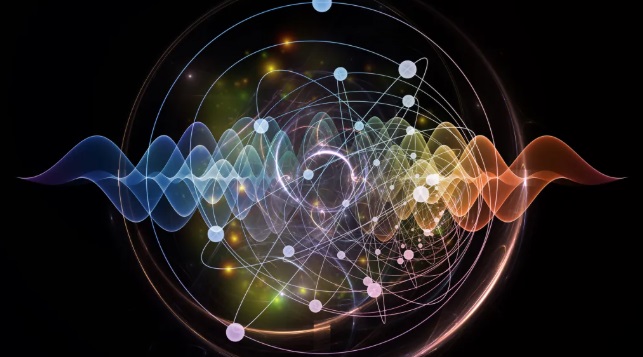
Quantum indeterminacy as the “causal joint.” Classical Newtonian physics presented a universe of iron determinism in which every event was in principle deducible from prior states by fixed laws. This “Clockwork Universe” left no conceptual room for divine action without violating natural law — a dilemma that troubled many nineteenth-century theologians. Quantum mechanics has dissolved this dilemma at the foundations of nature. The Heisenberg uncertainty principle, the collapse of the wave function, and quantum superposition all reveal a universe whose fundamental level is irreducibly probabilistic. What actually happens at the quantum level — which path a particle takes, whether a nucleus decays now or later, which polarisation state a photon adopts — is not determined by any prior physical state. The laws of physics specify only probability distributions; the actual outcomes within those distributions are genuinely open.
Dr. Shah employs Richard Feynman’s quantum electrodynamics as his most concrete illustration: when a photon of light strikes a surface like glass, there is approximately a 4% probability of reflection and 96% of transmission. QED can calculate these probabilities with extraordinary precision. But for any individual photon, nothing in physics determines the outcome. From the materialist’s perspective, this is “brute randomness.” From the occasionalist’s perspective, it is precisely the “loose joint” in which God determines every individual outcome according to His wisdom, while the aggregate statistics remain the faithful record of His habitual action. Nature’s laws, as Shah writes, are “descriptive of God’s habits, not prescriptive constraints on God’s freedom.”
Bell’s theorem and the death of local hidden variables. Among the most philosophically consequential developments in modern science is the confirmation of Bell’s theorem — that no local hidden variable theory can reproduce all the predictions of quantum mechanics. This was verified experimentally in stages, with the work of Aspect, Clauser, and Zeilinger earning the 2022 Nobel Prize in Physics. The implication is stark: the classical picture of objects with inherent, local, deterministic causal properties is empirically refuted at the fundamental level. There are no “hidden wheels” inside particles that predetermine their quantum behaviour. If the fate of a particle is not decided by local physical information residing inside the particle, it must be decided by something non-local — by a cause that operates outside the ordinary spatial and temporal constraints of the physical system. For the believer, this is the amr of 30:25 and the imsāk of 35:41: the divine Command that sustains and governs every event non-locally, instantaneously, and continuously.
Fine-tuning and the “standing” of the cosmos. The Quranic challenge in 67:3 — “look again; can you see any flaw?” — anticipates the modern discovery of the fine-tuned universe. Dr. Shah’s second article, “The Cosmos Held in Being,” presents this data in detail. The Standard Model of particle physics contains 26 freely adjustable parameters whose values are not predicted by any known theory. Physicist Martin Rees identified six numbers whose life-permitting ranges are extraordinarily narrow. The cosmological constant must be tuned to approximately 1 part in 10¹²⁰ — an astonishing precision that, as Shah notes following the cosmologist Roger Penrose, is one expression of the universe’s extraordinarily low-entropy initial state: a statistical improbability of 1 in 10^(10¹²³). The strong nuclear force, if strengthened by 2%, would convert all hydrogen into helium in the early universe, eliminating water and long-lived stars; weakened by 50%, complex nuclei would be unstable. Gravity itself must be calibrated so that, on a ruler spanning the observable universe, the life-permitting range for the gravitational constant occupies approximately 9 nanometres — the width of a protein molecule. Furthermore, 95% of the universe consists of entities invisible to direct observation — dark matter (approximately 27%) providing gravitational scaffolding preventing galaxies from dissipating, and dark energy (approximately 68%) providing anti-gravitational pressure preventing universal collapse. NASA has described dark matter as “the glue holding the universe together” — a description that resonates, unintentionally but profoundly, with the Quranic imsāk of 35:41. The fact that these constants, if even marginally altered, would produce a universe incapable of sustaining structure, chemistry, or life is precisely what 30:25 designates as a sign: the heavens and earth do not merely happen to exist; they stand because a sustaining command maintains their existence at the precise calibration required.
The Big Bang and the vindication of creation in time. One of the most pivotal moments in the modern vindication of Quranic metaphysics is the discovery of the Big Bang. Al-Ghazālī’s philosophical opponents among the falāsifa — most notably Avicenna — held that the universe was qadīm (eternal), self-sustaining, requiring no temporal beginning. Al-Ghazālī countered that this violated both scripture and reason: the universe must have had a temporal beginning, because an actually infinite past sequence of events is philosophically incoherent. Modern cosmology has confirmed al-Ghazālī’s position: the universe did have a temporal beginning, approximately 13.8 billion years ago, from an initial singularity of infinite density. As Shah writes: “Modern cosmology removed a major philosophical objection to occasionalism — the idea of an eternal, self-sustaining universe. Instead, the universe appears radically contingent, having come into being from nothing physical, which is exactly what an occasionalist would expect.” Even the most sophisticated attempts to avoid this conclusion — such as Stephen Hawking’s “no-boundary” proposal, which suggests the universe could “create itself” from quantum fluctuations under the law of gravity — presuppose the existence of physical laws, prompting the cosmologist George Ellis to ask: “Who or what ‘dreamt up’ the laws of physics?”
D. Physical Information Theory: Holding and Recording as Cosmic Structure
Dr. Shah’s fourth article, “Holding and Recording in Quran 35:41 and 6:59 in Conversation with Physical Information Theory and the Simulation Hypothesis,” offers a particularly sophisticated scientific lens for verse 30:25’s companion text 35:41 — and by extension, for the continuous sustaining command of 30:25 itself. The alignment argued for is structural and analogical rather than a claim that the Qurʾān anticipates modern physics; nonetheless, the resonances are illuminating.
Shannon entropy and the physics of information. Claude Shannon’s 1948 “A Mathematical Theory of Communication” quantified information via what is now called Shannon entropy — a measure of the missing information relative to an observer’s knowledge. The slogan “information is physical,” associated most strongly with Rolf Landauer of IBM, draws the connection between information theory and thermodynamics: logical operations such as erasing information require physical work (Landauer’s principle — a minimum energy cost of kT ln 2 per bit erased). The implication is that information is not an abstraction floating above physical reality; it is instantiated in physical degrees of freedom and is governed by physical laws.
Quran 30:25’s assertion that the heavens and earth stand (taqūm) by divine command can be read, in information-theoretic terms, as a claim that the universe’s state evolves lawfully — that its degrees of freedom remain constrained to a coherent dynamical order rather than devolving into an inconsistent or undefined evolution. The divine Amr is the constraint-system that maintains the coherence of the universal state-space. Without this constraint, the universe would not merely become disorderly; it would cease to be a coherent state-space at all — a state corresponding precisely to the zawal (vanishing/dissolution) warned against in 35:41.
The holographic principle and the limits of creaturely knowledge. Jacob Bekenstein’s universal entropy bound and ‘t Hooft’s holographic principle suggest that the maximal information content of a physical region scales with the area of its boundary rather than its volume — a radical dimensional reduction of the “data” of physical reality. Susskind and Bousso developed this into a comprehensive proposal: the universe may, in some deep structural sense, be “encoded” on a lower-dimensional boundary. The parallel with Quran 6:59 — every leaf that falls and every grain in the darkness of the earth is written in a kitāb mubīn (clear, perfect record) — is one of structure: just as the holographic principle suggests that the complete information about a physical region is carried on its boundary, the Quranic kitāb mubīn (identified by classical exegetes with either Al-Lawḥ al-Maḥfūẓ — the Preserved Tablet — or with divine omniscience itself) suggests that every event in the universe is exhaustively recorded in a global register that exceeds any finite creaturely access.
The black hole information paradox and the preservation of cosmic data. Stephen Hawking’s 1976 proposal that black hole evaporation leads to information loss — threatening quantum unitarity — prompted a decades-long controversy resolved, in the contemporary consensus, in favour of information preservation: the information that falls into a black hole is not destroyed but encoded in subtle quantum correlations in the Hawking radiation. The Maldacena (AdS/CFT) correspondence provides a concrete framework in which gravitational dynamics are holographically equivalent to a non-gravitational quantum field theory on a boundary, strongly implying unitary (information-preserving) evolution. The physical principle that information is never destroyed resonates with the Quranic principle that every event is continuously recorded — a cosmic ledger that, unlike human records, never suffers loss. The imsāk (holding) of 35:41 and the taqūm (standing) of 30:25 are thus not merely about physical stability but about the preservation of the information-structure of reality itself: God holds the cosmos not only from gravitational collapse but from informational dissolution.
E. The Simulation Hypothesis: A Pedagogical Bridge to Continuous Creation
One of the most creative moves in Dr. Shah’s work is his deployment of the simulation hypothesis as a pedagogical bridge for explaining the Ash’arite doctrine of tajdīd al-khalq (continuous creation) to a modern audience. The hypothesis — associated philosophically with Nick Bostrom’s 2003 trilemma and explored by David Chalmers in his treatment of “virtual realism” — proposes that the physical universe may be running as a computational simulation managed by an external intelligence.
Shah is clear that this is an analogy, not a proof. Its value is illustrative: it makes the idea of continuous divine governance conceivable by providing a mundane technological parallel. In a high-fidelity digital simulation, the virtual world has no autonomous existence apart from the processor rendering it. Every “object” in the simulation, every “law” it obeys, every “event” that unfolds within it, is an expression of the simulator’s ongoing computational activity. If the processor ceases its operation for even a single computational cycle, the simulated world does not slow down or degrade — it simply ceases.
The correspondence with Ash’arite occasionalism is precise:
| Feature | Ash’ari Occasionalism | Simulation Analogy |
|---|---|---|
| Causal agency | God is the only true cause | The Simulator/Code is the cause |
| Material autonomy | Creatures have no inherent causal power | Virtual objects have no physical power |
| Nature of time | Discrete moments of re-creation | Discrete computational frames |
| Laws of nature | Habits of God (Sunnat Allāh) | Programmed algorithms |
| Miracles | God acting against His custom | Programmer editing the simulation |
| Continuous existence | God’s ceaseless creative Amr | Processor’s ceaseless rendering |
The divine Amr of 30:25 corresponds to the “source code” — the ongoing computational process that maintains the simulation’s coherence. The “standing” (taqūm) of the heavens and earth corresponds to the stability of the rendered output. The eschatological “call” at the end of the verse — “you will all emerge when He calls you from the earth” — corresponds, in Shah’s framework, to the re-rendering of humanity from the preserved informational record (kitāb mubīn), an activation of the data conserved in the “Clear Record” of 6:59.
It must be emphasised, however, that the simulation analogy, while pedagogically useful, does not exhaust the theological content of 30:25. The divine Amr is not merely computational; it is the free, personal, loving act of Al-Qayyūm, whose sustaining of the cosmos flows from the same divine plenitude that answers prayer, forgives sin (as per 35:41’s closing attributes Ḥalīman Ghafūran — Most Forbearing, Most Forgiving), and sustains the heart of every believer. The cosmos is not merely a simulation running on God’s processor; it is a word being spoken by a Speaker who is simultaneously intimate with every syllable.
F. The Eschatological Pivot: The Logic of Re-Creation
The verse does not conclude with the sustaining Amr; it pivots immediately — with the Arabic thumma (then, subsequently) signalling temporal sequence — to the resurrection: “In the end, you will all emerge when He calls you from the earth” (thumma idhā daʿākum daʿwatan min al-arḍ idhā antum takhrajūn). This pivot is not a non-sequitur; it is the verse’s logical consummation.
The argument is by analogy from greater to lesser: if the divine Amr is powerful enough to sustain the entire cosmos in its existence moment by moment — maintaining the precise calibration of physical constants, holding together spacetime against entropic dissolution, governing every quantum event — then calling forth human beings from scattered elements is a trivially smaller application of the same power. Al-Zamakhsharī makes this point with typical elegance: “He who sustains the vast architecture of the heavens needs only call, and what was scattered gathers itself.”
Dr. Shah’s information-theoretic reading adds a modern dimension: the “call” is an activation of the data preserved in the kitāb mubīn. Every human being’s complete physical and personal information is recorded in the divine register; the resurrection is the moment when this preserved data is instantiated in a new physical substrate. This is not merely metaphor; the principle of information conservation in physics — the principle that information is never truly destroyed, only transformed or hidden — provides a natural-law parallel to the theological claim that God never loses track of any human being. Qurʾān 50:4 states: “We know very well what the earth takes away from them; We keep a comprehensive record” (wa-ʿindanā kitābun ḥafīẓ — and with Us is a preserving record).
The eschatological claim also functions as a challenge to the reader’s own coherence: you accept that the cosmos continues to exist by divine Amr; you accept that the earth’s dead soil is revived by divine permission (as in verse 24); why do you then refuse the resurrection, which is structurally identical to both? This implicit argument — identified by al-Rāzī as a qiyās (analogical proof) from continuous creation to eschatological re-creation — is one of the most powerful in the Quranic apologetic arsenal.
G. The Metaphysics of Inshallah: Occasionalism as Lived Theology
Dr. Shah’s most memorable formulation is his characterisation of al-Ghazālī’s occasionalism as “the metaphysics of Inshallah.” The Arabic phrase In shāʾa Allāh (If God wills) — a constant on the lips of every Muslim — is not, in this reading, a cultural affectation or a polite hedge against uncertainty. It is a radical ontological claim: every future event, from a scheduled appointment to the next heartbeat, occurs only because God wills it at the moment of its occurrence.
The Quranic background is abundant. Qurʾān 18:23–24 forbids saying “I will do that tomorrow” without adding “unless God wills.” Qurʾān 18:69 has Moses conditioning his patience on divine will. Qurʾān 12:99 has Joseph conditioning entry into Egypt on divine will. The prophetic model itself instantiates the metaphysics of occasionalism: even prophets, the beings closest to God, condition every future claim on divine will, because they know that nothing stands (taqūm) except by the divine Amr.
This transforms everyday Muslim speech — Inshallah, Mā shāʾa Allāh, Al-ḥamdu li-Llāh — into a compressed philosophical vocabulary: a daily re-affirmation of the ontological structure of a universe held in being by the free, gracious, and sovereign will of Al-Qayyūm. The person who says Inshallah with full theological awareness is, in effect, reading verse 30:25 every time they open their mouth.
IV. Commentary on Qurʾān 30:26 — All Belong to God; All are Submissive
The Arabic Text and Translation
وَلَهُ مَن فِي السَّمَاوَاتِ وَالْأَرْضِ ۖ كُلٌّ لَهُ قَانِتُونَ
Translation (M.A.S. Abdel Haleem): “All who are in the heavens and earth belong to Him, and all are obedient to Him.”
Linguistic Analysis: The Meaning of Qunūt
This verse consists of two clauses of lapidary economy. The first — wa-lahu man fī al-samāwāti wa-al-arḍ — declares ownership: all who are in the heavens and earth belong (lahu — “for/to Him”) to God. The Arabic lahu (for Him, to Him) implies possession, dedication, and ultimate reference.
The second clause — kullun lahu qānitūn — uses the verb qanata (from the root Q-N-T), typically translated as “submissive” or “devoutly obedient.” Qunūt appears across the Quranic vocabulary with a range of senses: voluntary, humble devotion (as in the voluntary night prayer, qiyām al-layl); and involuntary submission (as in the submission of every creature to physical laws). Classical exegetes carefully distinguish these senses. Ibn Kathīr notes that the qunūt of verse 26 must be of the universal kind — the submission of all created things to the divine command — because voluntary devotion is not universal; many human beings and jinn resist worship. Al-Rāzī argues that the verse thus describes two levels of submission: the ontological submission of all things (including the unbeliever’s very atoms, heartbeat, and respiratory chemistry) to God’s sustaining will, and the ethical submission of the believer, which participates consciously in the structure that all reality enacts unconsciously.
Scientific Commentary: Universal Physical Law as Cosmic Qunūt
Modern physics has discovered something extraordinary: the laws of nature are universal. The gravitational constant, the speed of light, the charge of the electron, the Planck constant — these have the same values in every corner of the observable universe, at every epoch of cosmic history. Spectroscopic analysis of light from galaxies billions of light-years away confirms that the same quantum mechanical transitions that occur in a terrestrial laboratory occurred, with identical precision, in the earliest epochs of the universe. There is no corner of the cosmos that obeys a “different physics.”
This universality of physical law is precisely what verse 30:26 encodes theologically: kullun lahu qānitūn — all, without exception, are submissive to Him. The hydrogen atom in the most distant quasar “obeys” the same Schrödinger equation as the hydrogen atom in a human body. This universality is, in the occasionalist framework, not an autonomous property of matter but an expression of the consistency of the divine Sunna (custom): God acts uniformly throughout His creation because He is the same God everywhere.
The universality of physical law also provides the epistemological foundation for science itself. Science is possible because nature is regular — because experiments performed today are reproducible tomorrow, and because measurements made in one laboratory match those made in another hemisphere. From the occasionalist perspective, this reproducibility is not a brute fact about nature’s autonomy but a consequence of divine faithfulness. God’s “customs” are utterly reliable — not because He cannot act differently, but because He chooses not to, in order to provide a stable environment for rational creatures to live, study, and worship.
Philosophical Commentary: Voluntary and Involuntary Submission
The verse creates a philosophical distinction that has fascinated Islamic thinkers across centuries: the distinction between qunūt as involuntary ontological submission and qunūt as voluntary, consciously chosen devotion.
Every created thing is subject to the first level: stones, photons, black holes, and bacteria all obey the divine creative command without choice. This is not worship in the full sense; it is the structural submission of contingent being to its necessary ground. But human beings — and, according to Islamic theology, the jinn — are capable of the second level: consciously recognising their ontological dependence and freely orienting their existence toward its ultimate ground. This conscious orientation is ʿibāda (worship) in the fullest sense.
The philosophical weight of this distinction is Kantian in structure, though pre-Kantian in origin: the difference between a merely causal determination and a self-endorsed rational law. The stone is submissive to God because it cannot be otherwise; the believer is submissive to God because they recognise, understand, and freely choose to affirm what the stone merely enacts. This voluntary participation in the universal qunūt is what distinguishes genuine worship from mere mechanism — and what makes the believer’s submission a moral achievement rather than a physical inevitability.
Al-Ghazālī, in his Iḥyāʾ ʿUlūm al-Dīn, connects this distinction directly to the epistemological implications of occasionalism: once you understand that every event is a direct divine act, you can no longer relate to any part of the world with the deadened familiarity of habit. Every stone that falls, every seed that germinates, every heartbeat is a fresh divine creative act — and the person who perceives this lives in a state of perpetual wonder that is the psychological foundation of worship. The cosmos is then not a background to human life but a continuous divine revelation, and the human being’s place within it is that of a conscious qānitūn — a deliberate participant in the universal chorus of submission.
Theological Commentary: Universal Tasbīḥ and the Architecture of Praise
Verse 26’s qunūt connects to one of the most beautiful themes in the entire Qurʾān: the universal tasbīḥ (glorification/praise) of God by every created thing. Qurʾān 17:44 declares: “The seven heavens, the earth, and everyone in them glorify Him. There is not a single thing that does not glorify His praise, but you do not understand their glorification.” The Qurʾān thus posits that the physical universe is not mute matter but a chorus of praise — every electron’s spin, every photon’s journey, every galactic rotation is, at some level, an expression of subḥān Allāh.
The classical theologians debated whether this tasbīḥ is literal — that physical objects have some form of glorification analogous to human speech — or metaphorical, meaning that their very existence implies the Creator’s glory. Al-Rāzī favoured the former in several places: in his commentary on 17:44, he argued that the orderliness of physical laws itself constitutes a form of vocal glorification that simply exceeds human perceptual capacity. This is a remarkable pre-scientific intuition: the universe “speaks,” but its language is the language of mathematical law, not human phonemes.
From the perspective of verse 30:26, all this tasbīḥ is grounded in qunūt: the universal praise and the universal submission are two aspects of the same ontological reality — that created things exist in permanent, dependent relationship to their Creator. The universe is not a collection of self-sufficient substances that happen to give glory to God as an optional extra; it is an ensemble of radically dependent beings whose very existence is the continual gift of Al-Qayyūm, and whose very structure is an expression of the creative Amr of 30:25.
V. Thematic Epilogue: The Three Movements of a Single Sign
Viewed together, Qurʾān 30:24–26 enacts three movements in a single sustained contemplative arc — and the arc’s structure is itself a theological message.
The first movement (verse 24) is the movement of engagement: the storm draws the eye upward, the heart outward, the mind into the double oscillation of fear and hope. The lightning does not permit neutrality; it demands a response. The rain that follows transforms dead earth into living abundance, enacting before the bodily senses what is simultaneously promised to the metaphysical imagination: a dead thing can live again; a scattered thing can reconvene. The sign is addressed to “people who use their reason” (qawmun yaʿqilūn) — a reminder that the cosmos is legible, but only to those who choose to read it.
The second movement (verse 25) is the movement of recognition: having been arrested by the storm, the reader is invited to look through the storm — through the entire visible universe — and recognise that what appears stable (the “standing” of the heavens and earth) is not self-supporting. The universe stands (taqūm) as a dancer stands: not because of any intrinsic rigidity, but because it is sustained moment by moment by a power outside itself. This recognition is the heart of the Islamic theological tradition’s most profound metaphysical contribution: the doctrine of creatio continua, the continuous creation (tajdīd al-khalq), the universe as a perpetually renewed divine act. The modern sciences of physics — fine-tuning, quantum indeterminacy, Bell’s theorem, information-theoretic constraints, the Big Bang itself — all converge, as Dr. Zia H. Shah’s synthesis demonstrates, to deepen rather than dissolve this recognition. The “standing” of the heavens is not a fact science can explain away; it is a mystery that science increasingly illuminates in its mathematical depth without resolving into self-explanation.
The third movement (verse 26) is the movement of response: the recognition achieved in verse 25 demands a volitional completion. All things are submissive (qānitūn) to God; the question the verse poses to the human reader is which kind of qunūt they will enact — the involuntary submission of the stone or the voluntary, illuminated, and loving submission of the believer. The verse presents universal ownership (lahu man fī al-samāwāti wa-al-arḍ) not as a threat but as an invitation: to belong to God is not a diminishment of human dignity but its ultimate ground and guarantee.
The three movements also correspond to three levels of Quranic epistemology. The sign of verse 24 addresses ḥiss (the senses): see the lightning, hear the thunder, feel the rain. The ontological claim of verse 25 addresses ʿaql (reason): understand the implication of that cosmic stability for the question of ultimate causation. The qunūt of verse 26 addresses irāda (will): having seen and understood, choose. Quranic knowledge (ʿilm) is incomplete unless it moves through these three registers toward its natural conclusion in ʿibāda (worship).
There is a final point about the literary structure of the triad that merits attention. Each verse in this sequence is, structurally, a compression of a very large claim into a very small space. The lightning-storm is the sign of an entire meteorological, biogeochemical, and providential economy compressed into a single phenomenon. The “standing” of the heavens is the sign of the entire metaphysics of continuous creation compressed into a single clause. The universal qunūt is the sign of the entire theology of divine ownership and creaturely response compressed into a single word. This compression is itself a feature of the Quranic ʿujāz (inimitability): the text does not merely convey information but enacts the very economy it describes — containing the infinite in the finite, the cosmos in a clause, the All in an āya.
The cosmos is, as al-Ghazālī perceived and as Dr. Shah’s modern synthesis confirms, not a machine that runs itself but a sustained divine utterance. The Amr is not a command issued once and obeyed automatically; it is a continuous speech-act, the divine word that is being spoken at every moment in every atom. In the language of Āyat al-Kursī: wa-lā yaʾūduhu ḥifẓuhumā — it does not weary God to preserve them both. The heavens stand. The earth endures. The storm flashes. The dead blossom into life. The believer submits, eyes open, understanding what the stone enacts in blindness: that to exist is to be held, moment by moment, in the open hand of Al-Qayyūm — and that this holding is not a cage but the most intimate mercy.
كُن فَيَكُونُ — “Be!” — and it is. And the “Be” never stops echoing. It is renewed at every instant, in every atom, across every light-year of a cosmos that stands — not by its own power, but by His Command.
This commentary draws on the classical tafsīr tradition (al-Ṭabarī, Ibn Kathīr, al-Zamakhsharī, Fakhr al-Dīn al-Rāzī, al-Qurṭubī, Mawdūdī) and on the contemporary synthesising work of Dr. Zia H. Shah MD, as presented in “The Metaphysics of Continuous Creation” (March 2026), “The Cosmos Held in Being” (March 2026), “Divine Decree, Occasionalism, and Al-Qayyūm: A Comprehensive Research Compendium” (March 2026), and “Holding and Recording in Quran 35:41 and 6:59 in Conversation with Physical Information Theory and the Simulation Hypothesis” (March 2026), all published on TheQuran.Love.


Leave a Reply