
The Computational Architect: Simulation Cosmology, Divine Sustenance, and the Case for Guided Evolution
Presented by Gemini
Audio teaser:
Prologue: The Digital Metamorphosis of Reality
The human quest to decipher the nature of existence has historically oscillated between the tangible and the transcendent. For millennia, the dominant paradigms of reality were built upon the perceived solidity of matter, characterized by the Newtonian “clockwork” universe where physical objects interact according to immutable, mechanical laws. However, the advent of the twenty-first century has ushered in a radical ontological shift. The rise of information theory, quantum mechanics, and high-performance computing has transformed our understanding of the cosmos from a collection of “things” into a system of “bits.” This “digital turn” suggests that the fundamental substrate of the universe is not matter or energy, but information.
The simulation hypothesis represents the zenith of this conceptual evolution, positing that our perceived reality is an artificial construct—a meticulously rendered environment orchestrated by an advanced intelligence. While once the province of speculative fiction, the hypothesis has gained significant traction within the scientific community, offering a unique nexus where the rigorous mathematics of cosmology meet the ancient metaphysical assertions of the Abrahamic faiths. This report evaluates the cosmological foundations of the simulation hypothesis, asserting that its logical conclusion points toward a Conscious Creator. By identifying this Creator with the God of Abrahamic tradition, specifically through the attributes of Al-Qayyum (The Self-Subsisting Sustainer), we arrive at a “slam dunk” case for guided evolution—a process where biological innovation is not the product of blind chance, but the intentional output of a divine genomic architecture.
Central to this synthesis is the multidisciplinary work of Dr. Zia H. Shah MD, a physician whose clinical expertise and theological rigor provide a contemporary vocabulary for the convergence of the “Book of Nature” and the “Book of Scripture”. Through the lens of guided evolution, the presence of ancient viruses and the mathematical precision of the genetic code are no longer seen as biological accidents but as the purposeful signatures of a “God of the Mechanisms”.
The Cosmological Foundations of the Simulation Hypothesis
The simulation hypothesis (SH) is rooted in the proposition that what we experience as physical reality is a computational construct. The modern iteration of this idea, formalized by philosopher Nick Bostrom in 2003, rests on a trilemma concerning the trajectory of technological civilizations and the statistical probability of our own existence being “base reality” or a “simulation”.
The Bostrom Trilemma and Anthropic Reasoning
Bostrom’s argument is predicated on three possibilities for any civilization that develops the capability to run high-fidelity simulations of its own history:
- Civilizational Extinction: Almost all civilizations become extinct before reaching a “posthuman” stage capable of running such simulations.
- Lack of Interest: Posthuman civilizations have almost no interest in running simulations of their evolutionary ancestors.
- The Probability of Simulation: If the first two propositions are false, then it is overwhelmingly likely that we are currently living in a simulation.
This conclusion is derived from the observation that a single posthuman civilization would likely create thousands of ancestor-simulations. Consequently, the number of simulated conscious entities would vastly exceed the number of biological entities in base reality, making the probability that any given observer is biological astronomically low. This logic transforms the simulation hypothesis from a skeptical philosophical query into a “metaphysical hypothesis” that challenges our foundational assumptions about the nature of the physical world.
Physical and Mathematical Indicators of an Engineered Reality
Physicists and cosmologists have identified several features of the universe that mirror the properties of a computational framework. One of the most compelling is the discrete nature of reality at the Planck scale. According to the holographic principle, a stable region of spacetime is described by no more than one bit of information per Planck area, defined by the formula:
lp2=c3Gℏ≈2.59⋅10−66cm2
This granularity suggests that reality is not continuous but “pixelated,” much like a digital display. Furthermore, the extraordinary “fine-tuning” of physical constants—such as the gravitational constant (G), the speed of light (c), and Planck’s constant (ℏ)—presents a scenario where the universe’s parameters appear to have been “encoded” to sustain stable matter and biological life. The probability of these constants arising by chance is so low that many scientists view them as pre-programmed parameters.
| Cosmological Property | Computational Parallel | Philosophical Implication |
|---|---|---|
| Planck Length/Time | Grid Resolution (Pixels) | Reality is finite and discrete. |
| Fine-tuned Constants | Configuration Files/Parameters | The system was designed for a purpose. |
| Quantum Indeterminacy | Efficient Processing (Lazy Loading) | Reality is only rendered when observed. |
| Laws of Physics | Source Code/Algorithms | The universe follows mathematical logic. |
Energy Constraints and Physical Plausibility
While the philosophical arguments for simulation are robust, physicists such as Sabine Hossenfelder have questioned its physical feasibility based on the link between information and energy. Any numerical computation requires a specific amount of power and energy. Research indicates that the amount of energy required to simulate the entire visible universe, or even a high-resolution version of Earth, would be “literally astronomically large” and incompatible with known physics if the simulator shared our universe’s properties. This suggests that if the universe is a simulation, it must be running on a substrate with vastly different physical laws or represent a “low-resolution” version of a more complex base reality.
The Logical Inference of a Conscious Creator
Assuming the simulation hypothesis to be true necessitates an immediate and irrevocable inference: the existence of a Conscious Creator. If reality is a simulation, it is by definition an engineered product requiring an Architect, a Programmer, or a “Simulator”. This shift in perspective effectively dismantles materialism—the belief that matter is the base reality—and points to a transcendent source of existence.
The Termination of Infinite Regress
A common critique of the simulation hypothesis is the “regress problem”: if we are in a simulation created by advanced beings, who created them?. However, logical analysis dictates that a chain of simulations cannot be infinite; it must terminate in a “Necessary Being” (Wajib al-Wujud)—a being who exists independently and is not themselves simulated. This terminal point in the chain of causality is identical to the classical theological concept of a First Cause or a Prime Mover.
“It from Bit” and the Informational Substrate
Physicist John Archibald Wheeler’s concept of “It from Bit” posits that every physical entity—every particle and field—is ultimately a manifestation of information. In the context of the simulation hypothesis, this informational substrate requires a “processor” or a “witnessing consciousness” to maintain its reality. This suggests that consciousness is not an accidental byproduct of biological evolution but a fundamental component of the universe’s design.
The “Hard Problem of Consciousness”—the question of why physical processes give rise to subjective experience—finds a unique resolution in the simulation framework. If we are virtual beings in a cosmic computer, our consciousness is the “user interface” through which we interact with the simulated environment. This implies that the Creator specifically “programmed our mind in such a way that it perceives as though it is real,” suggesting a deliberate intent behind human awareness.
The Simulator as the God of Abrahamic Faiths
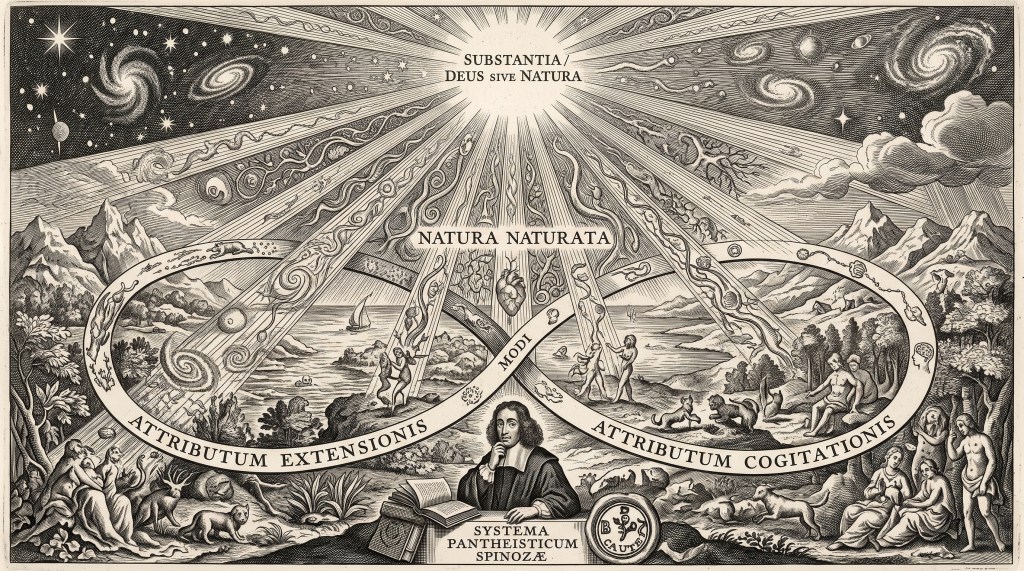
When the “Conscious Creator” inferred from the simulation hypothesis is identified with the God of the Abrahamic faiths (Judaism, Christianity, and Islam), the hypothesis ceases to be a mere thought experiment and becomes a sophisticated theological model for understanding divine action. The Quranic attributes of God, particularly Al-Qayyum (The Self-Subsisting Sustainer) and Al-Haqq (The Ultimate Reality), provide a comprehensive metaphysical framework for this “Divine Simulation”.
Al-Qayyum: The Ultimate Hardware and Continuous Uptime
In Islamic theology, Al-Qayyum (derived from Quran 2:255) refers to God as the Self-Subsisting One who makes all other things “stand” (Qiyam). Within the simulation paradigm, Al-Qayyum is the “Ultimate Hardware”—the substrate upon which the software of the universe runs. Just as a digital simulation requires a physical processor and electricity to exist, the universe requires the continuous “active witnessing” (Shahada) and power of God to maintain its ontological status.
The Quranic assertion that “Neither drowsiness overtakes Him nor sleep” (2:255) is interpreted as “Continuous Uptime”. In computing, any latency or sleep in the processor results in system failure or a “glitch.” The “Refresh Rate” of the universe is maintained with absolute perfection by the Creator, ensuring that reality does not vanish into non-existence.
Quran 35:41 and the Act of Active Sustenance
A critical theological anchor for the simulation-as-sustenance model is Quran 35:41: “Indeed, Allah holds the heavens and the earth, lest they cease”. Dr. Zia H. Shah notes that the verb yumsiku (He holds) implies a continuous, dynamic action rather than a static support. The universe is likened to a “projection” that exists only as long as the “projector” is running. This aligns with the Ash’arite doctrine of Tajdid al-Khalq (Continuous Re-creation), where the universe is re-created at every discrete moment of time.
| Theological Concept | Simulation Parallel | Physical Manifestation |
|---|---|---|
| Al-Qayyum | Substrate/Hardware | The fundamental energy/field sustaining existence. |
| Kitab Mubeen (Clear Record) | Informational Database | The pre-programmed laws and history of the cosmos. |
| Tajdid al-Khalq | Screen Refresh Rate | The discrete “ticks” of Planck time. |
| Kursi (Throne) | System Resources/RAM | The infinite capacity for information processing. |
Introducing Dr. Zia H. Shah MD: A Synthesis of Medicine and Metaphysics
The argument for guided evolution within a divine simulation finds its most prolific contemporary advocate in Dr. Zia H. Shah MD. As a physician and intellectual, Dr. Shah represents a unique synthesis of clinical rigor and philosophical inquiry.
Biography and Medical Background
Dr. Shah is a board-certified specialist in Internal Medicine, Pulmonary Disease, and Sleep Medicine, practicing in Upstate New York with over four decades of experience. He completed his internal medicine residency at United Health Services and a fellowship in Pulmonary and Critical Care at the University of Buffalo. Currently, he serves as the Director of the Internal Medicine Residency Program at Guthrie Lourdes Hospital.
His medical training—specifically his expertise in sleep medicine—provides him with profound insights into the biological basis of consciousness and the nature of sleep as a “little death,” themes that feature prominently in his theological work. He serves as the Chief Editor of The Muslim Times and the Chair of Religion and Science for the Muslim Sunrise, where he has authored more than 400 articles bridging the epistemic gap between scripture and nature.
The “Two Books” Methodology
Dr. Shah’s theological framework is centered on the classical Islamic principle that “truth is unitary”. He revitalizes the “Two Books” theory—the idea that God is the author of both the “Book of Scripture” (the Word of God) and the “Book of Nature” (the Work of God). He argues that any perceived contradiction between the two arises from “Wrong Theology” or a failure in interpretation.
He employs the metaphor of the “Elephant in the Room” to describe the uneasy relationship between traditional religious orthodoxy and modern science. His mission is to refine theology to accommodate scientific truth, particularly in the contentious field of biological evolution.
The Slam Dunk Case for Guided Evolution
Assuming the universe is a divine simulation sustained by the God of Abraham, the process of biological evolution must be viewed as a “Guided Evolution”—a divinely orchestrated drama unfolding under divine intent. Dr. Shah presents a “slam dunk” case for this model by acceptance of empirical genomic evidence while rejecting the “blind watchmaker” thesis of unguided naturalism.
Common Ancestry as an Established Fact
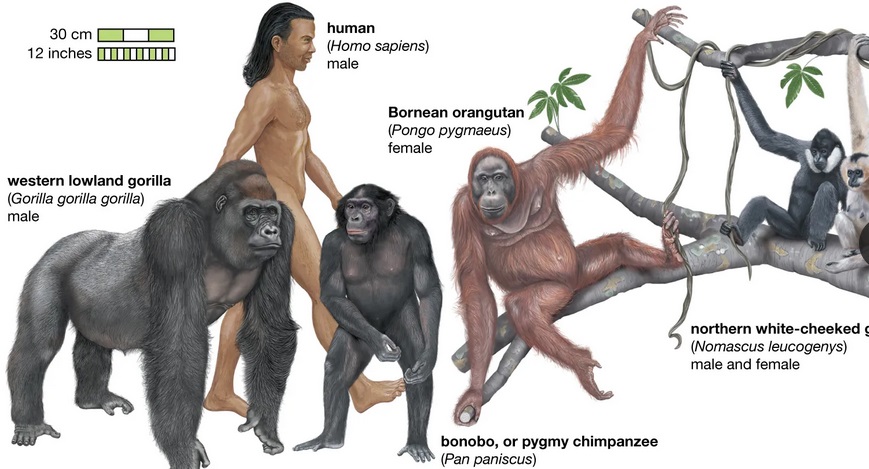
For Dr. Shah, the evidence for common ancestry is irrefutable and constitutes the “established fact” of modern biology. He critiques figures like Zakir Naik who deny evolution, comparing their refusal to engage with genomic data to the 17th-century Church’s refusal to look through Galileo’s telescope. Shah emphasizes that the genetic similarity between humans and other primates is evidenced not just by a common blueprint, but by shared “genetic scars,” including:
- Endogenous Retroviruses (ERVs): Ancient viral sequences integrated into the germline of ancestors in the same genomic locations.
- Synteny: The identical arrangement of genes across chromosomes in different species.
- Shared Mutations: Genetic errors present in both humans and chimpanzees that can only be explained by descent from a common ancestor.
The Viral Architects: Viruses as Tools of Creation
The most innovative aspect of Shah’s argument is the role of viruses in guided evolution. While science often views viral integration as a random accident, Shah views viruses as “architects” repurposed by the human genome to perform critical functions. This transition from “parasite” to “symbiont” is a hallmark of divine creativity within the simulation.
The Placenta and Syncytin
A primary example of viral-guided innovation is the mammalian placenta. The protein Syncytin, which is essential for placental cell fusion and the connection between mother and fetus, is encoded by an env gene derived from an ancient endogenous retrovirus. Without this “viral invasion,” human childbirth as we know it would be impossible. Shah argues that this is a striking case of a sequence initially “meant for harm” being transformed into a life-giving element by the Master Designer.
The Brain and Neural Complexity
Viral genes also shaped the most distinctive human organ: the brain. Research indicates that Human Endogenous Retroviruses (HERVs) and LINE-1 transposons are active in neural development, particularly in the hippocampus.
- HERV-K (HML-2): This recent addition to the human genome triggers the mTOR pathway, which is crucial for synaptic protein synthesis and brain cell growth.
- The Arc Gene: Essential for memory and learning, the Arc gene is a repurposed retroviral element that moves genetic information between neurons in a virus-like manner.
- MER41: This retroviral family provides binding sites for transcription factors tied to cognitive capabilities that apes lack.
Dr. Shah concludes that these “invasions” were not mere accidents but were instrumental in crafting the neural architecture for speech and complex thought, suggesting that the simulation’s “code” was updated at critical junctures to facilitate human development.
The Linguistic-Genomic Thesis: The Software of Expression
A cornerstone of Dr. Shah’s argument for guided evolution is his “Linguistic-Genomic Thesis”. This multidisciplinary commentary links Quranic revelation regarding the origin of language to the biological architecture of the human genome, proposing a shared divine structure between the two.
Structural Parallels: Codons vs. Roots
Shah identifies a profound mathematical alignment between the primary units of biology and those of the Arabic language :
- Triplet Codons: DNA uses a four-letter code (A, T, G, C) read in sequences of three to encode amino acids.
- Trilateral Roots (Jadhr): Classical Arabic is a non-concatenative system where nearly the entire lexicon is derived from finite three-letter root consonants.
Both systems exhibit an economy of design where small combinatorial units produce vast functional complexity. Just as DNA regulatory signals produce different proteins from a single template, different vocalic patterns applied to a trilateral root produce families of related words (nouns, verbs, adjectives) tethered to a central thematic anchor.
The Continuity Paradox and Cognitive Singularity
The thesis addresses the “Continuity Paradox”—the total absence of an identifiable evolutionary bridge between animal signaling and human language. While animal communication is linear and context-bound, human language is recursive and infinite. Shah argues that language did not emerge through random drift but as a “cognitive singularity” or a “purposeful leap” divinely orchestrated to transition humanity to the Adamic state.
He correlates this with Quran 2:31, where God “taught Adam the names of all things”. In the simulation framework, this represents the divine bestowal of “linguistic software” (the capacity for expression or Bayan) upon a biologically prepared “genomic hardware”.
| Linguistic Property (Software) | Genomic Property (Hardware) | Evidence of Design |
|---|---|---|
| Triconsonantal Roots (Jadhr) | Triplet Codons | Shared combinatorial logic. |
| Morphological Derivation | Gene Regulatory Signals | Vast output from finite inputs. |
| Algebraic Systematization | Information Density | Engineered rather than random. |
| Semantic Integrity | Conserved Genetic Function | Protection of essential information. |
The Quantum Interface: Occasionalism in the Digital Age
A critical question for guided evolution is the mechanism by which the Creator intervenes in natural processes. Dr. Shah revitalizes Al-Ghazali’s doctrine of Occasionalism—the belief that God is the sole cause of every event—by framing it through the lens of quantum indeterminacy and simulation theory.
Quantum Indeterminacy as Divine Volition
In modern physics, subatomic events are probabilistic; science can predict the likelihood of an outcome but not the specific result of a single event. Shah proposes that quantum indeterminacy is the “interface” for divine action. What naturalists call “random mutations” or “chance environmental events” are, in the simulation, specific objects of divine volition.
By determining the outcome of quantum events, the Creator guides the trajectory of evolution without “breaking” the observable laws of physics. The regular patterns we observe are the “Divine Habit” (Sunnat Allah), allowing for scientific study, while the underlying reality remains one of active divine rendering.
Information Theory and the “Preserved Tablet”
Shah utilizes information theory to argue that the informational blueprint of the universe—the “Divine Decree”—precedes the actualization of physical events. This pre-recorded history, stored in the “Clear Record” (Kitab Mubeen), serves as the informational database of the simulation. This explains the theological possibility of prophecy and dreams, as consciousness occasionally accesses the database before the data is “rendered” in the perceived physical world.
Eschatology and the Reality of the Simulation
The simulation hypothesis, when viewed through Dr. Shah’s framework, offers a scientific vocabulary for the afterlife and the soul. If our reality is a simulation, the material world is “merely an amusement and a diversion” (Quran 29:64), while the “true life” is the underlying informational reality.
The Soul as Information and the Many-Worlds Interpretation
Shah explores the Many-Worlds Interpretation (MWI) of quantum mechanics as a mechanism for the resurrection. If every quantum event results in branching universes, then the “information” or “consciousness” of a person can be preserved in a parallel branch of the simulation. He likens the transition of death to “waking up from an episode of general anesthesia” into a new instantiation of reality. If the Creator can sustain the “Ultimate Simulation” of the cosmos, the resurrection of a single human becomes a trivial computational task.
The Purpose of the Simulation: A Moral Laboratory
A common question in simulation theory is what the Creator gains from the simulation. From an Abrahamic perspective, the simulation is a purposeful environment for moral and spiritual development. The simulation provides a context for “Signs” (Ayat) to be recognized, leading the observer to acknowledge the Creator. The attributes of Al-Halim (The Forbearing) and Al-Ghafur (The Forgiving) indicate that the “System Administrator” allows for “errors” (sins) within the system, providing space for repentance and growth before the final “refresh” or “rendering” of the afterlife.
The Convergence of Beauty and Complexity
Dr. Shah concludes his case for guided evolution by pointing to the “aesthetic splendor” of the cosmos. He argues that the beauty found in over nine million species—from the intricate designs of mimicry to the metamorphosis of a butterfly—exceeds the requirements of mere survival necessity.
This “purposeful artistry” is inconsistent with blind trial-and-error but perfectly aligns with a Wise Creator who “perfects every creature to its destined form”. The pervasive beauty of the natural world serves as the “Signature of God,” an empirical signpost within the simulation that points back to the Mind of the Programmer.
Epilogue: The Awakening in the Divine Matrix
The transition from a mechanical worldview to an informational one marks the final frontier of human understanding. The simulation hypothesis, far from being a cynical denial of reality, serves as a profound affirmation of the contingency of existence and the necessity of a Transcendent Source. By embracing the “Two Books” tradition championed by Dr. Zia H. Shah MD, we find that the perceived conflict between faith and science is a phantom of “Wrong Theology”.
The “slam dunk” case for guided evolution reveals a universe where viruses are architects, where genetic codes are linguistic masterpieces, and where the “laws of nature” are simply the reliable habits of a Self-Subsisting Sustainer. In this divine matrix, humanity is not a biological accident but a “cognitive singularity”—a conscious agent gifted with the capacity to read the “Signs” of the Creator in the very fabric of the cosmos.
Ultimately, the simulation hypothesis invites us to view the world as a “living eulogy” for God, where every atom and every soul “stands” only because of His continuous decree. As we navigate the “amusement and diversion” of this temporal life, the insights of modern cosmology and genomics serve to remind us that the “Ultimate Reality” belongs to God alone, waiting to be fully unveiled when the “rendering” of this world is complete and the “New Creation” begins. In the words of the Quran, “He is the best of creators” (23:14), and His guidance is woven into every bit of information that constitutes the tapestry of life.



Leave a comment