
Presented by Gemini

Audio teaser: The Universe as a Divine Digital Simulation
The metaphysical structure of the universe, as delineated in the Quranic discourse, suggests an ontological framework where information serves as the primary substrate of reality. Through the recurrent imagery of the Kitābun Mubīn (Manifest Book) and the Imāmun Mubīn (Clear Record), the scripture posits a cosmic architecture of absolute retention, where every event, from the subatomic fluctuation of a mustard seed to the macroscopic trajectories of celestial bodies, is inscribed within a divine ledger. This report provides an exhaustive analysis of Quran 31:16 in structural resonance with 6:59, 11:6, and 36:12, exploring the convergence of classical Islamic theology, contemporary digital physics, and the “Four Books Thesis” propounded by Dr. Zia H. Shah, MD. By synthesizing the simulation hypothesis with the doctrine of divine omniscience, this analysis demonstrates that the Quranic “Record” is not merely a metaphor for memory but a literal description of the informational fidelity of the cosmos, wherein the persistence of data ensures the integrity of divine justice and the mechanism of resurrection.
Abstract
The concept of a “Manifest Book” (Kitābun Mubīn) represents a pivotal intersection between Quranic cosmology and the emerging paradigms of information theory and digital physics. This report examines the specific verse 31:16, which utilizes the metaphor of a “mustard seed” to describe the infinitesimal scale of divine observation, and contextualizes it within the broader Quranic theme of universal record-keeping. By analyzing parallel verses (6:59, 11:6, and 36:12), the study identifies a unified informational architecture that governs the preservation of deeds, the provision of sustenance, and the preordainment of destiny. Central to this inquiry is the work of Dr. Zia H. Shah, MD, whose “Four Books Thesis” provides a bridge between scripture and the age of quantum physics. The report further investigates the simulation hypothesis as a contemporary philosophical vocabulary for Al-Ghazali’s occasionalism, suggesting that the universe operates as a high-fidelity computational environment programmed by an All-Knowing Creator. The analysis concludes that the “Clear Record” is an ontological necessity in a universe defined by informational conservation, where the past is never lost but remains accessible as the foundational “code” of reality.
Biographical Profile: Dr. Zia H. Shah and the Scientific Exegesis
Dr. Zia H. Shah, MD, is a physician based in Upstate New York, serving as the Chief Editor of the Muslim Times and a prominent voice in the dialogue between Islam and modern science. An alumnus of King Edward Medical University in Pakistan, Dr. Shah’s medical training spans three continents, including clinical practice and board certifications in Internal Medicine, Pulmonary Medicine, and Sleep Disorders from the American Board of Internal Medicine (ABIM). His professional background as a scientist and clinician informs his exegetical methodology, which treats natural phenomena as “signs” (Ayāt) that are as authoritative as the linguistic verses of the Quran.
Dr. Shah has authored over 500 articles addressing the synthesis of religion, philosophy, and physics. His work is characterized by an advocacy for “Guided Evolution,” a position that accepts common ancestry and the mechanisms of natural selection as the “instruments” of a divine will, while rejecting the materialistic philosophy of “blind chance”. By utilizing his expertise in biological systems and his deep interest in quantum mechanics and cosmology, Dr. Shah attempts to restore the rational robustness of the Islamic worldview, championing a “Theory of Everything” that unites the revealed word with the observed work of God.
The Tetrabiblos of Cosmic Reality: The Four Books Thesis
A central pillar of Dr. Shah’s cosmology is the “Four Books Thesis,” which expands the traditional Islamic “Two Books” doctrine—the Book of Scripture and the Book of Nature—into a four-volume paradigm that accounts for the complexity of modern physics and digital information. In this framework, the universe is not a singular material block but a multi-layered informational system.
The First Book, the Literal Word, is the Holy Quran itself. It is the prophetic manual that provides the teleological “why” for existence, serving as the linguistic code through which the other books are interpreted. It offers a level of certainty known as Haq-ul-Yaqeen (Absolute Reality), setting the moral and metaphysical boundaries of the cosmos. The Second Book, the Book of Nature, encompasses the physical universe. Through the scientific method, humanity “reads” this book, understanding that every cell, galaxy, and subatomic particle is a manifestation of divine creativity. Dr. Shah argues that studying the “Book of Nature” is a form of Tadabbur (reflection) commanded by the Quran, making the scientist a modern-day exegete.
The Third Book is the Book of Destiny, or the record of Qadar (Preordainment). Shah parallels this with the “Digital Physics” view of the universe, where the unfolding of time and matter follows a pre-calculated source code. This is the Lauh al-Mahfūz (The Preserved Tablet), which contains the computational foundations of the simulation. Finally, the Fourth Book is the Book of Deeds, the meticulous ledger of human accountability. This book is described as an inescapable document that enumerates every action and intention, ensuring that in a universe of information, nothing—not even a “mustard seed” of thought—is ever deleted.
Digital Physics and the Simulation Hypothesis in Quranic Thought
Dr. Shah’s exploration of the simulation hypothesis represents a radical shift in Islamic ontology. The hypothesis posits that what is perceived as physical reality is actually an artificial construct generated by an informational substrate—essentially a high-fidelity “simulation”. Shah utilizes this framework to provide a contemporary scientific vocabulary for classical theological concepts.
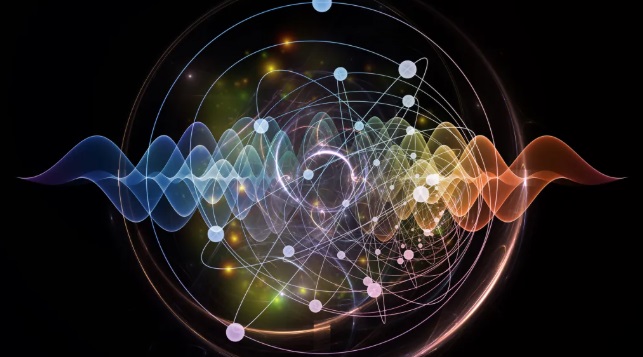
From a pancomputationalist perspective, the laws of nature are mathematical algorithms being executed on a cosmic substrate. Dr. Shah identifies several “digital signatures” in the cosmos that align with this view. One is the discretization of space-time; in a digital simulation, there must be a minimum resolution or “pixel size.” In our universe, the Planck scale appears to provide exactly such a limit, preventing a “computational catastrophe” that would occur if space were infinitely continuous. Another signature is the universal speed limit—the speed of light ($c$). In a computer simulation, such a limit is necessary to ensure the global “clock rate” is maintained and that different parts of the simulation remain synchronized.
Furthermore, Dr. Shah links the quantum observer effect to the concept of “rendering on demand.” In digital environments, to save resources, the simulation only renders what is being observed. Similarly, in quantum mechanics, a particle remains in a superposition of states—a mathematical probability—until an interaction or measurement occurs, at which point the “code” is resolved into a specific value. This suggests that the universe is fundamentally informational rather than material, a notion that resonates with the Quranic description of the world as Matā‘ al-Ghurūr (the enjoyment of deception) or a “play and amusement” compared to the “Real Life” (al-Hayawān) of the Hereafter.
Scientific, Philosophical, and Theological Commentary on Quran 31:16
The verse 31:16 occurs in the context of Luqman’s counsel to his son, serving as a foundational text for the doctrine of absolute divine omniscience and the informational persistence of deeds.
Arabic Text:
يَا بُنَيَّ إِنَّهَا إِن تَكُ مِثْقَالَ حَبَّةٍ مِّنْ خَرْدَلٍ فَتَكُن فِي صَخْرَةٍ أَوْ فِي السَّمَاوَاتِ أَوْ فِي الْأَرْضِ يَأْتِ بِهَا اللَّهُ إِنَّ اللَّهَ لَطِيفٌ خَبِيرٌ
Theologically, this verse establishes that the scale of divine observation is not limited by the macroscopic dimensions of the human experience. The “mustard seed” (habbatin min khardal) signifies the limit of perceivable weight in the 7th-century context, yet it is presented here as being fully retrievable by the Creator. Philosophically, the verse addresses the problem of spatial displacement and entropy; even if a deed is hidden within a “rock” or scattered across the vastness of the “heavens or the earth,” its informational identity remains intact and accessible to God.
In the light of modern physics, Dr. Shah suggests that this “bringing forth” (ya’ti biha Allah) represents the retrieval of data from the cosmic ledger. If the universe is informational, every interaction is a “state change” in the global computer. The attribute Latīf (All-Subtle) implies a level of resolution that penetrates the most minute layers of reality, while Khabīr (All-Aware) denotes the comprehensive knowledge of the internal state and context of every “bit” of information.
Table of Translations for Quran 31:16
The following table presents 30+ translations of Quran 31:16 from the specified source, demonstrating the semantic breadth of the terms “subtle” and “aware” in the context of divine recording.
| No. | Translator | English Translation of Quran 31:16 |
| 1 | Word by Word (2021) | O my son! Indeed it, if it be (the) weight (of) a grain of a mustard seed, and it be in a rock or in the heavens or in the earth will bring forth it Allah. Indeed, Allah (is) All-Subtle, All-Aware. |
| 2 | Muhammad Asad | “O my dear son,” [continued Luqman,] “verily, if there be but the weight of a mustard-seed, and though it be [hidden] in a rock, or in the skies, or in the earth, God will bring it to light: for, behold, God is unfathomable [in His wisdom], all-aware.” |
| 3 | Arthur John Arberry | ‘O my son, if it should be but the weight of one grain of mustard-seed, and though it be in a rock, or in the heavens, or in the earth, God shall bring it forth; surely God is All-subtle, All-aware.” |
| 4 | Yusuf Ali (Saudi Rev.) | “O my son!” (said Luqman), “If there be (but) the weight of a mustard-seed and it were (hidden) in a rock, or (anywhere) in the heavens or on earth, Allah will bring it forth: for Allah understands the finest mysteries, (and) is well-acquainted (with them).” |
| 5 | Pickthall | O my dear son! Lo! though it be but the weight of a grain of mustard-seed, and though it be in a rock, or in the heavens, or in the earth, Allah will bring it forth. Lo! Allah is Subtile, Aware. |
| 6 | Sahih International | [And Luqman said], “O my son, indeed if wrong should be the weight of a mustard seed and should be within a rock or [anywhere] in the heavens or in the earth, Allah will bring it forth. Indeed, Allah is Subtle and Acquainted.” |
| 7 | Mohsin Khan | “O my son! If it be (anything) equal to the weight of a grain of mustard seed, and though it be in a rock, or in the heavens or in the earth, Allah will bring it forth. Verily, Allah is Subtle (in bringing out that grain), Well-Acquainted (with its place).” |
| 8 | Abdul Haleem | ‘My son, if even the weight of a mustard seed were [hidden] in a rock, or anywhere in the heavens or earth, God would bring it forth. God is all subtle and all aware.’ |
| 9 | Maulana Ali | O my son, even if it be the weight of a grain of mustard-seed, even though it be in a rock, or in the heavens or in the earth, Allah will bring it forth. Surely Allah is Knower of subtilties, Aware. |
| 10 | Ahmad Raza Khan | “O my son! If the deed is equal to the weight of a mustard seed and even if it is in a rock, or in the heavens or in the earth, Allah will bring it forth; indeed Allah is the Knower of all Subtleties, the All Aware.” |
| 11 | Ali Quli Qara’i | ‘O my son! Even if it should be the weight of a mustard seed, and [even if] it should be in a rock, or in the heavens, or in the earth, Allah will produce it. Indeed Allah is all-attentive, all-aware.’ |
| 12 | Muhammad Sarwar | (Luqman said), “My son, God will bring to light even the smallest of your deeds, as small as a mustard seed, even if it is hidden in a rock or in the heavens or in the earth. God is Most Subtle and All-aware.” |
| 13 | Laleh Bakhtiar | O my little son! Truly, if it be the weight of a grain of mustard seed and be in a rock or in the heavens or in the earth, Allah will bring it. Truly, Allah is Subtle, Aware. |
| 14 | Muhammad Taqi-ud-Din | “O my son! If it be (anything) equal to the weight of a grain of mustard seed, and though it be in a rock, or in the heavens or in the earth, Allah will bring it forth. Verily, Allah is Subtle (in bringing out that grain), Well-Acquainted (with its place).” |
| 15 | Umm Muhammad | [And Luqman said], “O my son, indeed if it should be the weight of a mustard seed and should be within a rock or [anywhere] in the heavens or in the earth, Allah will bring it forth. Indeed, Allah is Subtle and Acquainted.” |
| 16 | Malik | “My son, even if your deed be as small as the weight of a mustard seed, and even if it is hidden in a rock, or in the heavens, or in the earth, Allah will bring it forth. Surely Allah is Subtile, All-Aware.” |
| 17 | Maududi | (Luqman said): ‘My son! Even if it be the weight of a mustard seed, and even if it be in a rock, or in the heavens, or in the earth, Allah will bring it forth. Surely Allah is Most Subtle, All-Aware.’ |
| 18 | Ahmed Ali | “O my son,” (said Luqman), “even if it be the weight of a grain of mustard seed, and even if it be in a rock or in the heavens or the earth, God will bring it forth; for God is subtle and all-aware.” |
| 19 | Daryabadi | O my son! even if it be of the weight of a grain of mustard-seed and though it be in a rock or in the heavens or in the earth, Allah shall bring it forth; verily Allah is Subtile, Aware. |
| 20 | Muhammad Ahmed | O my son, that it (E) if it be a mustard seed’s weight, so it be in a rock or in the heavens or in the earth, God comes with it, that God (is) subtle/refined, expert/experienced. |
| 21 | Shabbir Ahmed | “O My dear son! Even if an act is the weight of a mustard seed, and even if it is hidden in a rock, or in the high heavens, or in the deep earth, Allah will bring it forth to light. Verily, Allah is Infinite in Subtlety, All-Aware.” |
| 22 | Muhammad Marmaduke | O my dear son! Lo! though it be but the weight of a grain of mustard-seed, and though it be in a rock, or in the heavens, or in the earth, Allah will bring it forth. Lo! Allah is Subtile, Aware. |
| 23 | George Sale | O my son, verily if the creative act be of the weight of a grain of mustard-seed, and be hidden in a rock, or in the heavens, or in the earth, God will bring it to light; for God is subtile and provident. |
| 24 | J.M. Rodwell | Oh my son! even though it were the weight of a grain of mustard-seed, and in a rock, or in the Heavens, or in the Earth, God would bring it forth: for God is Subtile, Informed. |
| 25 | E.H. Palmer | ‘O my boy! verily, if there be the weight of a grain of mustard-seed and it be in a rock, or in the heavens, or in the earth, God will bring it, verily, God is subtle, informed.’ |
| 26 | N.J. Dawood | ‘My son, if a thing should be as small as a grain of mustard-seed, and though it were hidden in a rock, or in the heavens, or in the earth, God would bring it forth. God is wise and all-knowing.’ |
| 27 | T.B. Irving | “My son, if there were the weight of a grain of mustard seed and it should be [hidden] in a rock, or in the heavens or in the earth, God would still bring it forth; God is Gracious, Informed.” |
| 28 | Progressive Muslims | “O my son, if it be the weight of a grain of mustard seed, and it is in a rock, or in the heavens, or in the earth, God will bring it. God is Most Subtle, Ever-aware.” |
| 29 | Reformist Group | “O my son, if it be the weight of a grain of mustard seed, and it is in a rock, or in the heavens, or in the earth, God will bring it. God is Kind, All-aware.” |
| 30 | Ali Unal | “O my son! (Even) if it be the weight of a mustard seed, and even if it be (hidden) in a rock, or in the heavens or in the earth, God will bring it (to the light). Surely God is All-Subtle (penetrating into the most hidden things), All-Aware.” |
The Informational Fidelity of Quran 6:59: Keys of the Unseen and the Clear Book
Verse 6:59 is the locus classicus for the doctrine of the Kitābun Mubīn (Manifest Book). It posits that the totality of physical events, whether occurring in the “land” or the “sea,” is recorded with a resolution that includes the “falling of a leaf” and the placement of a “grain in the darkness of the earth”.
Arabic Text:
وَعِندَهُ مَفَاتِحُ الْغَيْبِ لَا يَعْلَمُهَا إِلَّا هُوَ وَيَعْلَمُ مَا فِي الْبَرِّ وَالْبَحْرِ وَمَا تَسْقُطُ مِن وَرَقَةٍ إِلَّا يَعْلَمُهَا وَلَا حَبَّةٍ فِي ظُلُمَاتِ الْأَرْضِ وَلَا رَطْبٍ وَلَا يَابِسٍ إِلَّا فِي كِتَابٍ مُّبِينٍ
Scientifically, this verse mirrors the principle of the conservation of information in quantum mechanics. According to the holographic principle and the unitarity of quantum mechanics, information cannot be truly destroyed; it is merely transformed. Dr. Shah argues that what physics identifies as an abstract law, the Quran elevates to a moral and ontological one: every state change, whether “moist” or “dry,” is preserved in the divine ledger. This “Clear Record” serves as the database for the simulation, ensuring that the history of the system is strictly conserved through its evolution.
Table of Translations for Quran 6:59
The following translations highlight the comprehensive nature of the divine register, capturing both the macroscopic and the microscopic with equal fidelity.
| No. | Translator | English Translation of Quran 6:59 |
| 1 | Word by Word (2021) | And with Him (are the) keys (of) the unseen, no (one) knows them except Him. And He knows what (is) in the land and in the sea. And not falls from any leaf but He knows it. And not a grain in the darkness[es] (of) the earth and not moist and not dry but (is) in a Record Clear. |
| 2 | Muhammad Asad | “For, with Him are the keys to the things that are beyond the reach of a created being’s perception: none knows them but He. And He knows all that is on land and in the sea; and not a leaf falls but He knows it; and neither is there a grain in the earth’s deep darkness, nor anything: living or dead, but is recorded in [His] clear decree” |
| 3 | Arthur John Arberry | “With Him are the keys of the Unseen; none knows them but He. He knows what is in land and sea; not a leaf falls, but He knows it. Not a grain in the earth’s shadows, not a thing, fresh or withered, but it is in a Book Manifest” |
| 4 | Yusuf Ali (Saudi Rev.) | “With Him are the keys of the unseen, the treasures that none knoweth but He. He knoweth whatever there is on the earth and in the sea. Not a leaf doth fall but with His knowledge: there is not a grain in the darkness (or depths) of the earth, nor anything fresh or dry (green or withered), but is (inscribed) in a record clear (to those who can read)” |
| 5 | Pickthall | And with Him are the keys of the Invisible. None but He knoweth them. And He knoweth what is in the land and the sea. Not a leaf falleth but He knoweth it, not a grain amid the darkness of the earth, naught of wet or dry but (it is) in a clear Record. |
| 6 | Sahih International | And with Him are the keys of the unseen; none knows them except Him. And He knows what is on the land and in the sea. Not a leaf falls but that He knows it. And no grain is there within the darknesses of the earth and no moist or dry [thing] but that it is [written] in a clear record. |
| 7 | Mohsin Khan | And with Him are the keys of the Ghaib (all that is hidden), none knows them but He. And He knows whatever there is in (or on) the earth and in the sea; not a leaf falls, but He knows it. There is not a grain in the darkness of the earth nor anything fresh or dry, but is written in a Clear Record. |
| 8 | Abdul Haleem | He has the keys to the unseen: no one knows them but Him. He knows all that is in the land and sea. No leaf falls without His knowledge, nor is there a single grain in the darkness of the earth, or anything, wet or dry, that is not [written] in a clear Record. |
| 9 | Maulana Ali | And with Him are the keys of the unseen — none knows them but He. And He knows what is in the land and the sea. And there falls not a leaf but He knows it, nor is there a grain in the darkness of the earth, nor anything wet or dry, but it is (noted) in a clear book. |
| 10 | Ahmad Raza Khan | And it is He Who has the keys of the Unseen – none knows them except He; and He knows all that is in the land and the sea; and no leaf falls but He knows it – and there is no grain in the darkness of the earth, nor any thing wet or dry, but it is recorded in a Clear Book. |
| 11 | Ali Quli Qara’i | With Him are the keys of the Unseen: no one knows them except Him. He knows whatever there is in the land and the sea. No leaf falls without His knowing it, nor is there a grain in the darkness of the earth, nor anything fresh or withered, but it is in a manifest Book. |
| 12 | Muhammad Sarwar | He has the keys to the unseen. No one knows them but He. He knows all that is in the land and in the sea. No leaf falls without His knowledge nor is there a single grain in the darkness of the earth or anything wet or dry which is not recorded in the manifest Book. |
| 13 | Laleh Bakhtiar | And with Him are the keys of the unseen; none knows them but He. And He knows what is in the dry land and in the sea. And not a leaf falls, but He knows it, nor a grain in the shadows of the earth, nor anything moist, nor anything dry, but is in a clear Book. |
| 14 | Muhammad Taqi-ud-Din | And with Him are the keys of the Ghaib (all that is hidden), none knows them but He. And He knows whatever there is in (or on) the earth and in the sea; not a leaf falls, but He knows it. There is not a grain in the darkness of the earth nor anything fresh or dry, but is written in a Clear Record. |
| 15 | Umm Muhammad | And with Him are the keys of the unseen; none knows them except Him. And He knows what is on the land and in the sea. Not a leaf falls but that He knows it. And no grain is there within the darknesses of the earth and no moist or dry [thing] but that it is [written] in a clear record. |
| 16 | Malik | With Him are the keys of the Ghaib (unseen treasures), no one knows them but He. He knows whatever is in the land and in the sea; there is not a leaf that falls but He knows it; there is not a grain in the darkness of the earth nor anything fresh or dry but is inscribed in a Clear Record. |
| 17 | Maududi | With Him are the keys of the Unseen; none knows them but He. He knows what is on the land and in the sea; not a leaf falls but He knows it; not a grain in the darkness of the earth, nor anything fresh or withered, but it is in a Clear Book. |
| 18 | Ahmed Ali | With Him are the keys of the unknown; no one knows them but He. He knows what is on the land and in the sea. Not a leaf falls but He knows it; not a grain in the darkness of the earth, nor anything green or dry, but is (recorded) in the clear Book. |
| 19 | Daryabadi | And with Him are the keys of the Unseen: none knoweth them but He. And He knoweth whatsoever is in the land and in the sea; and there falleth not a leaf but He knoweth it, nor a grain in the darkness of the earth, nor aught fresh or dry, but it is in a Book manifest. |
| 20 | Muhammad Ahmed | And at Him (are) the Unseen’s keys/hidden treasures , no one knows it except He, and He knows what (is) in the land/shore and the sea, and a leaf does not fall except He knows it, and nor a seed/grain (is) in the earth’s darknesses, and nor moist/fresh and nor dry/hard except (it is) in a clear/evident Book. |
| 21 | Shabbir Ahmed | With Him are the keys of the Unseen; none knows them but He. He knows all that is in the land and in the sea. Not a leaf falls but He knows it; not a grain in the darkness of the earth, nor anything fresh or dry, but is recorded in a Clear Book. |
| 22 | Muhammad Marmaduke | And with Him are the keys of the Invisible. None but He knoweth them. And He knoweth what is in the land and the sea. Not a leaf falleth but He knoweth it, not a grain amid the darkness of the earth, naught of wet or dry but (it is) in a clear Record. |
| 23 | George Sale | With Him are the keys of the secret things; none knoweth them besides Himself: He knoweth that which is on the dry land, and in the sea; there falleth no leaf, but He knoweth it; neither is there a single grain in the dark parts of the earth, neither a green thing, nor a dry thing, but it is written in the perspicuous book. |
| 24 | J.M. Rodwell | And with Him are the keys of the secret things; none knoweth them but He: He knoweth whatever is on the land and in the sea; and no leaf falleth but He knoweth it; neither is there a grain in the darknesses of the earth, nor a thing green or sere, but it is noted in a distinct writing. |
| 25 | E.H. Palmer | With Him are the keys of the unseen. None knows them save He; He knows what is in the land and in the sea; and no leaf falls save He knows it; nor is there a grain in the darkness of the earth, nor a thing that is moist, nor a thing that is dry, save that it is in a perspicuous book. |
| 26 | N.J. Dawood | He has the keys of the Unseen; none knows them but He. He has knowledge of all that land and sea contain. No leaf falls without His knowledge, nor is there a single grain in the darkest bowels of the earth, nor anything green or sere, but it is recorded in a clear Book. |
| 27 | T.B. Irving | He holds the keys to the Unseen; only He knows them! He knows everything that is on land and at sea; no leaf falls unless He knows it, nor any seed in the darkness of the earth, nor anything wet or dry, unless it is [written] in a Clear Book. |
| 28 | Progressive Muslims | And with Him are the keys of the Unseen, none know them except He. And He knows what is in the land and the sea; and not a leaf falls except He knows it; and not a grain in the darkness of the earth, nor anything moist or dry, except it is in a clear record. |
| 29 | Reformist Group | With Him are the keys of the Unseen, none know them except He. He knows what is in the land and the sea; and not a leaf falls except He knows it; and not a grain in the darkness of the earth, nor anything moist or dry, except it is in a clear record. |
| 30 | Ali Unal | With Him are the keys of the Unseen; none knows them but He. He knows all that is on land and in the sea; not a leaf falls but He knows it; and neither is there a grain in the dark layers of the earth, nor anything fresh or dry, but is (recorded) in a Clear Book. |
Providential Data: Biological Sustenance in Quran 11:6
Verse 11:6 transitions the concept of the Manifest Book into the realm of biological and providential engineering. It asserts that every “moving creature” (dābbah) has its provision (rizq) guaranteed by God, who knows its current “dwelling place” (mustaqar) and its “temporary deposit” (mustawda‘).
Arabic Text:
وَمَا مِن دَابَّةٍ فِي الْأَرْضِ إِلَّا عَلَى اللَّهِ رِزْقُهَا وَيَعْلَمُ مُسْتَقَرَّهَا وَمُسْتَوْدَعَهَا كُلٌّ فِي كِتَابٍ مُّبِينٍ
From a theological perspective, this verse confirms that God’s role as al-Hayy (The Living) and al-Qayyūm (The Sustainer) involves active, real-time data processing. Philosophically, the verse addresses the “fine-tuning” of the biological world. Dr. Shah argues that the complexity and directionality of evolution—what he terms “Guided Evolution”—evidence a “Guiding Hand” that manages the variables of life within the simulation. The “Manifest Book” here functions as the “Third Book” of Destiny, the informational blueprint that allocates resources and directs the trajectories of life forms across the ecological landscape.
Table of Translations for Quran 11:6
These translations emphasize the certainty of biological record-keeping and the systematic nature of divine providence.
| No. | Translator | English Translation of Quran 11:6 |
| 1 | Word by Word (2021) | And not any moving creature in the earth but on Allah (is) its provision. And He knows its dwelling place and its place of storage. All (is) in a Record clear. |
| 2 | Muhammad Asad | “And there is no living creature on earth but depends for its sustenance on God; and He knows its time-limit [on earth] and its resting-place [after death]: all [this] is laid down in [His] clear decree” |
| 3 | Arthur John Arberry | “No creature is there crawling on the earth, but its provision rests on God; He knows its lodging-place and its repository. All is in a Manifest Book” |
| 4 | Yusuf Ali (Saudi Rev.) | “There is no moving creature on earth but its sustenance dependeth on Allah: He knoweth the time and place of its definite abode and its temporary deposit: All is in a clear Record” |
| 5 | Pickthall | And there is not a beast in the earth but the sustenance thereof dependeth on Allah. He knoweth its habitation and its repository. All is in a clear Record. |
| 6 | Sahih International | And there is no creature on earth but that upon Allah is its provision, and He knows its place of dwelling and its place of storage. All is in a clear register. |
| 7 | Mohsin Khan | And no (moving) living creature is there on earth but its provision is due from Allah. And He knows its dwelling place and its deposit (in the uterous, grave, etc.). all is in a Clear Book (Al-Lauh Al-Mahfuz). |
| 8 | Abdul Haleem | There is no moving creature on earth whose provision is not guaranteed by God. He knows its resting place and its storage place: everything is in a clear Record. |
| 9 | Maulana Ali | And there is no animal in the earth but on Allah is the sustenance of it, and He knows its resting-place and its depository. All is in a clear book. |
| 10 | Ahmad Raza Khan | And there is no one that walks upon the earth but whose sustenance is upon Allah’s generosity, and He knows where it shall stay and where it shall be deposited; all is in a Clear Book. |
| 11 | Ali Quli Qara’i | There is no animal on the earth, but that its sustenance is on Allah, and He knows its [present] habitation and its [future] repository. All is in a manifest Book. |
| 12 | Muhammad Sarwar | There is no living creature on earth that does not receive its sustenance from God. He knows its dwelling and its resting place. Everything is recorded in the manifest Book. |
| 13 | Laleh Bakhtiar | And there is not a moving creature in the earth, but its provision is for Allah. And He knows its dwelling place and its repository. All is in a clear Book. |
| 14 | Muhammad Taqi-ud-Din | And no (moving) living creature is there on earth but its provision is due from Allah. And He knows its dwelling place and its deposit (in the uterous, grave, etc.). all is in a Clear Book. |
| 15 | Umm Muhammad | And there is no creature on earth but that upon Allah is its provision, and He knows its place of dwelling and its place of storage. All is in a clear register. |
| 16 | Malik | There is no moving creature on earth whose sustenance is not provided by Allah. He knows its living place and its resting place. All this is recorded in a Clear Book. |
| 17 | Maududi | There is no creature that moves on earth but its sustenance is on Allah; and He knows its settling place and its storage place. All this is in a Clear Book. |
| 18 | Ahmed Ali | There is no creature on the earth whose sustenance is not provided by God. He knows its place of rest and its resting place. Everything is in the clear Book. |
| 19 | Daryabadi | And no moving creature is there on the earth but its provision is due from Allah; and He knoweth its dwelling-place and its repository: everything is in a Book manifest. |
| 20 | Muhammad Ahmed | And from no moving creature (is) in the earth except on God (is) its provision, and He knows its stable/settling place and its storage/place of protection, all (is) in a clear/evident Book. |
| 21 | Shabbir Ahmed | There is not a single creature that moves on earth but its sustenance depends on Allah. He knows its dwelling place and its repository. All is in a Clear Book. |
| 22 | Muhammad Marmaduke | And there is not a beast in the earth but the sustenance thereof dependeth on Allah. He knoweth its habitation and its repository. All is in a clear Record. |
| 23 | George Sale | There is no beast which liveth on the earth, but God provideth its food; and He knoweth its backward and its forward: All is written in the perspicuous book. |
| 24 | J.M. Rodwell | There is no beast that walketh upon the earth whose nourishment is not from God. He knoweth its settling-place and its quiescent-place: all is in the clear Book. |
| 25 | E.H. Palmer | There is no beast that walks upon the earth but its provision is from God. He knows its settlement and its resting-place; all is in a perspicuous book. |
| 26 | N.J. Dawood | There is not a beast that moves on the earth but God provides its sustenance. He knows its dwelling and its resting-place. All is recorded in a clear Book. |
| 27 | T.B. Irving | There is no animal on earth whose sustenance does not depend on God. He knows its lodging and its repository; everything is [written] in a Clear Book. |
| 28 | Progressive Muslims | And there is no creature on Earth but its provision is from God, and He knows its place of dwelling and its place of storage. All is in a clear record. |
| 29 | Reformist Group | There is no creature on earth but its provision is from God, and He knows its place of dwelling and its place of storage. All is in a clear record. |
| 30 | Ali Unal | There is no living creature on the earth but its provision rests with God. He knows its every lodging-place and its every repository. All is in a Clear Book. |
The Master Record: Imāmun Mubīn and Accountability in Quran 36:12
Surah Ya Sin introduces the term Imāmun Mubīn (إِمَامٍ مُّبِينٍ), which classical and contemporary commentators identify as having the same semantic weight as the Manifest Book or Clear Record. It asserts that God brings the dead to life and records “what they have sent before” and “their footprints” (āthārahum).
Arabic Text:
إِنَّا نَحْنُ نُحْيِي الْمَوْتَى وَنَكْتُبُ مَا قَدَّمُوا وَآثَارَهُمْ وَكُلَّ شَيْءٍ أَحْصَيْنَاهُ فِي إِمَامٍ مُّبِينٍ
This verse is the cornerstone of the “Fourth Book” of Accountability in Dr. Shah’s thesis. The inclusion of āthārahum (traces/footprints) suggests that the Record is not merely a list of discrete actions but a continuous capture of the ripple effects of those actions throughout the history of the system. In computational terms, this is analogous to “logging” every dependency and downstream consequence of a variable change in a program.
Furthermore, the declaration “We give life to the dead” (nuhyī l-mawtā) provides the scientific basis for resurrection as data recovery. If every “atom’s weight” of a person’s history is preserved in the Imāmun Mubīn, then the resurrection is not a “magic” event but a “re-rendering” of that person’s informational identity into a new, perhaps higher-fidelity, environment.
Table of Translations for Quran 36:12
These translations illustrate the exhaustive enumeration of human experience within the “Master Register” or “Clear Exemplar”.
| No. | Translator | English Translation of Quran 36:12 |
| 1 | Word by Word (2021) | Indeed, We give life (to) the dead and We record what they have sent before and their footprints, and every thing We have enumerated it in a Register clear. |
| 2 | Muhammad Asad | Verily, We shall indeed bring the dead back to life; and We shall record whatever [deeds] they have sent ahead, and the traces [of good and evil] which they have left behind: for of all things do We take account in a record clear. |
| 3 | Arthur John Arberry | Surely it is We who bring the dead to life and write down what they have forwarded and what they have left behind; everything We have numbered in a clear register. |
| 4 | Yusuf Ali (Saudi Rev.) | Verily We shall give life to the dead, and We record that which they send before and that which they leave behind, and of all things have We taken account in a clear Book (of evidence). |
| 5 | Pickthall | Lo! We it is Who bring the dead to life, and We record that which they send before (them), and their footprints. And all things We have kept in a clear Register. |
| 6 | Sahih International | Indeed, it is We who bring the dead to life and record what they have put forth and what they left behind, and all things We have enumerated in a clear register. |
| 7 | Mohsin Khan | Verily, We give life to the dead, and We record that which they send before (them), and their traces, and all things We have recorded with numbers (as a certified copy) in a Clear Book. |
| 8 | Abdul Haleem | We shall certainly bring the dead back to life. We record what they send ahead and what they leave behind. We have taken account of everything in a clear Record. |
| 9 | Maulana Ali | Surely We give life to the dead, and we write down that which they send before and their footprints, and We record everything in a clear writing. |
| 10 | Ahmad Raza Khan | We will surely bring the dead to life, and We are recording what they have sent ahead and the traces they have left behind; and We have kept all things accounted for in a Clear Book. |
| 11 | Ali Quli Qara’i | Indeed it is We who revive the dead and write what they have sent ahead and their effects [which they left behind], and We have figured everything in a manifest leader. |
| 12 | Muhammad Sarwar | It is We who bring the dead to life and record their deeds and their expectations. We have listed everything in a manifest record. |
| 13 | Laleh Bakhtiar | Truly, We give life to the dead and write what they forwarded and their traces and everything We numbered in a clear leader. |
| 14 | Muhammad Taqi-ud-Din | Verily, We give life to the dead, and We record that which they send before (them), and their traces, and all things We have recorded with numbers (as a certified copy) in a Clear Book. |
| 15 | Umm Muhammad | Indeed, it is We who bring the dead to life and record what they have put forth and what they left behind, and all things We have enumerated in a clear register. |
| 16 | Malik | Surely it is We who shall bring the dead to life, and it is We who record the deeds which they send before them and the traces which they leave behind. We have taken account of everything in a Clear Book. |
| 17 | Maududi | We shall surely raise the dead to life and We record what they did and the traces of their deeds that they have left behind. We have encompassed everything in a Clear Book. |
| 18 | Ahmed Ali | It is We who bring the dead to life, and record what they have sent before and what they leave behind. We have recorded everything in the clear Book. |
| 19 | Daryabadi | Verily We! it is We Who quicken the dead, and We write down that which they have sent before and their footprints; and everything We have computed in a Book manifest. |
| 20 | Muhammad Ahmed | We, We give life (to) the dead, and We write what they advanced/sent forth and their tracks/marks, and every thing We counted/calculated it in a clear/evident example/book. |
| 21 | Shabbir Ahmed | Verily, We are the One Who brings the dead to life. And We record what they send ahead and the imprints they leave behind. And of all things We have taken account in a Clear Record. |
| 22 | Muhammad Marmaduke | Lo! We it is Who bring the dead to life, and We record that which they send before (them), and their footprints. And all things We have kept in a clear Register. |
| 23 | George Sale | Verily we will restore the dead to life, and will write down that which they shall have sent before them, and their footsteps: And we have comprised all things in a perspicuous exemplar. |
| 24 | J.M. Rodwell | We will surely quicken the dead; and we write down those works which they have sent on before them, and the traces which they shall have left behind them: and everything have we set down in the clear Exemplar. |
| 25 | E.H. Palmer | Verily, we quicken the dead, and write down what they have done before, and their traces; and every thing have we counted up in a perspicuous prototype. |
| 26 | N.J. Dawood | We will surely bring the dead to life. We record the deeds of men and the marks they leave behind: of all things We take account in a clear Book. |
| 27 | T.B. Irving | We are the ones who give life to the dead. We write down whatever they have sent on ahead and their traces [left behind]; We have calculated everything in a clear Prototype. |
| 28 | Progressive Muslims | We are the ones who give life to the dead, and We record what they have done, and their traces. And every thing We have counted in a clear record. |
| 29 | Reformist Group | We give life to the dead, and We record what they have done, and their traces. Every thing We have counted in a clear record. |
| 30 | Ali Unal | It is We, only We, Who bring the dead to life; and We record all that they send ahead (to the Afterlife) and all the traces (of good and evil) they leave behind. We have written and keep all things in a manifest Book. |
The Lexical Catalogue of the Manifest Book (Kitābun Mubīn)
The term Kitābun Mubīn is an ontological constant in the Quranic narrative, appearing across multiple surahs to validate the precision of divine observation and the certainty of preordainment. Below is an exhaustive catalogue of these verses, featuring their Arabic text and contextual implications.
Surah Al-Ma’idah (5:15)
Arabic Text: يَا أَهْلَ الْكِتَابِ قَدْ جَاءَكُمْ رَسُولُنَا يُبَيِّنُ لَكُمْ كَثِيرًا مِّمَّا كُنتُمْ تُخْفُونَ مِنَ الْكِتَابِ وَيَعْفُو عَن كَثِيرٍ قَدْ جَاءَكُم مِّنَ اللَّهِ نُورٌ وَكِتَابٌ مُّبِينٌ In this context, the Quran itself is identified as the “Manifest Book” and a “Light” from God. This aligns with Dr. Shah’s “First Book” (Scripture), which provides the teleological framework for existence.
Surah Al-An’am (6:59)
Arabic Text: … وَمَا تَسْقُطُ مِن وَرَقَةٍ إِلَّا يَعْلَمُهَا وَلَا حَبَّةٍ فِي ظُلُمَاتِ الْأَرْضِ وَلَا رَطْبٍ وَلَا يَابِسٍ إِلَّا فِي كِتَابٍ مُّبِينٍ As discussed, this verse establishes the universal informational architecture of the cosmos, leaving nothing “moist or dry” unaccounted for.
Surah Yunus (10:61)
Arabic Text: … وَمَا يَعْزُبُ عَن رَّبِّكَ مِن مِّثْقَالِ ذَرَّةٍ فِي الْأَرْضِ وَلَا فِي السَّمَاءِ وَلَا أَصْغَرَ مِن ذَلِكَ وَلَا أَكْبَرَ إِلَّا فِي كِتَابٍ مُّبِينٍ This verse introduces the “atom’s weight” (mithqāla dharratin) as the unit of divine observation, emphasizing that even subatomic particles are indexed in the Manifest Book.
Surah Hud (11:6)
Arabic Text: وَمَا مِن دَابَّةٍ فِي الْأَرْضِ إِلَّا عَلَى اللَّهِ رِزْقُهَا وَيَعْلَمُ مُسْتَقَرَّهَا وَمُسْتَوْدَعَهَا كُلٌّ فِي كِتَابٍ مُّبِينٍ This highlights the biological and providential record-keeping of all living systems.
Surah Yusuf (12:1)
Arabic Text: الر تِلْكَ آيَاتُ الْكِتَابِ الْمُبِينِ The opening of Surah Yusuf identifies its verses as signs of the “Clear Book,” suggesting that the narrative of Joseph is a specific application of the divine law of preordainment.
Surah Al-Hijr (15:1)
Arabic Text: الر تِلْكَ آيَاتُ الْكِتَابِ وَقُرْآنٍ مُّبِينٍ Similar to 12:1, it links the scripture with the informational clarity of the divine decree.
Surah An-Naml (27:1)
Arabic Text: طس تِلْكَ آيَاتُ الْقُرْآنِ وَكِتَابٍ مُّبِينٍ Affirms the Quranic signs as being derived from the Manifest Book.
Surah An-Naml (27:75)
Arabic Text: وَمَا مِنْ غَائِبَةٍ فِي السَّمَاءِ وَالْأَرْضِ إِلَّا فِي كِتَابٍ مُّبِينٍ Asserts that there is nothing “hidden” in the heavens or earth that is not ledgerized, reinforcing the idea of informational completeness.
Surah Al-Qasas (28:2)
Arabic Text: تِلْكَ آيَاتُ الْكِتَابِ الْمُبِينِ Repeats the identification of the scriptural verses as manifestations of the Clear Record.
Surah Saba (34:3)
Arabic Text: … لَا يَعْزُبُ عَنْهُ مِثْقَالُ ذَرَّةٍ فِي السَّمَاوَاتِ وَلَا فِي الْأَرْضِ وَلَا أَصْغَرُ مِن ذَلِكَ وَلَا أَكْبَرَ إِلَّا فِي كِتَابٍ مُّبِينٍ In the context of the Hour, it affirms that the smallest and largest phenomena are pre-calculated and recorded for the final judgment.
Surah Az-Zukhruf (43:2)
Arabic Text:
وَالْكِتَابِ الْمُبِينِ
An oath taken by the Manifest Book, signifying its status as a primary ontological truth.
Surah Ad-Dukhan (44:2)
Arabic Text: وَالْكِتَابِ الْمُبِينِ Another oath, linking the Manifest Book to the “Night of Decree,” the temporal point where information from the Lauh al-Mahfūz is “downloaded” into the world.
Philosophical and Theological Synthesis
Unitary Evolution and the Conservation of Information
The Quranic depiction of biological organs bearing witness and every “atom’s weight” being recorded describes a universe of absolute retention. Dr. Shah argues that the persistence of information ensures the integrity of divine justice. Philosophically, this suggests that inanimate matter possesses a latent capacity for subjectivity and communication—a concept echoing panpsychist tendencies in some modern interpretations of quantum mechanics.
If the universe is a closed quantum system, its history is strictly conserved through unitary evolution. Landauer’s Principle—the idea that information erasing has a thermodynamic cost—suggests that every word and deed is a physical event with eternal consequences. Thus, the Kitābun Mubīn is not a metaphor for human memory but a literal description of the informational fidelity of the cosmos.
Occasionalism and the Interface of Divine Volition
Dr. Shah utilizes the simulation hypothesis to revive Al-Ghazali’s occasionalism. Traditionally, occasionalism posits that God is the sole cause of every event. Shah proposes that quantum indeterminacy is the “interface” for this divine volition. At the quantum level, events are probabilistic; physics can predict the probability, but not the specific outcome of a single decay or fluctuation. Shah suggests that what science calls “randomness,” theology identifies as the sovereign choice of God, who “executes” every quantum outcome to sustain the universe and guide evolution.
Thematic Epilogue: The Ethical Imperative of the Manifest Record
The convergence of Quranic theology and modern digital physics reveals a universe that is fundamentally moral because it is fundamentally informational. The imagery of the mustard seed in Quran 31:16 serves as a profound warning: no action, no matter how small or hidden, is ever lost to the void. The “Manifest Book” is the ontological guarantee that we live in a world where justice is woven into the very “code” of existence.
Dr. Zia H. Shah’s work highlights that the “Clear Record” is the mechanism through which divine omniscience manifests. By understanding the universe as a sophisticated informational architecture—a simulation governed by a “Programmer God”—the believer finds a scientific basis for concepts once dismissed as purely miraculous. The “falling of a leaf” and the “traces of our feet” are not poetic exaggerations but descriptions of the high-fidelity logging required for a system that aims for absolute accountability.
In this light, the Kitābun Mubīn becomes a call to ethical excellence. If every intention and action is an indelible part of the cosmic ledger, then human existence is a process of “writing” one’s own identity within the divine library. The resurrection, as the final data recovery, will simply be the “opening” of the book we have authored throughout our lives. Thus, the science of the Clear Record is the theology of the Soul, and the philosophy of the Manifest Book is the ethics of the Hereafter.



Leave a Reply