
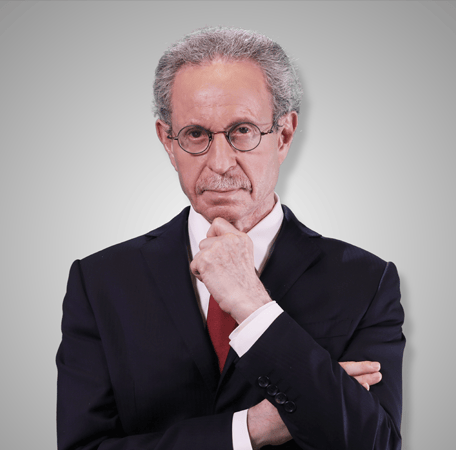
Robert Lawrence Kuhn the producer of countless videos titled Closer to Truth
Presented by ChatGPT for Zia H Shah MD
Abstract
J. L. Schellenberg’s argument from divine hiddenness is rightly regarded as one of the most important contemporary philosophical arguments against classical theism. Its mature form contends that a perfectly loving God would always be open to meaningful conscious relationship with every finite person capable of such relationship; conscious relationship requires belief that God exists; yet some people allegedly lack belief without resisting God. Therefore, Schellenberg concludes, no perfectly loving God—and ultimately no God of traditional theism—exists. Schellenberg first developed the argument in Divine Hiddenness and Human Reason in 1993 and later reformulated “reasonable” or “inculpable” nonbelief as the broader category of “nonresistant nonbelief.”
From the Qur’anic perspective, however, the argument is not merely unsuccessful; its deepest premises misconstrue what divine love, divine disclosure, human freedom, moral testing, and guidance are supposed to accomplish. Schellenberg moves illegitimately from “God perfectly loves His creatures” to “God must perpetually place every psychologically receptive person in an epistemic condition sufficient for conscious belief.” The Qur’an does not recognize that inference. God could produce universal belief but deliberately does not; He gives signs without converting earthly life into an irresistible theophany; He creates human beings for morally significant trial; He addresses reason, conscience, nature, history, revelation, and the human interior; and He promises further guidance to those who actually strive toward Him. Qur’an 10:99 and 26:4 explicitly contrast God’s power to make belief universal or submission overwhelming with the actual economy of guidance in which humans respond freely.
Nor should Schellenberg’s crucial empirical premise—“nonresistant nonbelievers exist”—be treated as though it were an observed fact on the level of blood pressure or planetary motion. Resistance is partly a disposition of the inner person. We observe testimony and behavior; we do not directly inspect another person’s complete hierarchy of desires, fears, loyalties, intellectual standards, self-deceptions, identity commitments, unacknowledged expectations, or unconscious motivations. Contemporary philosophy itself remains divided over this premise: Andrew Blanton’s 2026 Religious Studies article argues that nonresistant nonbelief is relatively common, while a substantial critical literature disputes either its existence, its prevalence, or our warrant for confidently identifying it. The Qur’anic response need not commit the opposite error by pretending that believers can read every atheist’s heart. It makes the more profound claim that resistance is morally and psychologically richer than explicit hostility and that genuine striving toward God is not abandoned by God.
This is where the writings I, Zia H Shah MD, have developed on consciousness and atheism become relevant. Across my corpus on consciousness, cosmology, naturalism, free will, meaning, fine-tuning, and the Qur’an’s “signs … in the horizons and within themselves,” I have argued for a cumulative rather than a one-dimensional case: the existence of a contingent cosmos, its intelligibility, the emergence and irreducibility of first-person consciousness, moral experience, rational agency, and revelation all belong to the evidential environment in which the question of God is asked. My consciousness and atheism collections repeatedly return to this convergence, while Robert Lawrence Kuhn’s own vast “Landscape of Consciousness” project documents the astonishing plurality of physicalist and nonphysicalist theories competing to explain phenomenal experience.
The Qur’anic refutation therefore does not amount to the crude slogan, “Every atheist consciously knows God and is lying.” That would exceed our knowledge of other minds. The stronger position is this: Schellenberg has not demonstrated that anyone satisfies the demanding description required by his premise—someone genuinely nonresistant in the morally relevant sense, genuinely striving toward ultimate truth, capable of receiving the available modes of divine disclosure, persisting in that condition, and nevertheless abandoned without a path to God. Indeed, the Qur’an expressly denies that final description: “Those who strive for Us—We shall surely guide them in Our ways” (29:69).
Schellenberg’s Argument—and the Assumptions Smuggled Into It
The first obligation of a serious refutation is to state Schellenberg fairly. His argument is not the childish complaint, “Why does God not appear in the sky?” Nor is it merely an appeal to emotional loneliness. The philosophical argument is considerably stronger. In a standard formulation summarized by the Internet Encyclopedia of Philosophy, a perfectly loving God would ensure that every finite person capable of a meaningful conscious relationship with God and not resisting such relationship is in a position to enter it; such a position requires belief that God exists; yet, Schellenberg maintains, some capable persons do not believe while not resisting God. Therefore a perfectly loving God does not exist, and because God as traditionally conceived would be perfectly loving, God does not exist.
That argument is valid as a piece of deductive form if its premises are granted. The controversy concerns soundness. Calling it a logical fallacy would therefore miss the target. The correct response is to ask whether Schellenberg has established his substantive premises—especially what perfect divine love entails and whether the purported class of nonresistant nonbelievers has been established with the confidence a deductive atheological conclusion requires. The philosophical literature has challenged both points. Muslim philosophers have likewise questioned whether the theological expectations built into Schellenberg’s argument map onto Islamic conceptions of God at all. Jon McGinnis’s study of divine love in medieval Islamic philosophy specifically situates the hiddenness problem against Islamic conceptions of divine nature, while Zain Ali’s explicitly Muslim response targets Schellenberg’s first premise and argues that an Islamic account of divine-human relationship does not simply entail perpetual maximal openness of the Schellenbergian kind.
Here is the first decisive point: “Perfectly loving” does not analytically mean “maximally belief-producing.” Schellenberg needs an additional theory of love. He must show that perfect love necessarily entails making conscious reciprocal relationship psychologically available at every moment to every capable nonresistant person, regardless of other divine purposes. That is not a tautology. It is a controversial moral-theological judgment. Recent theistic philosophical work continues to challenge the identification of divine love with Schellenberg’s particular model of relational availability.
The Qur’an’s God is indeed merciful, compassionate, forgiving, near, responsive and loving, but He is not reducible to an infinitely accommodating human parent whose supreme objective is maximizing present-tense belief. His mercy, wisdom, sovereignty, justice, pedagogy, truthfulness, judgment, creation of morally responsible persons, and long-term purposes form a unified theology. The Qur’an can therefore say both that divine mercy “encompasses all things” and that a distinctive divine love is related to a creature’s response to God.
Consider Qur’an 3:31:
قُلْ إِن كُنتُمْ تُحِبُّونَ ٱللَّهَ فَٱتَّبِعُونِي يُحْبِبْكُمُ ٱللَّهُ وَيَغْفِرْ لَكُمْ ذُنُوبَكُمْ ۗ وَٱللَّهُ غَفُورٌ رَّحِيمٌ
“Say: If you love Allah, then follow me; Allah will love you and forgive you your sins. Allah is forgiving and merciful.”
And Qur’an 7:156 says:
وَرَحْمَتِي وَسِعَتْ كُلَّ شَيْءٍ
“My mercy encompasses all things.”
These ideas are not contradictory. They demonstrate precisely why Schellenberg’s bridge from “God loves perfectly” to “God must ensure uninterrupted relationship-ready belief for everyone who lacks conscious resistance” cannot simply be imported into Qur’anic theology. Universal mercy is not identical with unconditional epistemic gratification; divine love does not abolish creaturely moral response.
There is a second unargued transition. Even granting that God desires relationship, it does not follow that God desires the maximum degree of epistemic obviousness compatible with human cognition. A professor who wants a student to know may still ask the student to reason; a parent who wants maturity may permit difficulty rather than continuously solving the child’s problems; and, incomparably more importantly, a God forming moral agents may value the manner in which truth is sought, received and lived, not merely the binary psychological state “believes that God exists.” These analogies do not prove theism, but they destroy the supposed entailment on which Schellenberg relies: love does not by itself logically determine one unique policy of disclosure. The Muslim literature on the hiddenness argument makes exactly this conceptual challenge to Schellenberg’s expectations about divine love.
The hiddenness argument consequently contains a hidden theology. Schellenberg is not deriving atheism from love alone. He is deriving it from a particular philosophy of what a loving God must prioritize. The Qur’an refuses that philosophy at its foundation.
The Qur’an’s Theology of Disclosure, Love, Freedom, and Trial
The most devastating Qur’anic answer to Schellenberg is extraordinarily simple: God explicitly says that He could make belief universal, yet that is not what He has chosen to do.
Qur’an 10:99:
وَلَوْ شَآءَ رَبُّكَ لَـَٔامَنَ مَن فِي ٱلْأَرْضِ كُلُّهُمْ جَمِيعًا ۚ أَفَأَنتَ تُكْرِهُ ٱلنَّاسَ حَتَّىٰ يَكُونُواْ مُؤْمِنِينَ
“Had your Lord willed, everyone on earth—all of them—would have believed. Will you then compel people until they become believers?”
This is almost a direct Qur’anic commentary on the expectation driving divine-hiddenness reasoning. Universal human belief is not beyond God’s capacity. Its absence is therefore not evidence of divine impotence. The verse expressly locates the explanation in divine purpose: God has not willed a world in which everyone is simply caused to believe. Classical commentary presented on Quran.com accordingly reads the passage as denying that compelled universal belief belongs to God’s decree.
Schellenberg can reasonably reply that clear evidence is not coercion. Correct. But that reply does not rescue his argument, because the Qur’an’s point is broader than a philosophy of coercion. It rejects the assumption that God’s terrestrial objective is universal present-tense assent. Qur’an 26:4 makes the point sharper:
إِن نَّشَأْ نُنَزِّلْ عَلَيْهِم مِّنَ ٱلسَّمَآءِ ءَايَةً فَظَلَّتْ أَعْنَٰقُهُمْ لَهَا خَٰضِعِينَ
“If We willed, We could send upon them a sign from heaven before which their necks would remain bowed in submission.”
The Qur’anic God therefore deliberately occupies a middle ground between absence and overwhelming manifestation. He is not absent: there are signs, revelation, reason, conscience, history, nature, the self, prophets and experiences of guidance. But neither does He normally overwhelm the epistemic space in the way He says He is capable of doing. The very next verses of the passage direct attention back to signs already present in creation.
Why this economy of disclosure? Among the Qur’an’s answers is that earthly life is a genuine test of what human beings make of what they are given:
ٱلَّذِي خَلَقَ ٱلْمَوْتَ وَٱلْحَيَوٰةَ لِيَبْلُوَكُمْ أَيُّكُمْ أَحْسَنُ عَمَلًا ۚ وَهُوَ ٱلْعَزِيزُ ٱلْغَفُورُ
“He created death and life to test you as to which of you is best in conduct; He is the Mighty, the Forgiving.” — Qur’an 67:2.
Notice what the verse says: not “which of you most rapidly forms the proposition ‘God exists,’” but which is best in deeds. The Qur’anic economy of life is ethical and spiritual, not merely propositional. The epistemology of faith cannot be detached from character, gratitude, humility, action and the employment of one’s faculties.
Similarly:
إِنَّا هَدَيْنَـٰهُ ٱلسَّبِيلَ إِمَّا شَاكِرًا وَإِمَّا كَفُورًا
“We showed the human being the way, whether he becomes grateful or ungrateful.” — Qur’an 76:3.
That sentence contains an entire philosophy of divine disclosure. Guidance can be given without response being guaranteed. Schellenberg repeatedly treats the absence of belief as evidence that adequate divine relational availability is absent. The Qur’an denies the equivalence. The road can be shown and still not be taken.
The Qur’an likewise locates a primordial orientation toward God in human fitrah:
فَأَقِمْ وَجْهَكَ لِلدِّينِ حَنِيفًا ۚ فِطْرَتَ ٱللَّهِ ٱلَّتِي فَطَرَ ٱلنَّاسَ عَلَيْهَا ۚ لَا تَبْدِيلَ لِخَلْقِ ٱللَّهِ ۚ ذَٰلِكَ ٱلدِّينُ ٱلْقَيِّمُ وَلَـٰكِنَّ أَكْثَرَ ٱلنَّاسِ لَا يَعْلَمُونَ
“So set your face toward the religion in uprightness—the fitrah of Allah upon which He has fashioned humanity. There is no altering Allah’s creation. That is the upright religion, though most people do not know.” — Qur’an 30:30.
Whatever detailed account of fitrah one adopts, this is miles away from Schellenberg’s picture of humans confronting a universe from which the divine has simply absented Himself. Qur’anic anthropology says there is something in the human constitution oriented toward the truth, while immediately acknowledging that many people nevertheless fail to know.
And critically, the Qur’an simultaneously safeguards divine justice for those whose epistemic circumstances genuinely differ. It does not say that every person who fails to reach explicit belief is automatically guilty to the same degree:
مَّنِ ٱهْتَدَىٰ فَإِنَّمَا يَهْتَدِي لِنَفْسِهِۦ ۖ وَمَن ضَلَّ فَإِنَّمَا يَضِلُّ عَلَيْهَا ۚ وَلَا تَزِرُ وَازِرَةٌ وِزْرَ أُخْرَىٰ ۗ وَمَا كُنَّا مُعَذِّبِينَ حَتَّىٰ نَبْعَثَ رَسُولًا
“Whoever is guided is guided for his own good, and whoever goes astray does so against himself. No bearer bears another’s burden; and We do not punish until We have sent a messenger.” — Qur’an 17:15.
This destroys another frequent hiddenness inference: religious nonbelief is not equivalent to divine abandonment, and divine judgment is not indifferent to epistemic circumstances. If an isolated person never receives adequate prophetic disclosure, Qur’anic justice already has a category for that problem. The argument “some humans lack explicit theistic belief, therefore God has denied them loving relationship and will condemn them” is not the Qur’anic doctrine being defended.
Schellenberg can therefore press his argument against one particular theological model only by first showing that the Qur’anic model is incoherent. He has not done so merely by defining divine love differently.
The Achilles’ Heel: “Nonresistant Nonbelief” Is Not an Empirical Given
Premise Four is where the apparently pristine deduction touches the untidy reality of human psychology:
Some people capable of relationship with God fail to believe in God even though they are not resisting God.
Everything depends on the final clause.
One must distinguish at least three claims:
“I do not believe.” That can be known by sincere self-report.
“I consciously wish I could believe.” That too may be perfectly sincere.
“There is no relevant resistance anywhere in my complete intellectual, volitional, affective, moral and dispositional orientation toward God and what belief in God would entail.” That is enormously stronger.
Schellenberg needs something approaching the third—not merely the first two. The Internet Encyclopedia of Philosophy notes that his terminology evolved from “reasonable/inculpable nonbelief” to the wider notion “nonresistant nonbelief,” precisely because resistance concerns whether a person has in some relevant way shut himself or herself off from God. Recent debate confirms that this remains a contested philosophical matter rather than an uncontested datum. Blanton’s 2026 article argues that nonresistant nonbelief is actually pervasive, but the article itself catalogs numerous philosophers who have doubted its existence or prevalence; Schellenberg needs only one case for the deductive version, yet identifying such a case is precisely the disputed matter.
A particularly relevant criticism is the “noseeum” problem: from I see no resistance it does not automatically follow that there is no resistance. Macdonald’s critique targets the assumption that resistance, if present, would normally be detectable to us. That objection should not be exaggerated into “every unbeliever is secretly wicked.” It is an epistemic objection: the interior state Schellenberg requires is harder to establish than the argument’s presentation often suggests.
The Qur’an goes further by challenging an intellectualist model in which evidence enters an emotionally neutral mind and produces belief according to something resembling a calculator. Human knowing is moral as well as cognitive. Its paradigmatic example is Pharaoh’s circle:
وَجَحَدُواْ بِهَا وَٱسْتَيْقَنَتْهَآ أَنفُسُهُمْ ظُلْمًا وَعُلُوًّا ۚ فَٱنظُرْ كَيْفَ كَانَ عَـٰقِبَةُ ٱلْمُفْسِدِينَ
“They denied the signs even though inwardly they were convinced of them, out of wrongdoing and arrogance. So see what became of the corrupters.” — Qur’an 27:14.
That verse is about Pharaoh and his people, not a license to call every contemporary atheist a Pharaoh. Its philosophical significance is more precise: it supplies a Qur’anic counterexample to the proposition that adequate intellectual evidence automatically produces existential assent. One can recognize and resist simultaneously. The distance between evidence and acknowledgment can be occupied by pride, interest, fear, status, identity or will.
Qur’an 7:146 broadens that anthropology:
سَأَصْرِفُ عَنْ ءَايَـٰتِيَ ٱلَّذِينَ يَتَكَبَّرُونَ فِي ٱلْأَرْضِ بِغَيْرِ ٱلْحَقِّ وَإِن يَرَوْاْ كُلَّ ءَايَةٍ لَّا يُؤْمِنُواْ بِهَا وَإِن يَرَوْاْ سَبِيلَ ٱلرُّشْدِ لَا يَتَّخِذُوهُ سَبِيلًا وَإِن يَرَوْاْ سَبِيلَ ٱلْغَيِّ يَتَّخِذُوهُ سَبِيلًا ۚ ذَٰلِكَ بِأَنَّهُمْ كَذَّبُواْ بِـَٔايَـٰتِنَا وَكَانُواْ عَنْهَا غَـٰفِلِينَ
“I shall turn from My signs those who are arrogant without right on earth. Even if they see every sign they will not believe in it; if they see the path of right guidance they will not take it, while if they see the path of error they take it. That is because they rejected Our signs and were heedless of them.”
Again, this cannot responsibly be universalized into a psychological diagnosis of every agnostic. But Schellenberg cannot responsibly universalize in the opposite direction either, treating sincere self-description as transparent access to the absence of every morally relevant resistance. The Qur’an insists that human beings can be obscure to themselves.
Here my disagreement with Premise Four can be formulated more rigorously than the slogan “nonresistant nonbelievers do not exist.” A universal empirical negative about billions of interior lives cannot be established by us with certainty. But neither can Schellenberg’s crucial positive existential premise be upgraded into an indubitable empirical fact simply by pointing to sympathetic, intelligent, apparently sincere unbelievers.
The specifically Qur’anic thesis is stronger in another way: if “nonresistance” is strengthened into sustained, morally serious striving for ultimate truth and for God should God exist, the Qur’an promises that such striving is not met by divine abandonment. That does not mean instantaneous conversion, mystical visions on demand, or immunity from uncertainty. It means that God supplies ways of guidance. Qur’an 29:69, to which we shall return, makes exactly this claim.
That distinction matters. Schellenberg tacitly treats “not presently conscious of resistance” and “positively oriented toward God in the deepest relevant sense” as though they were interchangeable. The Qur’an does not.
There is an additional logical point. A genuinely deductive argument for atheism needs the premises, not merely uncertainty about the premises. If all Schellenberg can establish is that some cases look to us like nonresistant nonbelief, then the strength of the conclusion should be correspondingly evidential or probabilistic. Indeed, recent scholarship explicitly discusses a movement toward evidential versions of hiddenness reasoning rather than simply treating the original deductive case as settled.
Thus the supposed knockout blow has become something far more modest:
Some human cases appear, from our limited third-person perspective and sincere first-person testimony, difficult to reconcile with one particular theory of how divine love ought to produce religious belief.
That is a legitimate philosophical datum. It is not a demonstration that the Creator does not exist.
Consciousness, Cosmos, and the Signs Already Before Us
The rhetoric of “hiddenness” becomes even less persuasive when it silently assumes that God has left human beings with virtually nothing to reason from. The Qur’an portrays revelation and creation differently. It repeatedly redirects the human gaze outward and inward—toward cosmology and toward ourselves.
The programmatic verse for much of what I have written about science, consciousness and God is Qur’an 41:53:
سَنُرِيهِمْ ءَايَـٰتِنَا فِي ٱلْـَٔافَاقِ وَفِيٓ أَنفُسِهِمْ حَتَّىٰ يَتَبَيَّنَ لَهُمْ أَنَّهُ ٱلْحَقُّ ۗ أَوَلَمْ يَكْفِ بِرَبِّكَ أَنَّهُۥ عَلَىٰ كُلِّ شَيْءٍ شَهِيدٌ
“We shall show them Our signs in the horizons and within themselves until it becomes clear to them that it is the truth. Is it not sufficient that your Lord is witness over everything?”
In my writings, I have repeatedly treated this “horizons and selves” pairing as an invitation to open both eyes: one toward the external universe—its existence, order, laws, origins and intelligibility—and another toward the interior mystery of consciousness, reason, moral agency and personal identity. My consciousness archive and atheism archive develop these themes repeatedly, while my detailed writings on consciousness explicitly connect the “within themselves” dimension with contemporary debates over phenomenal experience.
This should be stated carefully. Qur’an 41:53 is not a modern neuroscience textbook, and one should not pretend that classical exegetes were secretly discussing twenty-first-century philosophy of mind. The stronger and more defensible claim is hermeneutical: the verse itself authorizes attention to signs both outside and inside the human being, and consciousness is undeniably one of the most fundamental facts encountered “within ourselves.” Quran.com’s presentation likewise renders the two domains as signs “in the universe and within themselves.”
Contemporary consciousness research makes that inward sign philosophically formidable. Robert Lawrence Kuhn’s peer-reviewed 2024 “Landscape of Consciousness” project attempted to organize the extraordinary range of proposed explanations spanning materialism, non-reductive physicalism, information theories, quantum approaches, panpsychisms, monisms, dualisms and idealisms. Kuhn’s stated purpose was taxonomic rather than adjudicative: the diversity itself was the phenomenon to be mapped. By 2025, his follow-up work described more than 350 explanations across physicalist and nonphysicalist traditions.
That does not prove God. The existence of hundreds of theories is not itself a syllogism for theism. Nor should atheism be carelessly equated with reductive materialism: an atheist could be a nonreductive physicalist, neutral monist, panpsychist or even some varieties of idealist. What the consciousness problem does undermine is the swaggering assertion that a purely reductive materialist picture has already explained the one phenomenon through which every scientific fact is known in the first place—subjective awareness. Kuhn’s taxonomy itself ranges from materialist to explicitly nonphysicalist ontologies because there is no settled account commanding the field.
This has been central to my argument against naturalism. We know extraordinarily much about correlations between brain states and conscious states, and those correlations are indispensable. But correlation, neural dependence and manipulation do not by themselves answer the ontological question: why is any physical processing accompanied by first-person experience at all? In my January 2026 treatment of Christof Koch and the wider Closer to Truth literature, I emphasized precisely the continuing absence of consensus on how phenomenal consciousness fits into reality.
The Qur’an’s language concerning the rūḥ is strikingly epistemically modest:
وَيَسْـَٔلُونَكَ عَنِ ٱلرُّوحِ ۖ قُلِ ٱلرُّوحُ مِنْ أَمْرِ رَبِّي وَمَآ أُوتِيتُم مِّنَ ٱلْعِلْمِ إِلَّا قَلِيلًا
“They ask you concerning the rūḥ. Say: the rūḥ is from the command of my Lord, and you have been given only a little knowledge.” — Qur’an 17:85.
I have used this verse as a theological framework for humility about consciousness. It would be excessive to claim that the verse straightforwardly “predicts the hard problem” or scientifically proves substance dualism. Its legitimate force is subtler: the Qur’an does not teach that the human interior will be exhaustively reduced to a simple material description; it explicitly warns of the limits of our knowledge concerning the rūḥ. My writings have explored stronger metaphysical readings of the distinction between the created physical order and amr (“command”), but those should be recognized as philosophical-theological interpretations rather than uncontested translations of the verse.
The external side of the cumulative case is equally Qur’anic. Surah al-Tur asks:
أَمْ خُلِقُواْ مِنْ غَيْرِ شَيْءٍ أَمْ هُمُ ٱلْخَـٰلِقُونَ أَمْ خَلَقُواْ ٱلسَّمَـٰوَٰتِ وَٱلْأَرْضَ ۚ بَل لَّا يُوقِنُونَ
“Were they created from nothing, or are they themselves the creators? Or did they create the heavens and the earth? Rather, they lack certainty.” — Qur’an 52:35–36.
This is philosophical interrogation in Qur’anic form. Why is there a contingent order at all? Is the human self self-explanatory? Is the universe its own sufficient explanation? The verse does not offer a twenty-page contemporary cosmological argument; it does something more elemental. It refuses to allow existence itself to disappear behind familiarity.
My atheism writings repeatedly return to this point alongside fine-tuning, consciousness, moral experience, meaning and intelligibility. No single one must be dishonestly advertised as a mathematical proof of Islam. Their force is cumulative: the world Schellenberg calls “hidden” is, on the Qur’anic reading, saturated with inferential signs.
That fundamentally changes the hiddenness discussion. The relevant comparison is not:
“God visibly standing before us” versus “no evidence whatsoever.”
It is:
“God providing a world rich in signs that solicit reason, conscience, inquiry and response” versus “God overwhelming finite consciousness with His presence so that the epistemic problem is effectively closed.”
The Qur’an says God chose the former.
And that makes sense of why the hiddenness argument feels compelling only after an enormous assumption has already been granted: that a loving God should prefer maximal obviousness to meaningful discovery. The Qur’an has never granted that assumption.
Robert Lawrence Kuhn: Seeking, Moving Goalposts, and the Limits of Judging Motives
Robert Lawrence Kuhn is a particularly illuminating case because he has spent decades publicly interrogating cosmology, consciousness, God, ultimate reality, evil and life’s meaning. His scholarly consciousness project has now classified hundreds of theories, and Closer to Truth systematically juxtaposes materialist, theistic, idealist, dualist and other approaches. I have repeatedly used Kuhn’s work in my writings precisely because his relentless questioning provides a remarkable window onto the metaphysical crossroads created by modern science.
There is real evidence that Kuhn regards himself as open rather than hostile to God. In conversation with Mark Vernon he says that he takes atheistic arguments seriously but would love to believe in God, while insisting that he wants what is real rather than merely comforting. That is exactly the sort of testimony to which Schellenberg’s defender can point: here seems to be an intelligent person who desires theism to be true yet remains unconvinced.
But the story is more complicated.
In his conversation with atheist philosopher Simon Blackburn, Kuhn openly says that despite rejecting organized religion, he has an inner sense that there is “something like a god” needed to explain the universe and mentality, and then provocatively asks Blackburn for the best atheistic arguments that might cure him of that inclination. That is fascinating. Kuhn is not describing a mind for which there is simply no theistic evidence. He is describing a mind that already experiences significant explanatory pull toward something God-like and deliberately subjects that inclination to repeated skeptical assault.
His own consciousness work creates the same pattern. In discussions summarized in my writings, Kuhn recognizes the extraordinary mystery of basic conscious awareness and entertains a decision tree in which, if consciousness is not reducible to physical brain processes, the inquiry may lead toward something more fundamental—potentially “God or something like God.” Yet he continues opening additional branches and objections rather than treating the explanatory trajectory as complete.
This is where my criticism of Kuhn can be made forcefully without pretending to read his soul.
One can reasonably argue that Kuhn displays what might be called a moving-threshold epistemology. Cosmology raises the possibility of a transcendent explanation: another question follows. Fine-tuning raises a question: another alternative follows. Consciousness resists easy reduction: panpsychism, neutral monism or some deeper physics enters consideration. A personal ultimate explanation appears plausible: the problem of evil becomes a barrier. An afterlife changes the structure of the problem of evil: further epistemological questions appear. This is precisely the pattern I have highlighted in my writings on Kuhn.
That pattern can legitimately be criticized. At some point rational inquiry cannot consist forever in saying, “Yes, but perhaps there is another possible model.” Bare possibility is cheap. Explanatory comparison requires eventually asking which worldview best unifies the total evidence. The mere ability to invent another conceivable metaphysics does not leave all metaphysics equally rational.
But I would go further than the crude accusation that Kuhn is knowingly performing “mental gymnastics.” We do not know that. Indeed, his public record contains evidence against such an easy dismissal. He openly says he wants theism to be true; he frequently presses atheists as aggressively as theists; and his consciousness taxonomy was explicitly designed to collect and categorize rather than prejudge competing ontologies.
That epistemic restraint is actually important for the Qur’anic case. The Qur’an teaches us to criticize arguments, arrogance, negligence and patterns of reasoning; it does not authorize us to manufacture certainty about an individual’s unspoken motives.
Kuhn therefore should not be used as proof that no sincere agnostic exists. He is useful for a subtler point. He demonstrates how inadequate Schellenberg’s binary categories can be in actual human life. Is a person “resistant” merely because he repeatedly increases his standard of evidence? What if he consciously wants God but unconsciously associates religious assent with loss of intellectual independence? What if his reluctance is simply exemplary caution? What if some objections are rational and others motivated? What if all these tendencies coexist in the same person?
That is exactly the problem. “Nonresistant” sounds clean in a syllogism and becomes extraordinarily difficult when applied to an actual human psyche.
Schellenberg may respond that resistance need not be proven absent with Cartesian certainty; ordinary evidence for sincere seekers is enough. That response can support an evidential difficulty for theism. It cannot magically convert our fallible assessment of another person’s interior disposition into the indisputable premise needed for a triumphant deductive disproof of God. The current philosophical debate over the extent and nature of nonresistant nonbelief confirms that this empirical premise is still under active dispute.
And once consciousness enters the picture, Kuhn inadvertently becomes a witness against the rhetoric that God has left us in an evidential desert. The man has catalogued hundreds of mutually divergent theories because the existence of conscious awareness raises some of the deepest questions about the structure of reality. His own interviews repeatedly reach toward mind-like, consciousness-first, nonphysical or God-like ultimate explanations.
One may remain agnostic after confronting all of this. But one can no longer honestly describe the human situation as one in which there are no signs to consider.
That is precisely the Qur’anic distinction.
“Those Who Strive for Us”: Surah al-‘Ankabut’s Direct Answer to Divine Hiddenness
At the end of Surah al-‘Ankabut comes perhaps the most direct Qur’anic response to the strongest version of Schellenberg’s challenge:
وَٱلَّذِينَ جَـٰهَدُواْ فِينَا لَنَهْدِيَنَّهُمْ سُبُلَنَا ۚ وَإِنَّ ٱللَّهَ لَمَعَ ٱلْمُحْسِنِينَ
“And those who strive for Us—We shall surely guide them in Our ways. And surely Allah is with those who excel in goodness.”
— Qur’an 29:69.
Every word matters.
وَٱلَّذِينَ جَـٰهَدُواْ — “Those who strive.”
Not those who merely entertain a hypothesis for an afternoon. Not those who demand that God satisfy a personally selected evidential criterion. Not those who search only until the implications become uncomfortable. The verb evokes expenditure of effort. The epistemology is participatory: truth is pursued with the whole person.
فِينَا — “for Us / in Our cause.”
The orientation matters. A person can research religion endlessly while being primarily committed to defeating it; another can investigate religion as sociology; another can desire emotional reassurance rather than truth. The Qur’anic promise concerns striving ultimately directed toward God and His truth.
لَنَهْدِيَنَّهُمْ — “We shall most surely guide them.”
The Arabic construction is emphatic. Whatever else Islamic theology may debate about guidance, this verse presents divine guidance not as indifference but as promise.
سُبُلَنَا — “Our ways.”
Strikingly, the word is plural: subulanā, “Our ways.” Guidance need not come through one uniform psychological event. One person may be awakened by contingency, another by moral experience, another by revelation, another by consciousness, another through suffering, another through beauty, another through the example of a believer, another through intellectual dissatisfaction with naturalism. That plural significance is a theological inference from the verse’s language; it harmonizes naturally with the Qur’an’s repeated appeal to multiple signs rather than one compulsory proof.
And the verse ends:
وَإِنَّ ٱللَّهَ لَمَعَ ٱلْمُحْسِنِينَ — “Allah is surely with the doers of excellence.”
The end point is not merely possession of a proposition. It is ihsān—excellence in being and doing.
This verse enables us to formulate the Qur’anic answer to “nonresistant nonbelief” with precision:
A person who is genuinely striving toward the ultimate truth, willing to follow God if God is there, morally and intellectually engaged with the signs available to him, and persistent in that striving is not, according to the Qur’an, a person whom God simply abandons without guidance.
That does not imply that a seeker must become a Muslim on our timetable. It does not tell us that every unresolved agnostic is insincere. It does not authorize believers to announce the secret spiritual state of Robert Lawrence Kuhn or anyone else. And Qur’an 17:15 itself protects the principle that God judges people justly according to the guidance actually made available to them.
What 29:69 does entail, from the Qur’anic standpoint, is devastating to Schellenberg’s theological narrative. Schellenberg asks us to imagine a person calling sincerely into an empty heaven while perfect Love refuses to answer. The Qur’an says the premise is wrong: striving and guidance belong together. The answer may arrive as a path rather than a thunderbolt, through accumulated signs rather than an apparition, through intellectual and moral transformation rather than compelled certainty—but the seeker is not abandoned.
Combine 29:69 with 41:53 and the Qur’anic architecture becomes unmistakable:
سَنُرِيهِمْ ءَايَـٰتِنَا فِي ٱلْـَٔافَاقِ وَفِيٓ أَنفُسِهِمْ حَتَّىٰ يَتَبَيَّنَ لَهُمْ أَنَّهُ ٱلْحَقُّ
“We shall show them Our signs in the horizons and within themselves until it becomes clear to them that it is the truth.”
God shows. Humans strive. God guides.
Signs. Seeking. Guidance.
That—not compulsory visibility—is the Qur’an’s epistemology of faith.
Thematic Epilogue: The Silence Was Filled With Signs
The greatest rhetorical achievement of the hiddenness argument is the picture it plants in the imagination: a lonely human being standing beneath a silent sky, calling for God, while an allegedly loving Creator remains inexplicably concealed.
It is a moving picture.
But from the Qur’anic perspective, it is the wrong picture.
The human being beneath that sky is standing on a planet in an intelligible cosmos whose existence he did not cause. He possesses rational capacities he did not design. He experiences a first-person field of awareness for which contemporary philosophy and neuroscience still entertain hundreds of competing explanations. He finds himself capable of truth, love, moral obligation, mathematics, wonder and the question of eternity. He belongs to a species addressed by prophetic traditions and scripture. He can turn outward to the horizons and inward toward consciousness. And the Qur’an confronts him with the primordial question:
أَمْ خُلِقُواْ مِنْ غَيْرِ شَيْءٍ أَمْ هُمُ ٱلْخَـٰلِقُونَ
“Were they created from nothing, or are they themselves the creators?”
To call this situation “God’s silence” is already an interpretation.
Schellenberg’s argument succeeds only if we accept, before the argument has done its work, an extraordinarily specific theology: perfect love must entail constant relationship-readiness; relationship-readiness must entail present explicit belief; God has no sufficient reason for an economy of signs rather than overwhelming manifestation; human nonbelief can be confidently classified as nonresistant; sincere self-report establishes the absence of deeper resistance; and God’s purpose in this life should prioritize universal recognition over morally meaningful seeking and response. Contemporary philosophers continue to dispute several of precisely these propositions, and Muslim treatments of hiddenness have specifically challenged Schellenberg’s conception of divine love and relationship.
The Qur’an grants none of them.
It says God could make everyone believe:
وَلَوْ شَآءَ رَبُّكَ لَـَٔامَنَ مَن فِي ٱلْأَرْضِ كُلُّهُمْ جَمِيعًا
“Had your Lord willed, everyone on earth would have believed.”
It says He could provide a manifestation before which resistance collapses:
إِن نَّشَأْ نُنَزِّلْ عَلَيْهِم مِّنَ ٱلسَّمَآءِ ءَايَةً فَظَلَّتْ أَعْنَٰقُهُمْ لَهَا خَـٰضِعِينَ
“If We willed, We could send down upon them a sign from heaven before which they would remain bowed.”
He does not do so—not because He is absent, but because overwhelming disclosure is not the purpose of this stage of human existence. Life is a test in moral excellence; a way has been shown; human response matters.
It says the problem is not simply shortage of information. Pharaoh’s people could become inwardly convinced and outwardly deny. Arrogance and heedlessness can alter how signs are received. This need never become a cheap insult against unbelievers. It is a universal warning about the human condition—including the believer, who is no less capable of motivated reasoning, tribalism and self-deception.
It says humanity bears a fitrah, an orientation implanted into human nature, while still acknowledging widespread ignorance.
It says no one is unjustly punished before adequate warning reaches them.
It says the external universe and internal human reality contain signs.
It asks why there is something rather than nothing, why contingent beings exist, and whether creatures can plausibly be their own ultimate explanation.
It counsels humility before the mystery of the rūḥ and the limits of human knowledge.
And finally it makes a promise:
وَٱلَّذِينَ جَـٰهَدُواْ فِينَا لَنَهْدِيَنَّهُمْ سُبُلَنَا
“Those who strive for Us—We shall surely guide them in Our ways.”
That is the Qur’anic answer to Schellenberg.
Not that God owes us no evidence.
Not that questioning is sinful.
Not that every atheist is consciously dishonest.
Not that every believer possesses demonstrative certainty.
And certainly not that one should stop thinking.
The answer is more demanding: God has not hidden Himself in the sense Schellenberg’s argument requires. He has disclosed Himself through an epistemic environment appropriate to responsible creatures—through signs rather than compulsion, invitation rather than overwhelming spectacle, enough light for seeking and enough distance for the moral quality of the seeker to matter. Qur’an 10:99, 26:4, 41:53, 67:2 and 29:69 together articulate exactly that structure.
My writings on consciousness and atheism belong inside this larger Qur’anic vision. Consciousness is not a solitary magic bullet against atheism, and cosmology is not a substitute for revelation. Rather, the cumulative case asks what picture of reality best accommodates the whole astonishing package: that anything exists; that the universe is rationally intelligible; that conscious subjects arise who can comprehend it; that those subjects experience reason, normativity and meaning; that the fundamental mystery of first-person experience remains philosophically unresolved despite enormous scientific achievement; and that revelation directs us precisely to investigate both the horizons and ourselves. My consciousness and atheism archives have pursued these converging lines, while Kuhn’s own increasingly expansive taxonomy of consciousness theories confirms at minimum that simplistic reductive closure is premature.
Robert Lawrence Kuhn is therefore not someone whose heart I need to condemn. His decades of searching are far more interesting than that. His interviews reveal both a desire for God and a persistent habit of reopening the case whenever a conclusion approaches. He has publicly admitted a sense that “something like a god” may be needed to explain universe and mentality, while simultaneously asking atheistic philosophers to supply their strongest counterarguments. One may admire that relentless skepticism and still ask whether endless suspension of judgment can itself become an epistemic default that is rarely subjected to the same scrutiny as belief.
For there must finally come a point at which the seeker asks not:
Can I imagine one more alternative?
but:
What explanation best accounts for everything I know?
That is where the Qur’an is unapologetic. It does not beg for a place beside naturalism as one hypothesis among equally self-sufficient competitors. It challenges the human being to explain existence without the Creator, consciousness without ultimate Mind, moral agency without transcendent grounding, revelation without its Source, and the cumulative convergence of signs without the One to whom they point.
And then, rather than demanding blind submission, it says:
Look again.
Look at the heavens.
Look at the earth.
Look at your own existence.
Look into consciousness.
Look at history.
Look at revelation.
Look at what your objections actually establish.
Look also—fearlessly—at what may be happening inside the one who objects.
Then strive.
For the Qur’anic God is not a deity hiding behind the cosmos and mocking honest seekers. He is the One whom the cosmos signifies, whom consciousness mysteriously reflects, whose revelation summons reason, whose mercy encompasses creation, whose justice takes our circumstances into account, and who promises the genuine seeker not abandonment but guidance.
Schellenberg’s argument therefore does not reveal a contradiction in God.
It reveals a contradiction between Schellenberg’s expectations of God and the Qur’an’s account of why God created human beings in the first place.
And those are not the same thing.
For references, please go to Microsoft Word file:



Leave a Reply