

Prepared in support of a scholarly essay by Zia H. Shah, MD, Chief Editor, The Muslim Times; founder, thequran.love by Claude
Sūrat al-Dhāriyāt 51:1–23 is a single argumentative arc built on oaths: four opening oaths (the scattering winds, the load-bearing clouds, the smoothly-sailing ships, the angels apportioning affairs) that swear the promised Judgment is true (vv.1–6); an oath by “the heaven of ḥubuk” indicting the disputers (vv.7–14); the portrait of the righteous — sparse sleep, dawn forgiveness, the beggar’s right in their wealth (vv.15–19); and a closing chiasmus locating God’s signs “in the earth,” “in your own selves,” and “in the heaven,” sealed by an oath by the Lord of heaven and earth “that it is the truth, just as it is that you speak” (vv.20–23). The essay’s spine should be the structural parallel between 51:20–21 (signs in the earth and in the selves) and 41:53 (signs in the āfāq/horizons and the anfus/selves) — a linkage Fakhr al-Dīn al-Rāzī himself draws in his own commentary, reading both verses as the twin proofs dalīl al-āfāq and dalīl al-anfus. The requested “rain-fertilizes-the-soil” science is rigorous and abundant — lightning nitrogen fixation, Saharan-dust phosphorus feeding the Amazon, wind-borne pollen, cloud condensation nuclei, and the cosmic web as “woven” ḥubuk — but every convergence must be framed, in the author’s own anti-concordist idiom, as resonance and anticipation, never as scientific-miracle proof.
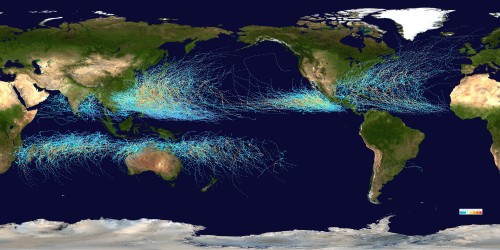
Key Findings
- The opening oaths have a canonical fourfold decoding (winds / clouds / ships / angels) transmitted from ʿAlī ibn Abī Ṭālib and Ibn ʿAbbās through al-Ṭabarī, al-Zamakhsharī, al-Rāzī, al-Qurṭubī, and Ibn Kathīr — but the tradition is self-aware that these are interpretive, not dogmatic, and Muhammad Asad (following one option in al-Rāzī) reads all four as phases of one life-giving system of wind-cloud-rain.
- ḥubuk (v.7) is semantically rich — woven streaks, tracks, ripples the wind carves in sand and water, curls of hair, star-orbits, angelic pathways, and “beauty and complexity” — making it the natural hinge for the modern cosmic-web resonance.
- 41:53 supplies the interpretive key and al-Rāzī makes the cross-reference explicit, welding the āfāq/anfus proof of Fussilat to the earth/selves proof of Dhāriyāt.
- The science is quantitatively strong and now sourced to named primary studies (USGS; NASA/Yu et al. 2015; Borucki & Chameides 1984; Bond, Kofman & Pogosyan 1996).
- Anti-concordism is a mainstream scholarly position the essay can lean on to position itself against Bucaille/Naik-style ʿijāz ʿilmī.
Section 1 — The Author’s Own Framework (to be mined and cross-referenced)
1a. The directly on-topic Dhāriyāt article
Zia Shah’s “The Quranic Oath in the Beginning of the Surah Dhariyat” (thequran.love, 28 April 2025) is the seed text. Its architecture and recurring arguments:
- Five stated purposes of Quranic oaths, each with a proof-text: (1) emphasize core beliefs (37:1–4, angels in ranks → “your God is One”); (2) affirm the Quran’s divine origin (56:75–77, oath by the stars’ positions → “it is a noble Quran”); (3) validate the Prophet’s mission (36:1–3, “By the wise Quran, indeed you are among the messengers”); (4) highlight the reality of the Hereafter (51:1–5); (5) reflect on human nature (100:1–6, “man is ungrateful”).
- Verse-by-verse science on 51:1–4: winds “distribute heat around the globe, carry seeds and pollen to fertilize distant lands, and even transport nutrients like Saharan dust across oceans”; he quotes the islamicstudies.info commentary that winds “carry seeds about and plant new seeds in old soils” and “readjust” creation. Clouds (“bear the load”) weigh (per USGS) “on the order of 1.1 million pounds”; ships “flow with ease” (with the classical alternative of planets that glide by smoothly); angels “distribute by command.” islamicstudies
- His occasionalist reading of causality: he quotes al-Ghazālī via his own earlier essay — “Fire does not burn cotton by its own power; rather, God causes the burning each time fire touches cotton” — and calls natural laws “God’s customary actions, not necessary truths.” Winds “don’t scatter by themselves; God scatters things through the winds.”
- His teleological reading: he cites Asad — the oaths point “to the miraculous creation of life as such and, thus, to the existence of a conscious, purposeful Creator” — and Yusuf Ali — the winds ever point “to the one Great Final Event, ‘to which the whole Creation moves.’”
- His theology of the oath (jawāb al-qasam): vv.5–6 are the answer to the oath; the structure is “By X, by Y, by Z, indeed the Resurrection is true.” He stresses that only God may swear by His creation (a human swearing by creation would be shirk), citing the islamweb fatwa: “When Allah swears by something, this means that it has great importance.”
1b. The companion science article
“Rainfall, Lightning, and the Atmospheric Delivery of Nutrients and Trace Elements to Earth” (28 April 2025) is the scientific engine. Its epigraph is Q 45:5 (night/day, “the provision God sends down from heaven,” and “the turning about of the winds”). His central epiphany: Q 51:22 uses rizq (provision), not māʾ (water), for what descends from the sky — and he lists over two dozen “water from the sky” verses (2:22, 2:164, 6:99, 7:57, 8:11 … 80:25) to show that this single lexical choice is deliberate. His data (all peer-review-anchored): lightning fixes 3–10 Tg N/year; ~182 million tons of Saharan dust lofted, ~27.7 million tons deposited on the Amazon; rain scavenging removes 50–80% of below-cloud aerosols. His closing claim: “There is no human explanation for the use of the word رِّزْقٍ … in seventh century Arabia.” VailDailythequran
1c. The oaths corpus (cross-reference these by title)
From the thequran.love “Quranic oaths” category, the essay should name-check:
- “A Linguistic and Theological Analysis of Jurative Particles in the Quran: The Rhetoric of the Oath” — his systematic treatment of the three jurative particles Wa (waw al-qasam), Ba (ba al-qasam), and Ta (ta al-qasam), and the tripartite structure adāt al-qasam (particle) / muqsam bihi (thing sworn by) / muqsam ʿalayhi or jawāb al-qasam (thing sworn to). He notes 51:1 (Wa + al-dhāriyāt) and 51:7 (Wa + al-samāʾ dhāti’l-ḥubuk, “the heaven full of ways”) in his master table of phenomenal oaths, and cites Ibn al-Qayyim that God’s oaths by creation testify to His own attributes. thequran
- “Oaths in the Qurʾān: A Catalogue of the Aqsām by Particle — Wa, Ba and Ta.”
- “Seen and Unseen: A Multidisciplinary Commentary on the Quranic Oaths in Surah Haqqah” (69:38–39) — his key phrasing that the oath object and the sworn claim are “intimately connected,” turning “the book of nature into a standing witness to the book of scripture,” and his framing of oaths as “cosmic harmony where natural laws mirror moral truths.” This essay also states his methodological rule that “the Qur’an is not a physics textbook” — essential for the anti-concordist stance. thequran
- “Night and Day as Divine Testimony in Qur’anic Oaths”; “The Architecture of Darkness: A Multidisciplinary Analysis of Quranic Oaths by the Night”; “Quranic Oaths by the Sun”; “Oaths by Natural Phenomena in the Qur’an”; “The Oath by All That Is Seen and Unseen”; “The Lord of Every Sunrise and Sunset” (Q 70:36–44); “Ninety oaths and the last laugh of Al-Ghazali”; “The Architecture of Divine Volition: Quranic Oaths as an Ontological Exhibit for Al-Ghazali’s Occasionalism.” His recurring thesis, in his own words: “Through these oaths, the Quran not only draws attention to the order and purpose in nature but uses it as evidence of the truth of God’s message.” ThequranThequran
1d. His established theological frameworks
- The “Four Books of God” thesis: Revelation (Qur’an-e tadwini), Nature (Qur’an-e takwini), Destiny/al-Lawḥ al-Maḥfūẓ (Qadar), and Deeds (Kitāb al-Aʿmāl, recorded by the Kirāman Kātibīn). “The Book of Nature establishes the empirical evidence for the divine origin of the Revelation.” This maps directly onto 51:20–22: the earth-signs and self-signs are the Book of Nature validating the Book of Revelation. Thequran + 2
- Occasionalism as the “Inshallah universe”: laws of physics as sunnat Allāh (“Divine Habits”) through which God sustains the cosmos moment-by-moment, with quantum indeterminacy as the contemporary causal gap. The winds/clouds/angels acting amran (“by command,” v.4) are his exhibit of God as al-Mudabbir. Thequran
- Guided evolution, the argument from consciousness, fine-tuning natural theology, and the aesthetic argument (beauty as divine “signature”) — all available to enrich the anfus (self) sign.
Section 2 — Arabic Text, Transliteration, Six Translations
2a. Verbatim Arabic with transliteration (Q 51:1–23)
Verses 1–6:
وَالذَّارِيَاتِ ذَرْوًا فَالْحَامِلَاتِ وِقْرًا فَالْجَارِيَاتِ يُسْرًا فَالْمُقَسِّمَاتِ أَمْرًا إِنَّمَا تُوعَدُونَ لَصَادِقٌ وَإِنَّ الدِّينَ لَوَاقِعٌ
wa’l-dhāriyāti dharwan · fa’l-ḥāmilāti wiqran · fa’l-jāriyāti yusran · fa’l-muqassimāti amran · innamā tūʿadūna la-ṣādiq · wa-inna’l-dīna la-wāqiʿ
Verses 7–14:
وَالسَّمَاءِ ذَاتِ الْحُبُكِ إِنَّكُمْ لَفِي قَوْلٍ مُّخْتَلِفٍ يُؤْفَكُ عَنْهُ مَنْ أُفِكَ قُتِلَ الْخَرَّاصُونَ الَّذِينَ هُمْ فِي غَمْرَةٍ سَاهُونَ يَسْأَلُونَ أَيَّانَ يَوْمُ الدِّينِ يَوْمَ هُمْ عَلَى النَّارِ يُفْتَنُونَ ذُوقُوا فِتْنَتَكُمْ هَٰذَا الَّذِي كُنتُم بِهِ تَسْتَعْجِلُونَ
wa’l-samāʾi dhāti’l-ḥubuk · innakum la-fī qawlin mukhtalif · yuʾfaku ʿanhu man ufik · qutila’l-kharrāṣūn · alladhīna hum fī ghamratin sāhūn · yasʾalūna ayyāna yawmu’l-dīn · yawma hum ʿalā’l-nāri yuftanūn · dhūqū fitnatakum hādhā’lladhī kuntum bihi tastaʿjilūn
Verses 15–19:
إِنَّ الْمُتَّقِينَ فِي جَنَّاتٍ وَعُيُونٍ آخِذِينَ مَا آتَاهُمْ رَبُّهُمْ ۚ إِنَّهُمْ كَانُوا قَبْلَ ذَٰلِكَ مُحْسِنِينَ كَانُوا قَلِيلًا مِّنَ اللَّيْلِ مَا يَهْجَعُونَ وَبِالْأَسْحَارِ هُمْ يَسْتَغْفِرُونَ وَفِي أَمْوَالِهِمْ حَقٌّ لِّلسَّائِلِ وَالْمَحْرُومِ
inna’l-muttaqīna fī jannātin wa-ʿuyūn · ākhidhīna mā ātāhum rabbuhum, innahum kānū qabla dhālika muḥsinīn · kānū qalīlan mina’l-layli mā yahjaʿūn · wa-bi’l-asḥāri hum yastaghfirūn · wa-fī amwālihim ḥaqqun li’l-sāʾili wa’l-maḥrūm
Verses 20–23:
وَفِي الْأَرْضِ آيَاتٌ لِّلْمُوقِنِينَ وَفِي أَنفُسِكُمْ ۚ أَفَلَا تُبْصِرُونَ وَفِي السَّمَاءِ رِزْقُكُمْ وَمَا تُوعَدُونَ فَوَرَبِّ السَّمَاءِ وَالْأَرْضِ إِنَّهُ لَحَقٌّ مِّثْلَ مَا أَنَّكُمْ تَنطِقُونَ
wa-fī’l-arḍi āyātun li’l-mūqinīn · wa-fī anfusikum, afalā tubṣirūn · wa-fī’l-samāʾi rizqukum wa-mā tūʿadūn · fa-wa-rabbi’l-samāʾi wa’l-arḍi innahu la-ḥaqqun mithla mā annakum tanṭiqūn
2b. Six translations of the key verses
V.1 (wa’l-dhāriyāti dharwan):
- Sahih International: “By those [winds] scattering [dust] dispersing” quran
- Yusuf Ali: “By the (Winds) that scatter broadcast” quran
- Pickthall: “By those that winnow with a winnowing” quran
- Asad: “Consider the winds that scatter the dust far and wide”
- Khattab (The Clear Quran): “By the winds scattering ˹dust˺” islamicstudies
- Maulana Muhammad Ali: “By those scattering broadcast!”
V.7 (wa’l-samāʾi dhāti’l-ḥubuk):
- Sahih Intl: “By the heaven containing pathways” My Islam
- Yusuf Ali: “By the Sky with (its) numerous Paths” My Islam
- Pickthall: “By the heaven full of paths” My Islam
- Asad: “Consider the firmament full of starry paths” QuranV
- Khattab: “˹And˺ by the heavens in their marvellous design!” (footnote: “Or ‘By the heavens with their marvellous orbits.’”) islamicstudiesQuranhadits
- Maulana Muhammad Ali: “By the heaven full of paths!”
V.22 (wa-fī’l-samāʾi rizqukum wa-mā tūʿadūn):
- Sahih Intl: “And in the heaven is your provision and whatever you are promised.” Islam Awakened
- Yusuf Ali: “And in heaven is your Sustenance, as (also) that which ye are promised.” Islam Awakened
- Pickthall: “And in the heaven is your providence and that which ye are promised.” Islam Awakened
- Asad: “And in heaven is [the source of] your sustenance [on earth] and [of] all that you are promised [for your life after death].” AlimIslam Awakened
- Khattab: “In heaven is your sustenance and whatever you are promised.” islamicstudiesIslam Awakened
- Maulana Muhammad Ali: “And in the heaven is your sustenance and that which you are promised.”
V.23: “Then by the Lord of the heaven and the earth, it is the truth, just as it is that you speak” (Ibn Kathīr rendering); Asad: “as true as that you are endowed with speech!” Alim
Section 3 — Classical Tafsīr on the Key Verses (the five mufassirūn)
3a. The four opening oaths (vv.1–4)
The dominant decoding, transmitted from ʿAlī ibn Abī Ṭālib and Ibn ʿAbbās and recorded by al-Ṭabarī (Jāmiʿ al-bayān), al-Zamakhsharī (al-Kashshāf), al-Rāzī (Mafātīḥ al-ghayb), al-Qurṭubī, and Ibn Kathīr:
- al-dhāriyāt dharwan = the winds that scatter dust (ʿAlī, Ibn ʿAbbās, Mujāhid). islamicstudiesSurah Quran
- al-ḥāmilāt wiqran = the clouds laden with the burden of rainwater (al-Rāzī, al-Qurṭubī, al-Ṭabarī). islamicstudies
- al-jāriyāt yusran = the ships sailing smoothly — with a strong secondary view (al-Ṭabarī, al-Qurṭubī, Ibn Kathīr, al-Alusi) that it means the planets/stars gliding in their orbits. islamicstudies
- al-muqassimāt amran = the angels apportioning affairs by God’s command; al-Zamakhsharī specifies “they distribute provision, rains, and other things.” islamicstudies
The Sabīgh incident (a Tamīmī who repeatedly questioned ʿUmar about these verses and was flogged and placed under house arrest until his heart “filled with true faith”) is preserved by al-Qurṭubī, Ibn Kathīr and al-Alusi via al-Bazzār and others; ʿUmar’s own explanation gives exactly the wind/cloud/ship/angel reading. Ibn Kathīr held the marfūʿ (Prophetic) chain weak but the Companion-attribution strong. Asad (adopting one of al-Rāzī’s several possibilities) reads all four participles as “different phases or manifestations of the same phenomenon — namely, the life-giving function of the combination of winds, clouds and rain — pointing, symbolically, to the miraculous creation of life as such and, thus, to the existence of a conscious, purposeful Creator.” Yusuf Ali: the winds “do not diminish by one jot the substance of Allah’s material creation; on the contrary they help to readjust things … they carry seeds about and plant new seeds in old soils.” islamicstudies + 2
3b. Verses 5–6 (jawāb al-qasam)
All classical commentators identify vv.5–6 as the answer to the oath: “what you are promised is true (ṣādiq), and the dīn (Recompense/Judgment) will surely occur.” Al-dīn here = the Day of Reckoning, not “religion.” Maʿārif al-Qurʾān: “The first few verses contain an oath from Allah that the promise of Resurrection is true, and shall come to pass.” Surah Quran
3c. Verse 7 (ḥubuk)
Ḥubuk (sing. ḥabīka), from the root ḥ-b-k (“to bind, tighten, weave”), primarily denotes the fine woven streaks in fabric — hence “tracks / pathways.” Recorded meanings: Quran.com
- “Full of beauty, grace, magnificence and perfection” — Ibn ʿAbbās (via Ibn Abī Ṭalḥa), followed by Mujāhid, ʿIkrima, Saʿīd b. Jubayr, Qatāda, al-Suddī, and others. Surah Quran
- The ripples/meanders wind carves in sand and standing water — al-Dahhāk, al-Minhāl b. ʿAmr (and al-Farrāʾ, who adds the curls of wavy hair). Surah Quran
- The orbits of planets and stars — al-Hasan (“its ḥubuk are its stars”); the linguists (al-Zajjāj: “the good/well-made ways”). IslamWeb
- The pathways of angels’ ascent and descent.
Ibn Kathīr harmonizes: “All of these sayings return to the same meaning, that of beauty and complexity. The sky is high above us, clear yet thick, firmly structured, spacious and graceful, beautified with stars.” Maududi: the sky is characterized by ḥubuk because its clouds and star-clusters take endlessly varied, never-repeating forms — mirroring the “discordant statement” (v.8) of the deniers. This is the natural hinge for the modern cosmic-web resonance. Surah QuranMy Islam
3d. Verses 8–14 (the disputers)
V.8 innakum la-fī qawlin mukhtalif — “you are in discordant opinion” (about the Prophet: poet? soothsayer? sorcerer? and about the afterlife itself — Asad). V.10 qutila’l-kharrāṣūn — “perish the conjecturers,” those who judge by ẓann (conjecture) rather than knowledge; Maududi warns against making estimates “merely following one’s own conjectures … in questions of such fundamental nature” as accountability. V.13 yuftanūn — “they will be tried [by fire],” using the metaphor of gold assayed in flame. islamicstudiesislamicstudies
3e. Verses 15–19 (the righteous)
The muttaqīn in gardens and springs, “receiving what their Lord gave them,” for “they were muḥsinīn (doers of good) before this.” Their marks: v.17 “little of the night would they sleep”; v.18 “and in the hours before dawn (al-asḥār) they sought forgiveness” (Ibn Zayd defines saḥar as the last sixth of the night); v.19 “in their wealth was a right (ḥaqq) for the beggar (al-sāʾil) and the deprived (al-maḥrūm).” Asad (via al-Rāzī): this applies “to all living creatures, whether human beings or mute animals … physical or emotional.” Yusuf Ali: true charity “seeks out” those prevented from asking by shame, ignorance of their own need, or helplessness. islamicstudies + 2
3f. Verses 20–23 (signs in earth, selves, heaven; the closing oath)
- V.20: “in the earth are signs for those of assured faith (al-mūqinīn).” Ibn Zayd’s remark (preserved in Ishrāq al-Maʿānī) is notably modern: the mysteries of sight, hearing, the heart and the thinking mind “have still remained so after a millennium and a half, but have in fact deepened.” islamicstudies
- V.21: “and in your own selves — will you not then see?” This is the verse where al-Rāzī cross-references 41:53 (see Section 4).
- V.22: “in the heaven is your provision (rizq) and what you are promised.” Most commentators (Ṭabarī, Qurṭubī) gloss rizq as rain and its vegetative harvest; Kashshāf and Ibn Kathīr take “what you are promised” as Paradise; Yusuf Ali reads a double sense — physical sustenance (rain) and spiritual sustenance (revelation). islamicstudiesislamicstudies
- V.23: the divine self-oath by “the Lord of heaven and earth” that “it is the truth (la-ḥaqq), just as it is that you speak.” Zamakhshari, Qurṭubī and al-Alusi preserve al-Asmaʿi’s Bedouin story: on hearing v.23 a Bedouin cried, “Who angered the Exalted that He should swear? Surely they did not believe in what He said and so He resorted to swearing” — and died on the spot. islamicstudies
Section 4 — Q 41:53 and the Āfāq/Anfus Parallel (the essay’s centerpiece)
4a. Text and translations
سَنُرِيهِمْ آيَاتِنَا فِي الْآفَاقِ وَفِي أَنفُسِهِمْ حَتَّىٰ يَتَبَيَّنَ لَهُمْ أَنَّهُ الْحَقُّ ۗ أَوَلَمْ يَكْفِ بِرَبِّكَ أَنَّهُ عَلَىٰ كُلِّ شَيْءٍ شَهِيدٌ
sanurīhim āyātinā fī’l-āfāqi wa fī anfusihim ḥattā yatabayyana lahum annahu’l-ḥaqq; a-wa-lam yakfi bi-rabbika annahu ʿalā kulli shayʾin shahīd
“We will show them Our signs in the horizons/universe (āfāq) and in their own selves (anfus) until it becomes clear to them that it is the truth. Is it not sufficient concerning your Lord that He is Witness over all things?” (Fussilat 41:53). Renderings range from Sahih Intl “in the horizons and within themselves” to Khattab/Maʿārif “in the universe and within their own beings.” Surah QuranQuran.com
4b. The decisive linkage — al-Rāzī binds 51:21 to 41:53
In Mafātīḥ al-ghayb, commenting on 51:21 (wa fī anfusikum afalā tubṣirūn), al-Rāzī writes that this is “a pointer to the proof of the selves (dalīl al-anfus), and it is like His saying, ‘sanurīhim āyātinā fī’l-āfāqi wa fī anfusihim’ [41:53].” He explains that God chose, from among the āfāq-proofs, specifically “what is in the earth” (51:20) “because of its visibility to those on its surface.” He then debates whether nafs denotes the human being generally (“wa fīkum“) or the soul “which is the source of life, sensation, and movements” (manbaʿ al-ḥayāt wa’l-ḥiss wa’l-ḥarakāt). This is the strongest classical warrant for making 51:20–21 ↔ 41:53 the structural spine of the essay: al-Rāzī treats them as one argument — the twin proofs dalīl al-āfāq (the argument from the cosmos/horizons) and dalīl al-anfus (the argument from the self).
4c. The two camps on āfāq
- Historical / spread-of-Islam reading: the future conquests and victory of Islam east and west. This is al-Ṭabarī’s preference (tarjīḥ), and the view of Mujāhid, al-Hasan, and al-Suddī; al-Zamakhsharī elaborates it vividly (the God-enabled futūḥ “the likes of which no ruler on earth attained before,” victory over the Kisrās, “the weak overpowering the strong”); it is Ibn Kathīr’s lead reading (“external proofs in the horizons — the conquests and the appearance of Islam over the regions and all religions”). IslamWebIslamWeb
- Cosmic / anatomical reading: ʿAṭāʾ and Ibn Zayd (the sun, moon, stars, night and day, winds, rains, thunder, lightning, plants, mountains, seas); it undergirds al-Rāzī’s rational-proof framework, and appears as a secondary option in al-Qurṭubī and Ibn Kathīr, who explicitly invokes ʿilm al-tashrīḥ (the science of anatomy): “what the human is composed of … the wondrous materials, humors and structures, as elaborated in the science of dissection, which indicates the wisdom of the Maker.” Al-Qurṭubī and Ibn al-Jawzī (Zād al-masīr) include embryology among the anfus-signs (created “as sperm-drops (nuṭaf), then clots (ʿalaq), then lumps (muḍagh), then bones”). QuranIslamWeb
4d. The antecedent of “hu” in annahu’l-ḥaqq
Al-Qurṭubī records four opinions: (1) that it (the truth) is the Qur’an; (2) that it is Islam (the religion the Messenger brought); (3) that it is the signs themselves (what God shows them is the truth); (4) that it is Muhammad (that he is the true Messenger, divinely supported). Per Ibn al-Qayyim (Madārij al-sālikīn), “these four are all true and interconnected, but the apparent meaning (al-ẓāhir) is that it refers to the Qur’an,” supported by the preceding v.52. Al-Zamakhsharī, Ibn Kathīr, al-Ṭabarī, Jalālayn and al-Saʿdī all favor “the Qur’an.” Ibn ʿĀshūr adds that the closing clause is confirmatory (taqrīrī) reassurance to the Prophet (not a rebuke of the polytheists, who do not acknowledge God’s testimony), and candidly observes that “the commentators’ words show hesitation in extracting the meaning from the wording.”
4e. The mystical “know thyself” tradition
Maybudī (Kashf al-asrār) and Ismāʿīl Ḥaqqī (Rūḥ al-bayān) read 41:53 with 51:21 as the classic man ʿarafa nafsahu ʿarafa rabbahu (“who knows himself knows his Lord”): “he knows himself as a mirror and knows his Lord as the one manifested therein, as God said, ‘We will show them Our signs in the horizons and in their souls.’” This furnishes the essay’s Sufi register.
Section 5 — The Scientific Embellishment (framed strictly as resonance)
5a. Rain does not only water but fertilizes the soil — lightning nitrogen fixation
Atmospheric N₂ is locked by an exceptionally strong triple bond (N≡N) that ordinary life cannot break. A lightning bolt — briefly hotter than the Sun’s surface — supplies the energy to split N₂ and O₂; the freed nitrogen forms nitric oxide (NO), which oxidizes to NO₂ and then to nitric acid (HNO₃), dissolves in rain, and is deposited on soil as bioavailable nitrate (NO₃⁻). Global magnitude: the foundational estimate is Borucki & Chameides (1984, Reviews of Geophysics 22:363): 2.6 × 10⁹ kg N/year, with a range of (0.8–8) × 10⁹ kg; the widely-cited modern figure is ~3–5 Tg N/year (Levy & Moxim 1996, cited in Biogeosciences 17:3643, 2020: “3–5 Tg N yr⁻¹ to terrestrial ecosystems”) — a small share (~2.4%) of natural fixation, which is dominated by biological fixation (~140 Tg marine + ~58 Tg terrestrial), yet decisive in nitrogen-poor ecosystems and before biological fixation evolved. The “first-flush effect” means the first storms after a dry spell deliver the biggest nitrate pulse; monsoon thunderstorms in India can deposit an estimated 5–8 kg N/hectare (Varshik, Medium, applying the ~5 Tg/yr global figure). Farmers’ folk observation that crops “green up” after a thunderstorm more than under plain irrigation is the phenomenological correlate. This is the literal science behind al-dhāriyāt (the scatterers) and al-ḥāmilāt wiqran (the bearers of loads) — rain as fertilizer, not merely water — and behind the rizq (not māʾ) of 51:22. ScienceInsights + 4
5b. Saharan dust fertilizes the Amazon with phosphorus — winds as “bearers of loads”
Per NASA / University of Maryland (Hongbin Yu et al., 2015, Geophysical Research Letters, using CALIPSO satellite data 2007–2013): “wind and weather pick up on average 182 million tons of dust each year … 27.7 million tons — enough to fill 104,908 semi trucks — fall to the surface over the Amazon basin.” The phosphorus portion, an estimated 22,000 tons per year, “is about the same amount as that lost from rain and flooding” — a near-perfect replenishment of the Amazon’s phosphorus-poor soils, sourced largely from the Bodélé Depression, an ancient lakebed of dead microorganisms. Desert dust likewise fertilizes ocean phytoplankton with iron; atmospheric dust supports roughly one-third of Southern Ocean phytoplankton growth. This ties directly to Shah’s reading of al-dhāriyāt (“the scatterers that scatter”) and al-ḥāmilāt wiqran (“carriers of heavy loads”): winds literally carry mineral cargo across oceans and apportion it — al-muqassimāt amran, “the distributors by command.” NASA Scientific Visualization Studio + 6
5c. The “load-bearing” clouds and atmospheric water transport
Per USGS Water Science School (“How Much Does a Cloud Weigh?”): an average 1 km × 1 km cumulus cloud, at a density of 0.5 g/m³ over 1 billion m³, holds ~500,000 kg (~1.1 million pounds, ~551 US tons) of water — “the equivalent of 100 African bush elephants.” At planetary scale, net ocean-to-land atmospheric water transport is ~40 × 10¹⁵ kg/year (~1 × 10⁹ kg/s) (Trenberth et al.; Dey et al. 2023, HESS); a single atmospheric river carries ~4.7 × 10⁸ kg/s of water vapor. These are the ḥāmilāt wiqran, “the bearers of the load,” made quantitative. USGSUSGS
5d. Wind as pollinator and apportioner — al-muqassimāt amran
Per USDA Forest Service (“Wind and Water Pollination”): “Most conifers and about 12% of the world’s flowering plants are [wind-pollinated]” (anemophily); Friedman & Barrett (Annals of Botany) cite ~10% of angiosperm species. The wind-pollinated staples — wheat, rice, corn, rye, barley, oats — anchor global food security. Winds also redistribute planetary heat through the Hadley/Ferrel/Polar circulation cells and disperse seeds. This is the ecological face of “the distributors by command.” USDA Forest Service + 2
5e. “In the heaven is your provision” (51:22) — the science of sky-borne sustenance
The deepest reading of rizq min al-samāʾ is not merely rain but the whole solar-atmospheric economy of life. Photosynthesis converts ~200 billion tonnes of CO₂ and produces ~140 billion tonnes of O₂ annually (Johnson 2016, Essays in Biochemistry), driven entirely by solar energy from the sky; the atmosphere’s nitrogen, its ozone shield, and its rain are all genuinely “provision from the heaven.” Shah’s epiphany — that the verse says rizq, not water — is scientifically vindicated: the heaven supplies energy, breathable oxygen, fixed nitrogen, and water alike. PubMed Centralnih
5f. ḥubuk and the cosmic web — an aesthetic resonance
Modern cosmology reveals the universe’s large-scale structure as the “cosmic web” — a term from Bond, J. R., Kofman, L. & Pogosyan, D., “How filaments of galaxies are woven into the cosmic web,” Nature 380, 603–606 (1996) — a network of dense nodes/clusters joined by elongated filaments, membranous walls, and vast voids, sculpted by gravity from primordial density fluctuations. More than 50% of the universe’s matter resides in the filamentary “arteries” of this web (Cautun et al. 2014; Galárraga-Espinosa et al., per MNRAS 539:873). Astronomers and artists literally describe it as woven (the “Fabric of the Universe” project renders it as 3D woven textile). This resonates strikingly with ḥubuk as “woven streaks / braided tracks” — but the essay must present it as poetic resonance and anticipation, never as a claim that 51:7 predicted the cosmic web. Oxford Academic + 3
Section 6 — Philosophical and Theological Frames
6a. al-Ḥaqq — the divine name binding 51:23 and 41:53
Al-Ḥaqq (root ḥ-q-q: true, established, necessary, real, right/due) is one of the 99 names, denoting God as the Ultimate Reality “upon which all existence depends” (al-Ṭabarī; al-Qurṭubī on 22:6, 31:30). The Qur’an: “That is Allah, your Lord, al-Ḥaqq; so what is beyond truth except error?” (10:32). Both 51:23 (“innahu la-ḥaqq — it is the truth”) and 41:53 (“annahu’l-ḥaqq — that it is the truth”) deploy this same word, welding the two verses to the divine name itself: the promise is ḥaqq because its Author is al-Ḥaqq. The essay can note the root’s dual sense of “truth” and “right/due” — linking v.19’s ḥaqq li’l-sāʾil (the beggar’s right) to v.23’s ḥaqq (the truth): moral right and ontological truth share one root. My Islam + 2
6b. Epistemology of certainty — al-mūqinīn and the three grades of yaqīn
V.20 addresses al-mūqinīn, “those of assured faith.” Classical epistemology (synthesized by al-Ghazālī, drawing on Sūrat al-Takāthur) distinguishes three ascending grades: ʿilm al-yaqīn (knowledge of certainty — like being told of a fire), ʿayn al-yaqīn (eye of certainty — seeing its flames), and ḥaqq al-yaqīn (truth of certainty — being consumed by it). Ibn Ḥajar reads Ibrahim’s request in 2:260 (“that my heart be reassured”) as an ascent from ʿilm to ʿayn al-yaqīn. The Qur’an Project notes precisely that 51:20 restricts benefit from the signs to those with yaqīn: “in the earth are signs for those who are certain.” The āfāq/anfus signs are thus the ladder from ʿilm toward ʿayn al-yaqīn. Almirajsuficentre + 2
6c. Occasionalism, the Four Books, and the anti-concordist stance
The winds, clouds, and angels acting amran (“by command,” v.4) exhibit Shah’s occasionalist “Inshallah universe”: natural laws as sunnat Allāh, “God’s customary actions, not necessary truths,” with the causal order sustained moment-by-moment. The āfāq/anfus signs (51:20–21, 41:53) are the Book of Nature validating the Book of Revelation in his Four Books thesis. Crucially, the essay must stay anti-concordist. The scholarly critique of ʿijāz ʿilmī / Bucailleism is substantial: Stefano Bigliardi and the Zygon journal document that Bucaille’s method was applied inconsistently (William Campbell’s charge that Bucaille held the Bible but not the Qur’an to 20th-century scientific language); Taner Edis, Parvez Hoodbhoy, Khaled Montaser (Wahm al-Iʿjāz al-ʿIlmī, “The Lie of Scientific Miracles”), and the former Grand Imam of al-Azhar Mahmud Shaltut all opposed the scientific-miracle genre. The core danger is falsifiability-in-reverse: because science is revisable, a “miracle” trumpeted today can be embarrassed tomorrow. Even Shah’s own “Seen and Unseen” essay concedes the rule that “the Qur’an is not a physics textbook.” The essay should therefore present every convergence as resonance, anticipation, and invitation to wonder — the natural order as āyāt pointing beyond themselves — not as empirical proof of divine authorship. The Muslim TimesUnchangingword




Leave a Reply