
Presented by ChatGPT
Executive Summary
Ayat al-Kursi, Qur’an 2:255, is treated across the Islamic tradition as the most exalted single verse of the Qur’an. In the canonical hadith of Ubayy b. Kaʿb, the Prophet asks which verse in the Book of God is greatest, and Ubayy answers with this verse; the Prophet then affirms his answer. Classical commentators such as al-Tabari, al-Qurtubi, and Ibn Kathir read the verse as a compressed theology of divine uniqueness, life, self-subsistence, sovereignty, omniscience, and effortless preservation of creation. Its devotional prestige is reinforced by hadiths on reciting it before sleep for protection and, in a widely cited but extra-Sahih report, after obligatory prayers.
The clause most relevant to the scope of human knowledge is: “They do not encompass anything of His knowledge except what He wills.” Al-Tabari interprets this as a radical asymmetry: God knows all things comprehensively, while creatures know only what He grants them to know. Al-Qurtubi adds an important conceptual refinement: “knowledge” here can mean “the known,” so the point is not that God’s attribute is divisible, but that creatures access only such portions of the knowable world as God permits. Shia exegesis in al-Mizan likewise stresses derivative, bestowed knowledge; Maturidi theology supplies a useful epistemological analogue by distinguishing knowledge from the senses, testimony, and reason, while insisting that reason and revelation are harmonious but not exhaustive.
On the theological plane, Sunni, Shia, Ashʿari, Maturidi, and Muʿtazili readings converge on God’s incomparability and comprehensive knowledge, but differ on how to construe the kursi and the divine attributes. Al-Tabari famously prefers “knowledge” as the meaning of kursi, though later Sunni traditionalists often preferred the report that it is the “footstool” distinct from the Throne; al-Qurtubi records both lines while insisting that no corporeal localization of God follows. al-Zamakhshari, read here as a Muʿtazili-inflected witness, catalogs figurative readings such as knowledge and dominion, reflecting the school’s strong commitment to divine unity and transcendence. al-Tabatabaʾi’s al-Mizan explicitly renders the “Chair” as “Knowledge” in its English presentation of the verse.
Philosophically, the verse offers a distinctive epistemology and metaphysics. Epistemologically, it affirms that human knowledge is real, valuable, and even commanded elsewhere in the Qur’an, yet irreducibly partial, granted, and morally bounded. Metaphysically, it grounds all contingent being in the Ever-Living, Self-Subsisting One. Contemporary philosophy of religion in the Islamic tradition illuminates the contrast between human knowing, which is receptive and limited, and divine knowing, which classical Muslim philosophers such as Ibn Sina construe as non-receptive and causally prior to the existence of things. Qur’anic cross-references such as 2:32, 17:85, 20:110, 31:27, and 12:76 intensify the same theme: creatures know only by teaching, cannot encompass the Real, and remain always below the All-Knowing.
Scientifically, the verse does not function as a “scientific proof-text,” but it does sustain a rich dialogue with science. The requested article on The Glorious Quran and Science argues that every scientific discovery is, theologically, a disclosure of what God permits human beings to know, and it explicitly frames attempts to correlate kursi with the “framework” of space-time as speculative rather than demonstrative. In his broader corpus, Zia H. Shah argues for a “two books” approach: the Book of Scripture and the Book of Nature ultimately cannot conflict, reason is revelation’s ally, and serious science should not be reduced to superficial miracle-hunting. Modern cosmology, meanwhile, recognizes principled observational limits such as cosmic horizons; metrology recognizes irreducible measurement uncertainty. These do not “prove” the verse, but they do offer disciplined analogies for epistemic humility.
Abstract
This report offers a comprehensive scientific, philosophical, and theological commentary on Ayat al-Kursi, Qur’an 2:255, with special emphasis on the limits and scope of human knowledge. It presents the Arabic text, a source-attributed comparison of six major English translations, close exegesis from classical tafsir, a comparative theological analysis across Sunni, Shia, Ashʿari, Maturidi, and Muʿtazili perspectives, and a philosophical study of divine omniscience, human epistemic finitude, and metaphysical dependence. It also integrates the arguments of the requested article and the broader Quran-and-science reflections of Zia H. Shah, while distinguishing between devotional-scientific reflection and formal scientific inference. The central thesis is that Ayat al-Kursi establishes a theology in which all genuine human knowing is derivative, partial, and morally accountable, whereas God alone possesses exhaustive, non-derivative, and sovereign knowledge.
Text and Translation
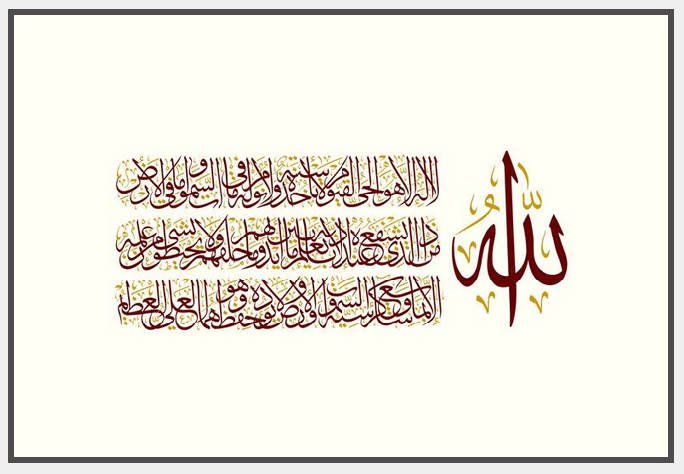
Original Arabic text
ٱللَّهُ لَآ إِلَـٰهَ إِلَّا هُوَ ٱلْحَىُّ ٱلْقَيُّومُ ۚ لَا تَأْخُذُهُۥ سِنَةٌۭ وَلَا نَوْمٌۭ ۚ لَّهُۥ مَا فِى ٱلسَّمَـٰوَٰتِ وَمَا فِى ٱلْأَرْضِ ۗ مَن ذَا ٱلَّذِى يَشْفَعُ عِندَهُۥٓ إِلَّا بِإِذْنِهِۦ ۚ يَعْلَمُ مَا بَيْنَ أَيْدِيهِمْ وَمَا خَلْفَهُمْ ۖ وَلَا يُحِيطُونَ بِشَىْءٍۢ مِّنْ عِلْمِهِۦٓ إِلَّا بِمَا شَآءَ ۚ وَسِعَ كُرْسِيُّهُ ٱلسَّمَـٰوَٰتِ وَٱلْأَرْضَ ۖ وَلَا يَـُٔودُهُۥ حِفْظُهُمَا ۚ وَهُوَ ٱلْعَلِىُّ ٱلْعَظِيمُ ٢٥٥
Six major English renderings
Because several modern English translations remain under copyright, the report gives source-attributed renderings and highlights their distinctive phrasing rather than reproducing six long verbatim passages in full. The cited sources contain the complete texts.
Sahih International renders the verse with strongly literal, contemporary diction. Distinctive phrases include “the Ever-Living, the Sustainer of [all] existence,” “they encompass not a thing of His knowledge,” and “His Kursi extends over the heavens and the earth.”
Marmaduke Pickthall preserves an elevated early twentieth-century register: “the Alive, the Eternal,” “intercedeth,” and “His throne includeth the heavens and the earth,” ending with “the Sublime, the Tremendous.”
Abdullah Yusuf Ali reads more expansively and interpretively: “the Living, the Self-subsisting, Eternal,” “before or after or behind them,” and “His Throne doth extend,” closing with “the Supreme (in glory).”
Muhammad Asad is philosophically tuned and strikingly interpretive: he renders the opening as “the Ever-Living, the Self-Subsistent Fount of All Being,” and concludes with “His eternal power overspreads the heavens and the earth.”
M. A. S. Abdel Haleem favors fluent contemporary prose: “the Ever Living, the Ever Watchful,” “they do not comprehend any of His knowledge except what He wills,” and “His throne extends over the heavens and the earth.”
Mustafa Khattab reads devotionally but with explanatory clarity: “the Ever-Living, All-Sustaining,” “no one can grasp any of His knowledge—except what He wills to reveal,” and “His Seat encompasses the heavens and the earth.”
Table of lexical and semantic differences
| Arabic phrase | Representative renderings | Interpretive implication |
|---|---|---|
| الحي القيوم | “Ever-Living, Sustainer of existence”; “Alive, Eternal”; “Self-Subsistent Fount of All Being”; “Ever Watchful” | The verse joins ontological fullness of life with self-subsistence and providential sustainment. “Qayyum” is variously heard as self-subsisting, sustaining, watchful, or fount-like. |
| سنة ولا نوم | “drowsiness nor sleep”; “slumber nor sleep”; “dozing nor sleep” | The paired negation excludes both incipient and full forms of creaturely lapse, underscoring immutable vigilance. |
| من ذا الذي يشفع | “Who is it that can intercede…” | Intercession is not denied absolutely, but subordinated completely to divine permission. |
| يعلم ما بين أيديهم وما خلفهم | “what is before them and what is behind them”; “ahead of them and behind them”; “present and past”; “before or after or behind” | The phrase can be temporal, spatial, or comprehensive; classical tafsir often takes it as covering all dimensions of creaturely condition. |
| ولا يحيطون بشيء من علمه | “encompass,” “grasp,” “comprehend,” “attain” | The key verb implies surrounding, mastering, or closing over an object of knowledge; each rendering marks creaturely non-totality. |
| وسع كرسيه | “His Kursi extends”; “His throne extends”; “His Seat encompasses”; “His power overspreads”; “His eternal power overspreads” | This is the verse’s biggest semantic fork: literal cosmic seat, symbolic authority, knowledge, dominion, or power. |
| ولا يؤوده حفظهما | “their preservation tires Him not”; “does not weary Him”; “oppresses Him not”; “He feeleth no fatigue” | God’s sovereignty is effortless, unlike creaturely governance. |
| العلي العظيم | “Most High, Most Great”; “Sublime, Tremendous”; “Supreme”; “Tremendous” | The closing names complete the verse with transcendence and incomparable majesty. |
The comparison above synthesizes the translation evidence in the cited sources.
Devotional and hadith context
The Prophet’s statement to Ubayy b. Kaʿb in Sahih Muslim establishes the verse’s singular status in devotional memory: it is “the greatest” verse in the Book of God. Another famous hadith in Sahih al-Bukhari relates Abu Hurayrah’s encounter with Satan, who tells him that reciting Ayat al-Kursi before sleep secures divine protection until morning; the Prophet confirms that “he told you the truth, though he is a liar.” A third report, widely circulated through al-Nasaʾi, Ibn Hibban, and later hadith collections, promises Paradise to one who recites it after each prescribed prayer, though this report does not stand on the same canonical footing as the Muslim and Bukhari narrations. Ibn Kathir also cites reports that the divine name al-Hayy al-Qayyum in this verse belongs to the cluster of texts containing the “Greatest Name” of God.
Exegetical Foundations
Classical Sunni tafsir reads Ayat al-Kursi as concentrated theology. Al-Qurtubi famously calls it “the chief of the verses of the Qur’an and the greatest verse”, then unfolds its syntax, doctrinal implications, and devotional use. Ibn Kathir highlights its extraordinary virtues and treats it as a sequence of ten complete statements, each adding a further aspect of divine lordship, life, watchfulness, ownership, permission, knowledge, and majesty.
Al-Tabari’s commentary is especially important for the epistemological clause. On “they do not encompass anything of His knowledge except what He wills,” he explains that God is the one whose knowledge encompasses all things and that no one besides Him knows anything except what He wills to teach. Al-Tabari then sharpens the polemical edge: beings who are ignorant, limited, and dependent cannot be proper objects of worship. Knowledge is not an ornamental attribute here; it is part of the verse’s anti-idolatrous argument.
For “no slumber or sleep overtakes Him,” al-Tabari interprets the negation not merely physiologically but theologically: sleep and drowsiness imply vulnerability, interruption, and incapacity. He even remarks that if the cosmic order depended on a sleeping governor, it would collapse; God’s permanence as al-Qayyum means uninterrupted governance. This is one of the verse’s basic metaphysical claims: the world depends on a sustainer who is never absent from sustaining.
Al-Qurtubi’s handling of the knowledge clause adds conceptual precision. He says that ʿilm here may mean maʿlum—the “known” or “knowables”—so that the verse does not imply that God’s own attribute of knowledge is partitioned into pieces; rather, creatures only access what from the field of the known God wills them to know. This is a subtle but decisive move: it preserves divine simplicity while affirming real, finite creaturely knowledge. It also resonates closely with 2:32, where the angels say, “We have no knowledge except what You have taught us.”
The most contested exegetical issue in the verse is kursi. Al-Tabari records multiple views: that it is God’s knowledge, that it is the Throne itself, and that it is a created reality associated with the Throne. He personally leans toward the “knowledge” reading, grounding it linguistically in the sense of a seat of learning and authority. Yet the later editorial note appended on Quran.com by Mahmoud Shakir sharply criticizes this preference and argues that the stronger transmitted reading from Ibn ʿAbbas is that the kursi is the “place of the two feet,” distinct from the Throne, while the Throne itself is beyond human estimation.
Al-Qurtubi carefully preserves the plurality of views. He reports that some authorities took kursi as knowledge and others as a real created entity beneath the Throne. He also records the saying that “the heavens and the earth, compared with the kursi, are like a ring cast into a desert,” and that the Throne exceeds the kursi by the same contrast. But he immediately guards transcendence: even if the kursi is a real created object, this does not entail a “place” for God. For him, al-ʿAli denotes exaltation of rank and majesty, not spatial altitude.
Ibn Kathir stands closer to the transmitted traditionalist current on this point. He cites the report from Ibn ʿAbbas that the kursi is the footstool and that no one can appraise the Throne as it deserves. He also cites the hadith that the seven heavens compared to the kursi are like a ring in a desert, underscoring the verse’s deliberate rhetoric of scale. Yet even here, the main function is not cosmography for its own sake. The point is theological: if preserving realities of such unimaginable scale does not burden God, then finite creatures have no basis for boasting, rivalry, or ontological self-sufficiency.
Concept map
Allah: al-Hayy al-QayyumNo slumber, no sleepUniversal ownershipComprehensive knowledgeEffortless preservationNo autonomous intercessionHuman knowledge is partial and grantedEpistemic humilityMoral accountabilityTrust, reliance, and anti-idolatryShow code
This map condenses the architecture of the verse as read by al-Tabari, al-Qurtubi, and Ibn Kathir.
Theological Perspectives
Sunni and Ashʿari emphases
Within mainstream Sunni exegesis, the verse teaches a balance of affirmation and transcendence: God truly lives, knows, wills, owns, permits, and preserves, yet none of these attributes may be interpreted through creaturely weakness. Al-Qurtubi, whose theology is Ashʿari, is explicit that al-ʿAli should not be reduced to spatial location, because God is beyond confinement and embodiment. In this sense Ayat al-Kursi is one of the Qur’an’s decisive anti-anthropomorphic texts: it affirms positive attributes, but it also negates creaturely predicates like fatigue, drowsiness, and dependence.
Maturidi perspective
Maturidi thought is especially illuminating for the verse’s epistemology. A standard presentation of al-Maturidi’s theory of knowledge distinguishes three sources: the senses, testimony, and reason. Reason evaluates sensory experience and transmitted report; revelation does not abolish reason but guides and completes it. A recent theological synthesis of Maturidi thought summarizes the school’s position as one in which reason can know many truths, including the existence of God and some moral principles, but cannot by itself penetrate all specific obligations and ultimate mysteries. That is a strikingly apt conceptual companion to “they do not encompass anything of His knowledge except what He wills.”
Muʿtazili perspective
Muʿtazili theology intensifies the demand for divine transcendence by resisting any multiplication of eternal entities in God. As the Stanford Encyclopedia summarizes, Muʿtazilites interpret divine predicates either as negations of creaturely limitation or as identical with the divine self, since otherwise divine unity would be compromised. In exegesis, al-Zamakhshari catalogs figurative options for kursi: a representation of majesty, God’s knowledge, God’s dominion, or a created seat below the Throne. The Muʿtazili impulse is clear: language about divine “seating” must not be allowed to collapse transcendence into physicality.
Shia perspective
In Shia commentary, especially ʿAllama al-Tabatabaʾi’s al-Mizan, the verse is read through an intensified metaphysics of dependence. The English presentation on al-Islam.org renders the line as “His Chair (Knowledge) extends over the heavens and the earth,” explicitly privileging the knowledge reading. The commentary goes on to tie life to knowledge and power, argues that God alone possesses real life in the full sense, and describes intercession as an intermediary causality that remains entirely under divine permission. It also preserves traditions from the Imams on the verse’s unmatched nobility and on the relation of the Chair to the Throne.
A comparative theological note
Across these schools, three stable conclusions emerge. First, God’s knowledge is exhaustive, non-derivative, and unrestricted. Second, human knowledge is genuine but always donated, partial, and dependent. Third, the verse constrains theology itself: one may affirm God’s attributes, but one may not domesticate them into creaturely categories. The major disagreements, therefore, do not concern whether God knows all and creatures know finitely; they concern how best to construe the symbolic-literal grammar of kursi, the ontology of attributes, and the balance between rational interpretation and transmitted report.
Philosophy of Knowledge and Metaphysics
Ayat al-Kursi’s most philosophically fertile clause is the simplest: human beings do not encompass anything of divine knowledge except what God wills. The verb yuḥīṭūna in the Qur’anic Arabic Corpus is glossed as “they encompass,” which is stronger than mere possession of isolated facts. It implies surrounding, grasping in totality, mastering a field. The verse therefore does not deny human knowledge; it denies human totalization. That distinction matters. The Qur’an elsewhere affirms that God “taught humanity what they knew not,” that the angels themselves confess, “We have no knowledge except what You have taught us,” and that human beings have been given only “a little knowledge.”
This is a remarkably balanced epistemology. It rejects both skepticism and epistemic arrogance. Skepticism is rejected because knowledge is possible and, indeed, granted; the Qur’an opens revelation with “Read” and “taught humanity what they knew not.” Arrogance is rejected because knowledge never becomes self-grounding; above every possessor of knowledge stands one more knowing, culminating in the All-Knowing. In philosophical terms, creaturely knowledge is derivative and participatory, not autonomous.
A second philosophical theme is divine aseity and necessary being. The opening names al-Hayy and al-Qayyum do more than praise God emotionally; they state something like a metaphysical grammar. God lives without borrowed life and subsists without support, while everything else stands by Him. Classical Islamic philosophy offers a useful resonance here. The Stanford Encyclopedia notes that, unlike human knowing, which receives form from an already existing world, divine knowing in Ibn Sina is not receptive; God’s self-knowledge is causally prior, and things exist because they are known by the First Principle. That philosophical model is not identical with tafsir, but it illuminates what later Muslim thinkers could hear in the Qur’anic pairing of comprehensive knowledge and cosmic sustainment.
The verse also frames intercession philosophically. Intercession is not erased, but it is stripped of metaphysical independence. No saint, prophet, angel, or causal intermediary can “close the gap” on its own terms; all mediation is licensed mediation. Cross-references such as 21:28, 34:23, and 53:26 reinforce precisely this point. The result is a world in which secondary causes may exist and act, but never as rival sovereignties. It is a metaphysics of permission, not competition.
The ethical effect of this epistemology is as important as the speculative one. Qur’an 96 immediately couples divine teaching with a warning that the human being “exceeds all bounds” once he sees himself as self-sufficient. Ayat al-Kursi is the antidote to that illusion. It teaches that inquiry should be vigorous and disciplined, but never self-deifying. To learn is a virtue; to absolutize one’s own grasp is the first step toward oppression, idolatry, or technocratic hubris.
Chart of epistemic claims
| Clause in 2:255 | Claim about God | Claim about human knowers | Ethical consequence |
|---|---|---|---|
| Allah, no deity but Him | Ultimate reality is unified | No human worldview can claim ultimacy against God | Intellectual humility before truth |
| al-Hayy al-Qayyum | God is self-subsisting and sustains all | Human cognition depends on conditions not self-made | Gratitude rather than self-sufficiency |
| No slumber or sleep | Divine awareness never lapses | Human attention is intermittent and fragile | Need for vigilance and repentance |
| He knows what is before and behind | Knowledge is total, trans-temporal | Human knowledge is perspectival and finite | Modesty in judgment |
| They do not encompass except what He wills | All creaturely knowledge is granted | Discovery is real but never exhaustive | Humility in science, law, and theology |
| His kursi encompasses heaven and earth | Divine authority and/or knowledge exceeds cosmos | Human scale is not the measure of reality | Anti-anthropocentrism |
| Preserving both does not tire Him | Divine governance is effortless | Human rule is limited and exhausting | Rejection of tyrannical pretensions |
The chart synthesizes the verse with the classical tafsir and Qur’anic cross-references cited in this report.
Scientific Reflections and Contemporary Dialogue
The requested article by Zia H. Shah on The Glorious Quran and Science centers the epistemological clause of the verse. It argues that all the knowledge acquired by angels, prophets, and human beings is only what God permits them to know; in that sense, science itself becomes a mode of receiving what the verse calls the divinely willed disclosure of knowledge. The same article is explicit that correlations between kursi and modern scientific concepts such as the “framework” of physical reality or space-time remain speculative reflections, not demonstrable identifications. That methodological caution is one of the article’s strengths.
In his broader “Two Books in Harmony” and related syntheses, Shah argues that the “Book of Scripture” and the “Book of Nature” cannot genuinely conflict; reason is described as revelation’s close ally, and modern discoveries in cosmology, evolution, neuroscience, and physics should be engaged rather than denied. At the same time, he explicitly warns against shallow “scientific miracle” apologetics. Read charitably, this is less a claim that the Qur’an predicts modern science in detail than a claim that revelation supplies a metaphysical frame in which scientific intelligibility becomes unsurprising.
From the standpoint of contemporary science itself, the analogy to epistemic limitation is instructive. Modern cosmology recognizes a genuine observational horizon: because light takes time to travel and the universe has a finite age, there are regions beyond what can be observed from our location. ESA’s Planck results place the age of the universe at about 13.8 billion years, while NASA explains that looking far away is always looking back in time and that what is “observable” is set not simply by technology but by physical conditions. These are not theological propositions, and they do not verify Ayat al-Kursi. But they do remind us that finitude is built into the architecture of inquiry.
Measurement science makes a parallel point. NIST defines measurement uncertainty as a parameter characterizing the dispersion of values that could reasonably be attributed to a measured quantity. This is not ignorance in the crude sense; it is disciplined recognition that finite observers working with instruments, models, and inference never possess exhaustive closure over the real. Again, the comparison should remain analogical, not exegetically coercive. Ayat al-Kursi is not a hidden treatise on metrology. But the verse’s insistence that creatures do not “encompass” divine knowledge harmonizes naturally with scientific practices that reject overclaiming.
The most responsible Quran-and-science reading of the verse, then, is neither concordist triumphalism nor secular dismissal. It is a threefold posture. First, science is honored as a real path to learning what God permits creatures to know. Second, science is limited: observation, measurement, theory, and even formal proof encounter boundaries, revisions, or underdetermination. Third, metaphysical ultimacy remains beyond the reach of empirical method alone. In the language of the requested article, science is suited to mapping “the what and how,” while Ayat al-Kursi directs thought toward “the Who and why.”
Thematic Epilogue
Ayat al-Kursi does not humiliate human knowledge; it rescues it. It rescues knowledge from idolatry by refusing to let the knower become sovereign. It rescues theology from superstition by insisting that no intercessor, symbol, or sacred intermediary can stand independently before God. It rescues metaphysics from triviality by reminding us that being itself rests on the Ever-Living, the Self-Subsisting. And it rescues science from scientism by welcoming inquiry without allowing inquiry to mistake its horizon for the whole.
The verse’s deepest lesson about human knowledge is therefore not anti-intellectualism, but proportion. Learn, because God teaches. Reason, because God created reason and the Qur’an repeatedly calls creatures to think. Observe, infer, compare, and test. But do not imagine that your models, even when powerful, “encompass” the whole. The angels already taught the correct posture: “We have no knowledge except what You have taught us.” And the Qur’an already gave the enduring warning: the human being transgresses when he sees himself as self-sufficient. Between those two poles lies the intellectual ethic of Ayat al-Kursi—rigor without arrogance, reverence without obscurantism, confidence without conceit.
In that sense, the “Crown Verse” crowns not merely a theology of divine majesty, but a culture of knowledge disciplined by awe. Human understanding is neither null nor absolute. It is a trust, a loan, a permission, a lamp lit in a world whose full light belongs to God alone. The one who recites the verse devotionally hears protection and praise; the one who studies it philosophically hears a doctrine of finite knowing; the one who contemplates it scientifically hears a summons to wonder without presumption. All three, at their best, arrive at the same threshold: “They do not encompass anything of His knowledge except what He wills.”




Leave a Reply