
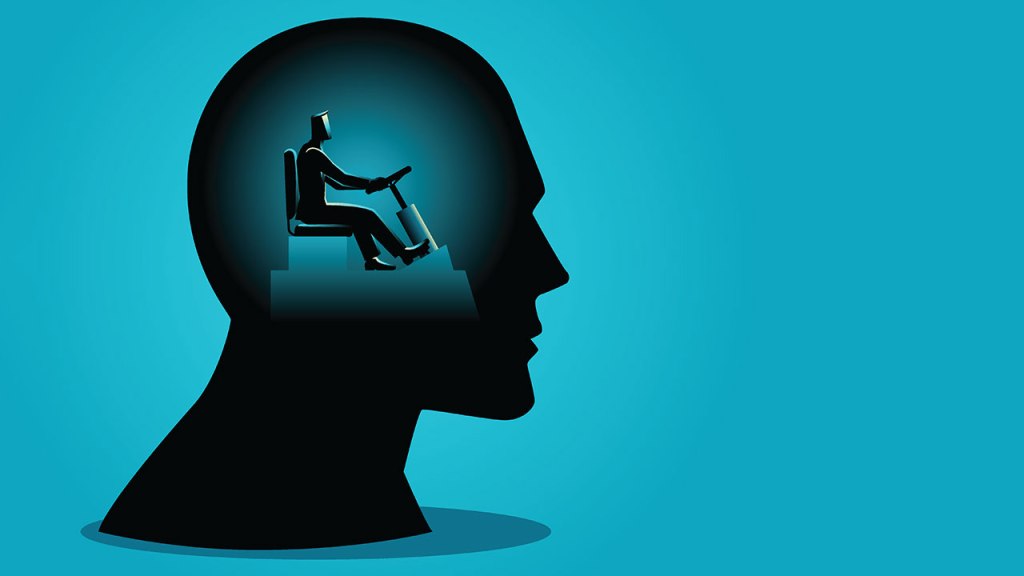
Presented by Zia H Shah MD with the help of ChatGPT
Abstract
Libertarian free will is the capacity of a rational person to be the genuine source of at least some choices: when more than one course of action is really possible, the agent can understand reasons, deliberate, and determine which possibility becomes actual. Such freedom is neither independence from all causes nor random behavior. It is self-determination by an embodied, morally responsible agent whose reasons and purposes possess genuine causal power.
This essay argues unapologetically for that freedom. Science has not demonstrated universal determinism; modern physics has dismantled the classical picture of an entirely predictable clockwork universe, while neuroscience has discovered the mechanisms and constraints of agency without explaining agency away. Philosophy shows that determinism cannot provide the authorship, rational responsibility, and genuine alternatives presupposed by deliberation. Theology situates creaturely freedom within divine sovereignty: God creates and sustains free agents without becoming the author of their sins.
Finally, if libertarian freedom is accepted as a fundamental fact—supported by the practically universal testimony of humanity—then reductive physicalism is false. A complete causal story about a free decision cannot be exhausted by impersonal physical antecedents, deterministic laws, and random events. A universe containing genuine persons, reasons, purposes, and agent-causation is richer than the ontology allowed by conventional naturalism. Human freedom therefore becomes not merely a feature of human life but a powerful sign that reality is grounded in mind, value, and purpose.
1. What libertarian free will means
“Libertarian” here has nothing to do with political libertarianism. It names an incompatibilist theory of freedom. It holds that:
- At least some human actions are not completely determined by the remote past and the laws of nature.
- In making such a choice, the person is its genuine source or author.
- Under appropriate circumstances, the person possesses more than one morally significant possibility.
- The choice is intelligible in light of reasons, character, purposes, and values.
- The person could have chosen otherwise—not merely if the past had been different, but because the future had not yet been irrevocably settled.
This does not mean that every movement is free. Reflexes, compulsions, addictions, neurological disorders, coercion, sleepwalking, overwhelming emotion, and ignorance can diminish or eliminate freedom. Libertarianism requires only that normal rational persons sometimes exercise irreducible agency.
Nor does it mean that a free act is uncaused. The agent causes it. Reasons inform it; character influences it; the brain implements it; circumstances delimit its options. But these factors do not always necessitate one outcome. The person settles which available course becomes actual.
A free decision is therefore neither a billiard ball struck by the past nor a quantum coin toss. It is an agent acting for reasons.
2. The philosophical landscape
The PhilPapers surveys confirm that compatibilism dominates contemporary academic philosophy, but they do not show a consensus that libertarian freedom has been refuted.
The 2009 PhilPapers Survey reported:
| Position | Percentage |
|---|---|
| Compatibilism | 59.1% |
| Libertarianism | 13.7% |
| No free will | 12.2% |
| Other | 14.9% |
The 2020 PhilPapers Survey found:
| Position | Percentage |
|---|---|
| Compatibilism | 59.16% |
| Libertarianism | 18.83% |
| No free will | 11.21% |
| Other | 13.54% |
The 2020 figures can overlap slightly because respondents could accept combinations of answers. Nevertheless, three conclusions are clear.
First, compatibilism remains the plurality view at approximately 59%. Second, libertarianism increased from roughly 14% to nearly 19% and is substantially more popular than outright denial of free will. Third, almost nine out of ten philosophers decline to endorse “no free will” as their primary answer.
These numbers describe professional opinion; they do not determine metaphysical truth. Philosophers have held majoritarian positions that later proved untenable. Furthermore, compatibilism owes part of its popularity to its comparatively modest definition of freedom: an action counts as free when it flows from the agent’s desires without external compulsion, even if those desires and the resulting action were themselves inevitable.
That is an important kind of liberty, but it is not the deepest freedom experienced in moral deliberation. A prisoner may do exactly what he desires because his desires have been manipulated. An addict may act from an overwhelmingly powerful internal desire. A hypothetical neurosurgeon might implant a desire that irresistibly produces a crime. Internal origin alone does not establish authorship.
The real question is not simply, “Did I do what I wanted?” It is, “Was I ultimately able to decide which desire, reason, or value would govern me?”
Libertarianism answers yes.
The 2020 survey also documents a strong association between theism and libertarianism, and between philosophy of religion and libertarianism. Among respondents in the relevant cross-tabulation, libertarians were far more likely to accept theism than non-libertarians; specialization in philosophy of religion was likewise one of libertarianism’s strongest demographic correlates. Physicalism and naturalism, conversely, correlate much more strongly with compatibilism or skepticism. These are correlations, not proofs, but they reveal the underlying metaphysical fault line: the debate about freedom is inseparable from the debate about what a person ultimately is.
3. The testimony of lived experience
The first and most immediate evidence for free will is the experience of agency itself.
Human beings do not merely observe thoughts and movements happening inside them. We deliberate:
- Should I tell the truth or conceal it?
- Should I forgive or retaliate?
- Should I remain faithful to a promise when breaking it would be advantageous?
- Should I follow appetite, duty, compassion, or long-term wisdom?
- What sort of person shall I become?
In genuine deliberation, several possibilities are represented as open. We compare reasons, imagine consequences, restrain impulses, reconsider priorities, and eventually settle the question. The experience is not merely, “I wonder which predetermined event will occur.” It is, “What shall I do?”
This experience is fallible, but fallibility is not equivalent to universal illusion. Perception can be mistaken, yet that does not justify concluding that the external world is unreal. Memory can fail, yet memory remains a basic source of knowledge. Reasoning can go wrong, yet an argument against reason must itself employ reason.
Likewise, the possibility of mistaken agency does not justify the wholesale rejection of agency. The burden belongs to the theory claiming that humanity is radically deceived about one of the most pervasive features of conscious life.
The testimony of eight billion people
The phrase “the testimony of eight billion people” should not be treated as a literal opinion poll of every infant, unconscious patient, or person unable to articulate a metaphysical position. It refers to the nearly universal practical stance of humanity.
Across civilizations, languages, religions, legal systems, and historical periods, people:
- make promises;
- offer advice;
- give warnings;
- ask for forgiveness;
- express regret;
- admire courage;
- condemn betrayal;
- educate children;
- deliberate over careers and marriages;
- exhort others to reform;
- punish deliberate wrongdoing differently from accidents;
- distinguish coercion from voluntary action.
All of these practices presuppose that human beings are, within limits, agents who can respond to reasons and direct their conduct. Even committed determinists normally continue to deliberate, persuade, praise, blame, and demand reasons. Their lived practice is commonly more libertarian than their abstract theory.
This is not a crude argumentum ad populum. Billions of people may be wrong about a technical fact. But the universal, unavoidable structure of first-person agency is not an ordinary popular belief. It is part of the evidence any theory of humanity must explain.
A metaphysics that declares this entire domain illusory assumes an immense epistemic debt. It must explain why evolution or physics produced creatures who cannot stop experiencing themselves as responsible agents, whose rational and moral practices work only by treating one another as agents, yet who never genuinely choose anything.
The more economical conclusion is that our experience is broadly veridical: we really are agents.
4. The philosophical case for libertarian freedom
The consequence argument
If determinism is true, every present act is the necessary consequence of:
- the state of the universe before the agent existed, and
- laws of nature the agent did not choose and cannot alter.
But no one has control over the remote past or the laws of nature. If our conduct is simply the unavoidable consequence of those factors, it is difficult to see how we possess ultimate control over that conduct. This is the heart of the incompatibilist consequence argument, surveyed in the Stanford Encyclopedia of Philosophy.
Compatibilists respond that freedom does not require control over the origins of one’s desires; it requires only the ability to act according to them. But this changes the subject from ultimate authorship to unobstructed execution.
Suppose a manipulator designs a person’s beliefs, desires, and neural states so that the person inevitably commits a murder. The resulting act may flow seamlessly from the person’s internal psychology. Yet because that psychology was engineered to guarantee the result, the person’s authorship is gravely compromised. If deterministic nature does precisely what the manipulator did—fixing every desire and judgment before the agent can evaluate them—the difference in moral authorship is obscure.
Libertarian freedom supplies the missing element: the agent can critically assess motives and decide which one will become action.
Reasons must be more than physical decorations
When someone asks why I donated to charity, I may answer, “Because the family was suffering, and helping them was right.” That explanation invokes a perceived reason. It does not merely report electrical activity in my motor cortex.
If the complete causal explanation of the donation is exhausted by prior physical states and impersonal laws, then the moral reason appears causally redundant. The neurons would have produced the same outcome whether the proposition “this family needs help” was morally true, false, rational, or irrational—as long as the physically identical neural sequence occurred.
But rational agency requires that reasons matter as reasons. Evidence should influence belief because it supports a conclusion; a moral consideration should influence action because it counts in favor of acting. The longstanding problem of mental causation is therefore central: if the physical domain is causally complete, what work remains for conscious intention, meaning, truth, or purpose?
Libertarian agency takes rational explanation seriously. A person does not stand outside the causal order; the person is a distinctive kind of cause—one capable of understanding possibilities and acting because one possibility is judged better.
Moral responsibility
Retribution is not the whole of morality, and responsibility must always be tempered by mercy, social circumstances, psychological impairment, and ignorance. Nevertheless, there remains a categorical difference between:
- deliberately poisoning someone and accidentally administering the wrong medicine;
- betraying a friend for profit and revealing information under irresistible coercion;
- cruelty chosen for pleasure and harm produced during an epileptic seizure.
The difference is not captured merely by desirable social consequences. It concerns the agent’s relationship to the act.
If every cruelty were the inevitable outcome of genes, prenatal conditions, childhood experience, neural states, and laws of nature, the offender would be the location at which the event occurred, not its ultimate author. We could still restrain dangerous people, just as we quarantine disease, but desert-based responsibility would be profoundly weakened.
Our deepest moral judgments imply that at least some people sometimes could have responded differently to the reasons before them. Responsibility comes in degrees because freedom comes in degrees, but neither is therefore unreal.
Rational debate presupposes agency
Determinism also creates an epistemological tension. We ordinarily believe a conclusion because we have considered evidence and judged that it supports that conclusion. But under strict causal determinism, acceptance of determinism is itself the unavoidable result of antecedent physical conditions.
This does not formally prove the belief false: a determined process might produce truth. Yet it weakens the determinist’s claim to have accepted the conclusion through an open, truth-directed evaluation. If assent was physically inevitable regardless of whether the person could have judged otherwise, the causal history of the belief does not by itself confer rational warrant.
Argument presupposes that interlocutors can attend, reconsider, correct themselves, and allow a better reason to redirect judgment. Libertarian freedom makes that familiar picture straightforward. Determinism must translate it into the movement of causally necessitated cognitive machinery.
5. What science does—and does not—show
The clockwork universe is not a scientific discovery
Classical Newtonian mechanics inspired the image of a universe in which complete knowledge of one state and the laws of nature would fix every future event. But that picture was a metaphysical extrapolation from a successful physical theory, not an experimental demonstration that every human choice is predetermined.
Modern physics has made the situation more open. Quantum theory assigns probabilities to outcomes, and Bell-test experiments rule out broad classes of local hidden-variable explanations. The work honored by the 2022 Nobel Prize in Physics experimentally established violations of Bell inequalities.
This does not prove free will. Randomness is not agency, and deterministic interpretations of quantum theory remain available at significant metaphysical cost. The proper conclusion is narrower but decisive: science does not license the claim that classical causal determinism is an established universal fact.
The physical world is at least hospitable to an open future. Libertarianism adds that when indeterminacy intersects an integrated conscious agent, the outcome need not be mere chance: the agent can settle it for reasons.
The Conway–Kochen Free Will Theorem is especially suggestive, although it must not be exaggerated. Roughly stated, given certain physical assumptions, if experimenters’ measurement choices are not functions of the prior history, then the particles’ responses are not functions of that prior history either. The theorem does not prove human freedom—it conditionally assumes a form of independence—but it dramatizes how far contemporary physics stands from naïve Laplacian determinism.
Chaos is not freedom, but it matters
Chaotic systems can be governed by deterministic equations while remaining extraordinarily sensitive to initial conditions. Chaos therefore does not create agency. It does, however, undermine simplistic claims that knowing the physical laws is equivalent to predicting complex behavior.
The brain is an immensely complex, dynamic, embodied system. Small differences can be amplified through neural networks. Physical description at the microscopic level does not automatically establish that personal-level reasoning is causally dispensable.
Neuroscience reveals the machinery of choice
A functioning brain is necessary for ordinary human agency. Brain injury, tumors, dementia, drugs, fatigue, developmental disorders, and electrical stimulation can alter judgment and self-control. None of this is surprising. An embodied agent requires an instrument through which to perceive, deliberate, remember, and act.
Dependence, however, is not identity. Damaging a violin alters the music, but this does not show that the composition is identical to the wood. More precisely, a biological realization of agency does not prove that personal agency is reducible to a description of neurons that excludes the person.
Neuroscience maps the processes through which decisions are formed. It has not discovered that no person forms them.
The Libet experiments
Benjamin Libet’s famous experiment found a readiness potential in the brain several hundred milliseconds before subjects reported conscious awareness of deciding to flex a wrist. Some interpreted this as showing that “the brain decides” before “the person decides.” Yet Libet himself did not regard his results as a complete disproof of freedom and suggested that conscious veto might still prevent the prepared movement. His original study concerned spontaneous, purposeless movements rather than reasoned moral decisions. See the original Libet paper.
Later work has significantly weakened the deterministic interpretation. Schurger and colleagues showed that the readiness potential can be modeled as the accumulation of fluctuating neural activity toward a threshold, rather than as evidence of a completed unconscious decision. Their accumulator model suggests that averaging many trials can create the familiar readiness-potential pattern without showing that the action was settled in advance.
Most importantly, Uri Maoz and colleagues compared arbitrary button presses with deliberate, consequential choices. The prominent readiness potential appeared for arbitrary decisions but was absent or greatly diminished for deliberate ones. Their study concluded that arbitrary laboratory choices may not generalize to decisions that matter—the very decisions most relevant to responsibility and libertarian freedom. See the 2019 eLife study.
Soon and colleagues later reported that brain patterns could predict left- versus right-button presses several seconds before reported awareness. But the predictions were only modestly above chance, not remotely close to perfect determination; the task remained arbitrary; and predictive information does not show that the decision was irrevocably fixed. The original study showed antecedent neural bias, not a completed metaphysical verdict.
A contemporary review by Marcel Brass and colleagues therefore concludes that neuroscience has not disproved free will: preceding brain activation can represent the developing decision process rather than a decision already made without the agent. Their review emphasizes that Libet-type decision models remain compatible with conscious freedom.
The agent includes conscious and unconscious processes
The phrase “your brain decided before you did” contains a misleading dualism. My brain is not a second person competing with me. Much intelligent agency operates through unconscious processing: language production, memory retrieval, perception, emotional appraisal, and practiced skills.
Libertarianism need not claim that a tiny conscious spectator issues commands to an alien brain. The free agent is the whole embodied person. Conscious reflection can establish intentions, cultivate habits, inhibit impulses, and reorganize future behavior. An intention formed today—such as fasting, studying, or forgiving someone—can structure neural processing tomorrow without being continuously present in focal awareness.
Freedom is therefore temporally extended. It belongs to persons who form policies, evaluate motives, remember commitments, and govern themselves across time.
Science shows that freedom is conditioned, embodied, and gradual. It has not shown that freedom is unreal.
6. The luck objection
The most formidable objection to libertarianism is that indeterminism seems to turn choice into luck. If exactly the same past can lead to either action A or action B, why does A occur rather than B? If nothing determines the outcome, is it not random?
This objection succeeds only if events can be caused exclusively by prior events. Agent-causal libertarianism rejects that assumption. The agent settles the outcome.
Suppose a person has strong reasons both to confess a damaging truth and to conceal it. The competing considerations explain why either choice is intelligible. The final decision is not causeless: the person chooses concealment for certain reasons, or confession for others. But the reasons do not mechanically necessitate the choice.
Indeterminacy is located not between the agent and the action, as if a roulette wheel intervened, but within the agent’s power to resolve a genuine conflict. The person exercises control by making one set of reasons effective through choice.
Chance is something that merely happens to someone. Agency is something someone does. Conflating the two begs the central question.
7. Freedom, character, and divine grace
A free act need not emerge from a characterless vacuum. Choices express character, but choices also form character. Repeated truthfulness makes future truthfulness easier; repeated selfishness narrows moral vision; disciplined worship, reflection, and repentance enlarge the capacity for self-command.
This produces a dynamic account:
- We inherit biological tendencies and receive social influences we did not choose.
- Within those conditions, we exercise a limited sphere of agency.
- Our choices strengthen habits and reshape character.
- The resulting character influences—but need not absolutely determine—later choices.
- Grace, education, love, worship, and repentance can restore damaged freedom.
Freedom is thus neither absolute nor equal in every person. The child, addict, saint, traumatized person, and mature moral agent do not possess identical practical liberty. Justice must consider capacity. Yet degrees of freedom are meaningful only because freedom itself is real.
8. The theological case
The Qur’anic architecture of responsibility
The Qur’an does not describe human beings as independent creators outside divine sovereignty. Nor does it describe them as puppets whose apparent choices are morally meaningless. It places human willing inside God’s encompassing will.
The clearest declaration of morally significant choice appears in 18:29:
فَمَن شَاءَ فَلْيُؤْمِن وَمَن شَاءَ فَلْيَكْفُرْ
“Whoever wills—let him believe; and whoever wills—let him disbelieve.”
—Qur’an 18:29
The verse immediately attaches consequences to the choice. Accountability is intelligible because belief and unbelief are presented as genuine responses to truth.
Surah al-Shams describes the human soul as morally perceptive and capable of self-formation:
وَنَفْسٍ وَمَا سَوَّاهَا فَأَلْهَمَهَا فُجُورَهَا وَتَقْوَاهَا قَدْ أَفْلَحَ مَن زَكَّاهَا وَقَدْ خَابَ مَن دَسَّاهَا
“By the soul and the One Who fashioned it, then inspired it with its wickedness and its righteousness: successful indeed is the one who purifies it, and ruined is the one who corrupts it.”
—Qur’an 91:7–10
Purification and corruption are not merely events that happen to the soul. They are paths of self-formation for which the person is accountable.
Likewise:
“Allah does not change the condition of a people until they change what is within themselves.”
—Qur’an 13:11
History is neither autonomous from God nor fatalistically closed. Divine providence responds to human moral transformation.
Human will within divine will
The Qur’an holds creaturely and divine willing together in adjacent verses:
لِمَن شَاءَ مِنكُمْ أَن يَسْتَقِيمَ وَمَا تَشَاءُونَ إِلَّا أَن يَشَاءَ اللَّهُ رَبُّ الْعَالَمِينَ
“For whoever among you wills to take the straight way. But you do not will unless Allah wills—the Lord of all worlds.”
—Qur’an 81:28–29
The first verse affirms human willing. The second denies that the human will is metaphysically independent of God. This is not a contradiction. God creates and sustains the agent, the power to choose, the field of possibilities, the moral law, and the consequences. Within that God-given field, the human person genuinely wills.
Divine sovereignty is therefore the condition of creaturely freedom, not its competitor. God is not one more cause occupying the same level as neurons, desires, and social pressures. He is the ontological ground that allows finite causes—including personal causes—to exist and operate.
Foreknowledge does not cause the choice
Knowing an event is not the same as causing it. If I infallibly knew that a person would freely choose generosity tomorrow, my knowledge would not compel the generosity. God’s knowledge is perfect because it corresponds to reality; reality is not coerced merely because God knows it perfectly.
The temporal language of “foreknowledge” can also mislead. God does not wait in an earlier moment and infer a later decision. He knows creation in its complete dependence upon Him. He knows a free choice precisely as the agent’s free choice.
The necessity here is retrospective or logical: if God knows that a person chooses A, then that person chooses A. It does not follow that the person chooses A by causal necessity. The choice could have been B; had the person freely chosen B, God’s eternal knowledge would have been knowledge of B.
Certainty of knowledge is not necessity of causation.
Moral testing and judgment
Revelation repeatedly commands, warns, invites, promises, and judges. These acts would be morally unintelligible if their recipients had no meaningful capacity to respond.
A perfectly just God would not create a person unable to avoid an act, decree that act solely through irresistible causes, and then condemn the person as though the person had authored it. The Qur’anic insistence that God does not wrong anyone must inform the interpretation of divine decree.
Human beings do not deserve credit for creating themselves or their capacity to choose. Every power is a gift from God. Yet receiving the power as a gift does not make its exercise unreal.
The free-will theodicy
Libertarian freedom also illuminates moral evil. A world containing free, loving, morally developing persons is more valuable than a world populated by perfectly programmed automatons. Love that cannot be withheld is not the fullest love; courage without danger is not courage; forgiveness without injury is impossible; moral growth without genuine alternatives is theatrical.
God can create free agents and oppose their evil without causing that evil. The possibility of sin is inseparable from the possibility of significant obedience. This does not answer every question about suffering, particularly natural evil, but it blocks the claim that an all-good God must directly determine every wicked act.
The same structure appears in the Hebrew Bible’s summons: “I have set before you life and death … Now choose life” (Deuteronomy 30:19). Across the Abrahamic traditions, covenant, repentance, commandment, and judgment address persons, not mechanisms.
9. Libertarian freedom as a refutation of physicalism
Now let us take libertarian free will as given—as the user’s conviction and as the best explanation of humanity’s lived testimony.
The argument against reductive physicalism can then be stated directly:
- Human beings sometimes make libertarian-free choices.
- A libertarian-free choice is not completely fixed by prior physical states and impersonal laws.
- Nor is it adequately explained as a random physical event.
- The choice is settled by a conscious agent acting for reasons.
- Therefore, conscious agents and their rational powers possess causal efficacy not reducible to deterministic physical causation or physical randomness.
- Therefore, reductive, causally closed physicalism is false.
This is a valid and powerful argument. Once premise one is granted, conventional physicalism cannot survive unchanged.
Determinism and randomness exhaust the physicalist alternatives
Under a strict physicalist ontology, a brain event is ordinarily said to occur either:
- necessarily, given prior physical conditions and laws; or
- probabilistically, according to stochastic physical laws.
If it occurs necessarily, the agent could not have done otherwise. If it occurs randomly, chance rather than the agent settles the outcome. Neither gives us libertarian authorship.
The physicalist may say that the agent simply is the physical system. But renaming the system “the agent” does not solve the problem. If every state of that system is fixed by previous states, it remains determined. If the decisive transition is random, it remains random. The missing category is agent-causation: a person’s irreducible power to settle an open possibility for reasons.
The causal-closure problem
Physicalism commonly relies upon the causal closure of the physical: every physical event that has a cause has a sufficient physical cause. Historically, this principle helped produce modern physicalism, as the Stanford Encyclopedia’s discussion of naturalism explains.
But if every bodily action already has a causally sufficient physical explanation, then conscious deliberation faces exclusion:
- Either the conscious reason is identical to the physical cause;
- or it duplicates the physical cause;
- or it does no causal work.
The first option reduces meaning to mechanism without explaining how a proposition’s truth or moral force becomes causally relevant. The second creates systematic overdetermination. The third embraces epiphenomenalism: consciousness observes a performance it does not direct.
Libertarian freedom rejects causal closure. Reasons, intentions, and persons can make a genuine difference to physical events. The movement of my hand may occur because I decided to sign the document, not merely because an impersonal chain of microphysical events happened to generate that description.
Naturalism faces a choice
“Naturalism” is broader and less precise than physicalism. A sufficiently expansive naturalist might accept emergent persons, irreducible consciousness, objective reasons, agent-causation, and an ontologically open future. Such a view would not be refuted merely by the word naturalism.
But notice the price. The more naturalism admits irreducible consciousness, rational normativity, teleology, moral truth, and personal causal power, the less it resembles the austere worldview normally invoked to exclude theism.
Therefore, libertarian freedom decisively refutes reductive physicalism and strongly undermines standard causal-closure naturalism. A revisionary “naturalism” can survive only by expanding nature to include realities that materialism was designed to deny.
At that point, the debate becomes whether mind and agency are surprising late accidents in a fundamentally mindless universe—or expected expressions of a reality ultimately grounded in supreme Mind and free creative agency.
Theism offers the more coherent home. If ultimate reality is personal, rational, purposive, and free, it is unsurprising that finite beings should possess derivative rationality, purpose, and freedom. If ultimate reality consists exclusively of mindless matter governed by impersonal regularities, the arrival of genuine first-person agents is metaphysically startling.
Human freedom does not by itself prove every doctrine of religion. But it points beyond materialism. Persons look less like accidental eddies in a river of particles and more like finite images of a supreme personal Source.
10. A cumulative verdict
The case for libertarian free will is cumulative:
- Phenomenology: We directly experience deliberation among possibilities.
- Human practice: Civilization presupposes promises, responsibility, persuasion, repentance, and reform.
- Philosophy: Determinism cannot adequately supply ultimate authorship or alternative possibilities.
- Rationality: Reasons must be causally effective as reasons, not merely accompany neural events.
- Morality: Responsibility requires more than being the physical location of an inevitable behavior.
- Physics: Science has not established universal determinism; contemporary physics permits an open causal order.
- Neuroscience: Neural preparation and influence do not demonstrate an irrevocably predetermined decision.
- Theology: Divine command, judgment, repentance, and moral growth presuppose meaningful creaturely agency.
- Metaphysics: If genuine agent-causation exists, causally closed reductive physicalism is false.
- Theism: Finite personal freedom is more at home in a reality grounded in supreme Personhood than in one grounded exclusively in mindless matter.
No single point must carry the entire burden. Together they form a coherent vision: human beings are embodied and conditioned, but not reducible to their conditions; influenced, but not always necessitated; dependent upon God, yet genuinely responsible.
Thematic Epilogue: The Open Door
Every serious moral decision places a human being before an open door.
Behind us stand inheritance, upbringing, habits, wounds, social pressures, bodily appetites, and the accumulated consequences of earlier choices. Around us stand the physical conditions that make action possible. Above and beneath all of it stands the sustaining will of God. Yet before us there remains a real question: What shall I do?
Naturalism tries to close that door from the distant past. It tells us that what appears to be a moment of decision is merely the visible terminus of processes that could never have produced another result—or else the accidental outcome of physical randomness. But neither necessity nor chance is a person. Neither can repent, love, promise, sacrifice, or answer the summons of truth.
Humanity lives otherwise. Eight billion human lives unfold through appeals, resolutions, commitments, failures, recoveries, and choices. Parents teach because children can learn; prophets warn because people can turn; judges distinguish intention from accident; friends forgive because betrayal need not have occurred; worshippers repent because tomorrow need not repeat yesterday.
This universal drama is not plausibly dismissed as an elaborate illusion generated by particles. It is evidence about what reality contains.
The Qur’an preserves the balance in two adjoining truths: “for whoever among you wills to take the straight way,” and “you do not will unless Allah wills.” Our freedom is neither absolute nor imaginary. It is created freedom—finite, dependent, morally consequential, and real.
We do not create the road, the light, our capacity to walk, or the destination. But by the permission of the One who created them all, we truly take one path rather than another.
And in that created but authentic “yes” or “no,” matter does not merely move. A person acts. A moral future becomes actual. The human soul discloses that the universe is not merely machinery, but a theater of meaning; not merely causation, but responsibility; not merely what happens, but what ought to happen; not merely nature, but creation.
The open door of choice is therefore also an opening toward God.



Leave a Reply