
Presented by Gemini
Audio teaserL Quantum Physics and Ayat al-Kursi
Abstract
This study provides a multi-disciplinary commentary on Ayat al-Kursi (Quran 2:255), traditionally designated as the “Crown Verse” or “Throne Verse” of the Quran. By integrating classical Islamic exegesis (tafsir) with medieval Islamic philosophy (falsafah), post-classical theology (kalam), and modern physical sciences, this analysis explores the structural, ontological, and epistemological dimensions of the text. Special emphasis is placed on the scope of human knowledge, analyzing the structural boundaries of human comprehension through the lens of the “Quantum Epistemic Wall,” wave-particle duality, and the philosophy of mind. The investigation demonstrates how the mathematical and physical limits of observation mirror the ontological restrictions placed upon created intellects within a universe continuously sustained by the absolute, independent reality of Al-Qayyum.
Textual Architecture and Linguistic Translations
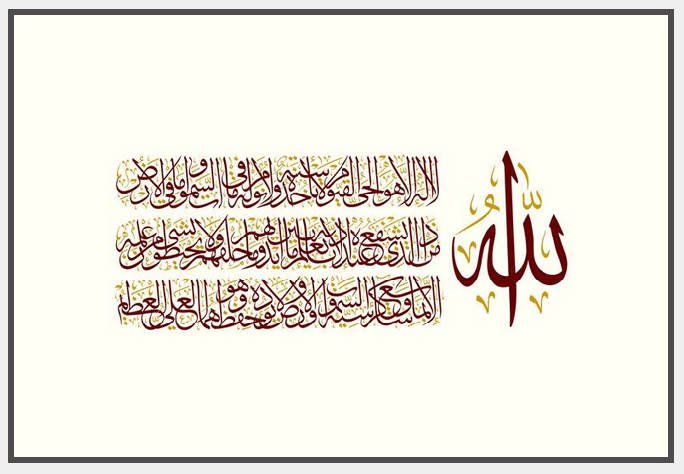
Ayat al-Kursi is celebrated as a linguistic and literary masterpiece, characterized by a single flowing Arabic sentence of balanced rhythmic cadence. To facilitate a thorough textual analysis, the complete Arabic text is presented alongside its phonetic transliteration.
Arabic Text
اللَّهُ لَا إِلَٰهَ إِلَّا هُوَ الْحَيُّ الْقَيُّومُ ۚ لَا تَأْخُذُهُ سِنَةٌ وَلَا نَوْمٌ ۚ لَّهُ مَا فِي السَّمَاوَاتِ وَمَا فِي الْأَرْضِ ۗ مَن ذَا الَّذِي يَشْفَعُ عِندَهُ إِلَّا بِإِذْنِهِ ۚ
يَعْلَمُ مَا بَيْنَ أَيْدِيهِمْ وَمَا خَلْفَهُمْ ۖ وَلَا يُحِيطُونَ بِشَيْءٍ مِّنْ عِلْمِهِ إِلَّا بِمَا شَآءَ ۚ وَسِعَ كُرْسِيُّهُ السَّمَاوَاتِ وَالْأَرْضَ ۖ وَلَا يَئُودُهُ حِفْظُهُمَا ۚ وَهُوَ الْعَلِيُّ الْعَظِيمُ
Phonetic Transliteration
Allahu la ilaha illa huwa al-hayyu al-qayyumu la takhudhuhu sinatun wala nawmun lahu ma fi as-samawati wama fi al-ardi man dha alladhi yashfa’u ‘indahu illa bi-idhnihi ya’lamu ma bayna aydihim wama khalfahum wala yuhituna bishay’in min ‘ilmihi illa bima sha’a wasi’a kursiyyuhu as-samawati wal-arda wala ya’uduhu hifzuhuma wahuwa al-‘aliyyu al-‘azim.
[cite: 4, 5]
Comparative Translation Matrix
To capture the semantic depth and varied linguistic approaches of modern and classical scholarship, Table 1 compiles six canonical translations of the Crown Verse, demonstrating the translation choices for key divine names and epistemological clauses.
| Source | Translation of Quran 2:255 |
|---|---|
| Muhammad Asad[cite: 4] | “GOD – there is no deity save Him, the Ever-Living, the Self-Subsistent Fount of All Being. Neither slumber overtakes Him…sourcery** |
| Abdullah Yusuf Ali[cite: 4] | “God! There is no god but He,-the Living, the Self-subsisting, Eternal. No slumber can seize Him nor sleep. His are all things in the heavens and on earth. Who is there can intercede in His presence except as He permitteth? He knoweth what (appeareth to His creatures as) before or after or behind them. Nor shall they compass aught of His knowledge except as He willeth. His Throne doth extend over the heavens and the earth, and He feeleth no fatigue in guarding and preserving them for He is the Most High, the Supreme (in glory).” |
| Sahih International[cite: 3] | “Allah – there is no deity except Him, the Ever-Living, the Sustainer of [all] existence. Neither drowsiness overtakes Him nor sleep. To Him belongs whatever is in the heavens and whatever is on the earth. Who is it that can intercede with Him except by His permission? He knows what is [presently] before them and what will be after them, and they encompass not a thing of His knowledge except for what He wills. His Kursi extends over the heavens and the earth, and their preservation tires Him not. And He is the Most High, the Most Great.” |
| Marmaduke Pickthall[cite: 5] | “Allah! There is no deity save Him, the Alive, the Eternal. Neither slumber overtakes Him nor sleep. Unto Him belongeth whatsoever is in the heavens and whatsoever is in the earth. Who is he that intercedeth with Him save by His leave? He knoweth that which is in front of them and that which is behind them, while they encompass nothing of His knowledge save what He will. His Throne includeth the heavens and the earth, and He is never weary of preserving them. He is the Sublime, the Tremendous.” |
| B.H. Shakir[cite: 5] | “Allah is He besides Whom there is no god, the Everliving, the Self-subsisting by Whom all subsist; slumber does not over…source.” |
Rhetorical Symmetries and concentric Design
The structural composition of Ayat al-Kursi is characterized by a concentric, mirrored pattern known in modern rhetorical analysis as a chiastic or ring composition (ABCD−X−D′C′B′A′). This symmetry organizes the ten distinct clauses around a central axis that emphasizes divine knowledge as the focal point of the verse.
The first segment, which proclaims absolute monotheism (Tawhid) and denies any equivalent deity (A), is balanced by the tenth segment, which affirms God’s ultimate transcendence and grandeur (Al-Aliyy al-Azim) (A′). The second segment introduces the attributes of absolute life and continuous cosmic sustenance (Al-Hayy al-Qayyum) (B), which corresponds to the ninth segment’s declaration that the effortless preservation of the heavens and the earth causes no weariness (B′). The third segment’s negation of biological limitations, specifically drowsiness (sina) and sleep (nawm) (C), corresponds to the eighth segment, where the vast, unwearied reach of the divine seat (Kursi) is described (C′). The fourth segment, which establishes divine ownership of everything in the heavens and the earth (D), is paired with the seventh segment, which highlights the epistemological limitations of created beings who cannot encompass any part of divine knowledge except what is permitted (D′).
At the center of this ring composition (X) lies the fifth and sixth segments, which address the authority of intercession by divine permission and the absolute, unrestricted knowledge of God. Placing the phrase “He knows what is before them and what is behind them” at the central axis indicates that divine knowledge is the structural pivot of the entire text. The literary structure itself reflects the thematic message: just as the universe is encompassed by divine knowledge, the architectural layout of the verse converges on this central reality.
Classical Exegesis and Prophetic Traditions
In classical Islamic exegesis, Ayat al-Kursi is regarded as the greatest verse of the Quran. Prophetic traditions record that the Prophet Muhammad ﷺ affirmed this status during an exchange with the companion Ubayy ibn Ka’b (Abu Mundhir), stating that the verse has a tongue and two lips with which it praises the Sovereign at the leg of the Throne. This description metaphorically illustrates the verse’s dynamic reality and close connection to divine authority.
Canonical traditions, such as those compiled by Al-Nasai, state that for anyone who recites Ayat al-Kursi after every obligatory prayer, nothing stands between them and entry into Paradise except death.
Classical commentators utilized the theological nuances of the verse to address key doctrinal debates. Fakhr al-Din al-Razi leveraged the verse’s linguistic distinctions to defend Sunni creed against Mu’tazilite interpretations and anthropomorphic (tashbih) extremes, explaining that the term Kursi must be understood as an expression of divine power and majesty rather than a physical seat. Al-Qurtubi focused on the legal and spiritual dimensions of intercession, explaining that the clause “Who could possibly intercede with Him without His permission?” reconciles divine justice with mercy by ensuring that intercession is never arbitrary but is granted solely by divine authorization. Ibn Kathir compiled various textual traditions to demonstrate that the negation of drowsiness and sleep represents the absolute perfection of divine life, ensuring that the universe is under constant, uninterrupted guidance.
Linguistic and Conceptional Ontologies
To understand the philosophical and theological implications of Ayat al-Kursi, one must examine the linguistic roots of its primary terms. Table 2 provides a detailed semantic mapping of these key terms, illustrating how their classical derivations support the metaphysical assertions of the text.
| Arabic Term | Linguistic Root | Classical Semantic Derivations | Metaphysical Interpretation |
|---|---|---|---|
| Al-Hayy (الْحَيُّ) | h-y-y | • To possess life, vitality, or organic growth. • To be alert, clear, and awake. • To exist without beginning or end. | Establishes that God is the source of all life, possessing intrinsic, independent vitality that does not rely on biological conditions. |
| Al-Qayyum (الْقَيُّومُ) | q-w-m | • To stand up, rise, or remain upright. • To manage, maintain, or make right. • To be ongoing, consistent, and stable. | Signifies absolute self-subsistence; He is entirely self-sufficient while actively maintaining the existence of all contingent beings. |
| Sina (سِنَةٌ) | w-s-n | • A light drowsiness or nodding off. • The preliminary stage of sleep. • A temporary lapse of attention. | Negates the most subtle biological limitations, affirming unceasing alertness, continuous governance, and cosmic stability. |
| Kursi (كُرْسِيُّهُ) | k-r-s | • A foundation, seat, or platform. • The base of a structure. • Metaphorically, a domain of knowledge or authority. | Repositions the entire cosmos as a dependent system, metaphorically depicting the physical universe as a footstool before divine power. |
| Ihata (يُحِيطُونَ) | h-y-t | • To encircle, embrace, or enclose. • To guard or protect completely. • To comprehend a subject in its entirety. | Establishes that created intellects cannot attain exhaustive, independent knowledge of reality. |
The linguistic root of Al-Qayyum (q-w-m) serves as a foundational concept in Islamic theology and practice. From this root arise key terms such as iqaamah (establishing the obligatory prayer), qiyaam (the standing posture in prayer), qiyaam ul layl (the voluntary night prayers), istaqaamah (steadfastness on the straight path), and yawm ul qiyaamah (the Day of Resurrection/Standing). This semantic web connects cosmic sustenance with human spiritual practice, illustrating that human righteousness is an effort to align with the stability and order established by Al-Qayyum.
This root also yields the sociological concept of qawama, referenced in Quran 4:34 to describe the protective responsibility and material support that supporters provide to their dependents. This relationship reflects a moral duty rather than a declaration of intrinsic superiority. This responsibility is illustrated by historical figures like Khadija bint Khuwaylid, an independent and successful merchant who supported the early prophetic mission. In his commentary, the Sufi metaphysician Ibn Arabi remarked that human spiritual maturity is directly related to how much one responds to the needs of those seeking support, thereby reflecting this divine attribute within human limitations.
Philosophical Formulations: Necessity and Occasionalism
Avicenna’s Burhan al-Siddiqin and the Ground of Necessary Existence
Avicenna (Ibn Sina) formulated a highly influential ontological-cosmological proof for the existence of God, known as the Burhan al-Siddiqin (“Proof of the Truthful”). This proof relies on a logical distinction between contingent and necessary existence. Avicenna argues that all observable entities in the physical universe are contingent, meaning their existence is not logically necessary; they can either exist or not exist, and they rely on external causes to transition from non-existence to existence. To explain the existence of contingent beings, there must be a primary cause whose existence is necessary in itself—a being that cannot not exist and is entirely self-sufficient. This Necessary Existent (Wajib al-Wujud) terminates any potential infinite regress of contingent causes.
This metaphysical framework aligns with the theological attribute Al-Qayyum. Philosophers like Parviz Morewedge classify Avicenna’s argument as ontological, noting that it relies on the conceptual definition of necessity without requiring empirical premises. Conversely, scholars such as Herbert A. Davidson categorize it as cosmological because it begins with the observed reality of contingent beings to infer the existence of a Necessary Existent. In either reading, the Necessary Existent serves as the conceptual equivalent of Al-Qayyum: the independent, self-subsisting foundation that continuously sustains the dependent, contingent order of creation.
Ghazalian Occasionalism and Quantum Indeterminacy
In contrast to the Aristotelian causal models of the medieval philosophers (falasifah), Abu Hamid al-Ghazali advanced the doctrine of occasionalism. Occasionalism asserts that created things possess no intrinsic, independent causal power. For Al-Ghazali, physical events that appear to be cause-and-effect relationships—such as fire burning cotton—are actually sequential events directly created by the divine will at every moment. The consistency observed in natural phenomena is not due to inherent qualities within the objects themselves, but is the result of God’s habitual, ongoing governance.
This occasionalist framework finds support in the Crown Verse’s assertion that the preservation of the cosmos does not weary Al-Qayyum, who never experiences drowsiness or sleep. If the divine will were to withdraw for a single instant, the universe would cease to exist.
While classical Newtonian physics depicted a deterministic, “clockwork” universe operating on autonomous mechanical laws, the development of modern quantum mechanics has challenged this perspective. Max Planck’s discovery of the quantum of action and Albert Einstein’s explanation of the photoelectric effect demonstrated that physical reality is not a continuous, rigidly determined system, but is characterized by quantization and inherent probabilities. This transition from strict classical determinism toward a probabilistic framework has reopened discussions around causality, offering a physical parallel to Al-Ghazali’s assertion of an open universe sustained by constant, moment-by-moment structuring.
Epistemological Limits: Conjecture versus Certainty
In Quranic epistemology, a sharp distinction is made between authentic knowledge (‘ilm) and mere conjecture (zann). Within the Western philosophical tradition, zann can be compared to an unjustified belief, a cognitive bias, or an unproven hypothesis. The Quran critiques those who base their beliefs on conjecture, particularly regarding ultimate truths, and instead praises those who are “firm in knowledge” and demand evidence-based beliefs. This framework suggests that true ‘ilm bridges faith and reason, as both authentic revelation and empirical study point to the same underlying truth.
The limits of human knowledge are highlighted by the historical context of related Quranic revelations. Traditional reports indicate that Jewish rabbis challenged the Prophet Muhammad ﷺ regarding the statement in Quran 17:85: “you have not been given of knowledge except a little”. The rabbis argued that because they had been given the Torah, which they regarded as an exposition of all knowledge, this limitation could not apply to them. The Prophet ﷺ responded that even the collective knowledge contained within the Torah is “little” in comparison to the infinite knowledge of God. To reinforce this principle of epistemic humility, the Quran declared in Surah Luqman (31:27) that if all the trees on earth were pens and the oceans were ink, the words of God would not be exhausted. This context demonstrates that all human-held knowledge is structurally finite, whereas divine knowledge is infinite and of an entirely different qualitative order.
The Quantum Epistemic Wall and the Unseen
Wave-Particle Duality and the Born Rule
The physical limits of human measurement are illustrated by the double-slit experiment, which serves as an empirical demonstration of the “Quantum Epistemic Wall”. When matter or light is fired through a double-slit unobserved, it behaves as a wave of probability, existing in a state of superposition where it travels through both slits simultaneously. This wave state is represented mathematically by the wave function Ψ(x,t), and the probability of locating the particle at a specific coordinate is determined by the Born rule:
P(x)=∣Ψ(x,t)∣2
[cite: 2]
However, if a measurement device is introduced to observe which path the particle takes, the wave function collapses. The quantum superposition dissolves, and the wave of probability resolves into a definite particle state. This transition demonstrates that the mere availability of information—even without physical disruption—forces the system into a definite state.
                     [Unobserved Quantum State]
                    Superposition Wave (Al-Ghaib)
                                 │
                   ┌─────────────┴─────────────┐
                   ▼                           ▼
        [Act of Measurement]          [No Measurement]
         Wave Function Collapses       Superposition Sustained
         Definite Particle Manifests   Interference Pattern Formed
         (Illa Bima Sha'a)             (Unmanifested Potentiality)
This experimental reality illustrates the clause: “And they encompass nothing of His knowledge except what He wills”. Human observation cannot bypass this limitation; under Niels Bohr’s Principle of Complementarity, one can observe either the wave nature or the particle nature of a system, but never both in their totality. The double-slit experiment provides a physical example of the linguistic concept of ihata (encompassing grasp). The attempt to fully measure or “encompass” one property of a quantum system inherently limits our knowledge of another, establishing a structural boundary to empirical inquiry.
Superposition as a Parable of Al-Ghaib
The unobserved quantum wave function exists in a state of un-manifestation—a cloud of potentiality where a particle is simultaneously everywhere and nowhere. This state can be understood as a physical parable of the Unseen (Al-Ghaib). Only through physical interaction and the process of decoherence is a specific, localized reality allowed to manifest.
If quantum wave functions never collapsed, the universe would remain a blurred cloud of probability rather than a stable macroscopic world. The attribute of Al-Qayyum is reflected in the continuous maintenance of physical constants and decoherence processes, which prevent the universe from dissolving into a chaotic superposition of probabilities, thereby sustaining a stable world for conscious experience.
Wheeler’s “It from Bit” and the Divine Command
This informational perspective on physics aligns with John Archibald Wheeler’s concept of “It from Bit,” which proposes that physical matter is not composed of primary “stuff,” but arises from information and participatory observation. At its most fundamental level, physical reality is highly responsive to the presence of an observer, mirroring the Quranic concept of Kalima (the Word) or Amr (the Divine Command). If unobserved light exists as a wave of potentiality, the physical laws of collapse act as the mechanism that precipitates the tangible reality of our physical environment.
The Philosophy of Mind and the Hard Problem of Consciousness
The boundary of human knowledge is not only encountered when observing the subatomic world, but also when looking inward at the nature of human consciousness. While neuroscience maps the physiological pathways of the brain, it has not yet resolved the “Hard Problem of Consciousness”—the question of how objective physical processes in the brain give rise to subjective experience (qualia).
The Quran addresses this inner epistemic limit in its description of the human spirit (ruh): “The spirit is of the command of my Lord; and you (humankind) have been given of knowledge only a little”. This verse directly sets a limit on human self-knowledge, suggesting that the inner workings of consciousness belong to a domain that resists complete human reductionism.
In contemporary cognitive science, researchers have formulated over two hundred different theories to explain consciousness, illustrating a lack of consensus that points to the complexity of the subject. Integrated Information Theory (IIT), championed by neuroscientist Christof Koch, suggests that consciousness is a fundamental property of physical systems that can be measured mathematically through the variable Φ (Phi), representing unified, irreducible information. While Koch and Zia H. Shah MD both emphasize the fundamental nature of consciousness, their frameworks diverge in their ultimate conclusions:
- Christof Koch: Suggests that standard reductionism has failed to explain subjective experience, turning to Panpsychism and physical architecture to locate consciousness as a fundamental property of matter.
- Zia H. Shah MD: Proposes that consciousness is indeed fundamental, but identifies this foundational reality as the Divine (Al-Hayy), rather than an atomic or material property.
From this perspective, the human brain acts as an interface for a divinely-originated spirit, allowing conscious agents to experience and interact with physical reality. The “explanatory gap” between neuronal firings and subjective experience remains a structural boundary, reminding humanity of its epistemological limits.
  Physical Brain State (Electrochemical Neuronal Firings)
                       │
             [THE EXPLANATORY GAP]
                       ▼
  Subjective Experience (The "Qualia" of Sight, Sound, Self-Awareness)
Societal and Devotional Applications
Resistance to Tyranny and Political Ontology
Beyond its epistemological and scientific dimensions, Ayat al-Kursi has historically influenced Islamic political thought and social movements. Modern Islamic thinkers, such as Abul A’la Maududi and Sayyid Qutb, utilized the absolute sovereignty expressed in the Throne Verse to argue that ultimate legislative authority belongs strictly to the Divine.
By asserting that all power in the heavens and the earth belongs to God alone, the verse challenges the legitimacy of human tyranny, absolute monarchs, and unjust political authorities. Traditional reports state that upon the revelation of Ayat al-Kursi, every idol fell face-down and tyrant kings trembled, symbolizing the verse’s power to challenge false claims to divinity and absolute authority.
Devotional and Healing Traditions
The verse also plays a central role in the devotional and therapeutic practices of Muslims worldwide. Known as ruqyah (spiritual healing and protection), Ayat al-Kursi is recited to seek relief from physical, psychological, and spiritual distress. While these practices share a common focus on the text of the verse, they exhibit sectarian variations in application and methodology. Table 3 details these variations across Sunni, Shi’a, and Sufi/Traditional practices, summarizing their methods, regional focuses, and scholarly debates.
| Practice | Primary Verses & Invocations | Methods of Application | Regional Concentrations | Scholarly Perspectives & Debates |
|---|---|---|---|---|
| Sunni Practice[cite: 8] | • Surah Al-Fatiha. • Ayat al-Kursi. • Surahs Al-Ikhlas, Al-Falaq, An-Nas. • Last two verses of Al-Baqarah. | • Direct recitation over the patient. • Blowing (nafth) onto hands and wiping the body. • Reciting over water to be drunk or bathed in. | Universal distribution across the Middle East, North Africa, and South Asia. | Permitted if the practice relies strictly on the Quran and prophetic supplications. Scholars warn against using non-Quranic charms or delaying medical care. |
| Shi’a Practice[cite: 8] | • Quranic recitations (Al-Fatiha, Ayat al-Kursi). • Supplications invoking the names and authority of the Imams. | • Recitation and blowing over the patient or water. • Frequent use of ta’widhas (written amulets containing Quranic verses or names of the Imams). | Highly concentrated in Iran, Iraq, and Shia communities within Lebanon and South Asia. | Permitted by jurists, though scholars like Allameh Sobhani stress that believers must not rely on charms as independent sources of healing, which would compromise Tawhid. |
| Sufi / Traditional Practice[cite: 8] | • Standard healing verses (Ayat al-Kursi). • Heavy emphasis on continuous dhikr (remembrance) and local litanies. | • Recitation at the shrines of saints. • Communal healing ceremonies involving incense and rhythmic chanting. • Use of herbal remedies alongside recitation. | Prominent in Sufi centers of South Asia, North Africa, and highly syncretic communities in Southeast Asia. | Supported by traditional Sufi clergy through the concept of baraka (blessing). Opposed by reformist and Salafi critics who categorize shrine rituals as innovations (bid’ah). |
Thematic Epilogue
Ayat al-Kursi presents a comprehensive theological framework that integrates cosmology, metaphysics, and epistemology into a cohesive narrative. By presenting a universe that is not a self-sustaining mechanical clockwork, but a dynamic creation continuously sustained by Al-Qayyum, the verse challenges deist assumptions and classical determinism.
Within this framework, human knowledge is presented as a participatory gift that is structurally bounded. Through physical principles such as quantum indeterminacy and the hard problem of consciousness, science encounters empirical boundaries that echo the Quranic reminder: “they encompass nothing of His knowledge except what He wills”. These limits do not discourage empirical inquiry; instead, they foster a posture of humility and wonder, positioning scientific discovery as a means to explore the signs of creation.
By recognizing that human comprehension is a small window into an infinite reality, the pursuit of scientific discovery and spiritual reflection can be seen as complementary paths. Each breakthrough in our understanding of physical laws reveals more of the order of creation, pointing back to the transcendent source of all knowledge. Ultimately, Ayat al-Kursi calls conscious observers to reflect on the universe with intellectual rigor and deep humility, recognizing their place within a cosmos sustained by the Most High, the Supreme.



Leave a Reply