
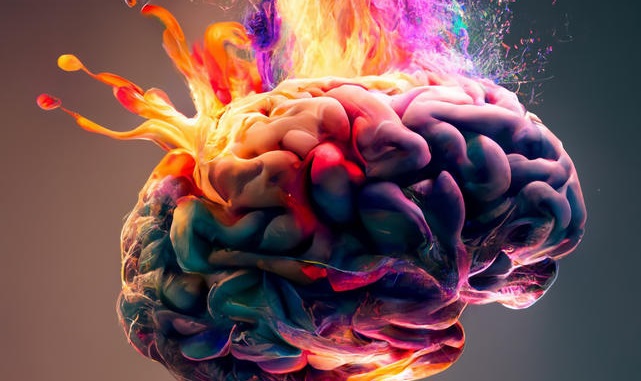
Audio teaser: Quantum Information and the Quranic Soul
Epistemological Foundations of the Dual-Book Paradigm
The scholastic tradition of natural theology has long operated under the “Two Books” paradigm, which posits that the transcendent Creator has manifested Himself through two parallel, fully harmonious media of revelation: the “Book of Scripture” (the written text of the Quran) and the “Book of Nature” (the physical cosmos). Within this unified epistemological framework, it is asserted that because both the written word and the physical universe originate from a singular, absolute Source of Truth, a genuine scientific discovery regarding the material world can never ultimately contradict the authentic spiritual meaning of divine revelation. Any perceived conflict between these two domains is understood to be a consequence of human error, resulting from either a flawed interpretation of scriptural semantics or an incomplete, dogmatic rendering of empirical science. This perspective demands a continuous, active intellectual engagement that uses scientific tools to deepen spiritual comprehension, defending the existence of God and the reality of the soul against the reductionist claims of secular materialism.
Within this structural harmony, human consciousness occupies a uniquely significant position. It is the primary lens through which the universe is observed and interpreted, yet it remains one of the most elusive phenomena in all of scientific inquiry. Rather than viewing consciousness as an accidental byproduct of biological evolution, the dual-book paradigm conceptualizes it as a fundamental bridge connecting the observable physical realm (Alam al-Shahadah) with the unseen, transcendent dimensions of reality (Alam al-Ghayb). By analyzing the human mind through this integrated lens, modern scientific observation is transformed into an act of profound contemplation and glorification (Tasbih), where the mechanics of subjective experience serve as an ontological signpost pointing toward a transcendent origin and a certain post-mortem destination.
The Scientific and Philosophical Impasse of Mind: From Reductive Materialism to Mysterianism
Contemporary cognitive neuroscience has achieved remarkable success in mapping the functional architecture of the human brain, identifying the neural correlates of memory, sensory processing, and behavioral execution. However, these advancements have brought the field into direct contact with what the philosopher David Chalmers termed the “Hard Problem of consciousness”. The core of the Hard Problem lies in the vast explanatory gap between objective physical processes and subjective, first-person experiences. While science can explain the electrochemical mechanisms by which retinal signals translate into cortical activation, it cannot explain why or how these physical processes are accompanied by the qualitative, subjective experience of “what it is like” to perceive the color red—a phenomenon known as qualia.
In response to this explanatory gap, physicalist philosophers have attempted to reformulate the nature of the mind. Daniel Dennett, representing a highly reductionist stance, argues that subjective consciousness as traditionally conceived is an evolutionary illusion. To dismantle the concept of an inner, unified subjective observer, Dennett rejects the metaphor of the “Cartesian Theater”—a hypothetical centralized locus in the brain where sensory inputs are presented to a unified self. Instead, he proposes the “Multiple Drafts Model,” suggesting that the brain is a decentralized, parallel processing system that continually generates competing streams of interpretation, constructing a post-hoc narrative of selfhood. Under this view, consciousness is merely a functional adaptation designed by natural selection to filter information and prioritize social and environmental navigation, rather than a distinct metaphysical reality.
However, the reductionist paradigm faces serious logical challenges. Thomas Nagel demonstrated that subjective experience is inherently bound to a specific, unique point of view that cannot be captured by the objective, third-person vocabulary of science. In his seminal inquiry, “What Is It Like to Be a Bat?”, Nagel pointed out that even if an investigator possessed complete knowledge of a bat’s neurophysiology and sonar mechanics, the actual subjective feeling of being a bat remains entirely closed to human experience. This inherent subjectivity indicates that physicalist frameworks are fundamentally incomplete, as they cannot capture the qualitative essence of conscious life.
This limitation has led “Mysterian” philosophers, such as Colin McGinn, to suggest that human intelligence possesses “cognitive closure” regarding the mind-body problem. Just as a dog is cognitively barred from understanding quantum mechanics, the human brain may be structurally and evolutionarily incapable of deciphering its own conscious awareness. Similarly, the mathematical physicist Roger Penrose suggests that consciousness may involve non-computable, quantum-mechanical processes occurring within cellular microtubules, implying that standard classical physics and computational models are fundamentally inadequate for explaining the mind.
To bypass the problem of emergence, some philosophers have turned to Panpsychism, which proposes that consciousness is not a late-stage emergent property of complex brains, but a fundamental, intrinsic property of all matter, existing alongside mass and electric charge. By positing that even elementary particles possess a rudimentary form of experience, Panpsychism avoids the difficulty of explaining how conscious minds could arise from entirely non-conscious physical ingredients. Nevertheless, Panpsychism is undermined by the “combination problem”—the unresolved challenge of explaining how billions of individual, micro-conscious subatomic particles can integrate to form the singular, highly unified, and coherent subjective consciousness of a human self.
This deep scientific and philosophical division is directly addressed by the Quranic declaration regarding the limits of human knowledge:
“They ask you concerning the soul (al-rūḥ). Say: ‘The soul is of the command of my Lord, and you have not been given of knowledge except a little.’”
This verse does not discourage intellectual exploration; rather, it establishes an ontological boundary. It indicates that the rūḥ—the vital animator of subjective consciousness—is not a material composite that can be reduced to physical components, but a divine command that interfaces with physical biology. The enduring inability of science and philosophy to resolve the mind-body problem confirms this scriptural boundary, demonstrating that the essence of awareness remains beyond the limits of human reductionism.
Theistic Proofs Derived from Human Consciousness
The irreducible nature of subjective awareness has been formulated by several modern philosophers into robust arguments for the existence of a divine Creator. These theistic proofs argue that the presence of finite, subjective conscious experiences in the universe is far more plausible under a theistic ontology than a naturalistic one.
The philosopher Richard Swinburne presents an inductive argument from consciousness, focusing on the systematic correlation between physical brain states and non-physical mental states. Swinburne argues that physical science can only establish empirical correlations; it cannot provide a logical reason why a specific neurochemical event in the cerebral cortex should produce a specific subjective sensation, such as the smell of a rose or a feeling of joy. Because this systematic correlation is not logically necessary and cannot be explained by materialist laws, Swinburne contends that it is best explained as the deliberate, purposeful design of a divine Mind that binds the physical and mental worlds together.
The deductive iteration of this argument, developed by Robert Adams, progresses through several formal, logically sequential premises:
- Non-physical mental states constitute genuine, existing entities.
- Specific types of mental events and physical events are regularly and systematically correlated.
- A robust explanation is metaphysically required to account for these persistent correlations.
- No naturalistic explanation can account for this systematic, cross-categorical synchronization.
- Therefore, the systematic correlation between physical brain activity and non-physical mental experiences is best explained by the deliberate orchestration of a divine, transcendent Mind.
This deductive framework is complemented by J.P. Moreland’s argument from finite, irreducible consciousness. Moreland contends that the existence of finite, conscious human minds cannot emerge from brute, non-conscious matter through purely physical processes. Since the qualitative properties of the mind (qualia) and the capacity for intentionality cannot be mapped onto physical properties like mass, charge, or spatial position, the ultimate origin of consciousness must be personal and conscious. Therefore, the existence of finite conscious agents points directly to an infinite, conscious, personal God.
Similarly, William Lane Craig emphasizes the philosophical challenge that intentionality—the “aboutness” or directedness of mental states toward objects or abstract concepts—poses to naturalism. A physical state or material object can never be “about” another object; a stone cannot possess belief or desire regarding another stone. Because intentional mental states exist and are fundamentally non-physical, Craig argues that they are best explained by a theistic worldview that posits a primordial, conscious Mind as the foundation of all reality.
The Islamic Model of Consciousness: The Metaphor of Sleep, Multidimensionality, and State Transitions
To conceptualize the relationship between physical biology and the human soul, the Quran employs the profound biological and metaphysical metaphor of sleep:
“Allah takes away the souls of human beings at the time of their death; and of those also that are not yet dead, during their sleep. And then He retains those against which He has decreed death, and sends back the others till an appointed term. In that surely are Signs for a people who reflect.”
This verse establishes a deep ontological parallel between the daily experience of sleeping and the final transition of death, characterizing both as states where the soul is temporarily or permanently decoupled from its physical vehicle.
This scriptural model finds compelling support when viewed through the lens of clinical sleep medicine. Human consciousness is not a single, monolithic state, but a dynamic, multi-state phenomenon. During a standard twenty-four-hour cycle, a human transitionally inhabits three distinct physiological and subjective states: wakefulness, Rapid Eye Movement (REM) sleep, and non-REM sleep.
During wakefulness, the mind actively processes external sensory inputs, constructing a coherent model of the environment. In non-REM sleep, particularly deep slow-wave sleep, subjective awareness is largely suspended, and the brain displays highly synchronized, low-frequency electrical activity. During REM sleep, however, the brain becomes highly active, and the mind experiences a rich, vivid subjective reality—dreams—completely independent of external sensory inputs. This daily oscillation demonstrates that subjective awareness is not a simple, unitary phenomenon tied to active waking physiology, but is capable of existing in radically different formats.
Furthermore, this multi-state flexibility of consciousness can be modeled using the Many-Worlds Interpretation (MWI) of quantum mechanics and multi-dimensional physics. MWI, proposed by physicist Hugh Everett III in 1957, suggests that quantum events do not cause a wavefunction collapse; instead, the universe branches into multiple parallel realities corresponding to every possible outcome.
If human consciousness is fundamentally anchored in extra spatial dimensions—such as those hypothesized in superstring and M-theory—the decay of the three-dimensional physical brain does not result in the annihilation of the observer. Instead, the transition of death is conceptualized as an ontological state shift, akin to waking up in a new parallel branch or higher-dimensional space. To the newly instantiated conscious self, this transition would feel remarkably like waking up from a state of general anesthesia or a deep, dreamless sleep, finding its personal identity and memory completely preserved.
This transition is also described through the “fetus paradigm”. Just as a developing fetus in the dark, restricted environment of the womb cannot possibly conceive of the vast, complex, multi-dimensional world that awaits it after birth, the human mind in its current material state is cognitively restricted from fully conceiving the post-mortem paradigm of the hereafter.
The Unanswerable Challenges to Material Agency: The Fly Challenge and the Deathbed Challenge
To expose the limits of human autonomy and scientific reductionism, the Quranic discourse presents two major empirical challenges to humanity: the Fly Challenge and the Deathbed Challenge.
The Fly Challenge
In the context of materialist attempts to simulate biological systems, the Quranic fly challenge functions as a profound critique of technological hubris:
“People, here is an illustration, so listen carefully: those you call on besides God could not, even if they combined all their forces, create a fly, and if a fly took something away from them, they would not be able to retrieve it. How feeble are the petitioners and how feeble are those they petition.”
While contemporary biotechnology has achieved remarkable feats in cloning and genetic modification, these successes are fundamentally dependent on pre-existing biological architectures—including carbon-based DNA, RNA, proteins, and complex enzymatic pathways already established in nature.
The scriptural challenge dictates that materialist agency must create a living, conscious organism completely ex nihilo, without relying on pre-fabricated biological templates. To meet this challenge, secular science would be required to assemble life from non-biological substrates, such as silicon, starting from the atomic level without utilizing pre-existing cellular machinery. This demand highlights the insurmountable metaphysical barrier that separates the manipulation of life from the actual origination of the vital spark—a limitation famously echoed in the astrophysical observation that synthesizing even a rudimentary object from scratch requires the pre-existence of a highly fine-tuned universe.
The Deathbed Challenge
While the Fly Challenge addresses the origin of life, the Deathbed Challenge (Quran 56:83-87) addresses its inevitable conclusion, placing the reader at the bedside of a dying person:
“Why is it not then that when it comes up to the throat, and you at that time look on—and We are nearer to it than you, but you see not—why then, if you are not held under authority, do you not send it back, if you are truthful?”
This challenge is a formal, empirical demonstration of human helplessness. Despite the advanced interventions of modern clinical medicine, there is a definitive, irreversible point in terminal physiology where the soul departs the body, and no human technology can restore it.
This terminal transition is marked by what the Quran calls the sakratul-mawt—the stupor or agony of death. Biochemically and neurologically, this transition involves a systematic shutdown of metabolic systems and cortical activity. The Quranic description of this state as a “stupor” (sakrah) matches the profound disorientation and altered states of consciousness observed during clinical death.
Islamic tradition describes this separation of the soul from the body as varying based on the individual’s spiritual alignment; the soul of a believer is drawn gently, “like water pouring from a jug,” while the soul of a disbeliever is extracted harshly, “as a skewer is pulled through wet wool,” reflecting its deep attachment to material existence.
This clinical transition is frequently accompanied by near-death experiences (NDEs), where individuals clinically revived from cardiac arrest report a highly consistent sequence of subjective experiences. These include:
- A sensation of floating outside the physical body and observing medical interventions.
- Movement through a dark tunnel toward an intense, non-glaring light.
- Deep feelings of peace, warmth, and unconditional love.
- A comprehensive life review, encountering deceased relatives or spiritual entities.
- A profound realization that “the veil has been lifted,” revealing a reality far clearer and more absolute than material life.
These empirical accounts align with the Quranic assertion that at the moment of death, the sensory limitations of the physical body are removed, granting the departing soul an expanded perception: “We have stripped from you your veil, and your sight today is piercing”.
This cosmic veil is further illuminated in the celestial oaths of Surah Al-Waqi’ah, which invoke the “positions of the stars” (mawāqiʿ al-nujūm):
Oaths⟹Stellar Positions⟹Terminal Physiology⟹Ontological Sovereignty [cite: 16, 19]
From an astronomical standpoint, this oath highlights the vast scale of stellar mechanics and the finite speed of light. When human observers gaze at the night sky, they perceive stars in celestial positions that those stars occupied millions of years ago, rather than their current, actual physical locations. This creates an epistemological disjunction between appearance and reality.
The Author of the cosmos uses this immense astronomical delay to illustrate that the physical senses are easily deceived by spatial and temporal intervals. Yet, while the physical stars are unfathomably distant, the same divine Author is ontologically “nearer to the human being than the jugular vein”. This juxtaposition establishes that the unseen reality of divine presence and the departing soul at the moment of death are far more immediate and certain than the physical stars observed in the night sky.
Eschatological Reconstruction and Information Conservation
The most prominent materialist objection to the resurrection of the dead is the “reassembly problem”. This argument posits that because a deceased human body decays into dust and its constituent atoms are recycled through the biosphere, a physical, bodily resurrection is a logical and physical impossibility. The Quranic discourse addresses this skepticism by demonstrating that the “First Creation” is the ultimate logical and scientific proof for the “Second Creation” (the Resurrection). In Surah Ya-Sin, the text rhetorically asks:
“Does man not consider that We created him from a mere drop of sperm, and behold—he is an open adversary? And he presents for Us an example and forgets his own creation. He says, ‘Who can give life back to bones after they have decayed?’ Say, ‘He who created them in the first place will give them life again: He has full knowledge of every act of creation.’”
This argument establishes a clear logical precedent: the initial assembly of a highly complex, conscious, thinking human being from a microscopic, undifferentiated sperm-drop is a far more complex creative act than simply repeating that assembly.
To resolve the specific mechanism of reassembling scattered physical identity, the Quran describes the Creator as bi-kulli khalqin ‘Alīm—”Knowing of every creation”. This implies that every subatomic coordinate, every historical arrangement of matter, and every neural state that constituted an individual’s identity is perfectly known, tracked, and stored by the Divine.
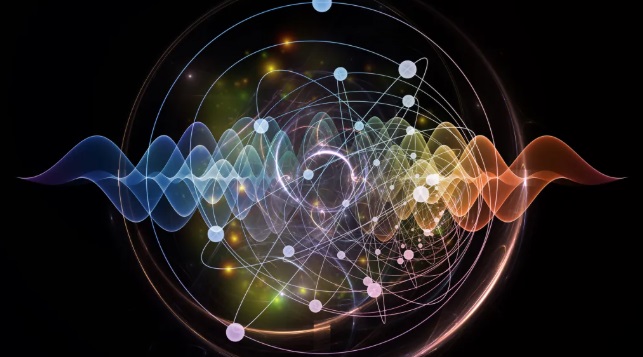
This theological assertion is highly consistent with the fundamental principle of information conservation in modern physics. Within quantum mechanics, physical information is considered indestructible. The state of a closed quantum system is represented by a wave function ∣ψ(t)⟩, which evolves deterministically over time according to the Schrödinger equation:
iℏ∂t∂∣ψ(t)⟩=H^∣ψ(t)⟩
Because this temporal evolution is governed by a unitary operator U(t)=e−iH^t/ℏ, the inner product of quantum states is strictly preserved, making the physical information describing the system’s history mathematically conserved and theoretically retrievable.
This principle of unitarity is further supported by the “No-Hiding Theorem” in quantum information theory, which dictates that quantum information cannot be lost or dissipated into the environment; it is merely scrambled. The resolution of the black hole information paradox by physicists like Leonard Susskind, alongside the development of the Holographic Principle, confirms that information is a fundamental, indestructible constituent of reality.
If the physical universe possesses an inherent mechanism for the absolute conservation of information, then the complete reconstruction of a deceased individual’s exact physical and neural configuration is entirely consistent with the laws of physics.
Furthermore, the scale of this cosmic reconstruction is described through a powerful cosmological metaphor in Surah Al-Anbiya:
“The Day when We will fold the heaven like the folding of a sheet for the records. As We began the first creation, We will repeat it. (That is) a promise binding upon Us. Truly, We will do it.”
This passage describes the terminal phase of the current cosmos as a geometric folding of the spatial manifold, mirroring the “Big Crunch” model of contemporary astrophysics.
In this scenario, the gravitational pull of the universe’s mass eventually halts its expansion, initiating a symmetrical contraction phase that draws all matter, energy, and spacetime back into a low-entropy, high-density singularity. This establishes a symmetrical relationship between the initial Big Bang and the ultimate Big Crunch, presenting a unified vision of a dynamic, purposeful, and potentially cyclic universe where the end of physical space is merely a transition to a renewed, transcendent creation.
Skeptical Conjecture versus Ontological Reality
Modern materialist skepticism, represented by figures such as Stephen Hawking, dismisses the afterlife as a biological impossibility, asserting that human consciousness must end when the physical brain ceases to function. Hawking famously claimed that the brain is a computer that stops working when its components fail, and that there is no heaven or afterlife for broken computers.
However, this confident denial of post-mortem existence is not a conclusion derived from empirical, scientific evidence. Because the afterlife, heaven, and hell are conceptualized as realities existing beyond the localized coordinates of time, space, and physical matter, they lie entirely outside the scope of scientific observation and falsification. To declare with absolute certainty that no future life exists is an epistemological leap of faith—an unfalsifiable assumption rooted in materialist dogma.
The Quran pointedly identifies this dogmatic skepticism as mere conjecture (dhann):
“And they say, ‘There is not but our worldly life; we die and live and nothing destroys us except time.’ And they have of that no knowledge; they are only assuming.”
By labeling this denial as conjecture, the scripture turns the epistemological tables on secular skeptics. It is the deniers of the afterlife, rather than the believers, who are making assertions without factual or scientific evidence.
Belief in the afterlife, by contrast, is supported by a robust synthesis of biological teleology, the irreducible nature of consciousness, and the universal moral intuition of the human soul. This intuitive alignment is documented in global demographic data, which demonstrates that the expectation of a post-mortem existence and moral accountability is a highly stable feature of the human mind.
| Geographic Region / Demographic Cohort | Practice Level (Daily Prayers) | Belief in Heaven (%) | Belief in Hell (%) | Scriptural / Intuitive Alignment |
|---|---|---|---|---|
| South Asia & Southeast Asia[cite: 9] | General Population | ~100% (Universal) | High | Near-universal conviction of afterlife |
| Middle East & North Africa[cite: 9] | General Population | Universal / Very High | Very High | Deeply rooted scriptural certainty |
| Russia (Religiously Committed)[cite: 9] | Multiple times daily | 79% | 78% | High correlation with active devotion |
| Russia (Less Committed)[cite: 9] | Infrequent | 49% | 46% | Reflects secularization and diminished practice |
| Southern & Eastern Europe[cite: 9] | General Population | ≥ 50% | Moderate | Baseline belief persists across secular environments |
The data compiled in this table demonstrates that the conviction of post-mortem accountability is not a localized cultural anomaly, but a widespread intuitive alignment of the human mind. This universal expectation of cosmic justice indicates that the belief in the hereafter is deeply aligned with human nature (Fitra), providing a coherent spiritual and ethical foundation that contrasts with the unfalsifiable assumptions of materialist skepticism.
Comparative Analysis of Consciousness Theories
| Theoretical Framework | Primary Proponents & Context | Proposed Mechanism of Consciousness | Resolution of the Mind-Body Problem | Major Conceptual / Empirical Failure | Integrated Quranic Synthesis |
|---|---|---|---|---|---|
| Reductive Materialism / Illusionism | Daniel Dennett, Stephen Hawking | Emerges from decentralized, parallel neurochemical processing (Multiple Drafts Model). | Denies the problem; classifies subjective experience and qualia as biological illusions. | The Explanatory Gap: Fails to explain why physical states produce qualitative first-person experiences. | The Command of the Lord (Q 17:85): Confirms that the soul is non-reducible and beyond complete human comprehension. |
| Panpsychism | Philip Goff, Galen Strawson | Consciousness is an intrinsic, fundamental property of all physical matter. | Rejects emergence by claiming that matter has always possessed a rudimentary form of experience. | The Combination Problem: Cannot explain how micro-conscious states combine into a unified, singular self. | Divine Unity (Tawhīd): The unified conscious identity of the human Nafs is structured and sustained by a singular Creator. |
| Mysterianism / Cognitive Closure | Thomas Nagel, Colin McGinn | Consciousness is physical, but its explanation is inaccessible due to human cognitive limits. | Declares the mind-body problem unsolvable by current human cognitive architectures. | Ontological Resignation: Offers no positive explanation for the relationship between brain and mind. | Epistemological Humility: Aligns with “you have not been given of knowledge except a little”. |
| Quantum Microtubular / Multi-Dimensional | Roger Penrose, Many-Worlds (Everett) | Consciousness is anchored in quantum states within microtubules or extra spatial dimensions. | Bridges the mind-body gap through non-computable quantum events and multi-dimensional spaces. | Lack of Direct Empirical Proof: Difficult to test or measure quantum coherence in warm brain environments. | State Transitions (Q 39:42): Models death as a transition, preserving identity in a parallel spiritual paradigm. |
Conclusions
A multidisciplinary analysis of human consciousness and terminal physiology demonstrates the limits of materialist reductionism and the necessity of a theistic framework. The persistent failure of physicalist paradigms to resolve the “Hard Problem of consciousness” shows that subjective awareness cannot be explained purely by electrochemical brain states. Instead, consciousness is best understood as an irreducible, non-physical reality—the rūḥ—which interfaces with physical biology under divine command.
The comparison between sleep and death, supported by clinical sleep medicine and quantum information conservation, provides a coherent model for how conscious identity can survive physical decay. Furthermore, the Fly and Deathbed Challenges expose the limits of human technology, highlighting the absolute sovereignty of the Creator over life and death. Ultimately, the post-mortem resurrection is not a biological impossibility, but a certain transition of awareness into a higher-dimensional reality, planned and executed by the Creator who initiated the cosmos.


Leave a Reply