
Presented by Claude
- The two pillar verses (Q 13:2 Ar-Ra’d and Q 31:10 Luqman) share the phrase بِغَيْرِ عَمَدٍ تَرَوْنَهَا, fully sourced here with Arabic, transliteration, and six named translations; classical tafsir splits into a “no pillars” camp (al-Hasan al-Basri, Qatadah) and an “invisible pillars” camp (Ibn Abbas, Ikrimah, Mujahid), and modern exegetes (Maududi, Maulana Muhammad Ali, the Ghamidi circle) gloss the invisible pillars as gravity.
- The scientific narrative — Chandrasekhar’s 1930 voyage, the ~1.44 solar-mass limit, Eddington’s 1935 ridicule, Einstein’s 1939 rejection of Schwarzschild singularities, and the eventual vindication (1972 Cygnus X-1, 1983 Nobel) — is verified against named primary and reputable sources, with exact journal citations supplied below.
- Dr. Zia H. Shah’s own corpus on thequran.love and The Muslim Times is captured by exact title and URL, ready to be cited by name in the essay’s apparatus and epilogue.
Key Findings
1. The Two Primary Verses with Six Translations
Surah Ar-Ra’d (Q 13:2) — Arabic (quran.com/ar-rad/2):
ٱللَّهُ ٱلَّذِى رَفَعَ ٱلسَّمَـٰوَٰتِ بِغَيْرِ عَمَدٍۢ تَرَوْنَهَا ۖ ثُمَّ ٱسْتَوَىٰ عَلَى ٱلْعَرْشِ ۖ وَسَخَّرَ ٱلشَّمْسَ وَٱلْقَمَرَ ۖ كُلٌّۭ يَجْرِى لِأَجَلٍۢ مُّسَمًّۭى ۚ يُدَبِّرُ ٱلْأَمْرَ يُفَصِّلُ ٱلْـَٔايَـٰتِ لَعَلَّكُم بِلِقَآءِ رَبِّكُمْ تُوقِنُونَ
Transliteration (surahquran.com): “Allahu allathee rafaʿa as-samawati bighayri ʿamadin tarawnaha thumma istawa ʿala al-ʿarshi wasakhkhara ash-shamsa wa al-qamara kullun yajree li-ajalin musamman yudabbiru al-amra yufassilu al-ayati laʿallakum biliqai rabbikum tooqinoon.” surahquran
- Sahih International: “It is Allah who erected the heavens without pillars that you [can] see; then He established Himself above the Throne and made subject the sun and the moon, each running [its course] for a specified term. He arranges [each] matter; He details the signs that you may, of the meeting with your Lord, be certain.” surahquran
- Yusuf Ali: “Allah is He Who raised the heavens without any pillars that ye can see; is firmly established on the throne (of authority); He has subjected the sun and the moon (to his Law)! Each one runs (its course) for a term appointed. He doth regulate all affairs, explaining the signs in detail, that ye may believe with certainty in the meeting with your Lord.” surahquran +2
- Pickthall: “Allah it is Who raised up the heavens without visible supports, then mounted the Throne, and compelled the sun and the moon to be of service, each runneth unto an appointed term; He ordereth the course; He detaileth the revelations, that haply ye may be certain of the meeting with your Lord.” Qur’an Wiki
- Muhammad Asad: “It is God who has raised the heavens without any supports that you could see, and is established on the throne of His almightiness; and He [it is who] has made the sun and the moon subservient [to His laws], each running its course for a term set [by Him]. He governs all that exists. Clearly does He spell out these messages, so that you might be certain in your innermost that you are destined to meet your Sustainer [on Judgment Day].” IslamiCity
- Maududi (Tafhim al-Quran): “It is Allah Who raised up the heavens without such pillars as you could see: then He sat Himself upon the Throne of His Kingdom: He subjected the sun and the moon to a law. Everything in the universe is running its course to its fixed term. And Allah alone is directing the whole affair. He makes His signs plain: perhaps you may be convinced of meeting your Lord.” Surah Quran
- Maulana Muhammad Ali (Lahore Ahmadiyya): “Allah is He Who raised the heavens without any pillars that you can see, and He is established on the Throne of Power, and He made the sun and the moon subservient (to you). Each one runs to an appointed term. He regulates the affair, making clear the messages that you may be certain of the meeting with your Lord.” (alahmadiyya.org) Ahmadiyya
Surah Luqman (Q 31:10) — Arabic (quran.com/luqman/10):
خَلَقَ ٱلسَّمَـٰوَٰتِ بِغَيْرِ عَمَدٍۢ تَرَوْنَهَا ۖ وَأَلْقَىٰ فِى ٱلْأَرْضِ رَوَٰسِىَ أَن تَمِيدَ بِكُمْ وَبَثَّ فِيهَا مِن كُلِّ دَآبَّةٍۢ ۚ وَأَنزَلْنَا مِنَ ٱلسَّمَآءِ مَآءًۭ فَأَنۢبَتْنَا فِيهَا مِن كُلِّ زَوْجٍۢ كَرِيمٍ
Transliteration (myislam.org): “Khalaqa as-samawati bi ghairi ʿamadin tarawnaha wa alqaa fil ardi rawaasiya an tameeda bikum wa bassa feehaa min kulli daabbah; wa anzalnaa minas samaaʾi maaʾan fa ambatnaa feeha min kulli zawjin kareem.” myislam
- Sahih International: “He created the heavens without pillars that you see and has cast into the earth firmly set mountains, lest it should shift with you, and dispersed therein from every creature. And We sent down rain from the sky and made grow therein [plants] of every noble kind.” My Islam
- Yusuf Ali: “He created the heavens without any pillars that ye can see; He set on the earth mountains standing firm, lest it should shake with you; and He scattered through it beasts of all kinds. We send down rain from the sky, and produce on the earth every kind of noble creature, in pairs.” My Islam
- Pickthall: “He hath created the heavens without supports that ye can see, and hath cast into the earth firm hills, so that it quake not with you; and He hath dispersed therein all kinds of beasts. And We send down water from the sky and We cause (plants) of every goodly kind to grow therein.” myislam
- Muhammad Asad: “He [it is who] has created the skies without any supports that you could see, and has placed firm mountains upon the earth, lest it sway with you, and has caused all manner of living creatures to multiply thereon. And We send down water from the skies, and thus We cause every noble kind [of life] to grow on earth.” Islam Awakened
- Maududi (Tafhim al-Quran): “He created the heavens without any pillars visible to you and He placed mountains in the earth as pegs lest it should turn topsy turvy with you, and He dispersed all kinds of animals over the earth, and sent down water from the sky causing all kinds of excellent plants to grow on it.” My Islam
- Maulana Muhammad Ali (Lahore Ahmadiyya): “He created the heavens without pillars that you see, and cast mountains on the earth lest it should be convulsed with you, and He spread on it animals of every kind. And We send down water from the clouds, then cause to grow therein of every noble kind.” (en.wikisource.org / alahmadiyya.org) Wikisource
2. Classical Tafsir (the Two-Perspective Split)
The phrase بِغَيْرِ عَمَدٍ تَرَوْنَهَا admits two grammatically valid readings, depending on whether تَرَوْنَهَا (“you see them/it”) refers back to the pillars (ʿamad) or to the heavens (samawat):
- “without pillars — [and] you see them [so]” = there are NO pillars (the heavens visibly stand with no supports);
- “without pillars [that are] visible to you” = there ARE pillars, but they are invisible.
Ibn Kathir (d. 774/1373): On 13:2 he records: “(without any pillars that you can see) meaning, ‘there are pillars, but you cannot see them,’ according to Ibn ʿAbbas, Mujahid, Al-Hasan, Qatadah, and several other scholars. Iyas bin Muʿawiyah said, ‘The heaven is like a dome over the earth,’ meaning, without pillars… Therefore, Allah’s statement, (that you can see), affirms that there are no pillars. Rather, the heaven is elevated without pillars, as you see. This meaning best affirms Allah’s ability and power.” On 31:10 he reports: “Al-Hasan and Qatadah said, ‘It does not have any pillars, visible or invisible.’” (quranx.com/tafsirs; myislam.org) QuranX + 4
al-Tabari (Jami al-Bayan, d. 310/923): Reports both camps with full isnāds and gives his own tarjīḥ favoring the NO-visible-pillars reading: “وأولى الأقوال في ذلك بالصحة… فهي مرفوعة بغير عمد نَراها، كما قال ربنا جل ثناؤه” (“the soundest of views is that they are raised with no pillars that we see, just as our Lord said”). He cites ʿIkrimah ← Ibn ʿAbbas (“لعلها بعمد لا ترونها” — “perhaps it has pillars you do not see”), Mujahid (“بعمد لا ترونها”), and Qatadah (the latter appearing on both sides). (quran.ksu.edu.sa; islamweb.net)
al-Zamakhshari (al-Kashshaf, d. 538/1144): Offers two iʿrāb (grammatical) options for تَرَوْنَهَا: (a) as a new, independent sentence (mustaʾnafa) with the pronoun referring to the heavens — “you see them [standing] with no pillars,” which he illustrates with the simile “like you saying to your companion: you see me with neither sword nor spear” (كما تقول لصاحبك: أنا بلا سيف ولا رمح تراني); or (b) as an adjective (ṣifa) of ʿamad — “with no VISIBLE pillars,” meaning He braced them with unseen support, “which is His holding them up by His power” (إمساكها بقدرته). (islamicbook.ws) Islamic Book
Fakhr al-Din al-Razi (Mafatih al-Ghayb / al-Tafsir al-Kabir, d. 606/1210): Treats the verse as a proof of the Maker (dalīl ʿalā wujūd al-ilāh); dismisses the literal “pillars on Mount Qaf” tradition as “في غاية السقوط” (“utterly baseless”), and synthesizes his own preferred view, “أحسن من الكل” (“better than all”): the “pillar” (ʿimad) is God’s own sustaining power — “their pillars are in reality the power of God, His preserving, His governance, and His keeping them in the high atmosphere, while people do not see that governance, nor know the manner of that holding.” (islamweb.net, ID 3128) IslamWeb
al-Qurtubi (al-Jami li-Ahkam al-Quran, d. 671/1273): Reports both views; on Luqman 31:10 he states the clean binary verbatim: “قال الحسن وقتادة: ليس لها عمد مرئية ولا غير مرئية. وقال ابن عباس وعكرمة ومجاهد: لها عمد لا ترونها” (“al-Hasan and Qatadah said: it has no pillars, neither visible nor invisible. Ibn ʿAbbas, ʿIkrimah and Mujahid said: it has pillars you do not see”). He also relays al-Zajjaj’s gloss that the unseen “pillar” is God’s power, which holds the heavens and earth and is invisible to us. (quran.ksu.edu.sa) Al-Awail
Scholarly nuance to flag in the essay: the clean binary (Hasan/Qatadah = no pillars; Ibn Abbas/Ikrimah/Mujahid = invisible pillars) holds at the level of later summarizers (al-Qurtubi, Ibn Kathir), but the early athar in al-Tabari show both Qatadah and Ibn Abbas straddling both readings — Qatadah giving his own gloss “رفعها بغير عمد” (no pillars) while also transmitting Ibn Abbas’s “بعمد ولكن لا ترونها” (invisible pillars). Quran
Maarif-ul-Quran (Mufti Muhammad Shafi): Notes the same two grammatical possibilities and emphasizes “the particular sign of the perfect power of Allah… that He has made this extensive, high and magnificent roof in a way that no column and pillar is seen there-under.” (quran.com /en/31:10/tafsirs/en-tafsir-maarif-ul-quran) Quran.com
3. Modern Exegesis: Invisible Pillars as Laws of Physics / Gravity
Maududi (Tafhim al-Quran), note on 31:10: “The actual words bi-ghair-i amad-in tarauna-ha… may have two meanings: (1) ‘You can see for yourself that they stand without pillar’; and (2) ‘They stand on the pillars which you cannot see.’ Ibn Abbas and Mujahid have favored the second meaning… If the meaning is expressed in terms of the natural sciences of the present day, it can be said that the countless stars and planets in the heaven have been established in their positions and orbits without any visible support and prop: there are no strings and wires which might have tied them together… It is the law of gravitation which is supporting the system. This interpretation is according to the present-day knowledge.” My Islam
Maulana Muhammad Ali (Lahore Ahmadiyya), commentary on 13:2: “All heavenly bodies are raised high without any pillars that man can see. Those pillars are the laws of gravitation. All heavenly bodies, we are further told, run their course to an appointed term.” (alahmadiyya.org) Ahmadiyya
Yusuf Ali, note on 13:2: “The heavens are supported on no pillars that we can see. What we see is the blue vault of heaven, but there are invisible forces or conditions created by Allah, which should impress us with His power and glory.” Alim
Ghamidi circle (ask.ghamidi.org forum, “Heavens Without Pillars”): Reads samaa as atmosphere in 13:2, discusses the pressure-gradient force balancing gravity to keep the ~5-quadrillion-ton atmosphere bound to Earth, and links it to Q 55:7 (“And the heaven He raised and imposed the balance”). Ask Ghamidi
IslamiCity, S. M. Yunus, “The Heavens without Pillars: A Quranic Message and Science” (Jan 4, 2024): Argues the verse invalidated the pre-Islamic belief that the sky rested on edge-of-world mountains, and that the heavenly bodies are held aloft by a “dynamic equilibrium” produced by gravity and orbital motion — “the moons, the planets and the sun all together are tied up in an unseen chain as a result of the interactions of the forces acting on them.” (islamicity.org/95809)
The AcademicQuran and Islam StackExchange threads referenced in the brief corroborate that the “invisible pillars = unseen physical laws” reading is the dominant modern apologetic gloss, while noting the historical-critical caveat that the 7th-century audience likely pictured a literal dome/firmament.
4. Scientific / Historical Narrative — Verified Facts (with exact citations)
Chandrasekhar’s 1930 voyage and the limit: Subrahmanyan Chandrasekhar (b. Oct 19, 1910, Lahore), aged 19, calculated the maximum mass of a white dwarf during his 1930 sea voyage from Madras to England (Cambridge) aboard a Lloyd Triestino steamer (named in sources as the SS Pilsna). By incorporating special relativity into the physics of the degenerate electron gas, he found a maximum stable mass. Per Encyclopædia Britannica: “Chandrasekhar showed that it is impossible for a white dwarf star, which is supported solely by a degenerate gas of electrons, to be stable if its mass is greater than 1.44 times the mass of the Sun.” (A carbon–oxygen white-dwarf calculation gives more precisely 1.4546 M☉ for μe = 2.00085, per Howell et al., arXiv:astro-ph/0609804.) His result was published in Astrophysical Journal 74, 81 (1931). Above the limit, electron degeneracy pressure cannot resist gravity and the core collapses toward a neutron star or black hole. Encyclopedia Britannica + 2
Eddington’s 1935 ridicule: At the Royal Astronomical Society meeting at Burlington House on January 11, 1935, Sir Arthur Eddington publicly dismissed Chandrasekhar’s result. The recorded line (The Observatory Vol. LVIII, p. 38, 1935): “Various accidents may intervene to save the star, but I want more protection than that. I think there should be a law of Nature to prevent a star from behaving in this absurd way!” Eddington offered no scientific counter-argument, only the conviction that “Nature could not behave in this absurd fashion.” (He elsewhere disparaged the union of relativity and degeneracy theory: “I do not regard the offspring of such a union as born in lawful wedlock.”) Niels Bohr, Léon Rosenfeld, and Christian Møller privately assured Chandrasekhar that Eddington was wrong. The episode led Chandrasekhar to leave Britain for the University of Chicago in 1937 (first at Yerkes Observatory, where he remained until his death on Aug 21, 1995). arxiv + 3
Karl Schwarzschild’s 1916 solution: Schwarzschild derived the first exact non-trivial solution to Einstein’s field equations in 1916, implying an event horizon/singularity later called a “black hole” (the term coined by John A. Wheeler in 1967). WikipediaWikipedia
Einstein’s 1939 rejection: Einstein published “On a Stationary System with Spherical Symmetry Consisting of Many Gravitating Masses” in the Annals of Mathematics Vol. 40, No. 4 (1939). Verbatim conclusion (p. 922): “The essential result of this investigation is a clear understanding as to why the ‘Schwarzschild singularities’ do not exist in physical reality.” His argument: a spherical cluster of orbiting particles could not collapse to its Schwarzschild radius because the constituent particles would have to move faster than light to remain stable. The same year, J. Robert Oppenheimer and Hartland Snyder (“On Continued Gravitational Contraction,” Physical Review, 1939) demonstrated the opposite — that a sufficiently massive star does undergo continued gravitational collapse. (Institute for Advanced Study; Scientific American, “The Reluctant Father of Black Holes”; Wikipedia, Oppenheimer–Snyder model.) Wikipedia + 2
1054 supernova and the Crab Nebula: Chinese astronomers recorded a “guest star” in Taurus beginning c. July 4, 1054; it became as bright as Venus, was visible in daylight for 23 days, and remained visible to the naked eye for roughly 653 days (per the Song Shi; the final sighting was c. April 6/17, 1056 — Wikipedia computes 642 days from the final sighting). Its remnant is the Crab Nebula (Messier 1), identified as the SN 1054 remnant beyond reasonable doubt by Jan Oort and others by 1942. The supernova mechanism is the observational counterpart of Chandrasekhar’s collapse prediction. WikipediaWikipedia
Cygnus X-1 (1964 discovery, 1972 identification): Cygnus X-1 was discovered as an X-ray source in an Aerobee rocket survey by Bowyer, Byram, Chubb & Friedman, “Cosmic X-ray Sources,” Science 147, 394–398 (1965). In 1972 it became the first widely accepted stellar-mass black hole candidate when two teams independently identified a massive unseen companion to the O-supergiant HDE 226868: B. L. Webster & P. Murdin, “Cygnus X-1—a Spectroscopic Binary with a Heavy Companion?”, Nature 235, 37–38 (1972), doi:10.1038/235037a0 (Royal Greenwich Observatory); and C. T. Bolton, “Identification of Cygnus X-1 with HDE 226868,” Nature 235, 271–273 (1972), doi:10.1038/235271b0 (University of Toronto, David Dunlap Observatory). Both found a 5.6-day orbital period and a compact object exceeding the ~3 M☉ neutron-star ceiling. arxiv + 4
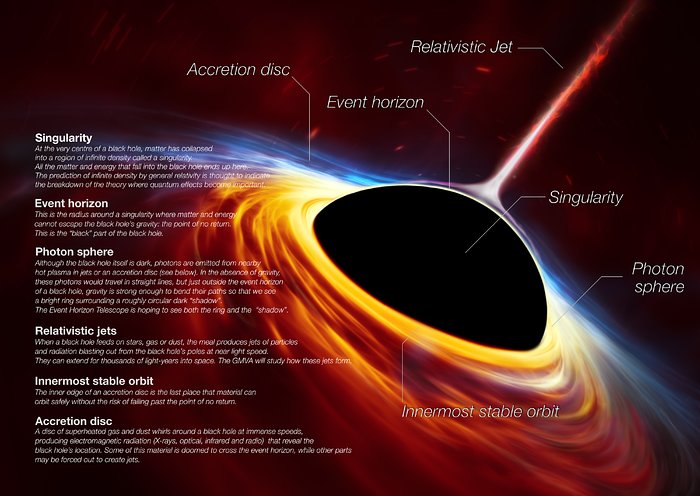
Vindication and Nobel: Black holes became firmly established; Chandrasekhar shared the 1983 Nobel Prize in Physics (with William A. Fowler) for his theoretical studies of the structure and evolution of stars. LIGO detected gravitational waves directly in 2015; the Event Horizon Telescope imaged a black hole’s shadow in 2019. Gravity — the “pillar you cannot see” — was thus doubly vindicated against the two greatest authorities (Eddington and Einstein) who had resisted its ultimate consequence. Encyclopedia BritannicaWikipedia
5. Dr. Zia H. Shah’s Corpus (exact titles + URLs)
On thequran.love (subtitled “The Glorious Quran and Science”):
- “Quranic Cosmology and the Mystery of Gravity: A Comprehensive Commentary on Quran 31:10-11 and 13:2-3” (May 22, 2025) — the central companion essay; “Presented by Zia H Shah MD with the help of Claude AI.” URL: https://thequran.love/2025/05/22/quranic-cosmology-and-the-mystery-of-gravity-a-comprehensive-commentary-on-quran-3110-11-and-132-3/ Thequran
- “The Mystery of Gravity and the Quranic Verses about It” (Dec 23, 2024) — “The expression the Quran uses for gravity is that Allah has created the heavens with pillars that we cannot see.” URL: https://thequran.love/2024/12/23/the-mystery-of-gravity-and-the-quranic-verses-about-it/ Thequran
- “The 1983 Nobel Prize in Physics: Unveiling the Secrets of Stars and Elements” (Apr 1, 2025) — covers the Chandrasekhar limit (~1.4 M☉), Eddington’s rejection, and Fowler. URL: https://thequran.love/2025/04/01/the-1983-nobel-prize-in-physics-unveiling-the-secrets-of-stars-and-elements/
- “Celestial Semantics: An Exhaustive Analysis of Quranic Cosmology and the Galactic Anchor of Sagittarius A”* (Jan 26, 2026) — invisible pillars as galactic gravitational anchor (Sagittarius A*); “pillars of power that are no less real for being hidden from the eyes of men.” URL: https://thequran.love/2026/01/26/celestial-semantics-an-exhaustive-analysis-of-quranic-cosmology-and-the-galactic-anchor-of-sagittarius-a/ Thequran
- “Al-Ghazali’s Occasionalism and the Modern Understanding of the Universe” (May 13, 2025). URL: https://thequran.love/2025/05/13/al-ghazalis-occasionalism-and-the-modern-understanding-of-the-universe/
- “From the Expression Inshallah to Al Ghazali’s Occasionalism” (Mar 7, 2025) — “Al-Ghazali’s doctrine of Occasionalism is essentially the metaphysics of ‘Inshallah.’” URL: https://thequran.love/2025/03/07/from-the-expression-inshallah-to-al-ghazalis-occasionalism/ Thequran
- “Occasionalism in al-Ghazali’s Thought and the Quranic Emphasis on Divine Causality” (May 7, 2025). URL: https://thequran.love/2025/05/07/occasionalism-in-al-ghazalis-thought-and-the-quranic-emphasis-on-divine-causality/
- “Al Ghazali’s Occasionalism and Laws of Nature” (Aug 8, 2025). URL: https://thequran.love/2025/08/08/al-ghazalis-occasionalism-and-laws-of-nature/
- “Saying Inshallah: The Universe is a Divine Simulation?” (Mar 27, 2026) — the “Inshallah universe” rendered “frame-by-frame.” URL: https://thequran.love/2026/03/27/saying-inshallah-the-universe-is-a-divine-simulation/ Thequran
- “Where Divine Will Meets Quantum Indeterminacy: Strong Determinism, Al-Ghazali’s Occasionalism, and the Epistemology of Quran 6:103” (Mar 4, 2026). URL: https://thequran.love/2026/03/04/where-divine-will-meets-quantum-indeterminacy-strong-determinism-al-ghazalis-occasionalism-and-the-epistemology-of-quran-6103/
- “The Architecture of Divine Volition: Quranic Oaths as an Ontological Exhibit for Al-Ghazali’s Occasionalism” (Apr 22, 2026). URL: https://thequran.love/2026/04/22/the-architecture-of-divine-volition-quranic-oaths-as-an-ontological-exhibit-for-al-ghazalis-occasionalism/
- “A Scientific, Philosophical, and Theological Commentary on Qurʾān 13:38–39: The Mother of the Book, Divine Sovereignty, and the Four Books of God in the Age of Quantum Physics” (May 6, 2026) — fullest statement of the Four Books thesis. URL: https://thequran.love/2026/05/06/a-scientific-philosophical-and-theological-commentary-on-qurʾan-1338-39-the-mother-of-the-book-divine-sovereignty-and-the-four-books-of-god-in-the-age-of-quantum-physics/
- “The Informational Architecture of Divine Justice: A Multidisciplinary Commentary on Quran 21:94 and the Four Books Thesis of Dr. Zia H. Shah” (May 4, 2026) — defines the four books: Revelation, Nature, Destiny, Deeds. URL: https://thequran.love/2026/05/04/the-informational-architecture-of-divine-justice-a-multidisciplinary-commentary-on-quran-2194-and-the-four-books-thesis-of-dr-zia-h-shah/
- “Surah al-Hijr (Quran 15:1–5)” (May 19, 2026) — Four Books framework (Revelation, Nature, Destiny, Deeds) applied. URL: https://thequran.love/2026/05/19/surah-al-hijr-quran-151-5/
- “The Quran and Biological Evolution: Towards a Theistic Evolutionary Model” (May 4, 2025) — guided evolution; “Allah’s Book of Revelation and Book of Nature… should never fundamentally contradict.” URL: https://thequran.love/2025/05/04/the-quran-and-biological-evolution-towards-a-theistic-evolutionary-model/
- “The Architecture of Guided Evolution: A Scientific, Philosophical, and Theological Commentary on Quran 71:11-20 in Light of the Zia H. Shah Paradigm” (Jun 3, 2026) — divine design via Al-Khaliq, Al-Fatir, Al-Bari, Al-Musawwir. URL: https://thequran.love/2026/06/03/the-architecture-of-guided-evolution-a-scientific-philosophical-and-theological-commentary-on-quran-7111-20-in-light-of-the-zia-h-shah-paradigm/
- “The Glorious Quran and the Cosmological Argument” (Mar 26, 2025). URL: https://thequran.love/2025/03/26/the-glorious-quran-and-the-cosmological-argument/
- “Quranic Inspiration and the Rise of Astronomy and Mathematics in the Islamic Golden Age” (Mar 11, 2025). URL: https://thequran.love/2025/03/11/13244/
- “Scientific Insights in the Quran: Cosmology, Biology, Geology, and Embryology” (Aug 22, 2025). URL: https://thequran.love/2025/08/22/scientific-insights-in-the-quran-cosmology-biology-geology-and-embryology/
On The Muslim Times (themuslimtimes.info), where Shah is Chief Editor:
- “‘Heavens Raised Without Pillars’ – A Scientific, Philosophical, and Theological Commentary on Qur’an 31:10–11 & 13:2–3” (May 22, 2025) — Muslim Times sibling of the central essay; “Newton famously explained that gravity keeps the planets in orbit… essentially acting as ‘pillars you cannot see.’” URL: https://themuslimtimes.info/2025/05/22/heavens-raised-without-pillars-a-scientific-philosophical-and-theological-commentary-on-quran-3110-11-132-3/
- “If Gravity Exists, So Does God” (Aug 26, 2019) — “It was a beautiful and subtle way to refer to gravity holding the heavenly bodies in space without any visible pillars and the sun and the moon and all the planets being in motion in their orbits.” URL: https://themuslimtimes.info/2019/08/26/if-gravity-exists-so-does-god/ The Muslim Times
- “Cataloging 750 verses of the Holy Quran inspiring believers to study nature” (Dec 28, 2020) — quotes 13:2 among the cosmos verses. URL: https://themuslimtimes.info/2020/12/28/cataloging-750-verses-of-the-holy-quran-inspiring-believers-to-study-nature-9/
- “Stephen Hawking: ‘There is no heaven; it’s a fairy story!’” (Oct 28, 2015) — cites 13:2 (“Allah cites gravity and planetary motion as a pointer towards His creativity and eventual hereafter”). URL: https://themuslimtimes.info/2015/10/28/stephen-hawking-there-is-no-heaven-its-a-fairy-story/
Shah is described in his own bylines as a physician (pulmonary and sleep medicine) practicing in Upstate New York, Chief Editor of The Muslim Times (more than 36,000 Twitter followers), and author of more than 400 articles on Islam, Christianity, secularism, and religion & science (Twitter: @The_MuslimTimes).
Details
The essay’s spine is the convergence of revelation and physics around an “invisible support.” The classical exegetes had already debated, between the 9th and 13th centuries, whether the heavens stand on nothing or on unseen pillars — and figures like al-Razi explicitly identified the unseen “pillar” with God’s sustaining power, a striking pre-modern anticipation of the idea that an invisible agency (not a physical prop) holds the cosmos. al-Zamakhshari’s grammatical analysis legitimizes both readings; al-Tabari and the Hasan/Qatadah line prefer “no pillars”; the Ibn Abbas/Mujahid line prefers “invisible pillars.” Modern commentators (Maududi, Maulana Muhammad Ali) collapse the second reading directly onto the law of gravitation.
The scientific drama supplies the rhetorical climax: gravity — the very “pillar you cannot see” — was so counter-intuitive that the two greatest authorities of the age both refused its ultimate consequence (gravitational collapse to black holes). Eddington’s 1935 “absurd way” outburst and Einstein’s 1939 “do not exist in physical reality” paper became famous errors, overturned by Cygnus X-1 (1972) and crowned by Chandrasekhar’s 1983 Nobel. The lesson the essay can draw: the unseen forces governing the heavens humbled even the modern scientific mind, exactly as the Qur’an invites humans to “reflect” (tafakkur) on a cosmos whose support is hidden.
Shah’s own theological apparatus completes the frame: occasionalism (the “Inshallah universe”), the Four Books of God (Revelation, Nature, Destiny, Deeds), and guided evolution. In this scheme natural laws like gravity are the “habit of God” (sunnat Allah) — fully real and reliable, yet contingent at every instant on continuous divine will. This lets the essay treat gravity simultaneously as a genuine physical “pillar” and as a manifestation of the divine names (al-Razi’s ʿimad = God’s qudra; the Sufi reading of al-Qahhar and al-Hakeem in Shah’s commentary).


Leave a Reply