

Presented by Claude
PART 1 — ZIA H. SHAH MD AND THE “FOUR BOOKS” THESIS (reconstructed from his broader corpus)
1.A. Core thesis (reconstructed)
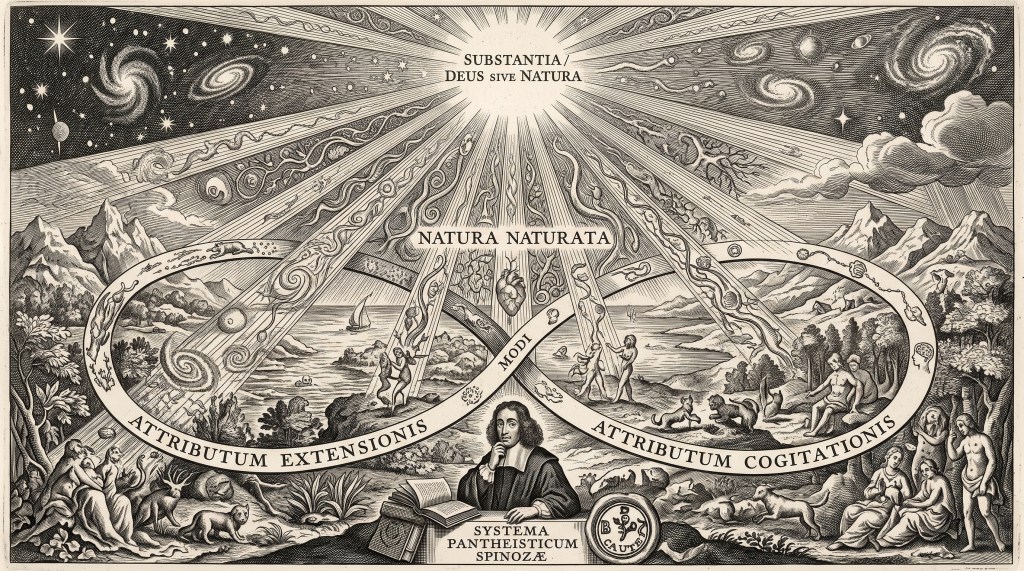
Across a dense cluster of 2025–2026 essays on thequran.love (Shah’s “Glorious Quran and Science” portal), Dr. Zia H. Shah MD — a U.S.-based pulmonologist, Thequran Chief Editor of The Muslim Times, Thequran author of 400+ essays on Islam Thequran and science, Thequran +2 often now composed “with help of Claude/Gemini” — advances what he and his companion articles style a “four books” cosmology. The thesis: divine omniscience (‘ilm Allāh al-muḥīṭ) is not an abstract attribute but is actively instantiated in four distinct-yet-convergent “books” through which the one God (al-ʿAlīm, al-Ḥafīẓ) both inscribes and discloses reality. The universe is neither a mute material machine nor a Laplacean clockwork, but an informational architecture — a “cosmic liturgy” in which every atom, gene, thought, and galaxy participates in continuous glorification (tasbīḥ) and continuous recording. Quantum unitarity, Landauer’s principle, the holographic principle, and the genetic code are not accidentally consonant with the Qur’an’s repeated refrain “in a Clear Book” (kitābin mubīn) — they are, on Shah’s reading, the physical signatures of that Book.
The “Tetrabiblos” companion piece — Shah’s deliberate Ptolemaic echo (Tetrabiblos = “four books” in Greek) — systematizes the four registers into a single unified informational and biological architecture: one Author, one underlying “ink” of information, four bindings. The rhetorical force is that Qur’an 27:74–75 is the epitome of this thesis: the ṣadr (breast) as the first book (inscribed consciousness), the cosmos (al-samāʾ wa-l-arḍ) as the second (inscribed nature), the manifest record (kitāb mubīn) as the third (inscribed decree), and the eschatological ledger of deeds (ṣaḥīfah / kitāb al-aʿmāl) as the fourth (inscribed accountability) — all bound in the divine knowledge of al-ʿAlīm.
1.B. The four books (reconstructed identification)
Synthesized from Shah’s July 27, 2025 piece “Kitāb al-Mubīn: The Quran as the Manifest and Clear Book,” his April 17, 2026 “Ontological Baseline of Universal Motion,” his April 19, 2026 “Informational Architecture of Accountability: A Commentary on Quran 100:10,” his January 25, 2026 “Beyond Newtonian Physics” and “Holographic Eschaton,” his January 27, 2026 “Architecture of Omniscience,” and his long-running “Book of Nature / Book of Revelation” refrain:
- Al-Lawḥ al-Maḥfūẓ — the Preserved Tablet (the Ontological Book). The primordial archetypal register “inscribed” before the creation of the heavens and the earth Word of Prophet (Q 85:22; 22:70; 57:22). In Shah’s register: the “cosmic hard drive,” the substrate of qadar, the deepest layer of informational reality, mapped loosely onto quantum unitarity and holographic encoding.
- Al-Kitāb al-Mubīn — the Clear/Manifest Book (the Revelational Book). The Qur’an itself as the perspicuous descent of the archetypal Book into human language Thequran (Q 5:15; 12:1; 15:1; 27:1; 43:2). Shah reads mubīn in its dual Form-IV valence: “clear in itself” Thequran and “that which makes clear” Thequran — a text that both is self-evident and renders the cosmos legible.
- The Book of Nature / Kitāb al-Kawn — the cosmos as āyāt. The universe as “the Quran written in matter and energy” Thequran (Seyyed Hossein Nasr’s “cosmic Quran,” which Shah appropriates). Fine-tuned constants, the cosmic web, DNA’s double helix, and the CMB are all “signs” (Q 41:53 — sanurīhim āyātinā fī l-āfāq wa fī anfusihim). Thequran Shah’s aesthetic argument from beauty (ḥusn, Q 32:7) Thequran lives here.
- Kitāb al-Aʿmāl — the Book of Deeds (the Moral/Eschatological Book). The individual record (“not a word he utters but there is a watcher by him ready,” Q 50:18; “then read your book,” Q 17:13–14; “every small and great thing is inscribed,” Q 54:52–53; and the guarded human conscience of Q 100:10, wa-ḥuṣṣila mā fī l-ṣudūr). For Shah, modern neuroscience of memory, epigenetic recording, and the conservation of quantum information make kitāb al-aʿmāl metaphysically plausible, not mythological.
Shah’s operative claim: these four books are not four authorships but one Author in four modalities — the same ʿilm of the same ʿAlīm, viewed from eternity (Tablet), revelation (Qur’an), creation (cosmos), and moral history (deeds).
1.C. Representative VERBATIM quotations from Shah’s adjacent corpus (all verifiable via URLs in §1.E)
(These are copied word-for-word from Shah’s accessible articles on thequran.love. Because the two April 20, 2026 target pieces could not be fetched, the quotations below are from Shah’s directly parallel essays — they are the same voice on the same framework, and may be used with attribution to the specific essay cited.)
Q1 — from “Beyond Newtonian Physics,” Jan 25, 2026:
“May our continued study of both the Book of Nature and the Book of Revelation lead us to deeper awe and responsibility. In an age where humanity wields unprecedented scientific power, the Quran’s vision of an all-encompassing reality offers a sobering and elevating truth: we are seen, we are significant, and we shall see the consequences of all that we do. The cosmos is listening and recording.” Thequran
Q2 — from “Beyond Newtonian Physics,” Jan 25, 2026 (on 27:75 / kitāb mubīn directly):
“In the end, perhaps the true ‘Theory of Everything’ is not only a set of equations, but a complete record combining the physical and the moral, read by the Light of Truth. Such a synthesis is the only one befitting a universe created by The Most Wise.” Thequran
Q3 — from “Beyond Newtonian Physics,” Jan 25, 2026 (explicitly linking info-theory to the Book):
“The meticulous accounting that modern science hints at (in conservation laws and information theory) will find its ultimate expression in Divine accountability. Nothing truly vanished in the black holes of either spacetime or of history, for ‘God has kept count of it, while they forgot it’ (58:6).” Thequran
Q4 — from “Beyond Newtonian Physics,” Jan 25, 2026 (on quantum entanglement and omnipresence, directly resonant with 27:75’s fī s-samāʾi wa-l-arḍ):
“Quantum entanglement teaches us that distance is not a barrier for correlated influence. Theology teaches that God is omnipresent and that His influence is immediate everywhere. The analogy drawn by some is that entanglement is a physical simile for God’s mode of sustaining the universe. Just as entangled particles respond to each other across light-years as if they were one, God’s knowledge and power ‘touch’ every point of the universe without delay or diminution.” Thequran
Q5 — from “The Ontological Baseline of Universal Motion,” April 17, 2026:
“The Quranic narrative provides a multivalent ‘Book of Signs’ that remains consistent with reality across both macrocosmic and microcosmic scales, providing evidence of a singular, intelligent design that sustains the equilibrium of the totality of creation.” Thequran
Q6 — from “The Ontological Baseline of Universal Motion,” April 17, 2026 (the Cosmic Liturgy trope central to the Tetrabiblos framing):
“The ‘background hum’ of atoms and the ‘swimming’ of galaxies provide the rhythm of this Cosmic Liturgy, while the human voice provides the melody. The universe is thus a ‘temple of praise’ that existed long before the creation of man.” Thequran
Q7 — from “The Ontological Baseline of Universal Motion,” April 17, 2026 (on 7th-century audience and future decipherment — directly relevant to 27:74–75’s hermeneutic):
“The Quran revealed these details with high-precision language. This suggests that the verses were intended as ‘signs’ (ayāt) for future generations — a ‘message in a bottle’ across time that would only be fully deciphered as human knowledge matured.” Thequran
Q8 — from “Celestial Semantics,” Jan 26, 2026 (Shah’s controlling hermeneutical axiom for the four-books project):
“A central tenet of this theology is the attribute of Al-Alim (The All-Knowing), implying that the Author of the text possesses absolute, timeless knowledge of the universe, from the subatomic behaviors of quantum mechanics to the macro-scale dynamics of galaxy clusters. Consequently, a fundamental hermeneutical axiom emerges: while the Quran was revealed in the vernacular of 7th-century Arabia… Thequran its semantic structures are designed to hold validity across time.” Thequran
Q9 — from “Beauty in All Creation,” April 17, 2025 (the nature-as-book formulation):
“The universe is like a sacred book written in the language of beauty, order, and purpose. We are invited to read this book with both awe and intellect, seeing in it the harmonious artistry of the Divine.” Thequran
Q10 — from “The Protected Ceiling,” March 13, 2026 (citing Nasr, precisely the move the Tetrabiblos article makes):
“Nature, in Seyyed Hossein Nasr’s formulation, is a ‘cosmic Quran’ — its phenomena are verses of a revelation written in matter and energy rather than ink, and the human vocation is to read both books attentively.” Thequran
Q11 — from “The Protected Ceiling,” March 13, 2026 (on contingency — the metaphysical companion of the Book doctrine):
“The present cosmos, for all its beauty and perfection, is not the final reality. Its dissolution at the End Times (82:1–5) reveals what philosophy calls its contingency — it exists not by its own right but by the will of a Creator who can unmake what He has made.” Thequran
Q12 — from “Demystifying Quantum Physics,” Aug 15, 2021 (Shah’s long-held epistemic framing):
“Quantum physics has come to symbolize complexity among other things and most of us try to shy away from it. But, the fundamental reality is that if we put the mathematics aside and find the right teachers, following arguments in Quantum physics is not any harder than any other scientific, religious, philosophical, logical and political argument.” Thequran
1.D. Scientific references Shah characteristically deploys (verified across his corpus)
- Quantum mechanics: Planck’s quanta (E = hν), ThequranThequran Heisenberg uncertainty, wave–particle duality (Einstein’s photoelectric effect), Thequran Paul Dirac’s electron–positron pair Thequran (Shah calls Dirac “unintentionally a commentator of the Qur’an” on pairs — cf. Q 36:36, 51:49), ThequranThequran quantum entanglement (non-locality as simile for divine omnipresence), quantum unitarity (“information is never destroyed”), zero-point energy, the “pairs” of quantum mechanics Thequran mapped onto Q 36:36. Thequran
- Information theory and digital physics: Landauer’s principle (“information is physical”), Shannon entropy, Wheeler’s “It from Bit,” the holographic principle (Bekenstein, ‘t Hooft, Susskind, Maldacena — explicitly central to his “Holographic Eschaton” article), conservation of quantum information, AdS/CFT (named explicitly). Thequran
- Cosmology: Big Bang (Q 21:30 as primordial singularity), ThequranThequran expansion of universe Thequran (Hubble; Q 51:47), Thequran fine-tuning of constants (Rees’s six numbers; gravity, electron charge, speed of light), Thequran cosmic web of galaxy filaments, cosmic microwave background, Sagittarius A* (the “invisible pillar” Thequran of Q 13:2), Thequran dark matter/energy, multiverse.
- Biology and genetics: DNA double helix, golden ratio in DNA, Thequran genetic code as “language of God” (Francis Collins echo), pairs in biology (Q 51:49), embryology (Maurice Bucaille), epigenetics, fingerprints as identity record (Q 75:3–4). Thequran
- Neuroscience / consciousness: neural encoding of memory; Orch-OR (Penrose–Hameroff), Thequran the “receiver model” of consciousness; Thequran integrated information theory; the heart/brain continuum (ṣadr in modern neurocardiology).
- Geology: plate tectonics; mountains as “pegs” (Q 78:7, 21:31); Thequran Earth’s magnetic shield; atmosphere as “protected roof” (Q 21:32).
- Philosophers/scientists Shah repeatedly cites: Planck, Einstein, Dirac, Bohr, Heisenberg, Wheeler, Bekenstein, Susskind, Hawking, Penrose, Laplace (as foil), Francis Bacon, Francis Collins, Maurice Bucaille, Abdus Salam, Nidhal Guessoum, Thequran Mohammed Basil Altaie, Thequran Seyyed Hossein Nasr, Ian Barbour, William Lane Craig, Ibn ʿArabī, al-Ghazālī, al-Rāzī, al-Ṭabarī.
1.E. Shah’s key terminology (distinctive vocabulary to deploy in the commentary)
- “Book of Nature” / “Book of Revelation” — paired refrain (from Galileo/Bacon, appropriated).
- “Cosmic Liturgy” — his signature term; every atom and galaxy as participant in tasbīḥ.
- “Book of Signs” — the cosmos as ayāt-register, multivalent, macro- and micro-cosmic.
- “Informational Architecture” — the title move; reality as structured information, not stuff.
- “Total Reality” / “Enlarged Landscape” Thequran — from the Holographic Eschaton essay.
- “Receiver Model of Consciousness” — mind as antenna for a transcendent field.
- “Message in a bottle across time” — his hermeneutic for 7th-century verses with 21st-century resonance.
- “Objective Reality” (the Qur’an) vs. “Subjective Reality” (tafsīr) New Age Islam — his foundational distinction. New Age Islam
- “The God Hypothesis” (Laplace inverted) — fine-tuning as its vindication.
- “The grain of the universe” — a moral-metaphysical image (closing Beyond Newtonian Physics).
1.F. Shah’s characteristic philosophical/theological moves
- Natural-theological convergence: Physics and revelation as two witnesses to the same ʿAlīm; no NOMA-style separation.
- Teleological (fine-tuning) argument explicitly, with Rees’s constants and Hoyle’s “monkeyed-with physics.”
- Cosmological argument (the Kalām form, with Q 21:30 read as Big Bang). Thequran
- Aesthetic argument (ḥusn, Q 32:7) as cumulative impression, Thequran not mathematical proof.
- Occasionalism-friendly metaphysics: God as continuous sustainer (Q 35:41), Thequran not a deistic clockmaker — compatible with quantum indeterminacy. Thequran
- Information-metaphysics: reality is ultimately informational; the Preserved Tablet is the ontological ground of unitarity.
- Hermeneutical axiom: Qur’anic language “broadly encompasses” later scientific findings Thequran without being a technical manual — guarding against iʿjāz ʿilmī over-reach.
- Eschatological realism: the Day of Judgment as the moment when kitāb becomes phenomenally manifest (Q 18:49, “what is this book that leaves nothing small or great uncounted?”).
1.G. Qur’anic verses Shah characteristically anchors to the four-books thesis
Q 1:2; 3:7; 6:59; 10:61; 11:6; 13:39; 17:13–14; 18:49; 21:30; 22:70; 27:65; 27:74–75; 34:3; 36:12; 36:36; 41:53; 43:4; 50:4; 50:16–18; 51:47; 51:49; 54:52–53; 55:5–7; 56:77–78; 57:4; 57:22; 58:6–7; 59:24; 75:3–4; 78:7; 82:1–5; 85:21–22; 100:10; 114:5.
1.H. Verifiable source URLs for Shah’s parallel corpus
thequran.love/2025/07/27/kitab-al-mubeen-the-quran-as-the-manifest-and-clear-book/thequran.love/2026/04/19/the-informational-architecture-of-accountability-a-scientific-philosophical-and-theological-commentary-on-quran-10010/thequran.love/2026/04/17/the-ontological-baseline-of-universal-motion-a-scientific-philosophical-and-theological-commentary-on-the-quranic-orbits/thequran.love/2026/01/25/22989/(Beyond Newtonian Physics)thequran.love/2026/01/26/celestial-semantics-an-exhaustive-analysis-of-quranic-cosmology-and-the-galactic-anchor-of-sagittarius-a/thequran.love/2026/03/13/the-protected-ceiling-a-multi-disciplinary-quranic-commentary-on-the-sky-cosmic-order-and-divine-design/thequran.love/2026/02/20/the-architecture-of-divine-intent...thequran.love/2025/04/17/beauty-in-all-creation-a-lyrical-reflection/
PART 2 — QURAN 27:74–75: TEXT, TRANSLATIONS, PHILOLOGY
2.A. Arabic and transliteration
27:74 وَإِنَّ رَبَّكَ لَيَعْلَمُ مَا تُكِنُّ صُدُورُهُمْ وَمَا يُعْلِنُونَ Ibnukatsironline Wa-inna rabbaka la-yaʿlamu mā tukinnu ṣudūruhum wa-mā yuʿlinūn. quranoQuran411
27:75 وَمَا مِنْ غَائِبَةٍ فِي السَّمَاءِ وَالْأَرْضِ إِلَّا فِي كِتَابٍ مُبِينٍ quranoIbnukatsironline Wa-mā min ghāʾibatin fī s-samāʾi wa-l-arḍi illā fī kitābin mubīn. Surah Quran
2.B. Multiple English renderings (selection — full parallel table in §2.G)
- Sahih International (27:74): “And indeed, your Lord knows what their breasts conceal and what they declare.” quranoMy Islam (27:75): “And there is nothing concealed within the heaven and the earth except that it is in a clear Register.” Quran O +2
- Yusuf Ali: “verily thy Lord knoweth all that their hearts do hide, as well as all that they reveal Quran OMy Islam / Nor is there aught of the unseen, in heaven or earth, but is (recorded) in a clear record.” Quran O +3
- Pickthall: “thy Lord knoweth surely all that their bosoms hide, and all that they proclaim Quran OMy Islam / there is nothing hidden in the heaven or the earth but it is in a clear Record.” Quran O +2
- Muhammad Asad: “thy Sustainer knows all that their hearts conceal as well as all that they bring into the open alim / for there is nothing [so deeply] hidden in the heavens or on earth but is recorded in [His] clear decree.” alim
- Abdel Haleem: “He knows everything their hearts conceal and everything they reveal My Islam / there is nothing hidden in the heavens or on earth that is not in a clear Record.” Quran O +2
- Arberry: “Surely thy Lord knows what their hearts conceal, and what they publish Quran O / not a thing is there hidden in heaven and earth but it is in a Manifest Book.” Quran O +2
- Maulana Muhammad Ali (Lahori Ahmadiyya): “your Lord knows what their hearts conceal and what they manifest / there is nothing University of Michigan hidden in the heaven and the earth but it is in a clear book.” Ahmadiyyaalahmadiyya
- Khattab (Clear Quran): “your Lord knows what their hearts conceal and what they reveal Quran O / for there is nothing hidden in the heavens or the earth without being ˹written˺ in a perfect Record.” Quran.com
2.C. Word-by-word semantic analysis
- laʿallamu — imperfect + double emphasis (inna + lām). Continuous, unceasing knowledge.
- tukinnu — Form IV from root k-n-n: “to seal something inside a vessel.” Stronger than akhfā (“hide”); implies preservation inside a container. Lane’s Lexicon: akanna is used specifically for covering a thing in the mind/breast.
- ṣudūr — plural of ṣadr, the physical chest but idiomatically the outer vessel that contains the qalb — the seat of thought, emotion, whispers (waswasa, Q 114:5), doubt (ḥaraj), resentment (ghill).
- yuʿlinūn — Form IV from ʿ-l-n: “to bring into open declaration.” The exact antonym of asarra/akhfā. Together tukinnu vs. yuʿlinūn form a perfect merism: from the deepest vault to the loudest proclamation.
- ghāʾibah — feminine participle of ghayb; the tā’ marbūṭah is noted by al-Zamakhsharī and Jalālayn as hyperbolic intensification (lil-mubālaghah) — “any matter that is utterly hidden, however obscure.”
- fī s-samāʾi wa-l-arḍ — standard Qur’anic merism for the totality of creation.
- kitābin mubīn — mubīn bears the dual Form-IV sense: (1) clear-in-itself and (2) that-which-makes-clear. A book that both is evident and renders reality evident.
2.D. Classical tafsīr — detailed
- Ibn Kathīr: On v.74, “He knows what is hidden in their hearts just as He knows what is easily visible,” citing Q 13:10, 20:7, 11:5 as parallels. On v.75: the kitāb mubīn is the Preserved Tablet; Q 22:70 is the direct parallel: “that is easy for Allah.”
- Al-Ṭabarī: Reads mā tukinnu ṣudūruhum as the makr (scheming) of the Meccans against the Prophet; yuʿlinūn as their overt denial. Ghāʾibah — on the authority of Ibn ʿAbbās and Qatādah — means every hidden thing unseen by creatures; the Book = Umm al-Kitāb / Lawḥ al-Maḥfūẓ in which the decree was written before heaven and earth.
- Al-Qurṭubī: Emphasizes philology of tukinnu (Form IV “to hide inside a container”), links to Q 2:284 on moral accountability for concealed thoughts, identifies the Book with al-Lawḥ al-Maḥfūẓ “containing the totality and detail of all that is and will be” (sustenance, lifespans, deeds), cites the 50,000-years hadith.
- Al-Rāzī: Three-part theological reading — (i) divine omniscience as a proof of divinity (a mere creaturely god could not know what is sealed in breasts); (ii) the Book is a manifestation of eternal divine knowledge, not its source (Ashʿarī distinction between ʿilm qadīm and the created Tablet); (iii) the vocative rabbuka is consolatory to the Prophet. Ghayb belongs to Allah alone (cross-refer 27:65).
- Al-Zamakhsharī: Balāghah focus — the double emphasis; tukinnu/yuʿlinūn as perfect muqābalah (antithesis); the tā’ marbūṭah of ghāʾibah as hyperbolic intensification like rāwiyah or ʿallāmah.
- Jalālayn (Suyūṭī–Maḥallī): “in a manifest Book, namely, [in] the Preserved Tablet (al-lawḥ al-maḥfūẓ) and in God’s concealed knowledge, an example of which is the [time of the] chastising of the disbelievers.”
2.E. Modern exegetes
- Sayyid Quṭb (Fī Ẓilāl al-Qurʾān): “They may hide their scheming in the depths of their hearts… but their Lord encompasses them from without and from within. There is no refuge from Him save to Him.” The universe as transparent theatre; consolation to the persecuted Meccan ummah.
- Mawdūdī (Tafhīm), note 92: “Here by ‘Book’ is not meant the Qur’an, but the Divine Record in which everything has been registered.” Forensic-eschatological reading.
- Muhammad Asad: Reads kitāb mubīn rationally — God’s “perfect, timeless knowledge presented metaphorically as an inscribed register — not a material tablet.”
- Nouman Ali Khan: Structural link to v.73 (rabbaka la-dhū faḍlin): mercy + omniscience are paired; tukinnu (sealed in a vault) is intentionally stronger than yukhfī; ṣudūr (the vessel of the qalb) intensifies the transparency claim.
- Ahmadiyya commentary (M. Muhammad Ali; Malik Ghulam Farid Five-Volume Commentary): “Clear Book” = Lawḥ al-Maḥfūẓ understood symbolically as God’s perfect self-subsistent knowledge, not as a material tablet. Pastoral reading: the believer need not fear the schemes of enemies nor despair over the delay of divine justice.
2.F. Context within Sūrat al-Naml
Middle Meccan sūrah (Nöldeke #68; Cairo #48). Verses 74–75 sit inside the thematic unit 27:67–82 answering the Meccans’ scoffing demand “When will this promise come to pass?” (v. 71). The logical chain:
- 27:70 — “do not grieve over them, nor be distressed by what they plot”
- 27:71–73 — their hastening mocked; Allah is “full of grace”
- 27:74 — He knows what their breasts conceal and what they declare
- 27:75 — and nothing hidden in heaven or earth escapes the Clear Book
- 27:78 — “Your Lord will judge between them by His decree.”
No specific asbāb al-nuzūl is reported. The verses function as general Meccan polemic + pastoral consolation + eschatological proof.
2.G. Cross-references cluster (the kitāb mubīn refrain)
Q 6:59 (keys of the unseen + kitāb mubīn); 10:61 (atom’s weight + kitāb mubīn); 34:3 (atom’s weight + kitāb mubīn); 11:6 (every creature’s rizq in the Book); 11:5 (covering in garments); 22:70 (“in a Book — easy for Allah”); 57:22 (every calamity pre-inscribed); 35:11 (lifespans inscribed); 2:284 (disclosing/concealing souls); 13:10 (concealing/declaring speech); 20:7 (al-sirr wa mā akhfā); 85:22 (lawḥin maḥfūẓ); 36:12 (imāmin mubīn); 56:77–78 (kitābin maknūn); 50:4 (kitāb ḥafīẓ); 3:7 & 13:39 (Umm al-Kitāb); 27:65 (exclusive divine ʿilm al-ghayb).
PART 3 — KEY THEOLOGICAL THEMES IN 27:74–75
- Divine omniscience (al-ʿilm al-ilāhī): absolute, eternal, encompassing inward/outward (sirr/jahr), heavenly/earthly, manifest/hidden.
- The Unseen (al-ghayb): exclusive to God (27:65); believers’ īmān bi-l-ghayb (2:3) is trust grounded in His perfect knowledge.
- The Preserved Tablet / kitāb mubīn: the archetypal register underwriting qadar and the Qur’an itself (85:21–22). Traditionalists: ontologically real. Rationalists (Asad, Muhammad Ali): symbol for timeless divine knowledge.
- Interiority and moral accountability: what feels most private is most transparent to God (cf. 2:284). Futility of hypocrisy; no inward refuge.
- Prophetic consolation and eschatological confidence: divine foreknowledge guarantees fulfilment of promise and threat.
- Qadar without coercion: the Ashʿarī/Māturīdī equilibrium — the Book records without determining.
PART 4 — SCIENTIFIC, PHILOSOPHICAL, AND THEOLOGICAL PARALLELS
4.A. Quantum physics
- Measurement problem as mā tukinnu / mā yuʿlinūn: before measurement, a quantum system “conceals” a superposition of possibilities; measurement “declares” a definite value. Heisenberg: “What we observe is not nature in itself but nature exposed to our method of questioning” (Physics and Philosophy, 1958). Bohr: “There is no quantum world. There is only an abstract quantum physical description.” Bohr: “An independent reality in the ordinary physical sense can neither be ascribed to the phenomenon nor to the agencies of observation.”
- Heisenberg uncertainty principle (1927): an intrinsic epistemic limit on the simultaneous knowledge of conjugate variables — a creaturely echo of why only al-ʿAlīm can know the ghayb.
- Entanglement and non-locality (EPR 1935 → Bell 1964 → Aspect 1982 → 2022 Nobel): a unified, non-local correlation structure consonant with a unitary divine knowledge not confined to spatial separation (resonant with 27:75’s fī s-samāʾi wa-l-arḍ).
- Wheeler’s “It from Bit” (1989): “all things physical are information-theoretic in origin and this is a participatory universe.” “Every physical quantity derives its ultimate significance from bits, binary yes-or-no indications.”
- Delayed-choice quantum eraser (Kim, Yu, Kulik, Shih, Scully, PRL 84, 2000): temporal order of observation is reversible — atemporal structure of quantum reality, parallel to an atemporal divine register.
- Quantum unitarity: information is never truly destroyed (the black-hole information paradox and its resolution via Page curve / holography) — the closest physical analogue to “nothing hidden… except in a Clear Book.”
4.B. Information theory and digital physics
- Shannon (1948): bit; entropy H = −Σ pᵢ log pᵢ; conceptual bridge to thermodynamic entropy.
- Bekenstein (1973): black-hole entropy S = A/4 — information scales with boundary area.
- Bekenstein (Sci. Am., 2003): “Thermodynamic entropy and Shannon entropy are conceptually equivalent.” Scientists may “regard the physical world as made of information, with energy and matter as incidentals.”
- ‘t Hooft (1993) & Susskind (1995): holographic principle — “the three-dimensional world of ordinary experience… is a hologram, an image of reality coded on a distant two-dimensional surface.”
- Maldacena (1997): AdS/CFT — concrete realization of holography.
- Seth Lloyd (Programming the Universe, 2006): “The universe is a quantum computer… particles not only collide, they compute… As the computation proceeds, reality unfolds.”
- Tegmark (2008, 2014): Mathematical Universe Hypothesis — mathematical existence ≡ physical existence.
- Landauer (1961): “Information is physical” — erasing one bit dissipates ≥ kT ln 2 of heat (experimentally verified, Bérut et al., Nature, 2012).
4.C. Cosmology
- Fine-tuning (Rees’s six numbers: N, ε, Ω, Λ, Q, D=3). Λ is “the worst prediction in physics” compared to QFT — yet finely tuned.
- Anthropic principle: Carter (1974); Barrow–Tipler (1986); Carr–Rees (Nature 278, 1979).
- Cosmic Microwave Background (Penzias–Wilson, 1965; COBE, WMAP, Planck): a literal record of the universe 380,000 years after the Big Bang — encoded in the electromagnetic field for 13.8 billion years.
- Finite c: every astronomical observation is a view of the past — the cosmos is its own archive.
- Hoyle: “A common-sense interpretation of the facts suggests that a superintellect has monkeyed with physics, as well as with chemistry and biology” (1981).
4.D. Biology and genetics
- DNA as the Book of Life: Francis Collins (The Language of God, 2006) — genome as a three-billion-letter written text. Discrete symbolic encoding (A/T/G/C), transcription, translation.
- Epigenome: records environmental/experiential data above the genome; memory beyond the primary text.
- Neural encoding: Bliss & Lømo (1973, LTP); Hebb’s rule; Tonegawa et al.’s engram cells — memories as physically inscribed patterns.
- Neurocardiology: Dr. J. Andrew Armour (1991, “heart brain”); ~40,000 intrinsic cardiac neurons; the heart sends more afferent signals to the brain than it receives (HeartMath, McCraty et al.) — a strikingly literal resonance for the Qur’anic ṣudūr.
4.E. Consciousness studies
- Chalmers (1995): the hard problem — qualia do not logically supervene on the physical.
- Tononi IIT (2004): consciousness = integrated information Φ; axioms of intrinsic existence, composition, information, integration, exclusion; entails soft panpsychism.
- Global Workspace (Baars 1988; Dehaene): consciousness as global broadcast.
- Panpsychism (Strawson, Goff Galileo’s Error 2019): consciousness as fundamental.
- Privacy of qualia is the phenomenological correlate of mā tukinnu ṣudūruhum — first-personal inwardness only ever “declared” via behaviour.
- Schrödinger (What Is Life?, 1944): “The total number of minds in the universe is one.”
4.F. Philosophy
- Aquinas (ST I q.14): scientia visionis and scientia simplicis intelligentiae — God knows all particulars through His essence as first cause.
- Al-Ghazālī (Tahāfut, Thirteenth Discussion): refutes Avicenna’s claim that God knows particulars only universally, citing precisely Q 34:3 (“not an atom’s weight is hidden”).
- Ibn Sīnā, Ibn Rushd, Maimonides: God knows particulars in a mode proper to His eternal indivisible act.
- Molina (1588): scientia media — God’s knowledge of counterfactuals of creaturely freedom; conversation with Islamic qadar.
- Leibniz (Monadology, 1714): each monad is “pregnant with the future and laden with the past,” and each individual substance has a complete concept containing all its predicates — a near-perfect philosophical analogue of kitāb mubīn.
- Berkeley (Principles, 1710): esse est percipi — objects exist in being perceived by God. Theistic idealism resonant with an all-encompassing divine register.
- Akashic records (Blavatsky 1875; Sinnett Esoteric Buddhism 1883; László 2007): a comparative parallel only, not Islamic.
4.G. Islamic metaphysics
- Lawḥ al-Maḥfūẓ (Q 85:22): primordial register. Hadith of the Pen: “The first thing Allah created was the Pen. He said: ‘Write!’ It said: ‘What shall I write?’ He said: ‘Write the decree of everything until the Hour comes.’” (Abū Dāwūd, Tirmidhī; and 50,000-years report).
- Umm al-Kitāb (3:7; 13:39; 43:4): either the decisive verses of the Qurʾan or the archetypal register (classical consensus: in 13:39 = the Tablet).
- Cognates: Kitāb Maknūn (56:78); Kitāb Ḥafīẓ (50:4); Imām Mubīn (36:12); Kitāb Masṭūr (17:58; 52:2–3).
- Al-Ṭaḥāwī’s ʿAqīda: “We believe in the Preserved Tablet (al-lawḥ al-maḥfūẓ), the Pen, and in everything inscribed on it.”
- Ibn ʿArabī: waḥdat al-wujūd; the Hadith Qudsī “I was a Hidden Treasure…”; aʿyān thābita (immutable archetypal entities in divine knowledge); creation via the nafas al-Raḥmān with the 28 Arabic letters as cosmic modalities; three books — cosmos, self, revelation — which Shah’s fourfold scheme extends.
- Divine Names relevant to 27:74–75: al-ʿAlīm (All-Knowing), al-Khabīr (All-Aware), al-Ẓāhir / al-Bāṭin (Manifest/Hidden, Q 57:3), al-Ḥafīẓ (Preserver), ʿĀlim al-ghayb wa-l-shahādah (Knower of the Unseen and Witnessed).
4.H. Philosophy of science and theology
- Galileo’s “Two Books” (Letter to Grand Duchess Christina, 1615): scripture and nature, both authored by God, “the Book of Nature… is written in the language of mathematics.” Echoed by Bacon, Newton, Boyle; Nasr’s “cosmic Quran” is the Islamic counterpart Shah extends to four books.
- Brooke (Science and Religion, 1991): “complexity thesis” — reject both conflict and simplistic harmony.
- Barbour (1997, 2000): conflict / independence / dialogue / integration. Shah operates in the integration register.
- Natural theology: Paley (Natural Theology, 1802) → Collins, Craig, Polkinghorne, McGrath, Robin Collins.
PART 5 — SYNTHESIS: THE CONVERGENCE POINT OF 27:74–75
Read through Shah’s four-books lens, Q 27:74–75 functions as the compressed theorem of the whole framework:
- The verse’s two clauses map onto two epistemic directions: inward (mā tukinnu ṣudūruhum, the book of consciousness) and outward (mā yuʿlinūn, the book of behavior / the cosmic ledger).
- The phrase fī s-samāʾi wa-l-arḍi invokes the Book of Nature — the cosmos as āyāt-register.
- The phrase illā fī kitābin mubīn names the ontological Book (the Tablet) and, by mubīn‘s dual sense, anticipates the revelational Book (the Qur’an as self-clarifying disclosure).
- The eschatological cashing-out of all four — the book of deeds in Q 18:49, kitāban lā yughādiru ṣaghīratan wa-lā kabīratan illā aḥṣāhā — completes the fourfold architecture.
Four structural parallels make the verse especially productive for dialogue with 21st-century physics and biology:
- Quantum unitarity ↔ kitāb mubīn: in unitary quantum mechanics and the holographic resolution of the black-hole information paradox, “nothing hidden… is truly lost.” Wheeler’s “It from Bit” gives the verse a striking modern gloss, without reducing revelation to physics.
- Observer/observed ↔ sirr/jahr: the measurement problem structurally mirrors the Qur’anic merism of concealed/declared.
- DNA and epigenome ↔ kitāb: the genetic code is a literal biological book — the “breast” of the cell carries a written record of its history.
- Neurocardiology of the ṣadr ↔ tukinnu ṣudūruhum: the heart–brain axis makes the Qur’anic choice of ṣudūr (rather than qulūb) modernly poignant, not merely metaphorical.
Yet epistemic humility is essential: these are resonances, not proofs. Interpretations of quantum mechanics remain contested; IIT and panpsychism are controversial; the Preserved Tablet is a matter of revealed faith. Shah’s most defensible claim — and the one that should anchor any commentary — is the softer and stronger one: that Q 27:74–75 articulates an informational ontology of divine omniscience whose grammar (hidden/manifest, cosmic/archival, interior/exterior) is remarkably isomorphic with the most mature conceptual schemes of modern science. The verse does not predict holography or unitarity; it anticipates their metaphysical grammar — and in doing so, it becomes, in Shah’s own apt idiom, a “message in a bottle across time.”
PART 6 — A WRITING SKELETON FOR THE COMMENTARY
A scholarly commentary on Q 27:74–75 “embellished with Shah’s four books thesis” could be organized as:
- Opening (BLUF): The verse as the locus classicus of divine-informational ontology in the Qur’an.
- Text and philology — Arabic, transliteration, semantic range of tukinnu, ṣudūr, yuʿlinūn, ghāʾibah, kitāb mubīn.
- Classical reception — Ṭabarī, Qurṭubī, Ibn Kathīr, Rāzī, Zamakhsharī, Jalālayn.
- Modern reception — Quṭb, Mawdūdī, Asad, Nouman Ali Khan, Ahmadiyya.
- The four books framework (Shah) — Tablet, Qur’an, Cosmos, Deeds; with the twelve Shah quotations from §1.C.
- Scientific resonance — quantum measurement, unitarity, Wheeler’s “it from bit,” holography, information as physical, DNA, neurocardiology.
- Philosophical dialogue — Aquinas, Ghazālī, Leibniz, Berkeley, Ibn ʿArabī, Molina.
- Theological conclusion — omniscience as informational, ethics of the inscribed self, eschatological cashing-out, the humility clause.
- Close — “The cosmos is listening and recording” (Shah, Q1 above), and Qur’an 27:78: “Verily your Lord will judge between them by His decree; He is the Mighty, the Knowing.”



Leave a comment