
Presented by Claude
Abstract
This chapter offers a multi-disciplinary commentary on Qur’an 17:82 — “And We send down of the Qur’an that which is healing and mercy for the believers, but it does not increase the wrongdoers except in loss” — a verse positioned within Sūrah Banī Isrāʾīl (al-Isrāʾ) that has functioned across fourteen centuries as a charter for understanding the Qur’an itself as therapy for soul, mind, and society. The chapter opens with the Arabic text and transliteration, followed by eight widely respected English renderings (Maulana Muhammad Ali, Pickthall, Yusuf Ali, Asad, Sahih International, Shakir, Arberry, and Hilali–Khan), which together exhibit the semantic depth of shifāʾ (healing/cure), raḥmah (mercy/grace), and khasāra (loss/perdition/ruin). Quran.com
The theological commentary draws from classical Sunni tafsīr — Ibn Kathīr, al-Ṭabarī, Fakhr al-Dīn al-Rāzī, al-Qurṭubī, al-Zamakhsharī, and al-Bayḍāwī — as well as Shia exegesis (Allāmah Ṭabāṭabāʾī’s al-Mīzān and al-Ṭabrisī’s Majmaʿ al-Bayān) and the contemporary voices of Sayyid Quṭb, Mawdūdī, Muḥammad Asad, and Maulānā Muḥammad ʿAlī. A consensus emerges that the min in min al-Qurʾān is explicative (bayāniyyah) rather than partitive, so that the entire Qur’an is healing, while the verse simultaneously names a paradox: the same revelation that heals the receptive heart catalyzes ruin in the heart hardened by ẓulm (wrong-doing against the self).
The scientific commentary is built extensively around the work of Zia H. Shah, MD, an Ahmadiyya Muslim physician practicing in upstate New York and Chief Editor of The Muslim Times, whose blog thequran.love hosts hundreds of articles correlating the Qur’an with modern cosmology, biology, embryology, the water cycle, the expanding universe, and the science of mind-body medicine. Dr. Shah’s framing of the Qur’an as a “spiritual software update” of the soul, his treatment of the placebo effect, and his synthesis of “guided evolution,” fine-tuning, and the aesthetic argument for God are woven into a discussion of psychosomatic medicine, neurotheology (Andrew Newberg), and the scientifically demonstrable effects of recitation.
The psychological commentary engages WHO global statistics on depression (approximately 332 million people in 2021, per the WHO Depression fact sheet updated with GBD 2021 data), anxiety (359 million, per the WHO Mental Disorders fact sheet), and suicide (approximately 727,000 annual deaths in 2021, with the IHME’s February 2025 update reporting 746,000), the Frankl–logotherapy diagnosis of the existential vacuum, Harold G. Koenig’s forty-year program of religion-and-health research at Duke, and a critical Islamic response to atheism’s meaning crisis drawn from thequran.love‘s atheism category. The philosophical commentary engages theodicy, the relation between divine mercy and suffering, and the metaphysical grounding of meaning. A thematic epilogue weaves these threads together: Qur’an 17:82 is not a magical formula but a covenant of receptivity — those who open themselves to it are healed; those who close themselves against truth find that the very light meant to heal them exposes and accelerates their loss. WHO + 2
I. The Arabic Text and Transliteration
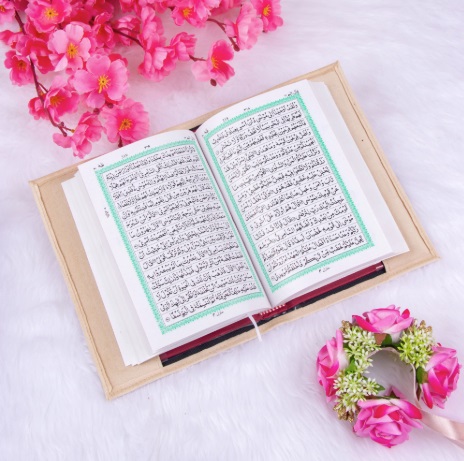
وَنُنَزِّلُ مِنَ الْقُرْآنِ مَا هُوَ شِفَاءٌ وَرَحْمَةٌ لِّلْمُؤْمِنِينَ ۙ وَلَا يَزِيدُ الظَّالِمِينَ إِلَّا خَسَارًا Surah QuranQuran.com
Transliteration: Wa nunazzilu mina’l-Qurʾāni mā huwa shifāʾun wa raḥmatun li’l-muʾminīna wa lā yazīdu’ẓ-ẓālimīna illā khasārā. (Qur’an 17:82) My Islam
The verbal form nunazzilu (imperfect of nazzala, Form II) signifies a gradual, staged sending-down — a nuance Yusuf Ali captures with the parenthetical “stage by stage.” Shifāʾ is a verbal noun denoting cure, healing, restoration to wholeness; raḥmah (from the same root as raḥim, “womb”) connotes encompassing, nourishing mercy. Ẓālimīn — the active participle of ẓulm — denotes those who place a thing in other than its proper place, paradigmatically wronging their own souls. Khasār is loss in trade, ruin, perdition — a commercial metaphor for an existential bankruptcy.
II. Eight Respected English Translations
- Maulana Muhammad Ali (Lahore Ahmadiyya, 2010 edition): “And the Qur’an that We reveal is a healing and a mercy to the believers, and it only increases the wrongdoers in loss.” Ahmadiyya
- Marmaduke Pickthall (The Meaning of the Glorious Koran, 1930): “And We reveal of the Qur’an that which is a healing and a mercy for believers though it increase the evil-doers in naught save ruin.” Quran OMy Islam
- Abdullah Yusuf Ali (Saudi Revised, 1985): “We send down (stage by stage) in the Qur’an that which is a healing and a mercy to those who believe: to the unjust it causes nothing but loss after loss.” Quran OMy Islam
- Muhammad Asad (The Message of the Qur’an, 1980): “THUS, step by step, We bestow from on high through this Qur’an all that gives health [to the spirit] and is a grace unto those who believe [in Us], the while it only adds to the ruin of evildoers.” IslamAwakened
- Sahih International (1997): “And We send down of the Qur’an that which is healing and mercy for the believers, but it does not increase the wrongdoers except in loss.” My IslamQuranic Arabic Corpus
- M. H. Shakir: “And We reveal of the Quran that which is a healing and a mercy to the believers, and it adds only to the perdition of the unjust.” IslamAwakenedQuran O
- A. J. Arberry (The Koran Interpreted, 1955): “And We send down, of the Koran, that which is a healing and a mercy to the believers; and the unbelievers it increases not, except in loss.” IslamAwakened +3
- Muhsin Khan & Taqi-ud-Din al-Hilali (The Noble Qur’an): “And We send down from the Quran that which is a healing and a mercy to those who believe (in Islamic Monotheism and act on it), and it increases the Ẓālimūn (polytheists and wrong-doers) nothing but loss.” My Islam
A comparison reveals the translators’ negotiations with three pivotal terms. For shifāʾ, Asad’s bracketed “[to the spirit]” anchors the verse in spiritual psychology; Hilali–Khan’s parenthetical doctrinal commitment narrows the audience; Pickthall and Arberry preserve the bare semantic force of “healing.” For raḥmah, Asad’s “grace” reaches toward a Christian theological register, while Yusuf Ali’s “mercy” preserves the Semitic register. For khasār, Pickthall and Asad reach for “ruin,” Shakir for “perdition,” Yusuf Ali poetically doubles it as “loss after loss” — capturing the cumulative force the Arabic implies through the negative-exception construction lā yazīdu… illā.
III. Theological Commentary: A Broad Muslim Perspective
1. Ibn Kathīr (d. 1373 CE): Cure for the Diseases of the Heart
In his celebrated Tafsīr al-Qurʾān al-ʿAẓīm, ʿImād al-Dīn Ibn Kathīr writes that Allah’s Book “is a cure and a mercy for the believers, meaning that it takes away whatever is in their hearts of doubt, hypocrisy, shirk, confusion and inclination towards falsehood. The Qur’an cures all of that. It is also a mercy through which one attains faith and wisdom and seeks goodness.” The verse, he insists, names the believer’s spiritual pharmacy. But for the disbeliever, “when he hears the Qur’an, it only makes him further from the truth and increases him in his disbelief. The problem lies with the disbeliever himself, not with the Qur’an.” Ibn Kathīr cites Qatāda’s terse observation: “When the believer hears it, he benefits from it and memorizes it and understands it” — the unbeliever does none of these. My Islam +2 + 2
2. Al-Ṭabarī (d. 923 CE): Healing from Ignorance and Blindness
In Jāmiʿ al-Bayān, the earliest of the comprehensive tafsīrs, Abū Jaʿfar al-Ṭabarī glosses the verse: “We send down upon you, O Muḥammad, of the Qur’an that which is a healing by which one is cured of ignorance and misguidance (al-jahl wa’l-ḍalālah), and by which one is given sight after blindness.” For the wrongdoers, “this Qur’an that We send down does not increase the disbelievers in anything but khasār — meaning destruction (ihlāk) — for whenever a command or prohibition is sent down they reject it, neither obeying His command nor refraining from what He forbids, so it adds loss to their previous loss.” Ṭabarī’s reading is at once epistemological (healing from ignorance) and ethical (acting upon command and prohibition). quranquran
3. Fakhr al-Dīn al-Rāzī (d. 1210 CE): The Rationalist Reading
Al-Rāzī’s Mafātīḥ al-Ghayb — the Great Exegesis, in 32 volumes a compendium of Qur’anic science, Aristotelian philosophy, kalām, and Sufi spirituality — treats shifāʾ primarily as the cure of intellectual diseases. The healing power of Qur’anic verses, he argues, lies in the rational grounds they provide for knowing God, prophethood, the Resurrection, and divine providence; the Qur’an saves people from ḥayrah (bewilderment) and ignorance, precluding doubts and guiding them to the path of happiness. This is consistent with Rāzī’s general program in Mafātīḥ al-Ghayb, where he argues that proofs based on tradition can only yield presumption (ẓann), while rational demonstration yields certainty (yaqīn) — and the Qur’an, on his reading, supplies the rational demonstration that heals the soul of metaphysical disease. Wikipedia + 5
4. Al-Qurṭubī (d. 1273 CE): The Bridge to Physical Healing
Abū ʿAbdullāh al-Qurṭubī’s al-Jāmiʿ li-Aḥkām al-Qurʾān explicitly extends the verse’s healing to physical disease. Citing the well-known hadith of Abū Saʿīd al-Khudrī (Ṣaḥīḥ al-Bukhārī 5736) — in which a Companion cured a tribal chief stung by a scorpion by reciting Sūrat al-Fātiḥa — Qurṭubī affirms that the Ṣaḥābah and Tābiʿīn used the Qur’an as ruqyah for sickness, that the Prophet ﷺ blew his breath on the sick after reciting the Muʿawwidhatayn, and that wearing Qur’anic verses as an amulet (taʿwīdh) is permissible. The Bukhārī hadith preserves the Prophet’s smile at his Companion’s instinct: “How do you know that Sūrat al-Fātiḥa is a Ruqya?… You have done the right thing.” Mufti Muhammad Shafi’s Maʿārif al-Qurʾān summarizes this consensus: “The way the Qur’an is a cure for spiritual ailments, it is also a cure for physical diseases.” Sunnah.com + 5
5. Al-Zamakhsharī (d. 1144 CE): The Grammatical Universality of Healing
In al-Kashshāf, the Muʿtazilite grammarian-exegete Maḥmūd al-Zamakhsharī advances a linguistic point that has shaped all subsequent commentary: the particle min in min al-Qurʾān is explicative (bayāniyyah), not partitive (tabʿīḍiyyah). The verse does not say that some parts of the Qur’an are healing while others are not; rather, it explains that the Qur’an — in its entirety — is healing. Al-Baghawī follows the same reading, as does Tafsīr al-Jalālayn, which reproduces Zamakhsharī’s gloss: “And We reveal of (min here is explicative) the Qur’ān that which is a cure, from error, and a mercy for believers, thereby; though it only increases the evildoers, the disbelievers, in loss, because of their disbelief in it.” This grammatical decision means that every verse — narrative, legal, eschatological, parabolic — possesses healing power for the receptive heart. quranx + 3
6. Al-Bayḍāwī (d. ca. 1286 CE): Synthesis
Nāṣir al-Dīn al-Bayḍāwī’s Anwār al-Tanzīl wa Asrār al-Taʾwīl synthesizes Zamakhsharī’s grammar (with Muʿtazilite content purged) and Rāzī’s rational theology. His commentary preserves the explicative reading of min, identifies shifāʾ as healing from error, and reads raḥmah as the guidance to truth received via the Qur’an. His succinct treatment became the standard reference for Sunni madrasahs from the Mamlūk period onward. Wikipedia
7. Allāmah Sayyid Muḥammad Ḥusayn Ṭabāṭabāʾī (d. 1981 CE): The Shia Philosophical Reading
In al-Mīzān fī Tafsīr al-Qurʾān, the great Shia philosopher-mystic Ṭabāṭabāʾī interprets raḥmah in 17:82 as the enlightenment of the human heart with knowledge and certainty, such that when one no longer has doubts, moral diseases, or distortions in belief, one returns to the original purity of fiṭrah — the primordial God-oriented nature. Just as the body suffers physical diseases, “the human soul might also suffer from moral and faith-related diseases which can be healed by the recitation of and acting upon the Qur’an.” For Ṭabāṭabāʾī, the ẓālimīn are disbelievers whose fiṭrah has been distorted; the loss they suffer is a consequence of their own actions, not of any defect in the Qur’an, which by its nature guides to felicity. Ṭabāṭabāʾī also cross-references 17:82 in his treatment of 2:102 to argue for the preserved purity of the Qur’an against the historical interpolations that affected earlier scriptures. Redzambala + 3
8. Abū ʿAlī al-Faḍl ibn al-Ḥasan al-Ṭabrisī (d. 1153 CE): Mercy as Blessing
In Majmaʿ al-Bayān, the classical Twelver Shia mufassir al-Ṭabrisī takes raḥmah to mean God’s blessings (niʿam Allāh). He aligns with al-Rāzī and Abū al-Futūḥ al-Rāzī in locating the healing in the Qur’an’s rational grounds for knowing God, prophethood, the Resurrection, divine decree, and the Imamate, since these save people from bewilderment and ignorance. His distinctive contribution lies in his reading of the khasār of disbelievers: “the loss of the disbelievers amounts to the disclosure of their impure inner selves by the Qur’anic verses.” The Qur’an, on his reading, is a diagnostic mirror; it does not inject corruption into the soul but exposes and intensifies what is already there. redzambala + 2
9. Sayyid Quṭb (d. 1966 CE): The Existential Therapy of Fī Ẓilāl al-Qurʾān
Sayyid Quṭb, the most influential Islamist exegete of the twentieth century, writes in Fī Ẓilāl al-Qurʾān (translated by Adil Salahi as In the Shade of the Qur’an) that the Qur’an “is the cure for all whispering doubts (waswasah), all confusions, and all anxieties; in it is the healing of these spiritual diseases. It connects the heart of the servant with God; thus he attains peace and contentment, and gains the consciousness that he is under God’s protection and in a state of safety and security.” Quṭb reads the healing socially as well: “the Qur’an is also a cure for those collective diseases by which the social system of a society becomes disordered… After acting upon the Qur’an’s guidance, Islamic society lives under the shade of Islam’s collective justice and peace.” The wrongdoers, he says, do not benefit from this prescription; rather, witnessing the Muslims continually rising through the Qur’an, “they gnash inwardly with anger but are helpless.”
10. Contemporary Voices: Mawdūdī, Asad, Muhammad ʿAlī
Abū al-Aʿlā Mawdūdī’s Tafhīm al-Qurʾān offers the most explicitly modern psychiatric reading: “Those people who make the Qur’an their guide and their book of law, are favored with the blessing of Allah and are cured of all their mental, psychological, moral and cultural diseases.” For the rejecters, “the position is of the one who, when presented both poison and elixir, makes a choice of poison.” Mawdūdī invokes the prophetic ḥadīth: “The Qur’an is either an argument in your favor or against you.” My Islam + 3
Muhammad Asad, the Austrian-Jewish convert whose The Message of the Qur’an remains a watershed in English-language tafsīr, inserts the bracketed clarification “[to the spirit]” beside shifāʾ, signaling his conviction — typical of his rationalist approach — that the verse names primarily a spiritual rather than a thaumaturgic medicine. Maulānā Muḥammad ʿAlī, in the Lahore Ahmadiyya tradition, comments: “The Qur’an is here called a healing and a mercy for spiritual diseases, and history bears testimony that spiritual diseases were all swept away by the Qur’an. But it is a healing for the believers who follow it, and not for those who reject it, and its rejection brings only greater loss.” Ahmadiyya
11. The Paradox of Increased Loss: Why the Qur’an “Adds” to the Wrongdoers’ Ruin
Across these traditions a coherent answer emerges to the unsettling second clause. The Qur’an does not cause loss; it exposes and catalyzes it. Before encountering the revelation, the wrongdoer is in a state of ignorance; after rejecting it consciously, he is in a state of active rebellion. As the QuranGallery synthesis of classical scholarship puts it, “the Quran does not inject new evil into the wrongdoer; rather, it acts as a catalyst that exposes and solidifies their existing state.” The same sun that ripens fruit hardens clay. The same Qur’an that softens the receptive heart hardens the unreceptive one. The fault lies not in the medicine but in the patient’s refusal of it. Quran Gallery App
This is precisely the structure Qur’an 41:44 makes explicit: “Say: ‘For those who believe, it is guidance and healing. But those who disbelieve — in their ears is deafness, and it is blindness upon them.’” The Qur’an is a single object whose effect varies with the receptivity of the subject — a phenomenology the verse names without apology.
IV. Scientific Commentary: The Work of Zia H. Shah, MD
1. Introducing Dr. Zia H. Shah
Dr. Zia H. Shah, MD is an American physician practicing sleep medicine and pulmonology at Our Lady of Lourdes (a Catholic hospital in Binghamton, New York), a graduate of King Edward Medical College, Lahore (MBBS 1985), and the Chief Editor of The Muslim Times, a digital newspaper representing an Ahmadiyya Muslim perspective. He has served as Chair of Religion and Science for The Muslim Sunrise, the oldest Muslim publication in North America, and is listed among the Association of Ahmadi Muslim Scientists. He has authored more than 400 articles on Islam, Christianity, secularism, and religion and science, and curates the blog thequran.love — an extensive archive of Qur’anic commentary integrating scientific, philosophical, and theological reflection. RocketReachMuslimscientists
His project is animated by the conviction — drawn from his Ahmadiyya tradition’s founder Mirzā Ghulām Aḥmad and from Khalīfat al-Masīḥ IV Mirzā Ṭāhir Aḥmad’s Revelation, Rationality, Knowledge and Truth — that “truth cannot contradict truth,” that the same God who authored the cosmos authored the Qur’an, and therefore that science and revelation must ultimately converge.
2. The Qur’an as “Spiritual Software”: A Psychological-Scientific Frame
In his commentary “The Qur’an as Spiritual Software: A Psychological Commentary on Qur’an 17:78–82” (thequran.love, September 2025), Dr. Shah develops an extended metaphor that captures the scientific dimension of shifāʾ. The five daily prayers prescribed in 17:78–79 — “Observe the prayer from the decline of the sun until the darkness of night” — function, he argues, like a daily “software update” of the soul: each prayer “patches moral vulnerabilities,” “interrupts worldly stressors,” and “provides emotional regulation,” anchoring the psyche the way scheduled meditation stabilizes mood. Within this regimen, 17:82 names the active ingredient — the Qur’anic word itself, whose recitation has measurable neurophysiological effects. thequranthequran
Dr. Shah cites contemporary studies — including those collected in PMC10704108 (2023) — showing that Qur’anic recitation stimulates alpha brain waves, raises the threshold for stress, and induces relaxation. The believer’s daily encounter with the text is thus not merely a ritual obligation but a clinically verifiable form of self-regulation: a recurrent reset of the autonomic nervous system, a re-anchoring of attention, a discipline that “enhances the Muslim’s spiritual and mental well-being.” thequranthequran
3. The Placebo Effect, Lourdes, and the Boundary of Spiritual Healing
In “Placebo Effect in Medicine and Psychology: From Lourdes to Charcot and the Critique of Homeopathy” (October 2025), Dr. Shah traces the history of mind-body healing from the Shrine of Our Lady of Lourdes — where the French neurologist Jean-Martin Charcot reinterpreted miraculous cures as effects of suggestion and autosuggestion — to contemporary placebo research. His epistemic posture is exemplary: he refuses to canonize anecdote, yet he refuses to dismiss it. In “Quranic Verses Used for Healing” (November 2025), he writes: “My personal view is to read the Glorious Qur’an as a spiritual guidance and not a magical wand. But, I cannot deny anecdotes if it led to any healing, be it placebo effect or hearing of an earnest prayer by Almighty.” Thequran
This is precisely the integrative posture that 17:82 invites. The verse, on this reading, neither reduces the Qur’an to a thaumaturgic talisman nor disenchants it into mere literature; it names a covenant in which receptivity (īmān) is the precondition for the medicine’s efficacy. The placebo effect — the demonstrable activation of endogenous opioid, dopaminergic, and immune pathways by belief — is, on Dr. Shah’s reading, not a debunking of religious healing but a partial physiological description of what shifāʾ looks like when measured in fMRI and serum cortisol.
4. Cosmology and the Expanding Universe: The Qur’an’s Scientific Signs
Dr. Shah’s most extensive scientific work concerns cosmology. In “Paradise as Vast as the Expanding Universe” (September 2025) and earlier essays archived on The Muslim Times, he argues that Qur’an 51:47 — “And the heaven, We constructed it with strength, and indeed, We are [its] expander (mūsiʿūn)” — anticipated by fourteen centuries Hubble’s 1929 discovery of cosmic expansion. The peer-reviewed estimate, established by Conselice et al. in The Astrophysical Journal (2016, 830:83), is that the observable universe contains approximately two trillion galaxies up to redshift z = 8 — “almost a factor of ten higher than would be seen in an all-sky survey.” Subsequent observations from the James Webb Space Telescope have found roughly ten times more early-universe galaxies than predicted in specific deep-field surveys, refining (rather than overturning) this estimate. His “aesthetic argument for God across six landmark essays” assembles the comprehensibility argument (Einstein’s “The most incomprehensible thing about the universe is that it is comprehensible at all”), the anthropic principle, the fine-tuning of cosmic constants (Sir Fred Hoyle’s “A super-intellect has monkeyed with physics”), and what Dr. Shah calls “aesthetic surplus” — the consistent excess of beauty in nature over what survival requires — as cumulative evidence for a purposeful Creator. Phys.org + 3
This scientific architecture is not extraneous to 17:82. The same Qur’an that heals the soul is, on Dr. Shah’s argument, the same Qur’an whose cosmological, embryological, and biological assertions cohere with discoveries the seventh century could not have anticipated. The healing it offers is thus integrated: it heals the intellect of the false dichotomy between faith and reason, the heart of doubt about whether the universe is purposeful, and the will of despair about whether life has meaning.
5. The Water Cycle, Embryology, and Guided Evolution
In “The Water Cycle in the Qur’an: Scientific Marvel and Spiritual Significance” (December 2025), Dr. Shah surveys Qur’anic verses on evaporation, condensation, precipitation, groundwater, and oceanic currents — comparing them favorably to the silence or fantastical accounts of the ancient cosmogonies. Water’s anomalous properties (high heat capacity, the lower density of ice that prevents lakes from freezing solid, surface tension enabling capillary action in plants) are presented as “intentional features set by al-Ḥakīm, the All-Wise Creator.” On embryology, his work on Qur’an 23:12–14 — “We created man from an essence of clay, then placed him as a drop of fluid in a safe lodging, then We made that drop into a clinging form, and We made the clinging form into a lump of flesh, and We made the lump into bones, and We clothed the bones with flesh” — engages standard contemporary embryological staging. In “Divine Consistency and the Integrated Self” (December 2025), he develops the thesis of “guided evolution,” accepting the mechanisms of natural selection and common ancestry while rejecting the metaphysical assertion that these processes are “blind,” noting that the development of the mammalian placenta through the co-option of ancient retroviral DNA looks, from the One-Master paradigm, like “the subtle manipulation of the code of life by the Creator.” Thequran + 4
6. Neuroscience of Prayer and Recitation
The “healing” of 17:82 finds a striking neurological correlate in the work of Dr. Andrew Newberg, the Marcus Institute (Thomas Jefferson University) neuroscientist who pioneered the field of “neurotheology.” Newberg’s SPECT and fMRI studies of Franciscan nuns in prayer, Tibetan Buddhist monks in meditation, and Sikh chanters demonstrate increased activity in the frontal lobes (focused attention), changes in the parietal lobes (alterations in the sense of self and spatial boundary), and modulation of the limbic system (emotional regulation). In How God Changes Your Brain (Ballantine, 2009), Newberg and Mark Robert Waldman report — based on a clinical study using Kirtan Kriya chanting for twelve minutes daily over eight weeks — that participants “dramatically” improved their memory function, and that “just twelve minutes of meditation per day may slow down the aging process.” BioLogos + 5
Within the Islamic frame, this corresponds precisely to ṣalāh and dhikr — the disciplined recitation and remembrance that 17:78–82 prescribes as the daily setting in which the Qur’an’s shifāʾ operates. The believer who recites the Qur’an five times daily is, on the neuroscientific evidence, engaged in a clinically therapeutic practice. Dr. Shah’s metaphor of the “spiritual software update” is, in this light, less metaphor than literal description: each prayer cycle re-tunes attentional networks, dampens the default mode network associated with rumination and self-referential anxiety, and strengthens prefrontal regulation of the amygdala.
V. Psychological Commentary: A Pandemic of Suffering and the Verse’s Response
1. The Global Burden of Mental Illness
The World Health Organization’s Depression fact sheet, updated with Global Burden of Disease 2021 data (accessed 13 August 2025), estimates that approximately 332 million people globally live with depression — about 4% of the world’s population, including 5.7% of all adults and 5.9% of those over seventy. (The earlier December 2023 update of the same fact sheet cited approximately 280 million.) Depression is roughly 1.5 times more common among women than men; more than 10% of pregnant women and women who have just given birth experience perinatal depression. Per the WHO Mental Disorders fact sheet, also sourced from GBD 2021 data: “In 2021, 359 million people were living with an anxiety disorder including 72 million children and adolescents,” and “nearly 1 in every 7 people (1.1 billion) around the world were living with a mental disorder.” WHO + 6
The toll in lives is staggering. The WHO reports that approximately 727,000 people died by suicide in 2021; the Institute for Health Metrics and Evaluation, in its February 19, 2025 press release on Rosenblad et al. (The Lancet Public Health, GBD 2021), updated this to 746,000 suicide deaths globally in 2021 (519,000 men, 227,000 women), framing it as “about 740,000 suicides… one death on average every 43 seconds.” Suicide remains the third leading cause of death among 15–29-year-olds globally; 73% of suicides occur in low- and middle-income countries. In the United States, the CDC recorded over 49,000 suicide deaths in 2023; the American Foundation for Suicide Prevention reports 48,824 in 2024, with firearm suicide reaching an all-time high (7.8 per 100,000). For every completed suicide, many more attempt — parasuicide — and the WHO notes that “a prior suicide attempt is an important risk factor for suicide in the general population.” WHO + 7
These numbers describe a civilization in mass mental-health crisis. They form the backdrop against which Qur’an 17:82’s claim — that the recitation of revelation heals the heart and grants mercy to the soul — must be read.
2. Belief in God and Mental Health: The Koenig Program
For four decades, Dr. Harold G. Koenig, Professor of Psychiatry and Behavioral Sciences at Duke University Medical Center and Director of Duke’s Center for Spirituality, Theology and Health, has led the most rigorous program of research on religion and mental health. The landmark Handbook of Religion and Health (Oxford University Press, first edition 2001; second edition with Dana King and Verna Carson, 2012), which Koenig co-authored, systematically reviewed thousands of peer-reviewed studies. Koenig’s 2012 paper in ISRN Psychiatry (PMC3671693), reviewing original data-based research published between 1872 and 2010, concluded that the great majority of studies demonstrate religious involvement is associated with better mental health outcomes — lower rates of depression, anxiety, substance abuse, and suicide, and higher levels of well-being, hope, optimism, purpose, and meaning in life. Amazon + 2
Subsequent reviews — including Koenig’s 2015 update in Advances in Mind-Body Medicine and the 2024 Yaminfirooz et al. and 2025 Abdelwahab et al. bibliometric studies that rank him as the most-published and most-cited author in the field — extend these findings. The Duke University Religion Index (DUREL), developed by Koenig and colleagues, has been adapted for Turkish-speaking Muslims (TDUREL) and is in wide international use. Koenig’s central observation, encapsulated in a 2009 article in The Canadian Journal of Psychiatry and reaffirmed in his February 2025 NPR commentary on the loneliness epidemic, is that religious involvement is correlated with better mental health in the domains of depression, substance abuse, and suicide; with weaker but positive evidence in stress-related disorders and dementia. Religiously integrated cognitive-behavioral therapy (RCBT), which Koenig and colleagues have trialed, performs comparably or better than conventional CBT in reducing suicidal thoughts among patients with major depressive disorder and chronic medical illness. PubMed + 4
This program of research is the empirical analog of Qur’an 17:82. The verse asserts that revelation heals the believer; Koenig’s forty-year data set supplies the population-level signal that this is true.
3. Kenneth Pargament and Religious Coping
The work of Dr. Kenneth Pargament, Professor Emeritus of Psychology at Bowling Green State University, complements Koenig’s. Pargament’s Psychology of Religion and Coping (Guilford, 1997) and the Brief RCOPE inventory distinguish positive religious coping (collaborative partnership with the divine, benevolent reappraisal, spiritual support) from negative religious coping (feeling abandoned or punished by God, demonic reappraisal, spiritual struggle). Positive religious coping predicts lower depression, lower PTSD symptoms, and faster post-trauma recovery; negative religious coping predicts worse outcomes. The pattern maps onto 17:82’s bifurcation: the Qur’an is healing for the believer who approaches it in trust and mercy; it adds only loss to the one who approaches it in rejection.
4. Ṣalāh and Dhikr-e-Ilāhī: The Therapeutic Architecture
The Islamic practice within which Qur’an 17:82 is embedded is not silent contemplation but a structured, embodied, vocalized regimen: five daily prayers, the recitation of Sūrat al-Fātiḥa at least seventeen times each day, and the practice of dhikr — the rhythmic remembrance of God’s names. Qur’an 13:28 states: “Verily, by the remembrance of God do hearts find rest (taṭmaʾinn al-qulūb).” The Quranic phrase nafs muṭmaʾinnah — the “tranquil soul” — names the psychological end-state. Thequran
In neuroscientific terms, dhikr operates as a mantra-meditation, slowing respiratory rate, increasing heart-rate variability, activating the vagal parasympathetic system, and quieting the default mode network. Dr. Shah’s writings on thequran.love in the Nafs-e-Mutmainnah category — including “Mindfulness and Zikr: Cultivating Wholesome Thoughts through Quranic Meditation” (May 2026) and “The Remembering Mind and Zikr e Illahi” (May 2026) — develop this convergence between Islamic spiritual psychology and contemporary mindfulness research. The Qur’anic prescription is, on this reading, a multi-modal therapy: cognitive (the meanings of the verses), behavioral (the postures of prayer), social (congregational worship), and contemplative (the inward repetition of God’s names).
5. Atheism, the Meaning Crisis, and the Existential Vacuum
The psychological commentary on 17:82 would be incomplete without engaging the opposite — the condition the verse names as the loss of the wrongdoers. Dr. Shah devotes an entire category of thequran.love to atheism, and his analysis converges with secular existential psychology to identify a contemporary “meaning crisis” — what Viktor Frankl called the existential vacuum.
Frankl, the Auschwitz survivor and founder of logotherapy, argued in Man’s Search for Meaning (1946) that the primary motivational force in human life is not Freud’s pleasure principle nor Adler’s will to power but the will to meaning. When this will is frustrated, the human being suffers an existential vacuum — an inner void manifested in boredom, apathy, “Sunday neurosis,” and what Frankl called the mass neurotic triad of depression, aggression, and addiction. The cure, on Frankl’s account, is the discovery of meaning through creative work, love, and the courageous attitude one takes toward unavoidable suffering. Countercurrents + 2
In “The Philosophical and Scientific Incoherence of Atheism” (March 2025) and “Human Morality: Atheism, Christianity or Islam?” (October 2025), Dr. Shah deploys this Franklian frame to argue that atheism’s reduction of the universe to “nothing but matter” cannot ground meaning. He quotes the biologist William Provine: “There are no gods, no purposes, and no goal-directed forces of any kind… There is no ultimate foundation for ethics, no ultimate meaning in life, and no free will for humans, either.” And Richard Dawkins: “The universe we observe has precisely the properties we should expect if there is, at bottom, no design, no purpose, no evil, no good, nothing but pitiless indifference.” Dr. Shah’s argument — drawing on William Lane Craig’s exposition of Nietzsche’s foresight that the “death of God” would lead to nihilism — is that the atheist worldview produces precisely the existential disorientation Frankl diagnosed. Dostoevsky’s famous line, often quoted in this debate — “If God does not exist, everything is permitted” — captures the moral corollary. Thequran + 4
Qur’an 59:19 — “And be not like those who forgot God, so He caused them to forget their own souls” — anticipates this condition. In “The Peril of Forgetting God (Atheism) and Remedy in Remembrance” (November 2025), Dr. Shah reads 59:19 as a clinical description of what happens when a culture forgets the transcendent: it forgets itself, loses its moral anchor, and descends into nihilism. The remedy named in the same Sūrah is dhikr — remembrance. And the same Qur’an that 17:82 calls healing and mercy is, on this reading, the antidote to the meaning crisis.
The data are sobering. Pew Research surveys cited in Dr. Shah’s “Islam: A Coherent, Meaningful, and Rational Worldview” (August 2025) note that approximately 28% of Americans now identify as religiously unaffiliated, while Christian affiliation has dropped roughly 12 percentage points over the past decade to about 65%. In parallel, rates of teen depression, anxiety, suicide, and “deaths of despair” (Anne Case and Angus Deaton’s term for the alcoholism, opioid, and suicide deaths concentrated among working-class Americans without college degrees) have risen substantially. Whether the correlation is causal is debated, but the convergence of secularization and despair — first prophesied by Nietzsche, diagnosed by Frankl, and measured by Koenig — gives empirical weight to the Qur’an’s claim that to lose the remembrance of God is to lose oneself. Thequran
6. How Belief in an All-Knowing, All-Powerful, Merciful God Heals
Belief in al-Raḥmān, al-Raḥīm, al-ʿAlīm, al-Qadīr — the Most Gracious, the Most Merciful, the All-Knowing, the All-Powerful — opens five psychological pathways to healing:
- Cosmic security. The believer’s narrative is not “I am alone in a meaningless universe” but “I am held by a Creator who knows me.” Pargament’s research shows this benevolent reappraisal reduces stress reactivity.
- Meaning in suffering. Frankl’s logotherapy and the Qur’anic doctrine of ibtilāʾ (trial) converge: suffering, when framed as a test from a wise God, becomes meaningful rather than absurd. Qur’an 2:155–157 — “Surely we belong to God and to Him we shall return” — gives suffering a trajectory.
- Forgiveness and shame relief. Belief in al-Ghafūr (the Most Forgiving) breaks the cycle of chronic guilt and shame that drives depression. Qur’an 39:53 — “Do not despair of the mercy of God; indeed God forgives all sins” — is psychologically curative.
- Hope. Qur’an 94:5–6 — “With every hardship there is ease; with every hardship there is ease” — supplies what positive psychology calls “dispositional optimism,” a robust predictor of mental and physical health.
- Community. Congregational prayer integrates the believer into an ummah — a community of meaning whose collective remembrance fortifies the individual against the social isolation Robert Putnam has documented as a driver of declining mental health.
VI. Philosophical Commentary: Healing, Meaning, Theodicy
1. The Ontology of Healing
What does it mean to call a text “healing”? On the materialist account, words are sound waves and ink marks; “healing” must be metaphor. But Qur’an 17:82 makes a stronger claim: the Qur’an is (not “functions as”) shifāʾ. The philosophical implication is hylomorphic: the text is a form whose actualization in the receptive soul restores that soul to its proper teleology. The Aristotelian conception of health as the right ordering of the parts to the whole, and the Galenic medical tradition that read disease as imbalance, map onto the Qur’anic conception of ẓulm as misplacement and shifāʾ as restoration.
In Avicennan terms — and Ibn Sīnā’s medical-philosophical masterwork is literally titled al-Shifāʾ (The Book of Healing) — the soul’s health consists in its conformity to the intelligibles emanating from the Active Intellect. Qur’an 17:82 names a parallel hierarchy: the Qur’an descends from the Divine, and the soul that conforms to it is restored. Both philosophies presuppose that ultimate reality is intelligible and benevolent — a presupposition that materialist atheism, on Dr. Shah’s argument, cannot sustain.
2. The Problem of Theodicy
The verse’s second clause raises theodicy in acute form. If God sends down healing and mercy, why does the same revelation increase the wrongdoers in loss? Does God not desire their healing also?
The classical Sunni response (developed by al-Rāzī and codified by al-Bayḍāwī) distinguishes God’s takwīnī will (His creative decree) from His tashrīʿī will (His legislative command): God commands all to receive the Qur’an, but in His creative wisdom allows the human will the genuine power to refuse — and the consequence of refusal is the very loss the verse names. The Muʿtazilite tradition, preserved in Zamakhsharī, emphasizes human moral responsibility: the wrongdoer is the cause of his own loss, not the Qur’an. The Shia tradition of Ṭabāṭabāʾī and Ṭabrisī, emphasizing fiṭrah, holds that the Qur’an reveals what is already in the heart: a sound fiṭrah receives it as healing; a corrupted one finds it intolerable and is hardened.
The deeper philosophical point — articulated in different vocabularies by Augustine (“Our hearts are restless until they rest in Thee”), al-Ghazālī (in Iḥyāʾ ʿUlūm al-Dīn), and contemporary virtue ethicists — is that moral perception is itself dependent on moral receptivity. To the eye blinded by ẓulm, the light of the Qur’an is painful; to the eye that has been gently opened, it is healing. The verse names not divine arbitrariness but the structure of moral epistemology.
3. Divine Mercy and Human Suffering
The pairing of shifāʾ with raḥmah — healing and mercy — is theologically pregnant. Raḥmah is the encompassing attribute under which all of God’s other attributes operate: the bismillāh that opens 113 of the Qur’an’s 114 sūrahs names God as al-Raḥmān al-Raḥīm. Qur’an 7:156 has God say: “My mercy encompasses all things.” The verse 17:82 thus locates the Qur’an within the architecture of divine mercy: the revelation is raḥmah descended into language.
The Christian tradition (in the Pauline doctrine of grace) and the Buddhist tradition (in karuṇā) parallel this insight: that suffering is met not with cold metaphysical necessity but with compassionate response. The Qur’anic distinctive is that this mercy comes through the Word — that recitation of God’s speech is itself the encounter with His mercy. This is why the verse uses the present-tense nunazzilu (“We are sending down”) rather than the perfect anzalnā (“We have sent down”): the sending-down is ongoing, the encounter is contemporaneous, the mercy is not a finished historical event but a continuous descent into the heart of each reciter.
4. Meaning, Purpose, and the Logotherapy of Revelation
If, as Frankl argued, the human being is fundamentally a meaning-seeking creature, then revelation is the answer to a question the soul is constitutively asking. Dr. Shah’s argument in “Islam: A Coherent, Meaningful, and Rational Worldview” is that Islam — and pre-eminently the Qur’an — offers what neither materialist atheism nor (he argues) Trinitarian Christianity can: a worldview in which the cosmos is purposeful (bil-ḥaqq, “with truth,” Qur’an 15:85, 30:8, 39:5), the human being is dignified as God’s vicegerent (khalīfah, 2:30), suffering has meaning as trial (ibtilāʾ, 2:155), and history has a trajectory toward justice. Within such a worldview, the existential vacuum is not the human default but a symptom of forgetting (ghaflah) — and the remedy is the dhikr the Qur’an enjoins. Thequran
5. The Aesthetic Argument and Healing through Beauty
A final philosophical note: Dr. Shah’s “aesthetic argument for God” — that the consistent excess of beauty in nature beyond utility (firefly bioluminescence, the spiral of galaxies, the symmetry of snowflakes, the mathematical elegance of the laws of physics) points toward an “Artist who loves beauty” — has a curious application to 17:82. The Qur’an itself is famous for its aesthetic qualities: its rhythmic cadence, its phonetic patterning, its rhetorical figures (iʿjāz al-Qurʾān). Listeners across cultures — even those who do not understand Arabic — report being moved to tears by recitation. Rumi captured this in the line Dr. Shah often quotes: “Each and every part of the world is a letter of the Beloved’s love-letter.” This too is a form of shifāʾ: the soul is healed by the encounter with beauty, which is itself a sign of the Beautiful. ThequranThequran
VII. Thematic Epilogue: Weaving the Threads
Qur’an 17:82 is, finally, a covenant. It is not a magical formula, not a promise of automatic cure, not a guarantee that those who chant the right verses will be relieved of cancer or anxiety. It is a conditional promise — healing and mercy for the believers — whose condition is receptivity, faith, and the long discipline of living according to the text.
The classical commentators agree on this. Ibn Kathīr names the believers as those whose hearts are open to receive; Ṭabarī specifies that the medicine works for those who “act upon the obligations” of the Book; Qurṭubī, while extending the healing to physical illness through ruqyah, insists that the cure is mediated by faith; Ṭabāṭabāʾī roots the healing in the restoration of fiṭrah; Quṭb makes it the condition for sakīnah, the tranquility of the heart at rest in God.
The scientific frame — articulated in Dr. Zia Shah’s body of work and corroborated by Newberg’s neurotheology, Koenig’s epidemiology, Pargament’s coping research, and Frankl’s logotherapy — confirms that this is not pious fiction. The disciplined practice of prayer and recitation produces measurable changes in brain function, autonomic regulation, and mortality. Religious involvement is correlated, in study after study, with lower depression, lower suicide, greater purpose, more hope. The recent demonstration by Newberg and Waldman that twelve minutes of contemplative practice per day produces measurable improvement in memory and may slow aging puts hard numbers behind what believers have always testified. Amazon
The psychological frame names the desperate need: approximately 332 million depressed, 359 million anxious, an estimated 746,000 dying by suicide each year — one every forty-three seconds — and an entire civilization in the grip of what Frankl saw coming: the existential vacuum opened when modernity decided it could live without God. The wrongdoers (ẓālimīn) of 17:82 are not, on the deepest reading, a separate species of malefactor; they are the part of every human being that resists the medicine. They are the modern condition Nietzsche prophesied, Dostoevsky dramatized, Frankl diagnosed, and Dr. Shah locates in the empirical reality of secular materialism’s inability to ground meaning.
The philosophical frame names the structure of the cure: that the cosmos is intelligible because authored, that suffering is meaningful because trial, that mercy is encompassing because divine, that the Word descends as healing because the One who speaks it is al-Raḥmān al-Raḥīm.
The theological frame names the One who speaks. The Qur’an, the verse declares, is not merely a useful text — it is sent down (nunazzilu, present continuous) by the Most Wise, raḥmah condensed into language, shifāʾ offered to every receptive heart in every age. The wrongdoers’ loss is not God’s vindictiveness but the logical consequence of refusing medicine that one has been freely given.
In a world of 332 million depressed and a suicide every forty-three seconds, the offer stands. The Qur’an is still being sent down. Whether it heals or adds to ruin depends, the verse says, on whether the heart that hears it has the humility and the courage to be healed.
“And We send down of the Qur’an that which is healing and mercy for the believers, but it does not increase the wrongdoers except in loss.” (Qur’an 17:82) Quranic Arabic Corpus


Leave a Reply