

Presented by ChatGPT
The closing verse of Sura At-Talaq (65:12) evokes the vastness of creation: “Allah is the One Who created seven heavens, and likewise the earth. His command descends among them, that you may know Allah is able to do all things and that Allah encompasses all things in knowledge.” In Arabic:
ٱللَّهُ ٱلَّذِى خَلَقَ سَبْعَ سَمَـٰوَٰتٍۢ وَمِنَ ٱلْأَرْضِ مِثْلَهُنَّ ۖ
يَتَنَزَّلُ ٱلْأَمْرُ بَيْنَهُنَّ لِتَعْلَمُوا۟ أَنَّ ٱللَّهَ عَلَىٰ كُلِّ شَىْءٍۢ قَدِيرٌۭ وَأَنَّ ٱللَّهَ قَدْ أَحَاطَ بِكُلِّ شَىْءٍ عِلْمًۢا (65:12).
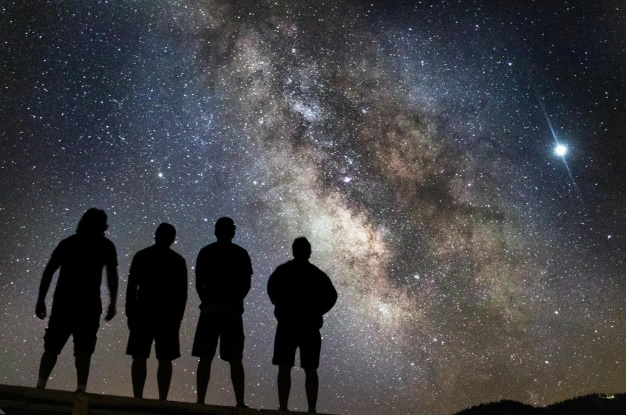
This verse invites reflection on “seven heavens and an earth like them” as signs of God’s limitless power. The Qur’an elsewhere notes, “among His signs is the creation of the heavens and the earth, and the living creatures that He has dispersed through them”, hinting at life beyond our world. Modern astronomy confirms the vastness implied: NASA reports over 6,000 confirmed exoplanets and estimates billions more in our galaxy alone. Just as 7‑literature scholars ponder “seven earths” (each possibly with its own inhabitants), science now knows our universe teems with planets and potentially life-bearing worlds. All of this points to a Creator of an expanding, life‑rich cosmos – “the One who created seven heavens… His command descends among them” – underscoring God’s omnipotence and omniscience.
Divine Providence and Ease (At-Talaq 65:2–5)
Reflecting on this immense Creator, Sura At-Talaq turns to His Providence for the faithful. Verses 2–5 repeatedly promise that “whoever fears Allah…” will find relief and sustenance. For example:
- وَمَن يَتَّقِ ٱللَّهَ يَجْعَل لَهُۥ مَخْرَجًا (65:2) – “And whoever fears Allah – He will make for him a way out.”
- Mohammad Asad: “and unto everyone who is conscious of God He [always] grants a way out [of unhappiness]”.
- Faruq-i-Azam Malik: “He that fears Allah may be provided a way out by Him”.
- Mustafa Khattab: “And whoever is mindful of Allah, He will make a way out for them”.
- Marmaduke Pickthall: “Allah will appoint a way out for him”.
- Abdullah Yusuf Ali: “for those who fear Allah He (ever) prepares a way out”.
- Sahih International: “And whoever fears Allah – He will make for him a way out”.
- وَيَرْزُقْهُ مِنْ حَيْثُ لَا يَحْتَسِبُ… (65:3) – “And He will provide for him from sources he never could imagine… Allah is sufficient for him.”
- Mohammad Asad: “and provides for him in a manner beyond all expectation; and for everyone who places his trust in God, He [alone] is enough”.
- Faruq-i-Azam Malik: “and given sustenance from the sources he could never imagine: for Allah is all sufficient for the person who puts his trust in Him”.
- Mustafa Khattab: “and provide for them from sources they could never imagine. And whoever puts their trust in Allah, then He [alone] is sufficient for them”.
- Marmaduke Pickthall: “And will provide for him from (a quarter) whence he hath no expectation. And whosoever putteth his trust in Allah, He will suffice him”.
- Abdullah Yusuf Ali: “And He provides for him from (sources) he never could imagine. And if anyone puts his trust in Allah sufficient is (Allah) for him”.
- Sahih International: “And will provide for him from where he does not expect. And whoever relies upon Allah – then He is sufficient for him… Allah has already set for everything a [decreed] extent.”.
- وَمَن يَتَّقِ اللَّهَ يَجْعَل لَهُ مِنْ أَمْرِهِ يُسْرًا (65:4) – “And whoever fears Allah – He will make for him of his matters ease.”
- Mohammad Asad: “And for everyone who is conscious of God, He makes it easy to obey His commandment”.
- Faruq-i-Azam Malik: “Allah will ease the hardship of those who fear Him”.
- Mustafa Khattab: “And whoever is mindful of Allah, He will make their matters easy for them”.
- Marmaduke Pickthall: “Whosoever keepeth his duty to Allah, He maketh his course easy for him”.
- Abdullah Yusuf Ali: “and for those who fear Allah He will make their path easy”.
- Sahih International: “And whoever fears Allah – He will make for him of his matter ease”.
- ذَٰلِكَ أَمْرُ اللَّهِ … وَمَن يَتَّقِ اللَّهَ يُكَفِّرْ عَنْهُ سَيِّئَاتِهِ وَيُعْظِمْ لَهُ أَجْرًا (65:5) – “That is the command of Allah… and whoever fears Allah – He will remove from him his misdeeds and make great for him his reward.”
- Mohammad Asad: “And unto everyone who is conscious of God will He pardon [some of] his bad deeds, and will grant him a vast reward”.
- Faruq-i-Azam Malik: “He that fears Allah, will have his sins removed and his reward enlarged”.
- Mustafa Khattab: “And whoever is mindful of Allah, He will absolve them of their sins and reward them immensely”.
- Marmaduke Pickthall: “and whosoever keepeth his duty to Allah, He will remit from him his evil deeds and magnify reward for him”.
- Abdullah Yusuf Ali: “and if anyone fears Allah He will remove his ills from him and will enlarge His reward”.
- Sahih International: “and whoever fears Allah – He will remove for him his misdeeds and make great for him his reward”.
Each of these verses reinforces a single theme: God’s providence and mercy for the God‑fearing believer. After contemplating a universe of “seven heavens and seven earths,” even possibly inhabited by other beings, the faithful take comfort that the same Creator who ordains the cosmos also cares for them intimately. He guarantees “a way out” of every difficulty and unforeseen provision “from sources… you do not expect”, because “Allah is able to do all things”.
Creator’s grandeur, the “ease” and “reward” promised in verses 2–5 can be embraced with full trust. Cosmologically, we see signs of God’s plan: billions of stars and planets, even life “scattered” throughout the heavens, all bound by His command. Philosophically, this inspires a sense of awe and accountability – that on these countless worlds, God’s message and wisdom hold true. Historically, scholars like al-Qurṭubī noted that the Qur’an implies the message of Islam must reach “the farthest corners of the globe” and even beyond, centuries before humanity discovered new continents or exoplanets.
Ultimately, Surah At-Talaq presents a theological tapestry: a God whose knowledge “encompasses all things”, who is powerful over the entire expanding universe, and who personally sustains and uplifts those who trust Him. The cosmic grandeur of 65:12 – “seven heavens and earth the like thereof” – thus magnifies the promise in 65:2‑5: the Almighty Lord of all creation guarantees relief and guidance to the believer.
Sources: Quran 65:2–5,12 (Arabic and multiple translations); Tafsīr and commentary; Quran 42:29; NASA (exoplanets).



Leave a Reply