
Written and Collected by Zia H Shah, Chief Editor of the Muslim Times
Michael Servetus, a 16th-century Spanish theologian and physician, is notably recognized for his rejection of the traditional Christian doctrine of the Trinity. His theological positions, particularly those expressed in his work Christianismi Restitutio, were deemed heretical by both Catholic and Protestant authorities of his time. This led to his arrest and trial in Vienne, France, where he was convicted of heresy in absentia and sentenced to death by burning. Servetus managed to escape imprisonment but was later apprehended in Geneva. There, under the instigation of John Calvin, he was tried again for heresy. Despite some appeals for a more lenient execution method, Servetus was burned at the stake on October 27, 1553, at the Plateau of Champel in Geneva. His execution sparked significant controversy and debate regarding the punishment of heresy and the limits of religious tolerance during the Reformation period.
Early Non-Trinitarian Thinkers in Early Christianity
In the first few centuries of Christianity, various thinkers and sects proposed understandings of Christ that diverged from what later became orthodox Trinitarian doctrine. Some early groups found the developing idea of the Trinity incompatible with strict monotheism, and thus denied that Jesus was God incarnate, viewing him instead as a exalted but created being. One such view was Adoptionism (also called dynamic monarchianism), which held that Jesus was born fully human and only “became the Son in His life” (for example, at his baptism or resurrection). Adoptionists like Theodotus of Byzantium (2nd century) and Paul of Samosata (3rd century) taught that Jesus, though exceptionally holy, was not eternally God the Son; rather, he was a man “adopted” by God to be the Messiah. This meant Jesus was divine by office or grace, not by nature—a direct rejection of Christ. By denying Jesus’ pre-existence and intrinsic godhood, Adoptionism set itself against what would become the orthodox view that Jesus was eternally divine.
Another strand of early non-Trinitarian thought was Monarchianism, which stressed the one sovereignty (monarchia) of God. Some Monarchians were essentially adoptionist (like Paul of Samosata), while others were Modalists. Modalistic Monarchians (such as Noetus, Praxeas, and Sabellius in the 3rd century) taught that Father and the Holy Spirit are not distinct persons, but rather different modes or aspects of the one God. Sabellius argued that the single divine Person manifested in different roles – Father in creation, Son in redemption, Holy Spirit in sanctification. In this view, the Father himself suffered on the cross as the Son. Modalists affirmed the full deity of Christ (since Christ was just God the Father in another form), but they denied any real distinction of persons within the Godhead, which conflicted with emerging Trinitarian depictions. Trinitarian theologians like Tertullian condemned Modalism as heresy, insisting that God is one being but in three persons, not one person. Despite their differences, both Adoptionists and Modalists were non-Trinitarian in that they rejected the co-existence of three coequal divine persons, either by denying Christ’s eternal divinity (Adoptionism) or by denying his distinct personhood (Modalism).
By far the most significant early challenge to prototrinitarian belief was Arianism in the 4th century. Arius of Alexandria taught that the Son of God was literally begotten by the Father before the ages – created as the first and highest creature through whom God made all other things. In Arius’s theology, Christ was divine but not equal to the Father: the Son had a beginning and was not co-eternal with the Father, and thus “there was [a time] when the Son was not.” The Arians held that the Son was of a distinct, subordinate substance from the Father, calling him divine in honorific sense as God’s supreme agent, but not the same God as the Father. As Britannica summarizes, Arianism asserted that “Christ was not divine but a created being”, subordinate to the one true God. This directly contradicted the emerging orthodox claim that Christ was fully God. For a time in the mid-4th century, Arianism and related semi-Arian views were widespread. Arian or homoiousian doctrine became dominant in parts of the Church and was even official in the Eastern Roman Empire until 381. Thus, on the eve of the definitive Trinitarian settlement, Christianity was deeply divided over whether Jesus was of the same essence as God or a lesser divine creature. The stage was set for ecumenical councils to define orthodoxy in opposition to these divergent (and by then widely labeled heretical) Christologies.
Development of Trinitarian Orthodoxy (Nicene and Athanasian Creeds)
The controversy over Arianism led the Church to formulate its doctrine of the Trinity more explicitly in the fourth century. The First Council of Nicaea (AD 325), convened by Emperor Constantine, was the first ecumenical council addressing the universality of Christian belief. Its immediate aim was to resolve the dispute over Arius’s teaching that Christ was a created being and not fully divine. At Nicaea, over 300 bishops condemned Arianism as a heresy and enshrined the full divinity of Christ in a creed. To do so, the council took the bold step of invoking the scriptural term homoousios – Greek for “of one substance (with the Father)” – in its confession of faith. The Nicene Creed declared Jesus Christ to be “true God from true God, begotten not made, of one essence with the Father”, thereby affirming that the Son is fully equal to and consubstantial with God the Father, not a subordinate creature. This doctrinal language was deliberate interpretations. Although adopted with some reluctance by certain bishops, Nicaea’s formula established that the Son shares the same eternal divine nature as the Father. However, the Nicene Council’s original creed (325) ended simply with “and in the Holy Spirit,” without explication. In the following decades, controversy continued, and Arian-leaning factions at times regained imperial favor (the Nicene party itself was temporarily in exile).
It was not until the First Council of Constantinople (381) that the Nicene stance was reaffirmed and expanded: the council re-condemned Arianism and “declared the doctrine of the Trinity — that the Father, the Son, and the Holy Spirit are three equal parts of the single Godhead.” The result was the Niceno-Constantinopolitan Creed, which explicitly included the Holy Spirit as “the Lord and Giver of Life, who proceeds from the Father, who with the Father and Son together is worshiped and glorified.” With this, the Trinitarian doctrine of one God in three co-equal, co-eternal persons was solidified as orthodox Christianity.
The theological rationale behind these decisions was the Church’s conviction that Christian salvation and worship were at stake. Athanasius of Alexandria and other Nicene fathers argued that if Christ were not truly God, he could not bestow divine life or redemption upon humanity. Only one who is fully divine could unite humans to God; thus, to deny Christ’s deity would “rob God of his Word” and empty the Gospel of its saving power. As one historian summarizes, the Nicene bishops felt compelled to clarify the Son’s relation to the Father “in order to conserve the very essence of the Gospel of God’s saving work in Jesus Christ.” They insisted that “everything would be emptied of…saving import if Jesus Christ were not fully, completely, entirely man as well as God.” In other words, the doctrine of the Trinity (and the Incarnation) arose from a soteriological concern: to safeguard the belief that in Christ, God Himself has come among us to save us. This theological motive explains the uncompromising tone of later Trinitarian formulas.
By the late 5th or early 6th century, the Western Church produced the so-called Athanasian Creed (Quicunque vult), which more fully and explicitly defined Trinitarian and Christological orthodoxy. The Athanasian Creed was the first creed to state unequivocally the equality of the three divine Persons. It professes that “we worship one God in Trinity and Trinity in Unity, neither blending their persons nor dividing their essence.” It goes on to enumerate that the Father, Son, and Holy Spirit are each unite, eternal, and almighty — “the Father is God, the Son is God, the Holy Spirit is God. “Yet there are not three Gods; there is but one God.”
It even opens with the warning that “Whoever desires to be saved should above all hold to the catholic faith. Anyone who does not keep it whole and unbroken will doubtless perish eternally.” In other words, adherence to the doctrine of the Trinity and the full deity of Christ became seen as indispensable for salvation within the catholic (universal) church. This stark claim underscores how essential Trinitarian belief had become to mainstream Christianity by the post-Nicene era. The Athanasian Creed (though not used in Eastern churches) helped distinguish Nicene Christians from any remaining Arian or other non-Trinitarian groups. In sum, through the Nicene and Athanasian formulations, the Church definitively declared that God is one Being in three coequal, coeternal Persons—Father, Son, and Holy Spirit—and that this mystery of “Trinity in Unity” is foundational to true Christian faith.
Unitarian Movements of the Reformation Era
Non-Trinitarian Christianity did not disappear after the early councils; it re-emerged in significant ways during the Protestant Reformation of the 16th century. While the Magisterial Reformers (Luther, Calvin, etc.) retained Trinitarian orthodoxy, more radical thinkers questioned longstanding dogmas—including the Trinity—in light of Scripture and reason. One early Reformation figure, Michael Servetus of Spain, famously published On the Errors of the Trinity (1531) and later Christianismi Restitutio (1553), arguing that the Trinitarian doctrine was unscriptural and had corrupted genuine Christianity. Servetus affirmed the unity of God and saw Christ as the Son of the one God, but not as an eternal coequal person in a triune deity. For these views, he was condemned by both Catholics and Protestants; Servetus was burned at the stake in Geneva in 1553 under John Calvin’s watch, becoming a martyr figure for later anti-Trinitarians. His fate illustrated the peril that open denial of the Trinity still carried in the 16th century. Nevertheless, Servetus’s writings circulated and planted seeds for later Unitarian movements.
The most substantial Unitarian (non-Trinitarian) movement of the Reformation era took root in Poland and Transylvania. In Poland-Lithuania, a group of radical reformers broke from the Calvinist Reformed Church in the 1560s, forming what was called the Minor Reformed Church or the Polish Brethren. These Brethren were influenced by Italian humanist refugees and by Servetus’s ideas. They rejected the doctrines of the Trinity and original sin, seeking to restore a simpler, “primitive” Christianity based solely on Scripture and reason. The Italian theologian Fausto Sozzini (Faustus Socinus) became the leading figure of this movement. Socinus, along with his uncle Laelius Socinus, developed a coherent non-Trinitarian theology later labeled Socinianism. The Socinians “accepted Jesus as God’s revelation but [as] a mere man, divine by office rather than by nature,” explicitly rejecting the Trinity. In their view, Jesus was the Messiah, fully human (though uniquely filled with God’s wisdom and power), who should be revered and obeyed but not worshiped as the Almighty God. They denied that Christ pre-existed his human birth, interpreting biblical references to the “Word” or logos as God’s plan or wisdom rather than a literal pre-incarnate Son. Consequently, Socinians also rejected the orthodox doctrines of the Incarnation and the atonement in their traditional forms. Instead of teaching that Jesus’ death was a divine sacrifice to appease God’s wrath, they viewed it as a moral example and the basis for God’s forgiving grace when one repents.
The Polish Brethren, guided by Socinus, emphasized rational faith and moral living. They taught that Scripture, read in the light of reason, did not support the Trinity, and that Christian doctrine must withstand rational scrutiny. They “minimized dogma” and stressed ethics: personal obedience to Jesus’ teachings was paramount. One distinctive Socinian doctrine was psychopannychism (soul sleep) – the belief that the soul dies with the body and does not suffer eternal torment. Only “the souls of those who have persevered in obeying Jesus’ commandments will be resurrected,” unto eternal life. Thus, salvation was conditional on faithful perseverance rather than on assenting to mysterious creeds. The Polish Brethren also championed religious toleration and separation of church and state ahead of their time. Under Socinus’s leadership (he settled in Poland in 1579), the Minor Reformed Church thrived for several decades: around 300 Unitarian congregations existed in Poland at its height, with a cultural and publishing center in the town of Raków. There they established a famous academy and printing press, which produced numerous works including the Racovian Catechism (1605) – a comprehensive statement of Socinian Unitarian theology. This catechism explicated their beliefs in one God (the Father), in Christ as a divinely appointed man, and in the virtuous life as the Christian calling.
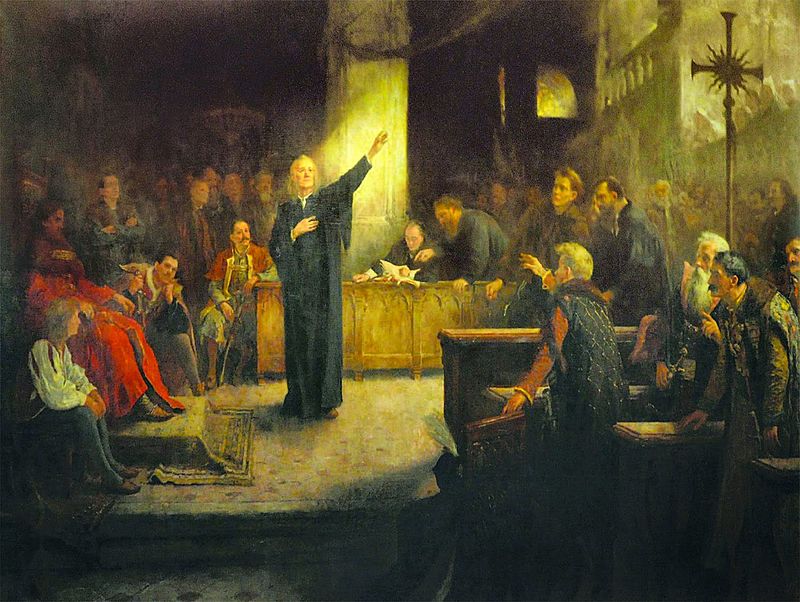
In the eastern Kingdom of Hungary, especially Transylvania, another Unitarian stronghold emerged. There the Unitarian Church of Transylvania was founded under the leadership of Ferenc Dávid (Francis David), a former Catholic and Calvinist who embraced Nontrinitarian belief. Dávid became the court preacher to King John Sigismund Zápolya of Transylvania, who was uniquely receptive to these ideas. In 1568, at the Diet of Torda, Ferenc Dávid’s eloquent arguments for the unity of God persuaded King John Sigismund to issue an extraordinary edict of religious toleration. The Edict of Torda (1568) granted legal recognition and freedom “to profess one’s faith” for four religions, including the Unitarian faith. Thus Transylvania became the first state in Europe to officially tolerate Unitarians. King John Sigismund himself converted to Unitarianism – the only reigning monarch ever to do so – and under his protection the Unitarian Church in Transylvania was organized (with Dávid as its first bishop). The Transylvanian Unitarians shared a similar theology to the Socinians (indeed, there was correspondence and cross-pollination between Poland and Transylvania). They affirmed God’s oneness and rejected the Trinity, viewing Jesus as an exceptional man endowed with God’s spirit. After John Sigismund’s untimely death in 1571, the next prince persecuted the Unitarians; Dávid himself was imprisoned for alleged “innovation” (he opposed invoking Christ in prayer) and died in prison in 1579. Nevertheless, the Unitarian Church of Transylvania survived as a distinct denomination through the centuries – an enduring testament to Reformation-era Unitarianism. (It exists to this day in Transylvania, now part of Romania, maintaining the teachings of “God is one” – even the slogan Egy az Isten [“God is One”] can be seen in their churches.) Transylvania and Poland were thus twin centers of Unitarian Christianity in the post-Reformation period.
By the mid-17th century, these movements faced severe crackdown. In Catholic Counter-Reformation Poland, the Diet of 1658 banned the Socinian Polish Brethren, giving them the choice to convert or face exile/death. As a result, a mass migration of Socinians ensued, with many fleeing to tolerant places like Transylvania, the Netherlands, England, and Prussia. The Polish Unitarian Church was extinguished in its homeland (only small remnants survived into the 19th century). In Transylvania, Unitarians held on as one of the recognized religions, though often a marginalized minority. Despite persecution, the legacy of the Socinians and Transylvanian Unitarians was profound. Their ideas – anti-Trinitarian theology, emphasis on conscience and reason, and plea for tolerance – influenced Enlightenment thinkers and later liberal Protestant movements. In fact, by the late 17th century the Polish Brethren were commonly called “Unitarians,” a name that would come to describe any Christian theology that affirms the unity of God (as opposed to Trinitarian plurality of persons). The Socinian writings circulated in Western Europe, influencing figures like John Locke and inspiring English dissenters such as John Biddle. Thus, long after the Socinian communities were scattered, Unitarian Christianity would re-emerge in new forms during the Enlightenment era.
Enlightenment and the Rise of Liberal Unitarianism
In the 18th and early 19th centuries, Unitarian ideas gained new life in England and North America, evolving into a liberal Christian movement. In this period, Unitarianism moved from being a persecuted heresy to an organized, open denomination dedicated to freedom of conscience, reason, and a simplified Christian theology. This development was propelled by several key thinkers and clergy.
In England, legal restrictions against anti-Trinitarianism began to ease only toward the end of the 18th century. Pioneers like John Biddle had earlier championed Unitarian views in the 1650s, but he suffered imprisonment and the 1689 Act of Toleration explicitly excluded Unitarians from its protections. Nonetheless, latent Unitarian sentiment persisted among some dissenting Protestants and even within the Church of England. Throughout the 1700s, a number of English Presbyterian and Baptist congregations gradually drifted toward Unitarian theology (rejecting the Trinity), under the influence of rationalist and Arian ideas. The watershed moment came when Theophilus Lindsey, a Anglican clergyman, concluded he could not in good conscience continue using the Trinitarian liturgy of the Church of England. In 1774, after the failure of a petition to Parliament to relieve anti-Unitarian subscription requirements, Lindsey resigned his Anglican parish and founded the first openly Unitarian congregation in England – the Essex Street Chapel in London. This event marks the formal beginning of Unitarianism as a denomination in Britain. At Lindsey’s chapel (which is still the headquarters of British Unitarians today), worship was simple and non-liturgical, and only the Father was worshipped as the one God. Lindsey was soon joined by eminent Dissenters, most notably Dr. Joseph Priestley.
Joseph Priestley – better known as a scientist and discoverer of oxygen – was also a theologian and a fervent advocate of Unitarianism. An English Dissenter, Priestley had become convinced that Christianity’s original teachings had been corrupted by Greek philosophical ideas such as the Trinity. He published History of the Corruptions of Christianity (1782), arguing that the pure apostolic faith was Unitarian and that doctrines like the Trinity and eternal hell were later distortions. Priestley’s approach to religion was highly rational: he embraced a “scriptural rationalism” that sought to test every doctrine by reason and the Bible. He was a determinist and materialist in philosophy, and he advocated a “humanitarian Christology,” meaning Jesus was fully human (not pre-existent), distinguished above others only by his divinely given mission. Priestley’s writings and sermons influenced many Protestant ministers in England toward Unitarian views. In 1791, a mob angered by his support of the French Revolution burned Priestley’s home and laboratory (the “Priestley Riots”), and soon after he emigrated to America. But in England his legacy endured: Unitarianism continued to spread among Dissenters, and in 1825 the British and Foreign Unitarian Association was founded to unite and represent these congregations. Parliament had repealed the last of the laws against anti-Trinitarian worship in 1813, finally granting Unitarians full legal toleration. By the mid-19th century, Unitarian churches were an established part of Britain’s religious landscape, led by figures like James Martineau (who moved Unitarian theology beyond pure empiricism toward a more intuitive spiritualit. British Unitarians stood for religious freedom, moral reform, and progress, aligning with many liberal causes of the day.
In New England (America), Unitarianism emerged slightly later but grew more rapidly into a major movement. In the late 1700s, many Congregationalist ministers in Massachusetts – influenced by Arminian theology and Enlightenment rationalism – began softening the strict Calvinist doctrines of the Puritans. They emphasized God’s benevolence and human moral capability, and some adopted an Arian Christology (seeing Christ as pre-existent but subordinate to the Father). The theological tension between these liberal ministers and the conservative Calvinists (followers of Jonathan Edwards’ legacy) came to a head at Harvard College. In 1805, Harvard appointed Henry Ware, a known liberal, as Professor of Divinity, signaling that Harvard Divinity School was shifting to the liberal side. The term “Unitarian” was initially a derogatory label used by the orthodox against the liberals, especially after English Unitarian writings (like those of Priestley and Belsham) became known in New England. When accused of denying Christ’s divinity, the New England liberals – notably Rev. William Ellery Channing of Boston – responded by clarifying their position.
Channing emerged as the leader of American Unitarianism. In 1819, Channing delivered his famous sermon “Unitarian Christianity” in Baltimore (at the ordination of Jared Sparks). This sermon was effectively a manifesto for the Unitarian movement. In it, Channing outlined a coherent Unitarian theology: he affirmed the oneness of God (the Father) and the subordinate role of Christ, the use of reason in interpreting Scripture, the dignity of human nature, and the rejection of Calvinist tenets like total depravity. He argued that the New England “liberal Christians” did indeed believe in Jesus and the Bible, but not in the Trinity or the harsh doctrines taught by their opponents. Channing stated that Jesus was divine in the sense of being endowed with divine truth and authority, but not God Himself; he called Jesus the Son of God, not God the Son. Interestingly, Channing personally leaned toward a moderate Arian or semi-Arian Christology early on (allowing that Christ might have had a pre-human existence or a superhuman nature), in contrast to the strict Socinian view of complete humanity. Nevertheless, he and his followers firmly denied the equality of Christ with the Father. They also denied the Trinity as unscriptural and against reason. Channing’s sermon also declared that the time had come for the liberal contingent to separate from the orthodox Congregationalists. And indeed, in 1825, the American Unitarian Association (AUA) was formed in Boston, creating a distinct denomination out of the formerly intramural Congregational split.
Under Channing’s influence, early American Unitarians preached the unity of God, the moral authority (but not deity) of Christ, and an “optimistic view of human nature.” They generally believed that human beings are not born depraved but have the capacity for good and for choosing God’s grace – a sharp departure from Calvinism. The Bible was respected as revelation, but to be understood with the “authority of Scripture rationally interpreted.” Over time, some American Unitarians moved even further from orthodox Christian doctrines. By the 1830s–40s, the Transcendentalist movement, led by former Unitarian minister Ralph Waldo Emerson and Theodore Parker, pushed back against what they saw as the cold rationalism of Unitarian theology. Emerson’s Divinity School Address (1838) and Parker’s “Transient and Permanent in Christianity” sermon (1841) challenged Unitarians to adopt a more intuitive, spiritual approach, even questioning miracles and the necessity of biblical Christianity. Parker, for instance, while still considering himself Christian, flatly said the Bible was not infallible and that the true, permanent essence of religion was moral truth and the example of Jesus, not any dogma about his nature. These developments caused internal divisions (Transcendentalists vs “Biblical Unitarians”), but ultimately broadened the range of Unitarian thought.
By the late 19th century, Unitarianism in America had evolved into a very broad church. There was debate over whether even non-Christian theists (or outright skeptics) could be included. In 1852 the Western Unitarian Conference formed with a more radical stance, and in 1867 the Free Religious Association was founded by those who wanted to detach religion from any specific Christian creed. Eventually, the national Unitarian organizations accommodated these trends. The Unitarian Church increasingly welcomed individuals with very diverse beliefs, as long as they shared the fundamental commitment to free inquiry and the ethical core of religion. Many Unitarians embraced religious humanism in the early 20th century – a philosophy that was nontheistic but affirmed human values and moral ideals. In fact, several Unitarian ministers were signatories of the first Humanist Manifesto in 1933, and by mid-20th century a large segment of Unitarian membership identified as humanist or non-theist. This set the stage for a later organizational merger with Universalists (who preached universal salvation and were themselves quite liberal). But even before that merger, Unitarians had become known as the vanguard of liberal religion – stressing individual reason and experience over any binding creed, and actively promoting causes like abolition, women’s rights, and later civil rights. Thinkers like James Martineau in Britain and James Freeman Clarke and Jenkin Lloyd Jones in America articulated a Unitarian faith that was “open-ended” and progressive, seeing revelation as continuous and truth as ever-unfolding.
In summary, the Enlightenment and post-Enlightenment era transformed Unitarianism from scattered heretical ideas into organized denominations in England and America. Leaders such as Lindsey, Priestley, and Channing carved out a space within Protestantism for a “Unitarian Christianity” that was biblical yet anti-Trinitarian, rational and reformist in spirit. Over the 19th century, this Unitarian movement became increasingly theologically liberal, paving the way for modern Unitarian and Unitarian Universalist bodies that extend the principles of free thought and tolerance even further.
Modern Unitarian Denominations and Their Contrasts with Mainstream Christianity
By the mid-20th century, Unitarian Christianity had further evolved and given rise to several modern denominations and groups, each interpreting the Unitarian impulse in distinct ways. Two notable examples are Unitarian Universalism and the Christadelphians, which illustrate the broad spectrum of modern non-Trinitarian faith, from highly pluralistic to strictly biblicist forms. These groups stand in marked contrast to mainstream Trinitarian churches in organization, worship, and doctrine.
Unitarian Universalism (UU) represents the most liberal and pluralistic inheritor of the Unitarian tradition. Formed in 1961 by the merger of the American Unitarian Association with the Universalist Church of America, Unitarian Universalism is no longer explicitly a Christian church, but rather a “liberal religious tradition characterized by its commitment to theological diversity, inclusivity, and social justice.” UUs do not adhere to any single creed or dogma; in fact, they pride themselves on being non-creedal. Instead of shared doctrine, UU congregations are held together by common values and covenants (such as the Seven Principles, which affirm dignity, justice, the search for truth, etc.). Individual Unitarian Universalists may draw on a wide range of religious or philosophical sources—humanism, Christianity, Judaism, Buddhism, paganism, atheism, you name it. The movement still honors its roots in Unitarian (and Universalist) Christianity historically, but in practice a UU church service might include readings from various faiths or none, and many UU members do not identify as Christian. God can be understood in many ways or not at all in UU circles. Consequently, UU differs from mainstream Trinitarian Christianity in that it has no required belief in the Trinity, the deity of Christ, or even in God – those are optional personal interpretations. Where a Trinitarian Christian church centers its worship on Father, Son, and Holy Spirit, a UU congregation centers on shared ethical commitments and the “free and responsible search for truth and meaning.” In essence, Unitarian Universalism has transformed the Unitarian emphasis on God’s oneness and love into an embrace of the unity of humanity and the universal value of all spiritual paths. This inclusive, pluralist approach contrasts sharply with the exclusive truth-claims and defined doctrines of orthodox Christianity. For example, a Catholic or Orthodox church professes the Nicene Creed and worships Jesus as God incarnate, whereas a UU congregation might celebrate insights from Jesus alongside the Buddha and affirm simply that “love is the spirit of this church.” UU’s heritage of Universalism (the belief that all souls will be saved) also sets it apart: most UU’s today reject the idea of eternal damnation, whereas many mainstream churches still uphold the possibility of hell for the unredeemed. In summary, Unitarian Universalism stands as a post-Christian, creedless faith – an outgrowth of Unitarianism that maintains its dedication to religious liberty and human dignity, but has largely left behind specifically Christian worship and doctrine.
At the other end of the spectrum are groups like the Christadelphians, who represent a conservative, Bible-based form of Unitarian (non-Trinitarian) Christianity. The Christadelphians, founded in the 1840s by John Thomas, are a small worldwide denomination that identifies as a Restorationist movement aiming to return to New Testament beliefs. They explicitly reject the doctrine of the Trinity and all later creedal formulations, holding a theology often termed “Biblical Unitarianism.” According to Christadelphian belief, God is a single person, the Father, and Jesus Christ is His Son – the Messiah, fully human in nature. They teach that Jesus was miraculously begotten by God’s power (through the Virgin Mary), making him Son of God, but “not God at all.” As one Christadelphian writer plainly put it: “we do not believe Jesus is completely God or in fact God at all… Jesus is the Messiah, the Son of God… sinless and therefore with a God-like nature, but… we stop short at saying he was divine. Jesus was a sinless man.” Christadelphians believe Jesus had no pre-human existence; he did not literally exist before his conception (they reject the idea that he is an incarnated heavenly being). Thus, while they acknowledge Jesus as Lord and Savior, they deny the Trinitarian identification of Jesus as “God the Son.” They also view the **Holy Spirit not as a distinct person but as the impersonal power or “divine active force” of God. In Christadelphian practice, only God the Father is prayed to, in Jesus’ name. In many respects, their theology is similar to 16th-century Socinianism: Christ is exalted but not worshiped as God, the Trinity is seen as a pagan-influenced error, and there is an emphasis on preparing for the literal Kingdom of God on earth at Christ’s return. Unlike Unitarian Universalists, Christadelphians are strict biblicists – they take the Bible as authoritative and are quite conservative on moral issues. They differ from mainstream churches on numerous doctrines (for example, they deny the immortality of the soul and a conscious hell, teaching instead that the dead are unconscious until resurrection). In contrast to mainstream Trinitarian Christianity, the Christadelphians’ faith is unitarian in theology, millenarian in hope, and restorationist in outlook. They remain a relatively insular community, but they illustrate that not all modern Unitarians became theologically liberal; some, like the Christadelphians (and similarly Jehovah’s Witnesses or Oneness Pentecostals, though different in other ways), maintained a literalist and apocalyptic form of non-Trinitarian Christianity Continuing from the above analysis, I’ll now provide the concluding section on key theological differences and finalize the answer.
Key Theological Differences Between Unitarians and Trinitarians
Despite the shared Christian heritage, Unitarian and Trinitarian theologies diverge on several core doctrines. Below are key differences in their beliefs about Christ, the Holy Spirit, the nature of God, and salvation, highlighting how Unitarian Christians contrast with mainstream Trinitarian Christianity:
- Nature of God – Unipersonal vs. Triune: Trinitarian Christianity defines God as one divine Being in three coequal, coeternal Persons (Father, Son, and Holy Spirit). The Father, Son, and Spirit are distinct yet of one essence, all three together being the one God. By contrast, Unitarian Christians insist that God is only one person – the Father. Unitarians hold a strict monotheism in which the Father alone is truly God, rejecting the idea of three divine Persons. For Unitarians, terms like “Son of God” and “Spirit of God” do not denote separate divine persons; they refer to God’s work through Christ and God’s presence or power, respectively. In sum, Trinitarians worship a Triune God, whereas Unitarians worship God as a single person (unity), viewing the Trinity as a post-biblical abstraction incompatible with true monotheism.
- The Person of Christ (Deity of Christ): In Trinitarian doctrine, Jesus Christ is God the Son, fully divine and fully human – the second Person of the Trinity who became incarnate. Trinitarians affirm that “the Son is God” (as the Athanasian Creed says) and therefore Jesus is to be worshiped as God. Unitarians, by contrast, deny the coequal deity of Christ. They generally believe Jesus was sent by God, yet was not God Himself. Historically, Unitarian Christians have seen Jesus as a divinely inspired man – the Messiah, prophet, and Son of God in a special sense, but not the eternal God. For example, Socinians taught Christ was a mere (though sinless) man miraculously begotten, and even more moderate Unitarians like Channing held Jesus to be of a subordinate status. As one summary puts it, “Unitarians maintain that Jesus was a great man and a prophet of God… but not God himself.” They point out that Jesus always prayed to and obeyed the Father, and claim the New Testament does not explicitly teach Jesus’ ontological equality with God. In practice, Unitarians direct prayer and worship to God the Father only, not to Christ (though Christ is deeply respected and his teachings followed). This is a sharp departure from orthodox Trinitarian worship, which includes Christ as an object of prayer, praise, and divine adoration. Essentially, Trinitarians confess “Jesus is Lord and God,” whereas Unitarians say “Jesus is Lord but not God.”
- The Holy Spirit: In Trinitarian belief, the Holy Spirit is the third Person of the Godhead, fully divine and personal. The Spirit is worshiped with the Father and Son and is believed to be an active personal agent (Comforter, Advocate) in the Church. Unitarian theology, on the other hand, does not recognize the Holy Spirit as a distinct divine person. Unitarians typically understand “holy spirit” as the power, influence, or spirit of God at work. For instance, many Unitarian groups are effectively binitarian (recognizing God and Christ) or purely unitarian in that “the Holy Spirit is not a distinct person, but is the power or divine influence of the Father (and Son).” In the same vein, Jehovah’s Witnesses and Christadelphians (who share a unitarian theology) explicitly teach that the Holy Spirit is God’s active force, not a person. Thus, Trinitarians pray to the Holy Spirit and attribute personal actions to Him, while Unitarians speak of the Holy Spirit as God’s presence or energy. The Trinitarian doctrine of the Spirit’s personality (grieving the Spirit, etc.) is generally rejected by Unitarians as an unwarranted inference; they maintain God’s spirit is just God in action, not a second or third “someone.” This difference in understanding the Spirit affects worship and theology: Trinitarian liturgies invoke “Father, Son, and Holy Spirit,” whereas Unitarian Christians typically omit the Holy Spirit or refer to it impersonally.
- Salvation and Atonement: Both traditions believe in salvation through Jesus Christ, but they differ in its theological mechanism and requirements. Trinitarian Christianity (especially in its historic creeds) often asserts that holding the correct faith in the Triune God and in Christ’s divinity is necessary for salvation. The Athanasian Creed famously states, “Whoever desires to be saved should above all hold to the catholic faith… Now this is the catholic faith: that we worship one God in Trinity…,” implying that denial of the Trinity imperils one’s soul. In terms of atonement, Trinitarians generally teach that Jesus’ sacrificial death, as God incarnate, is the sufficient atonement for human sin, and that salvation comes by grace through faith in Christ. Unitarian Christians typically have a more optimistic and rationalist view of salvation. They tend to reject doctrines like original sin and total depravity, and thus see less need for a mysterious, substitutionary atonement by a divine being. Socinian Unitarians explicitly denied the idea that Christ’s death satisfied divine justice; instead, they viewed Christ’s life and martyrdom as a moral example and a basis for God forgiving the truly penitent. They taught that salvation is conditional upon faith and obedience – those who “persevere in obeying Jesus’ commandments will be resurrected” to eternal life, whereas the disobedient unfaithful will not (or will be annihilated). Many Unitarians (especially the Universalists among them) came to believe in universal salvation – that a loving God will ultimately save all souls, or at least give every soul ample opportunity for redemption, rather than condemning people to eternal hellfire. Even when not strictly universalist, Unitarians stress God’s mercy and the moral influence of Christ more than legalistic atonement theories. Furthermore, Unitarianism historically promotes the idea that right belief without right character is empty. Where a traditional Trinitarian might emphasize the necessity of orthodox belief in Christ’s divine saviorship (“believing in who Christ is”), a Unitarian is more likely to emphasize following the teachings and example of Jesus (“believing in what Christ taught and living by it”) as the path to salvation. In practical terms, this means Unitarians focus on ethical living, repentance, and personal transformation as the purpose of religion, rather than on sacraments or on mystical doctrines. Most Unitarians also reject the concept of eternal damnation for error in theology; for example, 19th-century Unitarian preacher Theodore Parker said, “the gate of heaven is wide enough for all men of all creeds,” reflecting a view that sincerity and goodness matter more to God than doctrinal formulas. This contrasts with the more exclusivist bent of traditional Christianity where, for instance, believing Jesus is God and accepting his atoning sacrifice are often considered non-negotiable for one’s salvation in the afterlife.
In summary, Trinitarian Christianity and Unitarian Christianity differ fundamentally on who God is (Triune vs. absolute One), who Christ is (God-man vs. uniquely anointed man), what the Holy Spirit is (divine Person vs. divine power), and how we are saved (by mystical redemption requiring orthodox faith vs. by God’s gracious acceptance of those who follow Christ’s teachings). These differences have been debated for centuries. Trinitarians argue that the Trinity and Christ’s deity are grounded in Scripture and essential to preserve the fullness of the Gospel – for only if Christ is truly God can he be the object of worship and the effective Savior of humanity. Unitarians counter that their approach returns Christianity to the purity of “One God” devotion taught in the Hebrew Bible and by Jesus himself, and they believe it makes Christianity more rational, inclusive, and ethically focuses. Thus, while both traditions call themselves Christian and center their faith on Jesus in some way, the Unitarian versus Trinitarian divide represents two very distinct understandings of the identity of God and Jesus and the meaning of the Christian Gospel. Each has produced its own enduring lineage of communities, from the early church controversies, through Reformation-era sects, down to the modern denominations that still embody these divergent visions of Christianity’s central truth.
This should open the Christians to consider Monotheism as presented by Islam:
If Christians and Atheists Debate, Islam Wins: Lane versus Ehrman
If Christians and Atheists Debate, Islam Wins: Lane versus Millican




Leave a Reply