
Epigraph
اللَّهُ الَّذِي خَلَقَ سَبْعَ سَمَاوَاتٍ وَمِنَ الْأَرْضِ مِثْلَهُنَّ يَتَنَزَّلُ الْأَمْرُ بَيْنَهُنَّ لِتَعْلَمُوا أَنَّ اللَّهَ عَلَىٰ كُلِّ شَيْءٍ قَدِيرٌ وَأَنَّ اللَّهَ قَدْ أَحَاطَ بِكُلِّ شَيْءٍ عِلْمًا
Al Quran 65:12
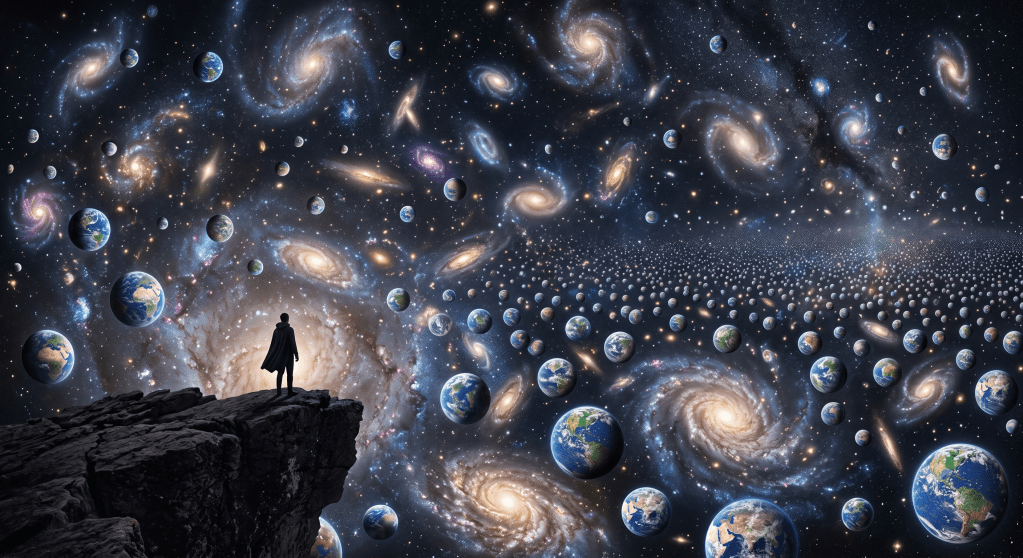
Presented by Claude for thequran.love — “The Glorious Quran and Science” — in the tradition of Zia H. Shah MD
Abstract
This essay develops, from two anchor verses of the Qur’an — Sūrat al-Ṭalāq 65:12 and Sūrat al-Shūrā 42:29 — a devotional and scholarly case that the Qur’anic cosmos is a universe bil-ḥaqq (in truth), plausibly teeming with life. Drawing on classical tafsīr (al-Ṭabarī, al-Zamakhsharī, al-Rāzī, al-Qurṭubī, Ibn Kathīr), on modern Muslim commentary (Muhammad Asad, Yusuf Ali, Maulana Muhammad Ali, al-Ṭabāṭabāʾī, Mufti Muhammad Shafiʿ), on the Arabic idiom by which “seven” (sabʿa) can signify indefinite plenitude, and on contemporary astronomy and astrobiology, it argues that 65:12 — read with the linguistic understanding that “seven earths” points toward innumerable earths — resonates with the modern finding that the universe may contain up to two trillion galaxies and billions of Earth-like worlds. It further argues that the word dābbah in 42:29, denoting corporeal moving creatures rather than spiritual beings, leaves open the existence of physical, possibly intelligent life on those other earths, while the verse’s closing clause — “He has the power to gather them together when He wills” — hints at a possible future meeting. Throughout, science–Qur’an convergences are framed as resonances and anticipations, deliberately distinguished from concordist “scientific miracle” apologetics of the Bucaille school. The essay synthesizes and culminates the author’s prior writings on the theme collected in the Extra Terrestrial Life category of thequran.love.
Read further in PDF file:



Leave a Reply