
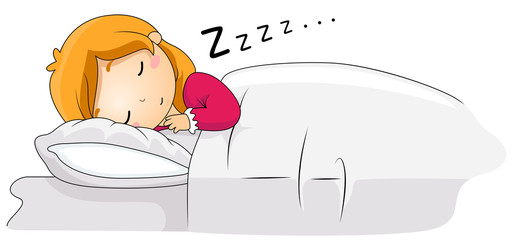

A study in classical and contemporary exegesis, with a metaphorical reading grounded in human biology and the science of sleep
Abstract
Qur’an 2:259 narrates the account of a man who passes by a town collapsed upon its roofs and wonders aloud how God could restore it to life. In response, God causes him to die for a hundred years, then revives him and asks how long he has tarried. “A day, or part of a day,” the man answers — whereupon he is shown his food and drink miraculously unspoiled, his donkey reduced to bones, and those bones reassembled and clothed in flesh before his eyes. This essay first surveys the classical exegetical tradition — al-Ṭabarī, al-Rāzī, al-Qurṭubī, and Ibn Kathīr — on the identity of the man, the location of the town, the moral status of his question, and the pedagogical architecture of the miracle. It then turns to contemporary voices, including Muhammad Asad’s parabolic reading, Sayyid Quṭb’s experiential epistemology, and the scientific-exegesis tradition. Finally, without claiming that the verse encodes modern science, the essay offers a metaphorical reading in which the episode becomes an archetype of the human sleep–wake cycle: the nightly “minor death” of Qur’an 39:42, the sleeper’s inability to perceive elapsed time, the body’s overnight repair and clearance of accumulated debris, and the morning reassembly of a coherent self. The verse, on this reading, is not merely about a resurrection that happened once to one man; it describes, in compressed and miraculous form, a resurrection rehearsed by every human being every night.
I. The Verse
Or [consider] such as the one who passed by a township, fallen into ruin upon its roofs. He said: “How shall God bring this to life after its death?” So God caused him to die for a hundred years, then raised him up. He said: “How long have you tarried?” He said: “I have tarried a day, or part of a day.” He said: “Rather, you have tarried a hundred years. Look at your food and your drink — they have not aged. And look at your donkey — and [this is] so that We may make you a sign for humankind. And look at the bones, how We raise them up, then clothe them with flesh.” So when it became clear to him, he said: “I know that God has power over all things.” — Qur’an 2:259
The verse sits at the center of a remarkable triptych in Sūrat al-Baqara. It is preceded (2:258) by the debate between Abraham and the tyrant who claimed the power of life and death, and followed (2:260) by Abraham’s own request: “My Lord, show me how You give life to the dead.” Three consecutive verses, three modes of knowing the same truth. The tyrant is answered by argument; the passerby is answered by experience; Abraham, who already believes, is answered by demonstration “so that my heart may be at rest.” The tradition read this sequence deliberately: rational proof, lived proof, and witnessed proof form an ascending ladder of certainty — what later Sufi and theological vocabulary would call ʿilm al-yaqīn (knowledge of certainty), ʿayn al-yaqīn (the eye of certainty), and ḥaqq al-yaqīn (the truth of certainty).
II. The Classical Commentaries
Who was the man, and what was the town?
The Qur’an, characteristically, names neither. Classical exegesis, drawing on reports from the Companions and Successors, filled the silence with several candidates. Al-Ṭabarī (d. 923) records the dominant view, traced to Ibn ʿAbbās, Qatāda, and others, that the man was ʿUzayr — the figure Muslim tradition associates with Ezra the scribe. A second strand, from Wahb ibn Munabbih, identifies him as the prophet Jeremiah (Irmiyā); a minority mentions al-Khiḍr. The town, in nearly all reports, is Jerusalem (Bayt al-Maqdis) after its devastation by Nebuchadnezzar — its roofs collapsed, its people slain or exiled, its scriptures scattered.
The Ezra identification carries deep resonance. In Jewish memory Ezra is the restorer of the Torah after the Babylonian exile; in the Muslim narrations, the man revived after a hundred years returns to his people and dictates the scripture from memory, becoming a living instrument of the very restoration he had doubted was possible. The town’s ruin and rebuilding thus mirror the man’s own death and revival: the passerby who asked how the city could live again becomes the answer to his own question.
The exegetes were nonetheless disciplined about this material. Al-Ṭabarī lists the reports and their chains without forcing a verdict, and later commentators frequently note that the lesson of the verse does not depend on the man’s name. The Qur’anic anonymity is itself exegetically significant: an unnamed man before an unnamed ruin universalizes the scene. He is anyone; the ruin is any ruin.
The moral status of the question
“How shall God bring this to life after its death?” — is this doubt, and if the man was a prophet, how could a prophet doubt? Fakhr al-Dīn al-Rāzī (d. 1210), in his Mafātīḥ al-Ghayb, devotes careful attention to this problem. His resolution turns on a distinction between denial (inkār) and wonder at the modality (istibʿād / taʿajjub). The man does not ask whether God can revive the dead; he asks how — the Arabic annā carrying the sense of “by what means, in what manner.” His question is the astonishment of a believer standing before a scale of destruction that exceeds imagination, not the challenge of a denier. Al-Rāzī observes that the divine response confirms this reading: God does not rebuke him, as deniers are rebuked elsewhere in the Qur’an, but instead honors the question with a personal, embodied answer. The question asked in wonder becomes the occasion of a sign “for humankind.”
This exegetical move matters pastorally as much as theologically. The tradition here distinguishes between the question that seeks to escape faith and the question that seeks to deepen it — and records God answering the latter not with censure but with curriculum.
The architecture of the miracle
The classical commentators were struck by the design of the demonstration, which they read as a deliberate pedagogical inversion. Consider what is preserved and what is destroyed:
The man’s food and drink — in the narrations, figs, grapes, and pressed juice or wine-must, among the most perishable things a traveler could carry — remain unspoiled after a century: lam yatasannah, “it has not aged,” a verb the philologists connected to sana (year), as though the provisions stood outside the years entirely. Meanwhile the donkey — bone and sinew, the durable beast — has crumbled to scattered remains. Al-Rāzī and al-Qurṭubī (d. 1273) draw out the lesson: the God who suspends decay in the fragile and permits it in the sturdy is demonstrating that corruption and preservation are not properties of matter but decrees upon it. Time is shown to be not an autonomous destroyer but an instrument in a hand.
Then comes the reversal of the donkey’s ruin, narrated in the verse’s most vivid clause: “Look at the bones, how We nunshizuhā” — a word the canonical readings transmit in two forms. Read with zāy (nunshizuhā), it means “We raise them up, fit them together, set each bone upon its joint”; read with rāʾ (nunshiruhā), “We bring them back to life.” The two readings together give the full sequence: assembly, then animation — the bones rising, articulating, and only then being “clothed with flesh” (naksūhā laḥman), a metaphor of clothing that the exegetes savored, flesh draped over the skeleton like a garment over a frame. Ibn Kathīr (d. 1373) presents the scene as witnessed in real time: the man watches his own mount reconstituted before his eyes, a private preview of the general resurrection.
The commentators also noticed the ordering of the imperatives. The man is directed first to his food (“look — unchanged”), then to his donkey (“look — destroyed and rebuilt”), and told that he himself is made “a sign for humankind.” He is simultaneously the observer of the miracle and its exhibit. In the narrations of al-Qurṭubī and others, he returns to his town an apparently young man while his son is now aged and his grandchildren grown — the sign walking among the people, a man younger than his own children.
“A day, or part of a day”
The exegetes noted the source of the man’s estimate: in several reports he died in the morning and was revived before sunset, so that the light of the sky honestly suggested to him that a single day had passed. His error is not foolishness; it is the best inference available to a consciousness that has been absent from time. The identical phrase occurs on the lips of the Sleepers of the Cave — “We have tarried a day, or part of a day” (18:19) — after three centuries of sleep, a parallel the tradition read as deliberate. Whoever is taken out of consciousness, whether by death or by sleep, loses the thread of duration entirely; a century and an afternoon feel the same from the inside. The classical commentators drew from this the eschatological lesson the Qur’an itself draws elsewhere (23:112–114; 30:55): on the Day of Resurrection, the dead will swear they lingered in their graves only an hour, an evening, a day. The whole of an interrupted existence collapses, in retrospect, into a moment.
III. Contemporary Commentaries
Modern exegesis has engaged the verse along several distinct lines.
Muhammad Asad (d. 1992), in The Message of the Qur’an, accepts the traditional association with Ezra and the ruins of Jerusalem but presses a parabolic reading: the episode, he suggests, may be understood as a vision granted to the man, and its deeper subject is the death and revival of a community — the apparently irreversible destruction of a nation and its improbable restoration. On this reading the “hundred years” spans the Babylonian exile, and the man’s revival figures the return and rebuilding. Asad is characteristically insistent that the miraculous surface of the narrative serves a universal spiritual point: no ruin, personal or collective, is beyond God’s power to restore.
Sayyid Quṭb (d. 1966), in Fī Ẓilāl al-Qur’ān, dwells on the epistemology of the triptych. The passerby possessed correct doctrine — he did not deny resurrection — yet doctrine held at arm’s length. God’s answer transforms propositional belief into lived certainty: the man does not merely learn that resurrection is possible; he undergoes it. Quṭb reads the verse as a statement about how conviction is actually formed in human beings — not by argument alone but by dhawq, taste, experience. The final confession, “I know that God has power over all things,” is grammatically identical to what the man could have said before, but existentially it is a different sentence, spoken now by a man who has been on the other side.
Abul Aʿlā Mawdūdī (d. 1979) takes the narrative as sober history and centers its function within Sūrat al-Baqara’s argument to the Children of Israel and to Muslims alike: resurrection is not an abstraction to be debated but a reality God has already demonstrated within history, and the community that carries revelation can itself die and be revived.
The scientific-exegesis (tafsīr ʿilmī) tradition, from Ṭanṭāwī Jawharī in the early twentieth century onward, was drawn to the verse’s physical details — the arrest of decay in the food, the century-long preservation, the staged reassembly of the skeleton — reading them alongside emerging knowledge of decomposition, preservation, and suspended animation. Later writers in this vein have connected the verse to phenomena ranging from cryopreservation to the relativity of experienced time. This tradition has also drawn principled criticism from within Islamic scholarship: the Qur’an, the critics note, is a book of guidance, not a science textbook in cipher, and tethering its verses to the science of any given decade risks discrediting the text when the science moves. The soundest contemporary approach — and the one adopted in the reading that follows — treats scientific resonance as reflection (tadabbur) rather than proof: the created world and the revealed word are read side by side, each illuminating the other, without claiming that the verse “predicted” the laboratory.
A final contemporary note: several modern readers have observed that the verse quietly dignifies empirical method. The man is not told to believe; he is told, three times, to look — unẓur — at his food, at his donkey, at the bones. Observation is the divinely appointed path from wonder to certainty. The verse ends not with “I believe” but with “I know” (aʿlamu).
IV. A Metaphorical Reading: The Verse as the Human Night
What follows is offered explicitly as metaphor — a tadabbur, a meditation on how the structure of this narrative maps, with startling fidelity, onto a biological event that every reader of the verse undergoes daily. The claim is not that Qur’an 2:259 is “about” sleep, nor that it encodes neurophysiology. The claim is gentler and, perhaps, more interesting: that the Qur’an elsewhere explicitly frames sleep as a minor death and waking as a minor resurrection, and that when the anatomy of 2:259 is laid over the anatomy of a night of human sleep, the correspondences are numerous enough to reward contemplation.
The Qur’anic warrant for the analogy
The bridge is built by the Qur’an itself. “God takes the souls at the time of their death, and those that have not died, in their sleep. He retains those for whom He has decreed death, and sends back the others until an appointed term” (39:42). And again: “It is He who takes you at night, and knows what you have earned by day; then He raises you up in it, that an appointed term may be fulfilled” (6:60). The Prophet’s own morning supplication makes the equation devotional: “Praise be to God who gave us life after He caused us to die, and to Him is the resurrection.” Sleep, in the Islamic imagination, is the “brother of death” — a nightly, merciful rehearsal of the grave and its opening. The man of 2:259 experienced once, at full scale, what the sleeper experiences nightly in miniature. Reading the verse through the night, then, is not an imposition on the text; it is following a path the revelation itself paves.
“How long have you tarried?” — the sleeper’s broken clock
The most precise correspondence is the man’s answer: a day, or part of a day. Human beings are, in waking life, respectable interval-timers; asleep, we are almost totally blind to duration. Consciousness is the medium in which subjective time is constructed, and when consciousness is suspended — in deep non-REM sleep, under general anesthesia, in coma — the internal clock does not run slow; it simply does not run. A person roused from three hours of slow-wave sleep and a person roused from twenty minutes of it will give similarly unreliable estimates; patients emerging from days of sedation routinely believe an afternoon has passed. This is also the substrate of paradoxical insomnia (sleep-state misperception), in which objectively recorded hours of sleep are experienced as almost none: the machinery that would have measured the interval was offline, and the mind, retrospectively, fills the gap with its best guess from ambient cues — exactly as the revived man reasons from the angle of the light. His estimate is not a failure of intelligence but an honest report from a consciousness that was absent while time continued without it. Every morning, each of us performs a small version of his calculation, reaching for a phone to be told, in effect, “rather, you have tarried longer than you think.”
The eschatological extension the classical exegetes drew — that the dead will experience the interval of the grave as an hour — thus rests on something every sleeper can verify from the inside: unexperienced time has no length. A hundred years without consciousness and a night without consciousness are, subjectively, the same size.
The ruined town — the waking brain at day’s end
“A township fallen into ruin upon its roofs” is an arresting image for what a day of wakefulness does to the brain. Waking neural activity is metabolically expensive and structurally consequential. Across sixteen hours of use, synaptic strength ratchets upward toward saturation — the synaptic homeostasis hypothesis frames wakefulness as a process of progressive potentiation that, unrenormalized, would exhaust the brain’s capacity to learn. Adenosine, the byproduct of cellular energy expenditure, accumulates as mounting “sleep pressure.” Metabolic waste — including β-amyloid and tau, the very proteins implicated in neurodegeneration — builds up in the interstitial spaces. Misfolded proteins accumulate; cellular repair is deferred. By nightfall, the city of the waking mind is, in a real biochemical sense, strewn with rubble: streets narrowed by debris, storehouses overfull, walls in need of repair. The exhausted person standing before their own depleted attention and frayed emotional regulation might well ask the passerby’s question: how can this possibly be brought back to life?
The night’s work — how God brings the city back to life
The answer, biologically, is that sleep is not absence but renovation — an active, exquisitely ordered demolition-and-reconstruction program that runs precisely when the resident is taken away:
The city is cleansed. During slow-wave sleep, the brain’s glymphatic system opens: the interstitial spaces widen substantially, and cerebrospinal fluid is driven in rhythmic waves through the tissue, flushing the day’s metabolic waste — amyloid, tau, lactate — out toward clearance. The rubble is carried from the streets, and this washing occurs only at scale while consciousness is suspended. The town can be rebuilt precisely because its inhabitant has been removed from it.
The bones are raised and clothed with flesh. The verse’s most cinematic image — bones assembled joint upon joint, then draped in flesh — is a strikingly apt figure for the anabolic program of deep sleep. The largest pulses of growth hormone in the entire twenty-four-hour day are released during early slow-wave sleep, driving tissue repair, muscle protein synthesis, and bone remodeling; in children, growth itself is concentrated in these hours. Wounds heal faster, immune memory consolidates (sleep after vaccination measurably strengthens antibody response), and the musculoskeletal microdamage of the day is knit up. Nightly, flesh is quite literally rebuilt upon bone while the owner of the body is elsewhere.
Memory is reassembled. The self that awakens must be the same self that slept — and this continuity is not passive storage but active nightly reconstruction. During slow-wave sleep the hippocampus replays the day’s experience to the cortex, consolidating fragile traces into durable memory; during REM, emotional memories are reprocessed and integrated, their affective charge softened. What the man witnesses in the donkey — scattered remains gathered, articulated, and re-animated into the same recognizable creature — the sleeper undergoes in the architecture of the self: the day’s scattered fragments are collected and reassembled into a person who wakes and says “I,” and means the same one.
The provisions are preserved. And here the verse’s strangest detail — perishables held unspoiled across the gap — finds its gentlest biological echo. Sleep is a state of programmed conservation: core temperature falls, metabolic rate drops, and in the deeper mammalian elaborations of the same physiology — torpor and hibernation — metabolism is suspended so profoundly that a ground squirrel’s tissues pass months without the decay that timescale would ordinarily impose. Medicine now borrows the principle deliberately: therapeutic hypothermia slows cellular deterioration in the injured brain, and organ-preservation science is, at bottom, the art of making tissue “not age” across an interval it could not otherwise survive. Decay, the verse and the physiology agree, is not an absolute; it is a rate — and the rate can be commanded. What is essential is held; what is meant to be rebuilt is rebuilt.
The clock that governs it all. None of this renovation is left to chance. It is scheduled by the suprachiasmatic nucleus — some twenty thousand neurons entrained by light — conducting melatonin, cortisol, temperature, and the pressure of adenosine in a circadian order as regular as the verse’s own structure of commands: look, and look, and look. The revived man reads the light of the sky to guess the hour; so does every cell in the human body, daily, through the same sun. And when the order is defied — in shift work, in jet lag, in the chronic short-sleeping of modern life — the ruined town is denied its reconstruction: waste accumulates, memory falters, glucose regulation and immunity degrade, and the epidemiology of insufficient sleep reads like a slow-motion version of the collapsed city. The metaphor carries its own ethics: the nightly death is not an inconvenience to be minimized but a mercy to be honored.
The sign we are made into
“So that We may make you a sign for humankind.” The man becomes a walking demonstration — younger than his son, a living argument. The metaphorical reading suggests that every human being carries a version of this office. We are, each of us, resurrected daily; we simply sleep through our own miracle and wake too accustomed to it to be astonished. The verse’s triple imperative — look at your food, look at your donkey, look at the bones — is an instruction the sleeper can obey each morning: look at what was preserved overnight, look at what was broken down, look at what has been rebuilt and clothed anew. The appropriate response is the one the man gives, and the one the Prophet’s morning prayer scripts: acknowledgment that the power which returned us was not our own.
V. Thematic Epilogue: The Nightly Rehearsal
Three verses stand together in Sūrat al-Baqara like three windows on one truth. Through the first, a tyrant is defeated by an argument about the sun. Through the third, the friend of God watches four birds return from four hills. And through the middle window — ours — an anonymous man sleeps a century in an afternoon and wakes to find that his lunch outlasted his skeleton’s beast of burden.
The classical tradition heard in this verse the promise of the general resurrection; the contemporary tradition heard the revival of ruined communities and the transformation of belief into knowledge. The metaphorical reading offered here does not replace either; it undergirds them with something closer than history and nearer than eschatology — the reader’s own body. For the deepest rhetorical genius of 2:259 may be this: the objection it answers (“how can this live again?”) is refuted not only by a miracle performed once upon one man, but by a mercy performed nightly upon everyone who has ever asked the question. The skeptic of resurrection is a creature who dies every night and rises every morning; who loses time absolutely and is returned to it; whose ruined city is swept, whose flesh is laid again upon bone, whose scattered self is regathered — all while he is absent, all without his help, all before breakfast.
Sleep, then, is not merely the metaphor’s vehicle; it is its argument. A phenomenon so ordinary that we spend a third of our lives inside it turns out to be a nightly enactment of the very thing the passerby thought impossible. And perhaps this is why the Qur’an insists on the vocabulary it chooses — God takes the soul at night and sends it back, causes us to die and raises us up in it — refusing to let sleep be small. The believer who internalizes this does not close their eyes at night the same way again. Each surrender to sleep becomes a rehearsal of the final surrender, undertaken in trust; each waking, a small standing-forth that promises a greater one; and the morning’s first sentence — praise be to the One who gave us life after causing us to die — becomes not a formula but a report of the news.
The man’s last words are the epilogue the verse writes for itself, and they will serve for ours: “I know that God has power over all things.” Between the evening and the morning, every human body quietly agrees.
Prepared as a reflective commentary. Classical positions are summarized from the tafsīr tradition of al-Ṭabarī, al-Rāzī, al-Qurṭubī, and Ibn Kathīr; contemporary positions from Muhammad Asad, Sayyid Quṭb, Abul Aʿlā Mawdūdī, and the tafsīr ʿilmī literature. The scientific material reflects mainstream sleep and circadian physiology — synaptic homeostasis, glymphatic clearance, sleep-dependent memory consolidation, slow-wave-sleep growth hormone secretion, and torpor biology — offered as metaphorical resonance, not as exegetical proof.





Leave a comment