

Presented by Claude
Abstract
This essay offers a Quranic commentary on Sūrat al-Ḥashr 59:18 (“O you who believe! Be careful of your duty to Allah, and let every soul consider what it has sent forward for the morrow…”), arguing that the verse presupposes libertarian free will as a brute fact of lived human experience. The contemporary denial of free will by prominent atheist scientists and philosophers is examined and found to be self-undermining and empirically over-extended. The Quranic worldview—with its structure of moral accountability, self-examination (muḥāsabat al-nafs), and eschatological reckoning—implicitly refutes deterministic illusionism. The research equips a publication-ready scholarly essay following Dr. Zia H. Shah’s fixed template: Arabic text with transliteration, six named English translations, five named classical mufassirūn, a comprehensive thematic body, and a thematic epilogue with explicit caveats distinguishing the Lahore Ahmadiyya reading from mainstream Sunni tafsīr.
- Q 59:18 commands every soul to examine “what it has sent forward for tomorrow”—a command unintelligible unless humans genuinely deliberate, choose, and bear responsibility; the classical mufassirūn read the verse precisely as the scriptural foundation of self-accounting (muḥāsabat al-nafs), anchored in ʿUmar ibn al-Khaṭṭāb’s “Hold yourselves accountable before you are held accountable.”
- A powerful coalition of contemporary thinkers—Sam Harris, Robert Sapolsky, Jerry Coyne, Daniel Wegner, Galen Strawson, Derk Pereboom, Sabine Hossenfelder and others—denies libertarian free will, but their positions are vulnerable to self-refutation (one cannot rationally “decide” to accept determinism if deciding is itself an illusion) and rest on a contested reading of the neuroscience (Libet) that has been overturned within neuroscience itself by Schurger’s stochastic-accumulator model (2012).
- The lived testimony of billions, the universality of moral and legal accountability across all cultures, the phenomenology of deliberation, and quantum indeterminacy (Eddington, Stapp) together support free will as a brute fact; the Quranic position—closest to the Lahore Ahmadiyya emphasis on real human moral agency—treats free will as the indispensable presupposition of the entire moral-eschatological order.
Key Findings
- Q 59:18 is structurally a verse about agency. Its central clause—wal-tanẓur nafsun mā qaddamat li-ghad (“let every soul look to what it has sent forward for tomorrow”)—was read by the classical commentators as a command to self-accounting and moral preparation for the Day of Judgment. A command presupposes a capacity to obey or disobey.
- The free-will deniers form a spectrum, not a monolith: hard determinists/incompatibilists (Sapolsky, Coyne), illusionists in the popular register (Harris, Wegner), hard incompatibilists (Pereboom), moral-responsibility skeptics (Galen Strawson, Bruce Waller), superdeterminists (Hossenfelder), and compatibilists who nonetheless reject libertarian free will (Dennett, Carroll). Their shared target is contra-causal/libertarian free will.
- The neuroscientific keystone has cracked. The Libet readiness-potential argument, long cited as empirical proof against free will, has been reinterpreted by Aaron Schurger and colleagues (2012) as an artifact of stochastic neural noise rather than a “decision” preceding consciousness.
- The defense rests on three pillars: the self-refutation of determinism, the universality of moral/legal accountability and the reactive attitudes (P.F. Strawson), and the phenomenology of deliberation—buttressed by the quantum-indeterminist opening (Eddington, Stapp) that Dr. Shah has previously developed on thequran.love.
- Islamic theology offers a calibrated middle path. Between the determinism of the Jabriyya and the absolute libertarianism of the Qadariyya/Muʿtazila lies the Ashʿarī doctrine of kasb (acquisition); the Lahore Ahmadiyya tradition of Maulana Muhammad Ali emphasizes genuine human moral responsibility.
Details
1. The Quranic Text and Six Translations
Arabic (Q 59:18): يَـٰٓأَيُّهَا ٱلَّذِينَ ءَامَنُوا۟ ٱتَّقُوا۟ ٱللَّهَ وَلْتَنظُرْ نَفْسٌ مَّا قَدَّمَتْ لِغَدٍ ۖ وَٱتَّقُوا۟ ٱللَّهَ ۚ إِنَّ ٱللَّهَ خَبِيرٌۢ بِمَا تَعْمَلُونَ
Transliteration: Yā ayyuhā alladhīna āmanū ittaqū l-Lāha wal-tanẓur nafsun mā qaddamat li-ghadin wa-ttaqū l-Lāha inna l-Lāha khabīrun bimā taʿmalūn.
- Sahih International: “O you who have believed, fear Allah. And let every soul look to what it has put forth for tomorrow – and fear Allah. Indeed, Allah is Acquainted with what you do.”
- Yusuf Ali: “O ye who believe! Fear Allah, and let every soul look to what (provision) He has sent forth for the morrow. Yea, fear Allah: for Allah is well-acquainted with (all) that ye do.”
- Pickthall: “O ye who believe! Observe your duty to Allah. And let every soul look to that which it sendeth on before for the morrow. And observe your duty to Allah! Lo! Allah is informed of what ye do.”
- Muhammad Asad: “O you who have attained to faith! Remain conscious of God; and let every human being look to what he sends ahead for the morrow! And [once again]: Remain conscious of God, for God is fully aware of all that you do.”
- Maududi (Sayyid Abul Aʿlā): “Believers, fear Allah and let every person look to what he sends forward for the morrow. Fear Allah; Allah is well aware of all that you do.”
- Maulana Muhammad Ali (Lahore Ahmadiyya): “O you who believe, keep your duty to Allah, and let every soul consider what it sends ahead for tomorrow, and keep your duty to Allah. Surely Allah is Aware of what you do.” Ahmadiyya
2. Classical Tafsīr on Q 59:18 and Muḥāsabat al-Nafs
The mufassirūn unanimously read “tomorrow” (ghad) as the Day of Resurrection, with the present worldly life as “today.” Maududi (Tafhīm al-Qurʾān) states: “‘For the morrow’: for the Hereafter. That is, this whole worldly life is ‘today’, whose ‘tomorrow’ is the Day of Resurrection,” adding that “every person has been appointed his own censor.” Alim + 3
Ibn Kathīr (Tafsīr al-Qurʾān al-ʿAẓīm) glosses the central clause: “hold yourselves accountable before you are recompensed, and contemplate what you have kept for yourselves of good deeds for the Day of your return,” titling the section “The Command to have Taqwā and to prepare for the Day of Resurrection.” He also affirms Allah’s complete knowledge of every deed, however great or small. Tafsīr al-Jalālayn explicitly renders “tomorrow” as “the Day of Resurrection.” Tanwīr al-Miqbās (attributed to Ibn ʿAbbās) reads: “let every soul…look to that which it sendeth on before for the morrow—to what it achieved for the Day of Judgement, for it will only find on the Day of Judgement that which it has performed in the life of the world.” QuranX + 6
For the five further named classical authorities, the substance of their readings is well attested though direct English quotations are largely unavailable (their works being mostly untranslated for this verse):
- al-Ṭabarī (Jāmiʿ al-bayān) records the early consensus that “what it has sent forward” denotes the deeds—good or evil—stored up for the Resurrection.
- al-Qurṭubī (al-Jāmiʿ li-aḥkām al-Qurʾān) notes the indefinite li-ghad (“a tomorrow”) magnifies the awesomeness of the Day, which Allah calls “tomorrow” because of its nearness and certainty.
- al-Rāzī (Mafātīḥ al-ghayb / al-Tafsīr al-Kabīr) is associated with explaining the double repetition of “fear Allah”—the first command relating to performing obligations and sending good deeds forward, the second to guarding against sin (or guarding the sincerity of deeds already done).
- al-Zamakhsharī (al-Kashshāf) makes the rhetorical point that the indefinite ghad emphasizes the magnitude of the coming day and reads the verse as a summons to scrutinize one’s deeds.
The classical link to self-accounting is anchored in the saying of ʿUmar ibn al-Khaṭṭāb: Ḥāsibū anfusakum qabla an tuḥāsabū wa-zinū anfusakum qabla an tūzanū — “Hold yourselves accountable before you are held accountable, and weigh yourselves before you are weighed, for the Reckoning will be easier upon you tomorrow if you hold yourselves accountable today” (recorded in Ibn Abī al-Dunyā, Muḥāsabat al-Nafs, no. 2). Ibn al-Qayyim declares muḥāsabat al-nafs a religious obligation, citing Q 59:18 as its proof; al-Ḥasan al-Baṣrī held that “you will never meet a believer except that he brings himself to account.” The hermeneutical point for this essay: every one of these readings presupposes that the human soul can deliberate, weigh, choose, send good or evil “ahead,” and be justly held to account—the entire architecture of the verse collapses under hard determinism. abuaminaelias
3. The Free-Will Deniers: A Comprehensive Survey
Sam Harris (Free Will, 2012) is the most prominent popular illusionist. His thesis: “Free will is an illusion. Our wills are simply not of our own making. Thoughts and intentions emerge from background causes of which we are unaware and over which we exert no conscious control. We do not have the freedom we think we have.” He argues free will “cannot be made conceptually coherent. Either our wills are determined by prior causes and we are not responsible for them, or they are the product of chance and we are not responsible for them.” He likens compatibilism to “saying: a puppet is free so long as it loves its strings.” His position is hard incompatibilist with respect to libertarian free will, though he frames it as the plain verdict of neuroscience and introspection.
Robert Sapolsky (Determined: A Science of Life Without Free Will, Penguin Press, October 17, 2023, 528 pp.; the publisher describes it as “a devastating scientific and philosophical case against free will”) gives the most comprehensive recent biological case. His core claim: “We are nothing more or less than the cumulative biological and environmental luck, over which we had no control, that has brought us to any moment.” His governing metaphor is “turtles all the way down”: “it is indeed turtles all the way down… It’s antecedent causes all the way down, not a floating turtle or causeless cause to be found.” He is classified as a hard incompatibilist. Critics (Kevin Mitchell at Wiring the Brain; Jessica Riskin in the New York Review of Books) note his framing covertly assumes dualism—treating any “self” that could cause action as a supernatural “ghost in the machine,” ruling out a naturalistic holistic agency from the outset.
Jerry Coyne, evolutionary biologist, defends physical determinism bluntly: “we have no ‘free will’: At a given moment, all living creatures, including ourselves, are constrained by their genes and environment to behave in only one way—and could not have behaved differently. We feel like we make choices, but we don’t.” He calls dualistic/libertarian free will “a complete illusion” that “must be true from the first principles of physics,” because the brain “is simply a computer made of meat.” He concedes the practical bind: “we have no choice but to pretend that we do choose.” Edge.org + 2
Daniel Wegner (The Illusion of Conscious Will, 2002) supplied the experimental-psychology arm. His “theory of apparent mental causation” holds that we experience conscious will when a thought (a) precedes the action (priority), (b) is consistent with it (consistency), and (c) appears exclusive of other causes (exclusivity)—but “conscious will is an indication that we think we have caused an action, not a revelation of the causal sequence by which the action was produced.” Conscious will, he argued, is “the mind’s best trick.” PubMedWikipedia
Benjamin Libet’s readiness-potential experiments (1983) are the empirical centerpiece of the deterministic case. The readiness potential (RP)—first discovered by Kornhuber and Deecke in 1965—begins roughly 550 ms before a self-initiated movement, while the conscious awareness of the urge to move emerges only about 200 ms before movement, leaving a lag of roughly 350 ms between RP onset and reported conscious intention. This was widely read as showing the brain “decides” before “we” do. Crucially, Libet himself preserved a role for conscious veto (“free won’t”): “the conscious function could still control the outcome; it can veto the act… Free will is therefore not excluded… it would not initiate a voluntary act but it could control performance of the act.”
The deterministic reading has been substantially undermined by Aaron Schurger, Jacobo D. Sitt, and Stanislas Dehaene, “An accumulator model for spontaneous neural activity prior to self-initiated movement,” PNAS 109(42):E2904–E2913 (2012). Their leaky stochastic-accumulator model shows that the RP need not reflect a preconscious “decision” at all: “when the imperative to produce a movement is weak, the precise moment at which the decision threshold is crossed leading to movement is largely determined by spontaneous subthreshold fluctuations in neuronal activity. Time locking to movement onset ensures that these fluctuations appear in the average as a gradual exponential-looking increase in neuronal activity.” On this reading the RP is the integration of random neural noise to a threshold, not evidence that “the brain decided first”—reopening the very question the standard Libet interpretation had appeared to close.
Derk Pereboom (Living Without Free Will, 2001) defends “hard incompatibilism”: we lack the free will required for moral responsibility whether or not determinism is true, because “absent agent causation, indeterministic causal histories are as threatening to moral responsibility as deterministic histories are.” His four-case manipulation argument moves by analogy from an overtly manipulated agent to an ordinarily determined one, arguing there is no principled moral difference between manipulation and ordinary causal determination. He proposes a “quarantine model” for criminal justice—a right to detain dangerous persons analogous to quarantining disease carriers—that does not require desert. PhilPapers
Galen Strawson advances the “Basic Argument” against ultimate moral responsibility: “Nothing can be causa sui—nothing can be the cause of itself… To be ultimately responsible for what you do, you have to be ultimately responsible for the way you are—at least in certain crucial mental respects. But you cannot be.” Therefore “it makes no difference whether determinism is true or false. We cannot be truly or ultimately morally responsible for our actions in either case,” and “no punishment or reward is ever ultimately just.” Wikipedia
Sean Carroll (The Big Picture, 2016) is a “poetic naturalist” and compatibilist: free will is a useful emergent description, real at the human level but not part of the fundamental “Core Theory.” He says: “I’m a compatibilist. I think determinism and free will are compatible. But as a physicist, we don’t even have determinism.” He rejects libertarian/contra-causal free will as illegitimate “strong emergence,” akin to qualia. He should not be classed with the hard determinists. Current Affairs
Daniel Dennett (Elbow Room, 1984; Freedom Evolves, 2003) is the leading compatibilist. He defends “the varieties of free will worth wanting”—the evolved capacities for rational self-control, deliberation, promise-keeping and moral competence that “are not threatened by advances in science but distinguished, explained, and justified.” But he explicitly rejects libertarian, contra-causal free will as neither real nor worth wanting. His long public debate with Harris turned on whether Harris demolishes a folk caricature of free will rather than the version sophisticated thinkers actually defend; Dennett judged Harris’s argument unsupported “by science or philosophical analysis.”
Sabine Hossenfelder, physicist, holds that “you probably have no free will, but don’t worry about it.” She argues from the deterministic (or merely random) character of physical law: “You have as much free will to make decisions as my computer.” She is associated with superdeterminism (a violation of statistical independence in quantum mechanics), while noting that superdeterminism “has nothing to do with free will” per se. Her candid summary: “It will take more than this to convince me that free will isn’t an illusion.” Blogger + 2
Bruce Waller (Against Moral Responsibility, 2011) argues that the system of moral responsibility, blame, and desert should be abolished even though humans possess a meaningful naturalized “freedom”; reward and punishment in the desert sense are unjustified.
Patricia and Paul Churchland (eliminative materialism) hold that folk-psychological categories—including the unified deliberating self presupposed by libertarian free will—may fail to map onto neuroscientific reality, undermining the dualist self that contra-causal freedom seems to require.
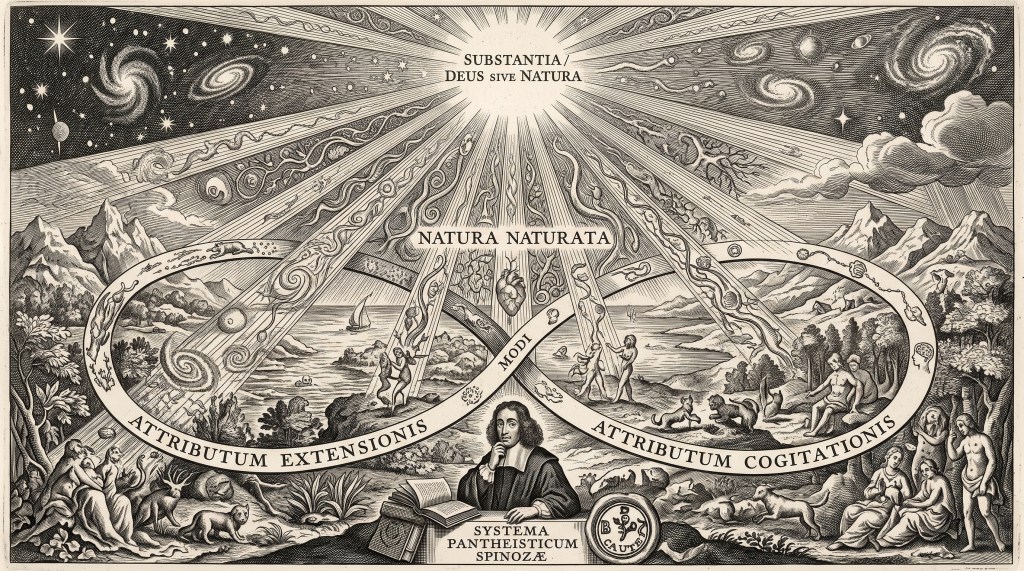
Honorable mentions: Stephen Hawking (The Grand Design, 2010) argued that because humans are biological machines, “free will is just an illusion.” Albert Einstein, a Spinozist, repeatedly denied free will: “I do not believe in free will. Schopenhauer’s words: ‘Man can do what he wants, but he cannot will what he wills,’ accompany me in all situations throughout my life,” and “human beings, in their thinking, feeling and acting are not free agents but are as causally bound as the stars in their motion.” Baruch Spinoza, the historical fountainhead, held that “men are mistaken in thinking themselves free; their opinion is made up of consciousness of their own actions, and ignorance of the causes by which they are conditioned.” Friedrich Nietzsche ridiculed “the desire for ‘freedom of the will’ in the superlative metaphysical sense”—the wish to be causa sui and “to pull oneself up into existence by the hair, out of the swamps of nothingness.”
4. The Defense of Free Will as a Brute Fact
The self-refutation argument. The denial of free will is pragmatically and epistemically incoherent: to weigh arguments, assent to a conclusion, and revise one’s beliefs is to exercise exactly the rational agency determinism denies. As critics put it, “the claim that free will is an illusion requires the possibility that minds have the freedom to assent to a logical argument, a freedom denied by the claim itself.” If determinism is true, one’s belief in determinism is merely the output of prior physical causes “wholly unrelated to reasons,” and so cannot claim rational warrant. Coyne concedes the bind in spite of himself: “we have no choice but to pretend that we do choose.” Uncommon Descent + 2
The argument from universal lived experience. Free will is a datum of the everyday testimony of billions: the felt reality of deliberating, weighing options, and authoring one’s acts. Even Coyne admits “I find it harder to convince atheists that they don’t have free will than to convince religious believers that God doesn’t exist.” The phenomenology of agency is, on this view, a brute fact no less secure than the existence of other minds or the reality of the external world.
The argument from moral and legal universality. Every human culture and legal system holds persons accountable, presupposing they could have done otherwise. P.F. Strawson’s “Freedom and Resentment” (1962) argues that our “reactive attitudes”—resentment, gratitude, indignation, forgiveness—are so deeply woven into interpersonal life that “no reasoning of any sort could lead us to abandon or suspend” them; the pessimist’s demand that we relinquish them in light of determinism is one we are neither psychologically nor rationally able to meet. RoutledgeAcademia.edu
The libertarian philosophers. Robert Kane (The Significance of Free Will, 1996) defends event-causal libertarianism grounded in “self-forming actions” and “ultimate responsibility”—”the originative control exercised by agents when it is ‘up to them’ which of a set of possible choices or actions will now occur, and up to no one and nothing else.” Peter van Inwagen (An Essay on Free Will, 1983) developed the Consequence Argument: if determinism is true, our acts are the consequences of the laws of nature and a past we did not control, so we cannot do otherwise; combined with the manifest reality of choice (the “Garden of Forking Paths”), this is read as an argument against determinism. Timothy O’Connor and Roderick Chisholm defend agent causation—the agent as an originating, uncaused cause of action. Alvin Plantinga’s Free Will Defense deploys libertarian freedom in theodicy.
The quantum-indeterminacy angle. Classical physics’ clockwork determinism is false; quantum mechanics introduces genuine indeterminism. Arthur Eddington (1932) was among the first to argue that quantum indeterminacy reopens the door to freedom that classical physics had closed. Henry Stapp (Lawrence Berkeley National Laboratory), in “Philosophy of Mind and the Problem of Free Will in the Light of Quantum Mechanics,” argues that “the principled quantum uncertainties entering at the microscopic levels of brain processing cannot be confined to the micro level, but percolate up to the macroscopic regime,” making room for conscious choice to be physically efficacious. Dr. Shah has developed this line on thequran.love in “Quantum Indeterminacy: How Quantum Mechanics Introduces True Indeterminism And Creates Free Will” (March 2025), drawing on wavefunction collapse, Heisenberg’s uncertainty principle, and Bell’s theorem against local hidden variables. Caveat: indeterminism alone yields randomness, not freedom; the libertarian needs indeterminism plus agent control. Eddington and Stapp therefore furnish a permissive condition—removing the classical obstacle—not a proof of freedom. thequran + 2
5. Islamic Theological Context: Qadar and Kasb
Islamic theology debated free will from the late 7th century, splitting between the Jabriyya (determinists, who held that humans are compelled “like a feather at the mercy of the wind”—rejected by Sunnis for nullifying moral responsibility and the locus of accountability) and the Qadariyya/Muʿtazila (libertarians, who held that humans create their own acts so that God’s justice in reward and punishment is preserved, and that God “has no power over human actions” in the sense of creating evil deeds). The dominant Sunni schools (Ashʿarī and Māturīdī) charted a middle course through the doctrine of kasb (acquisition): God creates the act, but the human “acquires” it by will and intention, thereby bearing responsibility. As Dr. Shah’s own corpus summarizes (in “Essence of Islam in Sunni Tradition”): “God creates the act, and the human being, by exercising will and intention, ‘acquires’ the act and its moral responsibility.” Al-Ghazālī’s occasionalism (God as the sole real cause of every event) intensifies this tension, since it must reconcile divine sole-causation with genuine human accountability—a theme Dr. Shah engages in his occasionalism work. Islam21c + 2
Numerous Quranic verses establish real human moral choice, complementing Q 59:18: Q 91:7–10 (the soul “inspired with its wrong and its right”—”he is indeed successful who causes it to grow, and he indeed fails who corrupts it”); Q 76:3 (“Surely We have shown him the way; he may be thankful or unthankful”); Q 18:29 (“let him who will, believe, and let him who will, disbelieve”); Q 13:11 (“Allah does not change the condition of a people until they change their own condition”); and Q 41:46 (“whoever does good, it is for his own soul; and whoever does evil, it is against it”).
The Lahore Ahmadiyya tradition of Maulana Muhammad Ali emphasizes genuine human moral responsibility and the efficacy of human effort, reading the Quran’s predestination language as referring to God’s foreknowledge and the laws (sunan) governing creation rather than as a negation of human choice. This stands in tension with strict Ashʿarī kasb, which subordinates human power so far that critics regard “acquisition” as a distinction without a real difference.
6. The thequran.love Corpus (Primary Source)
This essay builds on and cross-references Dr. Shah’s prior work on thequran.love:
- “Quantum Indeterminacy: How Quantum Mechanics Introduces True Indeterminism And Creates Free Will” (March 11, 2025) — marshals wavefunction collapse, the Heisenberg uncertainty principle, and Bell’s theorem against classical determinism, explicitly tying quantum indeterminacy to the space for free will.
- “Omniscience, Relativity, and Quantum Mechanics: An Islamic Perspective” (September 3, 2025) — reconciles divine foreknowledge with human freedom via Al-Ghazālī and Ibn Taymiyyah, alongside Augustine’s “eternal present” and Maimonides.
- “Essence of Islam in Sunni Tradition: A Theological and Philosophical Analysis” (March 5, 2025) — surveys the Jabriyya–Qadariyya–Ashʿarī spectrum and the doctrine of kasb.
- “The Informational Architecture of Divine Justice: A Multidisciplinary Commentary on Quran 21:94 and the Four Books Thesis of Dr. Zia H. Shah” (May 4, 2026) — develops human volition as a “quantum choice” inscribed into the cosmic record.
- The companion essay “Free Will and Predestination (Qadar) in the Qur’an and Islamic Theology” on The Muslim Times.






Leave a comment