

Presented with the help of Z.AI
Abstract This commentary provides a comprehensive scientific, philosophical, and theological exegesis of Quran 56:57-74 (Surah Al-Waqi’ah). The passage serves as a profound teleological and cosmological invitation, urging humanity to contemplate the origins of life, the cycles of nature, and the physics of the cosmos as signs (ayat) of the Divine. By dissecting the text through multiple lenses, this commentary explores the intricate relationship between ontological contingency and divine necessity. A dedicated segment presents an unapologetic cosmological and teleological argument, navigating from the brute fact of existence (“why there is something rather than nothing”) through the Big Bang, cosmological fine-tuning, and the concept of guided evolution. Ultimately, the commentary reveals how these verses synthesize physical reality with metaphysical purpose, culminating in an imperative for transcendental worship.
Exegesis of Quran 56:57-74
The Ontology of Human Creation (Verses 57-59)
Arabic: نَحْنُ خَلَقْنَاكُمْ فَلَوْلَا تُصَدِّقُونَ (٥٧) أَفَرَأَيْتُم مَّا تُمْنُونَ (٥٨) أَأَنتُمْ تَخْلُقُونَهُ أَمْ نَحْنُ الْخَالِقُونَ (٥٩)
Translations:
- Sahih International: We have created you, so why do you not believe? Have you seen that which you emit? Is it you who creates it, or are We the Creator?
- Abdel Haleem: It was We who created you: will you not believe in Us? Have you thought about the semen you discharge? did you create it, or did We?
- Yusuf Ali: It is We Who have created you: why will ye not witness? See ye the seed which ye emit? Is it ye who create it, or are We the Creators?
- Pickthall: We created you. Will ye then admit the truth? Have ye seen that which ye emit? Do ye create it or are We the Creator?
- Muhammad Sarwar: We have created you. Why do you not believe then? Have you seen what you emit (semen)? Do you create it or do We create it?
- Clear Quran (Khattab): We created you, so will you not believe? Have you considered the ˹semen˺ you emit— is it you who create it, or are We the Creator?
Commentary: The passage opens with a direct challenge to human complacency, juxtaposing the fact of existence with the denial of its Source. Theologically, it establishes God as the absolute Creator (Al-Khaliq) and humanity as the created (the contingent). Philosophically, this is an inquiry into efficient causality. Humans are reminded of their biological origins—the gametes they emit—to dismantle the illusion of existential autonomy. Scientifically, the verses point toward the marvel of reproductive biology. The transition from a microscopic cellular fusion to a fully integrated, conscious human being is presented not as a blind mechanistic accident, but as a divinely orchestrated process. The rhetorical question, “Is it you who creates it, or are We the Creator?” shifts the focus from the mechanism of biology to the agency behind the mechanics.
Death, Resurrection, and the Cycle of Creation (Verses 60-62)
Arabic: نَحْنُ قَدَّرْنَا بَيْنَكُمُ الْمَوْتَ وَمَا نَحْنُ بِمَسْبُوقِينَ (٦٠) عَلَىٰ أَن نُّبَدِّلَ أَمْثَالَكُمْ وَنُنشِئَكُمْ فِي مَا لَا تَعْلَمُونَ (٦١) وَلَقَدْ عَلِمْتُمُ النَّشْأَةَ الْأُولَىٰ فَلَوْلَا تَذَكَّرُونَ (٦٢)
Translations:
- Sahih International: We have decreed death among you, and We are not to be outdone. In that We will change your likenesses and create you in that which you do not know. And you have already known the first creation, so will you not remember?
- Abdel Haleem: We have decreed death among you. Nothing can prevent Us from replacing you with others like you, and recreating you in a way you know nothing about. You know about the first creation: will you not take heed?
- Yusuf Ali: We have decreed Death to be your common lot: and We are not to be frustrated from changing your Forms and creating you (again) in (forms) that ye know not. And ye certainly know already the first form of creation: why then do ye not celebrate His praises?
- Pickthall: We mete out death among you, and We are not to be outrun, that We may transfigure you and make you what ye know not. And verily ye know the first creation. Why, then, do ye not reflect?
- Muhammad Sarwar: We have destined death for you and no one can escape it. We can change your form and recreate you in a way that you do not know. You certainly knew the first creation. Why do you not take heed?
- Clear Quran (Khattab): We have ordained death among you, and We are never incapable of replacing you with others like you, and recreating you ˹anew˺ in a way you know not. And you already know the first creation. Will you not then be mindful?
Commentary: Here, the Quran introduces entropy and mortality. Theologically, death is not a defeat but a decree (qadar), a transition orchestrated by the same Will that initiated life. The claim “We are not to be outdone” asserts divine omnipotence over the dissolution of the biological form. The promise to “change your likenesses” points to the eschatological reality of the resurrection. Philosophically, it addresses the problem of continuous identity. If God can orchestrate the “first creation” from base matter, the reconstitution of the form in the Hereafter is a logical and ontological inevitability. If the ex nihilo (out of nothing) is possible, the ex vetere (out of the old) is trivial.
The Epistemology of Agriculture and Providence (Verses 63-67)
Arabic: أَفَرَأَيْتُم مَّا تَحْرُثُونَ (٦٣) أَأَنتُمْ تَزْرَعُونَهُ أَمْ نَحْنُ الزَّارِعُونَ (٦٤) لَوْ نَشَاءُ لَجَعَلْنَاهُ حُطَامًا فَظَلْتُمْ تَفَكَّهُونَ (٦٥) إِنَّا لَمُغْرَمُونَ (٦٦) بَلْ نَحْنُ مَحْرُومُونَ (٦٧)
Translations:
- Sahih International: Have you seen what you sow? Is it you who makes it grow, or are We the grower? If We willed, We could make it dry debris, and you would be left in wonder, saying, “Indeed, we are in debt; rather, we have been deprived.”
- Abdel Haleem: Have you thought about what you sow in the ground? Is it you who make it grow, or We? If We wished, We could turn it into chaff and leave you to lament, ‘We are ruined! We are robbed!’
- Yusuf Ali: See ye the seed which ye sow in the ground? Is it ye that cause it to grow, or are We the Cause? Were it Our Will, We could crumble it to dry powder, and ye would be left in wonderment, (Saying) “We are indeed left with debts (and nothing)”: “We are indeed deprived (of our fruits)!”
- Pickthall: Have ye seen that which ye cultivate? Is it ye who foster it, or are We the Fosterer? If We would, We could make it chaff, then would ye cease not to exclaim: Lo! we are laden with debt! Nay, but we are deprived!
- Muhammad Sarwar: Have you seen what you sow? Do you make it grow or do We make it grow? We could make it dry pieces and you would be surprised and say, “We are lost.” “Rather, we are deprived.”
- Clear Quran (Khattab): Have you considered the seeds you sow— is it you who make it grow, or We? Had it been Our Will, We could have made it ˹harvest˺ dry and broken, leaving you ˹in shock˺ to say, “We have suffered ˹total˺ loss! In fact, we are ˹completely˺ deprived.”
Commentary: Moving from human biology to ecology, the text invokes the agricultural cycle. Scientifically, this touches upon photosynthesis, soil chemistry, and the hydrological cycle. Yet, the Quran demands that the reader look past the biochemical machinery to the metaphysical sustainer of that machinery. The verses highlight human vulnerability. Humans can plant the seed, irrigate the soil, and harvest the wheat, but they cannot compel the seed to sprout. The power of growth belongs to God. The threat of making the harvest “dry debris” reflects the fragility of the food web and the precise climatic conditions required to sustain biological networks.
The Hydrological Cycle and Divine Mercy (Verses 68-70)
Arabic: أَفَرَأَيْتُمُ الْمَاءَ الَّذِي تَشْرَبُونَ (٦٨) أَأَنتُمْ أَنزَلْتُمُوهُ مِنَ الْمُزْنِ أَمْ نَحْنُ الْمُنزِلُونَ (٦٩) لَوْ نَشَاءُ جَعَلْنَاهُ أُجَاجًا فَلَوْلَا تَشْكُرُونَ (٧٠)
Translations:
- Sahih International: Have you seen the water you drink? Is it you who brought it down from the clouds, or is it We who bring it down? If We willed, We could make it bitter, so why are you not grateful?
- Abdel Haleem: Have you thought about the water you drink? Did you send it down from the clouds or did We? If We pleased, We could make it bitter. Why are you not thankful?
- Yusuf Ali: See ye the water which ye drink? Do ye bring it down (in rain) from the clouds or do We? Were it Our Will, We could make it salt (and unpalatable): then why do ye not give thanks?
- Pickthall: Have ye observed the water which ye drink? Is it ye who shed it from the clouds, or are We the Shedder? If We willed We could make it bitter. Why then, give ye not thanks?
- Muhammad Sarwar: Have you seen the water you drink? Do you send it down from the clouds or do We send it? We could have made it bitter. Why then do you not give thanks?
- Clear Quran (Khattab): Have you considered the water you drink? Is it you who send it down from the clouds, or is it We Who send it? Had it been Our Will, We could have made it bitter. Why, then, are you not grateful?
Commentary: This passage highlights the water cycle, a fundamental mechanism of Earth’s biosphere. The distillation of seawater into fresh, potable water via evaporation and precipitation is a planetary engineering marvel. Scientifically, it underscores the precise thermodynamic conditions of Earth. Theologically, the sweetness of water is a sign of divine mercy. The capacity of water—which could chemically be a toxic or unpalatable solvent under slightly different physical constants—to sustain life is framed as a deliberate grace rather than a cosmic accident.
Thermodynamics, Fire, and Transcendence (Verses 71-74)
Arabic: أَفَرَأَيْتُمُ النَّارَ الَّتِي تُورُونَ (٧١) أَأَنتُمْ أَنشَأْتُمْ شَجَرَتَهَا أَمْ نَحْنُ الْمُنشِئُونَ (٧٢) نَحْنُ جَعَلْنَاهَا تَذْكِرَةً وَمَتَاعًا لِّلْمُقْوِينَ (٧٣) فَسَبِّحْ بِاسْمِ رَبِّكَ الْعَظِيمِ (٧٤)
Translations:
- Sahih International: Have you seen the fire you kindle? Is it you who produced its tree, or are We the producer? We have made it a reminder and a provision for the travelers. So exalt the name of your Lord, the Most Great.
- Abdel Haleem: Have you thought about the fire you kindle? Did you make its tree grow or did We? We made it a reminder and a benefit for travellers. So [Prophet] glorify the name of your Lord, the Supreme.
- Yusuf Ali: See ye the Fire which ye kindle? Is it ye who grow the tree which feeds the fire, or do We grow it? We have made it a memorial (of Our handiwork), and an article of comfort and convenience for the denizens of deserts. Then glorify with praises the name of thy Lord, the Supreme!
- Pickthall: Have ye observed the fire which ye strike out? Was it ye who made the tree thereof to grow, or were We the grower? We, only We, appointed it a memorial and a boon for the wanderers, Therefor (O Muhammad), praise the name of thy Lord, the Tremendous.
- Muhammad Sarwar: Have you seen the fire which you strike? Do you produce its tree or do We produce it? We have made it a reminder and a benefit for the travelers. Glorify the Name of your Lord, the Great One.
- Clear Quran (Khattab): Have you considered the fire you kindle? Is it you who produced its tree, or is it We Who produced it? We have made it ˹as˺ a reminder and a benefit for all travellers. So glorify the Name of your Lord, the Most Great.
Commentary: The commentary turns to combustion and energy. The “tree” refers to the wood used for fire, which stores solar energy through photosynthesis. Releasing this energy through fire is one of humanity’s earliest scientific discoveries, catalyzing civilization. Scientifically, this represents the harnessing of thermodynamic energy. Theologically, fire is a “reminder”—a microcosm of the Hellfire—and a “provision” for warmth and industry. The passage culminates in verse 74 with a imperative doxology: the rational conclusion of observing biology, ecology, and physics is the glorification of the Creator.
The Cosmological and Teleological Imperative
To genuinely engage with these verses is to recognize that they are not merely poetic musings; they constitute a rigorous cosmological and teleological argument. The Quran demands that the reader look at the physical world and logically infer the necessity of a Transcendent Creator. This argument can be systematically traced from the foundational question of existence to the emergence of biological complexity.
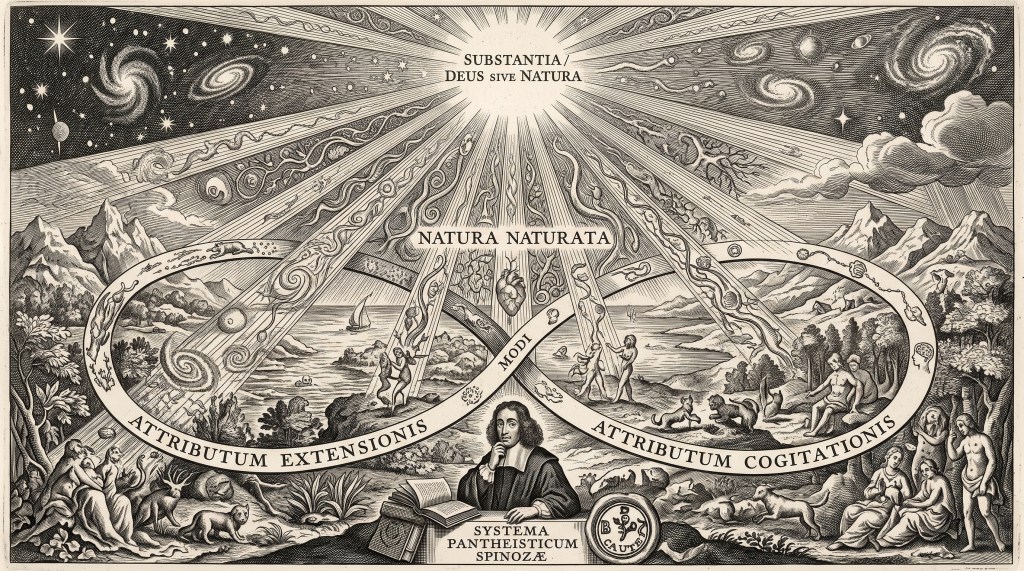
1. Why There is Something Rather Than Nothing The most fundamental datum of human experience is that something exists. The universe is not a void. Ontologically, the physical cosmos is contingent; it is composed of space, time, and matter, all of which are subject to change and decay. A contingent entity cannot be the cause of its own existence. If we trace the chain of causality backward, we are faced with an infinite regress, which is logically absurd, or we arrive at a Necessary Existent—an uncaused, non-contingent reality that exists by the sheer necessity of its own nature. This Necessary Existent, timeless and immaterial, is what the Quran calls Allah. The existence of “something” rather than absolute “nothing” demands an ontological ground outside the physical matrix of the universe.
2. The Big Bang and Cosmic Genesis Modern cosmology, specifically the Standard Big Bang Model, has empirically validated the doctrine of creatio ex nihilo. The universe is not eternally static; it had an absolute beginning. The expansion of the cosmos, the Cosmic Microwave Background radiation, and the abundance of light elements all point to a singularity roughly 13.8 billion years ago. At this singularity, space, time, and matter erupted into existence. Since the physical universe began to exist, it requires a cause outside of space, time, and matter. This aligns unapologetically with the Quranic assertion: “We have created you” (56:57). The Big Bang is not an alternative to divine creation; it is the physical signature of the divine command, Kun (“Be”).
3. The Fine-Tuning of the Cosmos If the universe’s inception requires a Creator, its subsequent order requires a Designer. Modern physics has revealed that the universe is governed by a set of physical constants (the strength of gravity, the cosmological constant, the strong and weak nuclear forces, the mass of the electron). These constants are delicately balanced on a razor’s edge. If any of these parameters were altered by even a microscopic fraction, stars would not form, carbon could not be synthesized, and the universe would be a sterile void of hydrogen or a collapsed black hole. This “fine-tuning” cannot be attributed to physical necessity (the constants could logically be otherwise) nor to mere chance (the probabilities are astronomically infinitesimal). When the Quran asks, “Is it you who brought it down from the clouds, or is it We?” (56:69), it is extending this principle to the terrestrial water cycle. The Earth’s precise atmospheric thermodynamics, which allow for the distillation and distribution of water, are a localized manifestation of the cosmic fine-tuning that sustains life.
4. Guided Evolution The transition from the cosmos to biology does not abandon the necessity of divine agency. The Quranic reflection on human origins—”Have you seen that which you emit? Is it you who creates it, or are We the Creator?” (56:58-59)—resonates deeply with the modern understanding of evolutionary biology. The theory of unguided evolution posits that random mutation and natural selection are sufficient to explain the diversity of life. However, a theistic and unapologetic reading of the cosmos insists that evolution itself is a guided, teleological process.
The genetic code is an information-rich system. Information, as an ontological reality, is fundamentally mental rather than material. The injection of novel, functional genetic information required to traverse the staggering biological hierarchies—from single-celled organisms to the complex neurobiology of human consciousness—cannot be adequately explained by blind, unguided material processes. Mutations may be stochastic in their immediate occurrence, but the environment in which they are selected, the laws of biochemistry that govern them, and the trajectory toward consciousness and moral agency are divinely superintended. God is the author of the evolutionary algorithm. The “first creation” (56:62) is not a blind collision of atoms, but a purposeful unfolding of life, guided by the same Necessary Existent who initiated the Big Bang.
Thematic Epilogue: The Convergence of Mechanism and Meaning
In Surah Al-Waqi’ah (56:57-74), the Quran constructs a seamless tapestry where the threads of science, philosophy, and theology are inextricably woven. The passage refuses the modern fallacy that scientific explanation precludes theological meaning. To explain how a seed grows, how rain forms, or how fire burns does not answer the question of why these phenomena exist, why they obey rational laws, and why they sustain human life.
Science provides the mechanics of the cosmos; philosophy provides the logical necessity of a First Cause; theology provides the personal context of a Sustainer. The Quranic interrogation—repeatedly asking, “Is it you, or are We?”—forces the human intellect to break through the veil of secondary causes. The water cycle, the growth of plants, and the kindling of fire are not blind, autonomous processes. They are divinely sustained phenomena, fine-tuned from the first moments of the Big Bang to serve as an arena for human existence and divine revelation.
Ultimately, these verses reveal that the physical universe is a liturgy. The rotation of electrons, the distillation of rain, and the complexity of DNA are all acts of worship, unconsciously obeying the divine decree. The only entity in the cosmos capable of rebelling against this order is the human being. Therefore, the Quranic journey through cosmology and biology culminates in a singular, unapologetic imperative: “So exalt the name of your Lord, the Most Great” (56:74). To study the universe with intellectual honesty is inevitably to kneel before its Creator.



Leave a comment