
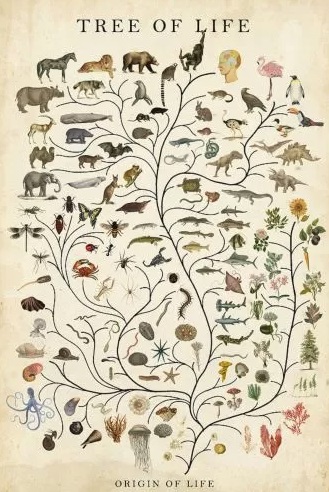
Epigraph
كَيْفَ تَكْفُرُونَ بِاللَّهِ وَكُنتُمْ أَمْوَاتًا فَأَحْيَاكُمْ ۖ ثُمَّ يُمِيتُكُمْ ثُمَّ يُحْيِيكُمْ ثُمَّ إِلَيْهِ تُرْجَعُونَ
How can you ignore God when you were lifeless and He gave you life, when He will cause you to die, then resurrect you to be returned to Him. (Al Quran 2:28)
قَالُوا أَءِذَا مِتْنَا وَكُنَّا تُرَابًا وَعِظَامًا أَءِنَّا لَمَبْعُوثُونَ
“They said, ‘What! When we are dead and become dust and bones, would we surely be resurrected?’” (Al Quran 23:82)
Presented by Gemini
Rebuilding the Soul From Scattered Dust
Abstract
This investigation analyzes the Quranic response to the materialist and skeptical arguments against bodily resurrection and the continuation of consciousness after physical death. Historically and in modern secular discourse, skeptics argue that the decomposition of the human body into inert “dust and bones” renders resurrection physically and logically impossible. The Quranic rejoinder presents a logically compelling a fortiori argument: the Divine Power that originated life and consciousness from non-existence or non-conscious materials is inherently capable of recreating it.
This study presents a comprehensive analysis of the term turab (dust) across its 17 distinct occurrences in the Quranic corpus, highlighting a precise mathematical and linguistic concordance that mirrors the stages of human creation. Furthermore, by contextualizing this theological framework within the modern philosophy of mind—specifically focusing on David Chalmers’ “Hard Problem of Consciousness” and Frank Jackson’s “Knowledge Argument”—this report demonstrates that skeptical denials of the afterlife commit a severe epistemic fallacy. Because materialist physicalism cannot explain the ontological origin of subjective experience (qualia) from inert matter in the first instance, the dogmatic denial of its re-emergence under Divine command represents an argument from ignorance.
Introduction: The Materialist Dilemma of Inertia and Decay
The denial of bodily resurrection and the subsequent afterlife is historically rooted in empirical reductionism. Both the ancient contemporaries of the Prophet Muhammad and modern secular materialists base their skepticism on the observable finality of biological decay. To the naked eye, the dissolution of the human body into dry soil, dust, and fragmented bones represents the absolute termination of personal identity and conscious existence. This objection is captured repeatedly within the Quranic narrative, reflecting the perennial nature of this skeptical challenge.
For instance, in Surah Al-Mu’minun, the skeptics’ query is framed around the perceived impossibility of reversing physical decomposition:
قَالُوا أَءِذَا مِتْنَا وَكُنَّا تُرَابًا وَعِظَامًا أَءِنَّا لَمَبْعُوثُونَ
“They said, ‘What! When we are dead and become dust and bones, would we surely be resurrected?’” (Al Quran 23:82)
This rhetorical questioning is not merely an expression of curiosity but a dogmatic assertion of impossibility based on a limited, sensory-bound worldview. The skeptics argue that once the physical substrate of the human body—composed of highly organized tissues—is reduced to crumbling particles, the structural and functional continuity of the individual is permanently severed.
A similar formulation of this skeptical challenge appears in Surah Al-Isra, where the materialists question the possibility of a “new creation” emerging from the ashes of the old:
وَقَالُوا أَئِذَا كُنَّا عِظَامًا وَرُفَاتًا أَئِنَّا لَمَبْعُوثُونَ خَلْقًا جَدِيدًا
“And they say, ‘When we are reduced to bones and crumbled particles, will we really be raised as a new creation?’”
Here, the use of the term rufata (crumbled particles or ashes) emphasizes the extreme state of disintegration. The objection assumes that life and consciousness are purely accidental, emergent properties of a specific physical arrangement of matter. Consequently, once that arrangement is shattered and scattered into the environment, any claim of its restoration is viewed as absurd.
The climax of this confrontational skepticism is illustrated in Surah Ya-Sin, which classical commentators note was revealed in response to a specific historical incident where an interlocutor picked up a decaying bone, crushed it into dust, scattered it into the wind, and mockingly asked who could possibly revive it :
وَضَرَبَ لَنَا مَثَلًا وَنَسِيَ خَلْقَهُ قَالَ مَنْ يُحْيِي الْعِظَامَ وَهِيَ رَمِيمٌ
“And he presents for Us an example and forgets his [own] creation. He says, ‘Who will give life to bones while they are disintegrated?’” (Al Quran 36:78)
The verse identifies a profound cognitive dissonance in the skeptic’s paradigm: the individual attempts to construct a logical limitation for Divine capability (daraba lana mathalan) while completely ignoring the mystery of their own primordial generation (nasiya khalqahu). This blind spot forms the basis of the Quranic counter-argument.
Exegetical Taxonomy of Turab: Origin vs. Dissolution
To fully comprehend the Quranic framework of resurrection, one must analyze the semantic and linguistic properties of the word turab (dust/soil). The triliteral root t-r-b (ت ر ب) occurs 22 times in the Quran across four derived forms, with the noun turab (تُرَاب) appearing exactly 17 times. This specific noun is deployed in two primary theological contexts: first, as a descriptor of the primordial, humble material from which human life was originated; and second, as a descriptor of the final, decayed state of human life before its ultimate restoration.
The following table presents a highly structured linguistic taxonomy of all 17 occurrences of the noun turab in the Quran, detailing the surah, ayah, exact Arabic text segment containing the word, and its theological or metaphorical categorization :
| Number | Surah & Ayah | Arabic Excerpt containing Turab | English Translation | Primary Semantic Categorization |
|---|---|---|---|---|
| 1 | Al-Baqarah (2:264) | فَمَثَلُهُ كَمَثَلِ صَفْوَانٍ عَلَيْهِ تُرَابٌ | “…his likeness is that of a smooth rock upon which is dust…” | Metaphorical (Spiritual Nullity of Charity) |
| 2 | Ali ‘Imran (3:59) | خَلَقَهُ مِنْ تُرَابٍ ثُمَّ قَالَ لَهُ كُنْ فَيَكُونُ | “…He created him from dust, then said to him, ‘Be,’ and he was.” | Primordial Human Origin (Creation of Adam) |
| 3 | Al-Ra’d (13:5) | أَإِذَا كُنَّا تُرَابًا أَإِنَّا لَفِي خَلْقٍ جَدِيدٍ | “When we are dust, will we indeed be in a new creation?” | Skeptical Objection to Bodily Resurrection |
| 4 | Al-Nahl (16:59) | أَيُمْسِكُهُ عَلَىٰ هُونٍ أَمْ يَدُسُّهُ فِي التُّرَابِ | “…or bury it in the dust?” | Social Critique (Pre-Islamic Female Infanticide) |
| 5 | Al-Kahf (18:37) | أَكَفَرْتَ بِالَّذِي خَلَقَكَ مِنْ تُرَابٍ | “Do you disbelieve in He who created you from dust…?” | Origin of Individual Man (Warning against Arrogance) |
| 6 | Al-Hajj (22:5) | فَإِنَّا خَلَقْنَاكُمْ مِنْ تُرَابٍ ثُمَّ مِنْ نُطْفَةٍ | “…We created you from dust, then from a sperm-drop…” | Theological Proof of Resurrection via Biology |
| 7 | Al-Mu’minun (23:35) | أَنَّكُمْ إِذَا مِتُّمْ وَكُنْتُمْ تُرَابًا وَعِظَامًا | “…that when you are dead and have become dust and bones…” | Skeptical Materialist Objection to Resurrection |
| 8 | Al-Mu’minun (23:82) | أَإِذَا مِتْنَا وَكُنَّا تُرَابًا وَعِظَامًا | “When we are dead and become dust and bones…” | Skeptical Materialist Objection Repeated |
| 9 | Al-Naml (27:67) | أَإِذَا كُنَّا تُرَابًا وَآبَاؤُنَا | “When we are dust and our forefathers…” | Skeptical Materialist Objection (Intergenerational) |
| 10 | Al-Rum (30:20) | أَنْ خَلَقَكُمْ مِنْ تُرَابٍ ثُمَّ إِذَا أَنْتُمْ بَشَرٌ | “…that He created you from dust; then, suddenly you are humans…” | Cosmic Sign of Divine Power & Human Dispersal |
| 11 | Fatir (35:11) | وَاللَّهُ خَلَقَكُم مِّن تُرَابٍ ثُمَّ مِن نُّطْفَةٍ | “And Allah created you from dust, then from a sperm-drop…” | Divine Control over Gestation and Lifespan |
| 12 | As-Saffat (37:16) | أَإِذَا مِتْنَا وَكُنَّا تُرَابًا وَعِظَامًا | “When we are dead and become dust and bones…” | Skeptical Materialist Objection |
| 13 | As-Saffat (37:53) | أَإِذَا مِتْنَا وَكُنَّا تُرَابًا وَعِظَامًا أَإِنَّا لَمَدِينُونَ | “When we are dead and become dust and bones, will we be judged?” | Objection Contextualized within Moral Accountability |
| 14 | Ghafir (40:67) | هُوَ الَّذِي خَلَقَكُمْ مِنْ تُرَابٍ ثُمَّ مِنْ نُطْفَةٍ | “He is the One Who created you from dust, then from a sperm-drop…” | Divine Path of Individual Development and Aging |
| 15 | Qaf (50:3) | أَإِذَا مِتْنَا وَكُنَّا تُرَابًا ذَٰلِكَ رَجْعٌ بَعِيدٌ | “When we are dead and become dust? That is a far return.” | Skeptical Objection Framing Resurrection as Implausible |
| 16 | Al-Waqi’ah (56:47) | أَئِذَا مِتْنَا وَكُنَّا تُرَابًا وَعِظَامًا | “When we die and become dust and bones…” | Materialist Critique of Eschatological Judgment |
| 17 | An-Naba (78:40) | وَيَقُولُ الْكَافِرُ يَا لَيْتَنِي كُنْتُ تُرَابًا | “…and the disbeliever will say, ‘O, I wish I were dust!’” | Eschatological Regret (Desire for Inanimacy) |
This semantic taxonomy reveals a highly intentional rhetorical cycle. The verses describing the human origin from turab are structurally juxtaposed with those describing the human return to turab. By using the exact same term for both the alpha and omega of physical human existence, the Quranic discourse emphasizes that the biological decay of the body into soil is not a state of permanent annihilation, but a return to the very raw material from which it was first constructed.
The Divine Argument from Initial Creation (Al-Insha’ al-Awwal)
The Quranic response to the skeptical challenge of decay is both simple and philosophically devastating. It bypasses speculative complexity and directly invokes the logic of the a fortiori (argument from the greater or prior case), known in Islamic theology as Qiyas al-Awla. The fundamental premise is straightforward: the Entity that possessed the power, knowledge, and will to originate life and consciousness from a state of non-existence is, by definition, capable of restoring it.
In Surah Ya-Sin, the immediate response to the challenge of the decayed bones is delivered under Divine instruction:
أَوَلَمْ يَرَ الْإِنْسَانُ أَنَّا خَلَقْنَاهُ مِنْ نُطْفَةٍ فَإِذَا هُوَ خَصِيمٌ مُبِينٌ * وَضَرَبَ لَنَا مَثَلًا وَنَسِيَ خَلْقَهُ ۖ قَالَ مَن يُحْيِي الْعِظَامَ وَهِيَ رَمِيمٌ * قُلْ يُحْيِيهَا الَّذِي أَنْشَأَهَا أَوَّلَ مَرَّةٍ وَهُوَ بِكُلِّ خَلْقٍ عَلِيمٌ
“Does man not see that We created him from a sperm-drop? Then behold! He is an open opponent! And he presents for Us an example and forgets his [own] creation. He says, ‘Who will give life to bones while they are disintegrated?’ Say, ‘He will give them life Who produced them the first time, for He has perfect knowledge of every created being.’” (Al Quran 36:77-79)
The exegesis of this passage, as noted by classical scholars such as Fakhr al-Din al-Razi and Ibn Kathir, rests on the transition from absolute non-existence (al-adam) to existence. If the initial creation (al-insha’ al-awwal) was accomplished without any pre-existing model or physical material, then the secondary creation (al-i’adah) is logically more direct, as it operates on a template that has already existed. The closing phrase, “He has perfect knowledge of every created being,” indicates that the Creator retains the complete structural and informational blueprint of every individual, down to the molecular and atomic level, regardless of how widely their physical components have been scattered throughout the biosphere.
Furthermore, the exegesis of the phrase khaseem mubeen (an open, loud, argumentative opponent) highlights the psychological state of the skeptic. The root kh-s-m indicates a highly confrontational, aggressive disputant. The Quran points out the tragic irony of human hubris: a creature whose physical beginning was a lowly drop of fluid (nutfah)—something considered physically insignificant and discardable—has been endowed by God with the faculties of intellect, speech, and argumentation, only to turn those very faculties against the Source of their existence.
The argument is expanded in Surah Al-Isra, where the Divine command mockingly challenges the materialists to transform into substances even more remote from life than bones and dust :
وَقَالُوا أَإِذَا كُنَّا عِظَامًا وَرُفَاتًا أَإِنَّا لَمَبْعُوثُونَ خَلْقًا جَدِيدًا * قُلْ كُونُوا حِجَارَةً أَوْ حَدِيدًا * أَوْ خَلْقًا مِمَّا يَكْبُرُ فِي صُدُورِكُمْ فَسَيَقُولُونَ مَنْ يُعِيدُنَا قُلِ الَّذِي فَطَرَكُمْ أَوَّلَ مَرَّةٍ فَسُنْغِضُونَ إِلَيْكَ رُءُوسَهُمْ وَيَقُولُونَ مَتَى هُوَ قُلْ عَسَى أَنْ يَكُونَ قَرِيبًا
“And they say, ‘When we are reduced to bones and crumbled particles, will we really be raised as a new creation?’ Say, ‘Be you stones or iron, or whatever you think is harder to bring to life!’ Then they will ask, ‘Who will bring us back?’ Say, ‘The One Who created you the first time.’ Thereupon they will shake their heads at you and ask, ‘When will that be?’ Say, ‘Perhaps it is soon!’” (Al Quran 17:49:51)
By shifting the parameters from biological decay (bones and dust, which still retain a structural association with life) to inorganic, highly stable elements like stone or iron, the Quran establishes that Divine creative power is not bound by material limitations. The bones and dust may still contain traces of biological memory, but stones and iron appear even further removed from life. The question of “Who will bring us back?” is met with the singular, sufficient answer: “The One Who created you the first time” (al-ladhi fatarakum awwala marrah).
The exegesis of the verb fasunyghidhoona (they will shake their heads) denotes a specific physical movement of mockery and cynical dismissal. The root n-gh-dh implies an up-and-down or side-to-side movement of the head, indicating that the skeptics, when presented with the unanswerable logic of primordial creation, resort to physical gestures of derision and speculative questions about the timing of the resurrection (“When will that be?”) rather than addressing the core metaphysical truth.
Philosophical Critique of Skepticism: The Argument from Ignorance
The skeptical objection that consciousness cannot re-emerge once the brain and body have decomposed into dust rests upon the unproven philosophical premise of physicalism. Physicalism (or materialist reductionism) asserts that the world is entirely physical and that all mental states, including consciousness, are purely emergent properties of complex neurological wiring. Under this paradigm, when the biological machine ceases to function, consciousness is permanently extinguished.
However, modern philosophy of mind has exposed deep, unresolved crises within this physicalist framework. Foremost among these is the “Hard Problem of Consciousness,” formulated by David Chalmers. Chalmers draws a sharp distinction between the “easy problems” of neuroscience—such as mapping sensory inputs, cognitive processing, and linguistic utterances—and the “hard problem,” which is explaining why and how these physical processes are accompanied by subjective phenomenal experience (qualia).
Neuroscience can map the visual cortex firing in response to light, but it cannot capture “what it is like” for a subject to experience the vibrant redness of a rose or the qualitative feeling of pain. There is an unbridgeable epistemic and ontological gap between third-person physical descriptions and first-person subjective experience.
This gap is demonstrated by Frank Jackson’s famous “Knowledge Argument” (the thought experiment of Mary the neuroscientist). Mary knows every physical fact about the neurophysiology of color vision, yet she has lived her entire life in a black-and-white room. When she is finally released and sees a red apple, she learns something fundamentally new: “what it is like” to see red. This proves that physical facts alone are insufficient to account for phenomenal consciousness; consciousness possesses an irreducible, non-physical reality.
Furthermore, the concept of “Philosophical Zombies” (p-zombies) demonstrates that one can conceive of a being physically and functionally identical to a human, but entirely devoid of inner conscious experience. This conceptual possibility indicates that consciousness is not a logically necessary consequence of physical structures. The physicalist cannot explain why cognitive processing is not simply “happening in the dark,” with no subjective observer present.
In light of these philosophical realities, the skeptics’ rejection of the afterlife based on the decomposition of the brain is revealed as an argumentum ad ignorantiam (argument from ignorance). The logical structure of their fallacy can be broken down as follows:
- The skeptic asserts that because they do not know of any physical mechanism by which consciousness can persist after the dissolution of the brain, resurrection is impossible.
- This argument conflates their own epistemic limitations (ignorance of the metaphysical origin and mechanics of consciousness) with an ontological impossibility.
- Critically, the skeptic cannot explain how consciousness emerges from “blind, cold, non-conscious physical processes” in the first place.
To claim that a decomposed brain cannot be resurrected under Divine command requires the skeptic to first prove that consciousness is entirely physical—a claim that is currently a major philosophical failure of materialism. Their denial is a dogmatic assertion born of ignorance regarding the very origin of their own awareness. By declaring the re-emergence of consciousness to be impossible, they deny a process that has already occurred: the emergence of their own conscious, arguing self from a drop of non-conscious fluid and primordial dust.
Islamic Ontologies of Consciousness: Body, Ruh, and Accidents
To understand how the Quran resolves the mind-body problem and the question of resurrection, one must look to classical Islamic theology (Kalam) and spiritual psychology. Unlike Cartesian dualism, which posits a simple binary split between the physical brain and the non-physical mind, Islamic metaphysics offers a more sophisticated tripartite ontology consisting of the Body (Jism), the Soul/Spirit (Ruh), and mental properties/accidents (A’rad).
Under this framework, the physical body (jism) is composed of material particles that are intrinsically devoid of life, consciousness, or purpose; any active properties are assigned and sustained by God. The Ruh (soul) is not a mere “mental state” or a product of neurological complexity. Rather, the Ruh is an independent, subtle, immaterial substance (jawhar latif) that exists distinct from the physical body. This immaterial substance acts as the locus of human spirituality, high-level perception, and intellect (idrak).
The qualitative experiences of consciousness—the subjective qualia—are considered “accidents” (a’rad) that depend on the underlying substance of the Ruh. Consequently, when the physical body decomposes into dust and bones, the immaterial substance of the Ruh does not cease to exist; it is simply disassociated from its physical vehicle. At the Day of Resurrection, the Divine command reconstitutes the physical body from its earthly remnants and re-associates the Ruh with it, restoring the complete conscious individual.
The Quran addresses the ultimate mystery of this conscious substance in Surah Al-Isra:
وَيَسْأَلُونَكَ عَنِ الرُّوحِ قُلِ الرُّوحُ مِنْ أَمْرِ رَبِّي وَمَا أُوتِيتُمْ مِنَ الْعِلْمِ إِلَّا قَلِيلًا
“And they ask you concerning the soul (ruh). Say, ‘The soul is of the affair of my Lord; and you have not been given of knowledge except a little.’”
This verse establishes an ontological boundary. Human science can map the physical structures of the brain (the “easy problems”), but the fundamental essence of consciousness (the Ruh) belongs to the Divine realm (Amr) and remains an enigma beyond complete reductionist explanation.
This absolute Divine intimacy with human consciousness is further emphasized in Surah Al-Anfal:
وَاعْلَمُوا أَنَّ اللَّهَ يَحُولُ بَيْنَ الْمَرْءِ وَقَلْبِهِ وَأَنَّهُ إِلَيْهِ تُحْشَرُونَ
“And know that Allah intervenes between a person and his heart, and that to Him you will be gathered.”
In classical exegesis, the “heart” (qalb) is the seat of consciousness, awareness, and spiritual perception. The statement that God “intervenes” (yahulu) between a person and his heart indicates that Divine presence is closer to our own subjective awareness than we are to ourselves. Our very ability to perceive, feel, and think operates under constant Divine oversight. Thus, the re-emergence of consciousness in the afterlife is not a distant, structurally complex engineering problem; it is the simple, direct exercise of Divine will upon a substance (Ruh) that has always existed under His direct purview.
Thematic Epilogue
The Quranic discourse systematically deconstructs the materialist denial of the afterlife by exposing its underlying intellectual errors. The skeptics’ focus on “dust and bones” represents an empirical trap—a failure to look beyond the immediate physical decay of the material vessel. By reducing human identity to its physical components, the materialist overlooks the profound metaphysical reality of their own existence: that they were once nothing, that they were fashioned from lifeless clay, and that their very consciousness remains an unresolved mystery to their own science.
The simple Quranic rejoinder—that the One who created them first will recreate them—is not an appeal to blind faith, but a rigorous, rational argument. It forces the skeptic to confront the reality of primordial creation. If the universe and human consciousness could emerge from a state of non-existence, then the restoration of that consciousness from its physical remnants is not only possible, but logically certain under the command of an Omnipotent, Omniscient Creator.
Ultimately, the human journey is framed not as a linear descent into the oblivion of the soil, but as a cyclical return. The physical body may return to the dust (turab) from which it was formed, but the transcendent soul (ruh) remains bound to the Divine command. The transition through death is merely a temporary pause in a larger metaphysical cycle. When the final blast is blown, the same Divine command that first breathed life into the primordial clay will gather the scattered dust of humanity, restoring every soul to a state of absolute, conscious clarity before its Maker.




Leave a Reply