
By Zia H. Shah, MD — Chief Editor, The Muslim Times
Abstract
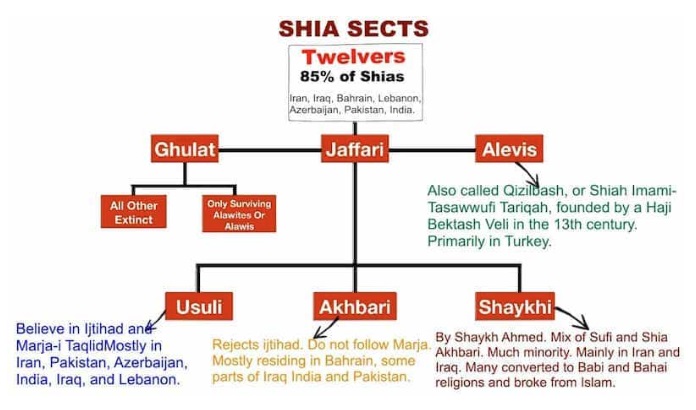
The Bektashi order (Turkish Bektaşîlik, Albanian Bektashizmi) is among the most theologically fluid communities to have emerged from the Islamic world. Born as a Sufi ṭarīqa in thirteenth-century Anatolia around the figure of Haji Bektash Veli, it began life squarely within the Sunni mystical milieu, yet by the sixteenth century had absorbed a thick layer of Twelver Shia devotion—reverence for ʿAlī, the Twelve Imams, the commemoration of Karbala—alongside esoteric currents drawn from Ḥurūfism, the antinomian qalandar dervishes, and the syncretic religious atmosphere of late-medieval Anatolia and the Balkans. The result is a community that sits, deliberately and self-consciously, between the two great confessional seas of Islam: it venerates ʿAlī as the greatest of the Companions while, unlike many Twelver Shia, honoring Abū Bakr, ʿUmar, and ʿUthmān; it upholds the Qur’an as uncreated and incorruptible in its inner meaning while privileging bāṭin (the esoteric) over ẓāhir (the literal); it counts itself Muslim while embracing the maxim that “the seventy-two nations are one in a single eye.” This essay traces the order’s origins, its turbulent Ottoman and post-Ottoman history, its present demographics, and its distinctive belief system, before mapping in detail what Bektashism shares with—and where it parts from—mainstream Sunni and Shia Islam. It concludes with a thematic reflection, consonant with the editorial vision of thequran.love, on a question the Bektashi case poses with unusual sharpness: whether the path to intra-Muslim concord runs through competing chains of charismatic leadership and esoteric initiation, or through a shared return to the Qur’an as the common, public criterion (al-furqān) by which every claim may be weighed. A scholarly caveat is observed throughout: the readings offered here are framed from a Qur’an-centered standpoint and are not presented as identical to classical Sunni tafsīr or to Bektashi self-understanding.
I. Origins: A Saint, a Teacher, and the Anatolian Frontier
Bektashism takes its name from Haji Bektash Veli (commonly dated c. 1209–1271, with later traditions giving 1248–1337), a walī or saint whose teachings are conventionally traced back to the great Central Asian mystic Ahmad Yasawi of Turkestan, born in Sayram in what is today southern Kazakhstan. Whether Haji Bektash was a literal disciple of Yasawi or stands at the end of a Yasawi-inspired devotional lineage is debated; what matters historically is that the Bektashi self-image locates its spiritual headwaters in the sober, vernacular, Turkic Sufism of Central Asia rather than in the Arabic legal academies.
The order crystallized on the Anatolian frontier, a zone of extraordinary religious fluidity in the thirteenth and fourteenth centuries. Here Turkic dervishes, recently Islamized nomads, displaced Christian populations, and wandering antinomian ascetics mingled, and the boundaries between formal Islam and folk piety were porous. Two foundational texts are attributed to Haji Bektash himself: the Makālāt (“The Articles” or “Discourses”), from which the celebrated doctrine of the “four gates” derives, and the Velayetname (“The Book of Walāya”), a poetic, hagiographic account of the saint’s life and the spread of his teaching across Anatolia. Modern scholarship—Mark Soileau’s work is representative—has questioned whether Haji Bektash actually authored the Makālāt, and with it whether the founder was as orthoprax (orthodox in practice) as later devotional literature claims. This uncertainty is itself instructive: it signals that the “Bektashism” we describe is less a fixed deposit handed down intact than a tradition assembled, layer upon layer, over three centuries.
The decisive systematizer was Balım Sultan (d. c. 1517–1519), revered as the pīr-i thānī, the “Second Elder.” It was Balım Sultan who codified the order’s rituals, its initiatic hierarchy, and much of its distinctive ceremonial life, and it was in his era—and through figures like the Ḥurūfī poet-martyr Nesîmî and the reorganizer ʿAlī al-Aʿlā, who carried the ideas of Faḍlallāh Astarābādī’s Ḥurūfism into the order—that Bektashism acquired the esoteric letter-mysticism and the pronounced ʿAlid coloring that distinguish it from its Sunni Sufi cousins.
II. History: Janissaries, Bans, and a Balkan Refuge
For roughly four centuries the fortunes of the Bektashi order were bound up with one of the most powerful institutions of the Ottoman state: the Janissary corps. By the fifteenth century the order had become the spiritual home of these elite infantry, many of them recruited as boys from Christian Balkan families through the devşirme levy. This alliance gave Bektashism political weight far beyond what a dervish order might ordinarily command—and it proved a double-edged sword. When Sultan Mahmud II violently abolished the Janissaries in 1826 (the so-called “Auspicious Incident”), the Bektashi order was banned across the empire in the same stroke. Tekkes (lodges) were demolished, their revenues confiscated, dervishes exiled and in some cases executed. Tellingly, this suppression was supported not only by the Sunni religious establishment but by the leaders of more shariah-observant Sufi orders, who regarded the Bektashis as lax and heterodox.
The order recovered partially under the reforming Tanzimat of the mid-nineteenth century, but a second, more final rupture came in the new Turkish Republic. In 1925 Mustafa Kemal Atatürk closed all Sufi lodges as part of his secularizing program. Salih Nijazi, the last Dedebaba based in Anatolia, relocated the order’s leadership to Albania, where in 1930 he was confirmed as Dedebaba and established the World Headquarters (Kryegjyshata) in Tirana, its construction completed in 1941 under the Italian occupation. The migration was natural: by the eighteenth century Bektashism had taken deep root in southern Albania and the surrounding Balkans—Epirus, western Greek Macedonia, parts of Bulgaria—often among Ottoman-era converts from Eastern Orthodoxy, including the Greek-speaking Muslim Vallahades. The famed Ali Pasha of Yanina was a Bektashi adherent, and the order became closely intertwined with the Albanian National Awakening; the national poet Naim Frashëri was himself a Bektashi, and the tekkes doubled as clandestine Albanian-language schools when Ottoman authorities promoted Arabic script.
In Albania the order took the unusual step of declaring its formal independence from the Sunni community, henceforth presenting itself as a distinct Islamic confession rather than a Sunni Sufi suborder. Its twentieth-century history then ran through the bloodiest passage of all. After the communist seizure of power in 1945, babas and dervishes were executed; in 1967 Enver Hoxha banned all religion outright, transforming Albania into the world’s first officially atheist state and shuttering every tekke. When the ban lifted in 1990, the spiritual infrastructure had been gutted—few survivors retained deep knowledge of the path—yet the order reconstituted itself. Reshat Bardhi Dedebaba (1935–2011) reopened the Tirana tekke, and in 2011 Baba Edmond Brahimaj—known as Baba Mondi—was elected the eighth Dedebaba of the Albanian line, a position he still holds.
The most recent chapter is striking. In September 2024, Albanian Prime Minister Edi Rama announced plans to carve out a Sovereign State of the Bektashi Order, a Vatican-style microstate of roughly twenty-seven acres (0.11 km²) enclaved within Tirana at the existing World Headquarters. If realized, it would be the smallest sovereign state on earth—about a quarter the size of Vatican City—with citizenship limited to Bektashi clergy and administrators, no army, no police, and no taxation. Rama and Baba Mondi have framed the project explicitly as an instrument for promoting religious tolerance and a moderate, inclusive Islam. As of mid-2025 the proposal remained pending: legal experts were drafting enabling legislation requiring parliamentary approval and, more uncertainly, international recognition. A standing scholarly caveat applies here too: the Anatolian and Turkish Bektashis do not recognize the Tirana Dedebabate, holding that the Dedebaba must reside in Anatolia and that the Albanian succession never historically possessed the Dedebabate—an internal dispute that itself foreshadows the central argument of this essay.
III. Demographics: Counting a Community That Resists Counting
Bektashi numbers are notoriously difficult to fix, partly because the boundary between formal membership, loose affiliation, and the broader Alevi–Bektashi cultural sphere is porous. A 2005 estimate attributed to Reshat Bardhi placed the worldwide figure above seven million; more expansive recent studies reach as high as twenty million. In Turkey alone some estimates count around 12.5 million, though much of this number belongs to the overlapping but distinct Alevi population—”Alevi–Bektashi” functions in contemporary Turkish discourse as an umbrella term despite the two traditions’ separate origins, and the Turkish state now recognizes the sphere officially through a “Presidency of Alevi/Bektashi Culture” under the Ministry of Culture and Tourism.
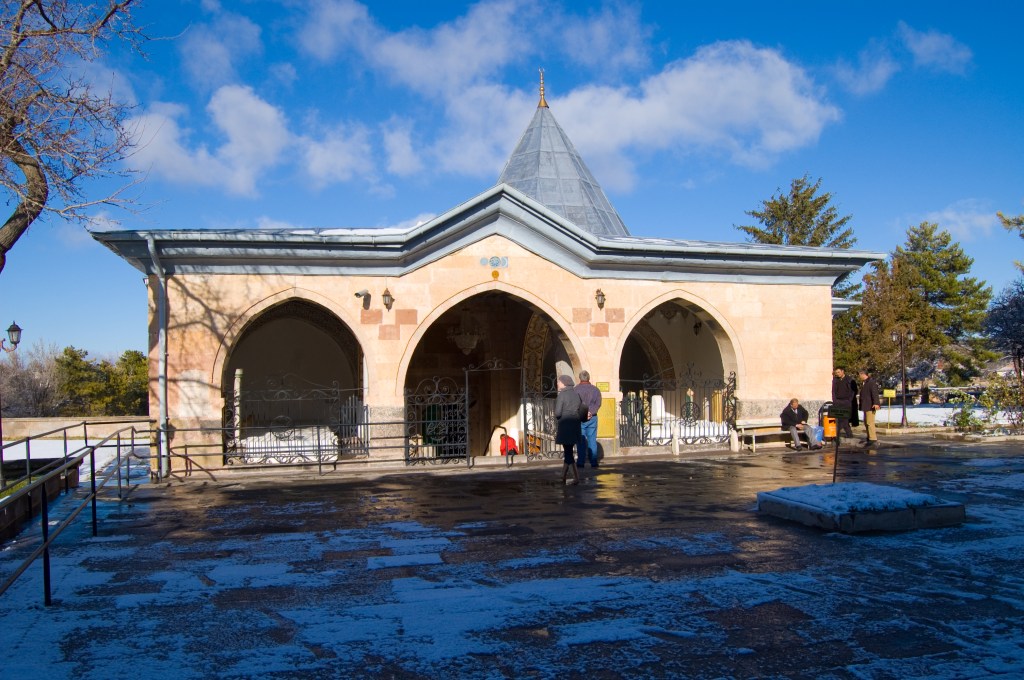
The order’s institutional heartland, however, is Albania. There Bektashis constitute roughly nine percent of the Muslim population and about five percent of the country overall, with sympathy far wider: by some reports around a fifth of Albanian Muslims claim some connection to the order. Significant communities persist among Albanians in North Macedonia (notably the historic Arabati Baba Tekke in Tetovo) and Kosovo (with a tekke in Gjakova recognizing Tirana), in Bulgaria (where shrines such as the Demir Baba and Otman Baba türbes remain heterodox pilgrimage sites), and in the diaspora—most famously the tekke founded by Baba Rexheb near Detroit in 1954, whose türbe still draws pilgrims of every faith. This geographic spread—Anatolian, Balkan, and now transatlantic—reflects both the order’s Ottoman reach and the successive waves of exile that scattered it.
IV. Beliefs: The Inner Path, the Fourteen Infallibles, and the Cup of Dem
At its doctrinal core Bektashism is a Sufi order, and it shares the classical Sufi grammar: the necessity of an experienced spiritual guide (here called a baba), and the doctrine of the four gates that the seeker must traverse in sequence—Sharīʿa (the religious law), Ṭarīqa (the spiritual path), Maʿrifa (gnosis or true knowledge), and Ḥaqīqa (Reality, Truth). Members ascend an initiatic ladder: the aşık (sympathizer not yet initiated), the muhip (initiate, following the rite of nasip), the dervish, the baba (head of a tekke, qualified to give irshād, spiritual direction), the halife-baba or dede, and at the summit the dedebaba. Bektashi metaphysics leans heavily on Ibn ʿArabī’s waḥdat al-wujūd, the “Unity of Being,” and on the conviction—captured in the order’s saying that one should “see the seventy-two nations in a single eye”—that bāṭin (inner meaning) takes precedence over ẓāhir (outer form), and that all nations and faiths share, at the deepest level, one reality.
From Shia Islam the order draws a dense devotional vocabulary. Bektashis affirm the ʿiṣma (infallibility) of the prophets and of the Fourteen Infallibles—the Prophet Muḥammad, his daughter Fāṭima, and the Twelve Imams—and add veneration of the “Fourteen Innocents,” children of the Prophet’s house who died in infancy or were martyred at Karbala. They commemorate ʿĀshūrāʾ and the Battle of Karbala; they hold ʿAbbās ibn ʿAlī in special honor, climbing Mount Tomorr in Albania each August for an annual pilgrimage to his türbe; and they celebrate Nowruz as the birthday of ʿAlī. Haji Bektash himself is held to descend from ʿAlī through Husayn and the Imam ʿAlī al-Sajjād.
Yet the order’s relationship to ritual law is famously relaxed, and this is where it most visibly departs from both Sunni and Shia norms. Historically Bektashis were not known to keep the Ramadan fast or the five daily prayers in the standard form; in their place they observe two distinctive prayers, at dawn and dusk, for the welfare of all humanity. Men and women worship together, without veiling or segregation—a gender equality the order claims to have practiced for eight centuries. Most strikingly, rakı, a fruit brandy, is consumed sacramentally and is not regarded as ordinary alcohol but reverently termed dem (“breath,” “the moment”). Pork remains forbidden as for all Muslims, but the Bektashis add an unusual prohibition on rabbit. Confession of sins to a baba (maghfirat al-dhunūb) and the communal ritual meal (muhabbet, the spreading of the sofra) structure devotional life, and in the Balkans the order absorbed practices resonant with Christianity, including a ritual sharing of bread.
Two points deserve emphasis against any caricature of Bektashism as having drifted away from scripture. First, the order has no single fixed canon; it possesses no binding written doctrine peculiar to itself, so practice varies from one baba to the next, and it reveres non-Bektashi masters—Ibn ʿArabī, al-Ghazālī, Rūmī—as kindred spirits. Second, and crucially for the argument below, Bektashism formally upholds the Four Holy Books—Torah, Psalms, Gospel, and Qur’an—insisting that they cannot be removed and that, whatever apparent contradictions exist at the level of ẓāhir, their inner meaning is uncorrupted. Rather than rejecting scripture, the Bektashi tradition centralizes it, even rendering Qur’anic verses into Albanian and Turkish in poetic, esoteric paraphrase to convey their hidden sense. Poetry, indeed, is the great vehicle of Bektashi spirituality: Yunus Emre, the most beloved poet of the Turkish language, is counted among the order, and Balım Sultan’s verses famously echo Ḥallāj’s anā al-Ḥaqq (“I am the Truth”), the cry of mystical annihilation in the divine.
V. Between Two Seas: Commonalities and Differences with Sunni and Shia Islam
The defining peculiarity of Bektashism is that it cannot be cleanly filed under either of Islam’s major confessions. It is best understood as a third thing that overlaps both. The following mapping makes the pattern explicit.
Common ground with Sunni Islam
- Sufi origin and structure. Bektashism began as one Sunni Sufi order among many, sharing the ṭarīqa model, the master–disciple bond, the lodge (tekke/khanqah), and the four-gates schema common to Sunni mysticism.
- Respect for all the Companions. Unlike many Twelver Shia, Bektashis honor Abū Bakr, ʿUmar, ʿUthmān, Ṭalḥa, and even Muʿāwiya—rejecting the ritual cursing of the first caliphs that marks some Shia piety—even as they rank ʿAlī the greatest of the Companions. This is a profoundly Sunni-compatible posture on early Islamic history.
- Shared reverence for Sunni-rooted masters. Al-Ghazālī and Rūmī, both pillars of the Sunni intellectual and mystical tradition, are venerated within Bektashism.
- Core monotheism and prophetology. Bektashis affirm one God and the full line of Islamic prophets, and uphold the Qur’an—points of unambiguous agreement with Sunni creed.
Common ground with Shia Islam
- Veneration of ʿAlī and the Ahl al-Bayt. The intense ʿAlid devotion, the doctrine of the Twelve Imams, and the affirmation of their infallibility are straightforwardly Shia inheritances.
- The Karbala paradigm. Commemoration of ʿĀshūrāʾ, mourning for Husayn, and devotion to ʿAbbās ibn ʿAlī place Bektashism within the broad Shia memory of Karbala.
- The Fourteen Infallibles. The formal category of Muḥammad, Fāṭima, and the Twelve Imams as a unit of veneration is a Twelver framework.
Where Bektashism diverges from both
- Ritual obligation. The non-observance, historically, of the five daily prayers and the Ramadan fast in their standard forms separates Bektashism from the orthopraxy of both Sunni and Twelver Shia Islam.
- Sacramental alcohol. The ceremonial use of rakı as dem is rejected as unlawful by Sunni and Shia jurists alike.
- Esoteric primacy and syncretism. The systematic privileging of bāṭin over ẓāhir, the Ḥurūfī letter-mysticism, the absorption of Christian-tinged rites, and the “seventy-two nations in one eye” universalism push beyond the confessional boundaries either tradition recognizes.
- Charismatic, initiatic authority. Religious authority flows not from a shared, publicly accessible body of law and scripture interpreted by trained jurists (the Sunni ʿulamāʾ) or by the Imams and their juristic deputies (the Shia marjaʿiyya), but through an initiatic hierarchy culminating in the living Dedebaba—an authority structure that the rival Anatolian and Albanian claimants themselves cannot agree how to locate.
It is precisely this last point—the centrality of contested, person-bound leadership—that the mainstream Sunni establishment historically seized upon when branding the order heretical, and that today fuels the schism between Tirana and the Turkish Bektashis over where the legitimate Dedebabate resides. The Bektashi genius for tolerance and the Bektashi vulnerability to fragmentation spring, paradoxically, from the same root: a tradition anchored less in a public text than in a chain of charismatic guides.
Scholarly caveat: The categories above describe tendencies, not a fixed creed. Because Bektashism has no binding canon and varies by baba, individual communities may observe more or less of the shariah than this summary suggests, and modern reformist Bektashis in Turkey and Albania often present a more law-observant face than the antinomian historical record implies.
VI. Thematic Epilogue: The Qur’an as Furqān — A Criterion Above the Chain of Leaders
The Bektashi story, read with sympathy, is one of the most humane in the Muslim world: a tradition that sheltered Jews in the Second World War, that seated men and women together for eight centuries, that preached love of the human being and respect for the seventy-two nations, and that now proposes to dedicate a sovereign acre of earth to the proposition that Islam can be a sanctuary of tolerance. None of what follows is meant to diminish that witness. It is meant, rather, to ask what the Bektashi case teaches the wider ummah about the sources of unity and division.
Here the order is doubly instructive. On one hand, Bektashism already does something the rest of the Muslim world might learn from: it centralizes rather than discards scripture, formally upholding the Qur’an—indeed all four revealed Books—as incorruptible in inner meaning, and it refuses to let confessional partisanship harden into the cursing of revered figures. On the other hand, the very feature that most endangers Bektashi unity is its reliance on a living chain of charismatic leadership—baba, halife, Dedebaba—as the operative locus of religious authority. When that chain forks, as it has between Anatolia and Tirana, there is no higher, shared, public court of appeal to adjudicate the rupture, because authority was vested in persons and lineages rather than in a text equally accessible to all.
This is the recurring lesson of minority-community case studies, and it is the normative thesis to which the editorial vision of thequran.love returns again and again: that the further a community’s center of gravity drifts from the Qur’an toward the person of a leader—an Imam declared infallible, a Dedebaba whose seat must lie in one country and not another, a hierarchy of initiation that only insiders can navigate—the more that community becomes hostage to the accidents of succession, geography, and charisma. The Qur’an names itself al-Furqān (Q 25:1), the Criterion, the standard by which truth is distinguished from falsehood. A criterion, by definition, must stand above the parties it judges and be available to all of them. A chain of leaders cannot perform that function, because the chain is itself one of the things in dispute.
The constructive implication is not that spiritual guides are dispensable—the Qur’an honors the role of those who teach and purify (Q 62:2)—but that they are servants of the text, not substitutes for it. Sunni, Shia, and Bektashi alike already share the Qur’an; what they do not share is a single human authority, and history suggests they never will. The Sunni–Shia rift is, at bottom, a dispute over who should have led after the Prophet ﷺ; the Bektashi internal schism is a dispute over where the supreme leader must sit. In both cases the quarrel is about leadership, not about the Book. It follows that the one ground on which these communities can actually meet is the ground they already hold in common: the Qur’an as a shared, public criterion, read with intellectual seriousness, open to the inner meanings the Bektashis cherish but disciplined by the outer text that keeps interpretation accountable.
A Qur’an-centered Islam, in this reading, does not ask the Bektashi to abandon his love of ʿAlī, the Sunni his Companions, or the Shia his Imams. It asks only that each weigh his inherited loyalties against the Criterion that all of them confess, and recognize that what divides them was never the revelation but the contest over who would speak in its name. Were the Muslim world to make that shift in emphasis—from the leader to the Book, from the chain of persons to the shared standard—the Bektashis’ beautiful ambition, a small state with a big heart dedicated to tolerance, would no longer be the exception that proves Islam capable of peace. It would be the rule.
Scholarly caveat: This epilogue is offered as a normative argument from a Qur’an-centered standpoint and reflects the editorial orientation of thequran.love. It is not a description of how Bektashis, Sunnis, or Shia understand their own traditions, each of which advances a coherent account of legitimate religious authority on its own terms.






Leave a comment