

Presented by Zia H Shah MD
Audio teaser:
1. Introduction: The Universal Mandate of Truth
1.1 The Premise of Unity in Diversity
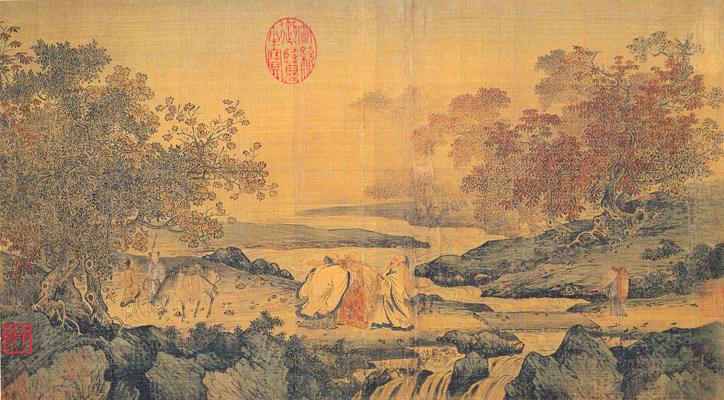
In the vast tapestry of human spiritual history, few civilizations have contributed as profoundly to the cultivation of virtue, the understanding of social harmony, and the pursuit of ultimate reality as the civilization of China. For millennia, the Chinese mind has been shaped by the currents of Confucian ethics, Taoist metaphysics, and Buddhist psychology, creating a unique cultural genome characterized by an openness to truth, a reverence for ancestral wisdom, and a pragmatic search for harmony (He). It is within this fertile intellectual landscape that the invitation to Islam and the Glorious Quran is situated—not as a foreign imposition from the deserts of Arabia, but as a “Remembrance” (Dhikr) of the primordial truths already encoded in the sage traditions of the East.
This report posits that the Quranic message is not alien to the Chinese worldview; rather, it serves as a crystallization and confirmation of the insights held dear by the sages of the Sinosphere. The Quranic assertion that “For every people there is a guide” (Quran 13:7) and that “We sent a messenger to every community” (Quran 16:36) establishes a theological foundation for inclusivity.1 This doctrine suggests that the wisdom found in the Analects of Confucius, the Tao Te Ching of Lao Tzu, and the sutras of the Buddha may reflect the scattered light of earlier divine revelations, now finding their focal point and completion in the final revelation. As Dr. Zia H. Shah argues, the “openness to truth” characteristic of Chinese philosophy—whether it be the Taoist fluidity or the Confucian rectification—serves as the perfect bedrock for engaging with Islamic monotheism, which demands a similar surrender to the Real (Al-Haqq).2
The invitation extended here is one of intellectual partnership and spiritual recognition. It invites the reader to witness the “Light upon Light” (Nur ‘ala Nur)—the convergence of the light of Revelation with the light of the innate human intellect (Fitrah). By exploring the profound parallels in theology, ethics, and scientific rationality, this report demonstrates that Islam offers the “Middle Way” (Sirat al-Mustaqim) that the Chinese spirit has sought for thousands of years.
1.2 The Historical Context of the Invitation
This dialogue is not new. It is a continuation of a conversation that began over a thousand years ago when the first Muslim traders arrived in the Tang Dynasty, and later, when the Han Kitab scholars of the Ming and Qing dynasties wove Islamic theology into the fabric of Confucian thought. These scholars did not see themselves as importing a barbarian faith, but as restoring the “Pure and True” (Qing Zhen) teaching that resonated with the ancient monotheism of the pre-Qin era.3 Today, in an era of global connectivity and scientific inquiry, this invitation is renewed with fresh vigor, drawing upon contemporary insights from physics, cosmology, and psychology to bridge the ancient wisdom of the East with the eternal message of the Quran.
2. The Metaphysical Bridge: Taoism and the Reality of Al-Haqq
2.1 The Ineffable Nature of the Ultimate
The Tao Te Ching opens with a declaration that defines the boundaries of human language: “The Tao that can be told is not the eternal Tao; The name that can be named is not the eternal Name”.5 This apophatic theology—the understanding that the Ultimate Reality transcends all definitions, limits, and conceptualizations—is the very heartbeat of Islamic monotheism (Tawhid).
In Islamic theology, Allah is described as Al-Haqq (The Real) and Al-Batin (The Hidden). The Quran asserts, “There is nothing like unto Him” (Lay-sa ka-mith-li-hi shay) (Quran 42:11), a verse that negates all anthropomorphism and limitation.5 Just as the Tao is the “Mother of the Ten Thousand Things” yet remains distinct from them, Allah is the Creator of the heavens and the earth, utterly transcendent beyond the created order. The “Nameless” aspect of the Tao finds a profound resonance in the Islamic concept of the Divine Essence (Dhat), which is beyond the grasp of the human intellect, while the “Named” aspect corresponds to the Divine Attributes (Sifat)—the “Most Beautiful Names” (Asma al-Husna)—through which the Divine Will manifests in the cosmos.5
Dr. Zia H. Shah and other scholars of the Han Kitab tradition have noted that when Lao Tzu speaks of the Tao as “Vast,” “Silent,” and the “Source,” he is describing attributes that a Muslim immediately recognizes as Al-Wasi (The All-Encompassing), Al-Samad (The Eternal/Absolute), and Al-Mubdi (The Originator). The invitation to Islam is, therefore, an invitation to name the Unnamable with the names He has chosen for Himself, moving from the abstract Principle of the Way to the personal relationship with the Lord of the Way.
Table 1: Comparative Metaphysics of Taoism and Islamic Theology
| Metaphysical Concept | Taoist Perspective | Islamic Perspective | Convergence Point |
| Ultimate Reality | The Tao (The Way/Source) | Allah / Al-Haqq (The Truth/Real) | Both represent the uncaused, eternal Source of all existence, transcending binary distinctions. |
| Ineffability | “The name that can be named is not the eternal Name.” | “There is nothing like unto Him.” (Quran 42:11) | Both traditions emphasize that the Ultimate cannot be encapsulated by human language or mental constructs. |
| Manifestation | The “One” producing the “Two” (Yin/Yang). | Divine Command (Kun – “Be”) creating pairs (Azwaj). | The origin of multiplicity from Singularity; the binary nature of creation (Quran 36:36). |
| The Path | Wu Wei (Effortless Action / Non-Resistance). | Islam (Submission / Surrender to Divine Will). | Alignment of the human will with the Universal/Divine Will to achieve harmony. |
| Cosmology | Taiji (Supreme Ultimate) generating reality. | Nur (Light) and Kalima (Word) generating reality. | The universe emerges from a singular, ordered metaphysical principle. |
2.2 The Metaphor of Water and Divine Mercy
Water is the quintessential metaphor in Taoism for the highest good. Lao Tzu writes, “The highest good is like water. Water gives life to the ten thousand things and does not strive. It flows in places men reject and so is like the Tao”.7 This profound humility, adaptability, and life-giving force mirrors the Quranic presentation of water as the primary symbol of Divine Mercy (Rahma) and creation.
The Quran states, “We made from water every living thing” (Quran 21:30) and describes the revelation itself as water sent down from the sky to revive a dead earth (Quran 13:17).1 In the Quranic worldview, water is a sign (Ayah) of God’s sustenance. It is pure (Tahur), purifying, and life-sustaining. The Taoist ideal of Wu Wei—flowing like water around obstacles rather than confronting them with rigid ego—can be understood in Islam as Tawakkul (active reliance on God) and Rida (contentment with Divine Decree). The believer, like water, submits to the gravity of the Divine Will, finding strength in suppleness and victory in surrender (Islam).
Dr. Zia H. Shah elaborates on this metaphor by highlighting the “water cycle” in the Quran not just as a scientific marvel but as a spiritual metaphor for the resurrection and the endurance of truth. Just as water remains to benefit humanity while the “foam” (falsehood) vanishes, the Taoist sage remains grounded in the Real, letting the trivialities of the world pass.1 This parallels the Taoist emphasis on the “Uncarved Block” (Pu)—the state of pure potentiality and truth that remains when the artificial constructs of society are washed away.
2.3 The Way and Sirat al-Mustaqim
The word “Tao” literally translates to “The Way.” Islam describes itself as Din al-Haqq (The Religion of Truth) and the path to God as Sirat al-Mustaqim (The Straight Path). The opening chapter of the Quran, Al-Fatiha, which is recited seventeen times a day by a practicing Muslim, is essentially a prayer for guidance to this path: “Guide us to the Straight Path.”
For the Taoist accustomed to seeking the “Way,” the invitation to Islam is an invitation to the Sirat al-Mustaqim. It is not a divergent path but the “Straight” path—the path of balance between the extremes of asceticism and hedonism, between this world and the next. The Han Kitab scholars utilized this linguistic bridge effectively; they often referred to Islam simply as Dao or Hui-Dao (The Way of the Hui) to emphasize that Islam is not a “new” invention but the crystallization of the primordial Way of Heaven (Tian Dao).4 The “Straight Path” in Islam encompasses the Taoist virtues of simplicity, balance, and harmony with nature, but anchors them in a covenant with the Creator.
3. The Philosophical Bridge: Buddhism, Suffering, and the Illusion of the World
3.1 Addressing the “Non-Theistic” Barrier: Being-as-Such
A significant intellectual hurdle in the dialogue between Islam and Buddhism is the categorization of Buddhism as “atheistic” and Islam as “theistic.” However, a nuanced analysis reveals that this dichotomy is often superficial. As Dr. Zia H. Shah notes, Buddhism is atheistic primarily in its rejection of the anthropomorphic “gods” (Devas) of the Vedic pantheon who are subject to birth, death, and Samsara. The Buddha rejected the notion of a creator god who is himself a deluded being within the cycle of existence.2
However, the “God” of Islam is not a “god” in the polytheistic sense. Allah is Al-Samad (The Eternal, The Absolute), equivalent to the Buddhist concept of the Unconditioned (Asankhata) or the Deathless (Amatan). The “Highest God” in enlightened Islamic theology is not “a being” among beings, but “Being-as-Such”—the Absolute Reality upon which all dependent origination relies. When Mahayana Buddhism speaks of the Dharmakaya (Truth Body) or Buddha-Nature as the pervasive, eternal reality that transcends form, it approaches the Islamic understanding of the Divine Reality.9
When a Muslim declares La ilaha illa Allah (There is no god but The God), they are engaging in a process strikingly similar to the Buddhist Neti Neti (Not this, not that) or the doctrine of Emptiness (Sunyata). The Muslim negates all limited, conditioned, and false gods (La ilaha)—which corresponds to the Buddhist rejection of inherent existence in phenomena—to affirm the One Ultimate Reality (illa Allah) that remains when all illusions are stripped away.
3.2 The Simulation Hypothesis and the Illusion of Maya
Modern science and philosophy offer a new language to bridge these ancient traditions. Dr. Zia H. Shah draws upon the “Simulation Hypothesis”—the idea that our physical reality is a constructed simulation or projection—to bridge the gap between the Buddhist concept of Maya (Illusion) and the Islamic concept of Dunya (The Lower World).
- Buddhist View: The world of form is fleeting, illusory, and empty of inherent existence. Attachment to it causes suffering.
- Islamic View: The Quran describes the Hayat al-Dunya (Life of this World) as “play and amusement” and “a deceiving enjoyment” (Quran 57:20).9 It is a transient stage, not the ultimate reality.
Dr. Shah posits that modern physics, which reveals that matter is merely energy and fields, supports the ancient insight that the material world is not “solid” or “fundamental.” In this context, the “Real” is the Programmer or the Creator (Allah), and the spiritual goal is to wake up from the “dream” of material attachment to the “wakefulness” of Divine consciousness.10 This resonates with Zhuangzi’s famous “Butterfly Dream,” suggesting that what we perceive as reality is merely a shadow of the True Reality.10
3.3 Suffering (Dukkha) and the Cure of the Heart
The First Noble Truth of Buddhism is Dukkha (Suffering/Unsatisfactoriness), caused by Tanha (Craving/Attachment). The cessation of suffering (Nirodha) is achieved by eliminating this craving. Islam offers a strikingly similar diagnosis of the human condition but provides a theological cure.
The Quran identifies the root of human anxiety and spiritual malaise as the attachment to the fleeting (Fani) rather than the Everlasting (Baqi). When the human heart attaches itself to the temporary—wealth, status, physical pleasure—it inevitably suffers because those things are destined to perish.
- The Buddhist Solution: Detachment and mindfulness to achieve Nirvana (extinction of the flame of desire).
- The Islamic Solution: Zuhd (Asceticism/Detachment) and Tazkiyah (Purification of the Self). However, Islam does not seek a void; it seeks to fill the emptied heart with the love of the Eternal. “Verily, in the remembrance of Allah do hearts find rest” (Quran 13:28).
Shaykh Hamza Yusuf, in his essay “Buddha in the Quran?”, highlights this convergence. He quotes the Buddha’s statement, “O Moses, people suffer in this world to the degree of their mental attachment to it,” paralleling the Islamic teaching that the love of Dunya is the root of all spiritual disease.11 The “Middle Way” of Buddhism finds its counterpart in the Islamic concept of Wasat (Moderation), where the believer lives in the world but is not of the world, participating in life without being consumed by its illusions.
3.4 Was the Buddha a Prophet?
A profound gesture of inclusivity in this invitation is the recognition of the Buddha’s potential status within Islamic prophecy. The Quran explicitly states that messengers were sent to every nation. Some Muslim scholars, ancient and modern, have suggested that the figure mentioned in the Quran as Dhu al-Kifl (“The One from Kifl” or “The One of the Double Portion”) refers to Siddhartha Gautama, the sage of Kapilavastu.12 Classical scholar Al-Shahrastani (d. 1153) famously compared the Buddha to the Quranic figure Al-Khadir, a seeker of esoteric wisdom who transcends legalistic boundaries.13
Recognizing the Buddha as a recipient of Divine Wisdom allows the Chinese Buddhist to view Islam not as a rejection of their teacher, but as a continuation of the same stream of prophetic guidance. It suggests that the original teachings of the Buddha were a call to the Oneness of Truth, which Islam seeks to revive and protect from the accretions of later idolatry.
4. The Ethical Bridge: Confucianism, Governance, and Social Harmony
4.1 Filial Piety (Xiao) and Quranic Birr
Confucianism is built upon the bedrock of Xiao (filial piety), considering it the “root of all virtue” and the foundation of a stable society. Confucius taught that if the family is rectified through proper honor to parents, the state will be rectified.
This central Confucian virtue finds its most powerful monotheistic confirmation in the Quran. The Quran elevates kindness to parents to a status immediately following the worship of God: “Your Lord has decreed that you worship none but Him, and that you be kind to parents” (Quran 17:23).1 The Islamic concept of Birr al-Walidayn (Righteousness to Parents) is rigorous and tender. It forbids even a sigh of impatience (“Uff”) and commands the believer to lower the “wing of humility” out of mercy.14
The comparison reveals a deepening of the concept:
- Confucian Xiao: primarily social and ethical, extending to ancestor worship as a rite of remembrance.
- Islamic Birr: theological and spiritual. Parents are honored not just for social order, but because they are the means chosen by God for one’s existence.
Islam purifies the practice of ancestor worship by redirecting it into Du’a (Supplication) and Sadaqah Jariyah (Continuous Charity). Instead of offering food to spirits, a Muslim creates a legacy of good deeds in the name of their deceased parents, ensuring their spiritual benefit in the Hereafter. This transforms Xiao from a ritual of the past into a dynamic, living force of charity.15
4.2 The “Silver Rule” and the “Golden Rule”
Confucius famously taught the “Silver Rule”: “Do not do unto others what you do not want done to yourself” (Shu – Reciprocity).1 This negative formulation emphasizes restraint and the avoidance of harm.
Islam upholds this and expands it into the “Golden Rule” of active benevolence. The Prophet Muhammad said: “None of you truly believes until he loves for his brother what he loves for himself”.1 This shift from “not doing harm” to “actively loving good” for others marks the transition from the legalistic protection of rights to the spiritual cultivation of Ihsan (Excellence/Beauty).
The invitation to Islam is an invitation to active altruism, where the “Superior Man” (Junzi) is not just one who refrains from evil, but one who exerts himself (Jihad) in the service of humanity to please the Creator.
4.3 Governance, the Mandate of Heaven, and Stewardship
Confucian political philosophy relies on the “Mandate of Heaven” (Tianming), where a ruler’s legitimacy is contingent upon their virtue (De) and alignment with the moral order of Heaven (Tian). If a ruler fails in benevolence, the mandate is withdrawn, and social chaos ensues.
This aligns seamlessly with the Islamic concept of Khilafah (Stewardship) and Amanah (Trust). In Islam, sovereignty belongs ultimately to God (Al-Malik), and human rulers are merely trustees responsible for establishing justice (Adl). The Prophet Muhammad’s warning that “A ruler is a shepherd and is responsible for his flock” 1 mirrors Confucius’s insistence that “If the ruler is upright, all will go well without laws.”
The Han Kitab scholar Liu Zhi equated the Confucian Tian (Heaven) with the Islamic Rabb (Lord) in his synthesis, arguing that the “Principle of Heaven” (Tianli) is the expression of God’s command in the universe. Islam purifies the concept of Tian from an abstract force to a personal, knowing, and merciful Creator who actively guides humanity through revelation. The “Mandate” is not just a cosmic force but a covenant with God to uphold justice and protect the weak.17
5. The Historical Synthesis: The Han Kitab Legacy
The most compelling argument for the compatibility of Chinese thought and Islam is that it has already been achieved. During the Ming and Qing dynasties, a brilliant school of Muslim scholars known as the Han Kitab writers systematically articulated Islamic theology using Confucian, Taoist, and Buddhist terminology. They proved that one can be fully Chinese and fully Muslim, honoring the sages while worshipping the One God.
5.1 Wang Daiyu: The Master of Islam in Confucian Dress
Wang Daiyu (c. 1590–1658), author of Zhengjiao Zhenquan (“Real Commentary on the True Teaching”), was a pioneer in this intellectual synthesis. He utilized the Neo-Confucian metaphysical framework of Li (Principle) and Qi (Matter/Energy) to explain the Islamic Creator, but he introduced a critical distinction.
- The Zhenyi (Real One): Wang argued that while Confucianism focuses on the “Way of Man” (Ren Dao), it lacks a clear definition of the ultimate origin. He introduced the concept of the “Real One” (Zhenyi)—the Islamic Ahad—who originates the Taiji (Supreme Ultimate).
- The Three Teachings: He posited that the “Three Teachings” (Confucianism, Taoism, Buddhism) had lost the “Real One” and that Islam was not a new religion but the “return” to the primordial unity that the ancient sages had originally known.3
5.2 Liu Zhi: The Great Synthesizer
Liu Zhi (c. 1660–1730) took this synthesis to its zenith in his Tianfang Xingli (“Nature and Principle in Islam”). His work was so respectful of Chinese tradition that it was accepted into the Siku Quanshu (Imperial Collection) of the Qing Emperor, a rare honor for a minority text.
- Shangdi and Allah: Liu Zhi engaged with the ancient Chinese concept of Shangdi (Lord on High), identifying it with Allah. However, he clarified that Allah is the Zhenzai (True Master) who transcends the limited anthropomorphism sometimes associated with popular folk religion. He effectively argued that the God of Islam is the same God worshipped by the ancient Zhou and Shang kings, purified of later corruptions.17
- The Prophet as the Ultimate Sage: Liu Zhi referred to Prophet Muhammad as the Zhisheng (Ultimate Sage). To the Chinese mind, this presented Muhammad not as a foreign conqueror, but as the Sage who united the “Way of Heaven” (Tian Dao) with the “Way of Man” (Ren Dao) perfectly, surpassing even the earlier sages in his compilation of the Law (Sharia).4
Table 2: Han Kitab Terminology – Bridging Concepts
| Islamic Concept | Han Kitab Terminology | Chinese Contextual Meaning |
| Allah | Zhenzhu (True Lord) / Zhenzai (True Master) | Distinguishes the Creator from lesser spirits or the abstract Tian. |
| Prophet (Nabi) | Sheng (Sage) / Zhisheng (Ultimate Sage) | Connects Muhammad to the lineage of Confucius and Mencius. |
| Sharia (Law) | Li (Propriety/Ritual) | Frames Islamic law as the perfection of social and cosmic order. |
| Tawhid (Oneness) | Zhenyi (True One) | Bridges Islamic Monotheism with the Taoist/Neo-Confucian “One.” |
| Islam | Qing Zhen Jiao (The Pure and True Teaching) | Emphasizes purity (from idols/pork) and Truth (metaphysical reality). |
If you would rather read in the Microsoft Word file:

 The Glorious Quran and Science
Leave a comment