
Presented by Zia H Shah MD
Audio teaser or promo:
I. Introduction: The Theological Imperative of Finality and Sufficiency
The architecture of Islamic theology is sustained by two indivisible pillars: the absolute Oneness of God (Tawhid) and the finality of the Prophetic mission entrusted to Muhammad ibn Abdullah. Within the orthodox Sunni and established Sufi traditions, these pillars are not merely historical markers indicating the cessation of a specific era, but are ontological realities that define the relationship between the Divine and the human. The assertion that the Quran is the final, complete, and exhaustive message of God to humanity serves as the demarcation line between orthodoxy and heterodoxy, establishing the boundaries of the faith and the mechanism of salvation.
This report provides a comprehensive, expert-level analysis of the doctrine of Khatam an-Nabiyyin (The Seal of the Prophets), arguing from the classical Sunni and Sufi perspectives that the age of revelation has irrevocably closed. This closure renders any claim to post-Prophetic infallibility, necessary mediation, or new legislative authority as a theological aberration that threatens the very core of the Islamic creed. The inquiry necessitates a rigorous refutation of alternative narratives presented by Shia, Ismaili, and Ahmadi traditions, utilizing the full breadth of classical scholarship, Quranic exegesis (Tafsir), and the intellectual history of Islamic thought.
The central thesis advanced herein is that the “Perfection of Religion” (Ikmal al-Din) announced in the Quran precludes the possibility of “necessary teachers” possessing divine authority after Muhammad. While scholars (Ulama) and spiritual guides (Murshids) exist to facilitate understanding, they are functionally distinct from the theological necessity attributed to the Shia Imams or the Ahmadi prophets. The Quran’s universality and accessibility serve as the ultimate rebuttal to the esoteric exclusivity found in Batini (esoteric) sects. By leveraging scriptural evidences of completeness (Ikmal) and perfection (Itmam), this report demonstrates that the Sunni paradigm—which relies on a preserved text and the consensus of a fallible but guided community—negates the need for an ontological intermediary to access the Divine Will.
1.1 The Definition of “Necessary Teacher” in Islamic Theology
To understand the Sunni rejection of post-prophetic authority, one must first define the concept of the “Necessary Teacher” (Mu’allim). In the heterodox traditions—specifically Twelver Shi’ism and Ismaili Shi’ism—the “Necessary Teacher” is an individual whose existence is essential for the valid interpretation of scripture and the guidance of humanity.1 In this view, the Quran is a “Silent Book” (Quran Samit) that cannot guide without a “Speaking Book” (Quran Natiq)—the Infallible Imam.
Conversely, Sunni theology posits that the Quran is Mubin (clear) and self-explanatory in its fundamentals. The role of the teacher after Muhammad is pedagogical, not ontological. The teacher explains what is already there; they do not authorize truth or serve as the sole conduit of grace. The removal of the “Necessary Teacher” is the democratization of guidance: the text is open to the community (Ummah), protected by God, and accessible to the intellect.3
II. The Perfection of Religion: Implications of Quran 5:3
The theological corollary to the Finality of Prophethood is the Perfection of the Message. The decisive declaration found in Surah Al-Ma’idah (5:3) serves as the bedrock for the Sunni argument against any subsequent legislative or authoritative addition to the faith.
2.1 Exegetical Analysis of “Al-Yawma Akmaltu Lakum Dinakum”
The verse states: “This day I have perfected for you your religion and completed My favor upon you and have approved for you Islam as religion” (Quran 5:3).
Classical Sunni exegesis, represented by authorities such as Ibn Abbas and confirmed by modern commentaries like Maarif-ul-Quran, interprets “Perfection” (Ikmal) as the completion of all limits, obligations, injunctions, and refinements in personal and social behavior necessary for the True Faith.5
- The Scope of Perfection: The perfection is exhaustive. It is neither specified for any particular time nor restricted to any particular area. Instead, Islam is presented as a Shari’ah which is perfect and complete for every period, area, and people until the Last Day.5
- Completion of Blessing (Itmam al-Ni’mah): This refers to the rise of Muslims and the eradication of the customs of Jahiliyyah (ignorance). The blessing is the autonomy of the Muslim community, free from reliance on external or previous dispensations.5
This concept is devastating to any theology that posits the necessity of a divinely appointed guide to “complete,” “evolve,” or “update” the religion. If the religion was perfected on the plains of Arafat during the Farewell Pilgrimage, then any subsequent addition—whether it be the Shia doctrine of Imamate or the Ahmadi continuity of prophethood—implies that the religion was imperfect at the time of the Prophet’s death.5
2.2 The Distinction between Din and Sharia
While the core Din (Religion/Creed) is perfected, Sunni theology acknowledges the flexibility of Fiqh (Jurisprudence) to address new situations. However, this flexibility is derived from the perfected principles of the Quran and Sunnah, not introduced into them by a new authority.
- Sunni Mechanism: Ijtihad (independent reasoning) by fallible scholars.
- Sectarian Mechanism: New revelation or Infallible Decree by an Imam.
The Sunni stance maintains that the perfection of the religion lies in its ability to address new issues through established principles without the need for a new legislator. The text is sufficient; the human intellect, guided by the text, is capable of extracting the necessary rulings.6
2.3 The Sufficiency of the Text and the Fallacy of the “Silent Quran”
Shia theology frequently employs the argument of the “Silent Quran” (Quran Samit), positing that the text is mute and requires a “Speaking Quran” (Quran Natiq)—the Infallible Imam—to interpret it. Without the Imam, they argue, the text is liable to misinterpretation and is thus insufficient.1 This argument is a cornerstone of the Ismaili and Twelver claim to authority.
The Sunni refutation, grounded in the Quran itself, rejects this dependency. The Quran describes itself as Mubin (Clear) and Tibyanan li-kulli shay (An explanation of all things).4
- Surah Al-An’am (6:114): “Then is it other than Allah I should seek as judge while it is He who has revealed to you the Book explained in detail?”.5
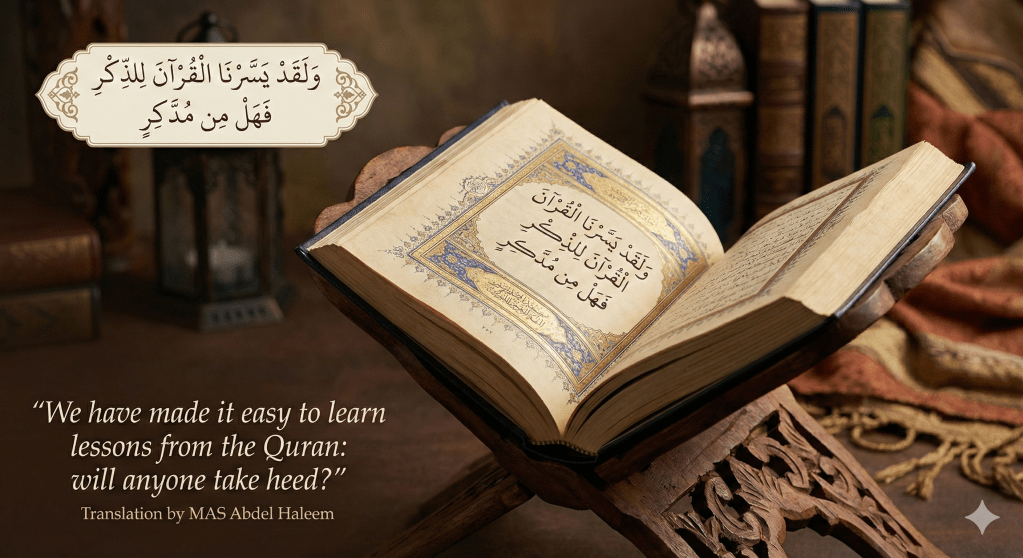
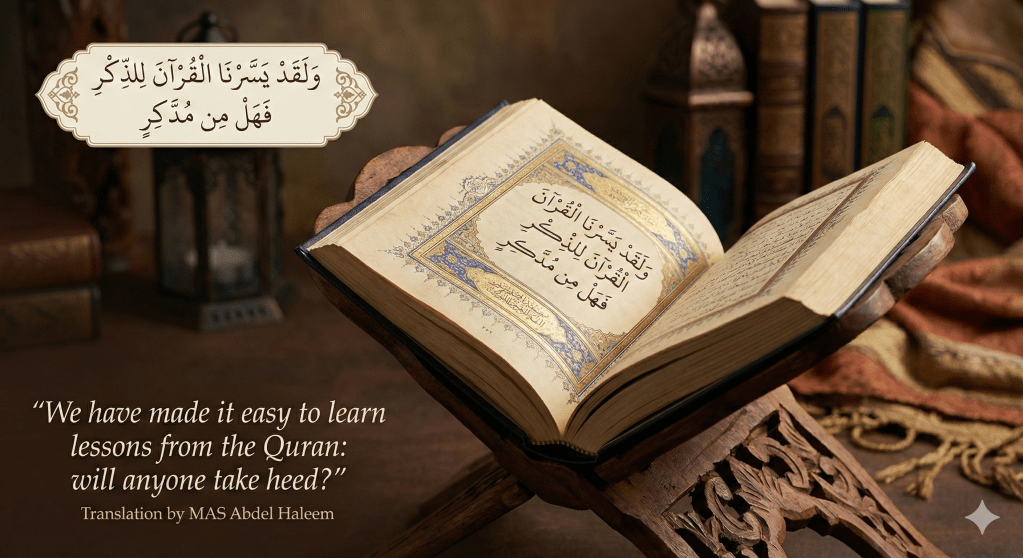
- Surah Al-Qamar (54:17): “And We have certainly made the Quran easy for remembrance, so is there any who will remember?”
Sunni theologians argue that if God describes His book as “easy to understand” and “fully detailed,” then the claim that it is “silent” or “inaccessible” without an Imam is a contradiction of the Divine Word. It implies a deficiency in the revelation itself—that God failed to communicate clearly and requires a human interpreter to fix the ambiguity.3
Furthermore, the “Silent Quran” argument leads to circularity: if the Quran cannot be understood without the Imam, how does one verify the authority of the Imam? If the proof of the Imam is in the Quran, then the Quran must be understandable prior to the Imam. If the proof of the Imam is outside the Quran, then the Quran is secondary to the Imam, which contradicts its status as the Word of God.9
III. The Doctrine of Khatam an-Nabiyyin: The Absolute Closure of Prophecy
The foundation of the Sunni rejection of post-Muhammadan authority lies in the interpretation of the “Seal.” The Quranic declaration in Surah Al-Ahzab (33:40) serves as the primary legislative and theological barrier against any continuity of the prophetic office.
3.1 Linguistic and Exegetical Analysis of the “Seal”
The term Khatam (or Khatim) in Arabic denotes the instrument used to seal a document, signifying its completion and preventing any further addition or subtraction. In the classical Sunni exegesis, the verse “Muhammad is not the father of any of your men, but (he is) the Messenger of Allah, and the Seal of the Prophets” 11 is understood not merely as a chronological marker but as a sealing of the divine legislative canon.
Scholars such as Ibn Kathir and Al-Tabari provide the definitive Sunni interpretation: the “Seal” unequivocally closes the door to any new prophethood. Al-Tabari’s linguistic analysis of the root Kh-T-M confirms the meaning “to conclude, seal, and bring to an end”.12 This is distinct from a “ring” or “ornament,” which some heterodox interpreters suggest. A seal on a letter prevents anything further from being written; thus, the “Seal of the Prophets” prevents any further prophet from being sent.
This interpretation is reinforced by the Mutawatir (mass-transmitted) Hadiths, where the Prophet Muhammad explicitly declares, “There is no prophet after me” (La Nabiya Ba’di).12 The denial is absolute, covering all types of prophethood, whether legislative (Tashri’i) or non-legislative (Ghayr Tashri’i).
3.2 The Metaphor of the Final Brick
The Prophetic self-conception of finality is vividly illustrated in the Hadith of the Palace. The Prophet described the line of prophethood as a beautiful building that was complete except for a single brick in the corner. People would walk around the building, marveling at its beauty, but asking, “Why has this brick not been placed?” The Prophet declared, “I am that brick, and I am the Seal of the Prophets”.12
This imagery is critical in Sunni theology because it implies three things:
- Structural Integrity: The structure of guidance is a unified whole, not a random series of events.
- Necessity of Completion: Without the final brick, the structure is incomplete.
- Impossibility of Addition: Once the final brick is placed, adding another brick is impossible without destroying the symmetry or being superfluous.
The “Final Brick” metaphor refutes the idea of an “open” or “evolving” revelation. The house is built; the task now is to inhabit it (practice the Sharia), not to continue building it (seeking new revelation).12
3.3 The Consensus (Ijma) on Finality
The doctrine of Finality is not a later theological development but was the consensus of the Sahaba (Companions). This is historically evidenced by the immediate military and theological response to Musaylimah al-Kadhhab, a false claimant to prophethood during the life of the Prophet and immediately after. The Ummah under Abu Bakr did not debate the “type” of prophethood Musaylimah claimed; the mere claim of receiving revelation after Muhammad was sufficient for the charge of apostasy and the subsequent Wars of Apostasy (Ridda).13
Sunni creeds, such as Al-Aqidah At-Tahawiyyah and Al-Aqidah An-Nasafiyyah, codify this belief, asserting that “Every claim to the prophetic office after his is a delusion and a wandering desire”.11 This consensus forms a protective ring around the Quran, ensuring that no subsequent individual can claim the authority to abrogate, modify, or authoritatively “re-interpret” the text based on new revelation.16
3.4 Refutation of the Qadiani Ahmadiyya Interpretation
The Ahmadiyya community presents a sophisticated but ultimately heterodox interpretation of Khatam an-Nabiyyin. They argue that Khatam means “The Seal” in the sense of a “Seal of Approval” or the “Best” of the prophets, rather than the chronological last. They further distinguish between “law-bearing” prophets and “ummati” (subordinate/reflective) prophets, claiming that Mirza Ghulam Ahmad was a prophet in the shadow of Muhammad, whose prophethood was a reflection of his master’s light.17
3.4.1 The Sunni Rebuttal to “Reflective” Prophethood
The Sunni tradition categorically rejects the bifurcation of prophethood into “law-bearing” and “non-law-bearing” categories as a post-hoc innovation designed to legitimize a new claim.
- Textual Absolutism: The Quranic negation in 33:40 is absolute. Sunni theologians argue that if God intended to allow for “shadow” prophets, the text would have specified “Seal of the Law-Bearing Prophets” rather than “Seal of the Prophets” (Khatam an-Nabiyyin).13 The word Nabiyyin is a plural absolute, negating the entire genus of prophets.
- The Logical Fallacy of the “Shadow”: Ahmadi theology claims their prophet is a “reflection” (Zill) of Muhammad. Sunni logic dictates that a reflection has no independent existence. If a person is a prophet, they receive Wahy (revelation) and obedience to them becomes binding (Fard). If obedience is binding, they are a functional authority alongside the Quran. This creates a parallel authority, violating the sufficiency of the Quran.
- Ibn Arabi and Sufi Metaphysics: Ahmadi apologetics often cite Ibn Arabi’s concept of “General Prophethood” (Nubuwwah Ammah). However, Sunni scholarship clarifies that Ibn Arabi used this term to refer to Wilayah (Saintship) and the continuity of Ilham (inspiration), explicitly stating that legislative and normative prophethood ceased. Ibn Arabi himself stated, “Prophethood has been cut off”.19 Misusing Sufi terminology to justify a new prophetic office is considered a distortion of the Sufi tradition itself.
3.4.2 The Descent of Jesus (Isa) vs. New Prophethood
A common counter-argument employed by Ahmadis is the Sunni belief in the Second Coming of Jesus. They argue: “If Jesus returns, he is a prophet; therefore, prophethood has not ended.”
Sunni theology provides a nuanced and decisive refutation 21:
- Existing vs. New Appointment: Jesus was appointed as a Prophet before Muhammad. His return is not a new accession to the office of prophethood but the return of an existing functionary who was raised alive. The “Seal” prevents a new person from becoming a prophet, not an old prophet from returning.
- Abrogation of Previous Law: Upon his return, Jesus will not rule by the Gospel (Injeel) nor bring a new law. He will rule explicitly as a follower of the Sharia of Muhammad and a member of his Ummah.24 He effectively functions as a Mujaddid (Reformer) and Hakim (Just Judge), validating Muhammad’s message.
- The Finality of the Dispensation: Jesus’s return serves to confirm the truth of Muhammad’s final message, not to supplement it. He does not bring Wahy (revelation) of new injunctions. Therefore, the “Seal” remains unbroken because no new brick is added to the palace of prophethood; an existing brick is merely made visible again.
IV. The Sufficiency of the Text: Refuting the Shia and Ismaili Imamate
While Ahmadiyya theology challenges the “Seal” of prophethood, Shia theology (both Twelver and Ismaili) challenges the “Sufficiency” of the message. The central contention is that Muhammad left an unfinished mission—specifically, the interpretation of the Quran—which required a succession of infallible guides (Imams) appointed by God.25
4.1 The Argument from Necessity (Lutf) vs. The Argument from Sufficiency
Shia theology relies on the “Rule of Grace” (Qa’idah al-Lutf), arguing that it is incumbent upon God to provide an infallible guide in every age to prevent humanity from error. Without this guide, they claim, God’s guidance would be incomplete.26
The Sunni Refutation:
Sunni theology rejects the premise that God is “obligated” to provide an infallible person. Instead, God has provided an Infallible Source (the Quran) and a protected Method (the Sunnah).
- The Quran as Proof (Hujjah): The Quran establishes itself as the Hujjah against creation. “And We have revealed to you the Book as clarification for all things” (16:89). If the Quran requires an Imam to be understood, it is not a clarification; it is a cipher.
- Ibn Taymiyyah’s Critique: The Hanbali theologian Ibn Taymiyyah provided a devastating critique of the “Necessity” argument. He argued that if an Imam is necessary to know God or understand the Quran, then one falls into infinite regress. To know the Imam is truthful, one needs miracles or scripture. If scripture needs the Imam to be understood, circularity ensues. Therefore, the access to truth must be direct through the Quran and the intellect, not mediated by a person.9
4.2 The “Silent Quran” and the Infallibility of the Community
Shia polemics argue that the Quran is “Silent” (Samit) and can be interpreted in contradictory ways (e.g., by Kharijites vs. Murji’ites), thus proving the need for a “Speaking Quran” (Natiq).
Sunni/Sufi Response:
- Democratization of Infallibility: Sunni Islam agrees that individuals are fallible. However, it transfers the attribute of infallibility from the Individual (Imam) to the Collective (Ummah). The Prophet said, “My Ummah will not agree on an error” (La tajtami’ ummati ‘ala dalalah).28
- The Role of Ijma (Consensus): Ijma acts as the stabilizer of interpretation. Where the text allows for multiple interpretations (Mutashabih), the consensus of the scholars restricts the valid options. This ensures that guidance is preserved without needing a superhuman individual. The disagreement (Ikhtilaf) that remains on minor issues is viewed as a mercy and a flexibility, not a defect requiring an Imam to eradicate.28
- The Problem of Occultation (Ghaybah): For Twelver Shias, the 12th Imam has been in occultation for over a millennium. Sunni polemicists argue that if the Imam is necessary for guidance, his absence (inaccessibility) contradicts the very premise of his necessity. If the community has managed to survive and practice Islam for 1,100 years without direct contact with the Imam, then the Imam is evidently not necessary for the daily practice and understanding of Islam. The “Silent Quran” has effectively guided the Shias themselves during the Occultation, proving the Sunni point that the Text is sufficient.30
4.3 Ismaili Esotericism (Batiniyya) and the Negation of Sharia
Ismaili theology takes the necessity of the teacher further, distinguishing between Zahir (exoteric revelation) and Batin (esoteric interpretation). They argue that as times change, the Imam has the authority to abrogate or alter the Sharia, as the “living guide” supersedes the “silent book.” This is the doctrine of Ta’lim (Authoritative Teaching).2
Sunni and Orthodox Sufi Rebuttal:
- Al-Ghazali’s Fada’ih al-Batiniyya: Al-Ghazali aggressively refuted the Batiniyya (Esotericists), arguing that their insistence on an infallible teacher (Ta’lim) effectively nullifies the intellect (Aql) and the Revelation. If the plain meaning of the Quran can be overridden by a hidden meaning accessible only to a leader, then the religion becomes a plaything of human whims.32
- The Sanctity of the Zahir: Sunni Sufism holds that the Batin (inner meaning) must always align with the Zahir (apparent meaning). Ibn Arabi, despite his esoteric leanings, maintained that anyone who claims an inner truth that violates the outer Sharia is a heretic (Zindiq). The Ismaili Imam’s authority to alter practice (e.g., changing prayer forms) is seen as a violation of the “Perfection” of the religion (5:3), as it assumes the Sharia of Muhammad was temporary or incomplete.34
- Muhkam vs. Mutashabih: The Quran divides its verses into Muhkam (clear) and Mutashabih (allegorical). Ismaili theology often leverages Mutashabih verses to argue that the entire Quran is a code requiring an Imam. Sunni scholars place a full stop after “Allah” in verse 3:7: “None knows its interpretation except Allah.” The “ones firm in knowledge” say, “We believe in it.” This reading emphasizes humility and submission to Divine mystery, whereas the Ismaili reading creates an epistemological monopoly for the Imam. By claiming that an Imam is necessary to understand the Quran, these sects effectively gatekeep God’s guidance.35
V. Sufism: The Limits of Spiritual Authority and the Murshid
A critical aspect of this report is to clarify the position of Sunni Sufism. While Sufis believe in spiritual guides (Murshids) and the concept of Wilayah (Saintship), legitimate Sunni Sufism draws a sharp line between the Murshid and the Shia Imam or Ahmadi Prophet.
5.1 The Distinction between Wahy and Ilham
The Sunni tradition distinguishes between Wahy Qati (Definitive Revelation) and Ilham or Kashf (Inspiration/Unveiling).38
- Wahy: Specifically for Prophets. It establishes Sharia, is binding on the community, and provides absolute certainty (Yaqin). It ended with Muhammad.
- Ilham: For Saints (Awliya). It is a personal spiritual insight. It is subjective (Dhanni), binding only on the individual (and only if it doesn’t contradict Sharia), and cannot establish new laws.
Table 1: Distinctions in Spiritual Authority
| Feature | Prophetic Wahy (Sunni View) | Saintly Ilham (Sufi View) | Shia/Ismaili Imam Inspiration |
| Source | Direct Divine Command via Angel Gabriel. | Spiritual casting into the heart (Ilqa). | Divine Inspiration / Holy Spirit Support. |
| Binding Force | Universally Binding on all Mankind. | Non-binding on others; personal only. | Binding on the entire Ummah. |
| Relation to Law | Establishes, abrogates, or confirms Law. | Subservient to Law; cannot change it. | Can interpret, and in Ismaili view, abrogate Law. |
| Certainty | Absolute (Qati). | Speculative/Probabilistic (Dhanni). | Absolute (due to Infallibility). |
5.2 The Murshid is Not a “Necessary” Mediator
In Sunni Sufism (e.g., Qadiriyya, Naqshbandiyya), the Murshid is a teacher of character (Tazkiyah) and a spiritual doctor, not a theological necessity for salvation in the same way the Shia Imam is.
- Shaykh Ahmad Sirhindi’s Reforms: The Mujaddid Alf Thani (Shaykh Ahmad Sirhindi) vehemently argued against heterodox Sufis who blurred the lines between Prophethood and Saintship. He asserted that “The Sharia is the criterion of the Truth.” If a Sufi experiences a “unity” (Wahdat) that leads him to neglect the Law, it is a spiritual intoxication (Sukr) or a deception, not a valid path.40
- Al-Ghazali’s Balance: While Al-Ghazali emphasized the need for a guide to navigate the diseases of the heart (ego, pride), he maintained that the Quran and Sunnah are the ultimate arbiters. The guide points to the Prophet; he does not replace him. The believer follows the Murshid because the Murshid follows the Prophet. If the Murshid deviates, obedience ceases.42
This stands in stark contrast to the Ismaili concept of Talim, where the Imam’s instruction is valid because he is the Imam, regardless of apparent contradiction with the outer law.
VI. Universality and the Democratization of Grace
The final argument for the lack of necessary teachers is the universality of the Quran.
6.1 A Message for All Mankind
The Quran addresses humanity at large (Ya ayyuha al-nas). It does not address a priestly class or a specific bloodline. The universality of verses like “We have not sent you except as a mercy to the worlds” (21:107) and “It is but a reminder to the worlds” (38:87) implies that the message contains the necessary algorithms for guidance for all cultures and times without the need for a living ontological legislator.43
The “necessary teacher” model implies a restriction of grace—that God can only reach the Chinese, the European, or the African through an Arab Imam or a specific lineage. Sunni theology argues that the Quran, being preserved and accessible, allows God to speak directly to the conscience of any human being who reads it. This is the democratization of guidance.
6.2 The Rejection of the “Silent Quran” Slogan
The claim that the Quran is “Silent” is a polemical tool used to justify authoritarianism.
- Sunni View: The Quran speaks through the Arabic language, through Context (Asbab al-Nuzul), and through the Sunnah (which is the recorded practice of the Prophet, accessible to all, not a secret inheritance).
- Refuting Quranism (Quran-Only): While this report argues for the sufficiency of the Quran against Infallible Imams, it also refutes the Quranist rejection of the Prophet’s teaching. The Quran itself commands “Obey the Messenger.” Therefore, the Sunni view is that the Quran includes the Sunnah as its authorized commentary. However, this commentary is historical and recorded, not esoteric and living in a new authority figures.4 The “Silent Quran” argument is defeated because the Quran plus the Sunnah constitutes a “Speaking” revelation that requires no third party.
6.3 Universality through Ijtihad
Instead of a “Living Imam” to solve modern problems, Sunni Islam utilizes Ijtihad (intellectual exertion). This acknowledges that the principles of the Quran are universal, but their application requires human intellect.
- Flexibility vs. Authority: This system allows for diversity and adaptation. A solution in Canada may differ from a solution in Egypt, based on the same Quranic text. The Ismaili/Shia model tends to centralize this authority, whereas the Sunni model distributes it among the scholars of the Ummah. This distribution is a safeguard: if one scholar errs, others correct him. This collective mechanism preserves the universality and applicability of the Quran without compromising its finality.45
VII. Conclusion
The Sunni and Sufi understanding of the Quran establishes a fortress of scriptural sufficiency that renders the claims of Shia, Ismaili, and Qadiani-Ahmadi traditions theologically untenable. The argument rests on the convergence of three irrefutable points derived from the source texts:
- The Finality of the Messenger: The title Khatam an-Nabiyyin (33:40) and the historical consensus on the cessation of revelation close the door to any new legislative or prophetic authority. The metaphor of the “Final Brick” leaves no room for Ahmadi “shadow prophets.”
- The Completeness of the Message: The declaration “This day I have perfected for you your religion” (5:3) signifies that the operational code of Islam was fully delivered before the Prophet’s death. This renders the Shia concept of a “necessary” Imam to interpret or complete the religion superfluous. The Quran is Mubin (Clear) and does not require an ontological intermediary to be understood.
- The Supremacy of Text over Teacher: By establishing the Sharia as the yardstick by which all spiritual insights are measured, Sunni Islam ensures that no Sufi Murshid or Batini Imam can usurp the authority of the Prophet. The teacher is merely a servant of the Text, not its master.
Therefore, from the orthodox perspective, humanity requires no new prophets and no infallible imams. The age of charismatic, infallible authority ended with the death of Muhammad. We have entered the age of the Printed Word and the Collective Intellect, where the guidance of God is democratized through the preserved Quran and the Sunnah. This ensures that Muhammad remains the unique, final, and sufficient link between the Heavens and the Earth, and that the believer stands directly before God, needing no other necessary intermediary to attain salvation.
If you would rather read in Microsoft Word file:
 The Glorious Quran and Science
Leave a comment