
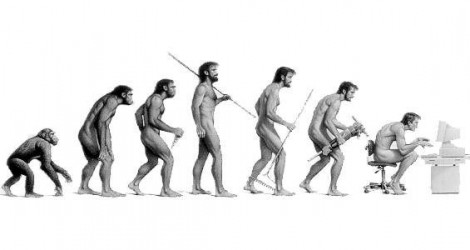
Epigraph
هُوَ اللَّهُ الْخَالِقُ الْبَارِئُ الْمُصَوِّرُ ۖ لَهُ الْأَسْمَاءُ الْحُسْنَىٰ ۚ يُسَبِّحُ لَهُ مَا فِي السَّمَاوَاتِ وَالْأَرْضِ ۖ وَهُوَ الْعَزِيزُ الْحَكِيمُ
He is Allah, the Creator, the Maker, the Fashioner. His are the most beautiful names. All that is in the heavens and the earth glorifies Him, and He is the Mighty, the Wise. (Al Quran 59:24)
Presented by Zia H Shah MD
Abstract
In a world where biological evolution is often portrayed as a blind, purposeless process, guided evolution offers a compelling alternative that harmonizes cutting-edge science with faith in God the Creator. This perspective affirms the empirical reality of evolution – common ancestry, natural selection, genetic change – while positing that these natural processes unfold under divine direction and intent. We explore a wealth of evidence, from the remarkable role of ancient viruses in shaping the placenta and even the human brain to the stunning beauty and complexity in nature that far exceed survival necessities. Recent discoveries show that mammals (including humans) owe key innovations to viral genes co-opted in their genomes – an “accident” of nature that, in a theistic view, hints at providence rather than chance thequran.love thequran.love. We examine how such findings, alongside the convergent emergence of complex features (eyes, wings, minds) in independent lineages, point to an underlying directionality or purpose in evolution’s grand tapestry. Philosophers and theologians across the Abrahamic faiths have long argued that randomness in evolution does not preclude God’s guidance – random mutations “being random” is entirely compatible with their being caused or utilized by God’s will creation.com scienceandculture.com. The Quran, in particular, provides a rich theological framework for guided evolution: it describes God as Al‑Muṣawwir (the Fashioner of forms) and Ar‑Rabb (the Nurturing Lord), guiding creation through stages thequran.love thequran.love. Quranic verses speak of life created “in stages” and emerging “from water” and “from clay,” closely paralleling the scientific narrative of life’s gradual development thequran.love thequran.love. In this extensive essay, we present an unequivocal case for guided evolution. We draw upon scientific research (especially the latest insights into viral “architects” of evolution), philosophical reasoning, and theological insights from Islam and other Abrahamic traditions. The evidence will show that evolution’s awe-inspiring creativity – producing conscious beings from simple cells over billions of years – is not a series of cosmic accidents, but a divinely orchestrated drama. Understanding evolution as God’s chosen method of creation not only resolves the perceived conflict between faith and science, it elevates our appreciation of nature. In the end, we find that the book of Nature and the book of Scripture tell one coherent story: a story of life guided with wisdom and purpose, testifying to God, “the best of creators” (Qur’an 23:14).
Introduction
Among the most profound questions in science and religion is whether the development of life on Earth is an unguided accident or a guided process with an underlying purpose. Darwin’s theory of evolution by natural selection provided a powerful mechanism explaining how life diversified, but many have assumed it renders notions of design or divine direction obsolete. This has led to a false dichotomy: either evolution is blind and random, or life must have been specially created in fixed forms. However, an increasing number of scientists, philosophers, and theologians are carving out a middle path – one that fully embraces the scientific evidence for evolution while affirming that a wise Creator is behind it all thequran.love creation.com. This view, often called theistic evolution or guided evolution, asserts that evolutionary processes are real and observable, but they ultimately unfold according to divine intent.
The stakes of this discussion are high. For people of faith, accepting a “purposeless” evolution can seem to undermine belief in a providential God. For scientists, invoking divine guidance can sound like a science-stopper. Yet, as we will show, reconciling evolution with God’s guidance is not only possible – it is supported by considerable evidence and philosophical insight. The fundamental mistake is to confuse the scientific description of evolutionary mechanisms with a metaphysical conclusion about whether those mechanisms are guided or not scienceandculture.com creation.com. In fact, science can describe how evolution works, but it cannot pronounce on the ultimate purpose (or lack thereof) behind it – that is a philosophical and theological question scienceandculture.com creation.com. As the philosopher Alvin Plantinga observes, the common claim that evolution is “unguided” is “not a part of the scientific theory itself, but a metaphysical or theological addition” creation.com. Nothing in evolutionary biology forbids God from working through natural laws and random mutations – these could simply be the tools of Providence thequran.love thequran.love.
In the Abrahamic traditions (Judaism, Christianity, Islam), God is understood to be both Transcendent Creator and Immanent Sustainer of the world. This means that God can work through what we call natural processes just as easily as through special miracles. The Islamic scholar Dr. Zia H. Shah MD encapsulates this view by noting that “the laws of biology are [but] God’s habits”, and what we label “random” in evolution is only random from our limited perspective, not from God’s thequran.love. Thus, mutations without any discernible pattern or goal (to scientists) could still occur according to a divine plan – much as quantum events might be indeterminate to us but known to God. In this way, evolution can be seen as the unfolding of God’s plan through natural phenomena thequran.love thequran.love.
This essay will make an emphatic case for guided evolution and a theistic understanding of nature’s creativity. We will marshal evidence from biology that suggests evolution is not a series of lucky accidents, but a process that shows signs of direction and foresight. For instance, we will examine how vital evolutionary innovations – from the mammalian placenta to the human immune system and even aspects of brain function – have arisen via the co-opting of “random” viral genes, an outcome that seems uncannily fortuitous on chance alone thequran.love thequran.love. We will also reflect on the remarkable beauty and complexity seen in evolution (such as the metamorphosis of a caterpillar into a butterfly or the intricate designs of mimicry and symbiosis), arguing that these are more consistent with a purposeful artistry than with blind trial-and-error thequran.love thequran.love. Moreover, we will delve into scriptural insights, especially from the Qur’an, that describe creation in terms strikingly compatible with evolutionary theory – emphasizing gradual development, perfection over time, and the idea that God “guides” every creature to its destined form thequran.love thequran.love. The analysis will be interdisciplinary and comprehensive, touching on modern scientific research, Qur’anic exegesis, and philosophical arguments put forth by thinkers across faith traditions.
By the end, it will become clear that guided evolution is not a compromise born of desperation, but a powerful paradigm that enriches both our science and our spirituality. It allows believers to embrace all the evidence of biology without abandoning belief in a purposeful Creator. It invites skeptics to consider that evolution’s astounding creative power might be indicative of a Mind working through nature’s laws. In short, guided evolution paints a theistic landscape wherein God is not a distant watchmaker who set life in motion and left, nor a meddler who constantly violates natural laws, but rather the Author of nature’s laws and the guiding force within evolutionary history. As we shall see, this view is not only intellectually satisfying and faithful to scripture – it also inspires deeper awe for the living world, which can now be seen as “a living scripture” in its own right, full of divine signs for those who contemplate thequran.love thequran.love.
Let us begin by clearly defining what guided evolution means, and how it differs from both strict Darwinian materialism and young-earth creationism. From there, we will journey through scientific discoveries and theological reflections that converge on the same conclusion: evolution is real, and God is behind it.
Read further in Microsoft Word file:




 The Glorious Quran and Science
Leave a comment