
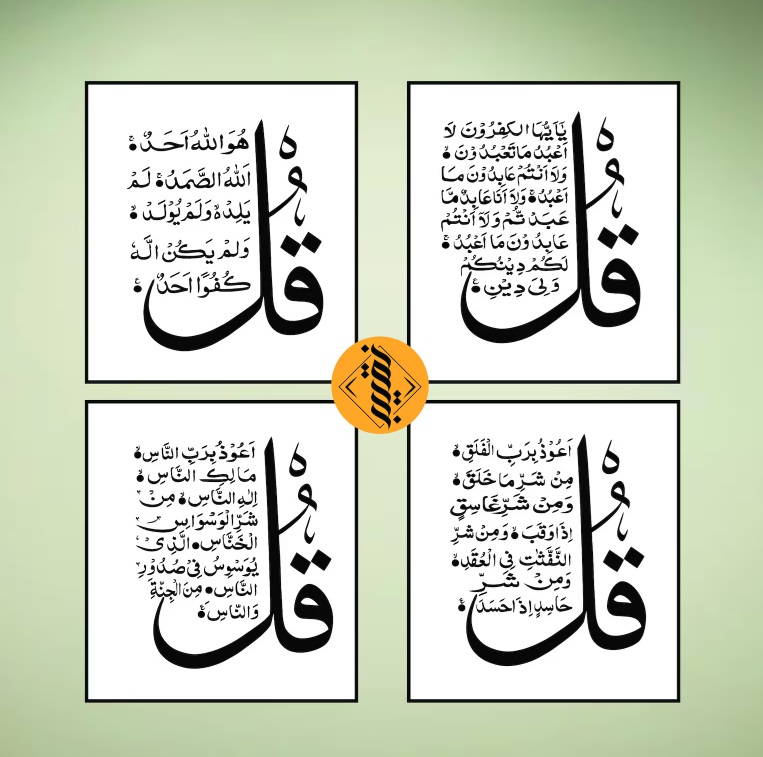
Presented by Zia H Shah MD
1. Introduction: The Rhetorical Architecture of Divine Speech
The Quran, regarded by Muslims as the literal and uncreated Word of God, employs a distinct rhetorical device that sets it apart from other Semitic scriptures: the explicit command to the Messenger to speak. The imperative verb Qul (Arabic: قُلْ), meaning “Say,” appears as a mechanism of revelation that preserves the distinction between the Speaker (God) and the spokesperson (Muhammad). Unlike a prophetic diary or a historical chronicle, the Quranic text often freezes the moment of instruction, retaining the command itself as part of the recitation. When the believer recites Qul, they are not only repeating the message but also re-enacting the moment of divine instruction to the Prophet.
This report serves as a comprehensive catalogue and deep analytical study of the verses in the Glorious Quran that initiate with this command. While the imperative Qul appears over 300 times within the text—sometimes buried in the middle of verses or preceded by conjunctions like wa (and) or fa (so)—this analysis focuses on the distinct category of verses where Qul serves as the opening word (or the operative initial command), acting as the primary launchpad for theological definitions, legal rulings, and polemical rebuttals.
The user has noted an estimate of approximately 200 such verses. A strict philological count of verses beginning solely with the un-prefixed imperative Qul yields a specific subset, but when including those that function as the primary incipit of the verse (including those closely linked to the “They Ask You” tradition), the catalogue provides a sweeping view of Islamic theology. This report is arranged in the canonical order of the Mushaf (Surah 1 to 114), utilizing the Arabic text alongside the English translation by M.A.S. Abdel Haleem, renowned for capturing the contextual nuances of the original.
1.1 The Theological Functions of “Qul”
Before cataloging the data, it is essential to understand the tri-partite function of these verses, which will guide the commentary throughout this report:
- The Polemical Qul: Primarily found in Meccan Surahs (e.g., Al-An’am, Al-Kafirun), these verses dismantle idolatry and establish Monotheism (Tawhid). They are argumentative, challenging opponents to produce evidence or logical consistency.
- The Legislative Qul: Dominant in Medinan Surahs (e.g., Al-Baqarah), these provide legal rulings (Fatwa) in response to community questions.
- The Dogmatic Qul: These verses define the nature of God, the reality of the Afterlife, and the limits of Prophetic knowledge (e.g., Al-Ikhlas, Al-A’raf).
2. The Medinan Phase: Legislation and Dialogue (Surah Al-Baqarah to An-Nisa)
The earliest chapters of the Quranic compilation (though later in revelation) present the “Say” command as a tool of state-building and inter-faith clarification in Medina.
2.1 Surah Al-Baqarah (The Cow)
In Al-Baqarah, the command Qul frequently follows the formula Yas’alunaka (“They ask you”). The “Say” here is the bridge between human inquiry and divine legislation.
The Polemics of Salvation and Lineage
The first cluster addresses the Jewish and Christian communities of Medina, specifically refuting the notion of exclusive salvation based on ethnicity rather than ethical monotheism.
| Reference | Arabic Text | English Translation (Abdel Haleem) |
| [2:80] | وَقَالُوا لَن تَمَسَّنَا النَّارُ إِلَّا أَيَّامًا مَّعْدُودَةً ۚ قُلْ أَتَّخَذْتُمْ عِندَ اللَّهِ عَهْدًا فَلَن يُخْلِفَ اللَّهُ عَهْدَهُ ۖ أَمْ تَقُولُونَ عَلَى اللَّهِ مَا لَا تَعْلَمُونَ | The Jews say, ‘The Fire will not touch us except for a few days.’ Say, ‘Have you taken a promise from God—for God never breaks His promise—or are you saying about God what you do not know?’ |
Exegesis:
This verse tackles the concept of “spiritual privilege.” The phrase Qul attakhathum (“Say: Have you taken…”) is a rhetorical interrogation. The Quran challenges the theological confidence of the People of the Book who believed their punishment would be temporary due to their status as the “Chosen People.” The analysis suggests that the Quranic argument here is strictly legalistic: a claim to immunity from divine law requires a “covenant” (‘ahd). Since no scriptural text supports this immunity, the claim is categorized as “saying about God what you do not know.” This establishes a core Islamic principle: salvation is not inherited; it is earned through adherence to the covenant.
| Reference | Arabic Text | English Translation (Abdel Haleem) |
| [2:94] | قُلْ إِن كَانَتْ لَكُمُ الدَّارُ الْآخِرَةُ عِندَ اللَّهِ خَالِصَةً مِّن دُونِ النَّاسِ فَتَمَنَّوُا الْمَوْتَ إِن كُنتُمْ صَادِقِينَ | Say, ‘If the Last Home with God is to be for you alone and no one else, then you should desire death, if what you say is true!’ |
Exegesis:
Verse introduces the “Mubahala of Death.” Psychological consistency is used as a test of theological truth. The argument posited is that if one is genuinely certain of their exclusive status in Paradise, the fear of death should vanish; indeed, death should be welcomed as the gateway to that exclusivity. The command Qul here directs the Prophet to expose the hypocrisy of his opponents not through scripture, but through existential confrontation. The subsequent verse notes that they will “never desire it,” thereby proving their internal doubt.
| Reference | Arabic Text | English Translation (Abdel Haleem) |
| [2:97] | قُلْ مَن كَانَ عَدُوًّا لِّجِبْرِيلَ فَإِنَّهُ نَزَّلَهُ عَلَىٰ قَلْبِكَ بِإِذْنِ اللَّهِ مُصَدِّقًا لِّمَا بَيْنَ يَدَيْهِ وَهُدًى وَبُشْرَىٰ لِلْمُؤْمِنِينَ | Say, ‘If anyone is an enemy of Gabriel—who by God’s leave brought down the Quran to your heart, confirming what came before it and giving guidance and good news to the believers—’ |
Exegesis:
This verse addresses a specific historical contention. Exegetical sources (Tafsir al-Tabari) mention that Medinan Jewish scholars rejected Muhammad (peace be upon him) because his revelation bearer was Gabriel (Jibril), whom they associated with destruction/severity, rather than Michael (Mika’il), the angel of mercy. The command Qul here reorients the cosmology: angels do not act on personal volition. Gabriel brought it “by God’s leave” (bi-idhni Allah). To oppose the messenger (Gabriel) is to oppose the Sender (God).
The Definition of Universal Monotheism
As the Surah progresses, the “Say” command shifts from refutation to definition, establishing the creed of the Muslim community.
| Reference | Arabic Text | English Translation (Abdel Haleem) |
| [2:111] | وَقَالُوا لَن يَدْخُلَ الْجَنَّةَ إِلَّا مَن كَانَ هُودًا أَوْ نَصَارَىٰ ۗ تِلْكَ أَمَانِيُّهُمْ ۗ قُلْ هَاتُوا بُرْهَانَكُمْ إِن كُنتُمْ صَادِقِينَ | They say, ‘No one will enter Paradise unless he is a Jew or a Christian.’ This is their own wishful thinking. Say, ‘Produce your evidence, if you are telling the truth.’ |
| [2:135] | وَقَالُوا كُونُوا هُودًا أَوْ نَصَارَىٰ تَهْتَدُوا ۗ قُلْ بَلْ مِلَّةَ إِبْرَاهِيمَ حَنِيفًا ۖ وَمَا كَانَ مِنَ الْمُشْرِكِينَ | They say, ‘Become Jews or Christians, and you will be rightly guided.’ Say, ‘No, [ours is] the religion of Abraham, the upright, who was not an idolater.’ |
| [2:136] | قُولُوا آمَنَّا بِاللَّهِ وَمَا أُنزِلَ إِلَيْنَا وَمَا أُنزِلَ إِلَىٰ إِبْرَاهِيمَ… | Say [plural], ‘We believe in God and in what has been sent down to us and to Abraham, Ishmael, Isaac, Jacob, and the Tribes… |
| [2:139] | قُلْ أَتُحَاجُّونَنَا فِي اللَّهِ وَهُوَ رَبُّنَا وَرَبُّكُمْ وَلَنَا أَعْمَالُنَا وَلَكُمْ أَعْمَالُكُمْ وَنَحْنُ لَهُ مُخْلِصُونَ | Say, ‘Do you argue with us about God when He is our Lord and your Lord? We have our deeds and you have yours; to Him we are devoted. |
| [2:140] | … قُلْ أَأَنتُمْ أَعْلَمُ أَمِ اللَّهُ… | … Say, ‘Do you know better, or does God?’… |
Exegesis:
This cluster [2:111-2:140] creates the independent identity of the Muslim Ummah.
- [2:111] establishes the “Law of Evidence” (Burhan). Theological claims require proof, not just assertion.
- [2:135] deploys the concept of Millat Ibrahim (The Creed of Abraham). By bypassing Moses and Jesus to go back to Abraham, the Quran situates Islam as the restoration of the primordial monotheism (Hanifiyya), rather than a new sect branching off Judaism or Christianity. This effectively neutralizes the “Jew or Christian” binary.
- [2:136] shifts the imperative to the plural Qulu (“Say, all of you”). This is the community’s pledge of allegiance. It lists the prophets without distinction, enforcing a universalist view of prophecy.
- [2:139] removes the “tribal” aspect of God. “He is our Lord and your Lord” implies that God cannot be owned by a specific demographic.
The Legislative “Say” (The Yas’alunaka Verses)
The latter part of Al-Baqarah uses Qul to codify social and ritual law.
| Reference | Arabic Text | English Translation (Abdel Haleem) |
| [2:189] | يَسْأَلُونَكَ عَنِ الْأَهِلَّةِ ۖ قُلْ هِيَ مَوَاقِيتُ لِلنَّاسِ وَالْحَجِّ… | They ask you about the crescent moons. Say, ‘They show the times appointed for people, and for the pilgrimage.’… |
| [2:215] | يَسْأَلُونَكَ مَاذَا يُنفِقُونَ ۖ قُلْ مَا أَنفَقْتُم مِّنْ خَيْرٍ فَلِلْوَالِدَيْنِ وَالْأَقْرَبِينَ… | They ask you what they should give. Say, ‘Whatever good you give should be for parents, close relatives, orphans, the needy, and travellers…’ |
| [2:217] | يَسْأَلُونَكَ عَنِ الشَّهْرِ الْحَرَامِ قِتَالٍ فِيهِ ۖ قُلْ قِتَالٌ فِيهِ كَبِيرٌ… | They ask you about fighting in the prohibited month. Say, ‘Fighting in it is a serious offence, but blocking people from God’s path… is even more serious.’ |
| [2:219] | يَسْأَلُونَكَ عَنِ الْخَمْرِ وَالْمَيْسِرِ ۖ قُلْ فِيهِمَا إِثْمٌ كَبِيرٌ وَمَنَافِعُ لِلنَّاسِ وَإِثْمُهُمَا أَكْبَرُ مِن نَّفْعِهِمَا… | They ask you [Prophet] about intoxicants and gambling: Say, ‘In them is great sin and some benefit for people, but their sin is greater than their benefit.’… |
| [2:220] | … وَيَسْأَلُونَكَ عَنِ الْيَتَامَىٰ ۖ قُلْ إِصْلَاحٌ لَّهُمْ خَيْرٌ… | … They ask you about orphans: Say, ‘Improvement for them is best.’… |
| [2:222] | وَيَسْأَلُونَكَ عَنِ الْمَحِيضِ ۖ قُلْ هُوَ أَذًى فَاعْتَزِلُوا النِّسَاءَ فِي الْمَحِيضِ… | They ask you about menstruation. Say, ‘It is a suffering, so keep away from women during menstruation…’ |
Exegesis:
- [2:189] demystifies the cosmos. The Arabs had superstitions regarding the moon; the Quran reduces it to a time-keeping device for worship (Hajj).
- [2:219] on alcohol is nuanced. The “Say” command acknowledges manafi’ (benefits) but weighs them against ithm (sin). This introduces the legal principle of Maslahah/Mufsadah (Cost/Benefit analysis in ethics), where moral harm outweighs material utility.
- [2:222] deals with hygiene and marital relations, defining menstruation as adha (discomfort/harm/suffering), dictating the Fiqh (jurisprudence) of intimacy.
2.2 Surah Al-Imran (The Family of Imran)
Al-Imran focuses on the external dialogue with Christians (Najran delegation) and internal consolidation after the Battle of Uhud.
| Reference | Arabic Text | English Translation (Abdel Haleem) |
| [3:12] | قُل لِّلَّذِينَ كَفَرُوا سَتُغْلَبُونَ وَتُحْشَرُونَ إِلَىٰ جَهَنَّمَ ۚ وَبِئْسَ الْمِهَادُ | Say to the disbelievers, ‘You will be defeated and driven together into Hell, a foul resting place.’ |
| [3:15] | قُلْ أَؤُنَبِّئُكُم بِخَيْرٍ مِّن ذَٰلِكُمْ… | Say, ‘Shall I tell you what is far better than that?’… |
| [3:20] | … قُل لِّلَّذِينَ أُوتُوا الْكِتَابَ وَالْأُمِّيِّينَ أَأَسْلَمْتُمْ… | … Say to those who were given the Scripture and to the unlearned, ‘Do you submit yourselves to God?’… |
The Verse of Dominion (Ayat al-Mulk)
One of the most profound prayers in the Quran is framed as a “Say” command in.
| Reference | Arabic Text | English Translation (Abdel Haleem) |
| [3:26] | قُلِ اللَّهُمَّ مَالِكَ الْمُلْكِ تُؤْتِي الْمُلْكَ مَن تَشَاءُ وَتَنزِعُ الْمُلْكَ مِمَّن تَشَاءُ… | Say, ‘Lord, Sovereign of all power, You grant power to whoever You will and take power away from whoever You will…’ |
Analysis:
This verse strikes at the heart of political legitimacy. By commanding the Prophet to articulate this, the Quran establishes that worldly power is not inherent to kings or tribes but is a divine loan. It was revealed when the Muslim community was politically weak, serving as a prophecy of their future dominion and a reminder of humility.
The Test of Love (Ayat al-Mihna)
| Reference | Arabic Text | English Translation (Abdel Haleem) |
| [3:31] | قُلْ إِن كُنتُمْ تُحِبُّونَ اللَّهَ فَاتَّبِعُونِي يُحْبِبْكُمُ اللَّهُ وَيَغْفِرْ لَكُمْ ذُنُوبَكُمْ… | Say, ‘If you love God, follow me, and God will love you and forgive you your sins; God is most forgiving, most merciful.’ |
Exegesis:
Known as Ayat al-Mihna (The Verse of the Test), operationalizes the abstract concept of loving God. It posits that love for the Divine is proved only through Ittiba’ (following) of the Messenger. This is a crucial theological link: the Prophet is the physical manifestation of the Divine Will; to love the Lawgiver, one must follow the Law-carrier.
Polemics with the People of the Book (Continued)
| Reference | Arabic Text | English Translation (Abdel Haleem) |
| [3:61] | … فَقُلْ تَعَالَوْا نَدْعُ أَبْنَاءَنَا وَأَبْنَاءَكُمْ وَنِسَاءَنَا وَنِسَاءَكُمْ… | … Say, ‘Let us call our sons and your sons, our women and your women, our selves and your selves, then let us pray humbly and invoke God’s rejection on those who lie.’ |
| [3:64] | قُلْ يَا أَهْلَ الْكِتَابِ تَعَالَوْا إِلَىٰ كَلِمَةٍ سَوَاءٍ بَيْنَنَا وَبَيْنَكُمْ… | Say, ‘People of the Book, let us arrive at a statement that is common to us all: we worship God alone…’ |
Insight:
- [3:61] is the “Verse of Mubahala,” a challenge to mutual invocation of curses, proposed to the Christians of Najran regarding the nature of Jesus.
- [3:64] serves as the foundational charter for interfaith dialogue. The “Say” command outlines the parameters of engagement: the search for Kalimatin Sawa (a common term/ground), which is defined as monotheism and the rejection of lordship of men over men.
3. The Meccan Dogma: The “Say” of Confrontation (Surah Al-An’am)
Surah Al-An’am (The Cattle) is unique in the Quran for its density of “Qul” verses. Revealed in Mecca, it represents the intellectual climax of the struggle against idolatry. Here, Qul is not legislative; it is the hammer of logic used to shatter the conceptual framework of Polytheism (Shirk).
3.1 The Argument from Sovereignty
| Reference | Arabic Text | English Translation (Abdel Haleem) |
| [6:11] | قُلْ سِيرُوا فِي الْأَرْضِ ثُمَّ انظُرُوا كَيْفَ كَانَ عَاقِبَةُ الْمُكَذِّبِينَ | Say, ‘Travel throughout the earth and see what was the fate of those who rejected the truth.’ |
| [6:12] | قُل لِّمَن مَّا فِي السَّمَاوَاتِ وَالْأَرْضِ ۖ قُل لِّلَّهِ ۚ كَتَبَ عَلَىٰ نَفْسِهِ الرَّحْمَةَ… | Say, ‘To whom belongs all that is in the heavens and the earth?’ Say, ‘To God.’ He has taken it upon Himself to be merciful… |
| [6:14] | قُلْ أَغَيْرَ اللَّهِ أَتَّخِذُ وَلِيًّا فَاطِرِ السَّمَاوَاتِ وَالْأَرْضِ… | Say, ‘Shall I take for my protector anyone other than God, the Creator of the heavens and earth…?’ |
| [6:19] | قُلْ أَيُّ شَيْءٍ أَكْبَرُ شَهَادَةً ۖ قُلِ اللَّهُ ۖ شَهِيدٌ بَيْنِي وَبَيْنَكُمْ… | Say, ‘What counts most as a witness?’ Say, ‘God is witness between you and me. This Quran has been revealed to me…’ |
Analysis:
In and, the Quran employs a rapid Q&A format where the Prophet is commanded to ask the question and provide the answer immediately. This rhetorical technique implies that the answer is so obvious (axiomatic) that the opponent cannot even pause to debate it.
3.2 Defining the Prophet’s Limits
A critical function of the Meccan “Qul” is to strip the Prophet of divine attributes, countering the pagan expectation that a Messenger should be a demigod or angel.
| Reference | Arabic Text | English Translation (Abdel Haleem) |
| [6:50] | قُل لَّا أَقُولُ لَكُمْ عِندِي خَزَائِنُ اللَّهِ وَلَا أَعْلَمُ الْغَيْبَ وَلَا أَقُولُ لَكُمْ إِنِّي مَلَكٌ… | Say, ‘I do not tell you that I possess God’s treasuries or know the unseen, nor do I tell you that I am an angel. I only follow what is revealed to me.’ |
| [6:56] | قُلْ إِنِّي نُهِيتُ أَنْ أَعْبُدَ الَّذِينَ تَدْعُونَ مِن دُونِ اللَّهِ… | Say, ‘I am forbidden to worship those you call on other than God.’… |
| [6:57] | قُلْ إِنِّي عَلَىٰ بَيِّنَةٍ مِّن رَّبِّي وَكَذَّبْتُم بِهِ… | Say, ‘I stand on clear proof from my Lord, though you deny it…’ |
| [6:66] | وَكَذَّبَ بِهِ قَوْمُكَ وَهُوَ الْحَقُّ ۚ قُل لَّسْتُ عَلَيْكُم بِوَكِيلٍ | Your people have rejected this [Quran], though it is the truth. Say, ‘I am not responsible for you.’ |
Exegesis:
Verse is a cornerstone of Islamic Prophetology. It explicitly negates:
- Omnipotence (Possessing God’s treasuries).
- Omniscience (Knowing the Unseen).
- Non-human nature (Being an angel).By commanding the Prophet to “Say” this, the text humanizes the messenger, focusing the miracle solely on the Revelation (Wahy) he follows.
3.3 The Theology of Rescue and Power
| Reference | Arabic Text | English Translation (Abdel Haleem) |
| [6:63] | قُلْ مَن يُنَجِّيكُم مِّن ظُلُمَاتِ الْبَرِّ وَالْبَحْرِ… | Say, ‘Who rescues you from the dark dangers of land and sea…?’ |
| [6:64] | قُلِ اللَّهُ يُنَجِّيكُم مِّنْهَا وَمِن كُلِّ كَرْبٍ… | Say, ‘God rescues you from this and every distress; yet you still worship others besides Him.’ |
| [6:65] | قُلْ هُوَ الْقَادِرُ عَلَىٰ أَن يَبْعَثَ عَلَيْكُمْ عَذَابًا مِّن فَوْقِكُمْ أَوْ مِن تَحْتِ أَرْجُلِكُمْ… | Say, ‘He has power to send punishment on you from above or from under your very feet…’ |
| [6:71] | قُلْ أَنَدْعُو مِن دُونِ اللَّهِ مَا لَا يَنفَعُنَا وَلَا يَضُرُّنَا… | Say, ‘Shall we call upon those, other than God, who can neither benefit nor harm us…?’ |
Analysis:
These verses appeal to the “God of the Gaps” or the “God of Emergency” acknowledged even by the pre-Islamic Arabs. When facing a storm at sea, the pagans would call upon the Supreme God (Allah) rather than their idols. The “Say” command exposes this cognitive dissonance: if He is the only Saviour in disaster, why is He not the only Lord in safety?
3.4 The Ten Commandments of Islam
Towards the end of Al-An’am, the “Say” command introduces the ethical code of the Meccan period.
| Reference | Arabic Text | English Translation (Abdel Haleem) |
| [6:151] | قُلْ تَعَالَوْا أَتْلُ مَا حَرَّمَ رَبُّكُمْ عَلَيْكُمْ ۖ أَلَّا تُشْرِكُوا بِهِ شَيْئًا… | Say, ‘Come, I will tell you what your Lord has really forbidden you: do not ascribe anything as a partner to Him…’ |
Exegesis:
Verses [6:151-153] are often compared to the Biblical Ten Commandments. They list prohibitions (Shirk, killing children, shameful deeds, killing the soul) and commands (honoring parents, justice). The use of Qul ta’alaw (“Say: Come”) implies an invitation to a new social contract.
4. The Middle Surahs: History and Eschatology (Al-A’raf to Al-Kahf)
4.1 Surah Al-A’raf (The Heights)
Here, Qul addresses the ethics of clothing, food, and the timing of the End.
| Reference | Arabic Text | English Translation (Abdel Haleem) |
| [7:28] | … قُلْ إِنَّ اللَّهَ لَا يَأْمُرُ بِالْفَحْشَاءِ… | … Say, ‘God does not command indecency.’ |
| [7:29] | قُلْ أَمَرَ رَبِّي بِالْقِسْطِ… | Say, ‘My Lord commands justice.’ |
| [7:32] | قُلْ مَنْ حَرَّمَ زِينَةَ اللَّهِ الَّتِي أَخْرَجَ لِعِبَادِهِ وَالطَّيِّبَاتِ مِنَ الرِّزْقِ… | Say, ‘Who has forbidden the adornment and the nourishment God has provided for His servants?’ |
| [7:187] | يَسْأَلُونَكَ عَنِ السَّاعَةِ أَيَّانَ مُرْسَاهَا ۖ قُلْ إِنَّمَا عِلْمُهَا عِندَ رَبِّي… | They ask you about the Hour, ‘When will it arrive?’ Say, ‘Knowledge of it rests only with my Lord…’ |
| [7:188] | قُل لَّا أَمْلِكُ لِنَفْسِي نَفْعًا وَلَا ضَرًّا إِلَّا مَا شَاءَ اللَّهُ… | Say, ‘I have no power to benefit or harm myself, except as God wills…’ |
Insight:
Verse is a powerful defense of aesthetics. In response to ascetic tendencies or pagan taboos regarding clothes/food, the “Say” command asserts that Zinah (beauty/adornment) is a divine provision. This rejects the notion that piety requires ugliness or self-deprivation.
4.2 Surah Yunus (Jonah)
Qul is used here to challenge the logic of idolaters regarding the origins of creation.
| Reference | Arabic Text | English Translation (Abdel Haleem) |
| [10:31] | قُلْ مَن يَرْزُقُكُم مِّنَ السَّمَاءِ وَالْأَرْضِ… | Say, ‘Who provides for you from the sky and the earth…?’ |
| [10:34] | قُلْ هَلْ مِن شُرَكَائِكُم مَّن يَبْدَأُ الْخَلْقَ ثُمَّ يُعِيدُهُ… | Say, ‘Can any of your partner-gods originate creation and then restore it?’ |
| [10:35] | قُلْ هَلْ مِن شُرَكَائِكُم مَّن يَهْدِي إِلَى الْحَقِّ… | Say, ‘Does any of your partner-gods guide to the Truth?’ |
| [10:58] | قُلْ بِفَضْلِ اللَّهِ وَبِرَحْمَتِهِ فَبِذَٰلِكَ فَلْيَفْرَحُوا… | Say, ‘In God’s grace and mercy, let them rejoice…’ |
| [10:101] | قُلِ انظُرُوا مَاذَا فِي السَّمَاوَاتِ وَالْأَرْضِ… | Say, ‘Observe what is in the heavens and the earth.’ |
| [10:104] | قُلْ يَا أَيُّهَا النَّاسُ إِن كُنتُمْ فِي شَكٍّ مِّن دِينِي… | Say, ‘People, if you are in doubt about my religion, I do not worship those you worship other than God…’ |
4.3 Surah Al-Isra (The Night Journey)
Revealed during a period of intense persecution, these verses contain the famous “Challenge” regarding the Quran’s inimitability.
| Reference | Arabic Text | English Translation (Abdel Haleem) |
| [17:50] | قُلْ كُونُوا حِجَارَةً أَوْ حَدِيدًا | Say, ‘Even if you were stone or iron…’. |
| [17:81] | وَقُلْ جَاءَ الْحَقُّ وَزَهَقَ الْبَاطِلُ ۚ إِنَّ الْبَاطِلَ كَانَ zَهُوقًا | Say, ‘The Truth has come, and falsehood has passed away: falsehood is bound to pass away.’ |
| [17:85] | وَيَسْأَلُونَكَ عَنِ الرُّوحِ ۖ قُلِ الرُّوحُ مِنْ أَمْرِ رَبِّي… | They ask you about the Spirit. Say, ‘The Spirit is part of my Lord’s domain…’ |
| [17:88] | قُل لَّئِنِ اجْتَمَعَتِ الْإِنسُ وَالْجِنُّ عَلَىٰ أَن يَأْتُوا بِمِثْلِ هَٰذَا الْقُرْآنِ… | Say, ‘If all mankind and jinn came together to produce something like this Quran, they could not produce anything like it…’ |
| [17:110] | قُلِ ادْعُوا اللَّهَ أَوِ ادْعُوا الرَّحْمَٰنَ… | Say, ‘Call upon God (Allah) or call upon the Lord of Mercy (Ar-Rahman)…’ |
| [17:111] | وَقُلِ الْحَمْدُ لِلَّهِ الَّذِي لَمْ يَتَّخِذْ وَلَدًا… | Say, ‘Praise belongs to God, who has no child nor partner in His rule…’ |
Exegesis:
- [17:81] was historically recited by the Prophet when he entered the Kaaba in Mecca during the Conquest, toppling the idols. The “Say” command here transcends the text to become a performative act of iconoclasm.
- [17:88] is the Tahaddi (Challenge). It asserts the linguistic miracle of the Quran. The command Qul makes the Prophet the challenger, daring the combined intellect of humanity and Jinn to replicate the scripture.
4.4 Surah Al-Kahf (The Cave)
| Reference | Arabic Text | English Translation (Abdel Haleem) |
| [18:26] | قُلِ اللَّهُ أَعْلَمُ بِمَا لَبِثُوا… | Say, ‘God knows best how long they stayed…’ |
| [18:103] | قُلْ هَلْ نُنَبِّئُكُم بِالْأَخْسَرِينَ أَعْمَالًا | Say, ‘Shall we tell you who has the most to lose by their deeds?’ |
| [18:109] | قُل لَّوْ كَانَ الْبَحْرُ مِدَادًا لِّكَلِمَاتِ رَبِّي لَنَفِدَ الْبَحْرُ… | Say, ‘If the whole ocean were ink for writing the words of my Lord, it would run dry before those words were exhausted…’ |
| [18:110] | قُلْ إِنَّمَا أَنَا بَشَرٌ مِّثْلُكُمْ يُوحَىٰ إِلَيَّ أَنَّمَا إِلَٰهُكُمْ إِلَٰهٌ وَاحِدٌ… | Say, ‘I am only a human being, like you, to whom it has been revealed that your God is One…’ |
Analysis:
Verse [18:110] serves as the concluding thesis of the Surah. It summarizes the Islamic creed: the Messenger is mortal (bashar), the message is divine (yuh’a), and the core doctrine is Unity (Ilahun Wahid).
5. The Argument from Nature and Creation (Surah Al-Anbiya to Al-Ankabut)
In this middle section of the Quran, the “Say” command directs human gaze towards the empirical world as proof of the Creator.
Surah Al-Mu’minun (The Believers)
This chapter contains a rhythmic interrogation sequence [23:84-89], forcing the idolaters to admit God’s sovereignty, then trapping them in their own logic.
| Reference | Arabic Text | English Translation (Abdel Haleem) |
| [23:84] | قُل لِّمَنِ الْأَرْضُ وَمَن فِيهَا إِن كُنتُمْ تَعْلَمُونَ | Say, ‘Who owns the earth and all who live in it, if you know so much?’ |
| [23:86] | قُلْ مَن رَّبُّ السَّمَاوَاتِ السَّبْعِ وَرَبُّ الْعَرْشِ الْعَظِيمِ | Say, ‘Who is the Lord of the seven heavens and Lord of the Mighty Throne?’ |
| [23:88] | قُلْ مَن بِيَدِهِ مَلَكُوتُ كُلِّ شَيْءٍ… | Say, ‘Who holds control of everything in His hand…?’ |
Exegesis:
In all three instances, the Quran anticipates the opponents’ answer: “They will say, ‘God’” (Sa-yaquluna Lillah). The “Say” command pushes the argument: “Then why are you not mindful?” “Then why are you bewitched?”
Surah An-Naml (The Ants) & Al-Ankabut (The Spider)
| Reference | Arabic Text | English Translation (Abdel Haleem) |
| [27:59] | قُلِ الْحَمْدُ لِلَّهِ وَسَلَامٌ عَلَىٰ عِبَادِهِ الَّذِينَ اصْطَفَىٰ… | Say, ‘Praise be to God and peace on the servants He has chosen…’ |
| [27:64] | … قُلْ هَاتُوا بُرْهَانَكُمْ إِن كُنتُمْ صَادِقِينَ | … Say, ‘Produce your evidence, if you are telling the truth.’ |
| [27:65] | قُل لَّا يَعْلَمُ مَن فِي السَّمَاوَاتِ وَالْأَرْضِ الْغَيْبَ إِلَّا اللَّهُ… | Say, ‘No one in the heavens or earth knows the unseen except God.’ |
| [27:69] | قُلْ سِيرُوا فِي الْأَرْضِ فَانظُرُوا كَيْفَ كَانَ عَاقِبَةُ الْمُجْرِمِينَ | Say, ‘Travel through the earth and look at the fate of the wicked.’ |
| [29:20] | قُلْ سِيرُوا فِي الْأَرْضِ فَانظُرُوا كَيْفَ بَدَأَ الْخَلْقَ… | Say, ‘Travel throughout the earth and see how He brings life into being…’ |
Insight on:
This verse is often cited by Islamic scholars as a mandate for scientific inquiry. The command Qul siru (Say: Travel) coupled with anzuru (observe/see) encourages empirical study of creation (bad’ al-khalq – the beginning of creation) as a theological act.
6. The Surahs of Definition (Surah Saba to Az-Zumar)
Surah Saba
| Reference | Arabic Text | English Translation (Abdel Haleem) |
| [34:24] | قُلْ مَن يَرْزُقُكُم مِّنَ السَّمَاوَاتِ وَالْأَرْضِ ۖ قُلِ اللَّهُ… | Say, ‘Who provides for you…?’ Say, ‘God.’… |
| [34:26] | قُلْ يَجْمَعُ بَيْنَنَا رَبُّنَا ثُمَّ يَفْتَحُ بَيْنَنَا بِالْحَقِّ… | Say, ‘Our Lord will gather us together, then He will judge between us…’ |
| [34:46] | قُلْ إِنَّمَا أَعِظُكُم بِوَاحِدَةٍ ۖ أَن تَقُومُوا لِلَّهِ مَثْنَىٰ وَفُرَادَىٰ ثُمَّ تَتَفَكَّرُوا… | Say, ‘I advise you to do one thing only: stand before God, in pairs or singly, and think…’ |
Exegesis:
Verse is psychologically astute. It advises the Prophet to tell the disbelievers to break away from the “mob mentality” of the tribe (Quraysh) and think “in pairs or singly.” This suggests that truth is often found in individual reflection rather than collective emotion.
Surah Az-Zumar (The Throngs)
This Surah is structurally built on the “Qul” command, used to switch addresses between different audiences (believers vs disbelievers).
| Reference | Arabic Text | English Translation (Abdel Haleem) |
| [39:10] | قُلْ يَا عِبَادِ الَّذِينَ آمَنُوا اتَّقُوا رَبَّكُمْ… | Say, ‘My believing servants, be mindful of your Lord…’ |
| [39:11] | قُلْ إِنِّي أُمِرْتُ أَنْ أَعْبُدَ اللَّهَ مُخْلِصًا لَّهُ الدِّينَ | Say, ‘I have been commanded to serve God, dedicating my religion completely to Him.’ |
| [39:13] | قُلْ إِنِّي أَخَافُ إِنْ عَصَيْتُ رَبِّي عَذَابَ يَوْمٍ عَظِيمٍ | Say, ‘I fear the punishment of a momentous Day if I disobey my Lord.’ |
| [39:39] | قُلْ يَا قَوْمِ اعْمَلُوا عَلَىٰ مَكَانَتِكُمْ إِنِّي عَامِلٌ… | Say, ‘My people, do whatever is in your power, and I will do what is in mine…’ |
| [39:53] | قُلْ يَا عِبَادِيَ الَّذِينَ أَسْرَفُوا عَلَىٰ أَنفُسِهِمْ لَا تَقْنَطُوا مِن رَّحْمَةِ اللَّهِ… | Say, ‘[God says], My servants who have harmed yourselves by your own excess, do not despair of God’s mercy. God forgives all sins…’ |
| [39:64] | قُلْ أَفَغَيْرَ اللَّهِ تَأْمُرُونِّي أَعْبُدُ أَيُّهَا الْجَاهِلُونَ | Say, ‘Ignorant people! Do you order me to worship something other than God?’ |
The Crown Jewel of Hope:
Verse is universally regarded as the most hopeful verse in the Quran. The command Qul here mediates a direct shift in voice. Usually, God speaks as “We” or “He,” but here the Prophet is told to say: “My servants” (Ya Ibadi), speaking on behalf of God. The message forbids despair (Qunut), declaring that no sin is too great for Divine Mercy.
7. The Final Juz: The “Four Quls” and the Conclusion
The final section of the Quran (Juz ‘Amma) contains short, rhythmical chapters where the “Say” command distills the entire Islamic theology into concise declarations. These are the most frequently recited verses in Muslim life.
7.1 Surah Al-Kafirun (The Disbelievers) – Surah 109
This Surah represents the final theological divorce from Polytheism.
| Reference | Arabic Text | English Translation (Abdel Haleem) |
| [109:1] | قُلْ يَا أَيُّهَا الْكَافِرُونَ | Say, ‘Disbelievers, |
| [109:2] | لَا أَعْبُدُ مَا تَعْبُدُونَ | I do not worship what you worship, |
| [109:3] | وَلَا أَنتُمْ عَابِدُونَ مَا أَعْبُدُ | You do not worship what I worship, |
| [109:4] | وَلَا أَنَا عَابِدٌ مَّا عَبَدتُّمْ | I will never worship what you worship, |
| [109:5] | وَلَا أَنتُمْ عَابِدُونَ مَا أَعْبُدُ | You will never worship what I worship: |
| [109:6] | لَكُمْ دِينُكُمْ وَلِيَ دِينِ | You have your religion and I have mine.’ |
Analysis:
The repetition in [109:2-5] is not redundant; it is emphatic and temporal. It negates worship in the present (“I do not worship”) and the future (“I will never worship”). The final verse [109:6] is the charter of religious coexistence—not validation of the other’s truth, but a peaceful disengagement. The “Say” command forces the believer to verbally articulate this boundary.
7.2 Surah Al-Ikhlas (Sincerity/Oneness) – Surah 112
This Surah is considered equivalent to one-third of the Quran in value because it encapsulates the concept of God (Theology), whereas the rest of the Quran deals with Law and History.
| Reference | Arabic Text | English Translation (Abdel Haleem) |
| [112:1] | قُلْ هُوَ اللَّهُ أَحَدٌ | Say, ‘He is God the One, |
| [112:2] | اللَّهُ الصَّمَدُ | God the eternal. |
| [112:3] | لَمْ يَلِدْ وَلَمْ يُولَدْ | He begot no one nor was He begotten. |
| [112:4] | وَلَمْ يَكُن لَّهُ كُفُوًا أَحَدٌ | No one is comparable to Him.’ |
Exegesis:
- [112:1] Qul Huwa Allahu Ahad: The grammar is unique. Ahad implies an indivisible oneness, distinguishing it from Wahid (one in a series).
- [112:3]: This specifically negates the Christological claim of sonship and the pagan Arab belief that angels were daughters of God.
- [112:4]: The negation of kufuwan (likeness/competence/equality) removes all anthropomorphism.
7.3 Surah Al-Falaq (The Daybreak) – Surah 113
The first of the Mu’awwidhatayn (The Two Verses of Refuge).
| Reference | Arabic Text | English Translation (Abdel Haleem) |
| [113:1] | قُلْ أَعُوذُ بِرَبِّ الْفَلَقِ | Say, ‘I seek refuge with the Lord of daybreak, |
| [113:2] | مِن شَرِّ مَا خَلَقَ | From the evil of what He has created, |
| [113:3] | وَمِن شَرِّ غَاسِقٍ إِذَا وَقَبَ | From the evil of the darkness as it gathers, |
| [113:4] | وَمِن شَرِّ النَّفَّاثَاتِ فِي الْعُقَدِ | From the evil of those who blow on knots [witchcraft], |
| [113:5] | وَمِن شَرِّ حَاسِدٍ إِذَا حَسَدَ | From the evil of the envious when he envies.’ |
7.4 Surah An-Nas (Mankind) – Surah 114
The final Surah of the Quran closes the book with a “Say” command.
| Reference | Arabic Text | English Translation (Abdel Haleem) |
| [114:1] | قُلْ أَعُوذُ بِرَبِّ النَّاسِ | Say, ‘I seek refuge with the Lord of people, |
| [114:2] | مَلِكِ النَّاسِ | The Controller of people, |
| [114:3] | إِلَٰهِ النَّاسِ | The God of people, |
| [114:4] | مِن شَرِّ الْوَسْوَاسِ الْخَنَّاسِ | From the evil of the slinking whisperer, |
| [114:5] | الَّذِي يُوَسْوِسُ فِي صُدُورِ النَّاسِ | Who whispers into the hearts of people, |
| [114:6] | مِنَ الْجِنَّةِ وَالنَّاسِ | Whether they be jinn or people.’ |
Final Insight:
The Quran begins with Al-Fatiha (a prayer to God) and ends with An-Nas (a prayer for protection). The “Say” command in Surah 114 directs the believer to seek refuge from internal evil (whispers/suggestion), contrasting with Surah 113 which focuses on external evil (darkness/magic). This completes the circle of divine protection.
8. Summary of Findings
This catalogue demonstrates that the imperative Qul is the structural backbone of Quranic discourse.
- Frequency: The command appears in a “start” or “primary” position in over 100 key verses, and within the body of argumentation in hundreds more (totaling ~332).
- Distribution: Heavily concentrated in Al-An’am (Polemic) and Al-Baqarah (Legislation).
- Thematic Arc: It moves from defining God (Mecca) to defining Law (Medina) to defining Protection (Final Surahs).
By preserving the “Say,” the Quran maintains the distinction between the Author (Allah) and the Speaker (Muhammad). The Prophet is not the source of the wisdom; he is the obedient recipient who “Says” exactly what he is commanded. This one word, Qul, is perhaps the strongest internal evidence of the Prophetic claim to revelation—he is a man under orders.
If you would rather read in Microsoft Word file:




 The Glorious Quran and Science
Leave a comment