
Presented by Zia H Shah MD
Abstract
The mammalian placenta is a stunning example of nature’s ingenuity, evolving over tens of millions of years in part by repurposing viral genes. This article explores how the placenta’s development – from ancient, simple structures to the complex organ sustaining human life – exemplifies the Quranic principle that “as for the foam, it vanishes, while that which benefits people remains” quran.com. In the Quran (13:17), truth is likened to life-giving water that endures, whereas falsehood is like scum or foam that dissipates. We discuss how the placenta’s story mirrors this: even a retrovirus, once deemed “junk” or harmful, was not wasted but transformed into something of great benefit to humanity. We interweave scientific insights with Quranic verses – including those describing embryonic development – to show how beneficial innovations are preserved and elevated over millennia by a guided creative process. Drawing on classical Islamic occasionalism (the belief that God is the direct cause of all events), we argue that the placenta’s emergence is not a mere accident of evolution but a divinely guided innovation. In doing so, we find a harmonious commentary on Quran 13:17 and related verses: the preservation of what is useful in nature reflects a higher truth and purposeful design, reinforcing faith in a Creator who brings life from unexpected sources and promises life after death.
Quran 13:17 – Truth Like Water, Falsehood Like Foam
Surah Ar-Ra’d 13:17 offers a vivid parable: “He sends down rain from the sky, and the valleys flow according to their measure, carrying foam on the surface… As for the foam, it vanishes, cast off; while that which benefits people remains on the earth. Thus does Allah illustrate truth and falsehood.” quran.com. In this metaphor, the truth is likened to the pure water that nourishes the land and endures, whereas falsehood is likened to the froth and scum that form and then disappear. Classical commentators explain that just as useful water soaks into the earth to bring life, while useless foam dries up, so do truth and goodness ultimately prevail as useless falsehood fades away academyofislam.com academyofislam.com. This Quranic principle has a timeless, universal quality – it applies not only to moral and theological truths, but can be seen reflected in the patterns of nature and history. Beneficial things have lasting impact, whereas that which is detrimental or without value is eventually eliminated.
The placenta’s evolutionary tale can be viewed through the prism of this verse. In a sense, the development of the placenta turned “foam” into “water” – converting a seemingly harmful invader into a life-sustaining organ. Over the eons, what was beneficial for life was retained and integrated, while the extraneous or harmful elements were discarded. This narrative of nature – preserving what is useful and casting off the rest – beautifully mirrors the truth-vs-falsehood parable of 13:17. It suggests that behind life’s complexity there is an optimizing principle, or as a believer would say, a divine wisdom guiding which “innovations” persist. In the sections below, we delve into how the mammalian placenta exemplifies this concept and what it means in light of Quranic commentary and the doctrine of occasionalism.
The Evolution of the Placenta: From Simple Beginnings to Viral Innovation
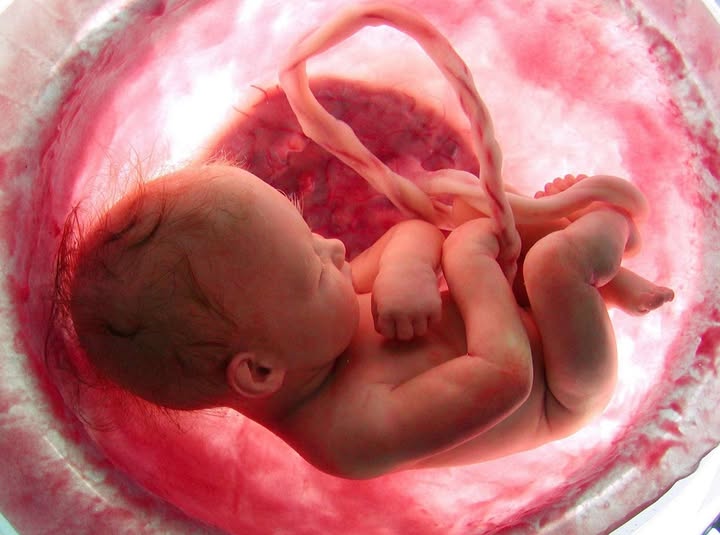
The placenta is an astonishing organ – so much so that despite modern advances, we have never engineered an artificial equivalent thequran.love. It is the transient organ that forms during mammalian pregnancy to sustain and protect the developing embryo. Through the placenta, nutrients and oxygen flow from mother to offspring and wastes are removed; it also modulates the mother’s immune system to prevent rejection of the half-foreign fetus and produces hormones essential for maintaining pregnancy themuslimtimes.info themuslimtimes.info. We share this miraculous lifeline with thousands of other mammal species thequran.love thequran.love, a testament to its central role in the success of mammals.
Paleontology and genetics tell us that live-bearing, placenta-bearing mammals (eutherians) split from egg-laying monotremes and pouch-bearing marsupials well over 100 million years ago themuslimtimes.info. Early eutherians in the Jurassic (~160 million years ago) likely had only rudimentary placentas thequran.love. Yet even those simple beginnings gave mammals a reproductive edge. Unlike egg layers or marsupials, placental mammals could nourish their young internally for longer, birthing more developed offspring. This advantage became crucial – for instance, around 66 million years ago, when an asteroid wiped out the dinosaurs, mammalian lineages with efficient placentas were better poised to survive and diversify in the aftermath thequran.love. In the Cenozoic era, placental mammals exploded into myriad forms, occupying lands, seas, and skies. The prolonged gestation supported by the placenta enabled larger brains and more complex behaviors, helping mammals dominate diverse ecological niches thequran.love. In short, the placenta was a game-changer in evolution, and its benefits “remained in the earth” – enabling the rise of everything from bats to whales to humans thequran.love.
One of the most remarkable chapters in this story is how the placenta became truly complex. Scientists have discovered that a key to advanced placental function in eutherian mammals was co-opting genetic material from an outside source: an ancient retrovirus. Roughly 25–40 million years ago, a retroviral infection in a primate ancestor left behind a viral gene in the animal’s genome thequran.love. Normally, viral genes are like unwanted foam – useless or even harmful genetic baggage. But this one was different. The viral gene encoded an envelope protein – essentially a tool viruses use to fuse with host cells. Early mammals domesticated this viral protein, repurposing it to fuse cells in the developing placenta thequran.love thequran.love. The result was the formation of the syncytiotrophoblast, a fused cell layer in the placenta that is crucial for nutrient exchange and for shielding the fetus from the mother’s immune system thequran.love thequran.love. In other words, what was once the mechanism of a virus turned into an invaluable feature for mammals. The invader’s weapon became a maternal embrace: trophoblast cells merged into a syncytium that both nurtures the embryo and protects it from attack, much like a fortress wall. This viral contribution is so vital that without it, the kind of deep implantation and efficient placental nourishment seen in humans and many other mammals might never have evolved thequran.love thequran.love.
Scientists have given the name “syncytin” to these viral-derived proteins that mediate placenta cell fusion. They find that different mammalian lineages acquired syncytin genes from different viruses at different times – a case of parallel innovation by nature. Marsupials, tellingly, lack syncytins and have more limited placentas thequran.love. But in the lineage leading to humans, multiple waves of retroviral integration occurred over time thequran.love, each time providing new raw material for evolutionary change. What’s truly fascinating is that these viral genes, once incorporated, tended to be conserved for millions upon millions of years – a sure sign that they were beneficial (natural selection “kept” them). Meanwhile, the non-useful portions of viral genomes, or whole virus particles that weren’t co-opted, eventually mutated into irrelevance or were lost – nature’s scum and dross fading away. Biologists refer to this process as exaptation or “evolutionary recycling” – taking junk DNA and making treasure out of it thequran.love. The placenta’s origin showcases this beautifully: viruses became evolutionary partners rather than just pathogens thequran.love thequran.love. It underscores how in the story of life, no useful thing is truly wasted. Even genetic detritus can be molded into something enduring if it confers a real advantage thequran.love. Here we see “what benefits people (or in this case, mammals) remains in the earth” quran.com – a Quranic truth manifest at the molecular level.
Modern research has uncovered that such retroviral domestication is not unique to the placenta. For instance, similar viral remnants play roles in the immune system and even the development of the human brain thequran.love. This hints that turning “foam” into “water” – extracting lasting benefit from transient phenomena – may be a general strategy in biology. The placenta’s case just happens to be an especially striking example, where a presumably harmful virus was transformed into a life-generating force. From a single integration event ages ago, a cascade of positive outcomes followed: mammals gained a more secure and nourishing way to bear young, leading to evolutionary flourishing. The useless was purged; the useful was preserved and embellished over the millennia. Truth prevailed over falsehood in the genome, long before any human ever understood it.
Read further in Microsoft Word file:



 The Glorious Quran and Science
Leave a comment